The Power of WHY in Education: 5 Key Takeaways from Hallie Rojeski's Journey
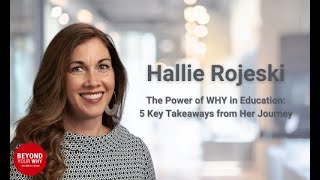
Hallie Rojeski, head of John Crosland School in Charlotte, shares how she uses a WHY framework to guide leadership and staff. Her own WHY is to find a better way and share it. The school posts each employee's WHY statement on doors and plans quarterly discovery sessions with students to build self-awareness.
Chapters
Welcome to beyond you'd why podcast, where we go beyond just talking about your why and actually help you discover and then live your why. You see, we believe that knowing your why, that driving force behind every decision you make and every action you take, is the essential first step to really knowing yourself. It allows you to move forward faster and have a bigger impact. If you're already a fan of the show, then you know that every week we talk about one of the nine whys, and then we introduce you to somebody with that why, so you can see how their why has played out in their life. This show will be more powerful for you if you've already discovered your why.
If you still need to do that.
Head over to whyinstitute.com and discover your why today. It'll only take you about five minutes. Now, let's meet today's guest.
This week, we're going to be talking about the why of better way. So if this is your why, then you are the ultimate innovator and you are constantly seeking better ways to do everything. You find yourself wanting to improve virtually anything by finding a way to make it better. You also desire to share your improvement with the world. You constantly ask yourself questions like, what if we tried this differently? What if we did this another way? How can we make this better? You contribute to the world with better processes and systems while operating under the motto, I'm often pleased but rarely satisfied. You are excellent at associating, which means you are adept at taking ideas or systems from one industry or discipline and applying them to another, always with the ultimate goal of improving something. So today I have a great guest for you. Her name is Hallie Rojeski. She is passionate about. Passionate about leadership, supporting individuals with learning differences, and celebrating neurodiversity. She has found a home serving as the head of school at the John Crossland in Charlotte, North Carolina. She brings over 20 years of teaching and leadership experience to Crossland. Hallie enjoys traveling overseas, trying out new recipes and playing with Bumble, her Australian labradoodle. Hallie, welcome to the podcast.
Thank you. This is exciting.
This is going to be fun. I. I'm really looking forward to this because as the listeners will see or hear once we get into it, you've taken this to your school, right?
Exactly. Yes. And we took it to the leadership team and then took it further. They said every single staff member, whether they're working with teachers, parents, or safety and security, need to understand this framework.
That's awesome. Well, let's. Let's start by going back in your life? A little bit. Where were you born and what were you like in high school?
I was born in Albuquerque, New Mexico by northern parents though. So. Yes. And I've never been back since I was six weeks old.
I did not know that. That is interesting.
At some point I need to make it. Make my way back to where I was born.
So you obviously didn't live here very long.
No.
And then where, where did you grow up?
So I would say home is just North Carolina. And so high school, I was in Greensboro and it was, I went to, you know, just a big public high school. And I think what was I like in high school? I would say I was very social.
I wasn't yet, you know, I wanted to get good grades, but that was more just to like satisfy expectations. I was more into everything that had to do with cheerleading, ballet, dance and just socializing. But that's where also in high school is where I found my passion for special education. And so that's interesting that it was that far behind long ago. Both my parents are in higher ed or education, but. And I was, didn't want to do them right. You're like, no, I'm not going to follow in their footsteps. But I became very intrigued with an individual with autism and found it fascinating how his brain worked, the joy I could bring to someone else, the helping of other people. So that started when I was 16.
Wow. So what do you mean by special education?
So my whole life I've either worked, I've worked with a variety of populations, but most of them I would just qualify as saying they learn differently. So sometimes that may be. Are we talking about students with dyslexia, autism? Is it auditory processing? I've also worked with populations that were non verbal when I was younger and so they were trying to really. It's a different need. So in there it was more life skills. What does that look like on self care versus academics?
So what was your attraction to it and interest in it? Why did that intrigue you?
I, I enjoy helping. I, I like, well being able to fix things, improve things. A lot of people don't need. I would say, I don't know, 50 to 60% of kids don't need a teacher. You know, they need materials, they need a direction, they need an assignment. But they don't need like legitimately the teacher. Like those that are doing online learning. Right. You can go through modules, you can watch videos, you can learn. I enjoy, I think being needed and then helping them to. Is it discover no. Best way to cut Pizza is it. Discover how to read. And now I'm in fifth grade and I've never been able to read before. So it's more like solving the puzzle is very intriguing to me.
Solving the puzzle and showing them a better way and finding a better way. Really?
Yes.
Okay. Okay. So you graduate from high school in North Carolina, off to college. Where'd you go to college?
And I stayed in North Carolina, so I went. Both of the colleges I went to were at one point teachers colleges before they turned into universities. So East Carolina and UNCG at Greensboro were, you know, I stayed. Loved that. It was a good fit. And again, I just found my tunnel and stayed in it.
Nice. Okay, so you get done with college. You're now a brand new teacher. Where do you start?
So I stayed in Greenville and I was at a. It was an independent school that was somewhat new, called the Oakwood School. And I was their student support specialist. So I was kind of like the special education person to help everybody. And that was a great starting point. But at the same point, when I moved away, I realized I want to work at a school where every single person has a passion for my. My people. And so in a normal setting, typical setting you're arguing for, can they have this accommodation? Can you do this for this one person? And some people are very willing, and other people don't understand the why or don't see the need or that's not what their passion is. And so instead it's finding. So our school, where I am now is in the past, I think also 16 years of where I've been in two different locations. It's. We have a unique mission, and everyone who's here, in my mind, wants to serve this group of students that are all unique.
Okay, so you were at a regular school, if you will, for how many years?
I want to say about three.
Three years.
And then, you know, and then. And then I transitioned back to Greensboro and have worked now at, for the past 16 years, two different schools, both by.
Both called Crossland.
Yeah. So the first school was in Greensboro called Noble Academy.
Ah, okay.
Which was. Which still exists. Great school. Love it was there 10 years and was leading. Started as an educator. My favorite class to teach would be middle school math. I like the quirkiness of middle school. They're curious, a little risky, want to know things.
And then I think math is very. What's the word? It speaks for itself. You know, there is no interpretation. This is what it is. There's always a right answer. That is very reassuring to Me and then off to.
To Crossland and started there to teaching and then worked your way up to where you are now or started where.
You are now after being in this with a better way. After being at my school for 10 years, I realized, you know what? I really. I've given a lot. I think I've made some improvements with different. Is it programming, is it curriculum, is it staffing? And I felt really comfortable and I didn't feel bad about shifting to a new place. The school that I. Because I ended up taking the headship and moved to Charlotte for the job. But that was. The school needed a lot of support at the time. And so there was a problem to kind of fix. They had had previous mistrust in leadership and so there was this healing kind of had already been done. But now we need a direction, we need a focus. We need someone that kind of has a vision and a plan and a passion for our kids. So that's been a nice way to be able to add opportunities of better ways. And I think everyone was willing to do it because what they've done before hadn't really worked or at least in the short term before during that one phase. So because the school is 45 years old, but you know, you always. Normally when you have a school that old, you're going to have at least a change of, you know, needing to reset and write the ship.
So you discovered your yos how long ago?
This, um, early in the summer.
Early in the summer. And. And what was that like for you when it came up? So for those of you that are listening, that know the why, how and what. Hallie's why is to find a better way and share it. How she does that is by making things simple, easy to understand. And ultimately what she brings are solutions that make sense. And so how did that feel to you?
I was like, ah, it was very refreshing. I didn't. The better way makes sense because like I'd lean into. I want to fix something. It's hard for me to sit back and watch something that has problems and not be critical or judgmental sometimes. And normally I keep it in my, my head of just like, well, I would have done this differently or this. You know, I'm constantly revamping the way to make it better as a side hobby, I guess, even if there's no production and then the make it simple. I. I like bullet points. I don't, I don't. I don't need lots of prose if there's a long explanation, if the research is lengthy. I'm going to just flip to the summary. And then that's where I also. And I kind of, I know there's people out there, like the mastery people that are different. But rather than me thinking.
I think I'd pass judgment on myself that it's like, oh, I just don't write. And it's like, no, I write. I just write very simplistically. And so I think accepting that that's a way. Oh, that's okay.
Has kind of made me have ownership in it rather than apologize for it.
I love that. Yeah. Gives you the. I'm. The ability to be okay with that.
Yeah. Yes. Yes.
Yeah.
And then I, But I mean, I also, I lean in like, what are my strengths and what are my weaknesses? And I think working at a school where we have students that have significant strengths and weaknesses and are neurodivergent, for me to say, like, I don't really like spelling. I don't know how to spell. I can teach people how to read. I can teach people to spell, but when it comes down to me, I don't have that visual memory. And it's in just when you name it people. Oh, well, don't worry about it. And I'm like, okay, great. Like we're moving on beyond that. So I think kind of that idea of.
Being authentic, a lot of people will connect with you faster that way.
Yeah. You know, it's interesting because you're. You better way, simplify. Makes sense. And I'm better way clarify simplify. And they're very, very similar. So as I listen to you talking, you're saying things that I would say. That's exactly everything that you've just kind of said. And what we've talked about is the same thing I would say or think or do. It's, it's a crack up because that's how I feel. I mean, am I the best speller? I mean, I can spell okay, but I, that's just not my thing.
One quote I love is spelling is elementary like, or pedestrian like, it's not, you know, and maybe a long time ago it mattered a lot when you didn't have dictionaries or they didn't exist or you didn't have Google. But now it's kind of like, I, there's other things in my brain that I'm holding up space with that I'm okay with that.
Yeah. And you know, when you said it, you're kind of direct to the point, which is part of simplified. Right. I don't want to cloud What I'm trying to say by getting into all this other stuff, let's just get to the point of it which can come.
Yeah, yeah. I think that also lends to being with northern parents and Polish heritage where directness is welcomed and celebrated rather than. So sometimes I do have to. And that's where I also like. So I know everyone's why on staff. So then you can, you know, like we'd call it code switching. Right. But I can embrace someone else and know that they want a long greeting where we're going to engage in some small talk and understand what's going on. Or is it this, you know, what do we need to talk about before we get to the problem or before we get to something that needs to be discussed? You know, so I think all of that makes sense.
And so once you discovered your yos, then you brought it to your team.
So we brought it to leadership team, which is about 10 people. And so we had a retreat over the summer and we met with Watson and did a basically a two part.
You know, development of what does this mean for everybody? How let's engage, let's spend time talking with each other about this. And that was they, they appreciate it, they liked it. So that, that was a good experience.
And what was that like? What did your team gain and benefit from knowing each other's yos and them knowing your yos?
I think.
I think it provides the framework and common language. So rather than. So, you know, and like it's now I understand how to approach different people for different tasks. For some people it may be hey here heads up. I want a meeting in two days. This is the topic, this is the content. You can kind of do it, do what you need for it before we have a conversation. And other people you can approach in the moment as well as I think.
The idea of who to ask for which task. There's someone that is very detail oriented that will not.
To know everything about the topic versus someone else who may be more of that. If we're going to do a field day and bring everyone together and we're all going to, you know, like then what does that look like? Versus someone who has trust of what's important and what you know. So I think it's knowing the individual. And then also it was interesting because as they, you know, they paired up, oh, we're both trust and we're both this, you know, we had, you know, and I think we had a lot of contribute because I think it's what schools you want a lot of people that are coming together for that similar cause and being a part of the team. And I think that's our biggest one school wide.
Yep.
But makes sense.
Yeah. It's really. So for other leaders that are listening to this that have teams.
It'S easy for your team to misinterpret you.
Right.
They see the actions that you do and they create a narrative around what they think. They see she's so this or whatever it is, but now they know what that is.
Right.
They know your why, how and what. And they can see what you're actually, you're looking for a better way. You're going to simplify it and you're going to make, make. It has to make sense.
And I think especially because when it says what to watch out for, sometimes I constantly want change or, you know, and that can be exhausting at an organ. And so I think that's where you know, and I've always heard from other leaders, you only can have two to three big changes or initiatives a year and like, then you have to say, no, this is a next year project. But I think even when I talk about do we always have to make every event better or is it great the way it is? And so I'm also not into reinventing the wheel. But I think that idea of, I think there's less judgment on this is her personality versus this is how what fulfills her and what makes. Makes sense. I think, yeah.
How she operates. This is her. The way she operates and how she sees things is she's going to look for better ways. Can't stop it. Can't turn it off, right?
Yes. No.
Can turn this off, can turn the mouth off, but you can't turn the mind off.
Oh, no. And especially professional development is the hardest one for me to sit in. And not just being an educator and not thinking how many ways could I rearrange this to make it better? And I, you know, so I'm, I'm very honest on when they ask for feedback surveys, but I think that's, you know, but they're asking for the feedback. But yes, that's one example where it, it really is, is large.
Have you been able to incorporate the concept of a, like a first draft? So one of the things that is a challenge for you and I is not improving what somebody brings to us. Right. They bring you, hey, here's my finished product. And you're like, here's how, you know, could be better here, it could be better there. One of the things that we talk a lot about at here is here's my first draft or here's my draft. Instead of bringing me the finished product, bring me the draft because I'm going to try to make it better anyways and then there's no hurt feelings. If it's a draft versus a finished product, does that make sense?
And I think it depends on what it is. Typically if it's a written letter and I'm not a wordsmith, I'm happy to say, like I may have a suggestion, but if it is a here is a plan for the next two weeks and this is what we're going to have for the agenda. And you know, it's more then. Oh, okay. But I think. Yeah, I've never heard that approach, but I think just we are very collaborative school as well. Yeah. And so, but I'm also will. I mean I also know at times I gave you full ownership. Stay out of their lane, you know, and like if you need help, I'm here or keep me in the loop and I'm not, you know, if you want advice, ask. And sometimes I. It's hard for me to, to be quiet. But I think that, you know, when you have a great team and you trust the people, it makes it a lot easier.
Yeah, exactly. So you took it to your leadership team and team and then you took it even further, right?
Yes. They were very passionate about every single. And we didn't budget for this. I mean like we budgeted for leadership and they were like, okay, that was part of the retreat. And so instead. But they wanted every staff member to have it. And so that everyone has taken out. They. We did not do the entire all three steps. We did the first one with everyone and then, you know, we talked about what does that look like? And let's put each other in like now divisions and what is. Who's, you know, what about committees and like all different avenues. And we also put it on everyone's door. We have a picture of ourselves, our name and then we also included everybody's statement of, you know, their simple yos.
Yeah, that's awesome.
And so when you walk around, you can kind of be reminded where, you know, some people printed out the whole. I don't if I wasn't. I had not prepared. But it's literally a chart with every single employee and where they are. And so, you know, who are your. Who are your trust people? Who are your make sense people? We have, you know, in the people that were.
What's the one where it's the challenge people. They were very Proud to be the challenge people.
I love that. And how has that affected the, the culture of the, of the school and the way everybody interacts and talks with each other.
I think it's really helped, especially new people. So we have a decent amount of new staff this year. And then you quickly understand how to engage with people maybe aren't on your hallway, so you can kind of understand what's important to them. And so that's been interesting. And I also think just giving them the vocabulary. So rather than them knowing, oh, well, this is, you know, you can lean into their mode or ask questions more about their mode. And so it's been a. It's been refreshing, it's been helpful. I haven't, I've. I have not. I've been glad that we went that far with it, you know, rather than, oh, this was kind of, you know. But I think we're trying to even embrace the why is the theme for the whole year. So quarter one was discover the why. Quarter two is when we share the why. And so that's where I think we're going to ask all staff to share with, you know, is it your parents, your teacher, like, your students, like, what does this mean? I enjoyed sharing with my board of this is my why. So if you understand where I'm coming from.
Yeah.
And then more toward the end, they'll be celebrate, like, how do we, you know, do we maybe get all of the.
You know.
God challenge people together and do they come up with some type of fun activity where they could challenge other people or get people out of their thinking or, you know, how do we, how do we be different but still successful?
One of the things we did at one of our events is we put, and this was when it was during COVID so we couldn't actually get in rooms, but we put people in, in zoom rooms with the same why. So everybody with challenge was in one. Everybody with contributors in one. Everybody's trust was in one. And man, we, we gave them some things to talk about. And when they came back, it was fascinating to hear what people would say. They were like, man, that was the best conversation I could have ever. It was so much fun to be around people that think like I do. So that is, that's something that you could try as well, because, yes, just like you and I, I mean, I look at you and I know what's going to come out of your mouth. I know what you're going to say. And it's fun to talk to somebody who, you know what they're going to say. Because we see the same thing.
Right. And I think also when you're looking at a team, there isn't really one or two things like glaringly missing. Right. So let's say you had everyone. If everyone was better way that would exhaust.
Yes.
You know, or on leadership that would exhaust staff or if everyone was, you know. And so I think it is a nice variety, which was good. But then also like if you lose two staff members that are very specific in one way, would you try to, when you're meeting other people, lean into someone who has a strength in one of these areas?
Yeah. Higher using it.
Yeah.
So one of the great things you can do is start as you know what you're looking for, somebody leaves and you know what it is you're looking for, you can quickly go down the nine whys and say these would be the best for it. These wouldn't be so good for it. Let's just say it's bookkeeper. Right. You're going to hire a new bookkeeper. Well, you know, you don't want challenges the bookkeeper.
Right.
You don't want better ways the bookkeeper. You don't want to make sense as the bookkeeper. They're going to run out of energy if someone's managing your money. Like what. Why would you want.
Right, right.
Trust. So there's ways that you can utilize that. What about, and I don't know if this would apply as much to your school because of, because I don't know enough about.
I don't know enough about special education. Would the students be able to discover their Yoshi?
I think our high school students would understand, you know, like that's not, I mean most of our kids are going to college.
Okay.
They, you know, we're, we're just, it's smaller class size teachers that really can break things down with lots of visuals and you know, where a kid wants to be in a class with maybe only, you know, eight other kids rather than 30 plus and at a fast pace where there's too much independence. So no, I do think exploring for the high school kids, it's, it's not, it's not out of their reach by any means. But also knowing that it wasn't really made, I mean that's where I would question of, you know, someone who's also 14. I know I didn't take it with a lens of being, you know, a young teenager or preteen.
So it's possible. But what we've done with the kids though is what we're finding is different types of how. What side of my brain do I lean toward more, do I have more strengths? You know, if you think left brain or right brain or out of executive functioning samples, am I better at materials management or time management and kind of helping them understand a little bit more about who they are as an individual and self awareness, not necessarily with.
Diving into them all doing the exact same thing yet.
So would this work? Would you be able to take.
A class, let's say, or a group of the kids, 10, 20, whatever number you want. I will give the yos discoveries to you and Watson and you pick a sample and try it out, Just see what happens.
And you want. But you want also feedback from the kids.
I would feedback from the kids. And see what I mean, we've done it with lots and lots of kids from age 9 up. So I mean we've done it.
Would it be valuable, Hallie, for a high school girl to know that she has a gift and what her gift is before she starts to date, before she picks a career, before she picks her college path?
Well, no, there I mean I see a lot of benefit in it especially a lot of our kids have social communication difficulties. So they percept perception taking is hard also as well as just misinterpreting information. But I think even if you know, that I'm a trust person that really matters to those people and kind of giving them a little bit of a deep dive, it would be very interesting because I do think and you know, especially the kids that identify on the spectrum, that would be also interesting because it's the idea of, oh, this is part of also my identity.
Yes.
You know, where I am, you know, am I an introvert, extrovert, Am I this, am I that? But I'm also like, oh, this is a little bit more of like what gets me excited and energized. No, I would love that. We would welcome that wholeheartedly. That would be fun to kind of see because then also they would have more an understanding of the, the high school teachers they're working with. Yes. Oh, this makes sense that now, you know.
Know Ms. Halloran is also trust and that's why, you know, maybe that's why we get along so well and maybe that's why the other teacher down the hall, you know, there's a little bit more of a rub depending on is it part of the, you know, the Y background.
Yeah. So. And for those of you that are listening or watching Watson, Jordan is though is the yos certified coach that has Been working with Hallie and their school, and so I think that would be a great exercise and I'm sure he would love to do it. I'll just donate all that, and he can come and work with you and you can figure out what you do, you know, with him. But you could do a little test, a sample test of whatever size you want and then see how that compares to the ones that don't have that ability to know.
Right? Yeah. No, that's beautiful. That is a great gift. So I appreciate that for sure.
So with your school, you've, you've got the leadership, you've got the teachers, and now that's what. Where we can see is it. We have, we have schools in Texas that are doing this with all of the students. And it'll. It's really fascinating to see how much confidence, clarity, certainty it gives the students when they know. Because think back to when you were that age. I know you that. That's where I'm a little not sure because I, I'm not as familiar with special education and. But it's, it's really a powerful experience. I, I had one daughter go through high school and college not knowing your y O s, and one go through high school and college knowing her yos, and they had different experiences completely. So one was sure right away, boop. This is what I want. The other one took six years to go through college, took a year off, didn't have the same type of an experience.
And we have a lot of students that their two interests are night and day. Right. I mean, it could be. Is it. I mean, I'm trying to think, I'm trying to think of one student specifically, but it's not coming to mind. But it's all, do I want to be a writer or do I want to, like, lean into, like, the computer tech world? And I'm like, that's, you know, and so maybe them understanding a little bit of their why os make. Oh, well, this, this may make more sense or may give me more satisfaction and then is one more of a hobby.
You know, here's how you can position that. Because if what they choose to do with their life is in line with their YOs, they're going to love what they do. They're going to have passion for what they do, they're going to stick to it, they're going to push forward, they're going to persevere. If it's not in line with their YOs, they can still do it, but they'll run out of energy right I.
Think that's where, you know, picture someone with the Y of contribute but like working in a cubicle looking at numbers all day. It's not. Sorry, my.
There we go. It's. That's not going to be fulfilling. Like they're, or they're gonna have to volunteer with their family on weekends or they're gonna, you know, like, or, you know, attend every single college football game they can. But that's. It's not going to be what they love to do.
No. So, Hallie, I think this would be fun. We'll. We'll have you come back, let's try this out, see what happens with the students. Have you come back and let's kind of see what happened.
I will look forward to that.
Yeah. So for now, though, I mean, thank you so much for being here and thank you for bringing it to your school. Thank you for bringing it to the leadership and to all the teachers. So it's been a. I, I wanted to have you on just to hear how that went.
Yeah, no, it went really well. And I mean, everyone leaned in and I thought it was a great experience. So I appreciate all the work you've done ahead of time to make it a possibility.
Well, thank you. And, well, if there's people that are listening that want to learn more about what you're doing, they want to follow your school, maybe they want to follow you, what's the best way for them to get in touch with you?
Probably. I'm pretty still active with LinkedIn, so if you message me or kind of connect through that, I try to check in there every day. And then also if they just want to learn a little bit more about the school, I would say our website, which is just john crosland school.org and it has different information also. You can find my email through there if you want to reach out personally. But I think it's. Yeah. And I'm a connector, so I like people even though I'm not a contribute. I love bringing people together and I love learning rather than. I don't necessarily read to learn as much as I like asking questions and finding out from other people, well, how do you do? Blah, blah, you know, like, is it. What is your name? You know, tell me more about your reading program that you just initiated. You know, like, what's the best part of it? What are, you know, what's the best change you've made on your campus this past year? And people are excited to tell you about those things for sure.
Well, we'll have you back and we'll see what happened. But until then, thank you so much for being here, and I look forward to our next conversation.
Perfect. Thank you so much, Gary.
I really hope you enjoyed today's episode and that through today's guest, you heard how important it is to know your why and how impactful it can be in your life and the lives of those around you. Be sure to head over to whyinstitute.com and discover your why today. Remember, the more you know about yourself, the more you'll know about others. I'm Dr. Gary Sanchez, and I'll see you on the next episode.
More from Dr.




Women In Leadership: A Need For A Greater Systemic Change With Belinda Clemmensen






