The WHY Of Contribute: Awakening The Greatness Within With Ken Sterling
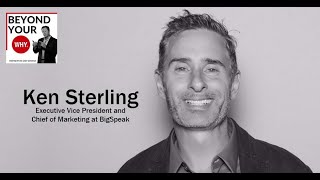
A podcast episode (YouTube) of Beyond Your Why hosted by Dr. Gary Sanchez interviewing Ken Sterling (attorney, executive at Big Speak). The episode centers on the "why of Contribute": Ken's motivation to support larger causes, simplify work, and build trust. Ken recounts his nontraditional education path (kicked out of high school, ~20 years before returning via community college → four-year degree → MBA at Babson → law school work → PhD in leadership), entrepreneurial ventures (tech company, manufacturing, bank founding that closed during the 2008 crisis), and his role as Executive Vice President/Chief Marketing at Big Speak. The conversation explains Big Speak (a large, business-focused speakers bureau), how bureaus help speakers (audience access, vetting, messaging, data), and offers practical speaker guidance: prepare (reps and mindset), pick a lane/own a niche, be highly engaging and interactive, simplify materials, and use data/marketing to generate leads. Episode closes with CTA to discover your why (whyinstitute.com) and promo code PODCAST50.
Questions this video answers
September 21, 2022
PhD in leadership (University of California)
About 20 years
MBA from Babson College
Executive Vice President and Chief Marketing (CMO) at Big Speak
Chapters
Welcome to beyond you'd why Podcast, where we go beyond just talking about your why and actually help you discover and then live your why. You see, we believe that knowing your why, that driving force behind every decision you make and every action you take, is the essential first step to really knowing yourself. It allows you to move forward faster and have a bigger impact. If you're already a fan of the show, then you know that every week we talk about one of the nine whys and then we introduce you to somebody with that why so you can see how their why has played out in their life. This show will be more powerful for you if you've already discovered your why. If you still need to do that, head over to whyinstitute.com and discover your why today. It'll only take you about five minutes. Now let's meet today's guest.
Welcome to beyond you'd why Podcast, where we go beyond just talking about your why and actually helping you discover and then live your why. And so if you're a regular listener, you know that every week we talk about one of the nine whys and then we bring on somebody with that why so you can see how their why has played out in their life. And so this week we are going to be talking about the why of contribute to contribute to a greater cause, add value, have an impact in the lives of others. So if this is your why, then you want to be part of a greater cause, something that is bigger than yourself. You don't necessarily want to be the face of the cause, but you want to contribute to it in a meaningful way. You love to support others and you relish the success that contributes to the greater good of the team. You see group victories as personal victories. You are often behind the scenes looking for ways to make the world better. You make a reliable and committed teammate and you often act as the glue that holds everyone else together. You use your time, money, energy, resources and connections to add value to other people and organizations. And so today I've got a great guest for you. His name is Ken Sterling. Ken is an attorney and an executive at Big Speakers Bureau. He is also an entrepreneur and angel investor in several tech startups. Ken mainly focuses on entertainment, media and well known thought leaders. At Big Speak, he serves as the Executive Vice President and Chief Marketing. Ken's background includes working with KPMG as a technology and management consultant, co founding a technology company, cloud computing, co founding an international vertically integrated manufacturing company, and working as Executive Vice President at a boutique asset management firm charged with operating real Estate and hospitality assets. Ken most recently was responsible for managing a team and real estate portfolio exceeding 300 million. Ken holds a PhD in leadership from the University of California, an MBA from Babson College, and he earned his BA in communication and Applied Psychology from the University of California. Ken is a Lecturer of Marketing and Entrepreneurship with Technology Management Program at University of California. Ken, welcome to the podcast.
Gary, thanks for having me. That description you put out there, gosh, your system and what you talked about is me to a T. Well, and.
Then we also added your how and your what. So for those of you that are listening, that are familiar with the yos. So Ken's why, which we just talked about, was to contribute to a greater cause. How he does that is by making things simple, easy to understand and doable. And ultimately what he brings is a trusting relationship where people can count on him. And how does that feel to you, Ken?
It feels amazing. And it was interesting taking the assessment, which I'm sure other folks feel the same way. It's very challenging to pick sometimes between the two. And then later on in the assessment, you almost feel like, didn't I answer that question? Do I need to answer it the same way? Should I answer it differently? Are they trying to trick me? Which I know goes counter to the trust thing, but in general really, really nailed it. And it's interesting because I've always known I was a contributor and I've always known that trust was big and I've always known that I do like to simplify things. I just didn't realize that was as much of my OS as it really is. And now it's been a couple days since I took the assessment and by the way, thank you. That's a wonderful tool. I've been reflecting on it a lot and I do. I get in there under the hood and especially when working with my team. Even the other day we had this very complex standard operating procedure SOP checklist that we do for one of our very unique speakers. I remember saying to one of my colleagues, we've got to make this easier for the team. What I explained is we don't just need to do it for the team, we need to do it for us. Because the simpler we can make this, the more autonomous people can be, the less they're going to come to us and ask for clarification. Candidly, as much as it's altruistic, I also believe that part of my OS on that is self preservation.
So if you make it simple, it's easier to stay in that position. Or what do you mean by self preservation?
So in other words, preservation of my time and what I'm learning. And as our. As our hourglass starts to maybe go over the middle mark, as some folks here might be familiar with, I'm beginning to understand that really the only thing I have that. The thing that I have for myself and really what I have to offer to the world and to make the world a better place, you know, which is a big part of my. My os, as you and the assessment have pointed out. Really what I have is time. And the more that I can help people make decisions on their own, the more that I can help them do things. And the more. The more time I invest to simplify things now, which does take time, the better it is for the stakeholders that I'm involved with, and then ultimately the better for me.
I love that. Well, Ken, let's go back in your life for a bit. Let's go back. And where did you grow up? What were you like in high school?
Interesting. So I grew up in New York, and I came out here to California for high school. And by the time I was wrapping up high school, we have the senior yearbook. And they do the best dressed and the best looking and the most likely to succeed. Unbeknownst to me, until the yearbook came out, they created a new category.
For me. And for one of my classmates, the category they come up with was Most non conformist. I remember being pretty chuffed that I made a category in the yearbook. And then sometimes later I reflect on that and say, okay, was that a compliment or not a compliment? So as a kid and in high school, I was definitely a connector. I spanned a lot of different groups of people. You know, back in those days, there were the surfers and the skaters and the lodies and the stoners and the jocks and the preppies and oh, and the mods and also the punk rockers. And I had friends in every one of those areas. My closest and best friends were skaters and surfers and then kind of like Bill Clinton. There was the Stoner era. And.
I might have inhaled once or twice.
Yeah, I can see that. So I picture you as everybody's good friend. Everybody liked you. You were not a troublemaker so much as just people enjoyed being around you.
Yes. And what was very interesting is that there was a certain type, there was maybe a certain clique. And I think it was kind of like the football guys. They didn't like me, and I didn't steal their girlfriends or anything like that. I think I was Just very counter to kind of their culture. So I remember kind of reflecting on that at the time and not feeling good about it and also realizing, and my nunno told me this, you know, you can make some of the people happy all of the time, you know, all the people some of the time, but you're never going to make all of the people happy all the time. And you know, years later in therapy, therapists saying, hey, it's none of your business what people think about you. So, you know, I think now I'm resolved with that. In high school, it was slightly challenging, not the end of the world.
Okay, graduated from high school, you go off to college. Now where did you go to undergrad?
So great question. Did not graduate high school, was kicked out three weeks before graduation.
I don't know if it's anything super scintillating. I got into it. So I had moved out of my house when I was young, so I was homeless for a while and I was working and I was also studying for two classes and kind of dozed off and you know, my, my fault, my accountability teacher called on me. We kind of got into it because I pointed something out incorrect, which we, we know as, as adults and evolved humans, sometimes you just graceful and, and don't, don't put people on the spot in front of, you know, 32 other kids. So got kicked out of high school, did not graduate, did not walk. And then much later, so I, I went in and kind of became an entrepreneur and you know, the first real kind of formal company in my late teens, early 20s. And I just dug into that really, really deeply and didn't really emerge into academia until much later in life. And by that time had to, you know, I shouldn't say had to got to go through a JC and you know, kind move up through there and really focus. Took some time off work and you know, got the transfer to the four year university, got that degree, got an mba, you know, then hey, why not? Wait, there's more, you know, did the PhD and some other things.
So how many years out of high school did you then go to college? How many years were you in? So you started a business right at the end of high school, didn't graduate, started working with that business. And then how many years later was it before you went back to school?
About 20. 20, about 20 years. So I mean, it was great because.
I remember my first day of being on campus and sitting in this classroom with really a bunch of 18 and 19 year olds. Most of them, the classes that I was taking were all transfer classes. So these were all students who wanted to go to four year colleges and really some really good people. And again, I'm the connector and I want to create community and I want to do all these things. And it was actually great because I had this kind of internal game that I was running on myself. I didn't belong here. You know, what's this old guy doing here with, you know, budget? And I remember and I'm actually, I'm going to be at a wedding in two days with a really good friend who I met at the jc and he walked over to me after class, he's like, hey, are you doing okay? And I said, yeah. And he's like, hey, everything's cool and I'm so glad you're here. And like, and this is, you know, a kid half my age, my son's age, candidly, who reached out and I thought that was great. And it really helped that reentry experience because there's no class, there's no orientation for old people going back to school. So it was great and wonderful experiences there. And I got involved and those were other things. I got involved in some student groups and did my best not to dominate those or overpower them. Just kind of, you know, be, be a regular person like everybody else and really had a great time.
So what was the turning moment? So if I'm listening to this, listening to you, what's crossing my mind is, okay, you've got a business, you're doing okay. And all of a sudden something happened that said I got to go back to school. What was that?
So it was a couple things. One of them is I had a child who was about ready to go to college and I had another child in high school. And I realized that I was talking about the importance of higher education to the kids. The other thing is, yes, there's been some successes and interesting things. There's also been some, you know, kind of like in the movie where everything's great and the party's going and the record scratches. And one of those record scratches for me is that in 2006 I was on the founding team of a bank.
So if anyone's launched a business or ever been in a regulated business, you might understand this. It was, it was a very onerous process to get the bank opened. And we started in 2006. By the time we actually got the doors open was 2008. And for folks that were around in 2008, 2009, the FDIC was closing banks down. I think I Can't remember the stats. I think they closed a thousand banks down across the country during that period of kind of the Great Recession. So I was one of those people.
The regulators came to us and said they never raided us. We didn't have the vans pull up and take over the bank. They said to us, hey, the way things are going, we think you're going to need to close the bank down. So why don't you liquidate your loans, why don't you return depositors? And that was really what the regulators needed is as long as depositors got their money back, then they didn't take a loss and it wasn't a hit for them. So we did all that and.
It was fine. I was kind of cruising along and I randomly get a LinkedIn email from a former employee that I had laid off Christmas of 2002 at our tech company. And not that I want anybody to watch my TED Talk, I actually talk about this on my TED Talk of how to, how to be present with your people and how to be in the room when you need to give them bad news and how to communicate. So this former colleague reached out to me and said, hey, it looks like from your LinkedIn, you're looking for work and I'm working at a company. And I told my boss what a great boss you were and how compassionate you were when you laid. And this was several, dozens of people that we laid off on December 23 and December 24, which was rough. And she said, hey, I think you'd be great for this job. Do you have a resume? So I sent over my resume and I had some college experience. I was transparent. I never said I had degrees, I never said those things. I had done some executive ed at Harvard and long story short, dream job and I get the job and I'm supposed to start on Monday. And because I'm a nut, and I wake up in the middle of the night and I check email. 3:30 in the morning on a Sunday, I get an email and it said, ken, we need to talk. And you know, that was the subject. And then, you know, Ken, I shared your, your resume with one of our board members.
And he wants to know if you have a four year college degree. And I replied back, you know, I don't. You know, I hope that my resume wasn't misleading. She said, oh, I just based on the reference that you got, the references that I checked based on the internal recommend and just based on the way you carried yourself, I just presumed it at my company. I have a policy that nobody, not even an intern, works here without a four year college degree.
So it was a very interesting moment for me because I felt shame, I felt anger, I felt confusion. And I actually had lunch with the founder of Bigspeak.
And who's a, who's been a very big mentor and very important person in my life for years. And I had lunch with him because he was one of the references that I gave to get the job. And he said, hey, how did it go? And I told him and I was still kind of in that bitter mode, you know, not, not like angry, I'm going to do anything, but just like, ah. And he said, oh yeah, it's the same thing at my company too. And what he said is that.
It'S a demonstration of your commitment to finish something. And that really, really sank in to me. So I seriously finished that lunch, got in my car, I drove up to the jc, I found the counselor's office and I sat down. Wonderful. She's retired now, Christie. And I said to her, how fast can you get me into a four year college? And that was that journey. And that's how and why I went back to school, really.
And I was grateful for it. And later, many years later, I emailed the CEO of that company and I said, I just wanted to let you know, congratulations, you're doing really well. And I did go back to school and life really worked out. So this was a great impact. And then of course, here I am at Big Speak and my mentor, Jonathan, who's very special to me, I thank him constantly. Hey, it was great to go back to school. And it was great to go back to school as an adult who had been in business for 20 years. A lot of that theory stuff I think that some people learn and they're like, I don't know why are they teaching this to me? Or they can't really apply it. I was kind of doing the reverse of that, especially my MBA program. We were building these really complex financial projections that I had always kind of wondered, why are those important? Or why does the bank need those? Or why do investors need those? And then it crystallized for me, that was a long, long answer.
Well, no, that's really interesting. And so you didn't just stop with J.P. see, you didn't just stop with a four year degree. What other degrees have you got? Because I, when we, when I started your intro or your, your bio, it said you're a lawyer.
Correct.
So you went, tell us what now? What are the different degrees that you got and why so many, you know, that's interesting.
And I'm back, I'm back in school now, studying some, some more postgraduate postdoc things. I love to learn. And Big Speak is a learning organization. You know, that's really, that's why we were founded. It's what we do. We, you know, either through consulting or facilitation or amazing keynotes on stage. And you know this because you're a keynote speaker, Gary. You know, really we're, we're entertaining folks to keep them engaged. Except we're not just up there juggling balls or chainsaws and there are people who do that. But you know, you and other people, other folks and you know, you, especially when you're helping people discover their why and discover their purpose and you know how to go out there and make an impact. You're giving people practical things and that is learning. That's somebody who didn't know about your subject matter and, or they knew very little about it. And then they, they sit in a seat either on Zoom or in a ballroom and an hour later they've got some tools that you just taught them. And that's a big part of what we do. So for me, it's being a participant and learning the mission of Big Speak. This is our mission, not just a tagline, awakening greatness within. And a real part of that is learning and helping companies and people learn professionally and personally how to develop themselves and how to connect and collaborate more and be community wise. That's a big part of our ethos.
So again, though, you did JC four year college, then you got your mba, correct?
And then law school, did a little bit of law school in between and a little bit before, and then went back and did the PhD, which, which was really interesting, which by the way was education, leadership in organizations. So that really set me up and during that process is when I joined Big Speak. And again.
I actually like my journey. I'm not recommending it for lots of folks and including my own kids, I think every learner's experience is individual and how they meet, the kind of, the learning atmosphere. So for me, when I landed at Big Speak full time, it was a culmination of, it was almost like one of those movies where everything just comes together and the detective puts it all together. And for me, being at Big Speak is that moment. It's, it's the most fun that I have. You know, I say to folks, hey, we're not selling servers. You know, we're not taking things away from people. We're doing Good things in the world. And when it comes to kind of that education journey, everything scaffolded into what I bring to Big Speak.
So for those people that don't know and they just heard me and you talk about Big Speak, what is Big Speak? If they went to the, on the Internet and searched for it, what is it?
Big Speak is one of the larger speaking bureaus in the world. There are a couple agencies that are larger than us, and there are a couple big bureaus on the east coast that could maybe claim largest in terms of headcount. One of the things that we found through our data is we're the largest business focused speakers bureau out there, meaning that we really focus on business audiences, whereas some speakers bureaus might focus on colleges or associations or politicians. We mostly help businesses move the needle. And that does, that doesn't mean just selling more widgets move the needle for their people. A lot of the work we do is internal work. And then of course, big, huge customer user conferences with celebrities and bands. And a couple years ago we closed down four blocks of a city and we had McLemore at a private conference and a private concert, which was amazing. And what, what BigSpeak does, because some people say, what does a speaker's bureau do? If you've ever been at a conference? So for example, you were a dentist. If you were ever at the, I don't know if it's called the ADA or you know, American Dental Dental Association. If you were there and there was a celebrity or an athlete or a thought leader that came on stage, kind of similar to what you do now, there's a good likelihood that that event hired a speaker's bureau to find them and book them that speaker who was up on stage. And then we also do consulting, we do follow on workshops. There's also a couple folks that we work with who have assessment tools similar to the tool that you have. And then we have a very boutique roster of exclusive speakers. So for example, if you want a celebrity, we can get them for you if you want. If you looked at our website, there's probably 3200 speakers on there. We exclusively manage about 30 very hand picked curated folks. Folks who I like to work with because I handle this part of our business. You know, folks that I'm at their weddings or you know, I'm with them traveling or, you know, having fun or doing some things, having dinner, you know, so kind people who want to awaken greatness within. A couple of those people would be Mark Randolph, who started Netflix, Kevin O' Leary, who is on Shark Tank, of course. Omar Johnson, who was number three at Beats. Thanh Lee from Emotive Sciences. You know, very, very unique roster and actually a couple of very cool new additions coming out in about two weeks. So everyone stay tuned for that.
So if you're hosting a big event and you want a celebrity, you want a big name, you want a, one of those guys, they just look you up or how does that work?
Great question. So a big portion of our work is businesses and we've thankfully we take really good care of those clients and they come back to us. So a big portion is people that we're in touch with that we know when their events are coming out and we're collaborating. And then we do have a pretty formidable digital marketing presence. So we do get a lot of inbound leads and we've been hacking on Google and social media for years. And again, this is, it's another area that I handle and I manage. And that background of being in technology, the background of having the mba, where I chose to focus on marketing and leadership, really helped us there. And then I also teach marketing at UC Santa Barbara, which is great because it, I would probably do it anyway. I really keep those classes fresh. We do a lot of project based work, we do a lot of group based work where the students are working in groups together and they're, they're hacking on things too. So it keeps me sharp, it keeps me learning, and I'm just, I'm kind of a marketing and business junkie, so I'm just always looking at stuff. And we test, test, test all the time with, with things.
So if I'm a speaker, because there's a lot of speakers, there's a lot of coaches, there's a lot of thought leaders that listen to this podcast. And why would I want a speaker bureau?
That's a great question. So as a speaker, there's a couple value propositions, you know, to use kind of a buzzword, you know, what, what, what do we do for Gary? What's in it for Gary? Kind of a thing. And I think the biggest thing is that we get you in front of the right audiences. We vet opportunities, we help with your messaging and positioning. We're a strategic partner. So we look at the same data that you would have and sometimes from a different lens. So we, we have dashboards and okay, we've booked Gary X times this year. The average fee is this. The, the mode, meaning the most common fee is this. Hey, maybe it's time for Gary to get A raise or, you know, on the other side, hey, we're not getting as much activity for Gary as benchmarked to others in his field or topic or as compared to maybe last financial period that we're comparing it to what happened and being proactive. The one thing that I'll point out, and you and I had met at that wonderful experience before with Impact11 and talked about this a bit with Josh Lincter and his team, is that really when it comes to sparking that demand, or I call it the hey Martha moment. And hey Martha is, you know, people sitting around the conference table or, you know, the breakfast table reading the Wall Street Journal and you know, they read about Gary and in Gary's new book, by the way, congratulations. Would love to hear more about your book. Like, hey Martha, who's this Gary Sanchez? You know, he got a. They're. They're talking about him in the Wall Street Journal. And when that hey Martha moment happens, most of that is, is candidly created by the speaker, you know, either by, by you having an amazing book or really knocking it out of the park at a, at another conference if you have PR efforts. A lot of our speakers actually retain PR agencies. And then of course, some things go viral. Oh, another, another client who we're very honored to work with is James Clear from Atomic Habits. And when we signed James in 2019, I think he was at about 2 million copies sold. Then this, this horrible event happened called Covid and, and a lot of other, you know, things lined up for him. And now he's close to 10 million copies, which if folks, you know, are numbers people and books people, that's actually more. It's more co. Copies that Malcolm Gladwell has sold of outliers in 20 years. And James's book has been out for four years. So I think some, some things like that are meaningful and really make a difference. So for example, with James, as you can imagine, probably 20 to 30 leads come in a day. So the idea of you managing 20 to 30 leads would be, you know, cumbersome for you. So we, we also. That's some of the value that we bring is simplifying things.
And plus, you are in the know in that world, right? I mean, you know, what events are coming up. You're aware of the different themes that they have.
Are you.
Do you guys keep databases on that kind of stuff or how does that work?
We're obsessive about it. And here's what I will share. You know, Barrett, who's our president and one of our partners so there's Jonathan Barrett and myself who are partners in the company, and Barrett and I are obsessive about data. We've got tons of dashboards. We'll also say it's part science and part art, meaning that, yes, you can have all the data in the world and you can have all the numbers in the world. And as you're probably also experiencing Gary and anyone else out there who's an author or a speaker, there is some magic special sauce that happens. And, you know, and granted atomic habits, which, by the way, I read, and it was transformational for me, and that's why I even reached out to James.
Those, those moments are very rare. And it's this amazing alignment of the planets and the forces and the karma and, you know, the gods. Everything really lines up. There's tons of authors and speakers out there who on paper have done exactly the same things as Malcolm Gladwell or Brene Brown or Simon or those folks, and somehow the liftoff just doesn't happen. Like looking at Sean Acre, for example, his TED Talk, very last minute, they had a cancellation, they called him. I think he had 11 minutes to deliver that talk. And millions, tens of millions of views. High demand.
Really. There's a virality that happens now. And remember, when Sean and Brene and Simon and those folks came out, it wasn't as much about social media. It was just this viral thing that happened. And by the way, also hats off to TED for, you know, in the earlier years, really putting some of these folks on the board and in front of millions of viewers.
Now the speaker bureaus help.
Help speakers get on TED as well.
Great question. Officially, no. And, and unofficially, I, I don't mean that to sound like there's. There's anything nefarious going on, ted. So there's the big TED and then There are the TEDx events. They run autonomously, they run independently. They don't technically give favor to speakers from speakers bureaus. There are times where a speaker's bureau can fill out a submission form on behalf of a speaker and be transparent about it. I'm not aware that there's really.
A point given or that there's preference given to speakers who are represented by bureaus. And this is purely a personal philosophy. I think if I was on the TED committee, I might be looking for new and fresh ideas so that maybe a speaker who's represented with the Speaker's bureau might get a negative point. And again, this is purely me just kind of thinking out loud.
So you and I met sort of about. I Don't know. A couple months ago in Florida, we were in the same room. There was only 40, 50 of us, but it's like we never crossed paths. That was so bizarre. But it was, it was put on by a group that, well, they just changed their name to.
What did they? Impact 11? Yes. It used to be three ring circus. And so these are four or five guys that teach the art and the business of speaking. And so what is it that you see that separates the great speakers from the good speakers from the okay speakers?
So what I'll say is there's my opinion. You know what gets me excited, for example, and then maybe some generalities that I believe hold to be true in the industry. And again, part of it is the check boxes and what looks good on paper. And then some of it is that magic, you know, je ne sais quoi that, you know, the thing that we cannot explain or we just don't know exactly how to say it.
What I can share, for me, and when I'm working with an end user client who's booking a speaker, first and foremost they want someone really engaging. And when I think of the impact 11 group, for example, and I think of who those people are, and you sat next to Ryan Estes, for example, at that dinner. And of course, you know him like that guy, he gets up on stage and everyone's just glued to him. The way he moves, the way he talks, the, the way he pauses, the, the message that he has. And what we learned at that, at that conference that, that you and I went to is that, you know, just to really get on your first stage and to really do okay, you have to have 20 to 30 reps to really do that. And I, I used to study martial arts and my sensei said practice does not make perfect. Perfect practice makes perfect. So if you do your 20 to 30 reps and you're just doing the same thing every time, probably not going to have this amazing outcome when you come onto that stage at that big event, getting the feedback, learning, really asking people, hey, what did you think? How could I make that better? Give me the unvarnished truth. And, you know, sometimes that's asking friends or families or outsiders, people who level up and go to these types of experiences like Impact 11, and are willing to invest in themselves and up their game candidly and learn how to talk, how to engage, how to synthesize what they're doing into the, I believe that Josh's group calls it the pct.
What's the problem? What's your Credibility and what's the transformation that you offer your audience? So really holding that as a North Star, I think is really, really important. Be interesting. Don't just be up there talking at people. Try to do some interactive pieces. You know, one of. One of the. And I don't know if I can call her just a speaker. One of the. The performers that I love to book. Her name is Jade Simmons and she's fabulous. And she's got a Yamaha grand piano. She has some synthesizers. She puts some music in there, some spoken word, some Rachmaninoff to rap to. These, this, this engaging presentation. Again, I don't want to call it a keynote about purpose, and it just resonates amazingly. So not everybody can be a Jade.
Holding that as, hey, that's high engagement, high interaction. How can I make my presentation a little more interactive? How can I get the audience to lean in to me? And some speakers will have people go on their phone and do a survey, which I don't recommend because that gets people's attention down here versus up there. And, you know, that's kind of the sign of death for a speaker, is if I'm in the back of the room and the last five rows, people are like this, then I know the speaker lost them. So be interesting, be intriguing. You know, not a lot of data, not a lot of graphs. Amazing, powerful photograph that really connects to the audience and connects to the speaker. And when you don't have an image that's really meaningful, just have a blank screen. Because what we all do, and we all tend to do this now in restaurants, there's tv, is we. We kind of do this. So, you know, you're up there on the stage pouring out your life story and talking about yos. And if you have these slides, especially this data, or if someone needs to take out their phone and take a picture of it. So what you can say a couple times during your presentation is, and this is a great way to get people on your mailing list or, you know, get them in your databases. Hey, folks, I just want to let you know I have a PDF of this whole thing. I have a workbook. I'm going to send you a link. And so you don't have to take any notes, you don't have to take any pictures. Just enjoy it. Maybe saying that two times during the presentation, which will keep the folks engaged. They'll trust that they don't need to be on their phone, because here's the thing that happens. Phones in the pocket. There's something interesting they want to take a picture. They do this. All of a sudden a notification pops up and they get sucked into this technology loop and you lost them. So engagement is really, really key.
Well, I love that. That's super helpful. You know, for me, the, I used to, I still compete, but I used to compete at a pretty high level and I missed, when my time ended, if you will, I missed that feeling of preparing for a tournament, preparing for an event, preparing to go to battle, if you will. Speaking is so similar to that. That's the closest thing I can think of that I've experienced to actually competing. You have to prepare, you have to show up no matter what. Something goes wrong. I've never not had something go wrong. And the show must go on and you don't know what the reaction's going to be. You hope you think you do, but you just never really know what's going to happen. And it's super fun, I think, but it's very much like competing. Have you ever heard anyone else talk about it in that way?
A hundred percent. And preparation, preparation is key. And I don't, I don't want to cliche. You've, you've got, you know, failing to prepare is preparing to fail. And the preparation piece, here's why it's most important. And I, I work with a lot of speakers and in the earlier days.
There'S probably.
Two things that speakers need to work on and one of them is method and one of them is mindset. And as most of us know, when we get into high stakes things, you gotta have the mindset clear to even be able to approach the method and to become a master of what you're doing. So the key to mindset. Sorry, I don't want to sound like Curly. Like I have the one thing, one of the keys to mindset is preparation. And here's why. If you. And as you know, because you'd be getting ready for a tournament, when you show up that morning and you actually showed up the night before and you checked everything out and you knew exactly where to go and you kind of walked things through. When you show up that next morning, it's not a shock to you. You're comfortable, you're in your zone and being in your zone is preparation. I believe that's the only way folks are going to get on their zones if they show up prepared because it's going to give you the confidence, that's going to give you the familiarity and it will give you a competitive advantage over other people. And I don't like to think of the speaking industry as competitive because it's not like you're in a running competition or a sports competition or an archery competition, for example, you are competing silently. When a company or an event wants to hire a speaker, probably the average number of speakers that they cycle that they look at, it's probably 30 to 40. So in a way, you are competing. And for example, the founders of Impact11, and especially Seth and Ryan, who are best friends, they compete with each other all the time without even knowing it because they both have great, engaging presentations. There's some similarity in terms of audiences for them. And I often joke because usually the two of them are selected as the number one and number two. And then I'll say to the company or the event, hey, I just wanted to let you know they actually know each other really well. So they're going to probably be talking about this the same way you are. So I think in terms of that preparation piece, getting in the reps, taking it seriously, doing your homework for your talk, and then when you're going to get on that call to talk to a prospective client, know who that client is, know what they want to do, ask good questions. And this is counterintuitive because a lot of speakers love to talk and they get paid to talk. And you. Sometimes these speakers get on the phone and they're just talk, talk, talk, talk. And at the end of it, the client doesn't feel like they got their. Their thing out, their need or their need state. So as. As much as all you speakers out there love to speak, be sure that you listen. Be sure that you have a couple good questions to ask during it, and then just pause and let. Let the client really tell you what they need.
Man, Ken, I could keep you here all day just asking questions, but I got two more questions for you. One's a comment question. What I noticed when we were at the Impact 11 event was that not all of the people there had actually.
Done something spectacular or created something amazing.
They.
Yet they were very successful speakers. And even the two that you mentioned hadn't really done, you know, like, they didn't, you know, swim across Antarctica or across the Atlantic or, you know, sled across Antarctica or anything. They just were phenomenal speakers and practice their art. So if I'm listening to this, do I have to have created something to save the world in order to be on a big stage?
That's a great question. And my, my personal opinion is no. And I'm. I'm oftentimes impressed and amazed and in Awe of some of these folks out there who are creating a living out of speaking, who reinvented themselves, who, who picked a lane. And really, and I think this is important is to be a speaker, to be an author, to be a thought leader, pick a lane. Some, some of the folks are generalists and when it really comes down to a high end event, corporate client, they're really looking for that expertise and really knowing that one subject matter with mastery. And I think that's a big plus for people to consider is owning it. So for example, you've got yours and you've dialed yours in beautifully with an assessment tool, with a really honed talk around that, with books.
Those are indicators to people who hire speakers that hey, Gary's an expert. And for other folks that are considering this or wanting to up their game, no, you don't need to swim from Miami to Cuba or swim the English Channel to do it, or you don't need to conquer Everest or be a professional skateboarder to do it. There's lots of amazing speakers out there who just have a wonderful story and have focused on that one lane that they're good at and who are interesting and I can't emphasize enough. Just be interesting, be creative, be.
Do things that are a little bit outside the box, you know, not crazy outside the box but you know, do things that are a little bit unique and counterintuitive that will surprise and delight audiences.
Love it. Okay, last question. I heard your alarm go off. What's the best piece of advice you've ever gotten or the best piece of advice you've ever given?
It's hard to.
Great question. And it's funny because going back to simplify one of my business ventures early, early on and, and I was, I was very fortunate, you know, even young, before I had done the four year university is that I, I had a business venture who also taught accounting at a local JC and he, he had done very, very well for himself and this was part of his give back. And I knew who he was and I had a connection through a family member and I signed up for his class and almost every time we met as a class, he would say, keep it simple, stupid. And I always had a problem with the word stupid. So I rebranded it and I do this a lot, you know, even with our own team. Keep it simple, smarty. And if I really had to, you know, for personal life, for work life, the more you can simplify things, the more you can streamline them, the more you can remove the static. Life will just be a lot better for you and the people around you.
I love it. Ken, thank you so much for being here today. I thoroughly enjoyed our conversation. I'm sure our audience has as well. You've done a lot of amazing things and I'm sure you're going to do a whole lot more and I look forward to us working together. So thank you so much for being here.
Wonderful. Thank you, Gary.
So thank you so much for listening. I hope you enjoyed Ken Sterling from Big Speak. We learned so much about the speaking industry from him. And if you have not yet discovered your why or your YOS, go to yinstitute.com you can use the code PODCAST50 to get it at half price. If you love the beyond your why podcast, please don't forget to subscribe below and leave us a review and rating on whatever platform you are using to listen to our thank you so much and I'll see you next week.
I really hope you enjoyed today's episode and that through today's guest you you heard how important it is to know your why and how impactful it can be in your life and the lives of those around you. Be sure to head over to whyinstitute.com and discover your why today. Remember, the more you know about yourself, the more you'll know about others. I'm Dr. Gary Sanchez and I'll see you on the next episode.
More from Dr.




Women In Leadership: A Need For A Greater Systemic Change With Belinda Clemmensen






