The WHY Of Contribute: Why Life Is Not About You With David Mansilla
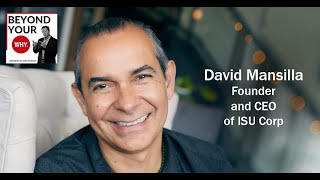
David Mansilla grew up in Guatemala during civil war, built ISU Corp into a successful company, then suffered a heart attack at 39 from burnout. He recovered through travel and faith, later discovered he had ADHD, and now plans to transition his business to employees or sell it for philanthropic purposes.
Questions this video answers
1972
19 years
31 years
2005
60 full-time senior engineers (with a scalable network up to 200–300 people)
Chapters
I have a fascinating interview for you today. His name is David Mancia. He owns ISU Corp, which is a high tech IT company, but we really don't talk much about it. We, we dive more into his life, which is fascinating. The very high highs and the very low lows and the cycle that he goes through through his throughout the last 20 years and what he learned on that journey of being at the top of the mountain and being at the bottom of the valley and where he is today. I think you're going to find it fascinating. You're going to take a lot of, there'll be a lot of great takeaways for you and things that you can use in your own life. So I'm excited for you to hear about David Mencia today.
Welcome to beyond you'd why Podcast, where we go beyond just talking about your why and actually help you discover and then live your why. You see, we believe that knowing your why, that driving force behind every decision you make and every action you take, is the essential first step to really knowing yourself. It allows you to move forward faster and have a bigger impact. If you're already a fan of the show, then you know that every week we talk about one of the nine whys and then we introduce you to somebody with that why. So so you can see how their why has played out in their life. This show will be more powerful for you if you've already discovered your why. If you still need to do that, head over to whyinstitute.com and discover your why today. It'll only take you about five minutes. Now let's meet today's guest.
So this week we're going to be talking about the why of contribute. To contribute to a greater cause, add value to have an impact in the lives of others. So if this is your why, then you want to be part of a greater cause, something that is bigger than yourself. You don't necessarily have to be the face of the cause, but you want to contribute in a meaningful way. You love to support others and you relish the success that contributes to the greater good of the team. You see group victories as personal victories. You are often behind the scenes looking for ways to make the world better. You make a reliable and committed teammate and you often act as the glue that holds everyone else together. You use your time, money, energy, resources and connections to add value to other people and organizations. And so today I've got a great guest for you. His name is David Mancia. He is the founder and CEO of ISU Corp, a custom Software solutions company with clients ranging from startups to multimillion dollar conglomerates like General Electric and Heinz. Located in Canada's Silicon Valley, ISU Corp. Increases entrepreneurs net profits with exceptional custom software solutions. They have been granted many awards such as the best innovative high tech enterprise Software company of the year from Global 100 and ACQ5's Game Changer of the Year. David is passionate about inspiring others. A priority in his life is sharing his experiences in hopes of encouraging a new generation of entrepreneurs to reach their full potential. David is the host of the Break free podcast where he invites a diverse set of guests to bring audiences valuable knowledge on living on their own terms, whether it's professionally or personally. David is also a number one international best selling author for his book Breaking out of Corporate Jail. David, welcome to the podcast.
Thank you for having me. It's a pleasure to be here.
This is going to be great. So you just heard David say a few words, but I bet you could tell already he has an accent. So David, where are you and where are you from?
I live in Toronto, Canada. I've been there for 31 years. I was born in Guatemala, which is the country.
In Central America, but south to Mexico. So if you position yourself in Central America north border to Mexico on the north.
Okay, so what was it like for you growing up in Guatemala? How long were you there and then when did you move out of Guatemala?
Yeah, so I was there for 19 years. Very tough childhood for sure. The country was in the middle of a 36 year old war. Basically in that country in smaller countries is where the Cold War was fought. So basically it was capitalism against communism. And thank God capitalism won in Guatemala. But it was a horrible, horrible war that the city wasn't as bad as the countryside, but.
It wasn't uncommon to see a house getting bombed with a tank, people getting shot on the streets by different groups, either by the guerrillas or by the army. That's how I grew up. Yep.
Wow. So how did that affect living in the us? I can't even imagine that.
Right.
So what was that? That was what? How old were you when all of that was going on?
So I was born in 1972. I think the war started in the mid-60s. And well, you know the missile crisis, when was the Cuban Missile crisis? Right. So that's when everything got really hot in Latin America right after that crisis.
So since I grew up, since I was a baby, right when I had consciousness that a war was happening is when my dad used to take me from the school that I Was seeing was a Catholic school that was attached to the cathedral, to the main church in the whole country. And it's besides the national palace because it's a Spanish country. So there is a National square, and then you have the palace on the side, you have the cathedral. And besides, you have one of the best Catholic schools in the country. So I was there and my dad had to go and pick me up at least three times where war broke out in the palace under bullets. We have to just escape. Right.
So by then I was 10, 11 years old.
Yeah, so that's a good question. How did having a war going on affect your schooling, your childhood, your ability to have sports? I mean, what's it like growing up in that time?
Tough. But, you know, you're a kid and your. Your parents, you know, tend to shield you from what's going on. So, honestly, if you ask me, I didn't think I had it that bad until I went back and realized that it was pretty bad. To give you an idea, my dad, my. My older brother died in the war. He was a volunteer firefighter. He saw something he shouldn't see. He told us about it. And a week later he disappeared. And he never. He never since today, he never showed up again. My dad looked for him for three, four years. My dad had good friends in the army, so they were flying with helicopters all over the country and we could never find him. So it was real.
Yeah. So did you have sporting events? It was school.
Yeah, it was normal. Like I said, most of the heavy fighting was in the mountains. Sometimes the guerrillas will have little cells that will bring chaos to the city. But that was the exception, usually was in the mountains. That's what the heavy fighting was.
Okay, so what were you like in high school? What was David like? Were you into sports? Were you into acting? Were you into computer? I mean, what. Like, what were you like?
So I. Since my brother disappeared, my dad encouraged me to join military school, to become an official in the army. So I actually went to military school for two years. I wanted to become a firefighter for the army, and I really didn't care about the army. I wanted to become a pilot.
An airplane pilot. So that was my desire. So my dad said he took advantage. He says it's better to be a trained official than getting killed like your brother got killed with no training. So I joined the army for two years, and that gave me amazing skills, incredible insight into discipline.
My teenage years were marked by my military training, and I thank God for that because I attribute most of My success in life thanks to that discipline.
It's funny, when you come to a country like this, a country like Guatemala, even in this modern age where there is rule of law and democracy, it's been here for over 30 years now, schools are more disciplined than North American schools. Like kids cannot wear long hair, they have to wear uniform.
And it's good. I see the difference.
If you don't teach kids discipline, they just getting them a tougher life. When they become adults, their life is ten times tougher because they don't know how to go through something that they don't want to do, but they have to do. Isn't life like that?
Right?
Totally agree with you. Yeah, that's a good point. You've gotten to see both sides. Okay, so you graduate from high school in Guatemala and then do you stay in Guatemala or did you leave after that?
So. Well, I was in military school.
Okay.
You know, back then to graduate you had to have a. You know, the typewriters before the computers. Yes, Right. So I had to pass this crazy typewriting examination and I could never pass it. I wasn't fast enough. And every time I did a mistake, I had to start the page all over again. So I was so frustrated. But by then my dad had already bought a computer. An Apple IIe. Believe it or not, it was an Apple that was text based without a mouse. People don't even know that they existed.
But my dad had one of those. My uncle was a senior VP of computer of the computer department for a large bank in the country. So when I was in a party, I was explaining how in a familiar gathering, I was explaining how frustrated I was with this typewriter. My uncle told me to come to his office during the week. So I went to his office and he showed me how he was using a text editor in a mainframe computer and how he could make mistakes and just push a button and print the letter. I'm like, this is incredible, I want this. And that was the beginning of me falling in love with computer science. So right after military school, my dad put me on the best computer science school in town, which turned out to be the best math and physics school in town. And that's how I got my first computer science degree. So as soon as I graduated from that in that school, I met my wife, we became sweethearts, we got married, got a kid, and we moved to Canada when I was. Yeah, when I was my early 20s. Wow.
And why Canada?
I wanted to continue my schooling. My brother had come to Canada already for his Degree in commerce and business. And it's funny because I mean the technology triangle, the Canadian technology triangle, and that's what the best computer science universities in the country are. So it happens also that our Harvard of business school, our version of Harvard of business school is also in this town. So my brother went to that university and I just landed there and I had three of the best universities in the whole country for computer science. So I did my second degree there.
Okay, so now you're done with your computer science degree, now what happens to you?
I thought I was going to start my own business right after college, right? So I'm like, I'm going to become a software consultant. I always fell in love with software automation since that, you know, since I started learning how to write software. Actually in Guatemala before I came, I was hired to build a payroll system. We're talking 1988, 1989, right. So me and my best friend from university, we wrote a payroll system that became, you know, they put it in production and they automated running payroll by hand for 300 employees. It took a week, we made it in four hours. That was the first thing that I did professionally as a computer scientist. Right after graduating in Canada, I thought I could actually do my own business. The Canadian government saw the Internet coming. This is 1995, 1994. The Canadian government saw the Internet coming as something new. They had a program for technologists that were graduating to give them a Canadian backed loan from one of the banks to promote people to start their own business. So I took advantage, I applied, they gave me a one year fast forward MBA paid for by the government. And then after graduating from that program I got the loan and yeah, I almost went bankrupt two years after that. I spent the whole loan and plus thousands of dollars in my credit card and basically my wife was sustained in the home. I had two kids back then. So I was like, okay, either I have to do something.
Nobody will trust me with computer software. So I turned into creating computers. So I started assembling computers, clones and we were doing pretty well until it started to go bad when I had to respect all the warranties. So I was making 5% profit. But then after a year people will come back and with one little change, the whole profit will go away. Even though I was selling thousands of computers, Little did I know though that my company had reputation because I had a lot of clients. So one time, one of my summer students or a co op students that was working for me in the summer, he fell in love with the business and his dad was a very wealthy man. So out of the blue, I wasn't even thinking of selling. I was thinking of just closing, right? He came, his dad came and he said, I want to buy your business. How much do you want for it? And I said, I gave him the exact amount that I owed. So I just said, I just want the government money and I want my credit cards paid off. I just gave him the whole number. And he brought his checkbook and he says, are you sure? And I'm like, yes, I'm sure. Are you sure? Yes. And he wrote me the check. Years later, after I became a businessman, I realized that I sold that business for a fifth of what it was worth just because of the reputation of the client base.
But it saved me, right? It saved me because I was clean, I was able to get a job. So I was. You know, it's funny because I started looking for a job in 1996. It wasn't easy for a computer scientist yet because the Internet was just starting up. So I remember having to send about 2, 300 resumes by snail mail. I got five job interviews in three months, and out of those five I got one job.
As a computer analyst.
So what did a computer analyst do in 1995 or 96?
I was writing software as a coder, right? So I was writing applications for the board of education. So I had in charge 2000 teachers for the entire school board and that was writing software automation for them to have classes better instructed. I was also supporting the staff, the school administrations. So we had a bunch of schools, I think over 200 schools or something like that. So I was writing software for them.
Okay, so you did that for how long?
I was there for two years. Funny enough though, my desire to become a software consultant came through three months after I got my first full time job. Throughout this whole thing, my older brother became my client. Actually, he was the only one that trusted me with. He had a chain of stores and I wrote a point of sale system for him. He's the only one that trusted me. But I left little signs on all his stores that I wrote this software that was running the invoicing. Three months in, I get a call from a guy in the town nearby. He was building this massive, massive warehouse with a storefront and he needed a custom made point of sale system. So I had to go back to my director, talk to HR to see if they could change the contract. And they allowed me to work on my business part time after work. So from 5pm forward I could do whatever I wanted with my own business because it wasn't competing with what I was doing during the day. So I landed that contract and it lasted for eight years. So I was consulting part time after work for eight years with this large store.
That's amazing how things play out. Okay, so eight years of that and then when did you start your own.
Yeah. So from that job, I started moving into larger corporations. The boss of my boss moved to.
The largest telecommunications company in the country. And I got a job as a leader already. And I grew in the corporate life really quickly while maintaining my little tiny consulting gig part time. Right. Until finally I was talking with my wife. The idea was we were both very cautious on trying out our business again because it was super hard. Those two years was horrible. Horrible in the sense of talk about not enough money, talk about being scared of not having to have enough money to pay the rent for the house the next month. Right. So we didn't never wanted to go through that again. So our plan was that my wife will come back to university, she will get a stable job with benefits, and that will allow me to risk it again. So that happened. The plan happened. She graduated from computer science. She said she was a developer too. She got a job as a database analyst for a large company. And with that, and my kids were older, a little bit older too. So with that, I decided full time on business 2005. Wow.
And what was that business?
ISU Corp. The same one that I have now.
Okay, so ISU Corp started in 2005. And who was your first client?
That was tough.
So I was blessed. I didn't have any clients lined up, but I decided to quit. I just, like, I didn't care because I knew I could do this now. I had the business acumen, I knew how to, you know, work the corporate ladder, how to play corporate politics. So at the beginning, I just started looking for a gig, and somebody trusted me with my experience. So they hired me as a single consultant to write embedded software for MFP. The MFPs are called these large photocopiers that they have a computer embedded. And you can program those computers to do multiple things. Right. So I wrote software for the Sharp machine. They had thousands of those machines in the corporate world connected through the Internet already. And so I was automating their software and their enterprise software. The contract was two months, and it actually lasted six months. And I started by myself. And in three months, I had two people working for me already in my own business because we grew the contract because I proved to Them that I could actually do it. Wow.
And then you just kept adding on.
Businesses to ISU Corp. Yeah, kept growing and growing. Scared to death about the money part. So I never spend a penny from the income that I was making. I was just building the bank account, by the way. I never, I didn't borrow a penny to open the second business because it went so bad with the loan. I said this is going to be bootstrapped. So the $500 that I actually got to do my own registration in the government back then, that's how much you paid. I didn't even hire a at the beginning. I just went and fill up the forms myself the simplest I could. That 500 bucks was from a consulting gig already. So I never raised money anymore. And the first year I never spent a penny. So the money was accumulated. It was beautiful because in six months I did a whole year salary as a senior vice president of a large company, as a consulting firm. But I was so scared. We were living on my wife's salary. But that actually helped me because I learned how to build cash flow in the business so that during the downturns you could live up the cash flow without having to go and get funding. Right. Or get a loan or anything like that. Wow.
And so what was do you think was the secret to being able to make it that this time bootstrapping it versus what you did the first time?
Experience. And again the support of my lovely wife because she did that first time. Now the second time she told me you have five years. If in five years you don't retirement, you have to go get a job.
And exactly five years I hire her back. So she came back as a director of HR with a much more less stressful job.
So what's ISU like today? Give us a picture of what it's like today. How many people do you have working with you? And I know you've, you're outsourcing to different parts of the world and you're all over the place. Now what's it like now we have.
60 full time senior engineers and then we expand our network up to 2, 300 people depending on the client because we do tend to work for larger clients. So usually we start, we call it the SWAT team. So we start with a small high end team that are full time employees and then if the company requires us to expand and grow, we have partners where we can grow. That's how we actually run the business.
But it hasn't been easy, Gary. It's been I almost been bankrupt Three, four times. Right. And this. And it's been most of the time when I get to the point of bankruptcies because I get greedy and I lose my why. I love your heart. Right. I lose my way once. Once your why is lost. Once you just focus on the money, once you just focus on your personal gain, that's the beginning of the end. So it took me a while for me to learn that lesson.
Yeah. So like give us an example of what you mean when you lose your why, when you lose your focus. Like when was the time that you lost your focus and how that played out for you.
Yeah. So moving.
The reason I said, because that could happen to all of us and any of us could be go through that exact same thing. So like, what happened and how did you get out of it?
It's greed. Right. I never been a greedy person until that time. But when you see your account getting larger and have more power through money, you want more. And then you start comparing yourself with other entrepreneurs that have more than you and you want to become like them. And then it becomes all about a money game. And you forget your employees, you forget your clients. All you want to do is increase a bank account and get as much money as you can so you could feel better than other people. And for me, it happened from 2009 to 2011. At 2009 I was about eight people, seven people. And from 2009 to 2011 we grew to 110 and 120 people. It was fast growth. So we became an eight figure company really fast through another friend of mine that became my partner.
But I was working 16 hours a day, forgot my family. I was traveling almost every week overseas every two, three weeks.
And was all money oriented. Right. I remember going to the bank back then you still had checks. So we were depositing, you know, half a million checks every, every two, every two weeks, every week. And a half a million dollar checks. And it was like boom, boom, boom. And the more money I gathered, the better I felt, better than anybody else. So I, you know, grill gives you ego and gives you false confidence. And I was overworking myself. I was using alcohol to cope with the stress. And then one day my heart told my brain, I don't want to play this game anymore. You are crazy. And I had a heart attack. That's how I woke up out of that. And I thank God for that because if that wouldn't have happened, God knows what person I would have been. Now probably my net worth would have been five times. As it is Now. But I will be a lonely, miserable rich person. Wow. Right? And you know who was my best psychologist? My doctor. When she saw me, I was. I was 39 years old. 39, 40 years old back then. When she saw me, she's like, david, your hair is falling off. I had, like, patches of hair, like, holding her on my. Like all over my head. I had bruises in my tongue from distress. And she said, you are killing yourself. What is it worth the money if you're not going to have the health to enjoy it or your family to enjoy it? So she said, I can give you these pills, these opioids, and they will allow you to cope with the stress so you can keep the same lifestyle. By my advice is to change your lifestyle. You could get addicted within three months if you. If you have these pills. So that was like a cold shower, right? I feel like God just gave me a cold shower saying, dude, what you're doing with your life, you're killing yourself. So the week. The next week, I apologized to my wife. I apologized to my kids. I haven't seen them for two years. I took a plane to Atlanta, where my partner was, and I told him I went out and I left 95% of the business to him. I left everything. I told him, I need out. You take everything. I was left with five employees again.
And 95 of my income was gone like this. So I told my. I remember Felix is my VP of operations and one of my best friends. He's my best friend, actually. I told him, felix, I need to take a break. I need to reconcile with my wife and I'll leave you the business. I know that we don't have enough income to sustain even the five people that we are. We cannot even pay the rent. But we're smart people. We can all get jobs if we go under. And I told my wife, get me out of Canada to a place as far as way as you can find, and make sure the kids come with us. And so she took these kids out of school and we went to Thailand for a month. It was the first time.
I didn't have any plans to come back until I got healed. The doctor also told me to follow a sport that allowed me to breathe because I was having panic attacks all the time.
The one panic attack is the one that gave me the heart attack. I was talking in the highway for three hours. I saw helicopters bringing people from three accidents on the ice storm. That's where I realized I was killing myself for nothing. Boom. Panic attack became heart attack. So I I decided to learn how to scuba dive. So, you know, after you're working 16 hours a day, so intensive you cannot just stay watching, watching the palm trees all day. So I went there, I got the blessing from my wife and I got into a squad diving course. Thank God it was, it was May, so it was very low season in Thailand. So my dive instructor only had me as a student. So he gave me like three courses in one. I was diving five times a day. I was leaving at 7am, back at 6pm every day for two weeks. It was beautiful because I learned how to breathe. I learned how to control my panic attacks just by breath work. I took the pills for a week and I never took them again.
I, you know, I didn't, you know, I. It was beautiful. And I never checked my email during that month. When I felt a little bit better, when I felt like, okay, I think my life is. I was more integrated with my kids, with my wife. Then I said, it's time to go back home. So I turned on my computer. I had thousands of emails, but all I did was sort emails by name. And I noticed that one of my old friends was emailing me 150 times. I finally phoned him from. I was in Bali, Indonesia, because we were moving. And he said, what's up? He says, david, I got this VP of IT from this company and they are going ordinary. We have lost millions of dollars in the software project and I know you can help me. To make the long story short, I talked to the CEO the next day and I, you know, I signed a million dollar contract with this lady two days later. So when I landed in Canada, we had a business again. Just like that?
Yeah.
And how were you able then to not overwork or not get back into the same rat race or did you get back into the same race?
I actually didn't. My learning didn't finish. Then I actually, you're right, me selling that million dollar contract, even though it was nothing to do with me, it was just God giving me another opportunity. It validated that my business partner was at fault, that my client was at fault and my employees were at fault. Everybody was at fault. I was the good guy.
The contract lasted about a year and a half. I was able to gather other contracts, but I kept working the same hours. After six months, I started abusing alcohol again. I never became an alcoholic, thank God, because I don't have an addictive personality. But I was drinking a bottle of wine a day. One glass of wine after dinner became a bottle.
Then.
I Didn't have the problems with my heart anymore because it wasn't as bad as before. But by December 2012, I looked at myself in the mirror and I was 40 pounds overweight. I was losing my hair again. Not normal hair loss from H. Like I had holes, right? Again, I had holes in my, my skull. And then it was a self wake, wake up. It's like, dude, like again, what are you doing? So remember December 27th, I decided to quit drinking and to quit what I was doing. I quit my own job. So I told, I called Felix again. Dude, you're not going to see me for one year. I need to fix myself again. This time I know I don't know what to do, but I know I can discipline myself. So I joined a gym membership and January 6, the first day of the gym, I stay, I stayed there for I. I joined a three month transformation program with Chris, getting a famous trainer, online trainer. And then I went from £200 to 159. Again, the discipline, right? I discipline myself to do the exercise. It was supposed to be one hour a day. I was doing four hours a day at the gym, all in, right? I ate, eating super clean, seven meals a day. I couldn't transform my body. But most importantly I was transforming my soul. My mind and my emotions were getting transformed. I started to listen to spiritual leaders online, also to business leaders. Instead of working 16 hours a day, I was working like 10 hours a week. I was still working. And then also I joined that leadership course. I realized that I wasn't a good leader. So, you know, funny because I couldn't. So the business was 110, went back to five or six people. Then I grew it to 20 people with a big contract and then back to five people again, right? But then I realized that I was attracting the people, that I was, you know, a greedy, self pity person. So I changed myself, got the leadership course, changed my life. It was incredible. 2013 was a year of change, is the only year that I lost money in the business, by the way, after 18 years. And it was okay. I needed to lose that money to actually, you know, recover. 2014 came, I changed the business for a lifestyle business. I divorced myself from greed. I wanted just to focus on culture. That's what changed everything. I focus on, focus on my people. How to, how do I add value to my employees so that they add value to my clients? I learned, I read every book I could on culture and I was, you know, and I dedicated myself to my family. I also read the four hour Work week book. So I never went back to working 16 hours a day. I was working maybe 20 hours a week, 25 hours a week. That happened from 2014 to 2017. The trip, I repeated that trip five years in a row. I will take my kids out of school in January and we'll come back in April, May, after the winter was over.
It was beautiful. I didn't made a lot of money. All I wanted Is to grow 5% per year the business. Because I knew if you don't grow, you shrink. But I was growing 15% per year, 20% per year. I stopped selling, I stopped marketing. It was just word of mouth. And the company kept growing and I was having this beautiful lifestyle business. But there was a problem. After five years in 2017, I got bored. My kids grew out of the house, I went to university. And then we talked with my wife again and I told her, listen, either we retire fully or we grow the business. She told me that. And I said, I don't know how to grow the business. Last time I tried, I almost died, literally. So that's when I joined BizTouch. That was the first business group that I joined and I had a business coach. And now it was more systematic, right? So started growing and growing again. Just to fall into the same trap in 2021, isn't it crazy in this case, 2021, I think it was the pandemic too. But the business has been very stable. Growing systematically.
I never lost the part of the culture and adding value to my clients, that's been great. But what I lost is focusing on everybody else. I started to focus on myself again. I started feeling myself better than everybody else, especially when my net worth grew after 8, I'm like, oh, I'm this multimillionaire and you know, very few people get to this number. And I started getting egocentric again, right? I kept my culture beautiful and my clients delighted. But I became my own God, right? And the ones who suffer was my wife and my kids the most. So 2022, last year, it wasn't a financial ruined year. Actually made a lot of money, but it was spiritually. I was spiritually ruined to the point that I almost lose what I love the most, which is my family.
So. But I woke up again.
What a roller coaster ride. You know, we all go on it. Well, all of us, all of us have the ups and downs, but you've had some real big highs and some real big lows. And how's your wife handling the. She probably almost doesn't want you to have success.
No, it's. She realized it's not the. Well, the money was that. That made me proud again. But it was. We had a. So we're believers. We believe in Jesus Christ as our Lord and Savior. And I move away from my faith for all those years from 2020 to 2022. Really. When I got, you know, when I got out of all the horrible things that I was doing to give an idea, I joined a new age culture and, you know, just start with. We start. You start with loving everybody with multiple gods down to doing witchcraft and, you know, using pendulums to detect your future and stupid, stupid superstitions like the horoscope, for example. After being a computer scientist with two degrees and having done all this, I fell into that stupidity.
So again, my wife, she should have let me go like 10 times over, but she's so lovely. What she did is she started praying for me, and her mom started praying for me, and my kids started praying for me and, you know, her whole network, like, I had at least 100 people praying for me. And then I woke up one day and realized that what I was doing was wrong. I asked for forgiveness. We actually split for two months last year when I really thought it was over. But I came back to my faith. I came back to God. I repented again, you know, and 2023 has been beautiful. It's been the year of healing and recovery. You know, it's funny because we decided to read the Bible again, which is one of the things that I stopped doing for 25 years. And God gave us Psalm 23, and it's 2023 and January 1st. We opened the Bible and we got Psalm 23. And we read it and it's like, this is awesome. And, you know, I have it in my heart, you know. And, you know, it's a very famous song because it talks about, you know, the Lord is my shepherd, right?
He makes me lay down in green pastures, you know, he takes me to calm waters. He's straightening my ways. Even though I walk in through the shallows of the valley of death, I will fear no evil because you are with me. It's beautiful. And it's been our theme the whole year. And now we're in this beautiful path where all we want to do is give back, give example of what happened to us. I'm so blessed that the business keeps running thanks to the networks that I belong to, like Strategic Coach and Dan Sullivan. In the last three years, I automated the business to the point that it's a Self managing company now, which allows me to run other businesses. I've been blessed to have multiple businesses that I can run, but I don't do it for the money anymore.
My wife makes sure I keep humble, so no more pride. But one thing happened. The miracle that I, like Gary, the miracle in all this is realizing that I had adhd. I had ADHD since I was a kid. And in November I got diagnosed by three different doctors. And when that happened, then everything made sense. My extreme behavior, my compulsive behavior of excessive business traveling, my success too. I mean, it's a superpower if you use it the right way. But if you don't know that you have it, you can also use that to become proud and arrogant and to destroy your family. Which is what I was doing at the end. Right.
How did knowing you had ADHD help you?
Actually, that's what God used to wake me up when I saw I was so blessed. I had one of the best psychoanalysts in the country. He was miracles like Gary. Like this. Listen to this. This guy was. He has been practicing psychoanalysis for 40 years. Dr. In psychology with clinical psychology, with specialization in analytical psychology, brain functions and neurotransmitters. He took me in, I was his last patient. He's the one that told me, dude, you are heavy on adhd. And he had adhd. That's why he became a psychologist. So he gave me all the strategies to live life in a beautiful way. He's the one that told me how to get bring my wife back when I was away two months. He's the one that told me, dude, like, do you know about the three horsemen of the apocalypse of the marriage? I'm like, no, what's that? Well, you blame, you defend, and you hide. If you keep doing those three things, you will never get your wife back. So stop. Stop that. So the minute that I stopped that my wife was able to talk to me and I was able to understand. He gave me strategies to deal with the condition that I have. And then he passed away. I started seeing him in September. My breakthrough was in November. He passed away in January. Isn't that crazy?
Wow.
And now I'm here.
Yeah.
So what's, what's next for you now? What's gonna you got back with your wife and then you guys continued with ISU and you're just continuing to build it or are you trying to keep it? What's next on your agenda?
So we have a five year plan to sell it or give it to our employees. We Created this plan where we, we gave shares to everybody. So everybody has been in the company for over two years and deserve it. They got shares. So the idea is either we retire our people or we give them the company and they keep growing it. Five year plan. We want to grow our EBITDA in a way that we can hit $100 million. Not about the money again, not about the money anymore at all. Actually, probably most of those profits will go back to help others in need.
So. And I'm not that involved anymore. So I spend my time doing the break free podcast writing. So I'm on my third book right now and I opened a brand new podcast in February called Leaders in Technology. And what I'm doing is I'm acknowledging the leaders that are helping companies grow by multiples and making this world a better place. But nobody's talking about them. Nobody's talking about the cto, the cio, the VP of technology and how they are actually impacting businesses. So I'm going to be talking with VPs like senior VPs of Nokia, Nvidia, Disney. I have senior VPs of big, big hospitals like Bishop Hospital in Orlando. It's fun. It's fun. So my whole life right now is give back and share my story. So people, if I can save somebody a couple of years of deep pain.
It makes my life worth it. That's my why now give back and raise the flag of ADHD and how to actually manage it for your own good.
What's interesting, David, is that for those that are listening, that know more about the yos, your why is contribute to a greater cause, right? How you do that is by finding the right way to get results. And ultimately what you bring is a trusting relationship. So I'm curious for how did that work for you when you weren't being, you know, quote unquote trustworthy to your people, to your family, to your kids, how did that work in your, how did that play out for you in your own head?
So when I decided to actually make it worth it for everybody else, is that what you mean?
No, what I mean is when you're on your game and you're helping people by finding the right way to get results and being that trusted source, being that one that they can count on, you're on your game, man. Things are great for you. But then when you, you know, kind of went down ADHD route and you started doing things that didn't allow them to trust you, didn't allow them to look up to you, how did that play out? For you.
Horrible. And this because I changed my why for the wrong way, right? So when you focus on yourself, when the why is you and your own gain, this is the common denominator, right? If you look at the pattern in my life, when everything became about me, everything started to fall off. And it's funny, because it doesn't matter how much success you gain in life, if you're doing it for yourself, you will never be completely fulfilled. You always stay empty. I remember reaching the next million dollars and thinking, now I'm going to be happy. And then it just became another number. In a computer, you don't even see the money. You have it invested. Maybe like we have a real estate portfolio and it's beautiful and it gives you a beautiful passive income. But at the end of the day, if you're doing it for yourself and your own comfort and you don't think of others, you never get fulfilled. When I was doing it for my people, when I wanted to get my people in a better position in the world, if I wanted, when I focused on them having the right feelings and producing the right emotions and the right attitudes, or when I saw the benefits that I was giving my clients with the software I was building for them, when I actually only thought about them and how I can benefit them, how I can grow their own profits, it's beautiful. Then you get fulfilled. And you know the funny part, Gary, is that when you do that, you get more. It's inevitable. You know, like the law of gravity. There is another law that says what you give is what you receive. And it doesn't matter what you give, you will always get it back, like a boomerang. And you get it back increased. So when you give greed, you receive greed. Increased in greed, you receive horrible people. You receive stress. When you give unconditionally, when you really mean that you want your client to prosper with what you're doing for them, then you prosper with them. When you really mean that your clients, that your own employees are actually growing in their careers and they have more time for their families and have a better lifestyle because of you, you get a better lifestyle. It's incredible, but that's how it works. And then you get fulfillment, which for me, there is no worst failure than being filthy rich and being empty in your heart because there is no money in the world or no success or not fame in the world, that can feel that, that can only be filled by God, and he does it by you serving others unconditionally, by you thinking of others, by you making this world a better place. If you. If you read the Bible, what God, you know, what Jesus said is, take care of the poor, take care of the homeless, take care of the widows, of the orphans, of the drug addicts, take care of them unconditionally. Start doing that. See how your life changes around. It's beautiful.
Wow, that's awesome. Well, you've lit. You've hit both sides of it, right? You've been on the top and you've been at the bottom, so you get to see both, and that's a big part of your story. And, you know, I had no idea today when we were going to have you on the podcast, this is the direction we were going to go. I thought we were going to be talking about software. So I'm glad we got to learn more and go deeper with you because it's super valuable. Way more valuable than anything you could have taught us about software. So thank you so much for sharing your story.
My pleasure. Like I said, I live for this now if. Whenever I can add value. If there is one person that listens to this podcast and they avoid making the wrong choice in their life and they get, you know, they get joy and peace. That's what we're looking for. We're looking for sustainable joy and peace, not necessarily avoiding suffering. I think suffering and pain are unavoidable because you live in a world that, you know, anybody can just, you know, crash in front of your car for a mistake that you didn't expect, and then you're going to be in the hospital, probably. But what I have learned is that you can actually keep your joy and your peace, regardless of what's going on in your life. And that's what I'm experiencing now, finally. You know, like, the last year was horrible. Like, I woke up from this terrible. This terrible cold that I. That I was in. I woke up in July. That's when my eyes got open. When I did research, I didn't even know what new age was. And unfortunately, I did a lot of psychedelics and stuff like that that, you know, that's what they do on those in. During those rituals. I developed acute pancreatitis. I developed anemia because I never ingested drugs before in my life. It was all psychedelics. And they are so popular now, right? Ayahuasca mushrooms, lsd, all that stuff. You start doing that without prescription, without a doctor, a clinical doctor prescribing you that stuff, you start doing it for. For spiritual reasons. You, brother, I got lost.
Right? But now I'M here is, you know, like the story of the prodigal son, you know?
Yeah. So if there's people, David, that are listening and they want to follow you, they want to hear more from you, they want to see what you're up to, they want to learn more about ISU Corp. What's the best way for somebody to get in touch with you?
Yeah, you can go to davidmanzilla.com now. My podcasts are there. They can read my story. They can buy my book, my life story. That is until 20, is there until 2014. So this new stuff is another book.
But they can also go to isucorp CA if they want. Our services, we're growing exponentially. We're hiring people right now, especially now that I have everything in place. So if you really want to run a software project where you're going to be considered top your need first, not our need, come to us. Believe that our, our last project is our best project and is the only project that matters. So that my last client brings me five new clients because they get delighted with us, and they're going to get my employees, which are delighted with us because they have a beautiful lifestyle, too. So everybody wins. I love that.
So, David, what's the best piece of advice? Last question. What's the best piece of advice you've ever been given or the best pie of advice you've ever given?
Life is not about you. And it seems like. It seems the opposite, but it's not. When you make life about you, you lose your life. But when you give your life away, you gain it. It's contradictory, isn't it? But if you think about it, if you really don't make your life about you, life happens, and it happens beautifully. It's not about us, man.
You know, I had a. I had a gentleman on the podcast a couple years back who was a gastroenterologist. He was a doctor. And he. His life was so much about his two daughters that he had has. And when they grew up and left, he kind of felt lost. And he said something similar to what you were talking about. He said he meditated for like three days. He was just really lost. And it occurred to him, he has your same why? And it occurred to him during that time, he said, the joy is in the giving.
Yeah.
That's where you get your joy. It's not in all the stuff I have. It's in the giving that you receive. That you receive joy.
Yeah. And you know, what money gives you is comfort. And comfort is nice. Don't get me wrong, going on a private plane, sure bits first class. I'm sure bits coach. But that doesn't makes you happier or fulfills you. It gives you little moments of comfort. But if you're willing to live without that comfort and you're willing to actually focus on helping somebody else, you know, the level of hardship that you can sustain grows so much that nothing touches you. I feel almost like I have a shield right now where, you know, the enemy can throw any darts that he wants and it's just gonna melt away. Because the level of suffering that I was able to sustain and that God got me out of is being so deep. When you go to hell and you get rescued from hell, nothing scares you anymore. I'm not afraid anymore. I don't have anxiety anymore. All those demons, I call them demons, all those psychological problems. A demon is a thought that torments you because it gives you bad emotions and you cannot do anything to stop it. That's why people get addicted. Right? White people get addicted. They are not getting addicted because they're about people. They are just in so much pain from their suffering, from these tormenting thoughts that they take something that numbs their brain and their body to get some kind of relief. Right?
Yeah. Well, David, thank you so much for being here and sharing your story. Totally fascinating fast. And I'm fascinated with it. And I appreciate you being here and spending time with us, so I'm sure.
Thank you so much. Anytime.
And it's time for our new segment, guess Their why. And so today I want to talk about Oprah Winfrey. All of you know Oprah Winfrey, very famous. She's, you know, had the network, the TV show, she's written lots of books. She's given away lots of different things. But what do you think Oprah's why is? I often use her in different presentations that I have because in, you know, if you go back in her life, she had somebody very close to her break her trust. And when that happens, their why, I mean, we see this very often with people with the why of trust that that has happened. So I believe that Oprah Winfrey's why is to create relationships based upon trust, to be that trusted source, to be the one that others can count on. If you can count on her and she can count on you, the sky is the limit. But if you break her trust, I'm sure that's, you're not going to recover from that one. So I believe Oprah's why is to be the trusted source. The why of trust. What do you think? If you you know, if you can write it below in whatever platform you're listening to. But if you thank you so much for listening. If you've not yet discovered your why, you can do so@why institute.com with the code PODCAST50. You can discover your why or yos at half price. If you love the beyond your why podcast, please don't forget to subscribe below and leave us a review and rating on whatever platform you are using to listen to our podcast. Thank you so much and I will see you next week.
I really hope you enjoyed today's episode and that through today's guest you heard how important it is is to know your why and how impactful it can be in your life and the lives.
Of those around you.
Be sure to head over to why institute.com and discover your why today. Remember, the more you know about yourself, the more you'll know about others.
I'm Dr. Gary Sanchez and I'll see.
You on the next episode.
More from Dr.




Women In Leadership: A Need For A Greater Systemic Change With Belinda Clemmensen






