Title: Challenge Accepted: Breaking Boundaries in Coaching and Leadership with Brandon Mergard
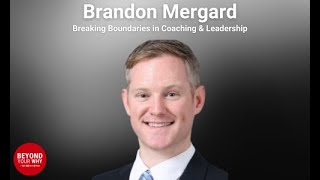
Brandon Mergard, CEO of Marshall Goldsmith Stakeholder Centered Coaching, talks about his journey from touring musician to business leader and why he's focused on scaling coaching impact through community-building and research. He joined the organization in 2014 and became CEO in late 2020.
Questions this video answers
May 26, 2014.
Late 2020.
Pacific Northwest — north of the Columbia River in the Portland metropolitan area (Washington/Oregon).
mgscc.net.
1987.
Chapters
In today's episode, we're going to be talking about the why of challenge. And I have a very interesting guest for you. His name is Brandon James Murgard and he is the CEO of Marshall Goldsmith Stakeholder Centered Coaching. And if you look at him online and you see some of his videos, you're not going to be able to guess that his why is challenged to challenge the status quo. But when you get to hear this interview, you, you're going to be sure that his why is challenge. I look forward to sharing him with you today.
Welcome to beyond your why podcast, where we go beyond just talking about your why and actually help you discover and then live your why. You see, we believe that knowing your why, that driving force behind every decision you make and every action you take, is the essential first step to really knowing yourself. It allows you to move forward faster and have a bigger impact. If you're already a fan of the show, then you know that every week we talk about one of the nine whys, and then we introduce you to somebody with that why so you can see how their why has played out in their life. This show will be more powerful for you if you've already discovered your why. If you still need to do that, head over to why institute.com and discover your why today. It'll only take you about five minutes. Now let's meet today's guest.
This week we're going to be talking about the why of challenge to challenge the status quo and think differently. So if this is your why, then you don't believe in following the rules or drawing inside the lines. You want things to be fun and exciting and different. You rebel against the classic way of doing things. You typically have eccentric friends and eclectic tastes because after all, why would you want to be normal? You love to be different, think different, and you aren't afraid to challenge virtually anyone or anything that is too conventional or typical for your tastes. Pushing the envelope comes naturally to you. So I have a fascinating guest for you today. His name is Brandon James Murgard. He is an internationally acclaimed business executive and leadership coach currently serving as the CEO of Marshall Goldsmith's Stakeholder Centered Coaching. Myrgaard has spent the past decade holding bold taking bold steps to drive business performance. Since its founding in 1987, stakeholder centered coaching has focused primarily on the US market. In the early 2010s, Murgaard was brought in to establish a sustainable international business arm. In 18 months, within five years, he tripled their profit margins and earned the company multiple international awards for training excellence and thought leadership. He subsequently installed new teams in five continents to accommodate and expand to accommodate the expanding customer base in 110plus countries. Beyond driving business performance, Myrgaard's unique contribution to the 5,000 person team is to establish an active community for coaches to connect, collaborate and co create. He does this through routine member gatherings to offer a shared vision of the future and plan community initiatives which are executed under the appointed local leadership. Brandon James Murgard was recently recognized in the top 200 power list of the biggest voices in Leadership by Leadership Leaders Leaders Hum 2022 and is a published author with Worldwide Coaching Magazine. Brandon, welcome to the podcast.
Thank you for having me on here Gary. It's quite the honor.
Well that was a mouthful and we're going to dive into that. Okay.
Yeah.
So let's start now. Where are you right now? Where do you live currently?
I am currently living in the Pacific Northwest. I'm just north of the Columbia river between Washington and Oregon, so it's the Portland metropolitan area.
Portland, okay. And now where did. Is that where you grew up?
No, I'm actually a bit of a desert rat. I was born in Phoenix in Mesa, Arizona, if any of you know where that is. Desert Samaritan Hospital. I spent maybe about seven years there in Phoenix, just blistering away in the heat before we moved to Austin, Texas when I must have been maybe 7 or 8. And it wasn't actually Austin. I've always been in metropolitan areas but never in the metropolitan hub. So this was a small town called Pflugerville, Texas. Shout out to any of you if you know Pflugerville. I think the population was 700 when we moved there and was topping 50,000 or so when we moved. When I moved out, spent some time there. We my family stayed there. I went off to college and did college in California, in New York, Massachusetts, around Asia and in the UK.
And have lived, you know, I've lived in a lot of places. I've lived in vans as I spent many years as a touring musician. I'm sure we'll get into spent a decade living in in Asia running our APAC and EMEA offices and you know, we wanted to live in a place that's just incredibly green and lush and outdoorsy and dog friendly and a great education system. So that landed us right here in Washington State and we couldn't be happier.
Awesome. Man, that's a lot of places to live and non. Non typical. Non traditional. Right?
Typical. That's typical for me to be non typical.
Yes so let's go back to what were you like growing up? What were you like in high school?
Perhaps I should have my parents or siblings on to answer that question. But I think atypical describes it just as well.
You know, if you wanted a physical snapshot, Gary, and I hope this doesn't scare anybody, but think about, think about black on black on black with, you know, loads of ball bearing necklaces and black fingernails is very odd. But I've always been very positive and optimistic and happy. And so there was this very strange looking individual with an equally strange personality at two opposite sides of the spectrum. But that's what I was. I was always doing mischievous things. I was always.
Pushing the envelope. But I also had incredible relationships with my teachers. They, they loved having me in their class. I was a great contributor as well as disruptor. And the notes that would typically get sent on my report cards would be things like.
Brandon will fool around in class and distract everybody and in the last few minutes finish all of his work and get an A. But everyone else has homework now because they were playing with him. Or you know, Brandon doesn't do his homework or he does it and forgets to bring it, but he has proficiency in all of the testing. And so I was always able to excel wherever I applied myself. But boy, I was applying myself in being the class clown and in being a distractor. Yeah, I mean authority and I rules and I have never really gotten along. That come as a surprise to you at all given my yos?
Not at all. So let's, for those of you listening, Brandon's why is challenge? Like we talked about, his how, how he does that is by making sense of the complex and challenging. And ultimately what he brings is mastery, depth, breadth and detail. So that tells us, you just told us exactly that you can think outside the box. You can imagine. Extraordinary. You can cause plenty of trouble. But how you do that is by making sense of it, figuring things out very quickly. And ultimately what you bring is a deep understanding so you could get through those tests so quickly. So fits right in. This is really good for me to hear personally because for those of you that can't see Brandon, he is dressed like me in a black T shirt, but very clean cut.
In fact, most of our interactions, in fact, our early interactions, you were pretty stoic and not what you just described in any way. So when I, when I saw that your why came up as challenge, immediately I was like, what I'm seeing is not what I should be seeing. But now that I hear this I'm feeling a whole lot better.
Yes, I, I saw myself. I mean, you know, Gary, I shared this with you when I read the report. My, my gut reaction is, you know, these things are all phrased so positive, like challenge. I believe success happens when we think outside the box. Well, everyone kind of thinks that to some degree. Right. So I thought, you know. No, yeah, exactly. My, my wife would be shaking her head so hard it might break her neck. Who is the epitome of rule follower. She's the absolute perfect antithesis in every positive way you can imagine. But I read it and I thought, you know, any sufficiently motivated person could read into this and see, oh boy, I'm a really great individual and unique and look at all these things. So I was skeptical, but as I've kind of, you know, peeled back the onion on myself and what is in the report and what, you know, data, you can cross reference this. I'm just more and more.
Influenced to really look at this and say, this is, this is a strong sense, this creates a strong sense of identity to me, because it's not, hey, you're just, you've always been kind of weird and the oddball. It actually says, you know, you've, you've always wanted to press the envelope intentionally because you think that there's success on the other side where other people don't want to go. So, no, this has been hugely, hugely impactful for me to see that and to, you know, realize that this is descriptive of my life.
Yeah, I wish my wife was here right now because I might have mentioned this to you, that I'm married to somebody with the YF challenge. So I'm very familiar with what it's like to be married to you. Your wife and I would have some great conversations.
It's a tough world.
Yeah, but, but the thing that my wife said about it was it gave her peace of mind in that, you know what? I am okay. And in fact, I've got something really great to offer and it really helped solidify that for her. And I don't know if you experienced any of that as well.
I do. I would, you know, because I know you value vulnerability. I'd say there's a, there's a, a sense of forgiveness that can come with, with this to look at it and say, I, I have permission for my oddities, not just because they happen to have worked out you.
But to say, this is a strength if you balance it with people like great spouses who can make us better, more well rounded individuals. So I'd say there is some forgiveness that comes along with it to let go of not being what people would consider normal and celebrating your differences.
Yeah, that's awesome. Okay, so let's go back. You in high school, you graduated, Were you. What kind of things were you into in high school?
Oh, one thing, and that was guitar, nothing else. College wasn't on my radar. Girls weren't on my radar, or I should say relationships. Friends weren't really on my radar. Every friend I had and have always had, have had some, I'll say, project associated with it because I love to collaborate, but, you know, I'm also extremely rigidly pragmatic. And so that didn't. Those things didn't quite resonate with me. My summers were spent. You know, I would practice 13 or so hours a day, and I was, you know, this plays into mastery. Whenever I have found something I'm into, boy, like, it's going to be all I think about, all I dream about, all I talk about, my full identity. And so I was, you know, through high school, I was making records. I was playing on the road, on the weekends. Summers, I just sit and play. I keep guitars next to my bed so before I'd open my eyes in the morning, I could just start getting in all of my movements. I would practice in cold weather so that when you were actually warmed up, you just had better performance. Sort of like swimmers, I guess, not shaving during training. Yeah. So I, you know, the more I look at the, the, the results here, I see myself. So that was what I was into. I was into guitar, I was into writing, I was into performing. But another strange thing here, Gary, is I wasn't into being an artist at all. You know, I had no business sense, but I still thought, you know, the guys that sell their, their music is a very narrow band of people to sell to. They have to not only like your genre, they have to like your composition, they have to like your. Your voice and your playing style and your band and your production. There's so many variables. And even early on I thought, what if I was just a session player? What if I got paid to play other people's music? Like, shorter payment cycles, higher earning per hour, more predictability. And so I just, I think we probably made 30 or 40 albums through. Through high school, played with some real class acts, got to do some recording for Slash from Guns N Roses at a big show in Las Vegas, invited to just massive events because of the people I knew. Because, you know, people my age aren't pursuing music the way I was, that was mostly people, 40s, 50s, 60s, who are established typically have the cash backing to be able to go and do these things. So I ran with mostly people in their 50s, you know, it was always a project based. We'd play at fundraising events, we'd play at, you know, all kinds of different venues and every different style. The last year that I was playing music, we did one of my favorites, just a speed metal album. I was playing drums on that one. Just, you know, machine Gun sounds all the way. We did some angry chick rock that I did production and guitar for. We did some kind of more mushy singer, songwriter type romantic songs that I did production, guitar and vocals for. And I just loved to play music. And so I spent my time through high school in a recording studio or at school and that was, that was about it.
Wow, that. I would have never guessed that one either. Okay, so after music then what hap. What was your first business or did you go into business next? What happened after? And what was the thing that maybe had you change courses away from music?
Yeah, well, a lot of good questions and there I, I'll try and hit them as we can, but that those questions probably summarize most of the story. So I'll.
I'll back up into high school starting. Where business kind of came about was, you know, if you were a musician, the, the, the pinnacle at that time of, of capability and competence was to become a music teacher. And so I went on to teach music. In addition to touring and recording.
I taught music. And it's funny enough, the studio at which I was teaching back in high school, I think is now owned by one of, by Marshall Goldsmith's son. I think it ended up growing and he ended up purchasing this really bizarre connection. This was back in Texas and his son is in Austin. And so yeah, that was kind of where, where I got started, you know, actually doing paying jobs that weren't performance based, but we also had a recording studio. So I was finding bands as bringing them in, helping them with their production, helping them with distribution. And I'm using terms I never would have used. It was like, hey man, you guys play music, Come on over here, we'll make you guys famous. And didn't go anywhere.
But that was a lot of fun. It was a blast to see kind of the backside of music and how it's made. And so I went, ended up going to college to do guitar performance. That was my, my first degree and I had a blast doing it. While I was there. We did all kinds of touring internationally. We. We did. You know, I was playing with private groups doing Canada, Mexico, in the US I was playing with other groups that went out and across Asia, which was my first time stepping foot over there. And that was it. I was going to make my life doing that. I was. My income by the end of college was probably somewhere around 9k a month as a musician, a session musician. Again, very different from being an artist. I didn't have a product to sell. I just had a skill.
And I. After having gone to Asia to tour, I fell in love with kimchi. Funny enough, that was the, the hooks that got me sunk. I came back, my school had a program with a college in, in Seoul, went back on scholarship to study language, culture and cooking.
While I was there, fell in love with kimchi again, fell in love with the people, made some great friends and kind of set up some actual work for myself afterwards with a goal that I wanted to go back and work in media. This was at a time there, foreigners didn't exist in media.
You know, I thought this is a great, great place. You know, I'm about 190 centimeters and about 98 kilos. So I think that's 62 and some change. And north of 220, I stand out. I'm a beacon anywhere I walk there. And so I thought this would, this would play well over there. So while I'm finishing school, getting ready to go over to Korea, I fall in love with exercise. Went through a very ugly breakup, fell in love with exercise in the backside of that and health became such a strong pillar of my life as I was over there being very fit. You know, there's not many foreigners in the gym and there's not that many fit people in the gym. It was largely very. It was largely people, let's say 65 and older in the gyms there, which is very encouraging. But so I made some connections there. I eventually went on to do some fitness modeling there. If you, if you bought a 2013, I believe it was the 2013 Samsung Smart TV series. I was teaching their fitness channel.
It's just I've kind of fallen backwards into these things. And when I take a couple steps back when I came back from my second trip to Asia where I went to study, the day I came back, a group of students from that school who I had not met but were at my school now studying business.
Met. One of them said, hey, let's go back to my place. Let's go have a. Let's all go hang out. Let's Talk about, you know, our, our threats, you know, this is your guys first day here. It's my first day back. And we all went to the same school. She said, can I bring a friend? Absolutely. Go grab her. I'm gonna go get my car. I pulled my car around, have a guitar in the back. And I see this group of people who are waiting to go. Well, one of them happened to be very attractive. And I thought, you know, we just came off tour. I know some songs in Korean. I'm gonna grab my guitar, woo some people. Let's just see where it goes. Start going. Everyone's so excited. Oh, he speaks Korean. Oh, you can play and sing. This is cool. And one of them had their arms crossed, looking off. When is this going to be over? When is this going to be over? And that became my wife. Yeah, just instantly nothing that I was interested in. So being with her, her not really having that passion for music the way I did, and me just not really feeling tethered to any skill or any direction. You know, I was pretty open. She was a business major. We talked a lot about business. Her English was way better than mine. She was helping me with paperwork I needed to turn in.
And she had six months of school left when I graduated and was able to go to Korea to take on my next job. And so we were there, dated six or so years. We've been together now maybe 15 years or so. But so it was in being with her and being yoked to someone who just has. If you, if you put $1,000 on the table and said, name me one artist or one song or one album or even one genre, she'd be completely blank.
And so that fire just kind of slowly died out. The company I was working at, this is now the business. What was the transition into business? The company I was working at.
I was not progressing the way that I had told them. I need to progress to stay on. That I had worked for for four years. I laid out a very distinct path and tracked that every couple months with the, with all of my superiors. But it was drying up. And so I said, I need a change of career. There's not much here. Media isn't what I want to go into now. And so I was looking to go back and do my mba. I'll pin this and come back. But I ultimately wound up finding, finding a position with stakeholder centered coaching where I'm working now. And that was my step, stepping stone into business. A couple years there, I fell in love with it. It's like playing A big game where being a challenging thinker is rewarded handsomely if you can execute well and with the right people. So I went on to do my mba. Once I got a taste of that life, oof. I had to go on and do my doctorate in business and finished that a couple years ago. And just, you know, there's the threads of, of mastery, the threads of making sense through academia and understanding how theory and practice intertwine and contradict at times, and challenging with more knowledge to be able to say, what if we did this different? That's kind of the story of how I got to where I am. It's backwards, it's falling forward at best. It's not planned. But here we are. And you know, now I'm sitting here with you. What a treat.
So you ended up in business just because you got tired of health and, and music and your wife was involved with it.
Yeah, I should say that the fire of music was dying off because the passion wasn't fueled nor rewarded. That's just environmental. Nothing bad about that. But the. It was replaced by business. And the know, personal passion that took me there was knowing so many professional musicians who have great, great incomes, but knowing it's not predictable. You know, styles change. You know, bands that are on top of the world today can be gone tomorrow. And I didn't like how fickle that was. You know, as a session musician, I enjoyed the fact that souls would always be.
Commercializable. They're, they're, they're evergreen as long as they're adaptable. And I thought business is quite the same way. You know, I've heard people say, if you know sales, you can work anywhere in any country, in any language, any industry, blah, blah, blah. And I thought that's, that seems reasonable. What else is there? So that's kind of how it came about in a nutshell.
So what for the listeners, what is stakeholder centered coaching? Stakeholder centered coaching.
It's a mouthful, that's what it is.
Yes, it is.
Yes. Stakeholder center coaching is the coaching methodology that was derived by Marshall Goldsmith, who has won every industry award for leadership thinking, business thinking, human resource, capital development, leadership development, and so forth. So what is stakeholder centered coaching? It's, it's a framework for leadership development, and I would actually call it stakeholder centered.
What we do right now is coaching, which is we deliver coaching services and we train coaches. But stakeholder centered leadership, we'll say, is a simple process of picking what you want to get better at, identifying the people who hold a stake in your performance in that particular skill, and then asking them, how do I show you that I'm better at this? Okay, so if I want to, let's say that I was a professional podcast guest, which I'm not, I might come to people and say, how do I be to the listeners? And say, how do I be a better guest? How do I. How do I do a better job at, you know, presenting this information? I'd listen, I'd say, thank you. I'd make a little action plan, and then I'd share it. Hey, here's what you can expect from me differently moving forward. Hey, Gary, this is the behaviors I want to have in this interview. If you see them at the end of the conversation, I'll ask you if you saw them. If you did, let me know. If you didn't, let me know, and let me know how I can do it better next time. So it's phenomenally simple. There's more nuance to it than that, but that's the gist. And then we were able to use changes in perceived leadership effectiveness. In this case, am I a better leader according to the people who follow me or whom I lead? In this case, I'd say, Gary, at the end of this conversation, I want to ask you a minus 3 to plus 3. How much better did I do this time than last time? Or how much better did I do at this particular behavior? I said, I'm going to show you. And so when we. When we ask that question of stakeholders, we get a rich composite of the perception of a leader and how it changes over time. In particular, behaviors that are important to the leader, important to the stakeholder, and important to the organization. Just phenomenally powerful, empirically grounded, and it's largely. But I've committed most of. Most of my professional career and certainly the rest of it moving forward to improving.
So simple, but not easy.
Exactly. Exactly.
Yeah. So you got into. Did you start working. When did you start getting into.
Working with Marshall Goldsmith? I remember you said that, but how long ago was that?
Yeah, it would have been, let's see, May 26, 2014.
May 26, 2014. If any of you know the Korean working ethos, my last day at my previous job was about 10pm on Sunday the 25th, and my first day at the new job was about 7am on the 26th.
So, you know, it just walked from one door to the next, and, yeah, there we are.
That is amazing to me that, you know, that I cannot remember dates for the life of me and, you know, the time and day and year, which, how are you pretty good at that? Have you always been good at remembering those types of things?
No, not at all. I, I, I can retain information like nobody's business, but boy, I wish I had control over which information stayed and which information didn't. It happens to be one of those dates that, that stuck with me.
So why did you pick Marshall Goldsmith?
Yeah, it was, you know, it was, it was a, it was backwards, just like everything else. Gary?
Yeah, so I'll share this. It won't surprise you how kind of convoluted it all became. When I started my previous job, I told them within four years I wanted to reach this very particular position, leadership position, which is, you know, achievable in two if you're slow. So every year I followed up on this. What do I need to do to be there? You know, how am I doing? Give me some feedback. This is very bizarre for them because they have very high, had very high turnover, fairly flat organization.
And so, you know, they didn't really know what to do with it, but they kept giving me opportunities. I kept doing, doing well at the things that they were giving me. You know, my scores in, in all of my performance measures were always number one or number two on a quarterly basis. And so there's no reason not to have it. But in this particular organization, promotions and everything else was seniority driven. And that's also very particular of the Korean business culture. And there was someone here who was there for a couple months longer than I was. Well, we can't give you this promotion. It's like this guy is consistently at the very bottom of all of these scores. Like, how are you going to sandbag me for that? Okay, you know, it's your business, do what you want, but don't count me in it in the future. And that was where, you know, I had some tough choices to make. I'm with, with my girlfriend at that time for maybe four years, maybe three years. And it's unlikely I'm going to find another progressive job in Korea. So I'm looking for grad school as a transition point. Doing the MBA, I applied to 77 or so jobs. Custom cover letters, specifically written resumes for each one. I heard back from maybe five of them saying, yeah, thanks, no thanks. It was a bit dire. I was playing in a band at the time and one of the singers, one of the singers spouse became my first manager. So they weren't hiring, they didn't have a position. But he, he told her, hey, you know, this guy has the work ethic. He's, he's. He doesn't come pre programmed with the, the knowledge of this domain. But he's a fast learner and he works pretty hard. Okay, we'll give him an interview. Went in and interviewed. Went very well. And they ultimately said we don't have a position, we don't have a role, we don't have a job description. We don't even have a computer and office. So kind of sit at this conference table and ask people questions and, you know, you'll figure something out. Ooh. So I picked up whatever the lowest, lowest performing area was. You know, some of the softwares they were making huge donations to and not using and just kind of worked them out. And I consistently did this. I audited, incorporated, improved, audited and improved. And that was kind of what set the staircase up for me. Working with stakeholder center, coaching. The transition was with the band I was with, did a few rounds of interviews and ultimately brought in to work with the company almost in an administrative role, I suppose, but certainly not a prestigious, a prestigious one. But I jumped in head first and I just tried to make sense of it and figured it out and at a good time doing it.
So that was nine years ago that you started with Marshall Goldsmith and then how long did it take you to want to be part of the company, move in to the types of roles that you have now?
Yeah.
I have always been attracted to progression, an upward trajectory. So the types of roles that I'm in, the types of roles that attract me are less about titles or.
You know, I'd say it has more to do with influence and leadership. I was always interested in leadership. I have such a background in, in leading volunteer teams and the depths of leadership required to lead volunteers is vastly different than the depth of leadership needed to lead people where you have quantitative leverage over whether that's pay or benefits or, or career path. And so, you know, let's say within the first.
18 months or so, I was pretty hooked. I was hooked because if I spent a couple hours doing something that I really enjoyed doing, that translated to commercial value pretty quickly. And over time I saw that that commercial value translated into quality of life improvements for customers. I saw how, you know, family is deeply important to me. I saw how what we did changed families. Yeah, it changes boardrooms, but it also changes the father that goes home at the end of the day. And when he's less fed up with everyone around him, he interacts differently with his kids, with his wife, the, the female high flying Executive who, you know, wants to pull her hair out at the end of the day, you know, you send that person home with their family, there's not great interactions. And I found that when we made people better leaders at work, they went home to have better family lives in general. And that was attractive to me. So I, I see that we can be a for profit business with extreme commercial value. We can also be a social, a social enterprise that seeks to actively improve the lives of our constituents. And oh, by the way, we happen to make great leaders out of this who do impactful and influential things in the world. You're hitting my bottom line. I'm all about that. And so that was really the impetus to go and do the MBA was to augment that hour and a half I might spend on that task. Going beyond that was more just.
Mastery, I suppose maybe some would call it foolishness or self hatred, but yeah, that was.
You know what I'm talking about.
Yeah, that's what I got here.
Now currently.
You'Ve been. What's your current position with Marshall Goldsmith?
I'm currently the CEO.
CEO. And how long did it take you to get to be CEO?
It would have been about 2020, when. Late 2020 when I, I picked up. So my general path was I came in to essentially administer coaching services and coaching support. So like customer support for coaches and you know, if there were services like assessments or something like that, helping with administration, I mean, as we.
Streamline, as we codified the procedures, you know, building help desks or whatever, I would notice other areas for improvement. The first or one of the first big ones was with marketing. And so I got really deep in the marketing strategy and then took on new skills like copywriting and things like this. Eventually that became sales became customer support. And as we built this up, I had to bring people along to run each of these functions after I was done with it. So within a couple years I took over the entire certification business, which is the, the largest vertical at the time. And that was great. Those processes started bleeding over into what we were doing with clients, which is the big horizon. And so let's see, by about 2017 or 2018, 2018, I think I took on the VP of Leadership, global VP of Leadership Development role, which meant I held onto the certification business and hired who is now my, my number two, Julian Mason, to be the director for that business unit while taking on what we were doing with clients. And so there, you know, one of the big contributions was we went from selling one or two leaders in a coaching Engagement. You know, an organization calls us, we place a coach for one or two leaders. You know, the last big, big one that we did in that, that business unit was we were selling in five digits. We were selling 10,000 engagements at a time over a five year rollout. And this was very bizarre in coaching, but we had such an attractive systemized process with guaranteed and measurable results. Why would you not want that? And so through doing this, through placing the right people, we had a restructuring. And through this, the founding partners, Chris Coffey, Frank Wagner and Marshall Goldsmith, came back and said, are you ready to run this thing? Probably not, but it's probably not going to kill me and it probably won't kill you guys either. So let's give it a whack. And it's been a blast. I love what I do. I love the people we do it with in general. I think they love it too. And I think we're doing impactful things in the world. So that's my hope, is to keep on doing that.
So when I, again, I mentioned this at the beginning, when I first got on a zoom call with you or I first looked at your picture before I got on the zoom call with you, I would not have picked Challenge.
Why is that?
Because.
You don't initially give off the impression of thinking outside the box. It's more thinking inside the box, more structured, more.
Conservative. Whereas now that I'm hearing your story, it's quite different. I had this same type of conversation, believe it or not, with Magda Mook, who is the CEO of icf.
Icf? Yeah.
So I had. She just went through and discovered her yos and her why is Challenge just like you? And then I watched a couple of her videos online and I looked at her picture and I was like, I don't know, man, I'm not so sure about this. And then when we got on the call, it was almost like what we just went through here. So she said, that's me to a T. I don't follow the rules. But I couldn't tell that based on the interactions that I had with her. So in your role, do you feel like you're able to be free to be you, or do you feel like there's a certain way you need to act is to be the CEO or how does that, how does that feel to you?
Yeah, I think it's a little bit of all those. You know, there are expectations that need to be met, but they don't have to be met the way that people are expecting them. For example.
You know, we can come to work and have. Have fun. We can come to work and enjoy what we do and have great results while also having the autonomy to explore. So, you know, some things that we do with challenge, for example, that I try to put into our culture is the. The culture of failure. Like, hey, try this. And in the worst case, it. It explodes in our faces. No one's gonna die. Worst case, we look a little goofy. But, you know, what's the real damage? What's the upside if we do succeed? And I think coaching is such, you know, we're moving from this place of. Of being so embryonic and fragmented where cohesion is starting to take place and you're starting to have, you know, big entrance with AI and big entrance with platforms that will. Will shake up the game.
But I think there's more to it than that. I think there's still alignment between the AI and the platforms and traditional coaching. But also, if you look at stakeholder center coaching itself, it's also very bizarre. Coaching is generally me and you sit down in your office, we close the door. I start off with, what are we going to work on today? And then we putz around for a bit. I am inclined and incentivized to make you like me and feel good about our time together and make sure that I'm employed here with you as long as I can. Stakeholder center coaching doesn't do that, says Gary. I want to be gone in 12 months. I never, ever want you to need me again. I'll be here, but I don't want to have our sessions again after 12 months. After that, I want you to know what we were doing together. Be able to do it by yourself, and I'll give you the tools and support to keep measuring it for the rest of your career. That's a bizarre proposition. By the way, we're also going to tell everyone what you're working on, and we're going to ask them how you get better at it. I don't need to be the expert. They will have the expertise. It's already in your leadership ecosystem. We just got to source it. We got to mine it out. That's very bizarre. We're going to share your action plan with everyone. That's bizarre. We're going to measure from their perspective, and if they see you as a better leader, well, guess what? You happen to be a better leader simply because leadership is a factor of people's willingness to be led. And if they see you as a more effective leader, guess what? That's going to translate to the right results assuming you have the right people in the right seats in the first place. So I think, you know, being involved in coaching traditional, relatively traditional service born out of consulting and therapy and mentorship and everything else, you know, to have stakeholder center centered coaching mutate the way that it has from the, the rest of the pack is bizarre. And I think we can drive it even further and I think we can partner with the, the, the newer entrants, I think we can partner with the, the legacy people to really make something beautiful in terms of improving leadership and improving the lives of the leaders who show up every day to do their thing.
I love it, love what you're doing. You know, it something to me while I've been listening to you, because oftentimes leaders with your why of challenge struggle with how to incorporate leadership with the YF challenge. How do I do? For example, I worked with the ophthalmology group, a big ophthalmology group in Oklahoma. And the CEO who's an ophthalmologist has your why of challenge, but he doesn't show it at all in any way in the way he dresses, in the way he connects and communicates with his team. But it came up when we did, when we worked with the leadership team and they all knew what challenge was and they knew that their leader now has the why of challenge. And so I was speaking at an event recently in LA and they were there and I asked him over a couple of cocktails, he and his business manager, that question. I said, you know, how did the Y of challenge feel to you? And he goes, oh my gosh, that's me to a T. And I said, but I don't see it in any way. And his office manager chimed in, says when he shows it, that's when he does his best. But he doesn't show it very often.
So you have a unique perspective on that.
And you've incorporated it. I like the way, I mean, I really like the way you've incorporated it in what you do. And that's another area where it would be very valuable to continue this discussion on how to have that Y N lead.
Yeah, you know, I won't claim any expertise and you know, given my background, I think it's abundantly clear that very little of what we do is forward planned. So I don't want it to sound like this was intentional, but we have a lot of specialists and the nice thing about specialists, and I'm very much a utility player. I'm a, I'm A generalist through and through until I need to be a master at something and I go really deep, pop back up, clear the ram, move on. You know, music is a good example.
The nice thing about that separation from specialists is you can't really tell them what to do, but you can challenge purely out of ignorance. So I can give a big, let's say direction and say, hey, coaching in general, Certifications in general are, are a earned through attendance model.
Moving higher in your certification is generally a pay to play game. You buy the higher certification. So what if we flip that around? What if anyone who got certified with us had to earn their spurs by actually proving that they can do what they want? How would we go about that? I said, have to have this discussion. And then we, we go layer by layer until we get to operational. It's like, okay, you guys bring the proposal, how each of these functions would run and then let's just, let's stress test it. So for me, I mean, key skills that I use with challenge scenario analysis. What happens in these two cases? Which direction can we go here? Which directions can we go here? Sensitivity analysis. What's the likelihood that one of these two actually happens? Cost benefit prediction. If this happens, what's the potential upside? What's the potential downside? And none of this that I'm doing is scientific. It's, you know, largely intuitive. But I love, let's say the entrepreneur's operating system, the EOS model from Gina Wickman. I think the, the, the visionary integrator relationship is so, can be so, let's say, supportive to someone with this. Why? Because you need someone who's going to lead rigidly from logic, which would allow me to lead rigidly from intuition while supporting with, with data, because I'm not making these things up. But I can extrapolate further than perhaps we can know and then support it with my general sales capability. But with that kind of buy in, plus a really good number two, who can make sure that the things that need to get done, get done. That's a winning combo. And I think we've got, I think we've done a good job fortifying that internally. Not perfect and it wasn't planned, but that's kind of, you know, what enables me to live challenge as a leader.
Yeah, for sure. So what's next for you? What's next for Marshall Goldsmith? Where are you driving things as the CEO?
Yeah, you know, there's two big contributions I want to make and I, I hope that, I hope, I hope that we can do it. Because I do believe there's immense benefit for all parties if we can stick the landing. But I also want to bring others along for the ride. I think we can do a lot more together than we can individually. And coaching has been so much individual. So two things I want to do. Number one is community. Number one is community. I've mentioned we have big entrance with, with AI and with platforms, companies that have hundreds of billions of dollars, excuse me, hundreds of millions of dollars invested in R and D, we're not going to be able to compete there. It's, it's, it's just not going to happen, nor do we want to. We have a great system that, that is run by the leader. The coach is just a facilitator. Right? You're not going to, you don't need a coach. First thing I tell clients, you don't need a coach, I'll tell you what to do. The reality is you're not going to do it. That's why you might want to coach. So one of the big things is community.
I have personally had the CEOs, CEOs of these AI companies and these platform companies call us up and say, hey, we've got the clients, we've got the budget, we've got this and that, but we're lacking the coaches and we're lacking a systematic process so that we can report back to the client what's actually happening beyond just usage stats. Okay, well, what, what, you know, you've got a great model, tons of money. How much do the coaches make on this? It's like, well, they'll make a dollar or so per hour per minute. Okay, well what quality level of coaches are you hoping to get? Because you're not going to get very good ones with that. But if we can have a community, I'm, I'll use, I won't use this word. If we can have a community, a group of coaches who can be deployed to large organizations that have leaders in China and Australia, the Middle East, Europe and in the US for example. We can say we can tell you what everyone's working on, we can tell you who's getting better and who isn't. Which, you know, which stakeholder group, whether it's peers or direct reports or managers, who is actually seeing the change? What are people working on? And then from a composite level, what is your finance team largely struggling with? What is the Australia office struggling with? You want to do an assessment of your whole high potential team so you can see on a five year timeline which bottlenecks are going to start showing up in your, your lower leadership ranks and eventually your upper leadership ranks. We can do that today and we can do it from a cost leadership perspective. And we can. We need a community for that. So the organization has spent the last however many years raising up this army. It will be my job to create cohesion and mobilization for that army which will have impact on, with and for these other big entrants. And the second is research. You know, being, being so involved in the academic side of things. Every paper, as all research papers do, say here's what we need to study further, here's what we know and what we don't know. And they're all saying we need to have engagements where you can compare one engagement to the other. I call this cross engagement comparability. Can I Compare my last 10 engagements, Gary, with your last 10 engagements? If I can't, at best you can research Brandon and his implementation. But if I can compare mine with yours, now we've got rich data. Well, boy, if we can push that across 5,000 coaches, we can get serious information. So two areas of knowledge gaps in academia, or let's say lack of consensus is what is the desired outcome of coaching. Those with a psychotherapy background talk about well being, they talk about quality of life, they'll talk about mental constructs. Those in consulting backgrounds are looking at things like roi, you know, in mentorship and therapy and all these different fields. Everyone's got a different perspective. Ours is you're a better leader. When people see you as a better leader has nothing, has very little to do with you. It has to do with your behaviors. And this is backed up by Alan Mulally who calls it Showtime. If you're a leader, you're paid to show up and behave a certain way. You're not paid for how you think about it, how you feel about it, how you slept last night, you know how things are going at home. You're paid to behave a certain way, period. We can augment that. And stakeholder centered coaching is, to my knowledge, the only one that looks at those outcomes and measures them the way that we do.
So that's one area. The second is what are the active ingredients that predict those outcomes. Marshall did an incredible study in the mid 2000s called Leadership as a Contact Sport. 88,000 leaders. And it. And what they essentially did was after 12 months of training, they went back and did our assessment with these leaders. Has your leader gotten more effective? Minus 3 to plus 3 score it. And we asked another question. To what degree had they followed up with you on what they're working on and how they want, how they're trying to improve. And there is a very tight correlation between follow up and changes in perceived leadership effectiveness. What we know that on a 12 month model because these research, because these studies have been so impactful, not a lot has been studied since 2005. It's the same study has been replicated at GE Capital, it's been replicated in other professional circles. The same results. 95% of leaders who follow up are seen as more effective within 12 months. And that's without a coach. Okay, more research needs to be done. You maybe can't see here behind me, but I have a whole, whole map of potential mediating and moderating variables associated with that on a longitudinal timeline that we're doing a big study on right now. So the second big area I want to contribute is research. I want to create a community of people ready to be mobilized, work together, connection, co creation, collaboration, and then a research community that's going to take the rich data that we have, millions and millions of data points, extract it, extrapolate it, work with Marshall to produce more, more books and intelligence on this, and then make all of that free. Because if we sit on it, maybe we get better, but there's a lot of leaders out there who aren't going to get better because we're holding onto it. So research and community, that's our future directions.
I love that. So, last question for you, Brandon. What's the best piece of advice that you've ever been given or that you ever gave?
That's a really good question, Gary.
I'll give, I'll give you a, I'll give you a serious yet somewhat funny answer. That's okay.
That's okay.
Boy, I remember my mom saying that to me. Whether I fell down and skinned my knee, bombed a presentation at school. A friend was mean to me. It's like, so what? Like it's okay, get up, keep going.
It doesn't matter how many times you get knocked down, it's how many times you get up. Some, something to that effect. So that's okay. That's what I always have in mind. That's what I, I'll tell you what, Gary, honest, honestly, if you could watch My son, my 3 year old boy, spitting image of me, absolutely challenging everything and I'm constantly saying, oh, you know, we'll figure this out, you know, there's, there's a different way that we could go about that. Or when I say that's okay, he just kind of gets like, huh, okay, keep on playing. Then you have some. Yeah, yeah, that's okay. Be different. That's okay. Get hurt. That's a fail. That's okay. Whatever it is.
I love that. That's great. I'm going to tell that one to my wife.
So, Brandon, thank you so much for being here today. If there's people that are listening and they want to connect with you, follow you connect with Marshall Goldsmith. You know the stakeholder how. What's the best way for them to get a hold of you?
Sure. You know, I'd say connect to me on LinkedIn. You pop to LinkedIn. Brandon Mirgard. M E R G A R D. You'll find me one of the only ones. Also, if you type in Marshall Goldsmith, I'll probably come up as well. That's a good way to follow. We also have the podcast conversations with coaches that you can get from our website mgscc.net Marshall Goldsmith Stakeholder Center Coaching mgscc.net yeah, follow along there. We have a great interview series with a number of our coaches as well.
And Gary, can I say one last thing actually, before we sign off for anyone who's listening.
Something I didn't get to share so far, but I wanted to share with you personally is how much this yos. Yes, it helps business. Yes, it helps prospecting. Yes, it helps messaging. Yes, it helps all the things that you want to fix. This has helped me individually, it's helped my marriage and it's helped my parenting style and specifically the how of make sense. I have learned so much about myself, so much about myself with those two words. Makes sense. I understand my my triggers for being frustrated, my triggers for being happy. I find my high points of energy in the day, low points of energy. I find the things that make me feel creative and the things that make me feel crummy. I've communicated that with my wife, with my kids, with. With my extended family, with my friends, neighbors and community. And the quality of life improvements have at home has far exceeded the impact professionally. But you already know that this is immensely impactful professionally. So I wanted to say thank you to you, to Dan, to the team who has put this together because I'm just telling you I'm living a better life having taken this and I would definitely encourage anyone else who's on the fence about it to just take it because it really makes a difference. So thank you to you, Gary.
Oh, thank you so much for saying that. You know, and you're not a newbie to all this, you're not somebody who doesn't know about other assessments or ways to evaluate yourself. So that means a lot to us. Thank you. And it's always great to hear that. And I look forward to us staying in contact, you know, and working together because hopefully we'll be more and more stuff together.
Absolutely. Absolutely. Well, Gary, thank you so much for having me. And thank all of you at home for listening and tuning in. I really appreciate it.
Awesome. Thank you so much for listening. If you have not yet discovered your why, you can do so@why institute.com with the code podcast50. It'll allow you to discover your why at half price. If you love the beyond your why podcast, please don't forget to subscribe below. Leave us a review on whatever platform you're using, because the more reviews we get, the more we can bring the yos to the world. I'll see you all next week.
I really hope you enjoyed today's episode and that through today's guest, you heard how important it is to know your why and how impactful it can be in your life and the lives of those around you. Be sure to head over to yinstitute.com and discover your why today. Remember, the more you know about yourself, the more you'll know about others. I'm Dr. Gary Sanchez and I'll see you on the next episode.
More from Dr.




Women In Leadership: A Need For A Greater Systemic Change With Belinda Clemmensen






