Turning Pain into Power: 4 Impactful Lessons from Singer Aro Rose's Life
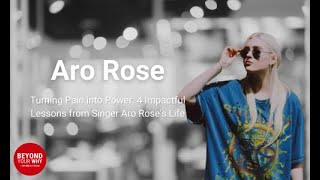
Dr. Gary Sanchez talks with singer Aro Rose about turning trauma into art. Rose lost her mother in 9/11 and channeled that grief into her album Damaged, which became central to her work as a songwriter and actress.
Chapters
Welcome to beyond you'd why Podcast, where we go beyond just talking about your why and actually help you discover and then live your why. You see, we believe that knowing your why, that driving force behind every decision you make and every action you take, is the essential first step to really knowing yourself. It allows you to move forward faster and have a bigger impact. If you're already a fan of the show, then you know that every week we talk about one of the nine whys and then we introduce you to somebody with that why so you can see how their why has played out in their life. This show will be more powerful for you if you've already discovered your why. If you still need to do that, head over to whyinstitute.com and discover your why today. It'll only take you about five minutes. Now let's meet today's guest.
This week we're going to be talking about the why of challenge, to challenge the status quo and think differently. So if this is your why, then you don't believe in following the rules or drawing inside the lines. You want things to be fun and exciting and different. You rebel against the classic way of doing things. You typically have eccentric friends and eclectic tastes because after all, why would you want to be normal? You love to be different, think different, and you aren't afraid to challenge virtually anyone or anything that is too conventional or typical for your tastes. Pushing the envelope comes natural to you. So today I have a great guest for you. Aro Rose is an American singer, songwriter and actress born in Manhattan, New York. Music has always been a huge part of Aro's life. Growing up, she always had a passion for playing the piano and writing. Throughout high school, Aro would write poems based on her own life experiences and later they would turn into lyrics. After graduating high school, Aro attended the Lee Strasberg Theater and Film Institute, after which she wrote her first album. Music to her is a way of connecting with people and telling different stories. She always believed that acting was a great way of telling stories as well. She was fascinated with getting lost in a character and creating a different reality. She believes that acting and music have a unique way of connecting with people's souls. Her album is titled Damaged and deals with different topics Aro herself had struggled with. She is hoping that the music will resonate with people that have struggled with similar things. Ara wants the message of Damaged to be that even though you are struggling and dealing with pain, you have to try your best to keep going and fulfill your dreams. Music touches people's hearts and even if she could help one person feel less lonely and less alone, she will feel like she has succeeded. So, Ara, welcome to the podcast.
Hi. Thank you for having me.
Well, this is just going to be fun. So I've been looking forward to interviewing you. I've heard your music. I've been on YouTube. I've listened to some of your song, and I love your voice. I mean, you just have a beautiful.
Thank you. I really appreciate that.
Do you often get compared due to any. You know, for people that haven't listened to you yet? Is there someone that your voice is compared to?
A lot of people sing Adele. I mean, I think Adele is absolutely phenomenal. So I don't really see it too much. But a lot of people do say that we kind of have a similar vibe. So a lot of people surprisingly say Adele.
That's what I said when someone asked me, you know, I hear you're in that saw that I was interviewing you. They said, you know, what's she sing like? And I said, her voice is very similar to Adele.
So a lot of people see that, which is a major compliment. I love Adele. I think she's one of the greatest artists of all time. But that's. That's common.
Okay, so let's go back in your life, Aro. Tell us, what were you like, where did you grow up and what were you like in high school?
So I grew up in New York. I'm from Manhattan, New York, so I grew up in the city a lot, which was really fun. I was always around a lot of plays. My dad brought me to Broadway a lot. I grew up seeing musicals and theater, so that was really a big part of my life, which is why I think I honestly wanted to do acting and music.
In high school. I definitely was not an academic. I'll be honest with you. I was not good in school. I never was. I was always a little bit on the rebellious side because I really liked creative things. I was, like, in love with cinema. I was in love with music. I took piano classes. You know, I read plays. The thing that was really just drawing me to it was like the arts. So I kind of had a different path than a lot of my other friends that were in high school. And, you know, a lot of the people that I went to high school with kind of were on board academic pack in their life. So there's a little.
Which is totally in line with your why, which is to challenge us to go and think differently.
Yeah.
So.
Was there a time in high school where you just Felt like you were different. Like you felt you didn't fit in. Like, you. You knew you didn't see things the same as everybody else.
I would say so. I just never was really good with being on, like, a team. Like, I tried sports. It didn't work out too well. I wasn't really great with, like I said, academics. I didn't really do well in my classes.
I wasn't considered popular or anything like that. So, I don't know, it was just. I kind of really felt like I had this path of. I just really want to be involved in the arts in some way, you know, whether it's acting or music. I loved creating. You know, I found it really interesting to create songs and write music. That was kind of like a really big outlet for me, because that was really. The only thing that I enjoyed doing was creating. You know, whether it was writing scripts just for fun or being involved in something musically or acting, it just. I was just so drawn to it.
What do you think it was that drew you to the arts?
I think it's a way to express yourself. I think, you know, music could be kind of like a diary. Some of the things that I think we're afraid to say can be said through music. And I also think it's a beautiful way to connect with people, too, because a lot of people hold so many things on the inside, and they may feel alone with a certain way that they're feeling. And that's how I felt a lot of my life. I felt like I was the only one that felt a certain way. And then I would listen to a song, and I'd be like, oh, my gosh, they get it. Like, I connect with their words. I connect with the music, and that helped me feel less alone. So that's why I think even with movies and characters, you relate to a character in a movie or in a show. And I think that's so important and unique, and that's why I was just always so drawn to all of that kind of stuff.
Do you remember the first time you performed?
I do. I was. It was like a little concert I was a part of when I was, like, I think 10 years old. I, like, sang a Miley Cyrus song, and I was so scared, but I really knew it was what I wanted to do. And it. Just connecting with people and just. It's just, you know, you put your heart and soul into it, and I just think that's, like, a really beautiful thing. And I just never found that in school or with academics. I was just Never like passionate about, you know, like science or math or English really. But besides plays, but you know, it's just something about creating like characters and music was just very important to me.
Yeah.
And so that's a young age to be performing. 10 years old.
Just to have the guts to get in front of everybody at 10 years old, that would have petrified me.
It is scary, I'm not gonna lie. It's scary though. It is a little bit frightening. But it's really fun though when you get into it. It's really fun.
So at 10 years old, did you know in that moment that this is what I want to do or it just was something that you were going to try for that, you know, once that was done, I was like so glad that's done. Can't wait to not have to do that again. Or was it just couldn't wait to do it again.
I definitely wanted to do it. I've always had a grand piano. My mom bought me one when I was for my first birthday, which is crazy. Who buys a one year old a grand piano? But she did. She bought me a grand piano for my first birthday because she really wanted me to play piano. And at first I really didn't like it. I didn't like taking piano lessons. But eventually as I got older, I started to appreciate piano more and I started to really love music. And figuring it all out, I still can't read music to this day though, I'll be honest. I can't read music I play by ear. But I still love it though. And I just really dissolved a passion for music and it just never died. So I just thought, you know, why not, why not pursue it?
Yeah. So you graduate from high school and then you go off to music and acting school, right?
Yes, I went to acting, an acting institute, Lee Strasberg Theater and Film Institute in Manhattan instead of going to real college. And actually a lot of people in my high school were very disappointed when with my choice. Well, because, you know, like, you know, guidance counselors, teachers, principal, they all want to see you go somewhere, you know, to a big college or something or a university. But it just wasn't. It just didn't feel right. I would say going to college. It just didn't feel. It just felt like I would be living like a false reality. Like I just wouldn't just not being true to myself. So instead of going to real college, I went to an acting institute and learned method acting there. So that was really fun.
And what was that like? What was, what was going to acting school, like, and I don't. Why do you say it's not a real school? Because you learn stuff that's super valuable.
Oh, it is. It is. But to. To a lot of people, though, they don't view it as real school, even though it is. It's actually very strenuous and it takes a lot of thinking. It's emotionally draining, physically draining. The amount of things that we had to learn and do, whether it was cry every day, laugh every day, be angry every day, it was really. They put you through a lot of emotional turmoil to really get to know yourself first so you could put your all into every single character that you play, which is very interesting. People don't really know the depth of what acting like really is. And it. It's really. It's. It's a lot of work. It definitely isn't easy. It's hard.
So let's talk about that for a minute. What do you mean by the actual depth that you have to go into a play a part? Because I've never done any acting at any. At any level other than maybe when, you know, at a play, at a. At a summer camp or something. But that's not what we're talking about.
Well, I. There are different methods of acting, but I learned method acting, which is basically to kind of sum it up, is you're taking your own life experiences and you're taking your own emotions and your own feelings, and you're putting them into whatever character you play. So, you know, if your character, let's say, is going through something.
Really sad and you. You take all of your sad experiences in your life, and then you really. You really go back and you kind of relive those, and that's kind of what helps you really feel what your character is going through. So you're really using your real emotions to put into that character. So it can be very draining. I would say it was a very grueling process.
You know, because they make you think about everything that you've been through in your life, and they make you really harp on it. So you really get every feeling, every emotion out. Just got to get it out. And, you know, it's a beautiful process, but it's also definitely difficult. Yeah.
And kind of scary, probably, because you got to live things that maybe you didn't want to think about.
It is scary. Yeah. Because, you know, a lot of people feel like, oh, acting is just lying. Acting is just faking. You're just pretending. Acting is pretend. And it's not. I mean, at Least the method that I learned, it's not pretending you're really living through a character and you're really becoming that character by using your own past experiences, by putting your own feelings into that character. Yeah. Have you.
Do you have a favorite character that you've played?
Oh, man.
I don't know. There's so. There are so many we had to do. We had to do a scene every single week. We had to perform for the school. That's kind of how it worked. Like every single week we would have to do like a new scene with a new character. So, I mean, everything was fun. I got to play Marilyn Monroe once, which was really cool, which I loved. That was such a cool part. Just kind of getting to know her and getting to know like what her struggles were and kind of trying to relate some of the things in my life with her life, which made it easier. But that was pretty cool.
So take us through what it would be like to. So I say, okay, Aro, this week you're going to play Marilyn Monroe?
Yeah.
What. What does that mean? How do you go about playing her? What. What do you have to go through to be able to play her?
I would say a lot of research.
Kind of being non judgmental, just kind of going into it with an open mind. I think that's the most important thing is going into every character with an open mind and just really trying to find any aspect of your life that could relate to that person's life. So anything that has happened in my life, try to find something that relates to that person, whether it's Marilyn Monroe or whoever it is. And it kind of makes you sympathize with them, empathize with them. Kindos makes you see them in a different light. And I think that helps you become that character is because you really try to understand who they were, which I think is pretty cool.
So you have to go back into their childhood and have to go hear what happened to them.
It's a lot of research.
Yes. Yeah, it's a lot of research. And it's a lot of just like I said, kind of going into it with an open mind and just really trying to understand that person. And like I said, take things from your own life that you can kind of relate to.
Yeah, it's a very. Acting is very interesting.
And then did you get to do any acting on Broadway or did you then switch to music?
Unfortunately, I didn't, but I would love to do acting on Broadway. That would be phenomenal. Unfortunately, right when I was getting into like acting And I signed with an agency. Covid hit, and then everything just shut down. So I'm kind of just trying to get back into it now, but kind of had a little bit of a break there, so.
Nice. And that's when you started going into the music, turning towards. More towards.
Yeah, that was in, like, 2019. 2020 is when I really started getting into the music more and writing because I had nothing to do, but. Right. I'm sitting in your household. I feel like doing, you know, nothing. I kind of just used the piano as an outlet and started creating songs. And then eventually.
I had a whole album, you know, by the time everything was over. And, yeah, I wrote Damage, and it just, you know, I tried to put out a good message that you should never give up. Even if you don't feel like pushing through and you feel like, you know, the world is crashing down on you, you still have to find that strength to keep going and pursue your dreams and pursue your passions.
And you had some of those things happening to you, isn't that right?
Yeah, I've had a few.
Go. And I don't know if you wanted to, because I think that's what some of your music is about, correct?
Yeah, definitely. Definitely.
Like. Well, my mom passed away in 9 11, so.
A lot of the. A lot of. I wouldn't say all, but some. The music was fueled by just, like, my feelings from that and just.
Loss, feeling damaged, feeling broken, that constant feeling of feeling broken by. I just felt like so many people are broken, though. Like, I feel like the majority of us are damaged. Most everybody is. I feel a part of us is damaged by something, but I also didn't want to let that stop me from pursuing my dreams because so many people are talented. I feel like everybody has their purpose.
Want people to let that damage stop them from pursuing their purpose and pursuing their dreams.
And the. And it's. That's what Damaged is about. The song.
Yeah. Yeah, that's what Damage is about.
And I've. I've listened to it, and it's really a powerful song. And are you getting a lot of. What is that the type of feedback you're getting from people that just relate to what they've been through as well?
Yeah, there is people who, like. Which was really touching, like, reaching out to me on Instagram and finding me and people I don't even know and just messaging me, like, their story or what's happened to them and just saying, like, the song's inspirational or they. They related to it in a way. Even if they just related to a line in the song. They said it meant something to them, which is really nice. I've had definitely quite a few different stories from people that were, like, really touching and brave to even talk about or to tell another stranger, you know, but the fact that they felt so like. I've had people email me, people I don't even know, like, you know, telling me their story and saying, like, hey, like, I've been through this and I'm damaged. But, you know, I get your message. I don't want to let me being damaged stopped me from living my life and pursuing my dream. So I thought. I just felt it was really touching, you know, that that happened. So.
And the name of your album is also Damaged?
Yeah, it is damaged.
So what kinds of things are most of your songs written about?
Experiences that you've had?
Some definitely are. I do like to get a lot of inspiration from movies and, like, films because I definitely love film and I love acting. So some of the songs, I have lines from certain shows or movies in them, which is funny because I'll just take, like, a little phrase from a scene that I really loved in, like, a show and I'll put it. I'll put it into the song in my own way. In my own way, of course.
Not like everybody else, but. So how do you go about writing a song? I've never written a song. I've never performed a song. Yeah, how do you go about writing them? What's the process you go through?
I typically like to have piano down first. Like, if I'm messing around the piano and I come up with a chord progression that I really like, and I'm like, oh, this sounds really good. I like how this is going. Then I'll probably start putting the lyrics to it. Usually trying to make something rhyme, think of things, think of a story that I want to tell, but it really all starts on the piano. That's how the whole album started. I would just sit at the piano, play around a little bit, see what I like, see what chord combination I really, really love. And then I just, like, pick the story. I'm like, you know what? This sounds like this, or this is how I want this to go. And then slowly but surely, it ends up becoming a full song, a full story. And, yeah, it is a cool process, but I definitely can do it without playing the piano. I think I would be so stumped if I couldn't have the piano to write with, because that's really what is the foundation.
So it sounds like it was A benefit for you not being able to read music because it's all about the sound.
So yeah, I would definitely say so. I think.
Reading music is great and I do wish I could do it, but it is very mechanical. It's very straightforward for me. I just kind of like doing anything, like doing whatever sounds good to my ear. And that is kind of how I just make. Make the songs happen, make everything happen. So in a way it did work out. Wasn't too bad.
This last weekend I was at an event where there was a Grammy Award winning musician. I guess it would be a musician that scored a lot of different.
Songs for different movies. And he took one clip and he put three different musical score, I guess scores that would you call it to it.
Oh wow. Really?
And it was amazing how different they connect with you based on the music that was picked for that little segment. It was a 20 second clip.
Yeah.
Three different musical backgrounds to it and they connected with us. One was suspenseful, one was romantic and one was like, oh gosh, you know, like exciting.
And so the power of music is pretty amazing. How do you see the power of music? How do you see it connecting when you're in front of an audience, what does that feel like when you see them all moving to your sound?
It's definitely. You can feel that energy, that's for sure. Like that energy in the room. You definitely feel it. Like this one, I performed at this one concert. It was like a benefit concert for 9 11. It was for the 20th anniversary when I sing Damaged. And I remember after just all the people that were just coming up to me saying, oh my God, like that was like. I really felt the song, it touched me, you know, I relate to it everything like that. It just, it was such a good feeling because you could really make an impact on people with music. Because I feel like no matter what kind of music you like, music brings people together and I feel like that is a really cool thing. That music just brings people together and I feel like it makes people feel closer.
So.
Yeah, yeah, it's cool. It. So when you.
Is it this bringing them together for a particular story or is it just a beat of the music or what's most impactful for you when you're in front of that audience?
I definitely think it's the music. The music itself is very. The like the instrumentation I think is really. Could be very powerful. The lyrics could be very powerful. What are people feeling? Bring each other together? What can people relate on? I think when people hear something that they relate to that just brings them closer to the person or closer to the artist. Like, I know for many songs that I've heard by my favorite artists, including Adele, like if I hear a song by her and she says a line that I really understand and I really relate to, I'm like, oh my gosh, you know how it's just it, you. It kind of gives you chills in a way. Like you really feel that so deeply. So that's kind of why I love doing it is because you never know who's going to relate to something that you say on such a deep level. You just never know.
Yeah. And what's it like for you to be in the musical space, you know, and the that is your career. Like that to me seems like a very challenging career path.
It's very challenging. It's a very challenging career path. But it is worth it because I really couldn't see myself doing like anything really else. I would just love it so much. I love creating music. It definitely could be a challenge because everybody likes different music. There's always going to be be people that don't like you. You know, there's always going to be negativity. That's something that I've struggled to deal with honestly at first. Just people just being hateful or just not supportive is definitely something that you deal with with this career. But I, you know, learned that I just don't. I don't want to let people stop me just because of negativity, you know, and some people are being negative towards me. I'm still going to pursue my passion because I know there are people that would like. So it's like, you know, I want to do it for the people that genuinely relate with me and like this. And that's kind of how I see it.
So tell us about one of your favorite performances that you've done lately.
I would say it was definitely this fashion designer's house, Wong, because she designed dresses for like Taylor Swift and Miley Cyrus and stuff. And she had this Hollywood party and they asked me to perform there and it was really cool. Like it was kind of nerve wracking though because it was like, you know, it was in her home and it was like the keyboard and I didn't have any other instruments or any other performers with me so I kind of just had to play and sing. So it was a little nerve wracking. But it was also really experience.
One of the sayings in speaking is that the more you speak, the more you speak. Is it similar in, you know, performing the more you perform. The more you perform, the more you get asked to perform. So from an event like that, do people then come and say, hey, I want you to come to and perform at X event? Is that how it works? Or does it all go through your agent only fun?
No, I mean, people definitely could ask you, you know, like, it's a good way to connections and stuff. And if people see you and they want you to perform, it's definitely a good way, but usually through your booking agent or manager.
Okay.
Yeah.
So what's next for you? Where. What's the. The next big move? And where are we going to see Ro next?
Well, I'm actually going out to California. A new music video, which will be really fun. I did a cover of Chris Isaac's Wicked Game, though. It's one of my favorite songs of all time, and I just love that song. So we're shooting a music video in the desert, which will be really fun. So I'm really excited to put that out.
Great.
Yeah, I'm really excited. Definitely more music and more videos for sure.
So if there's people that are listening and they want to follow you, they want to hear your music, they want to learn more about you, what should they do?
On Instagram, it's I am Arose, and on Spotify, it's Arrow Rose. And then my YouTube is.
A R O Rose.
Yeah.
Awesome. Well, Aro, thank you so much for being here today. It's been awesome to get to know you now that I, you know, get to talk to you. Yeah. After I've seen you, I've seen your. Your videos and now it's great to just meet you.
Thank you. I appreciate everyone's great talking, Gary. Thank you.
I really hope you enjoyed today's episode.
And that through today's guest, you heard how important it is to know your why and how impactful it can be in your life and the lives of those around you. Be sure to head over to why institute.com and discover your why today. Remember, the more you know about yourself, the more you'll know about others. I'm Dr. Gary Sanchez, and I'll see you on the next episode.
More from Dr.




Women In Leadership: A Need For A Greater Systemic Change With Belinda Clemmensen






