WHY Not Wednesday!
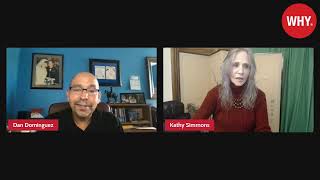
Kathy Simmons, a coach, walks through two frameworks for finding purpose: the YOS (why/how/what) and ikigai, which maps what you love, what the world needs, what you're good at, and what pays. She shares how these tools help clients build resilience and clarity, with examples from senior executives and resume writers.
Chapters
Hello. Welcome to why Not Wednesday. I've been looking forward to talking to you this week since you decided to be on. I'm glad I asked you and I'm glad you were able to be on. You were one of our first coaches to join. You know, it's been almost a year, I think, since you joined up with us or more than a year, right?
It has, yeah. Yeah, it has.
So welcome. I want to introduce you to everybody. You know, I kind of talked a lot about this week. I introduced you to the Y community as you have been doing this for a long time. You've been in the personal development area, you've been coaching. So you've got a lot, a very interesting background. You've lived in a lot of countries, you've worked with hundreds of companies. But what I really wanted to ask you about is something I discovered in the past couple of years, and that's Icky guy, right? The intersection of what you love, what the world needs, what you do well, and what you can be compensated for. Because when we have those four aligned, right, that's our. That's where we're do. We're making a big impact in the world.
That.
So you found a way to use your why, how and what. So let's. First of all, let's. Let's talk about your why, how and what, because a lot of people that are going to be watching our why Not Wednesday want to know what is the why of the person we're talking to? How do they go about bringing their why to life and what do they bring? So let's talk about your why of contribute, your how of chat of make sense and your what of challenge.
Okay, well.
I, you know, I think the, the contribute. Like a lot of people who go into coaching and do this type of thing, there is a strong desire to contribute. And my way of contributing has. And adding in the whole OS is that I make sense of complex things. That's something that I've done all my life. And as. And what I bring to the table is.
A way to challenge the status quo, whether it's as an individual, whether it's as a society, you name it. And so for me, the YOS was very validating because a lot of this I had a sense of. And anyway, and when I first, you know, it's that. That aha. Moment that you get when you go, yeah, that's exactly what I am. And so. And it's helped me a lot in my. In the coaching and my working with executives, because.
As a. As A coach. One of the things that's really an important part of it is that you want to go where that person is, right? And so, you know, I mean, it's, it's not about where you are, right. It's not about putting things into the person. It's about helping them. It's. It's helping them bring it out, bring who they are. And so understanding their why is and self awareness is huge, both for the individual as part of their, their personal development, but also for me, because as a contribute, I mean, you got me. You had me sold at the moment. Somebody tells me, oh, this is a great way you can help your clients and all of that.
Right?
That's it. But for someone else, that may not be for a person who their why is make sense or something like that makes sense. You need to be able to really show how it makes sense. You need to speak to that part of them because you're going into, you know, straight into the limbic system, right. And getting them to understand. So it's, it's incredibly helpful with that because you're speaking as you've often used the expression why to y.
Right.
With people, you know, so if I can, if I can have that, I'll have far more impact if I can speak to them. And they're in their why language. And the, the way it works with ikigai for me and with other things, with helping people find what, what their purpose is and what their how to live their why is that, you know, I mean, first of all, you need to understand what, what it is before you. You can live it. But having that, that foundational awareness is. Yeah, is, Is just amazing. I mean, all of us have only our own perspective, right?
Correct.
As someone said, you know, it's funny that that everybody who has contributed thinks everybody else wants to contribute.
Well, I think that's, you know, don't you find, Kathy, that that's the case with every why though? Because one of the things that Jerry Lujan talks about is when people find out their why, you know, I know I did it. When Gary helped me discover my why of contribute, the first thing I said, he said, dan, you love to help people. You love to make a difference. And I said, yeah, doesn't everybody? Right? And Jerry was the same way. When he found out his why was to find a better way and share it with others, first thing out of his mouth was like, yeah, doesn't everybody want to find a better way and share it with others? And it's not the case, right? So you're finding that out with the clients you work with. You help them get that deep. Hey, Kathy, can I get you to tilt your camera up just a little bit? We're cutting off your head just a little bit.
Yep. I had a little technical things here going on, so there you go.
Now we can see all of your, all of your hair. So when you, when you work with, with, with clients, how does that make a difference in terms of when you know their why? How do you approach them? So let, let's, let's talk about a recent client you worked with. You sent them their why discovery and did that change your interaction with them?
I. Yes, because it made me, again, as I said, go to where they were. You know, I mean, I wanted to, you know, I would be. As I said, you know, we all think, we all see things through our own lens. And so I would be jumping up and down about, you know, this is great, we can do this. And. But I realized that this person, that was not what was going to motivate them. That was not what was going to get them out of bed in the morning. Ikigai the, the experience that we were talking about is literally means what gets you out of bed in the morning. It's the purpose that gets, it's your why that gets you out of bed in the morning. You know, and so working with people, I can.
It'S not that I change who I am, but I can frame it in a way that, that is much more meaningful for them. And that's, that's the, the goal in coaching is, is getting, you know, speaking their language to any, you know, we're all talking past each other most of the time.
Well, I love that you, that you brought that up because one of the things we always talk about is the Platinum rule. Right. The golden rule says treat others as they want to be treated. It sounds like you're implementing the Platinum rule and you're talking to people in the language and they want to hear. Right. And so if they're a better way person, you're going to talk to them about how what you do or what you're going to do together is better than what they're currently doing. If you're talking to a challenge person, we're going to talk about how what we do together is going to challenge the status quo. And it's not about being inauthentic. It's about pointing out the parts of what your program offers at Medea Associates. What does your program do for your client that matches what they're looking for. And, and if there's a match, then we're going to get along. Right. If there's not a match, then it's probably a good time to know in that earlier con, in that early conversation that I'm not looking to, I'm not looking for someone to help me contribute, make sense of things and challenge the status quo. What do you feel about that?
Oh, I think you're spot on with that. You know, and this comes back to the whole concept of branding, what people forget. And you know, I love working with resume writers and, and other coaches that, on my team about this because branding is a huge part of helping people when they're, if they're in their careers and things like that. But when you. What people forget is that brands are meant to attract, but they're also meant to repel. You know, the brand that works for one person is not going to work for somebody else.
Right.
And that's a good thing. You don't want to be all things to all people because you'll end up not being yourself.
Well, I love you said that. You don't want to be all things to all people because you'll be ending up. You'll end up not being anything to anyone. Right. Because your message is so watered down and so understanding. And when we work with companies to help them discover their why for their company, we want to make sure they're attracting the ideal client. And a lot of times when we do it based on the why of the CEO or the visionary. Every company has a visionary. So what is their why? So I love. Let's talk some more about ikigai. I'm gonna, I'm gonna have Bella put, put, put a banner across the bottom of the screen because it's such a great definition, the intersection of what you love, what the world needs, what you do well, and what you can be compensated for. So what is, what does that mean? How does yos fit into that?
Okay, the ikigai is, is, as I said, it's a combination of it. All of those things that we're talking about here and when all. When you have convergence of the things that you love, the things that the world needs, what you do well, and what you can get compensated for, whether it's, you know, monetary or other types of compensation, that's the heart, that's the ikigai. And that to me is the same as when you get your OS because you now have an operating system that helps you understand it. And the interesting thing, and this, I think you could you can make, draw a lot of parallels with the YOS is like, for example, what you love and what you're good at is your profession. Be what you would the intersection of those two. But what you love and what the world, or what you love and what you're good at can be your passion. What you love and what the world needs is your mission. So you think about it and, and as you put all of these things together, they're the intersection. It's the same with looking the Venn diagrams of the yos.
Right. When you have your why, your how and your what and that they. Where they intersect. Correct.
Exactly.
I love that. So tell me, tell me about what. How is the, what's the most useful thing you've done with, with the wireless with your clients? What, how do you use it?
Well, a number of ways. You know, I think I, I have.
Do a lot of work with senior executives and most of them say I can.
I can brand anything, I can market anything, I can sell anything, except for myself. They're perfectly comfortable understanding how to brand something, but when they, but when it comes to themselves, they don't have the understanding of what that is. And by using the why, it gives them a tremendous way of looking at it. And you can just see their face light up. It's like, wow. Yeah, of course, you know, and the, the exciting part of that for me, you know, as, as I said, I've run a number of teams of coaches and writers and things is passing it on to them because.
It'S not that it's going to replace anything, it's going to add to it. I mean, the other types, it will serve as the foundation that this tells you who you are, not just what you can do. So many assessments are about what can you do. Well, no, it comes from the, the insight. It's an inside job.
Yeah. Start from within. Right. And even in our, in our, in our diagram, when we talk about why, how and what, we start with why in the middle and then your how and then your what. So you start with why versus the other way around, which, you know, we've heard this for a long time. If you start with why, you're going to connect with people at that limbic level. Right. So how does it, you know, how do you feel? You know, especially since you've known your yos for a while, how does your knowing your why operating system help you determine your purpose? Because I'm sure you do some of that work with your clients.
Sure. And.
It helps me again that, that attract or repel. Because there are certain clients, if I'm working with them.
Individually, there, there are people with whom it will resonate, and then there are people it won't and it makes. And I can refer them to somebody who will be perfect for them. But it's, I want to work with people who want to make a difference, who want to challenge the status quo, who want, you know, to contribute, who want, you know, they don't have to all be in that particular order.
Right.
But those are the people that I know I can map the, some of the greatest impact with. And the way it determines my purpose is that the.
Understanding that, that I contribute by making sense of things. I've always been somebody who had to make sense of things. And then, you know, I'm, I'm a challenger through and through. I mean, I've heard you talk about why not? That's my favorite question too. You know, it's like, as a challenger, why not?
That's great. Lead it. Let's ask this question because we have to have this question asked in a why not Wednesday. What's your biggest why not moment? Kathy, I know I hopefully gave you some time to think about that, but what has been your biggest why not moment in your life? Or, you know, we can even break it down in your life and then maybe in your business and then in your personal life. So give us your biggest.
Wow. I think.
The, the biggest one for me was.
Why not go out on my own right now at this point in my life? Because I need to be who I am and I need to follow my why and follow my purpose. And so why not? I mean, why not do it now? I mean, there, if I sat there and I can, sure there were, people would say, well, you know, at this point in your life, you're going to do this right? You know, there are times that you, you got to take the leap. And that was a big why not for me.
Absolutely right. And a lot of people would say, well, you're why, why would you make such a change this late in your career? You've got a lot of things going on. And you said, you know what? Why not? So I love that you brought that up because I love asking that why not question. So tell me about your. You mentioned something in our conversations. You believe that there are physical and psychological benefits of knowing your why, discovery and living your yos. Tell me a little bit about that. Because you're so experienced in this.
Well, knowing your, your why, which I think the why is the closest to think it's sort of like the, the sense of purpose, what your purpose is in life, right. Having a sense of purpose is linked to longevity across all, you know, all age groups, all, you know, genders, you name it, it's linked to that. Secondly, people who have that sense of purpose are far less likely to have strokes statistically and far less likely to have heart attacks than. And they also have a tendency to recover faster because understanding this and having a reason to recover, right, gives you resilience. That's what this is about. And then, then if you look at it, I mean, it comes all the way back to when the people, people who had been in prisoner war camps, the ones that survived, survived because they had a sense of the purpose of their life and meaning in their life. It could be something as simple as, I want to get back to my family and be with my family. But they knew that there was something to look forward to. And that's proven so over and over. This on the psychological side, again, it's that it's what's going to get you up in the morning. You know, I mean, in the. Cognitive benefits are huge. It reduces the risk of Alzheimer's. It reduces a lot of things that people thought were irreversible. So I'm a big proponent of knowing this.
I love that. So, Kathy, what, what. Let me ask you one last question, because there's something you brought up earlier. You mentioned meeting people where they are and Melanie Ake, one of our other coaches, talks about that. One of the things that learning your yos and the yos of your client really helps you is really meet them where they are.
How do, how.
What does that mean to you?
That means that it's not my agenda, it's their agenda. Right. You know, and understanding, again, that.
You know, this may sound a bit.
Oppositional to the idea of the people who I want to work with versus I don't want to work with. But, but for me, even the people that, that, you know, people that I'm working with, where we have, we share a lot of the, the same values. I have to go. If they're not ready to move to another level, I need to go where they are. I can't take that. You know, it's not my job to. It's like the difference between giving somebody the, you know, the difference between trying to indoctrinate them with something or being a consultant and saying, okay, you go out and do this, this and this, and being a coach who believes that you. Each one of us has this within ourselves. And our job is to help ask the right questions so they get their own answers. It's not my answers that matter, it's yours.
That's awesome, Kathy. And I love that because that kind of blends. It's meet them where they are. It's following the platinum rule. It's kind of bringing all of that together. But it's so fun the more I do what I do and talk to new coaches every day and get them to see the value in what we do and then join our movement. You've had so many new coaches here in the past few weeks. And what I love, and you, you shared this with me early on, is that those aha moments that their clients have. I had one this morning that sent me a video of a couple that discovered their YOs together. And what she said was, you know, I love that going through this process gave me words to say what I've always known, because a lot of times we've known, we know who we are. But what the yos does, the why discovery does, is it gives you words to put. So now you can present yourself. And I know we just launched the yos recently and you went through self discovery, went ahead and redid it and just confirmed for yourself that your why is to contribute to the success of others. And how you do that is helping them by helping people make sense of the complex and challenging. And ultimately what you bring are creative, out of the box, innovative solutions. So that's what you can be counted on for. How was that process for you as you went through the, I guess the verification of your Yoshi?
Well, I loved it because it was a.
You know, again, coming back to working with resume writers. It's like people struggle to try and come up with a branding statement or something that's short. And the fact that putting these three pieces together can give you what you just did, which was a great branding statement for me of what I do so quickly that it's. It's wonderful. It's an. It's an amazing tool. That's why, you know, I'm, you know, going out there and banging the drum to get more coaches and, and writers and. And to embrace this as well as working with my own clients on it.
Yeah, I love that. So. So, Kathy, tell me, tell me this. What, what is.
If you, if you had the opportunity, because I talk to new coaches every day. If someone's on the fence and they're thinking, I don't know if I want to get that. You've been using it now for over A year. What would you say to someone that's thinking, you know what, I'm not quite sure about that tool. What would you say to them and to get them off the fence?
Ah, well, I guess I would just tell them how what a game changer it's been with me in terms of, you know, after over 20 years of coaching people and working with them, it, it made it so much simpler and faster and easier to get right to the heart of the matter and get.
Get results with people and not get results. I'll put it this way. Help them get the results they want.
Right. I love that. Thank you so much. Kathy, is there a question I haven't asked you that you want me to ask? Because let's make sure, sure we ask that question before we sign off.
Oh, my gosh. I can't think of a question that I want you to ask at this point. I am just so grateful to you and it's a great day for this, you know, being close to Thanksgiving and everything else. It's a good time to start expressing our gratitude and I want to give you and Gary and all the people at the Y Institute a big shout out. And the coaches, the amazing people, Melanie, all the new people that this is. This is a great movement and I'm really grateful for it.
Well, we're so glad to have you as part of the Y Society, Kathy Simmons. We didn't even have a wise society when you came on. We are the Y society. We were getting stronger every day and lots of coaches are joining us. And I know that a lot of people are going to find value in your comments today. So thank you very much for being on. And we'll see you all next week for why not Wednesday. We're going to have former chief master commandmaster Chief of the Navy Raymond Kemp on our why Not Wednesday next week. So tune in and hear from him. He's a guy who likes to fight a better way by challenging the status quo and contributing to the success of others. Another fun yos that we're going to get to talk about next week. Thank you, Kathy and everyone. Have a great hump day.
Take care.
More from Dr.




Women In Leadership: A Need For A Greater Systemic Change With Belinda Clemmensen






