WHY NOT Wednesday with Darren K. Walker
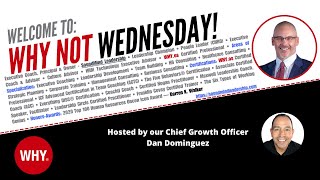
Darren K. Walker left a 25-year healthcare HR career to found Sound Mind Leadership and develop the Why Operating System. His YOS framework uses why, how, and what to guide leadership: find a better way, master your craft, contribute to others' success. He explains how discovering your why accelerates purpose and transforms team coaching.
Chapters
These last few years have made us question everything.
Our relationships.
Our jobs.
What constitutes an office.
And who we are.
In a.
World filled with chaos, confusion and uncertainty. It's time for some clarity. It's time to start understanding one another.
It's time to start understanding ourselves.
We envision a world where everyone knows their why. But even more, we envision a world where everyone knows their why os, their why, their how and their what. The operating system that drives you, that lets the world know where you stand.
What your unique gift is.
And most importantly, who you are.
Yos.
Are you ready?
Hello everyone and welcome to why not Wednesday. We are excited to share with you our good friend and yos certified coach, Darren Walker. Let me tell you a little bit about Darren Walker. He is an amazing guest, an amazing coach. He's an accomplished executive and leader who has served over 20 years in corporate healthcare Executive rules. His success comes through driving exceptional business results, through extraordinary leadership and purpose. Darren's passion for leadership comes from a belief that everything rises and falls on leadership and that there is a better way to grow, develop and evolve leadership. As an executive coach and leadership advisor, Darren embodies respect, grace and integrity. Partnering with leaders in a judgment free relationship to allow you to be present as your authentic self, to discover your purpose and vision for the life you desire. So, Darren, welcome to why not Wednesday. How are you today?
I'm doing great. It's great to be here with you.
Dan, man, it's been a while since you became one of our yos certified coaches and I can't believe it took me this long to introduce you because you're really doing some great things at sound mind leadership. I met your partner. But, you know, let's start with the basic question, because there's a reason you're here, Darren, and that is you took your yos and we found out, you know, all those, I guess it's been now, a couple of years, a couple of years ago that your why is to find a better way, Your how is mastery, to learn things at a deep level and your what is to contribute to the success of others. How does that feel to you? How did that feel to you when you first heard it and how does it feel today?
Yeah, it resonated with me right away because. And it answered it and connected the dots for me because when I saw a better way and read the description, I was like, oh yeah, that's absolutely me. Everything I do, I'm always trying to make it better. And then, and then I know my background and I study And I learn and I understand things to the nth degree, and everything I do is about making a difference every day in my life and the lives of others. So it was perfect for me.
Yeah, so. And that's, you know, even in your introduction, we talk about that. And you, every. Your, Your passion for leadership comes from a belief that everything rises and falls on leadership and that there is a better way to grow, develop, and evolve leadership. How long, you know, you, you mentioned you've kind of always been a better way. Why? Looking for better ways. How long ago do you remember. What's the first time you remember that you said, hey, there's got to be a better way, and then you implemented it.
Oh, boy. I, I would say as. As long as I can remember. I mean, I, I remember in my youth sports, you know, and seeing things and experiencing things and go, well, we could do it this way, we could do it that way, and this might be better to. To run this play this way. And so I think it. It really showed itself, manifest self manifest itself in my sports. But then right now, you know, just as. As I do different projects and I work on different things, it is always with an eye of, yeah, it's really good, but can it be better? And, and that's just how I, how my lens works. And, and to connect that and say, okay, yeah, that makes a lot of sense. It's been really refreshing to understand that.
About myself in mastery is pretty rare, Darren. You know, it's one of the three most rare whys. So to be somebody that likes to learn things at a really deep level in order to, to find better ways, in order to find those little things that can make a big difference.
How do you incorporate mastery into creating better ways?
Yeah, I'm a big believer that you can't give what you don't have. And so for me, from an integrity standpoint, and when I stand in front of people, I want to make sure that I understand what I'm conveying, the message I'm conveying, or the principle that I'm conveying. And so, you know, before I go out and share something or work with a team, I understand it, I know it, I've studied it, I've read about it, I've done it myself so that I can share the lived experience as well as the learned experiences. And that's just something that's, you know, it's, it's integrity to me, and that's why I have that. It's innate in what I do, and I just have naturally gravitated. To doing that.
And then, and then.
The final part of your yos, of course, is, is to build, is to build trust or contribute to the success of others. So tell me how you incorporate that. I mean, I think you, you know, just reading your introduction, I know you're somebody who wants to make a difference. How does finding a better way through mastery help you contribute?
Yeah, really. It was back to my leadership journey. You know, young in my career, I wasn't a very effective leader. And I had someone share that with me and say, hey, you've got a lot of potential, but you're rough around the edges and there's some things you need to work on. And of course I dismissed it at first, but then it created awareness in me and I went on this journey of self discovery. I'm like, okay, if I were to be a better leader, my mastery kicks in and I start reading and I start understanding. I go to conferences and I did seminars, I did all kinds of things to learn. And I went, oh my gosh, all this is out there. And of course my natural inclination is others got to know this. And so that's how I contribute is I discover a better way, learn about it, understand it, and then I share it with others so that they aspire to live extraordinary lives as well. And that's just how I give back. It's all about, what do I have that I can give so that we all can live better lives.
No, I love that and that, you know, I'm glad you mentioned that because a lot of times, me having the why of contributing, a lot of people say, gosh, I wish I had your why, because I want to make a difference. And it's your what, but your why is to find a better way. One of the things I always tell better way people, the way you contribute, and it's part of the definition of the why a better way, the way you contribute is by finding a better way and sharing it. Right? You don't just, you don't just find a better way. Once you find that better way, you're going to share it with people and you're going to share some depth of knowledge. You're going to bring some depth of knowledge to what you do so that you can help people.
Succeed, be better. How long did that take? You know, I, I really want to dig into that, that, that episode in your life. Somebody gave you some what we call constructive feedback. But you know, honestly, they're just telling you, hey, you're not doing a good job.
Right, Darren?
Yeah, but Somebody cared enough. I, I like to say, you know, people who care will tell us if we're not doing something right. People who don't care just let us keep failing. So somebody cared enough to say, hey, Darren, you could be doing a better job at this. And then you said, okay, what do I need to do? And then you went on a study, probably on a binge. As a mastery guy, you dug into leadership. You learned a lot of stuff. What was the timeline from the time you got the feedback to the time when you felt like, hey, I've got something to offer?
Yeah, it, you know, my first reaction when I received that feedback was, you don't know what you're talking about. Leave me alone. And that was the ineffective leader in me. Right. But as I started to see the evidence of that comment or those comments, I started to pay more attention to things. And it was probably about a year before I said, okay, he was right. Let's do something about this. And then I did. I dove in head first, and I probably spent the next three or four years just learning different leadership concepts and doing different things. And that's when I started to say, okay, how can I start giving this to others? And that's where my journey of, of the certifications came in. And, you know, anybody looks at my profile goes, my goodness, you're certified in so many different things. And I'm like, I know I can't help it because I see something. It's awesome. My mastery says, go get certified in it. My contributor says, now deliver it to others. And, and, and that's just what I've done. And so it was probably a journey of about four or five years before I started really giving back, because I spent that time learning and educating and becoming what I wanted to share with others to become. And, and it's just evolved since then, and, and I just continue to grow. But that was my first time. I, I got certified as a coach many years ago, and I just did internal coaching because I wanted to give back. And then I got certified in, in some different programs and, and did that internally in the organization. So. And, and it's just evolved from there, and it continues to grow today.
Yeah. And you know, you know, I love when during the introduction we talked a little bit about the fact that you, you believe that everything leadership. And it's interesting because that's what you dug deep into with your, with your mastery, and you went and learned that. But four to five years, a lot of people, you know, we hear a lot of people that will get into something and they'll say, okay, I'll go take one leadership course and I'm going to start coaching leadership. But it took you four to five years, then you internalized it, then you did it within your internal company before. Tell me about your journey in healthcare. So tell me what were, what were some of the positions you held and, and some of the lessons you bring to your coaching from that?
Yeah, I spent 25 years working in healthcare and I worked as an HR executive. I first started as a recruiter in healthcare and I just loved bringing people into the organization and seeing people get their jobs and helping them get jobs and working with leaders to fill their positions. And I wanted to learn more about the spectrum of HR and all the services. So I got my first HR manager job young in my career and started working in that role. And that just opened up a whole new realm of possibilities and being in this generous role and seeing how all of HR works and I just loved it. And I loved working with people. And you know, I've always been driven by the opportunity to make a difference every day. And my role in healthcare and my role in HR gave me that opportunity and it was up to me to take that opportunity and I did and I loved it and I just progressed. I, I worked for four different healthcare organizations and, and as I worked through those organizations and shared and gave and, and progressed, the next opportunity presented itself. And I've always felt like I will always be where I'm supposed to be at the time I'm supposed to be there. And, and that's, that's just worked out my life. But I progressed and I became an HR director, went through that period and became a vice president of hr. And then, you know, my goal when I got into this profession was I want to, you know, I want to lead the HR function of a large organization. And I did that. I became the chief people officer at a large health care organization and absolutely loved it. And the whole time through that process, I never stopped working with the leaders. I was always doing something in leadership development, even though that wasn't my core responsibility because I just, there was a natural attraction to it.
I love that. You know, tell us, you know, because I think you've made that, that, that great transition. You went from healthcare, healthcare executive to starting sound mind leadership. Tell us what, what was the catalyst for, for the transition and what it, what can people expect when they hire sound mind leadership?
Yeah, well, the catalyst really was as I was progressing through my career, I knew what I loved and I Love being around the leaders. I love doing the development. And the more I rose in my positions, you know, as I became a vice president and a chief people officer, the demands pulled me so much further away from doing that work that I just loved and that was pulling on me and the tension was there. And I love being a chief people officer, but I also love the other work. And after I spent a few years in that role, the opportunity presented it itself. And a former colleague of mine and individual that I worked with in healthcare connected with me and said, hey, what do you think about starting a company and doing this work full time? And my initial reaction was, no, I can't. I've got a good job, it pays me well. But walking away from that conversation, the thought never left my mind of, hey, think about the opportunity versus what you're giving up here. And as I reflected more and more on that opportunity, it just didn't leave me. And that was kind of my huge why not Moment. It's like, okay, you can continue what you're doing and you're going to be good at it, you're going to be successful at it, but this is something you've always wanted to do. This is where your passion is. Why not jump on that and do it? And we did. And it was the hardest thing I've ever done in my life as far as making that kind of commitment to step away from something that was so good and so successful, to starting something I've never done before.
And.
And we started the company because we were experiencing, you know, we were. My partner and I both worked in healthcare through Covid and we experienced what that impact had on the people. And we saw what it did to leadership. We saw how it decimated some leaders and the impact they had on them. And we both stepped away and said, there's just a better way to prepare leaders for these type of situations. And really that's the premise that we started sound mind leadership from our name is very intentional. When we were developing our name, our whole premise was how do we help leaders be better leaders and lead better lives? And so our tagline is a sound mind, a piece of conscious comes from being right with yourself. And that's our whole premise in which we work from in sound mind leadership is how do you get right with yourself as a leader?
Right.
How do you lead yourself better as a leader? And as you are more effective in leading yourself, you will naturally be a better leader to others. You will show up in a much more effective way. You'll show up as Your authentic self. You will know who you are and you will know what you're about. And then you can lead with integrity and authenticity. And that's really what we do at Soundline leadership, is help leaders develop that type of identity that they can work from.
I can't help but get excited about the work that you do, Darren, because leadership is so important. And I remember being a leader at a healthcare company myself on the vendor side of things. I remember that we don't promote the best leaders, we promote the best performers. And then we say, we hope you have some leadership skills. Now, I was blessed to have been in the army and had some leadership training prior to joining the corporate world. But I remember a lot of people getting put, hey, by the way, you're now the manager or you're now the director. And they've never led a team before, but it's. You were so good at sales, right? That was the place that I lived. You were really good at sales. You've got to know how to lead sellers and such a conflict. And so I think it's so necessary that what.
What you do.
So I really like that. I do want to bring something up. And by the way, thank you for answering the why not moment question, because you did already. So I sometimes get into these conversations and we're having so much fun, I forget to ask that question. So you've already answered what that biggest why not moment is when you and your partner made a decision to start Sound mind leadership. And I love the story behind that. But one of the things I remember from when you and I met is after you discovered your why operating system. And the reason why you said, I need this in my practice was the shortcut that it gave you, that you had a process that used to go through with leaders. And then you said, wait a minute, I think you, you. Well, tell us what that process was and how the yos helps you get through that faster. Let's let you answer it. You're the expert on this.
Yeah, it was, you know, as we began our practice and started working with leaders, one of the areas that we focus a lot is what we refer to the inner game of the leader. Basically the internal operating system of that leader. How do they work? How do they function? How do they think? How do they speak? How do they talk? Everything that drives this person, just like the hard drive of a computer, everything that happens with that computer is coming from that central location. And so with our leaders, we're doing the same thing. Let's discover your internal operating system. And so we spend time talking about their beliefs, we spend time talking about their values. We do assessments to help them gain self awareness. And we focused on purpose and we focused on vision. And as we did this, we. We were really seeing a lot of success, but we were getting tripped up a little bit in the development of personal purpose. And folks were struggling with grasping, how do I create this? And of course, my mind in working with my partner is like, man, there's got to be a better way out there to, to get to this. Because it, it, it's almost, you know, becoming a distraction. We're trying to do something good and help them identify something positive, but they're getting tripped up on it. So I do what I do and I started researching and scouring and I came across the Y Institute and I'm like, oh my goodness, this is it. This is what we need to do. And if you recall, I connected with you. We got together right away. And after hearing the description of the opportunity that discovering your why and then how we use that to help a person develop purpose or personal purpose, it became just that natural bridge. And the process with the, the why discovery was so simple. And, and that's what we need is, is we need simplicity, yet we need clarity. And, and we got both those things. And when we started implementing this, it. It was a game changer for us. In fact, my business partner, I did it with him. I did my first Y discovery with him, and he's like, okay, this is powerful. But he goes, let's see how it goes. And he, he. We used it with one of his coaching clients, and when we went through that debrief with them and they went, oh my gosh, this provides me with so much clarity. He went, okay, this is, this is the right thing and this is for real. And we've used it ever since. And we use it with, with each of our clients in their process and their discovery. We call it a discovery day when we're going through all that work around vision and values and beliefs and so on and so forth. So it's just, it. It's a major part of what we do, and it's just been impactful and it has just leapfrogged our, our effectiveness in coaching these leaders.
You know, Darren, you're going to get the award for best best guest in terms of just leading me along the path to the next question. Every time I ask a question, you finish your answer with the next question that I want to ask. And that is around the process that you guys follow. So what is the impact you feel you're making in the lives of leaders through the work of incorporating the why discovery into your four elements of identity structure? You told you talked a little bit about that internal operating system, but there's four elements. Internal operating system, feelings, presence, and then outcomes. So can we talk about each one of them? Tell us what iOS means, the internal operating system.
Yeah, and just to give you some context, and again, illustrates my better way. As I was doing all the studying and learning everything about leadership, I'm like, there's something here. There's a construct here. And so I spent time with it and developed this model that now has become the foundation from which we develop leaders. And we call it the four Elements of Identity Structure. What we're really doing is bringing a consciousness to who you are as an individual. And so, as you mentioned, it consists of the four elements. It's internal operating system, it's feelings, its presence and its outcome. And each of those, the iOS and the feelings part is what we refer to as the inner game of the leader. And that's where we do a lot of our work initially with leaders, is on that inner game. And the inner game simply means we're focusing on developing the awareness or consciousness of the leader. And that is important because it drives what happens in the outer game, our presence and our outcomes. And so the internal operating system really consists of self awareness. How aware are you of yourself, what are your beliefs, what are your values, what's your why, what's your purpose and what's your vision in life? And that is what the internal operating system is of the four elements. And that's the crux of what everything comes from. Then we talk about the feelings, because we know that the feelings have a huge impact on the way a leader shows up. So we talk about, you know, tell us about how you think through things, how you process things. We do a lot of work around emotional intelligence, and we do a lot of work around the stories we tell ourselves and the mental models that we hold and how we make decisions. Because that impact, there's a belief that we have, is what you think about, you bring about. And so if we could influence that internal operating system that then drives those thoughts and feelings that we have, then we can impact the presence, which is about your ability to influence as a leader, your engagement with others, your intuition that you have, the competencies that you hold and the technical skills that you have developed, and all of those. If we show up well in presence, that is what determines our outcomes. And when we talk about outcomes. We're talking about how successful are you? What are you achieving? You know, what is the fulfillment and. And happiness and joy that you have in your life because of the things or the lack of. Because when we are missing those things, if we're missing fulfillment and happiness and joy and who we are and how we're leading, we work backwards through those identities and get back to that internal operating system. Say what's happening in that internal operating system that's driving those outcomes. We know if we can influence the internal operating system, we're naturally going to have a positive impact on the outcomes in our. And we have seen that with our clients day in and day out. And it's just an awesome experience to watch, witness, and see.
Yeah, I love that. That you're taking. You take it all back to who you are. Right. That, you know, we. I remember this is such an overused word in corporate executive presence. Right. And having an executive presence, and you go through a lot of trouble wearing the right clothes and making sure, you know, you look ne. And I don't think anything that you mentioned right now has nothing to do with how you look more how you present yourself. And that comes from knowing who you are at a deep level, understanding that your drivers, and being able to communicate that to the people that you lead. It really is a totally different level that you and Steve. Right. Is your partner.
Yep. So Steve Loveless is my partner. Yeah.
Yeah. So you and Steve. Now I've got to ask this question because you're. You're. You're a coach and you. You understand the difference between the whys. His yos is trust, simplify, contribute. So you both share, contribute. But I often like to talk about mastery and simplify as almost exact opposites. Right. You're all about digging in, learning more, taking something simple and making it really complicated because you're going to learn it at a really deep level, whereas Steve wants it as simple as possible. Take that big complicated thing and simplify it to its essence. So tell me about what did you learn about each other and how do you work together with different hows that are so. So almost direct opposites? And how do you complement each other and how do you. How do you handle conflict?
Yeah. I will talk about the compliment first, because it has been such a. A joy to me to take something that I've gotten mastery on, and I understand it as such a different level just because I spent time with it.
Right.
And when I try to share it with others, I want others to experience like I've experienced it. And so I, I tend to talk over people and, and Steve. And his compliment is, is as he will. We will talk about our approaches and our presentations and our, our, you know, coaching. They'll say, okay, sounds really good, but how do you simplify that? So it's understandable by all, not just by you and maybe a select few who have spent some time with it. Okay, that's good. You know, and, and, and what it's done is he's helped me be more effective as a coach because of challenging me to simplify the approach and, and make it easy for people to understand. Not that they're not smart and can't get it over time, but we have limited time with these folks in limited engagements, and how do we make it easy for them? And, and on the flip side, how we compliment is he will take something that is a little more challenging or doesn't quite understand, and he'll say, hey, can you spend some time with this? And then let's get back together and talk about it. He goes, I just need to understand it better. And I just, it's just conceptually start coming together for me. So, you know, that's how we support each other, you know, in the conflict. I think early on it, it was understanding each other. And then when we took the Y O s and understood each other's, how we kind of both went, oh, okay, that makes a lot of sense, because early on it's like, well, you know, we, we want to, you know, give these folks everything they can. We can, and we need to share all our knowledge with them and do all this. And he's like, yeah, but you're going to kind of knock them over and maybe they'll lose interest if we won't be successful. And I was like, well, that's too simplistic. If you do it too simplistic, it doesn't have the meaning and the power. And, and, and so we, we saw that early on, but then again, we went through our yos and learned about each other, and now we found that really happy medium. You blend the simplicity that he brings, the mastery I bring, we usually end up with the right product.
You know, it's interesting, too. Does he. Is he as obsessed about certifications as Darren Walker, or does he say, you know what, let's get Darren certified and all that stuff, and then he can give me the CliffsNotes version and I'll, I'll help. I'll. I'll support him and in doing all of those things, is that kind of the way that goes.
Absolutely. He, he likes the idea of it. But then it, it's like, why don't you go get certified in that? I know it's a passion for you. I mean, I, I love shiny objects. I, you know, when new things come out, I jump on them, I read them, I stand, understand them. And I'm like, Steve, I got to get certified in this. And he's like, yeah, let's do that. Then he'll come back and say, well, why don't you go do it? And then we'll just work, you know, work through it, make it work in it in the practice. So, yeah, he's, he's not as obsessive about it as I am, I think.
I believe that's a, that's a beautiful compliment that you guys have for each other. And it's so good that you know that about each other and he can support that for you because you feel like you need, you don't just need to learn about that process. You want to, you want to get certified in it. So you're going to go get it. As a matter of fact, I noticed on your LinkedIn you recently got another cert ICF certification. Tell me about that. It's a team certification, right?
Yeah, yeah. One of the things that I've really developed in my coaching practice is doing the coach team coaching. And I've always enjoyed doing team coaching, but I, it was a pass that I had. The ICF came out with this new certification for team coaching and I'm like, I'm gonna get that, I'm gonna pursue that. And it's, it, it's because as I've worked with individual leaders, they almost always say, hey, we need to bring this to my team. And, and I wanted to be as effective as I could in bringing the content to a broader audience at once. And so.
I've just really embraced the team coaching and, and, and just love working with the leader and their respective teams and, and, and now it's evolving into more organizational wide work as well. But it's a wonderful certification because it, it, it brings in the principles of how to be effective in being a team coach versus being a team facilitator or a team educator. And coaching with a team is a unique skill because you still have to bring in the ethics and process of coaching, but in a team environment, but have to manage multiple people in the process of doing that with multiple opinions. And so it's great. I've appreciated the process to earn the certification and what it's done for me in my career.
Well, Darren, we're out of time. I want to thank you for being on why not Wednesday? It's been way too long. I'm glad we finally got you on the schedule. Let me ask you one last question. I like to go away with something really positive. You've been through this now. You've had the certification for a while. What would you say to someone, another couple of guys that have a business like sound mind leadership that's considering adding this tool to their repertoire? What would you say to them is the is the biggest value they'll get out of having one or both of them certified in yos?
The biggest value is the clarity that it brings to your clients. And if your passion is helping folks get to understanding themselves in that coaching process, there's no better way to start than to start with your why. Because it brings in the clarity from the get go. And then everything you do after that just builds on it. When people know their why, they understand how their life can be done, done and lived through purpose. And that is the beauty of it. And it just answers so many questions. It's simple, it's clear, it's concise and has been such a powerful tool for us. So I'd encourage anybody to incorporate it.
Thank you so much, Darren for that, that glowing testimonial. We always like to end on a positive note. Thank you for being on the show. Say hi to Steve for us. For all of you that are that are watching. We're so glad that we had Darren on and next week we're gonna have our good friend. Oh, gosh, let me, let me make sure I get the name right because I want to make sure I get the right person. We got Joseph Lander, legacy coach and the president of the life you love coaching. So he's a. Believe it or not, he's a guy that has my exact yos contribute challenge. Makes sense. So we may not get through the whole interview and all of the questions, but we hope you'll join us next Wednesday. Darren, thank you for being on. Have a great rest of the week and give our best to Steve.
Will do. Appreciate the opportunity. Dan.
More from Dr.




Women In Leadership: A Need For A Greater Systemic Change With Belinda Clemmensen






