WHY NOT Wednesday with Joe Lander, J.D.
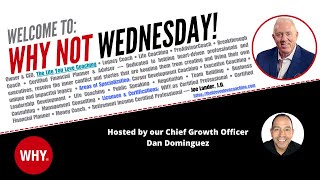
Joe Lander left law and finance to coach high-achieving professionals through his RESOLVE framework: identify your why, create your life puzzle, then live it. He argues you don't wait to leave a legacy. You live it now.
Questions this video answers
About 15 years.
18 years.
Identify → Create → Live.
Why: Contribute; How: Challenging the status quo; What: Making sense of the complex.
www.thelifeyoulovecoaching.com (spoken as thelife.youlovecoaching.com).
Chapters
These last few years have made us question everything.
Our relationships.
Our jobs.
What constitutes an office.
And who we are.
In a.
World filled with chaos, confusion and uncertainty. It's time for some clarity. It's time to start understanding one another.
It's time to start understanding ourselves.
We envision a world where everyone knows their why. But even more, we envision a world where everyone knows their why. O s, their why, their how and their what. The operating system that drives you, that lets the world know where you stand.
What your unique gift is, and most importantly, who you are.
Yos.
Are you ready?
Hey, good afternoon, everyone. Good morning if you're on the west coast. Good afternoon if you're on the east coast. And good evening if you're listening from somewhere else around the world. We are excited to start why not Wednesday today with our good friend Joe Lander. Joe Lander, owner and CEO and legacy coach at the life you love coaching. He is a person who is dedicated to helping high achieving, hard heart driven professionals and executives create and live their own unique and impactful legacy. He's got a diverse background as a former attorney, HR manager, a financial advisor, and then a breakthrough coach. Combined with over 30 years of personal development experience, Joe has mastered the art of guiding individuals to overcome obstacles and rewrite their narratives to create an incredible and meaningful legacy. And you know, one of the things that Joe did, I'm going to bring him on. He's been, he's in the green room ready to come on. So here he is. But you know, one of the things he did, I asked everybody, hey, do you have a walk up song? And Joe does. So Joe, before you even say a word, we're gonna play your song and rock out a little bit.
I'm through with playing by the rules of someone else's game Too late for a second guessing Too late to go back to sleep it's time to trust my instincts close my eyes and leave Time to try defying gravity. I think I'll try to find gravity.
Man. Joe, that is a beautiful song and I love the lyrics. I can, you know, as we get into your yos, I can tell probably why those lyrics are important to you. But you tell us why you chose defying gravity as your walk up show song.
Well, Dan, first of all, you know my what is all about challenge.
Yeah.
And I know we share that. And what I hear in that song is challenging. Challenging the society driven perceived restrictions that we have or the. Or the. The box that we sometimes feel even unconsciously that we find ourselves in that we Say limits us to what we've always done. And it feels like this force of gravity of like pulling us down. But ultimately that we have the ability to defy that gravity based on how strong our dream is, how strong our desire is, and the legacy that we want to leave and live in the world.
I love that define gravity so that that comes from. You know, there's so many ways we can go with that. But man, let's, so let's get started with, with. With. With you, Joe. I, I love the introduction. I love telling people about you. It's not often that I have a yos twin on the show. So let's, let's just start with that because. And let, let's, you know, let. Let's. Let's bring Daniel on here as I'm asking the question here. You know, the, The. The yos is. Is so cool in that we figure out our why, our how and our what. But when I met you, Joe, and. And you went through the discovery, what was really cool is we have the same why of contribute the same how of challenging the status quo and the same what of making sense of the complex. And you talked about it. What you talk about, what you. You seem to be really focused in. On in choosing that song is the ability to challenge the way things are done. So in what ways are you as a legacy coach, challenging the status quo?
Well, you know, Dan, inevitably what I'm. What I'm finding with many professionals and executives, successful business leaders, is they've accomplished a lot, both financially and professionally, and yet they're at a stage where something's missing and it feels like it's frustrating and it's deflating because, yeah, I've done great things, I've made great charitable contributions, but I feel like there's something more within me and there's something unique that I'm here to bring that I'm not fully living into because the thought of it is even scary. The thought of doing something different or in addition that is out of my comfort zone. And it's like I've already done this and now here's a chance to actually challenge that and come up with what it really is within you that you're looking to bring to the world in your own unique, impactful way, because we all have that within us and then overcome those mindset challenges, those self imposed limitations, what I call the ills, the inevitable imagined limitations that hold us back in.
Inevitable. Say that again. Ills.
It's the inevitable imagined limitations that stop us that we think will Prevent us or don't even realize are operating in preventing us from living into the legacy that we're here to live. Because I believe that legacy is something you don't just leave. It's something you get to live now.
So you're living the legacy that you're leaving.
Yes. And the key there, Dan, is to not focus on, all right, what do I want to leave? You know, and many people think in terms of meeting with an estate planner and coming up with what's the foundation or the trust? And all of those things are awesome. The question is, but there's something unique about you, and there's some way in which you are really passionate about or could be really passionate about. When we put the pieces together of your life, that is your way of really impacting the world now. And then potentially, it will reverberate for generations to come.
You know, you said something there, and I read that in your bio earlier. Your approach involves helping professionals and executives piece together the fragments of their past in a unique way that illuminates the path their life has prepared for them for. Yeah, and that's really important because you take you. You go through somebody's past. We go through everything that's happened to us to get us to where we're going. Tell me more about that, Joe.
Sure. Yeah, that's it. It's key, because the way we play back the real or the movie of our past often is in a particular way that is not necessary necessarily, always serving us and empowering us. So the key is to have the ability, and in the case of the clients that I work with, someone who's going to be on that journey with you with compassion and with the ability to elicit. What are the puzzle pieces? They're all there. But how do we assemble them now so that they're pointing very clearly in a direction that. That seems to be what you're really about, especially when we combine that with the core beliefs, the re. The beliefs that are so innate at this point within you that you can't imagine living without living those. Those beliefs and those values.
You know, one of the things you. As we look at that, you know, I've heard this a few times in many different ways, but the key being life doesn't happen to you. It happens for you. It happens for a reason. Now, no better example than Joe Lander, how you've had basically three different careers, Joe. You were an attorney for how long?
For about 15 years.
So, fifth, for 15 years, you carried. You carried a briefcase, and you were an attorney. Tell us about that phase of your life. Well, and how it's prepared you for this phase.
Sure. Well, the whole reason I went to law school was I was going to create world peace. I had taken a conflict resolution workshop, and that's the opportunity that I saw of law school, is to become an international mediator, bringing in a team of mediators to all the hotspots in the world. Clean it up, and we're going to finally live in peace. Well, when I got to law school, I realized international law was a real challenge and something I wasn't as fascinated about as the ticket to get into that. So I, I found that more so in bringing conflict resolution to. More to the labor relations and employment law arena. And what happened was, it's interesting because as I look back, while I was dealing with the conflict between parties, what I find myself now and how that prepared me for. For what I'm doing now is now I'm helping resolve the inner conflicts that we have that hold us back.
Those IIls. I'm gonna hold on to that one, Joe. But so, you know, one of the questions I love to ask on the show because the name of the show is why Not Wednesday? Tell me about a why not moment. You probably had a couple of those. So you, you, you decided to go to law school. You were going to create world peace. I'm sure it was a why not moment to make a decision to go to law school. But then you, you left that career to become a financial planner, a certified financial planner, and help people build wealth, Create wealth. And probably there's a little bit of legacy building there also. So what's. What led to that transition?
Well, it came down to that. The legal battling and the legal kind of. Of positioning was something that as a younger man, I really relished. And I loved the challenge of it. I loved many aspects of legal practice. And I had reached a point where I said, I'm not looking to be the hired gun coming in and resolving the conflict between two parties any longer. And I had through my brother who was in the profession in financial services, I said, huh, look at these positive people, these people who are all about empowering and encouraging others to live a life that they love.
And that idea of more proactively focusing on the dreams that people have for themselves and their families, that's what drew me to becoming a financial advisor and planner.
And how long did you do that, Joe?
That was for 18 years. Then 18 years in financial services in a variety of roles, the last of which was as a financial coach. And it was a unique approach to providing financial coaching and advice because we started with the question, what is your true purpose for money? You know, that which is more important than money itself so that we can start getting at some of these core beliefs and real dreams and really what matters and then take a look at, okay, now how do we line up your money with what you're really about and what you want your life to be about? And I just reached a point that I no longer wanted to then educate people on the practicalities of the investing and the portfolios that, that align with that. I just wanted to have conversations all day long with people about their true purpose for their money and for their life and defeating the money demons and doing whatever it takes to live into the life that you can own that you're only imagining right now and is there to be manifested.
You know, I love, I love that in almost everything we've talked about, Joe, your why of contribute really shows. I mean you went into law not to become a hotshot lawyer, not, you know, all, all those 80s movies about the lawyers, you know, in the courtroom and winning the big cases, Louisiana law, all that stuff. You wanted to make a difference. You wanted to make the world a better place. Then you went into what attracted you sounds like and correct me if I'm wrong, to financial planning is helping people achieve their dreams and, and, and live a life of purpose. So you almost be. And then you became a money coach. So you started your coaching journey, it was almost.
Today in helping high achieving, heart driven professionals and executives identify, create and live their own unique and impactful legacy. And I love the part about living your legacy as you're building it so you can leave it. So where, how far back does your why have contribute? Where, where does that come from for you?
Then I, without going into the full story, I can go back into like fourth grade where girls would call me and talk to me, you know, even though I'm a guy. They'd be talking to me about some of the challenges they had with the other boys in the class who didn't get it, who were immature and how, and asking me for my advice on how to deal with those as well as talking to siblings, parents, parents, friends, friends, cousins older than me, who found that in speaking with me that I was able to see certain situations in a way that they hadn't been. And it opened up something new for them. So in some ways I feel like my whole life I've been in one form or another, a coach, a Consultant. But the focus now is rather than in a consulting role as an attorney, advising and telling people what I think is in their best interests and educating them on law. Now it's about eliciting, now it's about co creating. The answers are not that I have them to, to interject into your life. It's really in what comes out of a very powerful conversation and exploration together.
Yeah. And whoa, you, you know, this is great. You're kind of guiding the interview so well, because the next question is you talked about, you know, you help people. There's a couple of things you said. You, you, they looked at things differently. So that's that challenge that, that you brought. Right. So the challenging the status quo, your how of challenging the status quo. You're there to help, you're there to listen. Whether it was your fourth grade classmates, your financial clients or your, your, your clients. When you were an attorney, you wanted, you were there to help them and, but you gave them ideas and things that were different. You gave them new perspectives that they may not have thought of, but you really touched on make sense. You help solve their problems.
Yes. And particularly one of the great examples I think of is in my role as a financial coach, financial advisor, where there's traditional ways, the Wall street way of investing, and it reaches a point where it's pretty much the same way. And a lot of times that approach kind of favors the house, let's just put it that way. And here I am within a role that challenges all that and says, you know what, that's actually an academic approach that's Based on over 50 years of economic and Nobel Prize winning research that's different than all that, which is a unique kind of approach to financial planning and investment management that my colleague, that the colleagues outside of our firm were not really engaged with. So it was always about take challenging status quo and then making sense of it all in a way and educating people in a particular way so that they can see for themselves. Wow. So then the practical solution or practical strategies that only make sense are these. And it's almost like they're coming to it through our process without it even necessarily being me telling them what to do.
Very, very, very evolved. What have makes sense, Joe, because one of the things that gets us in trouble and you and I share makes sense is we get stuff, we understand it, and we tend to want to tell people, hey, this is what you need to do. Right. And what I'm hearing from you is you've been able to curtail that and almost hold yourself back because you they need to do but you help them come to that decision on their own. And that's just a, a just incredible self awareness on your part. How did you overcome that? Because I'm sure if we talk to Mrs. Lander she probably say Joe still wants to solve problems before I finish telling him what the problem is.
Actually I must say my wife is one of my biggest fans and she's experienced at times the coaching where she, she's highly evolved herself and very intelligent so that if she even smells me telling her what to do, she starts running the other way. But if I can present it with her and, and have it, as you said, Dan, evolve in a conversation and giving her the space to do that and she knows that that's what I love to do and that's, that's why she's such a big fan of what I do and, and will introduce me all day to others that she feels fit the profile of the people that I've chosen to really focus on in you know, those heart driven, successful, you know, mission driven people who say I'm here for more. I'm at that highest point point at this point in my life of the Maslow's hierarchy where it's time to fully self self actualize. And I just want someone who's not going to put me into a workshop only or put me into some reading or workbook, but who'll be there not as a transaction, but be there with me on the journey of figuring this out and implementing it.
Well, you know, you have a framework and I'm so excited that somebody with the, with the how of challenge. You have a framework, your resolve framework. So you have a resolve framework. It starts with identify, then create, then live. So let's start, tell us what the resolve framework is first and then we'll go through each one of the components.
Sure. Without technically the resolve. I love the that it worked out this way. The resolve is that ultimately it's about resolving that whatever has held you back in the past.
Right.
Resolute to now move forward in a new direction in a direction that's calling to you. Excellent. But each one of those, the letters in resolve is actually, it's an acronym. So each one of those is, is one of the steps in the process. If we summarize it the way you just did it is about the first part of the process of first of all putting together the pieces, identifying the themes of their lives and looking at the beliefs, envisioning a life in a way that is free from the expectations of others and what may have been imposed on us unwillingly at younger ages and that still operates within us, but having the freedom to just say, wait a second, if I'm just. With a totally clean slate, if I'm creating what my life is about and looks like moving forward, what is that about? And then taking the time in noticing the impact that that has on others, that becomes the, the engine for moving forward. And then we create, we create that. So what will that look like? What area of life and what ways do you want to make that difference? And then let's finally then come up with a plan that looks at a high level of what are the key objectives and the results that you're looking to produce over the coming year. Let's make this manageable and something that's exciting, not just adding to your to do list.
Here we go. I muted myself because I was hearing some feedback and then now that the feedback's gone. So I was going to say, I love that you talk about that. You know, you simplified that. There's a whole resolve framework and I'm sure if people go to your website or work with you, they'll hear about that. But I like that you, you simplified it. Identify, create, live, and then you gave us some great examples of that. So, so Joe, we've, we've known each other going, going close to a little over a year. You, you were in Albuquerque last year. We got a chance to see you in person during our coaches conference in October, and we're going to get to see you again. What's your, you know, for you? What's the value that you've seen in under uncovering your yos? Because I remember when we first started talking, you had a couple of other things you were working with and, and you, you definitely got value from those. What's the value you've seen in understanding your why, of contribute, your how, of challenging the status quo and your what of making sense of the complex and challenging.
You know, it was a powerful experience, one that I, I couldn't imagine that in taking 10 minutes to answer your questionnaire that you wanted me to answer before we had our, our first meeting together, that, that 10 to 15 minutes of time of answering those questions would end up yielding results and a framework that really got who I am, what drives me, what motivates me, who I really am in life. What I find is the value of understanding my yos and the impact it's had is that it allows me first of all to very succinctly Introduce myself in a way to others that is in alignment with what Simon Sinek talks about, one of his most famous TEDx talks, which is people don't care what you do. Oh, you're a legacy coach. Okay. But before that, they need to understand your why. Why do you do what you do? And I love that the why. Os gave me that ability to communicate that in a very successful, succinct and powerful way that others can get. And then the choice becomes where do you want to direct that in your life? You now get where your superpowers are. Let's be very conscious about where you want to bring that to. And for me, that is the, in the arena of helping people live, not just leave a powerful, unique, impactful legacy that's within them.
I love the thought, and I've said it a couple of times of living that legacy. And so tell us, you know, you, you mentioned in, in it helps you introduce yourself. What, what's different. What's different today when you introduce yourself to someone, what kind of reaction are you getting versus the react. You said, you know, hey, I'm, I'm. So you're a legacy coach. Well, I know a lot of legacy coaches are when we're, you're, you're an attorney, you're a financial planner versus telling people up front, this is why I do what I do and how I go about it and what I bring. What's the different. What, what are some of the, what are the, some of the best reactions.
You'Ve gotten to that, you know, something then? What I've noticed is it's almost like this sense of relief and then excitement and curiosity is present and, and you can and is noticeable in my listener because they're asking out of courtesy, out of, you know, the standard, so what do you do, Joe? And they're ready to hear the same born whatever is going to next come out of my mouth. It'll be, oh, that's interesting. Okay. And I, and I throw and I say, well, you know something? I found that it's is what's probably even more important than what I do is why I do it. Would you like to know my why? And all of a sudden it's like it, it's, it, it shakes up the whole conversation and now becomes something that we're involved with rather than me talking at them. And I think that people really resonate with that and they appreciate that. And then when I describe why I it after I've described why I do and I describe now what I actually do and what is a legacy coach mean? They totally see how that's consistent with my desire and my why of contribute. And they get it that I'm there to challenge the standard ways of. And limiting ways of thinking and actually come up with practical solutions that make sense. They can get who I am and then anything I've done in my life, they can see where those same three components have attached to whatever. To whatever it's ever been.
Yeah. One of the things we've talked about, and this is a new. For me, it's new as I talk to coaches like yourself who are using the YOs in their practice, is you are looking for people who are looking for someone who is going to contribute to their success. And then we take the how you're looking for people who are looking for someone who is going to challenge them to do things differently. And then the final part is you're looking for people who are looking for someone who's going to help them make sense of it in the end. Right.
100%.
And so if you communicate that you attract those people. Go ahead.
No, that's. That's brilliant. And I, I had never put those. Made that connection the way you just did before of realizing, whoa, my wide OS is not just about me and the way I want to contribute. It actually defines who I'm here to attract so that something meaningful can come out of our collaboration.
Because, you know, and then this is the other insight that I've seen. If somebody comes to work with you, but they don't care about making a difference if they don't want to be challenged, they want to keep doing things the way they've always done them, and they don't care about whether it makes sense or not. How much fun are you going to have working with them if they come to you and say, hey, don't change anything I'm doing?
Yeah, that's a clear signal of it ain't worth whatever they're willing to pay for me to engage in that process. Because at the end of the day, we reach a point, we realize it's not.
It.
It's not about starting about the money. You're not doing it for the money. You're doing it for the contribution and bringing value. And then whatever is the exchange of that energy, of that money for that service, for the value you bring to them is simply a reflection of that. The value that, that you've brought to their lives and now you get to be part of because you contributed to that. And now whatever comes out of that in their lives. And there are some beautiful things that are coming out of it. When people really get in touch with the legacy they're here to leave, then you've co contributed to the world through the work you've done with this amazing person.
Joe, you've done such a great job. Believe it or not, we're at 30 minutes, man. We're 30 seconds away from hitting the 30 minute mark. We like to keep it to half an hour so that people can listen to us on their drive to work and get and get done and go on about their day. But Joe, where can some someone is looking to work with with Joe Lander. Where, where should they go?
Best place is my website, which is the life you love. Coaching.com and on there there's a ton of information. There's even a free training on what does this mean to create. Create and live your legacy, not just leave it. A whole webinar on that. And even a place where for those who think that they'd be a great guest on my podcast, the Legacy Builders podcast, it describes that. So best place for people to go and we'll find the link if they just want to have a conversation with me is right there on www.thelife. youlovecoaching. Com.
Well, Joe, it's been a pleasure to talk to you today. I'm looking forward to seeing you in October. Have a great rest of your week and we'll see you guys next week on why not Wednesday.
And the first margarita and nachos is on you, Dan.
All right, let's do that, Joe. Talk to you soon. Have a great.
More from Dr.




Women In Leadership: A Need For A Greater Systemic Change With Belinda Clemmensen






