WHY Of Better Way: Enhancing People's Quality Of Life With James Schmactenberger
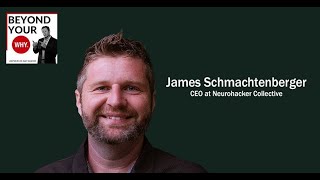
This is a podcast-style YouTube interview (Dec 7, 2022) in which Dr. Gary Sanchez interviews James Schmachtenberger, co-founder and CEO of Neurohacker Collective. Schmachtenberger recounts his atypical education and early entrepreneurship (buying a vocational college at 18), a severe burnout and recovery via IV therapy (including NAD), and the subsequent R&D that led to Neurohacker and products such as Qualia Mind (cognitive enhancement) and Qualia Life (mitochondrial/ longevity). The conversation covers Neurohacker's complex-systems science approach, product effects (focus, memory, mood, NAD increases), research investments, and where to learn more (neurohacker.com).
Chapters
Welcome to beyond you'd why podcast, where we go beyond just talking about your why and actually help you discover and then live your why. You see, we believe that knowing your why, that driving force behind every decision you make and every action you take, is the essential first step to really knowing yourself. It allows you to move forward faster and have a bigger impact. If you're already a fan of the show, then you know that every week we talk about one of the nine whys, and then we introduce you to somebody with that why so you can see how their why has played out in their life. This show will be more powerful for you if you've already discovered your why. If you still need to do that, head over to whyinstitute.com and discover your why today. It'll only take you about five minutes. Now let's meet today's guest. And so this week we're going to be talking about the why of better way to find a better way and share it. So if this is your why, then you are the ultimate innovator and you are constantly seeking better ways to do everything. You find yourself wanting to improve virtually anything by finding a way to make it better. You also desire to share your improvements with the world. You constantly ask yourself questions like, what if we tried this differently?
What if?
What if we did this another way? How can we make this better? You contribute to the world with better processes and systems while operating under the motto, I'm often pleased but never satisfied. You are excellent at associating, which means you are adept at taking ideas or systems from one industry or discipline and applying them to another, always with the ultimate goal of improving something. So today I've got a great example of that for you. His name is James Schmachtenberger. He is a successful serial entrepreneur with a lifelong focus on using business and innovation to affect large scale change for the benefit of humanity. James is the co founder and the CEO of Neurohacker Collective, a company focused on making groundbreaking products for health and well being through complex systems science. His area of expertise include neurotropics, anti aging and regenerative medicine, sleep and fast acting, fast paced entrepreneurialism. James, welcome to the podcast.
Thank you. It's great to be here.
Well, this is going to be fun. So tell everybody where you're at right now. And you're out in California, right?
Yeah, yeah, I'm San Diego based. At least most of the time. I do travel a decent amount, but always nice to be home, which fortunately I am right now.
Awesome. Well, so you And I got connected through an event that I was speaking @ with JJ Virgin, and I heard about your products. I use your products, but I didn't know from that bio that they were your products. So what, what, what is the most famous product that you have created that people might know.
About? So our, our flagship product is one called Qualia Mimes. It's a sort of broad spectrum cognitive enhancement designed to do a lot of the things that people traditionally look for when they go towards a cognitive enhancement, improvements in focus and memory. But then we take it many steps past that. So we are working on those things, but the goal was really how do you increase all forms of intelligence in a sort of sustainable and holistic fashion? So in addition to things like focus and memory, we're looking at things like critical thinking skills, improving discernment decision making, better visual reasoning, et cetera, pretty much the whole gamut. And then part of optimal cognitive function is also your state. How good do you feel about yourself? What is your outlook on the world? So in addition to trying to enhance brain function, it's also working to enhance mood and outlook so that not only do you have more intelligence, but more drive and capacity to pair with that enhanced.
Intelligence.
So I want to dive into that, but before we do that, because that's fascinating, and I'm sure that's fascinating to everybody who's listening. But before we do that, let's go back a little bit. Let's go back in your life. Where did you grow up? What were you like in high.
School?
So, I mean, I grew up. The majority of my life has been in California. My family moved here when I was like nine, originally from Iowa.
But so I didn't actually do high school. I was sort of homeschooled off and on throughout the younger part of my life. My parents did want my brother and I to go experience traditional school for a few years. So we had kind of the social interaction, but also just a connection to, in a sense of what everyone's experience is. But a lot of early life was homeschool and then.
Ended up kind of just skipping over the high school experience.
My last time in school was seventh grade. Then I essentially took a year off to watch.
Tv.
Hold on, hold.
On. We gotta.
Dump. What now? What did that, what was that you.
Said? So, yeah, my last time in school was seventh grade. After that I was supposed to go back into homeschool. I was. I basically just became disinterested. I was working with a tutor at the time and didn't relate to the style. So I essentially slacked off and spent most of the year watching television. And then, you know, from there.
Ended.
Up.
Essentially faking a diploma to be able to start going to college much younger than normal. So I ended up hopping into community college at 15.
And did a couple years of college.
Before realizing that that wasn't really my orientation. I mean, I loved learning, I loved studying, but I didn't love the traditional structure of studying. Depending on the topic, it was either too fast or too slow, but also just generally not that interesting. I was more of an immersive learner. And so I ended up, after a couple years, I stepped out of college. And my family always kind of jokes because right after I went out of traditional college, I started in a vocational college studying psychology and alternative medicine. And about a year into that, as I was graduating, there ended up being an opportunity to buy that school. And so Shortly after my 18th birthday, I went and raised some money and bought out the college that I was graduating from and spent most of the next decade running that.
So it was a bit of an abnormal life.
Experience. Yeah, I don't know many people that buy a college at.
18. I don't recommend it. No. I mean, it was spectacular for me in many ways, but it was also terrifying and daunting. I mean, I barely knew how to balance a checkbook, but all of a sudden I was responsible for, you know, tons of employees, hundreds of students.
So I. I got to learn.
Yeah. What was that like for.
You? It was. It was spectacular and devastating all at once. Especially the early years, you know, because I genuinely didn't know what I was doing. So, like, I. But I. I was so in love with what I had learned and what I saw as like, the bigger implications for the world of more people learning to live healthier lives, going into some of the domains of kind of psychology and personal development. So there was this huge mission and passion attached to it, but at the same time, I felt like I was failing. And so that first, essentially three years, I just made up for my lack of knowledge with work hours. I mean, I was working 20 plus hours a day, mostly never went home. I would, like, take a nap under my desk and then get back to work. If I did take time off work, it was usually to go to some kind of business workshop or marketing workshop and learn what I was doing.
So it was this weird thing because I was in love with it and I was also burning out. And by the time I hit 21, I was in full stage burnout, started having adrenal failure.
All kinds of cognitive issues. Started feeling depressed, which then made me start having an existential crisis because here I am doing this thing I totally love and I'm depressed and I couldn't make sense of it. So it was an interesting experience, ultimately a really beautiful one. Just maybe a little harder than it needed to.
Be. Wow. What did your family think when you said, I think I'm going to buy this college? Did you even graduate from the.
College? I, I was actually finishing my last courses when I ended up taking over the school. So I think I finished like two or three months after I owned the school, which also created sort of a weird dynamic being the owner of it and still being in class. And ultimately I loved the nature of the work. So I continued to study it a lot. After I bought it, I spent about five years in kind of a intensive, either one on one or small group studying with the man who had founded the school and just kind of went progressively deeper, particularly into kind of the psychology and personal development.
Domains.
Wow. I'm thinking if I'm listening to this now, I would be wanting to ask the question, okay, why would the founder of the school sell it to an 18 year old kid who hasn't even graduated yet? How did that.
Happen? That was a very common question. He got a lot of black for making that decision. You know, I had.
I had known him for a number of years, not particularly well before starting the school, but I had met him I think when I was like 10. And you know, I, I was so passionate about the work that I dove in in a way that not very many people did. I mean, it was supposed to be a two year program and I ended up doing it in a year.
And you know, I think, I mean, part of it was probably that he had been doing it for 20 plus years and wanted to slow down. Still wanted to teach, but didn't want to run the business. But part of it was, I think he saw something in me that he was willing to gamble on.
And I mean, luckily it worked out. In retrospect, I would have been one of those people being like, what are you doing? This is insane.
Yeah. At this stage of your life, right? If you were, if you were advising the, the person that started the, founded the college, would you advise them to sell it to an 18 year old who hadn't really.
Graduated? Probably not, no. No, it was a, it was an interesting experience. I remember when I was, the process, my, my dad had a quote that I thought was really funny. He's like, you know you're just naive enough to not realize what you can't.
Do.
I can see that. Okay, so now you're the 21 year old, burnout, depressed owner of a college to help people not get burnout and depressed. So what did you. How did that go now? Where did you go from.
There? So that ended up being like a big kind of turning point in my life and ended up being where the inspiration for Neurohacker, the company I run now, eventually where it initiated. So when I was 21, full burnout, lots of health issues, psychological issues. I started down my healing journey and there was all kinds of things I was doing. But I ended up getting introduced to this research physician in Mexico that had developed this specialized IV therapy for helping people recover, repair from all kinds of cognitive damage. Most of his work was actually for people recovering from drug addiction. But when I met with him, he's like, basically, what you've done to your brain not sleeping for three years is equivalent to a heroin addict. So I went and did three days of this IV for nine hours a day. And it completely changed my world. It wasn't like a subtle improvement. It was the lights came back on. The cognitive function that I had lost not only came back, but I had awareness of whole new aspects of cognition that I hadn't tapped into before. The sort of depressive experience went away and was replaced with the sense of confidence and motivation. And the piece that really stood out to me was my empathy shot through the roof. All of a sudden I stopped being able to think about what I wanted to do in the world without sort of automatically being aware of what the bigger implications of that were and how those actions would affect the people around me in the world at large. And it was actually like the reflection on that experience that told me this is the direction I wanted to go. Because I started to think about, wow, if, let's say, hundreds of thousands or millions of people could have this experience where they became more intelligent, more confident, more capable, and more empathetic. So they had an intrinsic motivation to use their competency and their intelligence for not only personal gain, but for greater purposes. That could be something that could really move the needle and change the world. And so that ended up being the original inspiration. Back then, I actually tried to partner with that doctor and was going to try to open up IV clinics all over the world.
And we started down that process, but very quickly into it, he ended up becoming quite ill and passing away. And most of his research went away with him. So then there was this beautiful Vision and no longer a path. And, you know, took a number of years while I was running other businesses, kind of continuing to study this in the background, meeting with neuroscientists, formulators, neurobiologists, to start to get enough of the sort of ideas and information together to be able to still create that vision, but through a totally different.
Modality. Wow. And so what was in the IVs that you got in Mexico? Do you know, like, what kind of.
Thing? Partially, no. The key ingredient in it was nad, which at this point is gaining significant popularity. NAD is a molecule naturally produced in the body that is sort of the primary energy source for all cells. So when you get increased nad, essentially health across the board starts to increase because your cellular health begins to increase, but it also has significant benefits on cognitive function and clarity. So that was kind of the key ingredients. And then there was a series of different amino acids to be able to kind of lever up what the NAD did on its own.
I still don't know entirely what was in it, because no one does other than him. But over the years, was able to kind of put the pieces together and recreate enough of it to kind of understand what was happening.
There. You know, I'm hearing more and more, in fact, at that event that. That I met your team, there was a lot of people talking about the.
Psychedelics.
Yeah. And was it. Was. Was any of that in there, do you.
Think?
So? I've had some people that also went through his work that theorized that one of the ingredients was ghb, which is a sort of increasingly popular psychedelic. It hasn't had as much attention as things like psilocybin or lsd, but is starting to gain more attention. It's actually a prescription drug used for sleep disorders, but in different application. And higher dose creates psychedelic experiences and puts people into very open, very receptive kinds of states, which gives the opportunity to.
Go into areas of your psychology or work on things that might not feel safe in a normal fashion, but being able to explore them in that state makes it much more accessible.
So I don't know for sure if that was in it. I tend to think it was.
Yeah. So, okay, you go down to Mexico, you have these IV therapy. It increases your empathy, it increases your energy, gives you more intelligence, more competence. You start to come back to yourself. Did you come back to yourself or did you come back to a better.
Self?
Sort of both. I mean, I was still myself. It wasn't like there was a fundamental change in my personality or my sense of self. It was just sort of in improved version. Like, I. I felt a lot better about who I was. I felt like the things that had always driven me, all of a sudden I had more ability to actually apply them in the world. So it was. It was still me. It was just an easier version of life through the experience of being.
Me. Okay, and so then you decided, hey, I want to get into this, I want to figure out how to do this. And you start down the path of creating IV clinics. That ended and then what happened to.
You? So we actually didn't end up starting to officially work on Neurohacker for a number of years. Still, the R and D process formally started in 2014.
And actually had a psychedelic component. But during the years in between, I was doing a number of other projects. Like I said, I ran that college for almost 10 years, ended up selling it in 2010. At that point, I got into the medical cannabis industry in kind of the very infancy of that space. I did quite a lot of business there, but I also got heavily involved in the public education side and then eventually the policy side. And for probably seven years or so, I ended up running a lot of the legalization campaigns and was building cannabis businesses, in essence, to be able to fund a lot of the political work and the public education work.
And, you know, during this time while I was running those businesses, I was continuing to study a lot of this domain. But I. I don't have a deep formal science background, so I was never in a position to be able to actually build the thing adequately myself. I. I kind of needed people and I had the vision, just not necessarily the know how. So actually, 2014, I went to Burning man, and Burning man tends to fall over my birthday this year. And so I decided on my birthday to take acid and go wander out in the desert by myself and essentially do this vision quest to figure out what I wanted to devote the next many years of my life to. And what ended up coming through really powerfully was this. This vision that you've had forever is too important not to create. However hard it is, whatever it takes, it has to happen. And so, on the drive home from Burning Man, I had gone there with my brother and I started a conversation with him and I was telling him about this experience. And even though he had known what I wanted to do for a long time, he didn't quite get the bigger implications of not just the positive effects on the individual, but the. The potential effects on sort of humanity at large. And as he started to understand that he's like, okay, I'll partner with you. And my brother's background is in complex system science. He's a brilliant, brilliant scientist and researcher. And it was his ability to bring that complex systems approach applied to the study of human physiology, which all of a sudden made the idea real. So we spent about two years after that in this heavy R and D phase, sort of developing the scientific model around complex system science and then developing our first product, which is now Quality of Mind, and then from there turned it into a company and started bringing its market in late 2016.
So long.
Journey. Long journey, but fascinating. And that I'm really glad we went back because now what you're doing makes more sense. And why I should listen to you makes more sense, right? Because there in your industry, how many.
Hackers without the bio are there out there? You know, how many just like fake, tiny stuff is out on the.
Market?
Unfortunately, the majority of it, yes. I mean, there are some really good companies out there. There's a lot of companies I respect actually. But when I look just kind of broadly at all of the sort of cognitive products that are being marketed, they have very little science behind them. And there's a lot of sort of marketing hype. I mean, I see these ads all the time of like, this is the pill that Warren Buffett takes to make all of his money. Well, Warren Buffett's never even heard of the thing, right? It's just completely made up. And then you look at the ingredients and you're like, oh, that's nice, right? Like it might do a tiny bit of something over the duration of many months, but it's not going to be a real impact.
And there's only a few companies that really seem to devote to research in an adequate fashion. And that's been the area that we've invested incredibly heavily. We're not even that big of a company. There's supplement companies that are.
Many, many times our size that still don't have nearly as much invested in R and D. You know, we have at this point a 6 person in house R D team plus a 30 person scientific advisory board outside of that and have done, I think going on 30 studies at this point. Because the goal is not just how do you make a profitable company, that's actually wildly easier. The goal is how do we actually advance the field of research and bring progressively bigger, better products, better science, better education to people in a scalable fashion that are both effective and actually safe. Because usually you have safe but not all that effective, or you have effective but not all that safe. Hitting both of those simultaneously really does require substantial.
Research. Yeah. So before we started, for those of you that are listening, I told James that in the building that my office is at, there is a place called the Optimum Human. And they only have the best of the best of everything there. I mean, the guy that. That started it, Matt Finkelstein, is. Has his wife is better way as well. But he's like us on steroids. Maybe not like you on steroids, because you're pretty much right there with him. But he flipped the words from better way to way better. So everything he touched has. Has to be way better. And he has quality of mind there. And so that's where the interest was for me in talking with you about this, because I don't. I didn't know much about it. I used it and I really liked it, but I didn't know. I couldn't tell you this story that we're getting right now. I couldn't tell you anything about the company other than if it's up there, then it's probably good enough for me. So this has been really helpful in figuring that out. So let's get to your. Your first big product was Qualia Mind. If you haven't heard of it, go take a look at it online. What does it do? What is Qualia Mind all.
About?
So, because of the scientific approach we've taken, it's an interesting thing, right, where most products on the market, if they are effective, they're trying to typically increase one or more neurotransmitters. And in our case, we're actually not trying to do that. The nature of our product is designed to bring the system into balance or homeostasis, and then increase capacity from there. So the idea is there are times where you need more of a certain neurotransmitter or times where you need less. And what we want is to be able to create the formulas that allow your body to do that in real time so you become increasingly adaptive to.
Reality. You know what, before we go there, why don't you kind of clarify for everybody what is a neurohacker? What is.
That? Yeah, so a neurohacker is. I mean, it's a term we came up with, but I mean, in essence, it's the intentional use of various forms of chemistry or technology to enhance neurology, to enhance your brain function. So in our case, we're more focused on the chemistry side, but there's all kinds of technologies as well. Things like neurostimulation, transcranial know, magnetic stimulation. There's, you know, but it's essentially rather than just kind of living life as a standard, it's choosing to really study and invest in what are the key things out there that can make meaningful improvements in the shortest amount of time possible within a reasonable safety.
Profile.
Okay, so that led you to essentially, we want to let find a way to make our brains work better. Right. It's a. How can we hack the system to create a better life through enhanced brain.
Function. Right.
Yeah. So that led you, that led you to quality of mind, which does that. So if I take quality of mind in layman's terms, what is that going to do for.
Me?
So the primary things that people experience right out of the gate, like most people have a positive experience within the first day or two. And usually what you start to notice right away is reductions in procrastination. So the things that have been sitting on your desk for way too long, all of a sudden you feel motivated to do them. Improvements in processing speed. How much information can you digest and make sense of and how quickly can you do that?
Improvements in memory, both sort of short term and long term. But you know, one of the key areas is actually working memory. How much information can you kind of hold in real time in a given moment? And those things all, you know, generally start to take place within very short order and then become progressively more so over the course of a few weeks. Because some of the things like memory takes a little bit of time for the nutrition to kind of work inside your system before you get the full benefit. But you do usually start to notice some of those changes right out of the gate. And then there's key changes in sort of mood and outlook. Almost everyone who takes the product has, you know, starts noticing that they become more present. And that's actually one of the pieces I enjoy hearing about the most. Like, of course, I love hearing people being more smarter and more intelligent and more effective. But when people write in testimonials that all of a sudden they're more present with their family, they're more in tune with their children, with their relationship, they see improvements in their meditation practice, these kinds of things are the things that tend to excite me the.
Most.
So how is qualia mind different than taking a handful of vitamins? Because you see these different vitamin packs that promise the world.
How is it different than just your typical.
Vitamins?
Substantially so. I mean, we, we do include a number of vitamins because there are key vitamins that the brain needs to be able to Operate in and even just functionally, but particularly optimally. And most people don't get enough vitamins in their diet. So there are things there, but there's all kinds of minerals, there's many types of amino acids, botanical extracts, and each one is designed to be able to support different aspects of brain function. Some of them are being able to support better production, dopamine, serotonin and acetylcholine, and to do those in multiple fashions. Because everyone's physiology is so different. If you just use a single ingredient or single approach, what ends up happening is something will work well for one person, but won't necessarily work well for somebody else. So the nature of how we've designed is we're usually using multiple ingredients for each use case, and as a result, being able to get meaningfully positive effects across almost everyone. Like when we've done kind of surveys around it, we see about 92% of people who take the product notice a meaningfully positive result. And if you look at kind of supplements in general, from the stats I've seen, it's usually about a 15% positive response rate. And so if you just take a good multivitamin for the brain, about 15% of people will probably have a good effect with that. The way that we've approached it with this much more complex orientation, it allows for a higher degree of effect, but also to affect a much larger.
Population.
What I like about what we're talking about is I have a friend who has one of the larger.
Not vitamin companies, but Neuro, not Neuro.
Oh.
Like a vitamin company, essentially. And I asked him, I said, what percentage of health fitness would you attribute to taking the right vitamins? And he said, well, he said about less than 4%.
And so what you're talking about is something totally different than that. What you're talking about is the.
Mind versus the body for this particular product. Yes. I mean, we do have other products that address different parts of the body at this point.
I don't disagree with him in general, I would orient it at a higher percentage than that. But one of the things where I think people do kind of get off path sometimes is, you know, they'll find a great supplement and they'll be like, oh, I'm going to do this, but it's kind of the only thing I'm going to do. And that doesn't really work. Right. Supplements are based on their name. They're designed to be supplemental. Right. This is on top of a healthy lifestyle. If you're not getting good quality sleep or enough of it. If you're not exercising, if you don't have a good diet and you take supplements, it'll help somewhat, but it's not going to help nearly as much as if you're actually doing all the baseline things that we all know to be doing just maybe aren't right. When you actually are doing those things and then you take the right supplements on top of it, that's where you start to get the kind of exponential benefits that kick.
In.
You said that a lot better than what I was. You said what I was trying to say, but much better. That's what I meant. If you don't follow all the other things, you just take a supplement, it's not gonna do much for you. But if you do everything, it's kind of like that last little thing that'll get you to another level, but only if you're doing the rest. But what you're talking about is not necessarily related to that. What you're talking about gets your brain thinking better, gets you, your brain functioning better so that you want to do those other things so that you have a better outlook, you are more present, your brain process is faster. Is.
That. And what you just said there is actually a really key piece, and it was for me personally, because, like, you know, when I hit such a degree of burnout, I knew that I should be exercising more, I knew I should be sleeping better. I just couldn't. Right. I didn't have the energy, I didn't have the wherewithal to make it happen. And so, you know, starting to get into nootropics and, you know, eventually into our product, like that gave me the energy, the motivation to be able to actually then start doing all of the other lifestyle factors. So it kind of goes both ways, right, because you get an increased benefit when you're doing the right supplements on top of everything. But if you also know you're supposed to be doing it and you just can't get there, sometimes the right supplements can help you kind of get over that edge and be able to take the right actions that then move everything in a better.
Direction. Okay, so now you've developed qualia mind. And then what took place after that? Because I know you've got other products, because I have one. And what are the other products? And what was the reason for developing these other. And going in these other.
Directions?
So, you know, once we developed qualia mind and we started seeing just these kind of remarkable types of effects with people, what became clear was that that same model of science we developed this complex systems approach, could be applied to almost any aspect of physiology and allow for creating meaningful products for addressing almost everything. And so, you know, we. We take this sort of like, foundational approach, right? So getting people's brain function in order seemed just absolutely necessary for everything. From there, we said, well, you know, what. What comes next? Right. And that ended up being, let's focus on cell health. And, you know, that. So that puts it in the domain of longevity. And, you know, increasing life expectancy is great, and it's definitely something that we're trying to, and I think we're achieving. But more important than that is how do we improve health as a whole, and how do we make sure that the years that you are on the planet are as healthy and vibrant as possible? One of the key ways to do that is go totally foundational and make your cells work better. We ended up developing a product called Qualia Life.
It's a mitochondrial formula which is basically designed to increase the amount of energy that your cells can output and increase cellular metabolism. And as a result of these things, your cells start to work better, which means all of your tissues start to work better, which means essentially all of health begins to improve in meaningful ways. This particular product does focus to a significant extent on nad, which we talked about a little bit earlier. It's not only focused there, there's actually many pathways that we're touching on. But NAD is one of the key ones and one of the few areas with that product we've had the opportunity to study so far and actually saw remarkable increases in the amount of NAD levels in people's blood.
So we went basically from cognition to longevity. We're still continuing to build products in the longevity space. We just a few months ago released a product called Qualiacinolytic, which most people don't know what a senolytic is.
It's essentially a kind of compound that gets rid of senescent cells, which are also referred to as zombie cells. It's when cells basically, when they're healthy, are supposed to be able to continue to divide and replicate, and then when they lose that ability, they're supposed to die off. But as we age, and particularly as our immune system stops working as well, a lot of times what happens is cells lose that ability to continue to replicate, and. But they don't die off, and they just sit there and they take up resources that could be going into healthy cells. And even worse, they emit these chemicals that turn the rest of the cells around them senescent. And it Speeds up the whole aging process. So that's one of our more recent products, is being able to help those senescent cells basically clear out of the system and allow all of the resources going into healthy cells supporting better aging across the board. So we've continued in the longevity space, but we've gone into a number of other areas. We have a product for being able to support improved vision. We have products for increasing energy. We're just getting ready to launch a product for.
Improving gut health, both at the level of the gut, but also with a cognitive focus. Because as most people don't necessarily know, the majority of your neurotransmitters are actually produced in the gut. So when gut health becomes off, not only do you have whatever digestive issues might come from that, but it has a serious impact on mood and brain function, though, where that product will be coming out probably in about 4ish.
Months. Okay, so as another better way guy, talking to a better way guy, because that's my why as well, what do you think is going through my mind right now when I start to hear about all these products and.
See, because from my perspective, and as maybe a consumer's perspective, what I want is one thing. I want one. I don't want 10, I don't want a handful. I want one thing that's going to give me the biggest bang for my.
Buck.
Right. What would that be? If you have all your products, If I was only going to take one. If you're, if the listeners are listening and they say, hey, that all sounds great, but I want to try it and I want one thing. What is the one I should start.
With?
So, so I agree with you. Right. Ideally there'd be one product. The inherent challenge there is, it would be a very expensive product and a lot of volume of capsules to take. But if, you know, if you look at the things that we're doing and you're going to pick one, I'm going to break your rule and I'm actually going to give two. Okay, so. And it depends on what your need is. Right. So quality of mind would be a key one, right. If, if the need is to be more motivated, have more intelligence, be able to be more effective at what you're doing in life, then quality of mind would be that one. And it's not just a cognitive product. It has benefits across all kinds of things, but it focuses there. If your primary goal is kind of improved physical health, longevity, improved recovery energy, then I would say quality of life.
And so like those in many Ways like, those are probably my two favorite products. I take all of them. But, like, those are the ones that I'm kind of religious about because the effects are just so significant that it doesn't make sense not to. So if you're picking one, it's like one of those two, depending on.
What the need is, you know, that's, again, one of the challenges I think, that the supplement has, which I don't think you have, is I take a handful of stuff and I don't really feel anything. I don't know if I take it, I don't take it. I don't notice any difference. But with your products, you do notice a difference and you do feel different and your mind is different. So it gives you motivation to take.
Them.
Right. There's not much motivation to. To spend a hundred dollars a month taking a handful of vitamins, and I don't notice a thing other than very expensive.
Urine. Right, right. It's hard to go on faith with something like that. Right. I mean, and if you understand the science behind it, and it's like, okay, it's not just faith. Yes, there are some of those things that really should be done. But ultimately, for sure, if you can actually have a noticeable benefit, it's. I mean, not only is it a better experience of life, but it becomes much easier to actually make it a consistent practice. And that's part of why we invest so much in research is we, we don't want to create things that you have to go on faith with. Right. It's like you want to have a real experience and know that things are getting better. Be able to feel those changes in your body, be able to feel those changes in your brain and in your.
Mood.
So why the name.
Qualia?
So qualia is actually a term from philosophy. Most people aren't familiar with it, but essentially what it means is your subjective experience of self and life. So how do you perceive yourself? How do you feel about yourself and how do you feel about the world? And the reason that we chose the word qualia is our aim was to enhance or upgrade that subjective experience.
So it's a little nerdy, but it's really good. It has a deeper meaning behind.
It. Yeah, it has a meaning which is important instead of just a cool word. It has actually some meaning. And, you know, for those of you that are listening.
James's why is better way to find a better way and how he does that is by simplifying things, making things simple and easy to use. And ultimately what he brings is a Trusting relationship where people can count on him. So things have to be better, simple and create a better relationship or be trustworthy. So that's super helpful to know because you take things and simplify.
Them.
Right? Isn't that kind of the essence of what you're.
Doing?
Yeah, I mean, I definitely don't do it on my own. What I sort of do is I, I find the best experts in the world doing the most complex, interesting things and then figure out how to work with them to take that complex, innovative, hard to access thing and make it accessible and simpler. So I'm, I, I tend to serve that kind of intermediary role between what is, you know, what is cutting edge, what is impactful, and then how do we actually make it something that people can.
Access.
And do something with so that it's, that it's useful. So if.
Last question. What's. It's totally. It can be unrelated or related, but what's the best piece of advice.
You'Ve ever received or you've ever.
Given.
So that. Actually, one of my favorite quotes comes to mind there, which is don't ask what the world needs. Ask what makes you come alive and do that. Because what the world needs is people who have come alive.
And that particular one, when I heard it, really stood out to me because I've always been someone who had a very strong drive to try to improve the world, improve quality of life. Um, but for most of my life, the way that I did that actually didn't make me come alive. It tapped into that sense of purpose in a really beautiful way. But I was running myself into the ground. And so it was sort of an upgrade in the way that I was holding sort of an earlier understanding of how to be, which was how do you know? How do you live your purpose? But in a way that actually.
Enhances and makes your own quality of life extraordinary. Because by doing that, you inevitably have more energy, more passion to actually deliver on the goal. And it took me a long time to learn that, and in many ways I still.
Am. Can you say that again? Wait. Don't do what the world needs. Do what makes you come.
Alive? Yes. Don't ask what the world needs. Ask what makes you come alive. For what the world needs is more people who have come.
Alive.
I love that. I'm trying to write it down. So that, that was really good. I totally agree with you, but I'd never heard it put that way, so that was awesome. So, James, if people are listening and they want to learn more about you, want to learn more about your company and your products. What's the best way for them to get in touch with you or your.
Company?
So I in either case, I guess best way is go to neurohacker.com.
That'S where you can find information about all the products, all of our research, all the education, and also kind of the best and easiest way to connect with me.
Personally. Awesome. James, thank you so much for taking the time to be here today. That was super fascinating and I'm going to run up after we're done and get both of those so I'm going to get the quality of mind and the quality of.
Life.
Awesome. Thanks for.
Sharing. Well, thank you. I really, really enjoyed this. It was a great interview and appreciate you having me.
On. Thank you so much for listening. If you have not yet discovered your why, you can do so@whyinstitute.com with the code podcast50. You'll get it at half price. If you love the beyond you'd why Podcast. Please don't forget to subscribe below and leave us a review and rating on whatever platform you are using to listen to the podcast because it really does help to get the word out and help us impact a billion lives in the next 15 years. Thank you so much for listening. I will see you next week.
I really hope you enjoyed today's episode and that through today's guest, you heard how important it is to know your why and how impactful it can be in your life and the lives of those around you. Be sure to head over to whyinstitute.com and discover your why today. Remember, the more you know about yourself, the more you'll know about others. I'm Dr. Gary Sanchez and I'll see you on the next episode.
More from Dr.




Women In Leadership: A Need For A Greater Systemic Change With Belinda Clemmensen






