You can only grow your business as much as you grow yourself: An Interview Joe Apfelbaum.
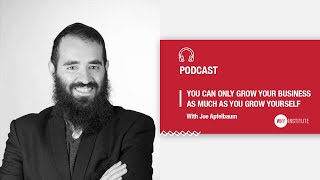
Joe Apfelbaum, CEO of Ajax Union, talks about his journey from 265 pounds and self-doubt to 170 pounds and running a Brooklyn marketing agency. His framework: recognize the problem, build strategy, then stay accountable. He explains why networking, keeping promises, and education-based marketing matter more than the pitch.
Questions this video answers
To find a better way and to share it.
Lost about 95 pounds (from ~265 lb down to ~170 lb).
Over 1,100 companies (since founding).
Recognize (awareness) → Strategy → Accountability.
Chapters
This episode of beyond you'd why is brought to you by our why App. Head over to why institute.com to take our free why app and discover your why today.
Hey, welcome everybody. I've got a great podcast for you today. You know, like I told you, I'm going to bring on different guests that have different whys, so you get to see how their why plays out in their life. And so that you also get to learn more and more about each of the different whys so that you can learn how to play full out in your life. And so if you haven't taken the why app yet, go to whyinstitute.com take the why app, and then my first couple of episodes are all about the different whys, the nine different whys. So I'd love for you to learn about those and then come back and and learn from today's guest. I got a real special guest for you. You know, they talk about you have to have a lot of passion for what you do, because passion is that fuel that gives you the energy to pursue your dreams. Without passion, you don't have anything. And when what you do is in line with why you do what you do, you will have passion for what you do. That's where passion comes from. So I want to show you some guests that are living their passion, that are living their why. Because when you know your why, what you do has more impact. It has more meaning, it has more focus, it has more direction. And so today's guest is an awesome example of that. And what I want to do is I want to read you his bio, because it's very long and it's a very fascinating bio. His name is Joe Apfelbaum, and I love saying that name. There's not many Apfelbaums here in Albuquerque, but Joe Apfelbaum, I hope I'm saying it right. He's the CEO of Ajax Union. It's a B2B digital marketing agency based in Brooklyn. Joe's a business strategist, marketing expert, and certified Google trainer. Joe enjoys speaking and writing about marketing, business networking, and personal development in his seminars, webinars, and articles. Joe is the host of a popular podcast called the Breakthrough Maze, Inc. 500 podcast and the CEO Mojo. Joe has been featured on popular podcasts including Entrepreneur.com and B2B Revenue Podcast. He's the producer of Growtime TV and has published over 500 motivational street talk videos on YouTube. Joe is a contributing member of the EO Entrepreneurial Organization in Brooklyn, a group with over 12,000 CEOs and an active member of Executives Association, a premier business networking organization, and New York City, Joe has lost 95 pounds and kept it off. Joe's a selfie master. He's taken over a thousand selfies a year with entrepreneurs and makes hundreds of introductions to business professionals in his network. Joe's proud of all his accomplishments, but most of all, he's proud of his purpose. His beautiful, amazing kids. Joe, welcome to the podcast.
Oh, thank you so much for having me here. I'm so excited to be on the program. Thank you.
Well, you know, we met through a mutual friend, Philip Lanos, and I'm so glad that he introduced us to each other. It's great to be talking to somebody with your why of better way.
Because better way and to share it.
Yeah, exactly. So tell everybody how you discovered your why.
So I was looking for a way to brand my own personal brand. So I have Ajax Union, which is one of the fastest growing companies in the United States, where B2B Digital Marketing Agency. And I started the business about 10 years ago and I started saying, you know what I want to find in order for our business to really be successful, I need to be. I need to be successful, right? Jim Rohn says, you can only grow your business as much as you grow yourself. So I really wanted to grow myself and I had to find how can I get more comfortable with public speaking? How can I get more comfortable with putting my selfie online? Because I was really afraid of putting my photo online. I thought people would judge me. I had all this fear and self doubt and all that stuff. And I see a lot of people out there that put their logo on their Facebook page or on their LinkedIn page instead of putting their face. And the excuse that I used to give that many other people give is I'm a private person. I don't share my face on social, dude. When I go to a networking event, I don't wear a mask and say, I'm a private person. Right? So I had to find a better way for me to feel comfortable with who I was. So I started hiring coaches and consultants and I actually spoke to a consultant, a coach that actually branded Simon Sinek. So the guy that branded Simon Sinek and he wanted to charge me a lot of money to kind of brand myself. So I said, you know what, let me, you know, when I get to a certain revenue level, I was talking to my partner, he's like, go to that guy at that point. So, you know, he had a system where you Go to his house in New Jersey for like two days and he like tears your past apart and your, he has like this whole thing. Anyway, so I said, you know what, I'm going to just hire coaches that I can speak to on a weekly monthly basis to try to find myself. So I started hiring all these coaches and consultants and stuff like that. And finally I found this one guy that took me through a whole journey of self discovery. And it was all about finding out my strengths, like what my top five strengths are and finding out my personal values and finding out my why and my issues and why there are issues in my life and my frustrations and what, what has made me successful in the past and what was I really proud of and like all the stuff. And I put it all together and looked at my whole history and I even wrote a book about my journey to try to find the greatest moments in my life. And when I discovered my why, to find a better way and to share it, everything started to make sense. Because I used to be so frustrated that I would start things and not finish them. And every single time I tried to get to 80%, then I would want to start something else and try to find a better way to do it and a better way to do it and a better way to do it and a better way to do it. And even if I found a better way, there's always a better to the better way. And what if there's another option? What if there's another choice? And I'm always like, and I made my wife crazy because her why is to do things the right way. And so like I made and my brother's why is to do things, to make things simple, to simplify things. So I would make things more complicated for him. He's the organizer, I'm the creator. And it was just like a non stop.
The self doubt that I had was because I wasn't comfortable with me keeping to change. I kept changing and changing and progressing and my whole life my wife used to say, you're obsessive, you're an extremist. And I said, yes, I am an extremist and I don't really like it. But now I started loving myself because I realized there's a lot of people like me. I joined entrepreneurs organization. I started finding a lot of entrepreneurs that like to find a better way and they need to partner up with the right employees and the right partners that their why is something else that would complement them. And like you say their why is my how or their why is My what? And ultimately, that's how I'm going to be able to be successful, by surrounding myself with the right people. And so I feel just tremendous when I found that out, and I wrote it down on a piece of paper and I had my vision on a piece of paper and who I am and my strengths and my values and my agreements. And I read the four agreements, and I started realizing that, oh, my gosh, I have all these agreements that I agree to that I didn't even know I had an agreement to have a beard, and I didn't even know I had that agreement. Just fantastic. Just fantastic.
So it's funny, you know, if you're listening to this, you can't tell, but if you're watching us, you can tell that I'm laughing because it's funny hearing you speak, Joe, because you are speaking my story. You are speaking my language. That's exactly what. What happened to me, and that's exactly how I think. And at a certain level, you think, man, am I just crazy or something? What is going on here? Why can't I finish this? Why am I off to the next thing? And again, it does drive people crazy, but it's a gift, huh? When you saw it as a curse, it held you back. But when you see it as a gift, it changes the way you think.
Yeah, no, absolutely. Absolutely. You know, the key is when I take. When I coach. Now I'm started coaching a lot of entrepreneurs because I realized a better way of doing it for you is teaching you how to do it yourself. And probably in a year from now, we'll have another better way to do it. So in the meantime, I'm coaching entrepreneurs to help create massive results in their life. And one of the. And I created a better way to do it, which is having an actual framework with three steps, which is I first create awareness, then I have a strategy, and then I have accountability. And I take people through three steps within each part of the framework. And when I walk people through the steps, one of the steps is to help them determine what their issues and frustrations are. And accept them. You have to accept yourself. So whether it's a strength.
Which is really also your weakness. Every strength is also your weakness. You have to accept it. And once you accept it and you become proud of it, and you realize that, you know what? I am proud of my strength and also my weakness. Because you cannot have a strength if you don't have a weakness. You cannot be fire if you're also water, you cannot be water if you're also fire you. You have to know who you are. Be polarizing, don't be crazy, but be polarizing. Definitely don't be mainstream because then you're nobody. You want to be a little off to the right or a little off to the left and know who you are, stand for yourself, love yourself with all your heart. And that's how your passion and enthusiasm is going to show. And that's where I feel like I have vitality, you know, when I don't have any power and I don't have any freedom and I don't have any the ability to express myself the way I'm expressing myself right now. And trust me, if you go back five years and you take a look at the person that I was presenting at that point, I was self conscious, I was scared, I was hiding. And I didn't even know that. I would have never admitted it because I didn't have that awareness. And I definitely didn't have acceptance. Now I accept myself for who I am. I see why my mother loved me so much.
Well, you know, one of the things that I talk about when I'm speaking at events is the power of transformation. And you hear all of these gurus talk about, hey, you've got to change your brain, change this, change that, change all these different things. And for me, what I always say is transformation is not about trying to be someone else. Transformation is about you being you. But you first have to know who you are in order to be that person. How can you be who you are if you don't even know who you are? And that's where the why comes in to really help you understand who you are, wouldn't you say?
Absolutely. I actually had a very big issue. And the reason why I was searching so much is because I wanted to create a new me. And the journey of creating a new you is a disaster. It's the worst thing ever. Instead, I found the right coach that actually practiced the why method. And he taught me that you don't have to create the new you, you have to discover the you. And if you want to transform that you, then it's up to you to figure out how you want to transform it based on your values. Now you have needs. He taught me something interesting, and I also learned this at Tony Robbins, is you have needs and you have values. And sometimes your needs and your values are very different from each other. And sometimes you're willing to sacrifice your values just to get your needs met. And if you don't know who you are and what you value, and you haven't discovered that, and you're trying to create something else based on your neighbor, based on the Joneses. That's never going to make you feel fulfilled and successful. And the worst thing for somebody is to actually be successful and not feel fulfilled. Have you ever met a billionaire that's on his sixth wife and is trying to figure out what's wrong with all these people in the world? And I say, what do you have in common with all the people that you married in the divorce? He's like, I don't know. There's a lot of things that they have in common. I said, hang on a second. You're the common denominator here. He's like, no, it can't be me.
Well, I got a question for you. How did your wife feel? What did your wife say when she. You said, honey, my why is to find a better way and share it. What did she say?
She's like, you really need to get help. This is another tactic. This is another tactic to change the way that we're living. You have to do things the right way, and the right way is this way. The right way. I'm like, okay, listen, I probably shouldn't tell you this right now, but I think I have a better way of doing things.
Yeah, it didn't go very well. But you know what? If you have integrity, then you have power. What I realized is I lacked integrity for a long time. I wasn't keeping my word. I would tell her one thing, but I had a better way of doing it. And so I didn't have integrity with my word. I'm not saying morality. I'm saying, like, integrity. When I said something, I would be there at a certain time, or I even wouldn't even say it. I'll just say, yeah, I'll do it. But I wouldn't say by when I would do it. And that's not a better way. That's literally the worst possible way. Not having integrity. But I didn't even know what the word integrity meant. I thought integrity was morality. I was completely confused. Now I teach promise management to my employees and to my coaching clients and to my children. And they have to understand what does it mean to have an agreement. Because reality, believe it or not, ladies and gentlemen, reality exists only within agreement. And this is something that when I learned this, I went to Landmark. I went to all these classes. I. And when I learned this, my mind was completely blown because I thought that my reality was reality. But the reality is, the truth is not what you think it is.
Go.
A little deeper into that. You said reality only exists within agreements.
Yeah. So I'll give you an example. Let's say me and you are looking at a color and we both agree that it's white. Does it matter if the color is really purple? No, we both agree that it's white. But if we have a hundred people and each person has a different opinion of what the color is, one person says it's purple, the other person says it's white, the other person says it's green. Every person has their own reality. So no one's going to agree as to what happened or what it is. Everything in the world, everything in the world could be perceived based on your perspective. So if you have a negative perspective, where the cup is always half empty, well, you're going to see it in a negative way. You're going to see a problem. You, if you have a positive perspective, on the other hand, and you're full of gratitude, you're going to see the cup half full, and you're going to see, instead of problems, you're going to see opportunity and everything in life. If we can both agree, if we're working together and we both agree to always look things in a positive way and always try to find a way forward, we're going to be much more successful than if we both agree to have a negative reality and instead be stuck. So reality exists within agreement. If I don't agree to be able to live with somebody else in a certain way, then when you don't have agreement, I always say this. The only way that you can have disagreement is if you don't have an agreement to begin with. And there's always an agreement. They say if there's a will, there's a way. And if you don't create a will, the state will create a will for you. And if you don't create a partnership agreement in your business, guess what? The state has a partnership agreement for you. There's an agreement there, a default agreement there for you. And that's why I always tell my clients and my students, you have to define and become aware as to what your agreements are. And to figure out, are these my standards? If your standard is right here and you haven't discovered your why yet, you need to up your level, discover your why. And that way you can up your standard. And guess what happens when you up your standard. When you up your standard, you up, your entire life changes. I know. Gary, you used to be a dentist, right?
I still do, yes.
You still are a dentist. And if you take clients that don't want to pay you and, and that don't value your services and your standards really, really low because you're desperate, then what? You're going to end up having negative Yelp reviews. You're going to end up being frustrated with your clients that you're helping them with their teeth, Gosh darn it, with their teeth. You're helping them be able to smile and have a shame upon them. And what ends up happening is if they don't appreciate what you're doing for them, they're the wrong clients. So you have to up your standards, you get higher, better clients and you end up getting higher fees and you end up getting more satisfied clients because they have, they appreciate your why. Now, there might be another dentist that has a different why than your why. Your why is to find a better way. And so you want clients that can appreciate that why and will pay you top dollar for that. That's your value proposition. A lot of people talk about what's your value proposition. Your value proposition is your purpose. Because when you tap into your why, when you tap into your purpose, suddenly you start being more enthusiastic and more confident and, and I don't know if you've ever gone to a show, any type of show. If you get up and see a musician or a comedian or an artist of any form and they get up and they're really shy and they're really timid and they're really not confident, you're not going to have a good time watching that. You're going to cringe because you're going to see the lack of confidence within you and relate to that and you're not going to want to see that. But if somebody gets up and they rip their shirt off, I mean, I don't know what type of show we're talking about here, but they rip their shirt off and they're like, yeah, I don't care how ugly the person is. I, I don't care if they sound like crap. I don't care about anything. If they're showing their true self, their full on total enthusiasm, well, no one's going to stop that person. Everyone's going to encourage them. I got up in front of 100 CEOs yesterday at a networking event and I recited a poem, a 30 second poem, as my elevator pitch. Now, it took a lot of courage to do that because I had to do it from memory and I had to present my poem. And the week before I did a wrap and it Went like this. Yo, yo, yo. My name is Joe. I'm the B2B. 2B 2B Sales Pro. I do 10x conversions. I make it rain. You should hire me so I can solve your pain. And, like, everyone's like, oh, my God, it's the best thing ever. Because that's a better way to do an elevator pitch.
Would you have done that five years ago?
Absolutely not. Absolutely not. Once you discover that, it's okay to keep changing, I used to think that, you know what? Why don't I just be like everybody else? Why can't I just. Why. Why try to. And my partner used to tell me that. He's like, dude, don't try to always grab attention. I said, but I have attention deficit disorder. I have an attention deficit. I need more attention. He's like, no, that's not what it is. It's whatever. Anyway. No, but that's a better way to define attention deficit. I have a better way to define it. I'm redefining attention deficit. It just means you want more attention. That's all. That's all. Those kids want more attention. I want more attention. Why? Because we had a lack of attention growing up or whatever it is, or because it's a better way to get attention. Because I have value to add. And I used to get negative attention. Now I get positive attention because I'm a thought leader and I'm reading hundreds of books and I'm delivering tons of value, and I'm teaching people about networking and prospecting and growing their own personal development and becoming more productive and goal setting. Could you imagine the confidence that people have when they have clarity around their own personal brand? And. And again, it's not about finding and creating some brand. It's about discovering who you are. Same thing in your business. If you want to have a productive business, you got to discover the values of your business. And I thought I had to create value. You don't create values, my friends. You have to literally discover them. Discover your why. Discover your values. Discover who you are. And if you don't like it, then you can transform it to something else. But you're starting from something. Something already exists. When people tell me why, I have 500 connections on LinkedIn. I have a thousand connections on LinkedIn. I'm like, who are they? They're like, I have no idea who they are. I just need more connections. You don't need more connections. You got to discover who already trusts you. That's my first step, is recognize, then strategize, then prioritize When I teach networking, this is what I teach. I'm doing a networking masterclass. And I have the courage to teach people these things because I am looking for. For a better way for people to network, for a better way to set goals, for a better way to be a real estate agent, for a better way to be an entrepreneur, for a better way to be human. That's what I'm constantly doing. And you know what? There is a pitfall to it. Sometimes you have to realize when to leave it alone and allow it to flourish. I'll give you an example. Let's say you're trying to make a plant grow. So if I'm constantly meddling with it and constantly trying to find a better way to make the seed rot and a better, it's never going to grow because I'm always going to be changing the water and finding a better way, and maybe it's a faster way. So at a certain point, you have to let your people take over and say, you know what? Create the process, fix the process, move on to the next thing so that that thing can germinate. So you have to be clever. So the better way of the better way is sometimes not to have the better way. On some things. You got to be smart enough to kind of have the balance. And for me, I had to learn that in my own business. And I came up with a quote in 2013, which is micromanage the process, not the people. So I have to micromanage the process. I'm constantly refining the process, and I'm throwing 10, 15, 20 ideas at my people every single day because I'm working on my idea muscle. But guess what? They have the right to veto every single idea. I am just a monkey, the ideator that throws stuff at you, grab what you can, and they respect that. I have an agreement with them where they have to respect my ideas, because if they don't, not going to be able to do my purpose. My why is to just deliver better ways. So the same thing with my clients. The one person that I've stopped coaching and my relationship got much better since I stopped coaching this person. You can already know where I'm going. My wife. I stopped coaching her because I had a coach that told me, joe, coaching without permission is criticism. And permission is when they pay you, not when you pay them. Coaching. Yeah, write that down. Because that's. That's literally the best. The best relationship advice I've ever been given, both relationships with my wife and with my friends. Because, believe it or not, I don't know how to turn it off sometimes. And I'm with my friends and I'm coaching them like, oh, you know, there's a better way. And they're looking at me, they're like, dude, that's not empathy. That's not empathy. Leave, Joe, leave. If you're going to wear your coach hat on here, leave. We don't need the coach right now. We just need a little empathy. And I read an amazing book that there are three steps to empathy. Step number one is mirroring. This is for the men out there that have absolutely no empathy like me. Mirroring. Step number two is validation. And step number three is empathy. So what does it mean to mirror? You repeat back to the person what they said in their own words, in your own words. So you don't repeat exactly what they said, but in there. So you just. Basically. So I think I heard you say, bop. Up, up, up, up. Then you, then you, you make sure that it's what I say. The second validation bearing validation. So you validate what they said. So you say, oh, that makes sense. It makes sense that you would feel this way. And this is why it makes sense. And then empathy means you feel what they feel as if you're in their shoes. And that's empathy. If you just say, oh, sorry about that. Sorry you feel that way. Oh, poor you. You know the worst thing I can do to my wife when she tells me she's tired, I'll say, oh, poor you. No, don't do that. That is terrible for your relationship.
Because I thought that was a better way, but it wasn't.
I love that what you said. Coaching without permission is criticism because that is so simple for all of us to do, right? Just let it come out and then wonder why they don't like you.
Yeah. And you know, for me as a better way person, for those of you that are listening, that are better way people, for me, the key is to ask permission. So when you ask permission, they give you permission. And the best way to ask permission is to ask for money. Because if someone's gonna pay you, you know, that's the leverage that some people need. I found that the leverage to get people to get things done is charge them. If they pay you, they'll get it done. Or for, you know, for people to pay me. I just recently launched a goal setting masterclass and I had 17 people pay me to do the masterclass and I had to then go create the masterclass. I first sold it and then I created it for me that's a better way. First sell the product and then create the product. I, you know, I got a 10 out of 10 review on every single class. I did six classes. It was really fantastic. But my point is, get people to pay you or you pay people, and that way you have that permission, but ask for permission before you coach somebody, and this way you don't get stuck.
Oh, I love that. You know, I want to go back to one thing you said there when you were talking about get agreements. So do you have, like, written agreements with everybody you interact with? What does that look like? How do you tell me about that?
There are certain agreements. So there's a book called the Four Agreements. If you haven't read the book, I highly recommend everybody reads it. The first agreement is be impeccable with your word. Right? So just really, like, have integrity with your word. Like, never use your words against yourself. The second agreement is it's important for you to not assume things. You want to make sure that you don't make assumptions, Right? A lot of people are out there, they're making assumptions constantly about everything. And when you're making assumptions, you make an ass out of you and me. That's the saying. But the reality is don't assume negative intent. Somebody tells you something, just ask, don't assume negative intent. And then the third thing is, make sure that you understand. So the first thing was given to yourself. Exactly. And the second thing is don't assume. The third thing is what my mother always taught me, which never take anything personally. Never take anything personally. People are going to say things to you. They're saying things to you based on who they are. So you have to have an agreement with yourself not to take things personally. And the last thing is always give your best. Because sometimes we want to give up and not give our best and not try our best so that we don't feel bad that we didn't try. At least I didn't even try. I spoke to an employee recently. I'm like, what's going on with you? They're like, I'm like, are you giving 100%? Because it doesn't seem to me that you're giving 100%. They're like, I'm really not giving 100%. I'm only giving 50%. I said, why are you not giving it 100%? They're like, I'm afraid that if I give 100% and I fail, I'm gonna have to quit my job. And I said, I promise you that you give 100%. I will make sure that you don't get fired because you gave it 100% and that's what matters. Let's have an agreement around that. So the only time I create agreements is when I have a breakdown. I'm not going to create agreement with everyone. So with, for example, with my spouse, if I'm constantly having a reoccurring breakdown, I said, hang on a second. What is the agreement? That's what I ask. If I have a breakdown with my brother, I said, hang on a second. What was our agreement? So he tells me what he thinks it was, I tell him what I think it was, and I say, can we create one together? Because you think that I need to be there early. I think that it's okay if I'm there late. I think it's okay if I don't tell you if I'm going to be late. You think you need to tell me if you need to be late. So I need to figure out, okay, we're having a breakdown. That means one person is frustrated with the other person, and the other person's frustrated that the other person's frustrated. So you're like, okay, what's going on? What is our agreement? So the one question that you can ask every time you have a breakdown is, what is our agreement? And if you know, because you can't foresee every possible breakdown. But if you're having reoccurring breakdowns, also known as vicious cycles, I'm sure you heard of this. If anybody ever went to therapy, you'll know what a vicious cycle is, right? You're like, not again. Not again. You knew what was going to happen. I knew he was going to do that. I knew she was going to do that. I knew he really? You knew? So you're an idiot that you didn't find a better way to fix it.
Well, maybe you're not a better way person.
That's great, man. You have got a lot of great stuff. I can tell that you're somebody who's always a seeker. You're a seeker, right?
Oh, my gosh. I can't stop. So I have three core values. My core value, number one is I am super, super creative. I need to be creative. I need to constantly create. I mean, that is why we've been given an imagination, is to be creative and to create. So that is one of my core values. Another value that I have is curiosity. I'm always looking to ask questions, and when you answer, I'm going to ask another question. That's why I interviewed 60 CEOs of the fastest growing companies in America for our podcast on ajaxunion.com podcast and I'm constantly trying to learn and to seek because my value is curiosity. I was born asking a question. I'm always asking questions. I'm always in question. And the last one, my third one, which is my favorite, is levity. I love making jokes. I like poking fun at things, not at people, but at things. Well, sometimes at people, but just so I can laugh together with them, not at them. So I'm always looking to make light of things and to have a good time. I love having fun.
Because that's a better way, right?
It's definitely a better way. Look, if you're not happy, then what the hell are you doing? If you're not joyous, then what the hell are you doing? If you're frustrated, what are you doing? You have the choice to be happy. You just have to learn the right strategy to be happy. And if you can stay in the state of joy constantly, you're going to attract more money, you're going to attract more love, and you're going to be healthier. Because they say that even people with cancer, depending on the stage or whatever, sometimes they get healed from happiness instead of stress. Stress causes all of our diseases. The number one killer is not cigarettes, although cigarettes are bad. And I used to smoke because I was all nervous, and I didn't know that I was nervous because I wasn't breathing. Did you know that when you smoke, you're actually just breathing, breathing deeper, and that's why you're calming down. Not because of the nicotine. You're calming down because you're taking deep. I don't know if you've ever smoked, but when I used to smoke, I used to take really deep breaths. This is how you smoke. You take your two fingers, you put it on your mouth, and you take a deep breath, a deep breath about for five minutes straight. You're breathing deep and you're wondering why you have so much relaxation. Instead, go do yoga for five minutes and you'll get the same relaxation. And it won't cost you so much money for a pack of cigarettes. You just bend down and breathe. And when I learned that I threw away the pack, I was like, I'm done. I started breathing deeply and I was like, holy crap. Stress comes from not breathing. It physically comes from not breathing. So I found a better way to relax.
So, Joe, I'm somebody listening to this podcast, and I love what you're saying. I hear what you're saying, and I'm thinking, you know, I'm being a muted version of myself. I know I'm being a mute. Everybody kind of realizes that I've muted who I really am because I. I.
Got to fit in.
I got all these other reasons for doing that. How does somebody get out of. Give them a better way to get out of being a muted version of themselves.
Step number one is recognize that you're being a muted version of yourself. Ask yourself, am I putting my full self out there or am I in my head? So step number one is awareness. If you're in your head, you're dead. And you can't read the label if you're inside the jar. So it's important to step out of yourself. If you want crazy results in your life, you got to get out of your mind. That's the only way you're going to get out of results. If you're in your head, you're dead. So I want people to create a little awareness around what's frustrating you, what are your issues, what's stopping you? And are you being your full self or not? If you're not being your full self, you need to create a strategy. Step number two is create a strategy for you to start being your full self. And that starts with exercise. I wrote a book called High Energy Secrets. It's available to download on high energysecrets.com and. And the things that I talk about is how do you take your energy to the next level? Everything in this world is made up of what energy? Even atoms. Even the smallest atom inside the atom is energy. Everything comes into form out of form. That's what it is. It's all energy. So if you can tap into increasing your energy levels, people say, well, if I exercise, I'm going to have less energy. You're not going to have less energy. The more energy you use, the more capacity for energy you have, the more energy you use. It's like a muscle. The more you use your muscle, it'll fall apart, but then it'll grow and get stronger. So you got to flex that energy muscle, be, have more enthusiasm and get out there and be more violent physically with your just movements by running instead of sitting, by standing. Right now I'm standing. I have more energy when I stand than when I sit. So get out there. Increase. Your strategy is with your body, strategy is with your mind, and strategy is with your spirit. With your mind. You want to journal and you want to think about what you want to create and come up with strategies and speak to a coach. And the third step, the third step is accountability. If you're not going to schedule, if you're not going to focus, if you're not going to find that coach, find that mentor, go to the seminars, buy the books, take the assessments. If you're not going to go, to start with, if you're not going to go to your brand, the wine Institute. Why institute.com. right. If you're not going to go there and take the assessment and discover your own why, and you're not going to make your spouse do it and make your employees do it, then you're wasting time. You're not being held accountable. Because ultimately everything that gets created, all the results you'll ever have is in action. That's when results happen. It happens in action. But you can't have action if you don't have awareness. And you can't have action if you don't have strategy. They say energy without strategy is a waste of time. You'll be spending your time wheels for forever. Forever and ever and ever. Because if you keep doing the same thing over and over and over and you expect different results, guess then what? You're an idiot. Isn't that what he said? No, I'm kidding.
He didn't say that. He said you're insane. But I think that you know what, you don't want to do that. You want to be able to have better results. So that means you need to have more awareness, more strategy, and more accountability. And that's the process I take people through when I coach them.
So five years ago you were in a place where most people find themselves, right?
Absolutely.
Was that five years ago?
Five years ago I was two hundred and sixty five pounds. Two hundred and seventy. I'm 170 now. I was 265 pounds. I was afraid of public speaking. I was afraid of commenting on social media or putting my face out there. I was afraid of networking and I was afraid of writing. I used to say, you know what? I'm not a writer. I hire writers. I have two dozen writers that work for me. I'm one of the fastest growing companies in America. Really? I was scared shitless that I wrote something and people would reject me and I didn't want rejection.
How has that changed today? You love rejection, right?
Right now I throw. I thrive on rejection. Right now I know that for every nine no's that I get, I'm gonna get one hell yes. And I'm out for the hell yeses. I don't. I'm done. I'm done with the maybes. I'm like, if somebody tells me maybe, I say no. I'm not gonna accept that maybe. I'm gonna turn that maybe into a no. And then once you give me a no, I'm gonna turn it into a hell yes.
Oh, that's a great, great way to think about it. Keep everything positive. Because, hey, if you get a no, that's great. If you get a yes, that's even greater. But a nose, okay.
The worst thing you want is a maybe. The worst thing you want is a maybe. You want someone to say, let me explain to you something. If you're a salesperson or a CEO or a marketer, the worst thing you can get is a maybe. A flaky maybe. What you want is a definite no. You know why you want a definite no rather than a maybe? Because you can turn a maybe to a yes. You can turn a no because you'll find out what their objection is and you can turn that objection in its head. But a maybe? You don't know what the objection is. It's a maybe. I don't know. But they don't even know why. They don't know, but I want to know why. I want to figure out why. Because once you turn the objection over its head, it becomes a hell yes. Once you figure out the key is to figure out the objections, it may be you'll never figure out the objections. So you want to go to the no, Just tell me no, but tell me why. Tell me no, but tell me why. Tell me. No, but tell me why. If you build rapport, if you build trust with the person, they're going to tell you no. They're going to tell you why. You're going to fix it if you want them as a client, and then you're going to get a hell yes. And that's what we're looking for. We all want the hell yes. We don't want the maybes.
So you just flat out ask them why not? What do you ask them?
Well, so you can't flat out ask for anything in this world because people have emotions. And if you flat. If you're not a computer, right? If you say, hey, baby, at the bar, let's go up to the room, they're going to be like, all right, call security, right? Then it's not going to work. You got to walk over and say, hey, what's your name? Where are you from? What are you up to? Tell me. What do you care about what's important to You. Oh, really? And then you learn about what they need and what they want. And if you ask the right questions, you're going to get the right answers. If you just say, hey, do you want my services? Guess what? I'm going to say, hell, no, I'm not interested in your services. But if you tell me, how can I add value to your life? I say, you know, Gary, I have a strategy to get you more. If I call you up, I call up your dentist practice, I pick up the phone, I say, ring, ring. And you say, hello, and you say, hi, it's the dentist services. And I say, hi, I have a marketing agency and I'd like to sell you marketing. You're going to hang up on me, right? But I found a better way to do that because I found out that there were 300,000 dentists in the United States. And at one point, I thought to myself, why don't I market to dentists? Why don't I sell my marketing service to dentists? So I had to find a better way. Because every single time we picked up the phone and said, hey, do you need a website? Do you want marketing? They hung up on me. They're like, we have enough. We have enough. So I realized there's a better way to start the conversation. Instead, I said, hi, are you accepting patients?
And guess what I got. I got one from a maybe. Everyone's like, maybe send me information about your marketing and I'll think about it. Right? Or no. No, no, no, no. They said, yes, Hell, yes, we're accepting patients. Gabby, are you accepting patients?
Yes or no? Are you accepting patients?
Always, for sure, yes. Hell, yes.
Did you know that there. Oh, yes. There are closed practices in the United States? And I say the reason why I'm asking this because some of your competitors actually recently closed their practice because we help them be able to send tons of patients to them. Could we set 15 minutes to talk about how we did that? How we sent tons of patients to them and completely got them to be a closed practice? Is that your goal? Is your goal to be a closed practice? Because everybody has their limit. What's your limit? How many patients can you handle? If I sent you patients, you might say, well, I could probably double how many patients I'm taking right now. Especially if it's cosmetic surgery. Yeah, I actually have a line of a waiting list of people that are looking for cosmetic surgery. Do you do cosmetic surgery? Yes. You know what you would do? You would drop your pants right there and say, take me now. Take Joe. Just Take me now.
Just ask Joe. That's all we got to do. You need a website? Just ask Joe. I mean, you got to have that. When's that coming up?
Do you understand the difference between getting a no and getting. It's all about the approach. And if you can change your approach to life and instead. Instead try to find a better way. I'm into the better way stuff because it's my why, but there's always a better way. Yep.
So I'm at a. That's awesome. And I love the way you turn that around and got me to think differently. And I'm sure you did the same for the other people in the podcast. So you've got people listening and they, they go to these networking events. Give them, give them a better way to network better.
The best way to network better is to ask questions instead of giving people verbal diarrhea. If you go to joeapplebaum.com networking, I have a. I have a bunch of networking tips there. I'm actually doing a webinar to teach people about networking. The first thing you want to do when you walk into an event is you want to ask people about them. Because there's one person in the world that everybody's interested in. It's themselves. So if you're going to talk about yourself, they're not interested in you. They just want to talk about them. I once went to a networking event and I stopped a person. I'm like, hi, how are you? What's your name? What do you do? And they tell me what they do. Wow. How did you get into that? Wow. Who's an ideal client for you? Wow. Do you have any struggles personally that I can support you on? Besides in your business? Is there anything else I can do? Why do you live there? And I'm literally just having a 15 minute conversations with this person asking five or six or seven questions. And when the conversation's at a high, I said, you know what, why don't we go talk to other people? But give me your card and let's continue this conversation because I love talking to you. And they're like, wow, you know, you're the most interesting person in this room, Joe. And I haven't said anything yet. They don't even know what I do. I got their card, I walked away. And they're still standing there thinking to myself, that person is amazing. When that person contacts me, I'm gonna take a call from them. Why? Because they don't know who I am. They don't have my card. They just Know my name, Joe Applebaum, because everyone knows my name. But I got their card. I'm gonna call them. You know, an entrepreneur recently came over to me, like, networking doesn't work. I said, oh, really? Networking doesn't work? Why doesn't it work? They're like, well, I give my card to a lot of people and they don't call me back. I was like, dude, you got to take cars. I said, networking works. You don't work. You got to take cards and communicate with other people, and you got to be the one to follow up. He's like, yeah, well, I don't get any introductions. I said, you don't get any introductions? How many introductions did you make? He's like, well, I don't really know how to make introductions. I made one or two, but I don't get any introductions. No one's introducing me. I know hundreds of people. They don't introduce me. I was like, Well, I made 700 introductions in the past seven months, and I get dozens of introductions every single month. I said, networking works. You don't work. And he's like, you're right, I don't work. I got to take your course, Joe.
So, Joe, tell us a little bit about Ajax Union. And first of all, why'd you call it Ajax Union? And then, unless that's the streets, it's on, but where'd that come from? Or do you want to tell us?
Yeah, yeah, yeah. Ajax Union. So Ajax is a technology asynchronous JavaScript and XML. So I'm a technologist. I was an IT guy, a web developer before I started doing marketing. And when I came. So, first of all, I used to get people to the top of Google, right? SEO means getting to the top of Google. And whenever I did a trade show, I wanted to be on the top of the list. And what I noticed is that the people that have an A on their name are always on the top. So I purposely made my last name Applebaum with an A, so I can always get to the top of the list. But I also named my company with an A, so I get to the top of the list. But that's, you know, when the Yellow Pages had the A's and when I used to do trade shows. And now we don't really do that stuff as much. The reason we called Ajax Union Ajax Union is because it was a name that was popular and people knew the word Ajax. Everybody knows Ajax. It's a cleaner. We used to do reputation management, where we clean your reputation online. Union. It's a partnership. And the. And the used to stand for Alan, Joe, and X, which was my partner, myself, and X, which is the customer. A union, a partnership between me and the customer. It was also two words that was easy to remember. Ajax Union. Easy to say two syllables each word. I specifically remember thinking about all these thoughts when I was coming up with a name and I had so many names lined up. But I picked this name because the domain name was available, the Twitter profile was available. It was just such an easy, good ring. I ran it by a bunch of people. Everybody loved it. Ajax Union is now a digital marketing agency based in Brooklyn. And we help B2B companies generate more leads, nurture the leads, and we help you take leads from the top of the funnel to the bottom line. What that means is if you have a business, there's something called a marketing funnel. And we teach companies how to define their brand and be able to take cold prospects, which is the top of the funnel, very wide to the bottom of the funnel, where just a few of those will become customers. And we keep filling prospects on the top of the funnel, and we funnel them all the way down using case studies and testimonials and buyers guides and automated emails and all types of interesting information. And we take them down to the bottom. We've serviced over 1100 companies since we started.
Wow.
Year number four. We were one of the fastest growing companies in the United States. We doubled our business four years in a row and we were number one, 78 on the Inc. 5000. And I'm so proud that we were able to accomplish that. But what I'm most proud of, that we went from being a company that's just everything to everybody, to a very specified company that really zeroes in on B2B that we really specialize on the types of companies that have sales teams, that have marketing teams, and we deliver tremendous, tremendous value to our customers. And the fact that I keep getting calls from our customers and they keep saying, joe, you guys are constantly giving us a better roi. You're delivering better results. And I was like, that sounds like a better way to do things, doesn't it? And they're like, yes, we love what you do. And I said, what is one word to describe our company? And they say, amazing. And that's what I'm going for. Wow.
So you're going to switch it to Amazing Union?
No, I'm going to. So our vision is amazing clients, amazing employees, amazing synergy. So that is our vision and our goal is to get to be amazing so Ajax Union is an amazing digital marketing agency and I want that feeling. I want you to say, wow, that's amazing. Every single time you interact with our brand.
I'm already feeling that way with just our conversation today.
Thank you.
Give us one tip, a better way for converting. So you've got your funnel there. What's the one tip for converting prospects into clients?
So one tip for converting prospect into clients. Most people are sending a bottom of the funnel message to a top of the funnel prospect. What that means is you're telling people, buy now, buy now, buy now. But the guide is not even interested in the product. People will vomit if they do. If you do that, you don't want to make people vomit. You want people make people smile and have an appetite for your product. So instead of telling people to buy now, first start with education based marketing. Educate people about your store, about your business, about your industry, give them education. And when you educate somebody, see the reason I have a digital marketing strategy boot camp and we offer that on Ajax Union Calm. We have a bootcamp where we teach you how to create your own digital marketing strategy. The reason why we do that is because we want to educate you on how to create your own strategy. You don't care about Ajax Union. You care about having an actual blueprint for success. So step number one is education. Step number two is trust. First you get them to know you by educating them. Then you get them to trust you by building the right case studies. Then you turn them into a client by sending them the right message on the bottom of the funnel. You get them to like you and that's when they start to buy. People will only buy from you if they know you, they trust you and they like you. But if you're going to try to sell, get people to like you when they don't even know who you are, that's counterfeit marketing. And that might get some people, but usually the people that you're going to get are very gullible and they're going to be the worst types of clients. That's why when you walk into a used car lot, you start, you know, you start getting really like scared that the guys are going to walk over to you and sell you a car you don't really want. That's the last type of person you want to deal with. You want to deal with the engineer that wants to teach you, that wants to take you through the process. You want to work with the teacher and you want to become that teacher. And that's how people are Buying today. So I want you to think about your marketing. I want you to look at your Facebook, I want you to look at your LinkedIn, I want you to look at your email messages and ask yourself, is that a top of the funnel message? Am I trying to educate? Or is this a bottom of the funnel message? Am I trying to sell? And people love to buy, but they hate to be sold. Jeffrey Gittermer says that over and over and over in his book, the Little Red Book of Selling. The reality is people love to buy and they love to buy from people that they know, they like, and they trust. So get people to know you by teaching them. And that's my number one tip.
Oh, that's awesome. So on that note, so it was educate, create, trust, and then send out the right message at the bottom of.
The funnel to get them to like you. At the bottom of the funnel, you get them to like you. So you first get them to know you by education, you get them to trust you with case studies and testimonials. And then at the bottom, you get them to like you by showing your personality and who you are and for them to connect with you based on your values.
So have you found it better to do that with.
Text or with video?
So it's a combination of both. There are certain people that are visual, there are certain people that are auditory, and there are certain people that are kinesthetic. And you want to try to capture people in all the ways. If you're going to do a video, have text there and audio there as well. If you're going to have text there, have the ability for people to also click on a link and watch a video if they're interested or watch an audio. You know the reason why podcasts and reason why this podcast is so popular and why podcasts are coming back is because people want to be able to listen on the go. They want to be able to multitask. A lot of people are still driving in the United States. In Brooklyn, people are not really driving, they're more crawling. But all over the United States, people are driving and they spend a lot of time in their car and they want to listen to quality podcasts like this one. And that's why podcasts are coming back. But you don't just have to create a podcast. You can take this podcast, turn it into an article, turn that article into a video, turn the video into an infographic, turn the infographic into a book, turn the book into an email series, turn the email series into a course. There's so many ways you can repurpose your content that will attract different types of people. People that are auditory, people that are kinesthetic, and people that are visual. I think that better way people are all three, but that's just me.
Well, hey, Joe, this has been awesome. And I know we're running up to the end of the hour and I just so much appreciate you, you being here. You have given us so many better ways. When I put down today what I wanted to talk to you about, I thought, well, Maybe I'll get one or two better ways. I got about 100 of them. Oh, I wanted to finish with. I wanted to say one thing back to you because when you were talking about where does it end, I was thinking about that same thing. If we're about finding a better way and all we do is continually look for a better way, one day I asked myself, well, where is this going to end? When am I going to stop? What is the end game for a better way guy? And what I figured out, what we are looking for is good enough. We are looking for good enough. And until we say, okay, that's good enough, we can't move on. But once we say, okay, that's good enough, now I can turn that over to somebody else and I can go on to do something different. Does that make sense?
Yeah. I was not satisfied until I broke 170 in my weight goal because I could have kept going until I was zero pounds. I was like, maybe I should cut off my leg or something. I can lose 20 pounds, but that's not a better way. But I first lost 30 pounds and then another 30 pounds, another 10 pounds and another 20 pounds, and someone's like, when is it good enough, Joe? When is it good enough? I was like, you know, when it's good enough? When I get to 170 and I write my book, high energysecrets.com, when I write that book and I get to 170, that's when it's good enough. £95 is good enough. So you're absolutely right, Gary. Good enough. You have to find where you're going to feel that fulfillment. You'll never be satisfied. But if you can feel that fulfillment with the good enough mentality, then you can move on to the next thing. And as long as you always have something else to do. You know, I became a rapper, I became a stand up comedian, I became a poet, and I didn't even know it. I did all these things because of my better way, and I celebrate those things. Instead of saying, well, I can't focus, I'm always trying new things. I'm always trying new things to bring them into the things that I already decided are good enough. And, you know, somebody said, joe, you're always out networking. What about spending time with your five children in Brooklyn? What about that? I said, you know what? I give each one of my children 45 minutes every single week of dedicated quality daddy and you time. And although I don't spend tons and tons of hours with them like my wife does, the time that I spend with them is one on one doing things that they love doing. And of course, I have more transactional time with them. I might take them to school or I'll be home for dinner some nights, the whole weekend I'll be there with them, but I'm reading a book, they're playing with their toys, they're busy. My better way is knowing that I am giving each kid dedicated time each week. And they know it, and they feel it and they appreciate it. And for me, that's a better way. So that's good enough for me. Somebody like, oh. Because some people are just never satisfied with how much time they're giving, and they're always feeling guilty. So instead of that, decide what you want to create, decide what your agreement. Go back to the agreements here, decide what your agreement is, when will good enough be good enough enough, and then go for it. Hit your goal. And the most important part is celebrate, Ladies and gentlemen, get mojivated.
That is awesome. Joe and I got three pages of notes from just our conversation today and look forward to continuing our relationship. And I really appreciate you being here. And thanks for giving us an hour of your time.
Thank you. I appreciate this very much. And remember, you can check me out at www.joapfelbaum.com. j O E A P F E L b a u m.com and you can check out our website, ajaxunion.com I want everyone to connect with me on Facebook, to connect with me on LinkedIn, to follow me on Instagram so that I can continue to add value. Because my goal this year is to add value to 1,000 entrepreneurs, to go from frustration to motivation.
That's awesome. Thanks, Joe. Have a great weekend.
Thank you very much. Take care, everyone. Thank you, Gary. Bye bye. That was great. That was great. Oh, my gosh, I had so much fun with you. You're such a great interviewer.
Hey, man, best one I've done. I mean, it really was, Joe, by far the best. You gave so much Great content. You gave so many pearls in so many better ways that, I mean, I was scribbling notes and I'm supposed to be interviewing you.
I mean, it was great. What did you love most about this interview? You, Gary Sanchez, the founder of the Y Institute, what did you absolutely love about this interview?
I would say coaching without permission is criticism.
That was very powerful to me because, you know, better way people want to give our better way, want to share it, want to share it, want to share it, but without permission. And I think. I think the whole thing about agreement as well, you know, what is our agreement that solves so many problems that I hadn't really thought of it that way.
You said I was one of the best people you ever interviewed. Why did you say that?
Because of the amount of content that you gave that made sense. That was a better way. So better way people. I didn't get to talk about this, but better way people love better way people.
You're filling me full of better ways. I know what's going on in your mind. I can see behind your eyes that I know what you're thinking. And I think the same thing. I felt that the first time I met you. I was like, damn, that guy's exactly the way I think. You're speaking my language. So everything you said was a better way, and I loved it because you saved me a lot of time in thinking about this, Doug, because you already have.
Yeah. No, that's amazing. If there was another podcast interviewer that wanted to interview me, what would you say to them?
I would say.
Joe's going to be high energy, high content, high fun, high value. Your clients are going to love him and you're going to want him, have him back every week. That's what I'm going to say.
Thank you very much. I really appreciate that compliment, that testimonial. Thank you.
Yeah, but it's true. It's true. And I love that you just the way you think, so it fits me perfectly. It fits a better. So all the better way people are going to enjoy the heck out of you because you just filled this full of better ways and you live it. So when I was at the beginning, I was talking about passion. Your passion comes through because you're spending your life helping people find a better way, and nothing could be better for you than that.
Yeah, absolutely. Absolutely. I love helping people find a better way, and I love the fact that I'm doing it every day. So thank you for allowing me to do it on your podcast. I really appreciate that.
I also want to talk to you sometime about.
The whole concept of the funnel. I was asking you about the funnel for myself because I need to find a better way to do what I'm doing.
And so I'd love to, if you. If you have time sometime, you know, talk about how we could work together or something like that.
I would love that. I would love that. So if you could just pick a time on my calendar, because I have a meeting coming up. If you pick a time on my calendar, I have plenty of slots available for next week or the week after or the week after that. You just go to joebaum.com talk and you can just pick any time that you like. I'm available to you whenever you need. Love it.
And then let me know. We'll get you everything to send this out to your list and to whoever you want to. I'll get you all the look and the content and all that kind of stuff.
Awesome. Really appreciate that very much. Thank you very much. And I look forward to staying in touch with you, Gary.
You too, Joe. Take care. They look great from here, man.
Back to you soon.
Thank you. Bye. Bye.
Sam.
More from Dr.




Women In Leadership: A Need For A Greater Systemic Change With Belinda Clemmensen






