102: Revolutionizing Cancer Treatment with Dr. Francisco Contreras
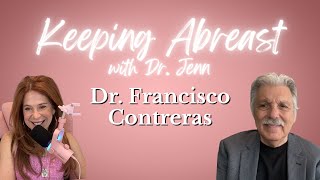
This is a YouTube video titled "102: Revolutionizing Cancer Treatment with Dr. Francisco Contreras" created in July 2025. It features a detailed, in-depth conversation between Jenn Simmons, MD, and Dr. Francisco Contreras, a surgical oncologist, discussing integrative and personalized approaches to cancer treatment. Topics include the power of the mind, immune system therapies, metabolic aspects of cancer, diet, exercise, and innovative immunotherapies such as dendritic cell vaccines and CAR T cells. The discussion also touches on systemic issues in conventional cancer treatment and drug development. Jenn Simmons, MD, leads the dialogue, sharing insights and promoting patient empowerment throughout the interview.
So it is so nice and such a privilege to have a fellow surgical oncologist here. That doesn't happen to me a lot, and I'm so excited to share you and your story with my audience. So why don't you start us off in, like, how did you get to be a surgical oncologist? Was. Is this something. Did you always want to be a physician?
Definitely. Well, first of all, thank you. It's an honor and a pleasure to be with you.
I'm so happy to have you.
I. I wanted to be a doctor since I was very, very young. And I think it's big influence from my father being an oncologist. But what I wanted is to be a surgeon. And then because I. As I grew older, I knew that I wanted to work with my father. Then I decided for surgical oncology career. But, yes, since I was about 12 or 13, I remember that I wanted to be a surgeon.
But you picked the hardest part of surgery. Your father was an oncologist.
Yes.
So you grew up in a world where people had cancer. You were surrounded by people who had cancer.
Correct.
So I'm guessing to you that was kind of normal.
Yes, it was daunting because my. My father made a decision when he was about 45, 46, to delve into the realm of the emotional and spiritual needs of patients. And he was tremendously criticized by that, to the point he was the director of one of the major oncological centers in Mexico City. And so they didn't allow him to do that. So he decided to come to Tijuana so that he would be free to be able to provide patients with emotional and spiritual support on top of the, you know, the conventional oncological treatment. But my father was convinced that the reason for the failure of oncology is that no oncologist was paying attention to the major needs of patients. And so it was my father that.
Was very forward thinking of him.
Oh, yes. The word holistic was actually coined because of what my father was doing, this holistic approach to medicine. And later on, about 10 years after, he was already having, you know, treating many, many patients with this holistic approach, the alternatives came to Mexico, and so he started using alternatives. But the approach of our institution has always been integrative. We have everything available from the alternative and the conventional. And depending on the patient's needs, we are going to be offering them whatever, according to our experience, is the best for the patients.
So I love that you said that your approach is always in integrity, and I think that that gets lost. So Much in the protocols and the standardization is that they stop looking at, at the person sitting in front of them. Right. It becomes more a checklist than anything else. And I'm not insulting doctors, I mean these are good, well intentioned people whose job is to follow a checklist. Right.
And that's the problem with, with a checklist like that is that the patient actually then identifies as cancer of the breast or cancer of the colon and they lose their identity.
Well, we see that all the time. Don't, don't you think so? Don't you think that people say, you know, like I, I'm a breast cancer or whatever. Right. Patient, or like they allow it to embody them and then they even identify down even more, I'm her 2 cancer patient or I'm a triple negative cancer patient like this. They, they so identify with the disease and they've been very well trained to do that.
Correct. And so that's one of the first things that we need to, that we work here with our, our patients is to, to erase that because your, your, your life works depend on your identity. And the worst thing is that once you identify as cancer of so and so, then you're a victim. And that is very devastating. So we want to convert our patients from victims into victors. And that changes the whole approach on what you're doing. And I truly believe that one of the reasons for our high rate of success in comparison to just about any other institution in the world is because we, we, we have that approach.
Yeah, I love that. Change victims to victors. Right?
Yes.
But unfortunately, I think the system is very much intentional in making people victims because it is somewhat reliant on the control, all lying with the, the provider and not with the, the patient. Because the things that are within the guise of the patient's control, the things that we know are so meaningful and so influential, the doctors either don't know about them, don't believe in them, or don't want to believe in them.
And it's also like a shield effect. They want to shield themselves because the failure is just so massive and they want to transfer the failure actually to the patient. Listen, we always say, well, you failed to chemotherapy. Well, that's not true. Chemotherapy failed you. Right, right, right, Interesting.
I never thought of that verbiage before. But you see all the time in reports failed, this therapy failed that therapy, like yes, you're right, that language is very much structured to say like the patient has no power and it was the patient that failed.
Correct. And so, wow, here we want to empower patients, and we want to be partners with them. One of the things that, that you're taught actually in oncology is to detach yourselves from emotionally from patients, because otherwise you won't last too long. It is very taxing when you get.
Involved, especially if you're an empath. Especially if you're an empath, because you take it all with you all the time.
But if you don't, then the patient feels that you're only worried about the tumor. And so we want to remind the patients that they're not a tumor. There are persons that have cancer, but cancer does not necessarily mean that it's the end of life, that there are options, that there are opportunities, that there's hope. You know, we have been accused of selling false hope, but really think about it. False hope.
What is, what even is that?
Right. There is no false or true hope. There is hope or no hope.
Yeah.
And one of the things that we, that, that we miss in all of this is that the power of the mind is enormous. And doctors acknowledge that, but then they don't use it for their patients. What do I mean by acknowledging that? Well, we do double blind studies. Correct. Because the mind influences the results.
Like if they knew that they were getting the drug versus getting the placebo, there would be different outcomes, Right?
Exactly.
So they want to take that, they want to take that element out of it, yet they abandon that whole concept in everything else.
And so what I started doing is looking at so many publications, and in most of them, maybe, maybe just 60, I mean, 51%, but maybe a little bit more, the placebo is much better than the drug. So instead of looking at the drugs, why don't we look at the power of the mind? Right. So here, that's why providing patients emotional and spiritual support is really fueling that power that hope has, that power of the mind to change outcomes. And so that's a. In my view, one of the most important things that my father began in the early 60s and that we've worked on. And so this leads me to the fact that what is most important of all is to work for the patient rather than against the tumor. And when we work just against the tumor, we're working also against the patient. Because most of the elements that we use are very immune suppressing. And so the most powerful element that we have in order to survive is our immune system. So at the oasis of hope, about 80% of our efforts are for the patient to improve the quality and quantity of the immune system. And about 20% is fighting against the tumor. And again, our results are so much better because we're doing that. So we. How do we work for the immune system? Well, from the most simple things to the most complicated laughter. It's been proven over and over that laughter increases the capacity of your immune system. That happiness, that meditation, that being well with God improves the quantity and quality of your immune system. And then we go to the most complicated, which are dendritic cell based vaccines that directly hone in your immune system against that patient's tumor. And so we've been very, very successful. We have a program called IMPACT that stands for immune personalized autologous cell therapy impact. And there are several elements on that immune program that will help the patient fight their tumor. It's a very personalized, very individualized type of therapy. So that therapy is only for that patient, cannot help any other patient whatsoever. Of course, we have the other side, which is the metabolic entity, which is attacking all of the common denominating factors that all tumors have. And so we have this combination of a very broad spectrum metabolic therapy and a very individualized therapy with impact. And this combination has proven to be very, very effective. But again, about 80% of the effort, effort is for the immune system. That is, we aim to work for the patient and somewhat against the tumor without damaging the patient's capacity to fight cancer.
Yeah. It's so interesting. I mean, we started off by talking about what the power of the mind is and the story that you tell yourself really matters. Right?
Correct.
Yeah. And we see this time and time again that people who identify with cancer and identify as the victim, they absolutely, positively have worse outcomes than people who say, like, hey, this doesn't, this doesn't define me, this doesn't embody me. This is a point in time that I am putting behind me. And I mean, that's what, that's almost the entire focus of my program, my breast health blueprint when I work with people is that the whole purpose of going through my program is to put your breast cancer diagnosis behind you. Because serve you here, it doesn't serve you here. You're absolutely value that we can get is if we put it behind us.
Yeah. The way that I tell it to patients is if cancer is driving your car, you need to drive your car and put cancer on the back seat. Precisely what you're saying.
Yeah.
And it, it changes the perspective completely.
And when you think about it in terms of an immunologic disease or an immunolog failure, think about when people Are stressed. Right. We only know two states. We only know safety and danger, and we only really understand primitive dangers. We don't understand deadlines or difficult relationships or anything like that. We understand saber toothed tigers. Right? So if you have a saber tooth tiger chasing you, your immune system is turned off, because what do you need to fight off the common cold or a cancer for? Right. Like if you're eminently going to get eaten by a tiger, you don't need to be protected against something that may kill you in a week, a month, a year, two years, 10 years. Right. And people don't understand this. Physicians don't understand this, and they don't recognize it. And you started to talk about metabolic therapy, which implies that cancer is somewhat involved with metabolic dysfunction. And I have often said that if we screened for metabolic dysfunction with the same vigor that we screen for cancer, this world would be a better place and a far healthier place.
You're right. Yeah.
Can you talk about that metabolic aspect of. Of cancer?
So there's no question that cancer is a genetic disease, not an inherited disease. But it's genetic because it can.
You make the distinction because most people do not understand.
So you are not inheriting bad genes. Okay? Even brca, not everybody that has brca will develop cancer of the breast. It just increases your possibilities. And so this thing about your mother and your aunt having cancer, what you're inheriting is bad habits.
Yes.
And if you continue doing the bad habits of your family, well, then you're going to suffer the. The same consequences. And those, those things are things that you can change. Now, cancer begins with a mutation, and that's a genetic problem. But that genetic problem translates into metabolic dysfunction.
But that genetic problem is an acquired genetic problem. Like that cell did not start off as a cancer cell.
Correct. It was a cancer cell.
That cell got mutated because of its environment.
Absolutely. Absolutely. And there are many contributing factors there. Okay. But it's an acquired disease now. So right now, science is looking at cancer only as a genetic disease. And that's why we look for genetic mutations. And because of those mutations, we find out what the impact is. And we have been developing for the last couple of decades targeted therapies. And it makes sense, right? The little problem is that cancers have hundreds of mutations. So the typical colon cancer has about 200 mutations. The typical breast cancer has around 100 mutations. And so in order for you to cure cancer, you would have to find the exact 100 mutations and give the patients 100 targeted therapies. Now, how daunting is.
And let's just. Let's just put that in some context for people. About how much money does it cost to develop a drug and bring it to market?
Well, each drug is about a billion dollars.
A billion dollars? A billion dollars. So there is no feasible way.
Correct.
To ever use this gene mutation theory to treat cancer.
Yeah, because if. If every shot of targeted therapy is around $10,000, and that. Those are the cheap ones. So imagine if you're taking every three weeks, 100 of them, it's a, you know, a million dollars every three weeks. So not even Americans can do it.
Even Americans. You cannot do that. Right.
It's just impossible. So just by looking at that, it's impossible. So what's the alternative? Well, the alternative is to look at the metabolic impact. And the metabolic mutations are actually quite restricted. So I'll give you a couple of examples. So all tumors, regardless of whether it's cancer of the breast, cancer of the colon, regardless if it's melanoma or multiple myeloma, it doesn't matter. All of them, the cells are hypoxic.
Can you translate that word to people who are not familiar with what you're talking about?
They create an environment that is poor in oxygen, and they thrive in a low oxygen environment because of that. The way they metabolize carbohydrates to produce energy is very different than the normal cells. So a normal cell with oxygen, for every unit of carbohydrates, they produce 32 units of energy. A malignant cell, for every unit of carbohydrates, they produce 2 units of energy instead of 32. So malignant cells become bullies for sugar. That's why, you know, the. It's very common to hear cancer loves sugar. So if cancer loves, quote, unquote, sugar, well, why don't you develop a diet for the patient low in sugar?
But it's not just like my preference for pink. Right? Like. It's not just that they like it. It's that they are so reliant on it. They are so vulnerable because they are so inefficient.
Exactly. And it's interesting, you know, you ask an oncologist, what about your eye? It doesn't matter. Whatever the patient needs.
But then doesn't that make you want to pull your hair out?
Well, then they prescribe a PET scan. Right. And for you audience, a PET scan is a very sophisticated X ray where patients are injected a very special type of sugar that's stacked with a radioactive material. And it's. I call it x Ray for dummies. Why? Because the tumors light up. You don't need to go to four years of medical school.
Right. Like my son can read it.
Right. Anyway, because the tumors actually, why do they light up? Because they absorb all of that, absorb all of that sugar and the other tissue doesn't. So we know that cancer needs a lot of sugar. And so it just makes sense. And common sense is very uncommon in medicine not to give sugar to the patient. So a low glycemic diet is going to be very beneficial for the patient and very adverse for the cancer. That's one metabolic thing. If tumors hate oxygen, well, there, there are ways to increase the oxygen, the oxygen concentration in tumors. And it's been proven that ozone increases the amount of oxygen in tumors. Whether it's cancer of, of the stomach or cancer of the, it doesn't matter. So those two things you can combine, right? Low sugar, increase the. Now all patients, because of poor metabolism in the cancer, all tumors are acidic. So you can impact or change the acidic constitution or the acidic environment of the tumor tissue and the tumor is going to suffer. And so there's about five or six very specific metabolic, common denominating factors of all tumors that we exploit against the tumor. Yeah, very efficiently. And then.
Are you ready for our breast cancer screening revolution? Well, I'm thrilled to introduce to you a breast cancer screening tool that I have only recently learned about, but I have universally adopted. This is the ARIA test. This groundbreaking at home breast cancer screening test is one that I believe will completely change the game. So imagine a screening test that's as simple as shedding a tear. Cause that's aria. It's a non invasive, convenient and perfect for all bodies and all breasts. Dense breasts, implants, no problem. ARIA makes it clear for everyone, even women as young as 30. Aria is backed by over a decade of clinical trials, thousands of samples and it's developed alongside top breast health experts. Here's how it works. You collect a tear sample at home and then ARIA then analyzes it for protein biomarkers that can signal early breast cancer. And the best part, you get a consultation with a breast health specialist to review your results. Now, ARIA isn't replacing breast imaging. I am using it alongside qt. It's complementing it and giving you a fuller picture of your breast health. Knowledge is power and ARIA is putting that power back in your hands. It's time to take control of your breast health. And ARIA is another way of doing it. Go to Aria Care a u r I a dot care and use my code, Dr. Jen 20 in capitals. D r j e n n 20 to get 20% off. Back to our show. I want to go back to the, to the low glycemic thing because I think where a lot of the misinformation around diet with cancer is born out of the fact that certainly in the conventional medical and the conventional medical oncology world, but probably in the cancer world in general, there is an association between cachexia, which is the end stage of cancer, where people are hyper metabolic, and losing weight. We know we associate weight loss with cancer wasting, with end stage disease, with terminal disease, and we extract that to apply across the board. But the truth is, in my world, most women. Not all. Right, not all, but most women who get a breast cancer diagnosis are either overweight or over fat. And the best thing that they can do is weight loss.
Correct.
And yet they're getting this messaging, this toxic messaging from their medical oncologist not to lose weight because the medical oncologist is stuck in that picture of weight loss equals cachexia or cancer wasting.
Yeah, but that's also a misconception because the, the percentage of cancer patients that develop cachexia is very low.
Very low.
Cachexia is a major problem. I mean, cachexia can be worse than cancer. But when you manage this correctly, you are not pushing a patient into cachexia by lowering the amount of glucose that you are providing. You see, lowering the amount of glucose does not necessarily mean avoiding calories. There are many wonderful foods that are low glycemic that have sufficient calories to maintain metabolism. So our diet.
And I think, I think that that is also a fundamental misunderstanding. People don't understand that just not eating foods that are high glycemic doesn't mean that you're undergoing any caloric deprivation. Right. There are plenty of foods that are low glycemic that you can get adequate calories.
Yes. And wonderful calories accompanied by wonderful nutrients.
I mean, nutrients and antioxidants and, and all the, all the macronutrients you need, actually. Carbohydrates. Right. Just not high glycemic carbohydrates.
Not combined with. And we're talking this as a diet for a patient with cancer. Right. Because bananas are probably the best food that God put on this earth as far as the combination of nutrients and everything. But it's not good for a cancer patient. No, because the glycemic index is just so high. It doesn't mean that a banana is bad for everybody. No, it's wonderful, but it's not the Best thing for a cancer patient. So we work with doctors, nutritionists, and chefs here to design a diet that is palatable for the patients. Because if you read the literature, the best diet for a cancer patient is vegan, low glycemic. And those are very hard, very difficult diets to do. I mean, when you are strict, you know, at the beginning, you're afraid, and you, this is, I'm going to do better at around three months. As if, is this all I have to eat? Well, then I'd rather die. So for us, the best diet is the one that you can do. And so we worked very diligently in developing diet, a diet that is doable, that is palatable, even fun, because diet is a very emotional thing.
It is. And we're all. We're all tied to food in a way that is ancestral and celebratory. And food is very important. It's where the family gathers. It's how you celebrate, it's how you connect. It's for. For most families, that is the only time that they're really spending together.
Correct. So, for instance, I tell my patients, hey, listen, if you're going to go to your mother's for Christmas, don't arrive with your Tupperware, with your diet. Just go and enjoy.
Go and enjoy it.
Much better for your immune system than the detriment of the food.
Yeah, but that is also the power of the mind.
Correct.
Right. Like, if you go in and say, this is a meal cooked with love that I'm sharing with the people that I love, it's not going to hurt you.
Correct.
But what I do caution people about is don't let one meal turn into one week to turn into one month, to turn into one year. Right. That's the only downfall that I say to people. Like, I don't want you to take the entire month of December off.
Correct.
Right. Like, yes, you can go to that. You can go to Thanksgiving dinner with your family, you can go to Christmas dinner with your family. That. That's fine. That's great. I want you to do that. But there's a lot of meals in between those two.
Correct. The concept of once in a while can be very broad. Correct?
Yes, yes.
But patients, you know, after a while, they. They get it. That they have to. They have to. There are sacrifices that you have to make, like everything in life. Right. If you want to be an athlete, there's sacrifices that. So if you want to survive, there are sacrifices that you have to be and that you're going to be happy. By making those sacrifices. But there are breaks.
Yeah. I also think that, you know, you develop a new standard, what life is. So, you know, before I got sick, I thought of birthday cake as a food group, and I wasn't overweight, and I was active, and I thought I was healthy. And so it worked for me. Right. And then. And then until it didn't. And afterwards, you know, like, I'm a very different person now. I won't touch many. Most of the things that I would eat on a regular basis before. And I'm. I'm all good with it. Like, if you put a birthday cake in front of me now and it has no pull on me anymore, but, you know, a steaming bowl of broccoli rabe with garlic and olive oil and hot peppers and, like, try to keep me away. So, you know, it changes. And that. That comes down to new habit building. But that's also the power of the mind, right. The story you tell.
Absolutely. And you see every time, every time you're making that sacrifice that now it's not a sacrifice for you anymore. You are actually feeding your body with the sense that there's a communication between us and our bodies all the time. And the message is, I'm willing to make this sacrifice for you. And the body will appreciate that. Responding with a very positive and strong immune response. So these are things that we make the patients aware of that. Because you usually don't think about that when you pick up a cigarette and you have cancer. It's like the body saying, well, what is it? Do you want to save me or kill me? Make a decision. And so the body will appreciate all of those sacrifices that you do to keep the body safe and healthy.
Yeah. So we talked about three of those metabolic factors. We talked about a low glycemic diet. We talked about increasing the. The amount of oxygen that the environment around the environment, the tumor environment, using ozone. We talked about all tumors are acidic. I actually think that those two things go together, right? The. The acidity and the lack of oxygenation. And I think this is a little bit where sitting is. The new smoking comes in, too, because part of the lack of oxygenation in the local environment is part of a lack of oxygenation of the whole body, because that the oxygenation comes along with being active. And a lot of us, even if you're an exerciser, there are so many exercising couch potatoes or office workers, as the case may be, when you're hypothetically a very busy doctor and you work out really hard in the morning and then end up spending a lot of time in the chair the rest of the day. Right. Like this happens to a lot of people.
Yes.
And being sedentary really does lead to a lack of oxygenation of the tissues.
Correct. One of the studies on the blue zones determined that one of the reasons they live so long is because they're very movable. They're not only gregarious and happy and have a good diet, but they work up until they're 100 and they move a lot. So moving is very important. There are so many studies that show that a half an hour of exercise a day, brisk to intense, will lower the incidence of cancer by 50%.
Yeah. And the recurrence rate. Yeah, and the recurrence rate.
So patients that have cancer that are taking chemotherapy, for instance, that exercise will respond and tolerate better the therapy. So, yeah, that's better. If you're, if you're taking something that is non toxic, you will respond better.
Yeah.
So yeah, moving is very important.
It's. And it's amazing because this is something that nearly everyone can do. And yet the medical oncologists are very much giving people the wrong advice here too, because they're telling them to take it easy.
Yeah. The advice is since you're going to die, just go and.
Yeah. Or you're getting chemotherapy right now, you should take it easy, rest, that kind of thing. And it's actually quite the opposite in that the people that walk every day, even if it's a mile, the people that walk every day have far better outcomes. You don't have to be training for a marathon, and I don't recommend that you train for a marathon, but that being active and moving and exercising during, during and after treatment goes a long way and makes a huge difference.
Yes.
And I think Kelly Turner really captured that in her second book because when she did radical remission, for whatever the reason, that element was left out of the things that, that people who made radical remissions had in common. But she did include it in her book Radical Hope, because that is a very important cornerstone of surviving and thriving.
Correct. Very important. And again, there are many studies that show that exercise improves significantly your immune system overall. So one of the things that we do here, and I was talking a little bit about the impact protocol, is that we. The reasons tumors grow is because they're. They're able to shield themselves from the immune system. It's like the immune system has a bandage over there, its eyes, and actually doesn't see the tumor. And it's because first the tumors grow out of normal cells. So the immune system will not attack a normal cell. And then the tumors, with certain chemical changes, they recruit immune suppressing factors and immune suppressing cells that will not allow the tumor to attack them. So what we do here with our impact protocol and several. The impact protocol has several branches. We want to take that shield off the face of the, of the immune system, the eyes of the immune system, so that the immune system actually sees the tumor and it's able to remove those obstacles and attack the tumor. And this is what the so called dendritic cell vaccine achieved. And this was developed actually in America to the point that in 2011, the inventor of this was received a Nobel prize. And yet it's not available yet in America and the patients have to come to Mexico. Why? Well, because in America they want to convert this into a drug and it. That's what. And it's not going to work because this is a very individualized protocol and there's no money to be made when you are making a.
Because it can't be massively rolled out.
Exactly. And. But it's very effective. So dendritic cells are very important and they actually kill nothing. But the name is antigen presenter cells. So what they do is that they determine the foe and they choose the element of the immune system specifically designed to attack that foe. So if it's a bacteria, it's going to call on certain white cells. If it's a chemical, it's going to allow for other elements of the immune system to go and resolve that issue. And for cancer, our immune system has what are called natural killer cells. Those specifically kill tumor cells and viruses, nothing else.
Yeah.
And so when you're able to present that antigen to the natural killer cells, they'll go and attack it. Otherwise they won't. And so this dendritic cell vaccine opens the eyes of the immune system against the tumor in a very specific way. So it's only for that patient and for that tumor. Okay. That's why at the beginning I was saying that it's very individualized. Now there are some variations in this. So we can do dendritic cells, but we can also expand. Now, expand in immunological terms means like cloning cells. So we obtain for instance, 100,000 natural killer cells, these cells that are very specific to kill cancer. And we expand them to millions, 10, sometimes 40 million. And since these cells are only designed to attack tumor or viruses, when you put them back into the patient in this massive amount, they just go and attack tumor cells wherever they are. Now we can then present the antigen to the dendritic cells and to the natural killer cells at the same time. And this is called a CO cultivation or CO activation of the two elements. And they have a synergistic effect, so you have a more powerful antitumor effect. We can also expand only natural killer cells. This is a more complicated process in the laboratory and it's time consuming. You need about three weeks to do that. But when it's possible, it's just wonderful. Then the most, one of the most or easier elements to do is what are called lysates. So we get a malignant cell either from a tumor or from circulating tumor cells, and we obtain a vast amount of antigens, just a pure antigen antigens, and inject the antigens back into the patient. Now, this is the closest of.
That's like a vaccine.
Correct. And then all of the dendritic cells that are circulating will be activated. And the most potent part of impact is what are called tumor infiltrating lymphocytes. This is the most complicated immune therapy that we have. And it's complicated because you actually need fresh tumor tissue. So you need to operate on the patient, remove, let's say, a lymph node that's large enough, it has to be at least one gram in weight. And from that we obtain tumor infiltrating lymphocytes. What are those? Those are natural killer cells that were able to break all of the barriers and get into the tumor. So those guys need no presentation, no activation, nothing. And we can clone, quote, unquote, expand them from a few hundred to millions and give them back to the patient.
But that requires a sample of the.
Tumor, usually a minor surgery. If the patient has a lymph node that it's in the neck, for instance, or in the axilla, that's easy to get. We've had patients that have such aggressive tumors that we actually did a surgery where we opened them up and went in and obtained tumor tissue, let's say from liver metastases or the omentum or wherever, we could obtain a good amount of tumor tissue to attack the tumor. And so that is the most potent type of immunotherapy that we have. And we're working diligently, hopefully within a year and a half or two years to produce what are called CAR T cells. So CAR T cells are like TILs, like tumor infiltrating lymphocytes on steroids. Right. They're very aggressive against tumor, not aggressive against the patient. And the big advantage of CAR T cells in comparison to tumor infiltrating lymphocytes. Tumor infiltrating lymphocytes, like all of the other elements that I've been talking about, they have a lifespan, and so you need to revaccinate every so often. CAR T cells regenerate constantly in your body. And so that's why, immunologically speaking, that's the future of cancer therapy. The drawback is that one treatment in America costs about a half a million dollars, and patients usually need two or sometimes three. We are working on this because in Mexico, we believe that we can bring down the cost to about $50,000 instead of $500,000. And that's why we're working diligently to do that. Our personnel is prepared to do that. It's a very sophisticated protocol. But the equipment, the devices, I call them, the toys that you need to do, are very expensive. And so we're putting money in our piggy bank, and once we have the money, we'll. We'll obtain those apparatuses and, and start doing car T cells. So that's. That's in a nutshell, our immune program, our impact protocol.
So, and these are very, very specialized therapies.
Yes.
That are not going to be realistic or affordable for most people. But I still think that there are so many things that do and can easily do to improve their outcome and even reverse their disease. Oh, yes, for many, many people, we've spent a lot of time talking about the different immune cells, and we do talk a lot about natural killer cells. Right. Natural killer cells have a huge role in the tumor reversal process. And so many people have a depletion of their natural killer cells. Right. Why do natural killer cells get depleted? And how can people help to increase their natural killer cells?
So again, studies show that exercise increases natural killer cells and increasing the amount of fruits and vegetables that you consume in a day. So there are studies that show that five portions of fruits and vegetables will reduce the incidence of cancer by 50%, and that's because they improve the immune system so much, even if you change nothing about your diet. So there are studies that show that people continued eating junk food and everything, but just by increasing the amount of fruits and vegetables.
Yes. We don't want to encourage more junk food, though.
No, but what happens.
No, but I hear you.
Is that once you start that change.
Into fruits and vegetables, people, it crowds out the junk.
Correct?
It does, for sure. True.
And so it's very difficult to find somebody that just decided to eat more fruits and vegetables and Continue smoking and doing all the bad things. But, but the studies show that just doing that is, is, is powerful. So imagine if not if, if you all also do away with the junk, junk, it's going to be much better for you. So the happiness also increases the amount of natural killer cells. So being happy, being positive.
Laughter.
Very, very, very, very important. So there are things that you can do now on the impact therapy. Yes, they're expensive, but nothing like chemotherapy, nothing like many other therapies that are available to patients. So yes, what happens, especially for Americans, is that because insurance companies do not pay for them and it's out of pocket. Well, then they seem very expensive because chemotherapy would be quote, unquote free. But it's of no value to you or it's going to.
Right, Right. I think, you know, there's, there's so much when we talk about where all the money is going for cancer research and there's this perception that it's going to these companies who are developing cures for cancer. And it's like a ridiculous notion like there is no drug ever that's going to cure cancer. No one drug that's going to cure cancer. No one drug that's going to cure breast cancer or colon cancer or any cancer. And even if there were, a drunk company would never develop it.
Well, let me.
That's not what they're in the business for.
Let me give you a, a little bit of a different perspective, okay? Although what you're saying is just so obvious that it's difficult to counteract, but I'm going to give you a different perspective, okay?
Hello, my beautiful listeners. I'm taking a quick break here to share something truly transformative with you today. If you're ready to take control of your breast health journey, then you need to get your hands on a copy of my book, the Smart Woman's Guide to Breast Cancer. I wrote this book to make a massive impact in the world of breast cancer, empowering women everywhere to make informed choices and educated decisions. You have so much more power and control over your health than you might think. And this book, this is a roadmap to harnessing that power. Inside, you'll uncover the truth about conventional treatments. They're often overestimated benefits and underestimated, under explained and under disclosed long term side effects. But more importantly, you'll discover the true drivers of health and how the choices you make at home every day can lead you to the best health, oh, the breast health of your life. Even after a breast cancer diagnosis, whether you're Looking to prevent a diagnosis, avoid recurrence, or simply live your healthiest life. This book is for you. Join me on this journey to empowerment and health. Grab your copy of the Smart Woman's Guide to Breast Cancer today, and let's revolutionize the way that we approach breast health together.
The reason why we will never find a cure is because natural elements are never in play. And the reason they're never in play. We were talking about the fact that it takes about a billion dollars to develop a drug, and not every one that is developed is approved by the. By the fda, Correct?
Right. So it was a billion dollars get to market, right?
Correct. Yes. So why do they have to spend so much money? It's because you have to prove to the government that your drug is safe and effective. Effectiveness is very easy to prove. Right. The tumor is this big, and now it's like this. Safety is a completely different thing, and that's where a lot of the money is spent. And so this began in the 60s. And so what the industries did of the government. You're going to make me spend so much money, how are you going to protect my investment? And so the government said, well, I'm going to give you a patent. And while that patent is alive, you're. You're going to have a monopoly of your invention so that you can make your money back. And I think that's fair. I mean, a billion dollars is a lot of money. And so that's the system. Now, vitamin C, all the studies were done at the NIH and the NCI proven to be very effective. And I even sent a letter to the main researcher on vitamin C because they published about nine papers proving that vitamin C in very high dosages act like chemotherapy without the side effects.
Do you want to explain why?
Because it's an oxidative process almost. I mean, exactly the same as radiation therapy. That's the mode of action. Okay. Of vitamin C in killing cancer cells. In many chemotherapies are oxidative. The same mode of action. Exactly. Why this was in the late 90s, when 2020. Why is it not available? Well, for the simple reason that you have to prove to the government that it's safe and effective and you have to spend exactly the billion dollars that everybody's spending. But then the government is going to tell you, well, I can't give you a patent because it's a natural product. And the day that you registered, you spend a billion dollars. Every laboratory in the world can do it. You will never make your money back. And that is the reason, the true reason, why natural things are not promoted. Because there's no, I mean, you can't.
Trademark a molecule of nature.
Exactly. And it's, you can never make, you have to spend the money and you will never make it back. It's not an investment. Yeah, I remember in, in the 90s, I think Turner, Ted Turner wanted to donate $800 million to the UN. You're too young to remember that.
And what am I too young for? Because I think you're wrong.
But. Well, do you remember Ted Turner?
Yes, of course.
It was a big thing. Okay, yeah, well, I think you're too young to remember that. But at any rate, I wrote him a letter. Why don't you donate the $800 million for us to do all the clinical trials needed for vitamin C to pass, and then if everybody makes it, who cares? Never wrote me back. But at any rate, that's the main reason. It is money. But I don't think it's just because if the cure for cancer comes, I'm not going to make any money and it's going to be a big problem. Okay, economically for all developed countries. But the truth is that it's the rewarding system.
No, but that's essentially what I meant is that they're, you know, if, if you cure cancer, that, that is the end of your customer too. Right. I do think that there's an inherent conflict of interest here.
Cigarette companies kill their, their customers and they still make money.
Yeah, but they have those customers for 20, 30, 40, 50 years.
That's true. That's true. I think that if somebody comes with a, with a way of rewarding in a different way, that we will find ways to survive. I mean, the pharmaceutical, for instance, there was all this scare that computers were going to do away with employment. Now we're thinking that robots, and that's even scarier. Right. And we always find a way to do other things that are worthwhile doing. I don't know.
I'd be pretty grateful if a robot took over for me right now, I'll tell you. All right, so let's use this and talk about vitamin C. Is definitely one of those, one of those tools that should be in your toolbox, right?
Yes, yes.
And you said high dose vitamin C. What does that mean to you? Because I think that there is a lot of different interpretation of what that means. And I also think that part of the problem around vitamin C is that there were people who tried to use oral vitamin C and don't understand that you cannot get high doses of vitamin C if you're using oral vitamin C. And that when you're, when you're doing it orally and not getting high doses, that actually acts as an antioxidant rather than a pro oxidant.
That's, that's the main, that's the main purpose of vitamin C as an antioxidant. But these guys at the NIH discovered that when you get a concentration of between 5 millimole vitamin C concentration in plasma to 15 millimole, it converts within the tumor as an oxidant.
So when you're treating people, do you generally check, do you measure your vitamin C levels?
And NIH did many studies that showed us that until you get about 15 to 20 grams of vitamin C in your system, you will reach that 5 millimole concentration. So if you take 10 grams orally, it's about 0.2 millimole concentration in plasma. That's why it's, it's of no value. Now about 30 grams to 50 grams is where you reach that 10 millimole. That's when you know real anti tumor effect happens. In order to do that you have to intake that amount of vitamin C in a very fast way. So the studies went from 10 grams to 100 grams. 100 grams is where you get the most activity for the longest period of time.
What are the downsides to 100 grams of vitamin C?
Vitamin C? No toxicity was found. Okay, but you need to inject infuse at a gram per minute. And when you need a hundred grams in 100 minutes, many exclusion happen. So if you have a little bit of problem with your heart, there, there.
Is an issue with people who have heart problems because that's a lot of fluid to go in over that period of time.
It's a very short period of time.
It's a very short period of time.
And what we do at the oasis is we give 30 grams in a half an hour. And so we have a period of activity of about four hours and then an hour and a half later we give another 30 grams. And so we have a period of about nine to 10 hours of anti tumor activity, the same as with 100 grams. And now we have a broad spectrum of patients that will be eligible for that type of therapy. And it's very effective. We've seen very, very good results and no side effects whatsoever.
And do you give anything with it? Are there things that you do that accompany your high dose vitamin C therapy.
Vitamin C into an oxidant which like, is like what so if you remember your chemistry lessons from high school, oxidation happens when an electron is lost. And so you have to actually steal an electron in order to begin the process of oxidation. And then when that is lost, the guy that lost it is going to steal another one. So it begins a flow of production, a tremendous production of radicals. Free radicals.
Free radicals.
And so the guys at the NIH solve this issue by providing an electron donning agent to stop the cascade of free radicals. And the best one is vitamin K. So vitamin K works as an initiating oxidating element and resolves the issue of the cascade of free radicals. So you combine it with that. Now, in order to produce oxidation, you also need oxygen. And tumors are low in oxygen. So we precondition the patients with ozone, which has proven to increase the concentration of oxygen within tumor tissue. So now you have oxygen, you have a high amount of vitamin C in the plasma that can impact the tumor. And you have the tumor ignition, which is the K. And so that combination is what makes the vitamin K converse it into chemotherapy, but without side effects. All of this is published.
Yeah.
And when I wrote a letter to Mark Levin was the head of the, of. Of the NIH A research, the one that published all of this has nothing to do with the Mark Levin political guy commentator. Nothing to do with him. It's a completely different guy. He was flabbergasted that we were going to be able to do this in Mexico. Just so happy to the point that he wrote a letter to, to. To us endorsing our protocol. So that when we went to the Mexican government asking for permission, they looked at, you know, the head of the nih. I mean, how stronger an endorsement. So it was wonderful. It wasn't actually Mark Levin was his assistant, but it was good enough. So that's why we're able to do it in Mexico now. Many people are doing it in America. Some. There are so many. I've heard patients of mine, oh, we're doing vitamin C. So how many grams? We're doing 50 grams. And how long in four hours is good for nothing. Yeah, you'll never get those 4, 5, 10 millimoles concentration in plasma. So a lot of people don't know what they're doing. All of. I think that if somebody comes with a way of rewarding in a different way that we will find ways to survive. I mean the pharmaceutical, for instance, there was all this scare that computers were going to do away with employment. Now we're thinking that robots and that's even scarier. Right. And we always Find a way to do other things that are worthwhile doing. I, I don't know.
I, I just, I'd be pretty grateful if a robot took over for me right now, I'll tell you. All right, so let's, let's use this and, and talk about vitamin C is definitely one of those, one of those tools that should be in your toolbox, right?
Yes, yes.
And you said high dose vitamin C, what does that mean to you? Because I think that there is a lot of different interpretation of what that means. And I also think that part of the problem around vitamin C is that there were people who tried to use oral vitamin C and don't understand. You cannot get high doses of vitamin C if you're using oral vitamin C. And that when you're, when you're doing it orally and not getting high doses, that, that actually acts as an antioxidant rather than a pro oxidant.
That's, that's the main, that's the main purpose of vitamin C as an antioxidant. But these guys at the NIH discovered that when you get a concentration of between 5 millimol vitamin C concentration in plasma to 15 millimole, it converts within the tumor as an oxidant.
So when you're treating people, do you generally check, do you measure your vitamin C levels?
The NIH did many studies that show this, that until you get about 15 to 20 grams of vitamin C in your system, you will reach that 5 millimole concentration. So if you take 10 grams orally, it's about 0.2 millimole concentration in plasma. That's why it's of no value. Now about 30 grams to 50 grams is where you reach that 10 millimole. That's when real anti tumor effect happens. In order to do that, you have to intake that amount of vitamin C in a very fast way. So the studies went from 10 grams to a hundred grams. 100 grams is where you get the most activity for the longest period of time.
What are the downsides to 100 grams of vitamin C?
Vitamin C? No toxicity was found. Okay. But you need to inject infuse at a gram per minute. And when you need 100 grams in 100 minutes, many exclusion happen. So if you have a little bit of problem with your heart, there, there.
Is an issue with people who have heart problems because that's a lot of fluid to go in over that period of time.
Very short period of time.
It's a very short period of time.
So what we do at the OASIS is we give 30 grams in a half an hour. And so we have a period of activity of about four hours. And then an hour and a half later we give another 30 grams. And so we have a period of about nine to 10 hours of anti tumor activity, the same as with 100 grams. And now we have a broad spectrum of patients that will be eligible for that type of therapy. And it's very effective. We've seen very, very good results and no side effects whatsoever.
And do you give anything with it? Are there things that you do that accompany your high dose vitamin C therapy?
Vitamin C into an oxidant which like, is like what? So if you remember your chemistry lessons from high school, oxidation happens when an electron is lost. And so you have to actually steal an electron in order to begin the process of oxidation. And then when that is lost, the guy that lost it is going to steal another one. So it begins a flow of production, a tremendous production of radicals. Free radicals.
Free radicals.
And so the guys at the NIH solve this issue by providing an electron donating agent to stop the cascade of free radicals. And the best one is vitamin K. So vitamin K works as an initiating oxidating element and resolves the issue of the cascade of free radicals. So you combine it with that. Now in order to produce oxidation, you also need oxygen and tumors are low in oxygen. So we precondition the patients with ozone, which has proven to increase the concentration of oxygen within tumor tissue. So now you have a high amount of vitamin oxidation. You also need oxygen and tumors are low in oxygen. So we precondition the patients with ozone, which has proven to increase the concentration of oxygen within tumor tissue. So now you can see in the plasma that can impact the tumor and you have the ignition which is the K. And so that combination is what makes the vitamin K convert into chemotherapy but without side effects. All of this is published.
Yeah.
And when I wrote a letter to Mark Levin was the head of the, of, of the NIH research, the one that published all of this has nothing to do with the Mark Levin political guy commentary. Nothing to do with him. It's a completely different guy. He was flabbergasted that we were going to be able to do this in Mexico ago. Just so happy to the point that he wrote a letter to, to, to us endorsing our protocol so that when we went to the Mexican government asking for permission, they, they looked at, you know, the head of the nih. I mean how, how stronger A, an endorsement. So it was, it was wonderful. It was, it wasn't actually, Mark Levin was his assistant. But it was good enough. So that's why we're able to do it in Mexico now. Many people are doing it in America. Some. There are so many. I've heard patients of mine, oh, we're doing vitamin C. So how many grams? We're doing 50 grams. And how long in four hours is good for nothing? Yeah, you. You'll never get those. 4, 5, 10 millimoles concentration in plasma. So a lot of people don't know what they're doing. All of this is. But we publish our protocol for anybody to do it, but.
More from Jenn






Stem Cells, Peptides, GLP1s and the New Blueprint for Preventative Medicine with Dr. Vass



The Truth About GLP-1 Drugs and Who Should (and Shouldn’t) Take Them with Dr. Susan Brian

What 100 Days Underwater Revealed About Aging and Healing with Dr. Joseph Dituri
