103: Peptides, Hormones & Holistic Health with Dr. Tracey Stroup
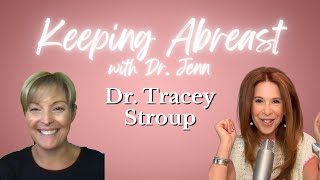
Podcast episode (YouTube) hosted by Jenn Simmons, MD featuring naturopathic doctor Dr. Tracey Stroup. The conversation introduces Dr. Stroup’s background (naturopathic medicine, telehealth, educator, chronic disease and cancer-adjacent care), emphasizes simplifying health via foundational habits (nutrition, hydration, movement, sleep, emotional/spiritual wellness), and begins discussing peptides as amplifiers to a core lifestyle. Early portions include personal anecdotes and practical guidance on diet (eat whole, organic/non‑GMO foods) and habit formation.
Chapters
Okay, so if you are one of those people who has heard about the peptide craze and is wondering about peptides, how they apply to you, how they could help you, and you have no idea where to begin. This was me two months ago, and then I went to the Annie Appleseed conference. And of course, I had heard about peptides before, but I had no education on them, because if you want to learn about peptides, you got to go learn about peptides. Like no one's teaching you about peptides, and I had no idea what to do with them. And then I heard Dr. Tracy Stroop at the Annie Appleseed conference, and my mind was blown. And I got to learn all about peptides, how to incorporate them into my life, and I want you to be able to know how to incorporate them into yours. So I went to the source. I got Dr. Stroup to come and be on my podcast. So, Dr. Tracy, welcome. I'm so excited to have you here. Besides the fact that I get to chat for the next however long with my friend.
Well, I am so honored to be on your podcast. Thank you for having me as a guest. And I know I'm. I'm a big fan of everything that you do and how you've innovated the industry with your amazing work. So, so appreciative that Annie Appleseed brought us together.
Yes. Well, thank you. Thank you, and that's very kind. Although, you know, truth be told, we're all out there fighting the good fight and doing good things. And so I want to start by just introducing people to you, giving them a little about your background, what you do, who you serve, who you help, and then I want to get into the pep talk.
Well, I am a naturopathic doctor by trade, so that's what I do. Now I have a telehealth company, as well as an educational academy for lay people and practitioners. So I would consider myself a chronic disease specialist. Now that you and I had been introduced through Annie Appleseed, I kind of tumbled into the cancer world when a very close friend of mine and my assistant was. Was diagnosed last year. So, you know, as I said at the Annie Appleseed, nobody is born a cancer expert. You kind of become one. You know, you're kind of, like, thrown into it all of a sudden. And I think your story, above all that I've heard, is amazing of how you entered into the journey. So in addition to that, I'm the chief health and growth officer of a tech company as well, and we innovate online stores for doctors So a lot of different hats that I wear, but my favorite one is educator. I love just to teach people how to simplify health, to get the best results and to make it doable. You know, I mean, I think we've overcomplicated health way too long. And I think, you know, adding simple things like peptides to your regimen that you're already doing can be an amplification. So I'm also a wife and a mom of two boys. God made me a boy mom, and I love it. And that's me.
We. We know all about being a boy mom.
Comes with the challenges.
Yes. You know, it's so interesting that you, you talked about simplifying because I think that so many people are so confused and so overburdened and told to do more and more and more. And oftentimes healing comes when you're doing less.
Absolutely. I mean, isn't that the whole crux of why most people are sick? We're doing too much. You know, we have too much stress and too many obligations and that feeling of overwhelm and that just has a cascade of effects on the body. But most of the time, I tell people you can get 70% to where you're trying to get just by changing how you think, how you eat, how you live. All of those just foundational habits. Right. Nutrition, hydration, movement, sleep, sleep elimination, emotional, spiritual wellness. That's the foundation that you need to build that house of health upon. You know, if you don't, you are just layering supplements and protocols on quicksand so you can't out supplement or out medicate a poor diet. You can't out supplement or out medicated out medicate a poor thought process. So those are the biggest things that we need to be speaking into people's lives and that they have more control over this temple, you know, that than they think. And they don't have to continue to hand their health away to everybody and say, help me, help me. There's so many things you can do every day in your own life. Making small tweaks. You know, I hear people always tell me like, oh, I have this goal, you know, your goals change. My goals have changed through my health journey. Right. It's like every year I want to lift more or get stronger or run a marathon or whatever that looks like that that'll never be a goal for me. Let me recant that. I'll never run a marathon. But if it was a goal, I'm.
With you on the no marathon. My health goal that I set for this year is that I'm going to by December 31st be able to do five pull ups.
Oh, that's a good goal. That's a great goal.
Did I tell you this story? I thought I was doing five pull ups. And I told my football playing 16 year old son that I can do five pull ups. Really almost six. And he's like, no you can't. And so I proudly take him into the gym and go to the bar and I proceed to do what I think is five pull ups. And like I rock it and I get down and he's like, it's great mom, but those are chin ups.
Oh my gosh.
Oh my God. I did not know that there was a difference. And he's like, now turn your hands around and try it again. And I couldn't.
Different muscle groups, right? So yeah, I started out in personal training at my degrees in exercise science and I used to tell people like chin ups and pull ups, whole different animal, different muscle groups, whole different animal.
Now I can do two and a half now.
Good. You know, it's impressive anyway, even chin ups are impressive. So don't sell yourself short. I mean compare us women at our beautiful ages to a 16 year old testosterone, you know, laden, child riddled boy. It doesn't, it's not apples to apples. So I'm proud of you, Dr. Jen, very proud of you, but thank you. Back to the goals, I love those, but really your health is built on habits, things that you do every day even without thinking about it. It's good to have goals, but it's better to define habits. And so your habits are the sustainable thing. And I'm sure you tell your boys and I tell mine. The habits that you create today determine the future you have tomorrow and down the road. And so you can have goals of, you know, I want to go to the mlb, but it'll be the habits that take you there. It's the same thing with your health. You want a healthy outcome for yourself. You want to get over something, you want to, you know, rebuild from something that's built on your habits. It's a great goal to have. But once you get there, then what? Right? So you're going to have a new goal. So establish those habits foundationally and then everything else is just icing on the cake.
Yeah, for sure. I love that. So what are some of the foundational habits that you talk to people about and know that like you don't have to do this all at once? Right. Health grows absolutely. And it grows from humble Beginnings, recognizing where you're broke.
That's right. The chain breaks at the weakest link. So here, easy thing, you know, nutrition. People get into all kinds of specific diets. And while I do recognize that those are valuable and sometimes incredibly needed to get you therapeutically somewhere, I go with simple philosophy. Tree, ground, run, swim, fly. If it falls from a tree, grows from the ground, runs in a field, swims in the ocean, or flies in the sky. Organic, non gmo. Heat it. If it can reproduce life or sustain life, it will reproduce and sustain life in you. Box, bags, cans, bottles, packages, Those are processed foods. They are without living enzymes and probiotics. They are not life sustaining. They are calorie producing. They can also give you some energy, but they will not help you create mitochondrial biogenesis. Right. The ability of the powerhouse of the cell to split and create new and healthy cells over and over again. That's an easy thing that I tell my people. Like, we are created foundationally in Genesis from the clay of the earth. You know, God pulled Adam out of the clay. So therefore, anything that runs on it, grows from it, eats from it, our body will recognize. So at the end, we're just dirt and ribs. And I tell people, don't overcomplicate that. Like really just eat from the dirt. You know, build your body. It'll help. So nutrition, that's pretty much what I give the advice on. If we need to tweak more fat, more protein, less carbs, whatever that looks like, we can do that. But a lot of people just aren't eating foundationally. They're not eating real food. They're eating. 90% of what's bought in a grocery store is processed. Packaged food in 40 billion tons of fresh produce are thrown away every year. It's so where we shop, right? So the DIY do it yourself movement, the home economics that's coming back, right? They took away in school, you know, our home ec. We don't learn how to cook anymore because we're a microwave nation and a fast food junkie. And even going out and eating at places that are supposedly healthy, it's still processed, it's still packaged, and it still needs preservatives. So eat at home, eat real food, eat organic, non gmo, as much as possible. We can get in that whole thing, but we're not. And eat from the dirt. That's what I would say. So that's nutrition. Yeah.
Unfortunately, that was a very intentional campaign that came about in the 1960s with feminism. And we were given this messaging, this toxic messaging that we are too important to stay home and cook, that our time is better spent doing other things, joining the workforce, whatever it is. It completely devalued cooking and preparing and shopping and nurturing and all of that very intentionally, right? Like, this was the food industry's way of getting you to buy their products because they sold you this mindset that you were too important, that it was a waste of your time to cook. Let me take that off of your hands. And that way you can do other things like get chronically ill and then utilize pharmaceuticals, the hospitals, you know, the medical system. I mean, it is an evil conspiracy. And when you. And when you recognize that, you're like, oh, yeah, that's exactly what happened. And I guess I am a conspiracy theorist, because I really do believe that it was a very intentional campaign.
I totally believe that. If you go back to Genesis and you look at God's design for culture, you know, man and woman get married and procreate, and they work equal partner. And I can't remember the Hebrew word used for partner in the Bible, but it's used several times that even God refers to himself as a partner, as something that somebody can't do on their own, but needs somebody else to do it for them, almost like filling the gaps, right? So God created Eve to be an equal partner to Adam, to build their home, their family, their culture. And that was the way people farmed. Women worked in the home. Men worked in the home, on the farm. Nobody worked outside of. Outside of the home. Nobody. Not women, not men. So it wasn't like this whole feminine movement for women to work outside the home. The work outside the home came from the Industrial revolution after the war, where we left our homes and went and built someone else's dream, rather than our dream at home for our enterprise, where we grew our food, harvested our food, you know, cooked our own food, and we were self sustainable. We gave away that. Right? So I absolutely agree. Feminism.
More from Jenn






Stem Cells, Peptides, GLP1s and the New Blueprint for Preventative Medicine with Dr. Vass



The Truth About GLP-1 Drugs and Who Should (and Shouldn’t) Take Them with Dr. Susan Brian

What 100 Days Underwater Revealed About Aging and Healing with Dr. Joseph Dituri
