104: Understanding Hormones, Metabolism & Modern Medicine with Dr. Tyna Moore
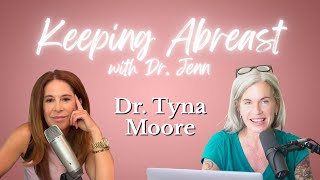
This is a recorded conversation (YouTube/podcast) between Dr. Jenn Simmons and naturopathic physician Dr. Tyna (Tyna) Moore about hormones, metabolism, peptides (especially GLP-1 family drugs), and problems in modern medical practice. Key points in this chunk: both doctors share personal diet histories (vegan/plant-based challenges, B12/thyroid failure, blood type responses), Dr. Moore outlines her naturopathic/chiropractic/regenerative-medicine training and scope variability by state, and they discuss GLP-1s — their pharmacology (semaglutide, tirzepatide, upcoming tri-agonists), microdosing strategies (typically ~1/10–1/5 of standard start for sensitive/optimized patients), clinical uses beyond weight loss (inflammation, metabolic optimization, MCAS stabilization), concerns about widescale and early pediatric use, risks when used without lifestyle foundations (muscle loss, hormonal dysregulation, possible receptor desensitization), and the need for clinician education. They also critique screening cascades (mammography, MRIs) as drivers of overdiagnosis and downstream profitable interventions, and describe practice-level challenges (insurance, telemedicine, bad actors, social-media misinformation).
Chapters
If you are wondering what the deal is with the GLP1s, if they're good, if they're bad, what they do, what they don't do, what they're supposed to do. Well, if you are one of these people, I promise you, you are not alone. And there are so many conflicting opinions and people saying that it's good, people saying that it's bad, talking about it in ways that most of us don't understand. What is a microdose, what is a regular dose, what is a super therapeutic dose? People just don't know until they don't know what to do. And I was in this position too about two years ago and then I heard Dr. Tina Moore. So Dr. Tina is a naturopathic doctor. She has been using GLP1s as many people have for many, many years. And she is using them the way they are supposed to be used, with precision, layered on top of everything else that you're supposed to be doing. And she's using them with great success. So if you're curious about the GLP1s, about peptides and about all the other things that we talked about today, which ranges from vegetarianism to veganism to farming to, I mean, we covered it all. So if you're interested, sit tight, stay tuned because here comes Dr. TM. I mean, we definitely have stories of, of vegetarian woes, right? And I am plant based. I will remain plant based. But, but I did have this amazing experience. Like When I was 11 years old, my grandmother, she came up to visiting day at camp and she brought me this article. It was Dean Ornish's article, right? But I didn't know who Dean Ornish was, but she said to me that, you know, it's too late for me, but it's not too late for you. And from then on I was plant based into my 20s. And I happened to be out with my girlfriends at this chain restaurant one night when I was 20s and literally like it had been over 10 years since I had anything that resembled an animal in any way, shape or form. I might have eaten eggs, occasionally cheese, but I was really, truly plant based and out to dinner with my girlfriends. Out of nowhere, like not thinking, I ordered a hamburger and said hamburger turned up in front of me and I ate it and I was like, wait a minute, I don't eat meat. And then my mother afterwards and my doctor said this must have been your body crying out for meat. And I thought like, oh, ridiculous. But then on and off through the years, I still remain plant based. And then I got to my 40s and I, I must have been at like IIN or some, one of those, one of those health coaching things. And you learn all about the different diets because they don't teach you anything about food in medical school. Like let's just put that out there. And I decide I'm going to be vegan. Like really, really strict vegan. And I'm about two years into really strict vegan and I'm gaining weight, I don't feel well, I have no energy. I start to get edematous and my voice is slowing down. I'm watching myself on videos and I'm actually talking slow. Like yeah, I was a hot mess, the opposite of a hot mess. I was a cold mess. And I went and had my thyroid numbers measured and my TSH was like 112 or something like that. Like oh my God, insane, insane. I, my thyroid shut down and it's because I was like a stupid vegan. I wasn't a twizzler eating vegan. Like not like that. I was a whole food vegan. But I was not supplementing with B12. And let me tell you, it does not work out well if you don't supplement with B12. And I'm not a beta carotene converter. I don't make my own vitamin A. So I have to get it from animal sources or fish or whatever. And I wasn't doing that. So like my body really shut down and it took me years to recover. Like literally years. And so even though my soul is as a vegan, my body does not want that. Just does not.
Yeah, it's hard. I'm such an animal lover and I, I'm definitely more meat based but I can't, I can't know the animal. My husband's grew up on this land out here where we live in Oregon and they reared cattle. His father was a USDA butcher. So he would go, he's the one that over saw the plants at the butcher plants. And then my father was a food broker when I was growing up and was the broker for like the biggest meat distributing in the like west coast. So When I was 14 I decided I was going to go vegetarian and I put a meat is murder sticker. I had a meat as murder sticker. I held on to it till my dad bought me a truck. They bought a truck. Turns out they bought a truck for themselves. But they gave it to me and I was 15 when they bought it. I couldn't drive it till I was 16. I stuck the Meat as murder sticker on the truck. And my dad, my dad went sideways. He's like, meat bought that truck. What are you doing? But I spent 10 years as just full on Mac and cheese itarian. I was like the little alternate girl in Portland. So I was like chain smoking rail thin, drinking way too much alcohol because that's what we did back then in the rain of Oregon. And I lived off Snapple and sun chips and I was so sick all the time. And so I finally found myself living in San Francisco after graduation from undergrad. Sick as a dog like nine months of. Is probably walking pneumonia. I couldn't shake it. And, and I'm cough, I'm literally coughing up blood at times living in this dank nasty. I lived in this nasty apartment. I got a tick embedded under my belly button ring from that apartment. I think there was mice in there. I don't know. It was so gross. And so I went and got a turkey sandwich at some fancy sandwich place in San Francisco. I didn't have any money but I went and got a turkey sandwich and I felt so much better after I ate that. And then I went years later, I ate a steak. And I about climbed the walls after that steak. I remember coming home and like I was on fire. I felt so good. Turns out I'm type O. My blood type is type O. And I don't know.
You are not meant to be plant based.
No, it was not my, I was not good. I actually at that time when I ate that steak it was because I had been diagnosed with ITP when I was 22 and my platelets were falling out from underneath me. And my mentor, I was working for my naturopathic mentor, my, my buddy who I ended up, I started as his receptionist. That's how I started on this whole journey was in that office. And he was like, look, they're going to take your spleen out. Because that's what they did back then. It doesn't work, but they're going to take your spleen out. Or you can go on prednisone at high doses and get, you know, all puffed up from that or you can go eat some steak. And I was like, I'll pick the steak. So, so I did, I got it under control. It's. It remains under control. But yeah, I mean it's tough because I love animals. I can communicate with animals really well, all kinds of different animals. I would have a whole, you know, I'd have them all living with me if I could.
You do look a little Like Snow White.
I'm just saying, I really. I really honor. I mean, I won't even kill a bug, you know, so it's tough. I'm sure there's vegetarian and vegan listeners listening to this thinking I'm a hypocrite, but I. I really get sick when I don't eat.
All right, well, let me just say this about that. A roach crawled by me a couple of weeks ago when I was. I. I walked out the back door of. Of my office, and, like, just a huge roach crawled by me. And I. I just, like, instinctively. Because it was trying to, like, go into the door of my office and, like.
No.
And I stepped on it, so. And I didn't feel bad.
I know. What are you gonna do?
They're just some, like, gross creatures. I mean, I don't like to kill bees because they serve such a great purpose, but I just struggle with, like, what purpose do roaches or mosquitoes serve?
Or, you know, freaking mosquitoes. Freaking mosquitoes.
Hate mosquitoes.
I do, too. And they love.
They love me.
You know, I heard something the other day that it's not that they love us. It's that we have a profound histamine response to them. They're probably biting others. Like, my husband never gets mosquito bites. He's like, they never bite me. I'm like, actually, they probably are biting you. He just doesn't have any kind of histamine response.
So I actually had heard that it has to do with your diet. And they're attracted to some people's skin and not others. Yeah. I mean, my husband hardly ever gets bitten, and I get bit all the time.
Yeah, totally. I don't know. I've tried. I mean, I got bit when I was carnivore. I got bit when I was vegetarian. I get bit when I have no. When my blood glucose and my insulin are bottomed out. I get bit when it's high. I don't know. I don't know.
I don't know. I did stop eating bananas for, like, five years because I had heard that they are especially attracted to the smell of bananas in your skin. Like, me and my younger son were the ones in the family that were always getting bit. And my husband and my older son never did. And we convinced ourselves that it was because we ate bananas, so we stopped eating bananas.
I don't know. I got bit the other day on the palm of my hand. And one time I got bit, I think it was two years ago on the bottom of my foot. I do not know how it got through that thick of skin. But. But both of those were the most uncomfortable experience.
Yes. It drives you crazy. The ones on your hand and your feet.
The burning pain. It's like this burning pain itch that you can't. The one on my foot, I was. And I have a really high pain tolerance. I was in a panic, and my husband is like, what is wrong with you that you didn't get stung by a bee? And I'm like, oh, my God, this is so awful. And it. You know, it ramps up for, like, a good 20 minutes, and then it subsides, and you're okay. But we've got two different species out here on the farm, and the one of them is just. Man, they make me wicked.
Yeah.
They burn.
Yeah.
Who knows? We. I'll never know. I'll never figure it out.
So, like, I. You know, it doesn't bother me at all to kill a mosquito.
No.
I'm like, I. All I see is that I'm saving myself for my next mosquito bite. Like, that's really all I see.
I do try to save spiders. I've. I've decided I have a lot of Daddy Long Legs down in my studio. And I'm like, look, you guys serve a purpose. You're not gonna bite me. You keep the bad spiders away. We can have an agreement.
So, yeah, I totally agree. I. But I do. I do shuttle them out of the house. Like, I. I totally get it that they serve great purpose. I don't want to kill them, but I also don't want to look at them. So I do shuttle. I do shuttle them out of the house. Off you go.
Yeah, absolutely.
Stink bugs. Do you have stink bugs?
We don't. We're in the Pacific Northwest, so I think we have something similar, but we don't have what you guys have. You're in the. You're in the Midwest, aren't you?
No, I'm in the Northeast.
Oh, you're in the Northeast. Yeah.
Honestly, like, growing up, I never heard of a stink bug, but 10 years ago, I guess they came over from Asia. All those great things come over from Asia. You know, someone packed them in their suitcase or whatever it is, and we have these stink bugs that I actually can't smell them. And I have a tremendous sense of smell. Like, I can smell something and tell you what you used in your recipe. I can. I can smell wine and stuff like that. Like, I have a nose. I could have been a perfumer. Yeah, I have a nose. But when you kill stink bugs, apparently they have A God awful smell. I don't smell it.
Oh, interesting.
So I don't. I don't know. I don't know what that means. I'm also a super taster. Oh, so do you know what that means? Have you ever heard of that?
Yeah.
Yeah. So, like, raw broccoli tastes disgusting to me. Even though cooked broccoli is like probably my favorite food on the earth. Like, I. But it, I cannot eat it raw. Like, it is vile.
How do you do with cilantro?
I love cilantro. Like, I. Sometimes I just make a salad out of cilantro.
Get that detox in. I love it.
Yeah, I love cilantro. When I'm, when I'm making guacamole, I'm like, needs more cilantro. It's basically like an ava. I shouldn't call it guacamole. I should call it like an avocado cilantro salad. Yeah, that's what my. That's what my guacamole ends up looking like.
Interesting.
Yeah, no, I love it. And I actually tell women with breast cancer to drink cilantro tea.
Yeah, yeah, yeah.
Just like steep it, put a little salt in. It's amazing.
So.
And then eat the cilantro afterwards because it's so detoxifying. Yeah, Absolutely amazing. For liver, it's amazing for all those things.
And it pulls heavy metals out. Yeah. Relatively well, all things considered. Like, yeah, it's pretty potent.
It's effective.
Yeah.
Okay. So how did you go from being a rebel to being this like super famous doctor?
Oh, I don't know about famous. I'm. I'm kind of a hermit. I just sit in my. In my. On my farm and stay isolated.
Okay, well, I think you're famous.
Thank you. It weirds me out that people are even listening. So I was a really sick little kid and I spent the bulk of my life in and out of doctors.
What does that look like?
I was born and was immediately put on antibiotics for chronic ear infections. So my microbiome was obliterated. And I spent literally my entire life in and out of doctor's offices constantly. And when I was five, I remember being held down by nurses and doctors and my mom and they were trying to suck snot out of my nose with some kind of vacuum device. And I was screaming. And I remember thinking, there's got to be a better way to do this. And so anyway, long tumultuous relationship with medicine in general. And then when I was a teenager, I decided I was going to be actually like fifth Grade. To be honest, I was. I started thinking about becoming pre med. And then as a teenager, I was really committed to the process of pre med. I don't know, I got disillusioned, though. I was working. I was in. I was an undergrad. I was working up at Oregon Health Sciences University in the Alzheimer's and Dementia clinic. And I was. I'm talking to the head neurologist up there, like, who you saw when you were basically a vegetable. And this is 1995. And he says to me that he. If he spends more than seven minutes in a room with a patient, he's losing money. And I was like, oh, my God. And my heart broke.
1995.
Yep.
It was. It was the way, you know, health insurance as we kind of know it now. You know, it was like the beginning of that.
And so that's when that transition was happening.
Yep. It broke my heart. And I just kind of went rogue and decided I got lost. I really got lost in college and I decided I was gonna become a marine biologist, of all things. And then somehow I. I shifted back towards medicine and ended up working. I had always been a patient of chiropractics. My mom had taken me to the chiropractor since I was a kid. And to be honest with you, of all those doctors I was all the time and all these specialists, my chiropractors were the only ones who would ever give me any answers. They were the only ones that would actually talk to me instead of over me and at my mom. They would answer all my questions. They would take their time with me. They taught me about nutrition, they taught me how to feed myself properly. And I really love my chiropractors. I owe my life to them, honestly, in many different ways. I'd go to the allergist and they would blow me up with allergy injections to test me. And then my chiropractor would do some mojo and I would like to completely calmed down. And so I had that kind of in my back pocket. And then I ended up right out of undergrad, going to work for a naturopathic physician in Portland who was really well known, famous guy. He's now since passed, unfortunately, but I had the honor of being mentored up by him for about 20 years. And that guy was such a rebel. That guy was Dr. Rick Marinelli. He was hardcore. He really pushed the envelope and was so, so smart. And in his final years, he actually was the first naturopathic doctor and acupuncturist to be basically brought in on a National Health Institute board. So he, you know, he sat on the NIH and I don't know, he.
He and I got pretty impressive.
He was a really cool dude and he really ignited my fire back in me. And in that process I ended up, I had, you know, by the time he passed away in 2013, I think I was like five years into practice. So I got through chiropractic training, naturopathic training, kind of under his watch. And then he unfortunately passed away and I had to take over his practice, which was all regenerative medicine. So I'm dropping 4 inch needles in people's spines like on the daily. And that takes a, you know, a lot of guts. And so I had to overcome any kind of hesitant. And you know, you're a surgeon, I'm not a surgeon. But like, you know that when you're doing, it's different than sitting there and talking to your patients all day. When you're like doing hands on procedures that might be missed with high liability, it's a different game. And I think that maybe you're feeling.
I didn't even know naturopaths were allowed to do that. So there's had different restrictions.
It depends on the state. So there's fake nature paths. There's a lot of fake nature paths out there. Some of them have huge followings. They call themselves doctor. They have absolutely no medical license or medical degree. And that's sort of rampant all over the Internet. I just did a whole podcast on my podcast about it. And then there are those of us.
That I didn't, I didn't know that. I didn't know it wasn't a regulated thing. Like everyone who has my medical degree has my training essentially right. That's not true in naturopathy.
No, no. In my profession. So for those of us who are licensed, who are real, we went to an accredited four year or anniversary four year university, we sat for North American board exams, we sat for state board exams. We hold a medical license. There are, there are very few states that are licensed in the United States. In Oregon, I happen to have a very broad scope. So I have virtually full prescribing rights, except for a few. I can't prescribe cancer drugs, I can't prescribe barbiturates, but I can basically prescribe everything else. We can do minor surgery. If you get specialized training and certification, you can deliver babies. So it's, it's legit. There's not a residency required in every state. I think that is a problem that's being changed and there are states that have licensed naturopathic doctors. Doctors in them, but they do not have. They're not licensed in that state. So Colorado, for example, they have a certificate, but they're. There's no actual naturopathic medical board that is licensed there. So it's. It's confusing, and it's very confusing for the general public. That's why I did a whole podcast on it of, like, what to look for. But there are several people online calling themselves Dr. So and so nd. Not a Dr. Whatsoever. Not even the same kind of training as I went through. They're basically essentially health coaches. They got some kind of health coach training, and then they bought a board certification. So you can buy.
You can. So scary.
You can buy board certifications for ND. You can buy board certifications. You can be a PhD. You can get a fake PhD and buy a board certification for that. So it's all fakey fake. And it's very difficult for the general public to tell the difference. Wow. Yeah. My profession never stepped up. Like, they never. The. The licensed NDs never really stepped up and took care of this when they could have. And so now we're in the situation where. And I get it, like, people come at me all the time. They're like, you're not a real doctor. You can't prescribe. Why are you talking about GLP1s? And I'm like, actually, no, you have that completely wrong. But, like, my DEA license would argue in my half a million dollars of student loan debt would argue differently. But. But yes. And my patients that I, you know, injected their spine on the regular would argue differently. So it depends on the state and it depends on the scope, and it depends on a lot of factors. But for those listening, not to, like, get off topic, but I do have a podcast on it where I tried really hard to explain it as clearly as I could, but it is. It's messy, unfortunately.
Wow. And what were you injecting? Were you doing stem cells?
What were you doing? Yeah, yeah. So stem cells, prp. And then originally it was prolotherapy. So that's what I was originally trained in. Long before these fancy, you know, stem cell exosomes.
Yeah.
That we have now. We were doing dextrose. We were doing different concentrations of dextrose. And dextrose has a really profound healing effect. It creates a modulated inflammatory impact on the region that you're injecting. And the focus of those injections is most often the enthesis. So our ligament and tendon meet Bone and then intra articularly. And I was very good at it because I was a chiropractor too. So I have, you know, pretty phenomenal hand skills and anatomy knowledge and you know, like, I know my, I know my musculoskeletal medicine. So yeah, taking it.
Well, I think that that's another and specialty that's overlooked that at least where I am. Chiropractors are kind of looked down on as less than.
Yeah.
And people don't realize the training that they go through. And listen, I do think that the rotten apple spoils the bunch a lot of times. And so you get these people who are inscrupulous and, and you know, don't have good training and don't do the right thing and, and take people for a lot of money and that kind of thing. Like there's bad apples everywhere.
Yep.
You know, there are plenty of real doctors who really do Medicare fraud and. Oh yeah, there are a lot of people not doing the right thing out there. But chiropractors in general have a very holistic training and can come out and offer something that most medical doctors cannot and do not.
Oh, absolutely. If you have a musculoskeletal complaint, I always say go to. Have you gone to the chiropractor first? And people say, I don't believe in chiropractics. And I'm like, you don't believe in biomechanics?
Like, yeah.
Anatomy. Like, yeah, it's. It's not. I will tell you, a well trained chiropractor probably knows more about neurology and neurophysiology than anybody aside from a neurologist. So if you've got something going on, have it checked out. You know, chiropractors especially, find a good one. It's hard to. I mean, that's a whole other conversation on how to find a good one. But find a good one because there's a lot going on there that they can take care of and they can ameliorate and then you get a much cleaner clinical picture. You know, I cannot tell you the amount of patients that have come into my clinic to get injected in their necks because they had chronic migraines and the naturopath in me was like, give them some thyroid. And the chiropractor in me was, let's adjust it. And they're on hardcore opioid drugs or hardcore pharmaceuticals for chronic migraines. And they've never had their neck adjusted and they're not getting their hormones, you know, handled. And that's what I did, I did regenerative injection therapies and hormones and peptides so that like anything regenerative and it was just kind of a one stop shop there. And I learned a lot along the way and I've been at it for a long time. But I would say at the end of the day, you know, you gotta build a team of clinicians around you. Right. Each one of them is going to be really good at what they do and you can't expect any one of them to be good at all of it. So it's like find your people and then pay them well. Because if you're going to find someone good, you're probably going to be paying out of pocket and prioritize it if you need to because. And I know there's a lot of fraudsters out there, but at the same time there's a lot of great ones. And just finding that's really my message online is I'm trying to just educate people so I can empower them so they can go out and find the people they need to help them. Yeah, I feel like that's half of what I do every day online. It's just like educate to empower.
I, I agree with you. I mean, you know, I keep saying that I want to step away from one on one medicine because I just, I, I can't do all the things. Like my dance card is so, so, so full. We were in a mastermind together that I dropped out of the mastermind this year just because I had to scratch something off of my dance card. Like as it is, I'm working till midnight every night. I wait. I shouldn't say that because I am not doing what I tell everyone else to do. I do, I do see it as a temporary stop gap until, but I, I, I have to expand my team. Like I am spread so, so, so thin that I need to bring other people in to do what I do. Which is not to say that what I do isn't special. It, it is, but it is special. Yeah, but I can't be the only special person out there.
Like of course I know, I deal with that too. But I don't know, at the same time, like I closed down my practice several years back before COVID Thank God, because I'm in Oregon and I was not doing Covid, I wasn't playing. I mean they were full stop like excessive out here and I know, I.
Mean we have a, we have a friend and colleague who, her license was taken away because she wouldn't play by their rules. Which was a total lie.
Yeah, it was crazy.
So crazy. And yet they ruined, they ruined honest, truth seeking lives.
Oh yeah. I, I, I could tell you story. If I could get past the PTSD of all of it, I could. Someday I'll share what all happened to me because I pushed back so hard and I had a pretty big platform and it was not well received. But all that to say when I let my practice go and I referred my patients out, it took two years for us to finally, I hate to use this term, but like, get everybody out. Because people kept coming back saying, you know, I went to these doctors that you suggested because you send them a letter of discharge and you give them your three favorite people and message after message, people, patients calling, emailing, begging for me to see them again, saying, they just don't think like you do. They don't inject like you do. They don't treat me like you do. They don't, they're not, they're not innovative like you are. They're not as brave as you are. You know, there's a lot of kind of practicing at the edge of your license that you have to do in some cases to get people better.
Yeah.
Sometimes you have to step out of what's normal and customary and you have to take some chances. Not that, not that you're going to endanger their life, but according to the rules, you know, it could get you in hot water. And I was always by the book, but I definitely wanted to do what was right by my patients. And so I do think you're special. And I'm, I'm starting to realize as time goes on, and I don't mean to toot my own horn, but I know that I do things very specific and unique way. And I don't know if it's because of my two different licenses and training. I don't know if it's because I.
Know, I mean, listen, you're definitely a unicorn.
Yeah. It's just, and it's okay. But I used to think like, oh, no, anybody can do this, you know, And I don't think anybody can. I, I have sent so many people to colleagues. I mean, for instance, like microdosing GLP1s and they come back with like a whole different thing than I had ever intended that, you know, this strategy to turn out like, and, and they're sick and they're having side effects and it's not microdosing and it's just standard low dosing and whatever. I mean, it happened this morning. A big influencer A big famous person actually texted me this morning and she said, I just got the microdose. And she sends me the bottle. And I'm like, nope, that's the standard.
Starting dose, the microdose.
That's like 10 times more than I would suggest for this lady because she's very lean already and she was just using it or wanting to use it for. To see if it helped with musculoskeletal pain. And I was like, there it is. So, anyway, all that to say is, I do think you're unique and it's hard to replace you. So finding a team to support you and having, you know, other clinicians underneath you, but that. What people don't realize is then you're taking on liability and you're running a big ship, which isn't sometimes any better, right, than you seeing the patient one on one. It's. It gets hairy and people are like, why aren't you seeing patients still? I'm like, because I would rather have my eyeballs tattooed at this point. No shade on the patients. I just do not have the bandwidth to be worried about other people. I gotta worry about my own.
Listen, I hear you. And for the last, I would say, six months, I had a policy, like, no more one on ones. And then I would get. Someone would get me on the phone. So, like, can you just talk to my cousin? Can you just talk to my neighbor? Can you just talk to my son's teacher? And they're like, will you just please take me on? Just, I, I, you know, please, just please take me on? And I'm like, oh, my God.
Oh, my God. Oh, my God. They. They beg sometimes. They send me novels begging. And they. It breaks my heart.
It does.
It breaks my heart into a million pieces. To the. My daughter is a pretty active member of my team. She's probably my key player on my team. And she's like, mom, I'll literally screenshot it and send it to her. And she's like, mom, you can't read these. Just. You can't help them all, Mom. You gotta step away. You gotta step away from it because it's. I don't know. I mean, I wish that medicine wasn't so mediocre in general. And I wish that more doctors in all of the different professions would just work a little harder to understand the strengths and weaknesses of what the other professions offer. Like, you just gave props to chiropractors because you know. And you know how to utilize them within your referral network, right? And when and where and it's just this weird turf war, especially online. Like, I, I've seen that your account has grown much bigger and you're probably getting some of this now. It's just such a turf war. And the second you get big enough, they come for you and they start cutting your head off. And it's like, dude, we're all.
They're so mean. I don't even go on social media anymore. Like, I, and I apologize for everyone that's trying to message me and get me to engage and all of that. I'm not engaging because they're so mean.
They're so mean. And you're.
I just don't do well with that negative energy. Like, I'm not one of them. I mean, listen, my self worth is not tied to who does and who does not like me on Instagram. Like in the, in this big scheme of things, I don't care. Yes, but, but when I'm in that moment, like looking to these comments and saying, you know, people say things to me because I am an avid non supporter of mammogram.
Yep.
Like, mammogram doesn't save lives. It doesn't save breasts. If it had to go to the FDA today for clearance, there is no way on God's green earth that it would get clearance.
Yep.
It would not happen. And yet it's considered the gold standard. And I'm some kind of like, murderer for first going out against mammogram. And I get it. Like, I get it that the people have been brainwashed. I get it that this was one of the biggest ad campaigns where we have hoodwinked the public. I get it. I get it. And yet in that moment when I have colleagues say to me, you know, you're, you're, you're a murderer and people will die. Yeah. It's the same. It, it's just, it's insane.
It's insanity.
There's people so afraid of change. In some ways, I get it that they're not out there. Re educating themselves. Because I know that most people aren't like me, that they didn't get to 50. And they're like, I think I'll completely change my profession from being this kind of doctor to being this kind of doctor. Like, most people are not going to do that. And I get it. You know, it took me three years and cost me a hundred thousand dollars to do it. So I get it, I get it. But that, well, probably cost me more because I had to start over.
Yeah.
But that they're so not open they're not open to the possibility that maybe what they've been doing for 10, 20, 30, 40 years is incorrect.
And I think that's it right there. It's like all the people just completely bought into the COVID vaccine as being safe and effective and just complete, like intelligent, well researched doctors, completely abandoning the duty to look at all the literature and not being willing to look at the myocarditis cases that are just, that's just such a blatant beginning step of what, you know, is potentially a problem here. And they won't look at the elephant in the room. And I think it's because they're complicit, they contributed to the problem. And they, they, you know, I've never ordered a mammogram for a patient ever, Ever. I, I. And kudos to you for being part of the system and walking away from it. I never was part of the system even, you know, and so I, but it's the same. I have to tell you, I actually said something about it in my stories recently about mammograms, and all I said was, I choose not to have them. You do whatever you need to do. Here's a podcast I did with Dr. Jen Simmons. I put the podcast up there with the link so they could go listen to it. I, I featured you so maybe you'd get some followers. Like, I was like, go talk to her. Go, go listen to her. Really? You know, I'm not, I'm not claiming to be the expert here. Oh, my God, they lost their flipping minds. And I'm looking at my husband and I'm like, poor Jen. Like, this is what she's dealing with. And then it gets worse. A few weeks later, I said something else about something apparently, maybe I think it was colonoscopy, something they didn't want to hear. Me choosing or not to do something has nothing to do with what you should or shouldn't do based on what you conversations you have with your doctors. People like, I just sharing my own personal decisions. And yeah, people dropped in and they're like, this is like the mammogram thing. You're a murderer. I hope you die. And just venom. Just venom. And I'm like, and, you know, I hope you get breast cancer and you don't catch it in time. And I'm like, this is from other women. And they're not doctors, they're just general people. And I was like, what is wrong with people that they would hang? It's like the cult of the vaccines, too. It's like, why would you hang your hat on something so vehemently without any. There's nothing that I believe in besides, honestly, besides God and nature. There's nothing I believe in so vehemently that I would not consider the other side. If somebody came to me with a sound argument, if somebody came to me with a sound argument, I might be like, okay, I'll listen. I'm not going to freaking attack them and wish them death. It's so crazy to me. Crazy.
Crazy. Right?
Cult. It's a cult. It's the cult of allopathic medicine.
But that is the whole thing about mammogram that at every point along the way where the government or the people who made guidelines said, let's look at the data, the data came back and said that mammograms don't save lives. And their response to that was, well, people really want them, so we're keeping them.
Yep. Yeah.
And so at every point along the way, mammogram has been proven to not save lives, to not save breasts. And we kept them because people feel so strongly about them.
Well, it's the gateway to a multi million dollar industry. Right.
The industry always wanted it. Right. And that's why they just continue to say louder like, mammograms save lives and no one calls them out on it.
It's like, it's in my industry, in my world, it's like the low back mri. And interestingly for most folks, if you had a, if I had a patient come in with low back pain, the standard of care, if they're going through insurance is X ray them, which I don't know why we would if we are suspecting soft tissue, because X ray does not show soft tissue. It shows osseous structures. So you X ray them. Then in many cases, before you can get coverage for an mri, you should inject them with cortisone. They want you to inject them with something that is catabolic, that's going to destroy their soft tissues even further. And you inject them with cortisone and then when they fail care, then you can get an MRI to be covered. And I'm like, or you could just pay the 500 bucks out of pocket and get the MRI because oh my God, like what a process to go through. And then once you get the mri, they have just a few tools, more cortisone radial ablation surgery. Right. They've got just a few tools in their tool belt and I'm over here like, or I could shoot some dextrose and PRP in there and probably get them pain free. I don't care what their MRI says. Right. Like, as long as they don't have any motor loss, I don't care. I just want them to have symptom relief. And so it's this whole cycle that people get into. And then we have an old saying in orthopedic medicine that surgery begets more surgery. So it's a pipeline and the MRI is the front end of that pipeline. Just like your mammogram is the front end of the pipeline. Yeah. And I mean, I don't know.
Billion, if not trillion dollar industry, Right.
Essentially. I mean, this is my opinion only, but yeah, like that's, that's my opinion that a lot of this is just, you're, they're just getting you in the funnel.
But I don't even think it's your opinion. I mean, it's just simple facts. Like if we, if we look at the mammogram industry, if we stopped doing mammogram tomorrow for screening. Right. Just stopped doing mammogram tomorrow for screening, we would have somewhere between 90 and 150,000 less breast cancers every year.
Wow. Well, because. Yeah, they go in and poke the mirror.
Right.
And 150,000. So that when you look at autopsy studies. Right, so say people die, women dying in car crashes. Not, not anything related to cancer. Right. If you just look at autopsy studies, one in five women will have changes that we would consider breast cancer. They would either have DCIS or they would have a focus of invasive cancer, totally subclinical. They don't have any mass that can be appreciated. They don't have any clinical symptoms. We're just talking about this person dies, you section their breast. One in five will have what we would term breast cancer.
Yeah.
And yet one in five women don't.
Have breast cancer or die breast cancer.
Or die of breast cancer. And that's the other thing, is that people hear that 1 in 7 or 1 in 8 number over a lifetime and they think that means that one in seven or one in eight women are going to die of breast cancer. That's not it at all. It's just that if you use mammogram to screen. Yes. Over a woman's life, you will successfully. Because that's the intention of it. You will successfully diagnose 1 in 7 or 1 in 8 women with breast cancer. But a third of those, at least a third of those would have never developed clinical disease.
They would have never known in her.
Lifetime, would have Never known. And yet when we diagnose them, they have to suffer the trauma of diagnosis, of treatment, and of what happens afterwards, which we never talk about. Like, we talk about survival, but we don't talk about what that looks like, which for most women, survivorship sucks. Yeah, like you can't think, you have brain fog, you can't sleep, you're anxious, you're depressed.
Well, you're chemically castrated, basically.
Yes, you are chemically castrated. If you weren't in menopause before you're put into menopause, if you were already in menopause, we make it worse. And then everything that we do accelerates heart disease, accelerates brain disease, accelerates brain disease, neurodegenerative disease. You gain weight, you have loss of lean muscle mass, increase in fat, libido. No. You know, your libido tanks. You have vaginal atrophy, you have bladder atrophy. Your, your ruins relationship. It does.
Are you ready for a breast cancer screening revolution? Well, I'm thrilled to introduce to you a breast cancer screening tool that I have only recently learned about, but I have universally adopted. This is the ARIA test. This groundbreaking at home breast cancer screening test is one that I believe will completely change the game. So imagine a screening test that's as simple as shedding a tear, because that's aria. It's a non invasive, convenient and perfect for all bodies and all breasts. Dense breasts, implants, no problem. ARIA makes it clear for everyone, even women as young as 30. Aria is backed by over a decade of clinical trials, thousands of samples, and it's developed alongside top breast health experts. Here's how it works. You collect a tear sample at home and then ARIA then analyzes it for protein biomarkers that can signal early breast cancer. And the best part, you get a consultation with a breast health specialist to review your results. Now, ARIA isn't replacing breast imaging. I am using it alongside qt. It's complementing it and giving you a fuller picture of your breast health. Knowledge is power and ARIA is putting that power back in your hands. It's time to take control of your breast health and ARIA is another way of doing it. Go to Aria Care a u r I a care and use my code, Dr. Jen 20 in Capitals, D r j e n n 20 to get 20% off. Back to our show.
I read a stat actually yesterday that there was a 60. I think, if I think I'm right, there was a 60% increase rate of divorce. When a woman develops cancer and it's virtually zero the other way around. So in most cases, a wife will stay with a husband who gets cancer, but in most cases a husband will leave a wife who gets cancer.
Yeah, yeah. And listen, I do think that that's a little bit of chicken and egg because so many women get cancer because they're in a relationship that's not working.
That's fair.
Right. So they. So that was already in motion when they got their cancer diagnosis. But I think in that same relationship, that's not working. When the husband gets the diagnosis, it's a time for reconnection, the wife gets the diagnosis, it's the time for the husband to get out.
Yeah. The other thing to consider that I always tell patients when they come in asking for imaging or for, you know, as a musculoskeletal doctor, I probably ran 5 MRIs in my entire career, honestly. Because in most of those were. If the case was in litigation, because I. It doesn't change the treatment plan very much. In any and every case of pain. If we've ruled out a neoplasm, which most. I mean, you know, we. In most cases, if we don't have motor. I mean, this is a pearl for your audience listening. If you've got a herniated disc, which everybody, you know gets all bunged up about, I know they're terribly painful. I've had them. Our tissues heal. So if you're not having motor loss, meaning drop foot, like say it's a low back disc. If you're not actually having motor loss or you're losing the circumference of your calf or your thigh, like you're not actually. Or your glutes are atrophying. If you're not having motor loss. I usually wouldn't run an image unless a patient absolutely had to have it. And in most cases, once you get in your head how shitty your back looks, it messes up your psyche. Right.
And yes, I wish you think you're broken.
I wish more people knew what comes after. And so I would always. I still always tell folks because I consult with a lot of people on their health in general. And I'm like, well, is it going to change the treatment plan any. And in my case, I can honestly say that I don't think that I would undergo the standard of care for breast cancer. I don't think I would do it. I think I would. I don't think I would do radiation or chemo or any of it, actually. I watched my best friend die of cancer for two years and I'm. I Just don't think I'll do it. So for me, I. I do. I live in this funny place of I don't want to know. I just don't want to know. And then like, well, why, you know, you're 51 and a half. Like, you haven't had a colonoscopy, you haven't had your mammogram. And I'm like, I don't necessarily want to know. And that's my personal decision. I don't want to do what comes after because I know what comes after. But I think a lot of people don't know. And then they live in this space of chronic fear. And then they do every. They think Dr. Is God. And so they do everything the doctor says. And I'm like, yo, have you even considered what your choice would be if you did get a diagnosis? And I don't think most people consider that. And I think it's worth talking about because especially like in a low back situation, if they're not exhibiting motor loss, they really want an image. And I'm like, okay, well, we can get you an image. A lot of times we have to put contrast dye in you. That's ganolinium. It's a heavy metal that gets in your brain. It messes you up. Like, we have data on that. Do you want to go through all of that when the treatment isn't going to be any different? Are you going to choose surgery? No, you don't want surgery. You wouldn't be in my office. You want a regenerative injection therapy trial. I don't need an MRI to tell me where you hurt. Like, yeah, so I get it. And I think a lot of doctors actually function in a place they practice from, a place of fear. So they want to, you know, cover their ass. Medicine, right? It's what, CYA medicine. And so that whole mess is so unfair and the patients are caught up in it. And I think when I have those conversations with folks, most folks have never been talked to that way. And then they hear it and they're like, you're right. It's not going to change my treatment plan any. I'm like, we're still going to dial in your diet. We're still going to dial in your hormones so your pain comes down. We're still going to do all the lifestyle stuff. I'm still going to have you strength train. I'm still going to have you go out in the sunlight. I'm still going to have you optimize your sleep. I'm still going to consider a peptide sac. I'm still going to do all these things. And we're going to inject your knee for a trial of, you know, two to five injections. Whatever we decide is most appropriate. That's called informed consent. And I think when people, when patients actually hear the risk benefit ratio and they're talked to like adults, and they get to make the decision based on informed consent, real informed consent, it's called a PAR Q. And most doctors don't do it. And what PAR Q stands for is you are supposed to explain the procedure to the patient. You're supposed to explain the alternatives, you're supposed to explain, explain the risks. And then you're supposed to ask them if they have any questions. And so I literally leave the room and I say, you come up with your questions and I'll be back. And then I come back a few minutes later after I've gotten their estimate together and I. Their treatment plan, and I come back and they ask me questions. And I say, if you have any other questions, feel free to call us. Because that's how medicine's supposed to be practiced. And I really challenge anybody listening to this, like, because that's how medicine's supposed to be practiced. And I really challenge anybody listening to this, like, how many of you have had that done? When you've been told you have to get something done or take a certain medication or take a certain injection? Right.
Most people just, it's not happening. I mean, my husband is going through it right now. Now, unfortunately, he's a quick fix guy. Like, he wants the pill or the shot or the surgery. Like, that's. That's who he is.
Yeah.
And I'm totally opposite. And I think for back pain, what we have to consider is, yes, you go for imaging and yes, you have a herniated disc, but doesn't like, 70% of the population have disc herniation?
And there's no correlation between how shitty your MRI looks and your MRI to your pain. There's zero. We have multiple studies on that. Like, it's the same industry as yours. It's like this outdated, weird thing that people keep hanging their hats on. And I'm like, we have no good data to show that your shitty MRI has anything to do with the pain you're exhibiting. And I can diagnose you with a disc without imaging. I can diagnose radiculopathy without imaging. I can do some orthopedic tests and tell you and some nerve flossing tests and tell you exactly which nerve root is being irritated or agitated, like, this isn't rocket science. And yet it's just.
I mean, there are dermatomes, like, you just know.
Yeah, it's the punt, though, because most medical doctors don't. And no, no disrespect, but I'm sure you'll agree with me, most doctor, medical doctors and most naturopathic doctors don't get any kind of decent musculoskeletal medicine training. And so they see a patient with low back pain and it's like, oh, you have low back pain. Whereas I have a much. You know, I have, like, at least six different diagnoses. I would pick from within that category of back pain. So, yeah, I don't know, it's a. It's a similar kind of punt. But the patient gets thrown into the punt, I think, most often by doctors who don't know what they're doing. So they go to their gp, their GP says, I don't know what's wrong with you, I'm going to refer you off to orthopedics. Orthopedics gives them a shot, a cortisone shot, to justify ordering the mri. We got. You got to fail care. Isn't that crazy? We live in a world where you have to fail care before you can move on to the next failure.
Right. Like you. And you have to have, like, taken six weeks of NSAIDs and you have to. You have to fail care. It's crazy. You're absolutely right. Well, our system is entirely built on failure. That's what it is.
I had to get out. Yeah. And then we get on because we're trying to help people. I remember back when Covid started and I was trying to, very early on, share with my audience about good eating habits, eating nutrient dense food and the importance of it.
The importance of it.
Because my whole argument was, it was real clear in the beginning. We had the data coming out of China that those who were diabetic were most significantly impacted. We had that data, like, week one. We knew that those with diabetes and obesity were having a terrible time in China and in Italy. And so I was trying to share with them the most simplistic ways to bolster your metabolic health. Go for walks, go out in the sunshine, eat, get enough protein, lift weights. And people were coming at me, my own colleagues were coming at me, saying, what you eat doesn't matter in the face of a virus. And I was like, oh, my God, did. Did we all forget immunology? I was like, sitting in class with these people.
So crazy. And even beyond that, the fact that we were talking. We're not talking about fasting.
Yeah, yeah. Like, there was no talk about any of it.
It was all talk about fasting. And I have to say, as an IFM trained physician, I was horrified by their response.
Oh, yeah, I was horrified by my entire profession's response. The Nature Paths completely drank the Kool Aid and they all came at me. They still come at me. It's nuts. Yeah.
How do they still come at you when, like, everything's out there? Everyone knows.
It's the same reason people rate you hate mail about mammograms. Because they don't want to admit they were complicit with it. Right. They don't want to admit they were part of the problem. And no, what you're eating day to day isn't going to necessarily directly protect you from a virus, but it certainly is going to impact your metabolic health, and your metabolic health certainly is going to impact. Impact your immune system and how you respond to that virus. So, like, it's, it's just wild. It was a really wild time. But I don't know, I feel like it's just some different story the next day. Like right now there's a kind of a meltdown happening on Instagram about glp1's microdosing glp1s because all these health influencers, they're not really health influencers, they're like regular people with Instagram accounts who don't have any health credentials whatsoever. And they are being paid kickbacks from the telemedicine companies to affiliate and promote microdosing of GLP1s, but they're not microdosing, they're just standard low dosing. So some of the obesity docs with big accounts are up in arms, and rightfully so. I, I get it. If that's all they're hearing is this sort of vanity weight loss thing. And these people are taking these. You know, the people are coming in asking for this, but just to be. I just did a podcast that came out today, actually about it. Microdosing for weight loss is not a strategy. It's not a viable strategy. And that's what they're all selling, which I think is a huge scam. And so anyway, people hear what they want to hear and the nuance gets lost in translation. And the original message I came out with two years ago about utilizing really tiny doses and already metabolically optimize individuals for inflammation, for neuroregeneration, for cardiovascular support, that's what I was proposing Anyway, not prevention, treatment or cure. Just like adjunctive optimization. Right. Which you and I understand the nuance of. But a lot of folks in the allopathic community don't understand that. And they're really mad about it because they're like, microdosing doesn't. If you need, if you need it for weight loss, you need a standard dose. And I'm like, well, not really, because I actually just started somebody on a microdose 2 days ago who went through a telemedicine company advertising microdosing, got his package. Again, standard, standard low dose, just the standard starting dose. And I was like, dude, well, I.
Think that they have to do that because with micro doses, doesn't it have to come from a compounder?
It does. That's what they have, though. That's what they're dispensing, is a compounder.
I thought that. Well, let's, let's get into it all because, I mean, I can't be with the queen of microdosing and not. And not really get into it. So first start us off. What is a peptide?
Okay, well, let me finish this story because I think that this will help drive it home a little bit. This individual has weight to lose. He also has some skin issues and he has MCAs. He's got mast cell activation syndrome.
Skin issues, like psoriasis or something along those lines. Kind of a ro. Kind of, you know, some, some immunologic looking skin issue. Okay, okay.
And I mean, this individual so sensitive that taking B vitamins sends him into a flare and that's how bad his MCAS is. So he orders GLP1 thinking he's getting a microdose. He's actually just being standard low dosed. And I tell him to take a tenth of the standard starting dose. I'm like, look, dude, I'm not trying to be your doctor here, but let me, let me just talk to you about this because we're close and we. He consults about his health with me and I said I would suggest a tenth of the standard starting dose. Obviously, ask your doctor if that's cool, but I think you would, I think you would end up in the ER if you took the standard starting dose. Like, I think you would be so sick. So he calls me two days later on a tenth of the standard starting dose. Tiny, like literally a droplet. And he's definitely having some side effects because, you know, in the initial stages of taking a GLP1, you go through what I call the purge, where your microbiome shifts. And so you either have bad constipation or you have bad diarrhea and you get a little nausea. And it's usually very transient for about the first week, but it's nowhere near like on the couch sick, puking. When people take higher doses, it's just a little bit of discomfort in your day. And he was going through the purge. I warned him about it, and he's like, oh, my God, if I had taken the full dose, I think I would die. And I said, yeah, I know. I mean, that's why I tried to come out with this strategy of taking really, really tiny doses, because we don't want to send people into flares anyway. What is a peptide? A peptide is a string of amino acids, peptide bonded together. And if in kindergarten version science, a string of peptides is a protein. So we have proteins and they break down into peptides, which break down into amino acids. And you get your amino acids from the foods you eat. They're just a particular strand of amino acids that make up these peptides. Some of these peptides are larger, some of them are smaller. Some of them can only come in an injectable form. Some can come through an oral form. But that's basically the, the gist on the peptides. And so glp. Oh, go ahead. What's your next question?
You have to have been living under a rock if you haven't heard of the GLP1s, right? So this is a peptide. It is found in our body. Does make this peptide, right? Yeah. But you have been talking about it for far longer than anyone else. You've been using it for longer than anyone else. You have a vast, vast, vast amount of experience with it. So I want to know, how did it all start for you? Like, how did you recognize that adding in this peptide would. Well, let. Let's first talk about what does this do and why is it important?
So the FDA approved versions, the brand name versions are better known as Ozempic and Manjaro. Those are the two different types. On the Ozempic side that is FDA approved for type 2 diabetes. The other version is Wegovy, that's approved for weight loss. Those are both semaglutide. And then on the tirzepatide side, that's a GLP1 agonist and. And a GIP agonist. I'll. I'll get to that in a second. That is Manjaro and Zepbound. And we have compounded versions of these as well. And so I actually, I had some experience utilizing the. This is a Family of drugs called Incretins. And these are the newer generations of these. These go back, though 20 some years to exenotide, liraglutide. There's. There's different ones. People may have heard of Victoza, that these are all in that family, and they've been used for type 2 diabetes for a long, long time. I knew of that version. I had been out of practice and honestly had not used semaglutide or tirzepatite in patients up until a couple years ago. And my podcast producer was breathing down my neck. They had. They had just come out really kind of on the scene because they had just been FDA approved for weight loss and the Internet was melting down because people have a lot of obesity bias. I have learned. I have figured out over the past couple years, and people were melting down about it. And he's like, you got to do an episode on Ozempic and weight loss. And I was like, dude, I don't like talking about weight loss. I never like talking about weight loss. I'm a big. My whole platform has been built on metabolic health and muscle and hormones. Like, my whole message is get stronger, not skinny. Like, we're not going for skinny. I have been telling people since 2016 when I came online to lift weights and eat meat. That is what my whole message has been. And I did not want to get caught up in some kind of weight loss conversation. And so I did my homework, I did my due diligence. I called everyone I knew who was using these clinically, and I interviewed them all, and I was like, are you using them for this? And this and this? And then I started digging into the research and finding really, really interesting studies that. Piles of interesting studies that had nothing to do with the clickbait, propagandized nonsense we were hearing over on social media and over on the mainstream media. And the weird thing was, the functional medicine community at the time was parroting what the mainstream media was, and they were both just hating on it. And I was like, what is going on? That always makes my ears perk up. I'm like, that sounds like propaganda. What? You know, it's like it was like 2020 all over again. I was like, well, something is off here.
Yeah, yeah. What's the goal here?
So I start digging into the data.
With the Women's Health Initiative, right? Like, wait, why are they screaming about this so much? Seems. Seems a little suspect, right? Yes.
I never stopped prescribing after that study came out. I was like, I was just in My own little silo over there writing HRT prescriptions the past 20 years.
As well you should be.
And so I started researching this peptide and finding all kinds of potential health benefits from tip to toe and really coming to the conclusion that they are anti inflammatory, they're healing and they're regenerative. And I was like, oh great, I'm a regenerative medicine. Listen doctor, this fits in perfectly. And I had some experience with some other peptides that were regenerative in my practice and in my day to day, but I really hadn't like gone into the, you know, I, Peptides are expensive and I do think that a lot of these are thrown around. Here's my issue with the whole longevity Dr. Peptide thing is a lot of doctors will put patients who have the financial means on these very expensive stacks of peptides, but those folks are not always necessarily doing the foundational work. And so my argument is if you're not in the gym, if you're not eating nutrient dense food, if you're not on the hrt, if you're not doing all the things as I call it, then you really shouldn't be dabbling with peptides. Would say the peptide gives you a leg up to get started. I would agree with that in certain circumstances. But I'm really a foundations first girl. I'm an.
It has to be an end. It has to be to be an end.
Yeah. Like you got to be in the, like if you're at, at base level, not going to the gym regularly and lifting weights, then I don't even want to talk about it. Right.
So yeah, I mean, quite frankly, I'm the same way with hormone replacement.
Yeah, totally don't.
I, I, I have no problems prescribing hormone replacement for women with history of breast cancer. Like, doesn't bother me, doesn't scare me. It's the right thing to do. They have better outcomes, they feel better. We often save their lives. Right. We don't cost them their lives, we save their lives. But don't come to me when you're still eating junk food, when you're not moving your body, when you're still drinking wine for stress relief. Like, don't, don't come to me asking me for hormones because I'm not, I'm not helping you.
Yes.
Like, amen, it's an end. But you have to be doing the things.
Yes.
Have to be doing the things.
Yes. I think that's why we get along because I same thing. I'll pull that prescription so fast if people do not comply because there's hormones go down funky pathways that we don't like when there's too much inflammation in the system. And of course it's like trying to hit a moving target when we're, when they're just pouring lighter fluid on the fire, right? And we're over here trying to put it out with hormones. So it's exactly the same. That's exactly my thinking, Jen. That was exactly what I was thinking. And I was like, okay, so when I have a patient, let's just say we have a 25 year old male who's got a history of playing hockey his whole life and he's had multiple head traumas and he's got really low testosterone on labs and he's dealing with chronic migraines and he's not healing from any of his injuries and he's not having gains in the gym and he's having erectile dysfunction. I'm going to put that young man on testosterone, but I'm not going to give him the dose of like a warrior. I'm going to give him a physiologic dose. Right? And so just understanding that nuance with HRT is what got me thinking about microdosing GLP1s. I started thinking like, well, maybe people are deficient in it. So I dug up studies showing that those who were dealing with type 2 diabetes and those with fatty liver were indeed deficient. And then some data showing that those who were obese were deficient or at least they weren't making enough in response properly. And so there was one study a couple years ago that showed those who were obese compared to their lean counterparts and when they were fed fat, they both released the same amount of endogenous GLP1 from. You make it in your gut and you make it in your brain. If it's made in the brain, it's probably pretty important in the brain, probably beyond just appetite control, right? Like I'm, I. There's receptors for GLP1s throughout the entire body is what I found in my research. And I was like, okay, these, this has to be much more important signaling peptide hormone than it. We're thinking about it, right? We're just thinking about it like this. And so anyway, I thought what if people, if it's made in the L cells, predominantly, most of my patients guts are trashed. Most of them, as we age we start dealing with B12 deficiencies from loss of intrinsic factor due to atrophy of the gut lining. Most of them have some level of leaky gut and. Or ibs. Many of them have IBD or some kind of inflammatory bowel disease, because I see those people, because guess what? Those people have joint pain. So I see a lot of people with gut issues, because a lot of most gut issues manifest as polyarthralgia in some. Some way or another. So I thought, well, what if we just did physiologic dosing? What does that look like? Well, there's no way to measure GLP1. So I thought, well, let's just sprinkle a little bit on it and see what happens. And I found very quickly that the dose really matters. And a little bit too much is a lot too much, depending on the person. But in all cases, I was dealing with people who moderately ate well, moved regularly. I mean, they might not all be superstar athletes, but these people, they give a shit about what they put in their mouth. They give a shit how they move their body. And I found very quickly that a tiny little bit could be really profound in folks that were generally already metabolically optimized. All these folks had very decent lab work. They weren't all superstars, they weren't all hitting the gym three days a week as I would like, but they were. Their labs looked decent. I hadn't dabbled with anyone who had true obesity or, like, real true pathology, but for some reason, this peptide is categorized as like, only for the people with severe pathology. And I'm over here in longevity optimization space thinking, well, what if we just did the tiniest little increment? So I started asking my colleagues, are any of you using it in really tiny, tiny amounts for things that have nothing to do with weight loss and nothing to do with body composition? And all of them said, no, but you could. So I really did my due diligence. I talked to compounding pharmacists. Nobody was using the tiny little doses I was suggesting. So I just started doing it, and then I started talking about it, and then it caught on, and I got on some podcasts and I got on some bigger podcasts, and it kept going. But in most cases, those podcasts and the. The hosts were wonderful, but many of them wanted to have the obese ozempic for obesity conversation. And I was like, that's not the conversation I'm trying to have. I'm trying to talk about all these other studies we have showing potential. And since opening Pandora's Box, a lot of these things have come to fruition, and we now have good data on it, right? And so that's kind of the conversation I have been wanting to have with people, and yet it keeps getting pulled back. Like, do you think it's okay to give it to obese people? And I'm like, dude, I'm not going to sit here and have a conversation about people's moral judgment of how obese folks should be treated because I say give it to whomever needs it. I have no. And the big scaries that data is just not bearing out, the pancreatitis, the thyroid cancer, all the big scaries that, the most recent data on that big. You know, there's, there's, there's decent studies where they look at all the literature called a meta analysis for your audience, and it's just not bearing out. So to say that is it not possible? No, absolutely. There's concerns and we have to keep our eyes open. But this, the blindness situation, such a rare, rare, rare, rare condition. And who's to say those people, most of the things you're hearing about that are scaring the shit out of everybody are real risks and significantly higher risks in the people most often using these peptides, meaning the thyroid cancers, the pancreatitis, the, the blindness. All of these things occur more often than not in those who are type 2 diabetic and, or obese. And so a lot of these folks are already sitting on the edge of said condition and then they end up developing said condition whilst on a GLP1. And they want to blame the GLP1 and the other. The folks who are in the know, like you and I are like, well, maybe they were already headlong on their way there and they just happened to be on a GLP1 on the way. It's like saying, you know, you, you wore a red T shirt on a drive and you got in a car accident. So the red T shirt caused the car accident.
Yeah.
Right.
You know, yeah.
No, I mean, it's such a valid point that we're, we're kind of. I, I just keep getting reminded of what I, I had one attending who whenever we would make rounds, it's totally like not PC, but if someone wasn't doing well, he would look at me and say like, chow fin, you can't make chicken salad out of chicken. Like, what did you expect here? And because trauma rounds were always really interesting because invariably the people that came in for trauma weren't on their way to church.
Right.
Yeah.
They were not on their way to the gym. Yeah.
This is like three in the morning. Crash my motorcycle. And I'm not judging people with motorcycle. I'm not Judging anyone. I'm just saying that the trauma population tends to be a different. A different breed.
And.
I think that we're looking at a population of people who. Who were prescribed this medicine who are genuinely unhealthy.
Yes.
You know, like they. They didn't get there from nowhere.
Yeah. And it took a long time to get to where they were. And I do think the problem. And the other reason I am such a proponent of the absolute lowest dose necessary is because I think if you go too high, too fast with these, you really can throw people over the edge because the body doesn't know how to. If you've had 20 years of hyperglycation or high blood sugars, your vessels are used to that, your entire nervous system is used to that. All your cells are used to swimming in sugar and high blood sugar, and then you suddenly pull it back and you maybe at the same time crush their appetite and threw them into an anorexic state so they're not eating, so their gastrointestinal motility slows down even more. Like, that's just a recipe for disaster. So if in my head, there's like two entirely separate uses here, one's over here for folks like you and I, and we're doing all the things, we're putting in the work, and we just want to add a peptide to our stack. You know, just like we would maybe at. Sprinkle a little testosterone on the hrt. Right. Like, we're. We're just sort of harmonizing the orchestra. And then over here, we have people who truly are so far down the pathology highway, and they're being given standard doses, which is fine. I'm not judging anyone's dose, but they're being ramped up so quickly. And I think therein lies a big problem. And I would. I invite the medical community to slow down, at the very least, just slow down the. On. On ramping. Because I do have a couple patients who are quite obese who are using it now, and we've just gone very, very slow and low, and we're achieving measurable weight loss on some of the lower end doses, a standard dosing. So it's just an argument for, like, do good medicine. And. And really, you know, we got to do some. I do think with these peptides, you need to be under a doctor's care and you need to get your hand held. I don't think this is appropriate for medispas. I don't think this is appropriate for. For. In. In some telemedicine cases. I know there's better companies than others. I don't think this is appropriate. Just fly by night, you know, clinicians who know nothing about metabolic health who just opened a GLP1 wing of their. You know, it reminds me of, like, it reminds me of doctors who just like decided, you know, I'm going to do regenerative injection therapies, and they don't know anything about orthopedic medicine. You know, like, at the end of.
The day, like, I'm going to do stem cells.
Yeah. Yes. Because a money grab. So I just think that folks have to be a little more scrutinous of who they choose to work with. But all that to say, I think there's a place for it. I think it's very safe. I think the results have been amazing. I've gotten a couple of my colleagues who do deal with very ill patients. So like that kind of mcas, histamine, Lyme disease mold group of patients, the very, very, very sick, very reactive. And they found very tiny doses to be seen. So amazing for stabilizing the mast cells and keeping those people from flaring. Because I don't know if you've worked with patients like that, but it's so hard to even get your treatment plan on board because they don't tolerate anything. Everything you give them, like, sends them into a tailspin. And so this is a really cool tool to just start to stabilize. And these people maybe aren't going to the gym and they're not doing all the things, but a micro dose is helping. Will that help forever? Probably not. What I've seen is if you're not putting in the work, you know, alongside using the peptide, the benefits will start to wear off pretty quickly. So I call it kind of the ultimate around and find out peptide, because you can. Suddenly you're like, I can tolerate gluten and I can tolerate all these things that my immune system wasn't letting me tolerate before. But that effect very quickly wears off in time. And you might see a little weight loss in someone like you or I who maybe, you know, I'm walking around with like 10 pounds of fluff from middle age, and I'm. Because I don't care what the bro science community says. And some of these other folks online, like you and I know we have women who are in midlife who are way more disciplined than even we are, and they're doing everything right and they just can't get that last, whatever that 15, 10, 15.
Yeah, that's very real.
It's. It's very Sense, right? It's like, yeah, they didn't have it. And then you saw them a year later for their annual checkup, and they walk in and they're like, where did this come from? That's low key insulin resistance starting. And so I think that's a very appropriate use for microdose too. But the weight loss part, the fluff will come off. It tends to come back on, though, if you around. So that doesn't give you free rein to start drinking your wine every night and, you know, doing all the things. You still have to be really disciplined, but it does give you a little bit more leeway in your immune system. So anyway, all that to say you may initially find weight loss with a microdose in a pretty healthy, optimized person. But I do think that that result will. It has a shelf life. So.
So I'll tell you that when everyone started to talk about it, and I don't remember the doctor at Harvard who came out and said that, that obesity is a genetic disease, even though it is not a genetic disease. And in fact, it just so happens that obese people grow up with obese people, and that's the connection. And they do the things that their parents did and the siblings do the same things, whatever. But she came out and said that obesity is a genetic disease and that obesity, obese families should all be given GLP1s, including the children. And, you know, no one's, no one's teaching them how to eat and how to move and all those things. They're just doing what they did before and living their lives of convenience, which. And again, I'm not picking on people. I know that people have to work. I have to work. I know that, you know, cooking and shopping and procuring is hard. I get it. I do it too. But that I saw this as a very dangerous message, a very dangerous quote, unquote solution. And I worried, like, what are we setting these kids up for when they're gonna start on a GLP1 at 8 and 10 and 12 and just learn nothing and take this drug forever? And I had grave, grave concerns, besides the safety things, I had grave concerns about the message that it sends that, like, we don't have to take responsibility and, and, and we don't have to work on our health. We can just farm out our health. Like we farmed out everything, but we're farming it out to the pharmaceutical companies who very, very intentionally want us to be reliant on them.
I completely agree. And I always say that, you know, diabetes and obesity are. It's the diabetes industrial complex. It's very profitable to a lot of industries.
Very.
I completely agree with that. I think the problem lies in resources. So the American association of Pediatrics came out with their guidelines and their guide. This was a couple years ago. This is what had, you know, Cali means. And everybody up in arms. The guidelines. I've gone through the guidelines with a fine tooth comb, and the guidelines were very clear that intensive family counseling and lifestyle interventions are step one. So getting the child exercising, getting. Oh, is there a. Is there Amber alert? Is there a flood?
Now, Pennsylvania is a. Experiencing a statewide intermittent 911 outage.
Oh.
Oh, that's. That's not good.
Well, get your gun. Put it next to your desk.
I actually should go up and get my gun, but I, I'm. I. I think you're going to be safe.
You'll be okay. You got your little dogs. I've seen you have a cute little dog. That'll make a lot of noise.
Yeah, yeah.
But.
But if I go like this.
Yeah. Bye. And.
911 for me.
Just put your address in the chat. I was online with someone two days ago on a podcast, and she just disappeared. But I was talking to my camera, so I didn't see her. I just kept talking.
That's so funny.
She's, like texting me. Like, I'm sorry. I. I lost connection. Anyway, okay, so these guidelines very clearly state they. I think they've been misconstrued by, you know, I'm going to just say it. You know, Cali means has been made a lot of noise about how we're going to give ozempic to 6 year olds, and a lot of folks out there are screaming that. And I get it. But these guidelines very clearly state a ton of intervention. And in fact, they give hours, the amount of hours that a family should be working on this together. It's just not reasonable because there's no version of this where these resources are available everywhere.
Yeah, they don't exist.
Test very down low on the whole thing was pharmacologic intervention. And they didn't necessarily specify GLP1s. It just says at age 14 or higher, we will authorize pharmacologic intervention for the obese child. So that somehow has gotten twisted into, we're going to give 6 year olds Ozempic. And I'm not defending it. I'm not a pediatrician. I don't pretend to understand what it is like to live in an obese body. I do have a very obese Family. I came from a long line of obese people. There is some epigenetic issues here that we probably should just mention. Like, there is very good data showing that mothers who are living with obesity when they're pregnant with severe metabolic dysfunction. That child, that infant, is swimming in insulin in the placenta, like swimming and inside high, very high levels of insulin. So they come out epigenetically marked their risk for obesity. And type 2 diabetes is so, so high because they were born of an obese and potentially diabetic mother. And so there's this epigenetic lineage happening. So not to say it's genetic, but there is. Like, they're kind of sitting ducks, if you will. So I. Again, I'm not saying it's okay to give kids Ozempic, but I don't think I've talked to pediatric obesity docs and they're not writing prescriptions like candy, you know, like, they really are trying to intervene with the family. And you're so right. Like, that's a huge conversation that nobody wants to have that obese kids are coming from obese parents. And I'm not pointing the finger, it's just how it is at something like way over 70% of obese children have obese parents are coming from obese households. Yeah. So there's.
Because from apples, you don't get oranges.
Yeah. So we have a huge problem. And I'm with you. I also am sitting here like, oh, my God, we're losing as a species, and I don't know what the answer is. And I. And I'll tell you straight up, my. I know a few people who really are living with the disease of obesity, and they are quite struggling with it, and they have all hit the max dose of these GLP1s and they're not working anymore. And then I'm talking to pharmacists who.
Are like, that's scary.
Yeah. Pharmacists are having patients call in saying, can you give me a bigger dose? And they're like, sorry, it's not FDA approved. I need a bigger dose because it's not working. And now they're working, which scares the crap out of me. They're working on looking at much higher doses. The pharmaceutical companies are looking at much higher doses of these peptides, and this is the recipe for complete disaster.
Hello, my beautiful listeners.
I'm taking a quick break here to share something truly transformative with you today. If you're ready to take control of your breast health journey, then you need to get your hands on a Copy of my book, the Smart Woman's Guide to Breast Cancer. I wrote this book to make a massive impact in the world of breast cancer, empowering women everywhere to make informed choices and educated decisions. You have so much more power and control over your health than you might think and this book, this is a roadmap to harnessing that power. Inside, you'll uncover the truth about conventional treatments. They're often overestimated benefits and underestimated, under explained and under disclosed long term side effects. But more importantly, you'll discover the true drivers of health and how the choices you make at home every day can lead you to the best health, the breast health of your life. Even after a breast cancer diagnosis. Whether you're looking to prevent a diagnosis, avoid recurrence, or simply live your healthiest life, this book is for you. Join me on this journey to empowerment and health. Grab your copy of the Smart Woman's Guide to Breast Cancer today and let's revolutionize the way that we approach breast health together.
People are going.
Have we, have we replaced the oxycontin with something even more dangerous?
Yeah. I mean these people are going to be metabolically like, they end up losing so much weight so fast and losing. It doesn't induce muscle loss. The muscle loss is coming secondarily from the lack of intake of nutrients and the lack of strength training. It's actually regenerative and really nourishing to the muscle and the bones. It does not induce osteoporosis. It's actually protective against the muscles or to the muscles and the bones. But at cranking the high doses super fast, they crush the appetite. The person goes into an anorexic, malnourished state. They look like melted candles. They've lost all their muscle mass. And now when the peptide stops working, because I do think it will, they're going to end up in such a mess because they just lost whatever metabolic engine they had which was their muscle. So yeah, I think that is a.
Huge part of the issue. Right. Is that as we talked about, you know, I, the same way that I won't give hormones, I also won't prescribe even micro doses to people who are not going to the gym two days a week and lifting heavy things and when they're home, lifting heavy things because we can't get rid of our muscle. It is the center of our metabolism. And you cannot have a healthy metabolism without maintaining lean muscle mass.
It's the image.
It is, it is. And quite frankly, I mean, breast cancer is undeniably a metabolic disease.
Yep. A thousand percent.
We see most cancers are end of the line of metabolic dysfunction. I mean, you know, maybe some of the leukemias or lymphomas are more environmental toxins. But you know, make no mistake, if you have metabolic dysfunction, that is toxic. Yep, it is toxic.
What's I think even more concerning is frailty is truly the kiss of death. I mean, that is the last thing you want. So you've got, you've gone from metabolically compromised obese to metabolically compromised skinny fat, which is even more deadly and more dangerous. And now they've lost all their muscle, so they're frail. And when you're frail and you're met with something like Covid or something like cancer, that's. I would, I would argue that frailty was the biggest risk factor for death for any, for any reason, for, for anything that you might meet up with.
And so about your ability to compensate. Right.
I look at some of our like age cohort, appropriate actresses that we grew up watching like on 90210 or whatever, and they are clearly on OIC and they're so skinny, they're like 90s wave thin, except they're in their 50s. And I'm like, honey, if you don't break a hip, it's just going to take a good flu to take you out. You know, it's, it's, it's really a mess. So I am totally in agreement with you. That's what I'm saying. Like, it's almost like two separate conversations in my head. I'm over here talking about those of us who have good muscle mass. Our BMIs are sound, our, our DEXA scans are good, our bones are good. And I'm talking about utilizing it to. Because I have autoimmune diseases and I have issues that I would like help with no matter how well I eat or no matter how good I am with the lifestyle pieces that we still have issues. I still, you probably see this too. I know women in our age cohort who have six pack abs, lift weights every single day, have their HRT dialed, everything. But all of a sudden their cardiovascular and inflammatory markers are creeping up. You know, so I sprinkle a little GLP1 on that. That's a whole different conversation though than the bulk of America. So when I come out and talk about this, it's hard because this really is the big problem, right? And I still think GLP1's done right. And that's why I have a course called GLP1's done right. Because I Think that done right, it could be so miraculous for this cohort as well. It just has to be addressed differently. It's a comprehensive treatment protocol. This is just but one tool in the tool belt.
There's.
There's a whole bunch more that goes into it. And, And I really think the more we educate the general public, the more they will demand that their doctors stop being mediocre and hopefully learn more. Like, the doctors need to learn more. They need to learn how to use the tool. And the course is for clinicians. I let the general public in because I don't want to gatekeep. So it's about like 60, 40 clinicians to general public. But all that to say, like, educating people, to empower them so they walk into their doctor's office to have a kind but intentional conversation with the data to say, like, this is what I want to do. How are you going to support me in this? Or find a different doctor who will. I don't, you know, I don't have the answers for everyone, but I think that we're missing the boat on the GLP ones. And now retta True Tide, the new one coming out. I think it just got FDA approved yesterday, or it's about to be. That one is a triple agonist, and that one actually has a glucagon agonism, which is super cool in people who hit the gym because it's anabolic. But when you're not anabolic, when you're in a catabolic pathologic state, it's actually going to. Cause I think I'm concerned that it potentially could induce more wasting. So I think five years from now, this is going to be a shit show.
Yeah. I think you hit the nail on the head, though, with the education piece, and I. I forget who I had this conversation with, but I had this really intense conversation which kind of woke me up to something that I hadn't even considered, which is that I think a lot of people are now realizing that we got the hormone thing completely wrong with the Women's Health Initiative.
Right.
Yeah. And that hormones, not only are they beneficial, but the whole platform. Platform that, that. That they were causative of breast cancer was totally, totally wrong. And in fact, they're protective. Right. So we know that they protect against breast cancer, they protect against osteoporosis, they attack, protect against heart disease, protect against neurodegenerative disease. And it's. It. It's not about hot flashes anymore. And it's not. That's not what it's about. It's about longevity. It's about preserving health. But we've had two decades of physicians, and I would argue maybe even more. And I'm not just talking about physicians. We've had two decades of providers who do not know anything about, about providing hormones for people, about prescribing hormones for people, about dosing hormones, about what to use, how to use them. So even if we decided to tomorrow as a society, okay, hormones are good. How are people going to get them? Because we don't have trained providers. And this is another example. Yeah, like if we decided tomorrow that micro doing is good, we're in the wild, wild west, or even standard dosing. They don't know. They don't know. They don't know what to do. They don't know how to do it. They don't know what to write for. So we have an education problem, and it's very real. Yeah, it is very real. And it's going to take another decade, I know, in order, in order to fix this education problem. And it's only going to be fixed if the people like my voice and your voice and Lindsay Berkson's voice and like the people that are out there who've known that this is the right thing to do. It's only going to get fixed if we teach.
Yes. That's why I made the course. I, I was going to make two separate courses, one for the public and one for practitioners. And my girlfriend and I were talking and she's like, Tina, let's, let's be real. Most doctors don't have the first clue how to address metabolic dysfunction in their patients.
No, they don't. They have no idea.
Just make the core like it really is. My 20 years of clinical experience wrapped up in a course that's wrapped in a GLP1 bow. So it's, there's a hormone module, there's. There's talk of gut health in there. Terrain first, you know, like, really this. And I'm realizing a lot of the doctors coming in, this is their first venture into functional medicine at all. And so it's been a, It's a doozy. It's like 40 hours of content. It's. It's approachable to the general public to understand, I think a smart individual, you don't have to be a doctor to understand it. But I'm really, I'm trying. And you're right. I think it's. You and I are early and people are going to beat on us until we either give up or burn out. Yeah.
Well, we can't we can't give up.
I know.
The other thing that I know that we can't give up on is that, you know, because this, this did become a rage. And I don't, I don't remember what the percentages are. You might know, but what are the percentages of people, people who are using GLP1s or one of the forms of GLP1s that are using them for. I don't mean this in a cruel way, but I'm just going to say vanity weight loss. What is the percentage?
I think it's a lot because that's what's happening online. This is the new thing. I would never take Ozempic. Oh, but I'll microdose it because the stigma's off there. I'm microdosing it for inflammation. That's what I'm seeing right now online. That's why I recorded that podcast and released it yesterday was because I'm like, what is going on here? They're now co opting and then they're using my name to sell it. They're using my name to go send them to an affiliate link to get a kickback from a Medispa or a. It's just so gross. Anyway, it's, it very much reeks of vanity weight loss and I think a lot of folks are using it that way. But I'll tell you this, this is very interesting. Two things. So do you know what kisspeptin is? Kisspeptin is like the peptide that sort of signals the hypothalamic gonadal axis to go. So it's like the, you know, you turn on the Kiss peptin and we can even use it as an exogenous peptide. We can inject it, but we make it naturally. And we make all these things naturally. And if we can get the kisspeptin to go, then we can get the hormones to sort of the whole thing to go. Interesting study. It was on mice. They took brain slices of mice who were well fed, put GLP1 on the brain slice and Kisspeptin was released in response. So these all work together. So we have leptin, ghrelin, glucagon, gip, you know, we've got all these signaling. Insulin is the one people are most familiar with. All of these things work as an orchestra. And so we need, we need to pull levers. And I'm a big fan of like. That's another reason I like the lowest dose necessary because I don't want to mess up the orchestra. I Don't want to come in with a big bass drum at high, you drown out the rest of the orchestra. Yeah. So they then took mice that were living who were malnourished and gave them GLP1 and their kids. Peptin didn't signal, which would suggest that their hormones are going to fall out from underneath them. So imagine a middle aged woman, she thinks she's microdosing, but she's actually just standard low dosing. Her appetite's being crushed, she's losing weight, she thinks she's on a microdose. I hear from these women every single day on Instagram, every single day I get messages like this, I'm microdosing, but I'm. I haven't eaten in two weeks and I feel terrible. Okay, so imagine that woman whose hormones are already falling out from underneath her, and we don't have hormone literate doctors to help her. And now she's on a micro dose from a Medispa or a telemedicine company and she's crushing her appetite further. And so she's getting no kisspeptin release and we're potentially exacerbating her hormone demise. Like, that's just a hypothetical based on a mouse study. But you see where I'm getting at? Like, that's a big problem. Yeah. And then the other piece is that these women aren't doing anything else. They're getting their hands on their microdose and then they're not. Or if they are, they're getting really cookie cutter hormones and they're not doing anything else. And then the messages I get all the time that kill me are the ones who say, your work has changed my life. I love you so much. I started microdosing. Who knows what their dose was. It's changed my life. I've lost £40 and now I'm gonna go to the gym. And I'm like, oh, no, no, wait. What have you been doing?
Did you not hear me?
They're not listening to me, Jen.
Don't think you heard me.
I'm so honored that you had me on to talk about this because they're not listening to me. And I'm like, what part of go to the gym first did you not hear? It's crazy town to me. So I think the, the inmates are running the asylum. I don't know what I can do anymore except continue to educate. But it's like the wild west.
It's really hard and it is the wild West. And even, you know, in, in the hormone space, this is what's happening too, that there are some loud voices and people with really big platforms. Some of them are, you know, some of them are Hollywood stars, and some of them are this and that. And they're just saying, you know, go on hormones. And I'm like, wait, wait, hang on.
Y.
Because, like, you can't just go on hormones because if you're already really inflamed, if you're not doing the things, if you're drinking wine every night with dinner, please don't go on hormones because this is just going to spell disaster for you.
Amen.
Right. Like, if your body is metabolizing that alcohol every night, night, guess what it can't metabolize.
Yeah. Your estrogen.
The estrogen, Right. So this is a surefire way. Now, estrogen doesn't cause breast cancer. Please hear that. However, if we're going to overload our detox system, your body is just going to scramble and say, like, I. I can't. I can't do this. Yes, I can't do this. And you're ne. You're never going to find balance because we can't predict what's going to happen in. With your metabolism.
Right.
And if your body is busy metabolizing alcohol, it cannot metabolize the estrogen. So please know that. Please hear that. So that's like an absolute no for me. I'm not, I'm not a, like, la, la, la. Don't tell me. I'm like, hey, if you want me to write you for hormones, you're not drinking.
Yeah, yeah, you're getting with the program. You're. You're like, get your together is what I tell people. You're gonna get your together or we're not doing the hormones. Because I complete. I have been preaching the same completely. I. It's. It's so unpredictable which pathways that estrogen is going to go down when we've got too many variables on board. And it's. This is where I do think a microdose of GLP1 is beautiful because it does make people not want to drink, and it does actually clean up the terrain a bit. It takes some of that inflammation out of the path. And so we can kind of get a little bit more strategic with our hormones. But again, if they fuck around and find out, then it's off. And I, I do want to say this too, just for the audience listening, since we're given the. The full Monty here. Tirzepatite is more GIP than it is GLP1. So if we're talking about the health benefits of GLP1. We have to take GLP, GLP1, which is semaglutide. Everybody wants to take the tirzepatide and everybody goes to the tirzepatide. But I'm like, there's not as much GLP1 in there. We still can get some good benefits. And I do like tirzepatide. But then retatrutide, it's like maybe 15 to 1 ish. Kind of going off some data that I found. So very, very little GLP1 and mostly GIP and glucagon agonism. So when people are saying, oh, retatrutide is the new thing, it's mainly people who can't prescribe prescribe and they are selling you gray market peptides from a research lab because that's what they can most easily access and that's what they can most easily sell you. But I saw a peptide expert today who I really respect, but he said if you want the best anti inflammatory benefits, retatru tides where you go. And I'm like, dude, the GLP1 is minimal in there. And when I take retatrutide, my psoriasis comes back and I do not get the benefits that I'm looking for that I normally get from semaglutide. So I just want to put that out there because I've talked to multiple peptide experts in the past few weeks who've all said the same thing, like, oh, sema is so old news. I love reticide. Reticide's the new sweetheart. Okay, well you're not getting much GLP1.
We're so attuned to what's latest and greatest is best. I just think we've been so trained to do that. Yeah, that, that's, I think that that's what's happening there.
Well, and it's what they can sell because there's been a lot of turf war between, and lawsuits between the compounded pharmacies and big pharma. And so it's getting harder and a lot more expensive to get your hands on semaglutide. I mean semaglutide has increased in price by from like $100 a vial, maybe 150 to $800 a vial.
I know, it is crazy. And this is one of those areas like we were talking about. We have to take over education. We also, we also have to, we have to fight here. Yeah, as, as providers. We, we can't let the pharmaceutical industry dictate this.
We can't let bad actors or people Who. I mean, I'm just kind of tired of. I'm just kind of tired of influencers. There are some. I know some strength and conditioning guys that are so smart about hormones and peptides. They know more about hormones and peptides than most of the. The doctors I know. But at the same time, it's just the wild west out on the Internet now. And so people are accessing things from. God knows. I mean, people are putting Botox and filler in their face. They're somehow getting black market Botox and filler. That's like a whole fad over on Tik Tok right now.
And I was like, can you imagine in. In a headspace where that would be okay, well, it's.
It's prohibitive.
Never. I would never. I know I'm not doing it anyway, but if I were doing it, I for sure, sure would not be like black market doing it.
It's crazy.
It's crazy.
The other thing I'll say, actually, that I wanted to say earlier is I have found, even with microdosing GLP1s definitely, and maybe you've seen this too, they definitely seem to shine the mirror on whatever hormonal deficiencies are present. So if someone's hypothyroid, they will feel more hypothyroid, potentially, if they are. If they're not having their thyroid supported, if they are low hormone or they're imbalanced, even high hormone. I've got. I've had some young patients, younger in their 20s, who had PCOS. And I thought, oh, yeah, microdose will be great, because in most cases it is really great. And then all of a sudden, all their hair started falling out. And I run their Dutch and their. Their hormones are through the roof. So we have to tread carefully. And I really want to encourage people to find practitioners who know how to do this because you have to address all the things at once. Because I get. I may not have a ton of patience anymore. I do consult with some people, but the interesting thing in my life is that I have a fairly large following and I have hundreds of thousands of people across multiple platforms. And I get a lot of messages from people. I don't answer hardly any of them because I can't. But I have heard it all about GLP1s. I have heard it all, and I have a lot of, you know, boots on the ground doing this work. And I hear from them, too. So they come. Guess who everyone comes to when there's a hiccup? It's in my. It's my DMs. And so yeah, I have had so many messages from people saying it's not working for me. I don't know what's going wrong. All my hair is falling out and I'm like you. I'll click through to their profile and I'm like, oh, you're just like your.
Thyroid check please have your thyroid.
Yes. And their gut health, I mean that's a whole other thing is like how's your gut health? How's your lipopolysaccharide load in your body when you're throwing estrogen at it. Now you're trying to use. I don't know, it's just a big mess. It can turn into such a hot mess so fast. So I just want to encourage folks like stop trying to figure this out on your own. Find people who can help you. And you might have to hunt. I have a whole module in the course on how to.
There aren't that many hormone literate providers out there. There aren't holistic. Do you have a, a database where can people go to your website and know who took your. Took your course or were you educated or.
I don't because I have it inside the course. So inside the course, anybody who's a health practitioner can add themselves to a spreadsheet and anyone who's a student of the course can go in there and access it. The reason being is I have no way to tell if they've actually done any of the modules. Did they comprehend it? I just had a guy, I had to send a cease and desist letter to a medical doctor who did buy my course and then turned around and launched a whole microdosing for weight loss online telemedicine company and then was using my name in his Facebook ads. And I don't agree with the way he's even selling it because again it's. I don't think it's a weight loss strategy. I don't think. I think that's unethical to promise people. I think what these companies are doing is bringing people in on the term microdose, giving them standard low dose or if they are truly microdosing them, they're usually ramp. You have to ramp people up to get appreciable weight loss. There's just no version of this where you take a tiny little bit and you lose a ton of weight. If you are someone who needs a more measurable amount of weight to lose. So anyway, all that to say I, I don't. And then I was, I am going to launch a certification program, but there's a lot of legal liability issues with that, and so I'm not even sure I'm legally allowed to. After talking to my lawyer. Once they've completed that cohort, I'm. This is for prescribing practitioners only. I don't even think I can list them on my website as having completed the certification because of liability issues. So I'm trying. I get asked this all the time and I wish there was, but I, I don't. I don't know how to do it without getting in trouble. Potentially.
Yeah.
You know, you know that you and I both are. We have a lot of enemies, so.
Oh, yeah.
People are just waiting for us to start.
People who are, who are sitting on the sidelines just waiting for me to stumble.
Yes. So you get it? Like, I have to be super careful.
I get it. So I do want to ask you because I've been curious. Most of the time when you hear about ozempic or the GLP1s, you hear about people doing them intravenously, but lately I've been hearing about oral. Is that a thing?
Oh, you mean intramuscular. It's usually sub qt.
No, I'm sorry. Sub Q. Sub Q. Sub Q intactable.
So there is a. There is an FDA approved oral medication.
It.
It. Every. I've never used it. Everyone I've talked to who's been using these for, you know, years and years for weight loss. Jim Lavelle. Dr. Jim Lavelle. I don't know if you've. Yeah, he said he just doesn't like the oral very much. They don't seem to be nearly as effective. Some of the compounding pharmacies are selling sublingual. I have had many followers message me and tell me they got their hands on oral or sublingual and it's just been a game changer for them. So I think that's great. But I don't, I really, you know, I stuck needles in people for a living and I really like the control over dose that I have with needles. So the only variable there is, is the peptide still good in the vial, you know, and where was it sourced from? But I can control matters with needles better. So I, If I can stick a needle in someone, I'm more inclined.
I get it, I get it. I was just so curious as to whether or not the oral was effective.
And dose dosing doesn't line up. So if you're, if you've got someone on injectable and they're doing A specific dose and that's working for them. It doesn't translate into the oral version of that. So you have to play with it a bit.
Right.
And I lastly want to ask you, when you're talking about a microdose, which is probably arguably like an eighth of the starting low dose, right.
Like it's a fifth to a tenth is usually what I go for. I'll go for a tenth if they're really sensitive, I'll go for a fifth if they're a little more robust. And it depends on what their short and long term goals are. So I always have like a phase one treatment plan and with the long term in mind. Right. And so I'll. I didn't mean to cut you off, but that's usually where I'll start.
So I just wanted to know because I, I tell people at the outset of hormone replacement, which is, you know, obviously after we've worked on all the foundations, are you eating right? Are you moving right? Are you drinking right. Are you thinking right. Are you sleeping right. Like, like after we've done all of that, I tell them that hormones are forever.
Yeah.
Because once your ovaries are done, they're done. But it doesn't mean your body has stopped needing them. And.
Yes.
And hormones are forever. Is this forever?
It depends. So I cycle all peptides. I never keep people on peptides continuously. I would never take BPC 157 continuously. I would never take TB 500 whether I injected it or did it orally continuously. Because both of those induce angiogenesis, which is great when you're trying to heal tissue. What angiogenesis is for the listeners is it's, it's causing microvasculature to grow. And I think that, I think looking at the data, GLP1s may very well do the same thing. And so guess what? Cancer loves, right? Angiogenesis. So I don't want to give anybody anything that is going to potentially feed a cancer. It's a, it's a, again, risk benefit ratio. This is why we have conversations with our clinicians who are knowledgeable and we don't just take random off the Internet so that those are concerns. So I cycle them and meaning they may go on a three month cycle. It depends. I think initially that cycle tends to be longer because we are healing up some pathways that have been compromise that is going to potentially feed a cancer. It's a, it's a again risk benefit ratio. This is why we have conversations with our clinicians. So that might be a little bit Longer. But I do cycle people on and off. How long can I cycle them off? Totally depends on we're knowledgeable and we don't just take random off the Internet. So that those are concerns. So I cycle them and meaning they may go on a three month cycle. It depends. I think initially that cycle tends to be longer because we are healing up some pathways that have been compromised, the individual and what we're using it for. And then I have to use things myself. As an example, I have psoriasis. I get some very specific spots on my scalp where I get psoriasis. And when that's coming back, the first question is, have I been around? What have I been doing? Probably stressed out, probably drinking a little too much wine, probably getting a little too much gluten, whatever those things are that trigger me. So that might be a little bit longer. But I do cycle people on and off. How long can I cycle them off? Totally depends on the individual and what we're using it for. And then I have to use things myself. As an example, I have psoriasis. I get some very specific spots on my scalp where I get psoriasis. And when that's coming back, the first question is, have I been fucking around? What have I been doing? Probably. And then the second is like, do I need to go back on a GLP1? And so I'll do a concerted cycle. I also think the last thing to mention about this is GLP1 ramps up AMPK pathway. AMPK pathway for the listeners, just very simply, this is like a teeter totter with mtor. So AMPK is a pathway, MTOR is a pathway. And MTOR is all about building. And AMPK is all about breaking down, stressed out, probably drinking a little too much wine, probably getting a little too much gluten, whatever those things are that trigger me. And then the second is like, do I need to go back on a GLP1? And so I'll do a concerted cycle. I also think the last thing to mention about this is GLP1 ramps up AMPK pathway. AMPK. But AMPK, when it's activated, this is what a lot of the longevity medications do. They either activate AMPK or inhibit mtor. Like when we think of rapamycin or metformin or any of these pathway for the listeners, just very simply, this is like a teeter totter with mtor. So AMPK is a pathway M medications people are using for longevity. AMPK activation is awesome. When somebody has like their mitochondria pooped out, they you know, fat tour is a pathway and MTOR is all about building and AMPK is all about breaking down. But ampk, when it's activated, this is what a lot of the longevity medications do. They either activate AMPK or inhibit mtor. Like when we think of rapamycin or metformin or any of these meting induces autophagy which activates ampk. There's lots of things that activate ampk. AMPK by itself done in a really healthful way will activate MTOR in a healthful way. Most people are getting their MTOR activated in a padications people are using for longevity. AMPK activation is awesome when somebody has like pathologic way, like insulin resistance, progro cancer kind of way.
Right.
MTOR activation healthfully would be getting enough protein and going to the gym. And so in my head it's all about balance. It's their mitochondria pooped out. They, you know fat never about one side or the other. There's times after I work out where I want my MTOR to stay high. I don't want to go drink alcohol and ruin that. I don't want to underfeed and ruin that. I But you can't rev AMPK all day and expect good things. It leads to wasting. I think that's where we're seeing some of this lean mass loss. This with these peptides. I don't think it's all just from cholera. Sting induces autophagy which activates ampk. There's lots of things that activate ampk. AMPK by itself done in a really restriction. It's definitely not the peptide's fault, but I think it might be secondary and I think we're going to see the long term healthful way will activate MTOR in a healthful way. Most people are getting their MTOR activated in a pathologic way, like insulin resistance, progro cancer kind of way.
Right.
MTOR activation healthfully would be getting enough protein and going to the gym. And so in my head it's all about balance. It's no impacts of that as part of this like shit show I described coming up in the next five years because I even found myself on a microdose wasting because I had hurt my back and I wasn't getting in the gym as much and my appetite was suppressed. Never about one side or the other. There's times after I work out where I want my MTOR to stay high. I don't want to go drink alcohol and ruin that from stress. And all of a sudden I lose my butt and I start, you know, the dreaded ozempic phase. Like I start losing, I start wasting. I'm like oh, I'm in a wasting state. So I went off cycle, meaning I discontinued the peptide. And I don't want to underfeed and ruin that. I but you can't rev ampk all day and expect good things. It leads to wasting. I think that's where we're seeing some of this lean mass loss with these peptides. I don't think it's all just from caloric restriction. It's definitely not the peptides fault. But I think it might be secondary and I think we're going to see the long term. I gave myself a very long off cycle before I went back on it so I could resensitize my receptors just like we do with hormones in our little hormone holiday. Same thing. So you might not take such an extended cycle off with a hormone but it's the same like you will get receptor resistance. I think that's what's happening with these folks who are on the high doses that aren't working anymore. I think they're just not. I don't think their receptors are hearing it from impacts of that as part of this like shit show I described coming up in the next five years. Because I even found myself on a microdose wasting because I had hurt my back and I wasn't getting in the gym as much and my appetite was suppressed from stress. And all of a sudden I lose my butt and I start, you know, the dreaded ozempic phase. Like I start losing, I start wasting. I'm like, oh, I'm in a wasting state. So I went off cycle, meaning I discontinued the peptide and.
Right. So I mean it has to be like every other hormone and that the reason that we get insulin resistance is because the levels get higher and higher and higher and the cells are like hey, like we've had enough.
Yeah.
And it's gotta be the same.
Yeah, same with that was part of my hypothesis initially. That was why I suggested microdosing was because the lowest I gave myself a very long off cycle before I went back on it so I could resensitize my receptors just like we do with hormones and our little hormone holiday. Exactly, same thing. So you might not take such an extended cycle off with a hormone but it's the same like you will get receptor resistance. I think that's what's happening with these folks who are on the high doses that aren't working anymore. I think they're just not. I don't think their receptors are hearing it. Minimal viable dose to get at the impact we're looking for. I do the same thing with hormones. You know, I'll microdose testosterone in women. I'll. I'm a big fan of very tiny doses of things and we titrate up in every case. We titrate up until we get symptom relief. And then labs are nice, but I recently was completely overdosing on estrogen because God knows what pathway it was going down. I was having all kinds, right?
So I mean, it has to be like every other hormone in that the reason that we get insulin resistance is because the levels get higher and higher and higher and the cells are like, hey, like we've had an ox.
Yeah. And same.
It's gotta be the same.
Yeah, same with. That was part of my hypothesis initially. That was why I suggested microdosing was because the lowest kinds of symptoms. But my clinician was like, but your labs finally look good and your FSH is finally normal. It's finally gone down. You know, like we're right at the. According to labs, I'm right in the sweet spot and I'm over here like puffy, bloated breast tenderness, feeling like a complete psycho. Like it was like being postpartum. I was just crazy. So, you know, labs are nice, but symptoms really matter. And so you need to find a more viable dose to get at the impact we're looking for. I do the same thing with hormones. You know, I'll microdose testosterone in women.
I'll.
I'm a big fan of very tiny doses of things and we titrate up in every case, we titrate up until we get symptom relief. And then labs are nice, but I recently, again, this is where we need good clinicians who can navigate this nuance.
And that's what it's going to come down to, is that we need a huge educational movement.
Was completely overdosing on estrogen because God knows what pathway it was going down. I was having all kinds because right.
Now there are not a lot of hormone literate clinicians.
And.
Especially in the breast cancer world.
I can kinds of symptoms, but my clinician was like, but your labs finally look good and your FSH is finally normal.
I tell you that almost across the board, if you have a history of breast cancer, the answer to can I have hormones? Is a resounding no. They may, they may get someone to give them a GLP one, but they are not getting people to Give them estrogen, progesterone and testosterone born out of. Of complete misunderstanding finally gone down.
You know, like we're right at the. According to labs I'm right in the sweet spot and I'm over here like puffy, bloated breast tenderness, feeling like a complete psycho. Like it was like being postpartum. I was just crazy. So you know, labs are nice, but symptoms really matter. And so you need to find again, this is where we need good clinicians who can navigate this nuance and nothing.
Of breast cancer born out of a narrative that was highly, highly curated and created so that people believe that breast cancer is caused by estrogen and the solution to breast cancer is estrogen blockade. So why would you ever not. No one ever thinks what it's going to come down to is that we need to need a huge educational movement because right now there are not a lot of hormone literate clinicians and especially in the breast cancer world, I can tell you that almost across the board if you have a history of breast cancer thinking or caring about the fact that why don't we have progesterone be part of the conversation. The answer to can I have hormones? Is a resounding no. They may, they may get someone to give them a GLP one but they are not getting people to give them estrogen progesterone. Well, because progesterone is completely protective. Yeah, right. So we used to treat breast cancer with progesterone. We don't do it anymore because it doesn't make anyone any money.
It's so work. It's so crazy. It's been so crazy. I feel like I've been in the space of. I don't. I mean I still feel like I'm.
Young and testosterone born out of complete misunderstanding of breast cancer born out of a narrative that was highly like I'm.
Some little young punk rock girl. But then I look in the mirror and I realize I've been in this.
World for decades and be highly curated and created so that people believe that breast cancer is caused by estrogen and the solution to breast decades.
And I'm so shocked at how slow everyone is to coming around. I thought for sure by the time I'd been in this a few decades everybody would be on the same page and medicine would have advanced. But it's like I feel like we just regress and the intentional ignorance and.
The just cancer is estrogen blockade. So why would you ever not no.
One ever absolute denial to look at nuance from the physician's perspective.
I Just thinking or caring about the fact that why don't we have progesterone be part of the conversation?
I don't understand. Even in my community, in the naturopathic community, same way. There's just this intentional ignorance and aggravation. It's so aggravating to me.
I just. I think to some extent people are busy. Right? Like, they're just busy doing the job that they were trained to do. And there's. Well, because progesterone is completely protective. Yeah, Right. So we used to treat breast cancer with progesterone. We don't do it anymore because it doesn't make anyone any money.
It works. It's so crazy. It's been so crazy. I feel like I've been in the space of. I don't. I mean, I still feel like I'm young.
Very little if any thought to wait, am I doing the right job?
Yeah, like. Like I'm some little young punk rock girl. But then I look in the mirror and I realize I've been in this world for decades and decades, and I'm so shocked at how slow everyone is to coming around. I. I thought for sure by the.
Time that I. I'm doing exactly what I was trained to do. And there's so much trust in this system, which. The system is so broken. It's so, so corrupt. I mean, our, Our medical training system was written for us by the pharmaceutical industry.
Yeah.
Right.
Time I'd been in this a few decades, everybody would be on the same page and medicine would have advanced. But it's like, I feel like we just regress and the intentional ignorance and the just.
And you're like, set. You're told this is what the truth is. And everyone said, okay, absolutely.
Denial to look at nuance from the physician's perspective. I just, I don't understand. Even in my community, in the naturopathic community, same way there's just this intentional ignorance.
Okay, Right.
Like, I had a.
No one ever said, wait, is it really true?
Well, and then you have to look at who's the. The privatization. I mean, that's a whole other conversation is the privatization of hospitals and the, you know, equity and private equity. Equity and an aggregate. It's so aggravating to me.
I just, I. I think to some extent people are busy. Right? Like, they're just busy doing the job that they were trained to do. And there's.
I mean, it gets real. It gets real messy real fast. Yeah.
I mean, it's.
Yeah.
Very little, if any, thought to wait, am I doing the right job. Yeah, like I'm doing exactly what I was trained to do. And there's so it's a business, it's an intention.
It's a gross greedy business where. Yeah.
Like I never too much trust in this system which the system is so broken, it's so corrupt.
I mean our health insurance ever in my practice because on principle, because I think it's the mafia. Like I just refuse to do business with the mafia. And patients would get so mad and to this day people are like, but people can't access you.
Our medical training system was written for us by the pharmaceutical industry. Yeah, right.
Okay. The injections I do are never covered by insurance anyway. So there was no point in covering.
And you're like set. You're told this is what the truth is. And everyone said okay, okay. Right.
Like I had a.
No one ever said, wait, is it really true?
First off his visit like it was a moot point anyway. All that to say I finally. I feel like the world's starting to see how gross health insurance companies are and how greedy they. They've just gotten worse and worse. Well and then you have to look at who's the. The privatization. I mean that's a whole and worse. But yeah, it's cr. It's just a crazy world. I think the imaging community is, is other conversation is the privatization of hospitals and the, you know, equity and private equity.
And part of it try, try forever changing how we screen for breast cancer.
I mean it gets real. It gets real messy real fast. Yeah.
I mean it's intentions.
Yeah.
It's a business.
It's a gross greedy business where. Yeah. Like I never took health insurance ever in my practice because on principle. Because I think it's the mafia. Like I just refuse to.
People are like, but you don't take insurance. I'm like, yes, I, I do not take insurance. That's true. Why would I work for an insurance company when the insurance company is so complicit in this whole scenario? I mean we started off by talking about back pain and the fact that you have pain.
Do business with a mafia and patients would get so mad. And to this day people are like, but people can't access you caused by.
Soft tissue and they want you to go have an X ray before you can.
Okay. The injections I do are never covered by insurance anyway. So there was no point in covering your first office visit. Like it was a moot point anyway. All that to say I finally I.
Feel like anything and I just went through this with my Husband. Yeah, that. The sports medicine guy that he went to see. He's like a unique.
The world's starting to see how gross health insurance companies are and how greedy they. They've just gotten worse and worse.
An X ray first. I'm like, no, no, no, he doesn't need an X ray. He's like, no, no, no, I can't see him without an X ray.
Yes.
Can't do anything without an X ray. And I'm like, it's so broke.
And worse. But yeah, it's cr. It's just a crazy world. I think the imaging community is. Is again.
It's so broken. It's crazy yet. And yet the patients who these part of it try. Try forever changing how we screen for breast cancer. People are already the outside of the box thinkers. They already don't want to go have a mammogram. They already already don't want like, but you don't take insurance. I'm like, yes, I. I do not take insurance. That's true. Why would I work for an insurance company when the insurance company is so complicit in this whole scenario get radiated. But they want their insurance to pay to come have a QT scan. And I get it. Because we've been conditioned to think therio. I mean, we started off by talking about back pain and the fact that you have pain. That. That our insurance policy is. Our health policy is our medical policy caused by soft tissue. And they want you to go have an X ray before you can do anything. And I just went through this with my husband. Yeah, that. The sports medicine guy that he went to see. He's like a unique. Let's see, instead of being what it was absolutely intended to do, what it should have been, which is it's for catastrophic situations. An X ray first. I'm like, no, no, he doesn't need an X ray. He's like, no, no, no, I can't see him without an extra.
Yes.
Right. Like the engine blows, fall and break your hip. Or. Or you.
Yes.
You can't do anything without an X ray. And I'm like, it's so broke. Have a heart attack, God forbid. Or you have an appendicitis. That's what. That's what health insurance is again. It's so broken.
It's crazy.
And yet. And yet the patients who. These are already the outside of the box thinkers. They already don't want to go have a mammogram. They already don't want. Right. But it should not be because you have to go to the doctor for this and that.
Yeah.
Like that is not what health insurance is for.
It's so crazy to get radiated.
But they want their insurance to pay to come.
I just went to the dermatologist. Same doctor that my husband saw a month earlier have a QT scan.
And I get it. Because we've been conditioned to think for.
The same exact office visit in the same exact procedure to have a lesion.
Biopsied to see what that our insurance policy is. Our health policy is our medical policy.
It was going to be. And we got his bill. So we pay an exorbitant amount of money for health insurance, which I think I need.
Let's see. Instead of being what it was absolutely.
Intended to quit doing because it's so stupid. Because we are the age cohort. We are. So it's.
We are subsidizing what it should have been, which is. It's for catastrophic situation.
All of the people in their 50s who are train wrecks of health. Right. So it's super expensive being. Yes.
Right. Like the engine blows up and break your hip. Or.
Or you in your 50s and having health insurance. And then. And he and I both never go to the doctor. I mean we have me, but we. We are both super healthy and we take it very seriously that we take care of ourselves. And he. We get a bill back and have a heart attack.
God forbid. Or you have an appendicitis. That's what. That's what health insurance is.
And after all is said and done, the doctor gets like. Like peanuts. Right. You're looking at 30 cents on the dollar at best.
Or.
Right. But it should not be because you have to go to the doctor. Yeah.
And that. The doctor's paid. And the. I'm sorry.
Or for this and that.
Yeah.
Like that is not what health insurance is for.
It's so crazy. I just went to the dermatologist. Same doctor that my husband saw a month earlier. It's okay.
I don't even know how to.
That's okay.
And my phone was on.
And for the same exact office visit in the same exact procedure to have a lesion biopsied to see what do not disturb.
How that even came through. I'll never know.
Maybe it's an emergency. Maybe it's one of your emergency.
It's not.
It's my. It's my stepdaughter who just can't.
It was going to be. And we got his bill. So we pay an exorbitant amount of money for health insurance. Which I think I need.
Resist.
Oh, okay.
So we get this all done and when it's all to quit doing. Because it's so stupid. Because we are the age cohort. We are. So it's. We are subsidizing all of the people in their 50s who are train wrecks of health, right? So it's super expensive being then done. Our contribution, because we have a super high deductible is a stupid amount of money. So in your 50s and having health insurance and then. And he and I both never go to the doctor. I mean, we have me, but we. We are both super healthy and we take it very seriously that we take care of ourselves. And he. We get a bill back. And after all is said and done, the doctor gets like peanuts, right? You're looking at 30 cents on the dollar at best. I went in the next month to the same exact location and I told them in advance that I did not want to use my health insurance because I just wanted to see. I was like, you know what? I have enough money that I'm going to gamble on what this is going to. I just was doing an experiment. I told the girl that, and she's like, are you sure? And I said, yes. She goes, okay, well, I have to have you sign before you go back there. You have to sign a paper like a consent saying that you agree not to have your insurance billed. And I said, okay, fine. So I signed it. I go back and that the doctors paid and the. I'm sorry. It's okay.
I don't even know how to.
That's okay.
And my phone was on do not disturbed. So how that even came through, I'll never know.
Maybe it's an em. Maybe it's one of your emergency contact.
It's my. It's my stepdaughter who just can't back.
They do the exact same thing to me. The gal remembers my husband. I go up front to pay. They don't know really how to process it because nobody ever wants to do cash pay. I kid you not. It was $150.
Resist.
Oh, okay, get.
So we get this all done and when it's all dollars more than my husband's bill after like the whole process they went through with the insurance was like fifteen hundred dollars and we ended up spending about five hundred for him. Then done. Our contribution because we have a super high deductible is a stupid amount of money. So I went in the next month to the same exact location and I told them in advance that I did not want to use my health insurance because I Just wanted to see. I was like, you know what? I have enough money that I'm going to gamble on what this is going to do. I just was doing it. Mine was like 650 cash with. And I still get the same pathology labs. I get the same exact thing. And the doctor actually ends up getting to keep a much more substantial part of that.
Yeah.
She gets paid better. And I have a little bit tinier experiment. I told the girl that and she's like, are you sure? And I said yes. She goes okay, well I have to have you sign before you go back there your big bill. And it doesn't go to my insurance. And then I ended up going to two other doctors and getting imaging done. And I paid for all of it with cash because have to sign a paper like a consent saying that you agree not to have your insurance billed. And I said okay, fine. So I signed it. I go back, they do the exact same thing to me. The gal remembers my husband. I go up front to pay. They don't know really how to process it because nobody ever wants to do cash pay. I kid you not. It was $150 more than my husband's bill. After like the whole process I was like, I just can't. I can't be a part of the system. I can't even. I'm pain. It's horrible and I can't do it.
There was a whole story on the Internet where it was on social media where a guy had to take an ambulance and was.
His daughter had to have an ambulance. They went through with the insurance was like fifteen hundred dollars and we ended up spending about five hundred for him or something.
Yes. And if insurance was going to pay.
For it, mine was like 650 cash with. And I still get the same pathology labs. I get the same exact thing. And the doctor actually ends up getting to keep up.
It was like a bazillion dollars.
Yeah.
And.
Or.
Or something along the lines of you said you didn't have insurance, so here's how much it was.
That's what it was.
Right. And then they found out that he had insurance.
Much more substantial part of that.
Yeah.
She gets paid better. And I have a little bit tinier big bill, but it doesn't go to my insurance. And then I ended up going to two other doctors and getting imaging done. And I paid for all of it with cash because I was like, I just can't. I can't be a part of the system. I can't even.
I'm paying it's horrible.
I can't do it.
There was a whole story on the Internet where and said the insurance has a huge deductible. Yeah. So then he had to, like, pay $10,000, even though without insurance it was $600 or something like that.
Yeah. Yeah.
Like, it is. It's insane. Our system's broken. It needs a total redo.
Complete rocket.
It was on social media where a guy had to take an ambulance and keep doing the good work.
You too. You too. You are. Was his daughter. Had to have an ambulance.
Good work.
I found you. I don't even know how many years ago I just saw a reel come across into something.
Yes. And if insurance was going to pay for was like a bazillion dollars.
Yeah.
And my page.
And here was this beautiful, sassy, beautiful, just red hair. And you were like, mammograms are. And I was like, yes. Who is this? Or.
Or something along the lines of you said you didn't have insurance, so.
Girl that. Then I had you on my podcast. So I hope everyone will come listen to that episode because you got to have your say there.
Here's how much it was.
That's what it was.
Right. And then they found out that he had insurance.
So. Good. And I just appreciate. I mean, we are fighting Goliath, both of us. And I know that we.
Yeah, we have. And the insurance has a huge deductible.
Yeah.
So then he had to, like, pay $10,000 each. Found a mountain that I didn't want to climb. I tend to. I tend to find mountains, but it's okay because I know at the end of the day, I am on the right side of history. I know that there. There's no doubt in my mind that I'm on the right. Even though without insurance, it was 600 or something like that.
Yeah. Yeah.
Like, it is. It's insane. Our system's broken. It needs a total redo. Complete rocket. Keep doing the good work.
You too. You too. I found you. I don't even know how many years ago I just saw a reel come across my page. And here was this beautiful, sassy, beautiful. Just red hair.
And you were like, right side of history with mammograms. With hormones. Like, I know I'm on the right side of history. And as we talked about so much today, it's always the mammograms are bullshit.
And I was like, yes, who is this?
Because you have to be doing all the other things.
Yep.
Right? We're not. We're not drug dealers. We're not drug pushers. We are saying, yes, girl.
Then I had you on my podcast. I hope everyone will come listen to that episode because you got to have your say there. And it was so good. And I just appreciate. I mean, we are fighting Goliath, both of us, and I know that we.
Yeah, we have. So they are enhancers.
You're.
You're a regenerative medicine physician. You are a longevity person, but no one is living longer because they're sprinkles or found a mountain that I didn't want to climb. I tend to. I tend to find mountains, but it's okay because I know at the end of the day, I am on the right side of history.
Yep.
I know that there. There's no doubt in my mind that I'm on the right with a GLP1. Right. They're living longer because they're doing all the things.
Yes.
They may be living a little better because you're doing the GLP ones, but they're living longer because you're doing the right side of history with mammograms, with hormones. Like, I know I'm on the right side of history things.
Yes.
And this is the first generation that is not going to live longer than their parents, because most people are not doing the things, and they're looking around for help. And as we talked about so much today, it's always the end because you have to be doing all the other things.
Yep.
Right. We're not work to a system that is not there to assist them. We're not drug dealers. We're not drug pushers. We are saying, yes, amen.
Amen.
Keep doing what you're doing. I love listening to you. They are enhancers.
You're.
You're a regenerative medicine physician.
You are.
I actually heard you on hymen when I was like, absolutely not to the GLP one thing, I was like, absolutely not. I was a longevity person. But no one is living longer because they're sprinkled with a GLP1. Right. They're living longer because they're doing all the things.
Yes.
They may be living a little better because you're doing the GLP ones, but they're living longer because you're doing this drinking the. It causes pancreatitis, and it's going to cause thyroid cancer, and it's going to do. And we don't even know what it's going to do, but I know it's going to do something bad. Dad. And then I heard you on hymen things. Yes. And this is the first generation that is not going to live longer than their parents. And I was like, wait, there's a point there. Hang on. Let's list. Let's listen. Right? Like, we can't be absolutely not people, because it's all the absolutely not people, because most people are not doing the things and they're looking around for help to a system that is not there to assist them.
Amen. Amen.
Keep doing what you're doing. I love listening to you. That we're surrounded by that are so dysfunctional.
Yes.
So what we have to do is maintain curiosity.
Yes.
Because what we were taught 20 years ago was wrong. So much of what we were taught was wrong. And we have to maintain curiosity. And we have to. I actually heard you on hymen when I was like, abby, critical thinkers and we have to say, wait, if the information changes, so too do our minds. They have to change. Absolutely not. To the glp, one thing I was like, absolutely not. I was drinking the. It causes pancreatitis, and it's going to cause thyroid cancer, and it's going to do. And we don't even know what it's going to do, but I know it's going to do something bad. And then I heard you on hymen, as the information changes, I always say.
Just keep digging, you know, like, especially if it sounds like propaganda. And I don't know where I learned to hear that. I don't know how I developed that skill. I. When I was in high school, and.
I was like, wait, there's a point there. Hang on. Let's list. Let's listen. Right.
I had a history teacher who was eastern German, and he brought over a book from eastern Germany, and he read a. And it was like, the same year, it was 1991. That was their book that they like.
We can't be absolutely not people, because it's all the absolutely not people that we're surrounded by that are so dysfunctional.
Yes.
So what we have to do is maintain curiosity.
We're using there. And it was art compared to our history book. And it was not the same history story. It was not the same story. And I realized then that this. It's very interesting how. Yes.
Because what we were taught 20 years ago was wrong. So much of what we were taught was wrong. And we have to maintain curiosity, and we have to be critical thinkers, and we have to say, wait.
If the information governments and people in power spin whatever message they want the.
Public to believe changes, so, too do our minds.
They have to change Eve into it. And so I maybe he taught me to question everything. But I, when I heard, you know, with the GLP1 conversation that was literally the red flag was when the entire functional medicine community was aligning with mainstream media. I was like something is wrong. This is, this never happens. Right.
As the information changes, I always say.
Just keep digging, you know, like. Yeah, especially if it sounds like propaganda. And I don't know where I learned to hear that. I don't know how I developed that skill. I. When I was in high school. School. Right. And so I don't know. I just, I say dig. Always dig. Always get second opinions. Always ask the hard. I had a history teacher who was eastern German and he brought over a book from Eastern questions and then be open to hearing the answer whether you like it or not. Right. Because science isn't always going to be exactly what you want me. And he read and it was like the same year it was 1991. That was their book that they want to be. But I think that's the only way to live. And the more that we can educate ourselves and empower ourselves we can do better. And we. That is the only way through this because the system is so busted and corrupt and the only way through is to really have. We're using there. And it was art compared to our history book. And it was not the same history story. It was not the same story. And I realized then that this. It's very interesting how base level knowledge of. Of nutrition and fitness and take good freaking care of ourselves so that we don't end up in the system system as best we can.
Exactly. Exactly. Okay, where can people find your course?
Governments and people in power spin whatever message they want the public to believe into it. And so I maybe he taught me to question everything but I. So there's a free four part video series that I hope everybody will check out. It's right on my website@doctor tina.com it's right up at the top there's a banner or it's if you forward slash ozempic uncovered. And when I heard, you know, with the GLP1 conversation that was literally the red flag was when the entire functional medicine community was aligning with mainstream media. I was like something is wrong. This is. This never happens. Right. That's a great way in. The big course is offered at the end of that for a discount or you can just grab the course off of my website under the courses tab. I've got about 20 hours of free content on GLP1000 on my podcast. So I have so much free content out there. You, if you really want the deep dive or your clinician, the course is great. But I really wanted to make sure that the public understands this for free. So everything's there. YouTube, you can find me Instagram. It's all D, R, T, Y, N A. Yep.
Thank you Dr. Tina. Thank you. This was an amazing, amazing, amazing conversation. I hope that everyone who was here to join us and hung out this long because this was a long one that you like it, that you share it, send us your questions. I don't know that we'll get to them, but at least everyone is thinking.
And talking and so I don't know, I just, I say dig. Always dig, always get second opinions, always ask the hard questions and then be open to hearing the answer whether you like it or not. Right. Because science isn't always going to be exactly what you want it to be. But I think that's the only way to live. And the more that we can educate ourselves and empower ourselves, we can do better. And we. That is the only way through this because the system is so busted and corrupt and the only way through is to really have a base level knowledge of. Of nutrition and fitness and take good freaking care of ourselves so that we don't end up in the system as best we can.
Exactly. Exactly. Okay. Where can people find your course? Me about it and and this was just amazing. I love spending time with you.
So there's a free four part video series that I hope everybody will check out. It's right on my website@drtina.com it's right up at the top there's a banner or it's if you go forward slash ozempic uncovered and we'll have you back.
Again because it's just so great. Thank you.
Thanks for having me.
Yeah. And thank you for everyone to. For hanging out and, and listening and know that I.
That's a great way in. The big course is offered at the end of that for a discount or you can just grab the course.
I will be back next week same time, same place. It's Dr. Jen.
Bye for now. Off of my website under the courses tab. I've got about 20 hours of free content on GLP1s on my podcast. So I have so much free content out there. You if you really want the deep dive or you're a clinician, the course is great. But. I really wanted to make sure that the public understands this for free. So everything's there. YouTube you can find me Instagram. It's all D, R, T, Y, N, A. Yep.
Thank you. Dr. Tina thank you. This was an amazing, amazing, amazing conversation. I hope that everyone who was here to join us and hung out this long, because this was a long one that you like it, that you share it, send our us your questions. I don't know that we'll get to them, but at least everyone is thinking and talking about it. And. And this was just amazing. I love spending time with you. We'll have you back again because it's just so great. Thank you.
Thanks for having me. Yeah.
And thank you for everyone to for hanging out and listening and know that I will be back next week, same time, same place. Dr. Jack Bye for now.
More from Jenn






Stem Cells, Peptides, GLP1s and the New Blueprint for Preventative Medicine with Dr. Vass



The Truth About GLP-1 Drugs and Who Should (and Shouldn’t) Take Them with Dr. Susan Brian

What 100 Days Underwater Revealed About Aging and Healing with Dr. Joseph Dituri
