107: Estrogen Myths & Bioidentical Truths with Jeffrey Dach, MD (Part 1)
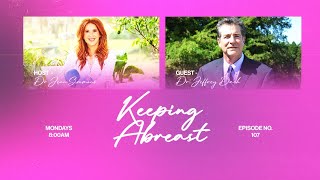
Part 1 of a recorded interview between Jenn Simmons, MD and Jeffrey Dach, MD exploring bioidentical hormone replacement and reexamining the role of estrogen in breast cancer. Dach challenges the conventional view that estrogen causes breast cancer, discusses ERα (proliferative) vs ERβ (tumor-suppressive), reviews historical and WHI trial data (including later follow-ups), and outlines preventive strategies (iodine testing/supplementation, progesterone, testosterone, aromatase considerations). The episode mixes clinical opinion, summary of research findings, and practical interventions; a Part 2 follow-up is promised.
Questions this video answers
ERα in 1986 and ERβ in 1996.
First arm published in 2002; second arm published in 2004.
A 45% reduction in breast cancer mortality (reported from the 18-year follow-up).
A 74% reduction in breast cancer mortality for women who had a pregnancy after diagnosis.
Iodoral tablets are discussed; each tablet is 12.5 milligrams.
Chapters
Wow. I just finished over two hours of recording with Dr. Jeffrey Dash. In case you don't know Dr. Dash, you need to know Dr. Dash. He is all things bioidentical hormones. He has written textbook after textbook after textbook, and I've spent the last few weeks in a deep dive in everything that he's put out there. So it was such an honor to talk to him and really get the nitty gritty about hormone replacement, about breast cancer, about nutrient deficiencies, and how they are contributing to the development of breast cancer. But I also learned so much in terms of how breast cancer was historically treated, why we stopped treating it that way, and why we should maybe go back to doing what we were doing before, which was working so much better. So I'm going to break it into two weeks because it is a lot to take in, so. So stay tuned for week one. Okay, so if you are awake, you have heard a lot of talk about bioidentical hormones. And there was. There has been a recent resurgence in this topic, in the topic of hormones in general, whether or not they're safe, whether or not they are or can be used. In women with a history of breast cancer, there's so much debate about hormones, and that is a continued debate from this narrative about estrogen and whether or not estrogen causes breast cancer and the whole narrative that came out of the Women's Health Initiative. So if you are someone who is wondering what is the truth, then tune in and sit tight because I have Dr. Jeffrey Dash with me today, and he has. Yes, welcome, Dr.
Dash.
Thank you.
He is the author of a number of textbooks, and the latest of which I've been digging into and I've shared with you is called Bioidentical Hormones. And he is here to talk about all of it, about the role of estrogen, whether or not estrogen causes breast cancer, what bioidentical hormones are, what they do, who should be using them, who shouldn't. I have a feeling that the who shouldn't is a short list. And we're going to talk about mammograms. We're going to get into it today. So welcome, Dr.
Dash.
Thank you so much, Jen. It's a pleasure to be here. Honor to be honored. Be on your podcast, of course. And I'm. I'm all excited and getting ready to. To answer questions, get into the discussion.
Yeah. And yeah, we're. We're going to dig in. We're going to dig in. But first I have to ask you, because you have a similar medical training to Mine. And I was taught that hormones cause breast cancer and hormones are unnecessary. And, you know, you can use antidepressants and you can use bisphosphonates, and you can use sleep medications and weight loss drugs and NSAIDs and cholesterol medicines, and there's no need for hormones. And you have a very different perspective. So how did you come to that perspective? How did you break out of the mold? So why don't you start us with how you got into medicine and then how you got into being a thought leader.
Well, in the book, I mentioned one of the influencers. When I was doing my surgical internship at Rush Presbyterian Hospital In Chicago in 1977, I did a rotation on the breast cancer floor. And the breast cancer surgeon at that time was Stephen Economo. And every morning he had an entourage of doctors, interns, residents on rounds with him. And he would spring these questions on us during rounds. And I remember distinctly, almost like it was yesterday, he asked me the question, does estrogen cause breast cancer? And, you know, I just finished medical school. I was in the beginning of my internship, and so I didn't really know the answer to the question. So I just made up an answer based on available knowledge. And I said, of course estrogen causes breast cancer because estrogen stimulates breast tissue, and any stimulation will cause cancer. You know, any stimulation of growth will cause cancer. And he. He did not reply, and he sort. He did not give me an answer to the question. And we just continued doing rounds. So that was, you know, that was in 1977, you know, which is more than 50 years ago. And he passed away about 10 years ago at the age of 84. But, you know, that, that what has been haunting me for the last 50 years. And doing research for the book, I realized that the answer to that question is more complicated, more sophisticated. It involves knowledge of the two estrogen receptors, ER Alpha and ER Beta, which of course hadn't even been discovered back in 1977. The alpha was discovered in 86, and beta was in 1996. And so the ER alpha is the. Is the proliferative receptor, meaning that it leads to growth, which leads to growth. And the ER Beta receptor is the tumor suppressor receptor. So the real answer involves understanding of the estrogen receptors and which types of estrogen activate either ER Alpha or ER Beta. For example, the Women's Health Initiative study was done using Premarin. Women's Health Initiative study, of course, first arm was published in 2002. The second arm in 2004. That was a big NIH study. It was a randomized control trial funded by the NIH. 5,000 women in each arm, hormone group and placebo group. There were 10,000 women randomized to each group. There were two arms. The first arm was published in 2002 in which they used medroxyprogesterone, the synthetic progestin, along with the Premarin. And the second arm was Premarin alone without the synthetic progestin, which is known to be carcinogenic. We know now that synthetic progestins, all of them are carcinogenic. The first arm was published in 2002 and that was halted early. It was supposed to go for eight years. They stopped it after 5.2 years because of increased breast cancer. In the hormone treated group, it was roughly 23 to 26% in the hormone treated group, however, it did not reach statistical significance. It probably would have if they had continued the study. There was also increased blood clots, as you know, which is found with any type of oral estrogen, will increase blood clotting because it stimulates the liver to produce clotting factors. The second arm of the study which was published in 2004 was showed surprisingly to the mainstream medical doctors who were doing the study. They were surprised to find a 23% reduction in breast cancer in the premarin treated group. And fast forward 18 years we have the eight. Now we have the 18 year follow up study. Remember the women took their hormones for five years and then were followed for an additional 13 years to get a 18 year follow up. The 18 year follow up was published in 2017 by Joanne Manson and in 2018 by Howard Hotis. They reviewed the data and the data showed again the mainstream medicine was shocked to hear that the estrogen treated group had a 45% reduction in mortality from breast cancer. Which is a paradigm shift in our thinking about breast cancer. The all, you know, for all these years it was mainstream dogma that yeah, of course estrogen causes breast cancer. Everybody knows that. It's pretty obvious. Now we have a study, it's which is the gold standard randomized controlled trial showing that's completely wrong. Estrogen is preventive of breast cancer. And the reason why it's preventive is this is explained by a Hungarian pathologist by the name of Suzanne Susanna Suba. She's also a geneticist in Budapest, Hungary who's, and she's been writing about this for, for 20 years now. And what she says, and this is also, you see this in the molecular biology literature. Estrogen controls the integrity of the genome you know, in the, in the, in the breast cell and also the rest of the body. The. What does that mean? Estrogen works together with the BRCA gene, the BRCA gene, which is a tumor suppressor gene. And so what happens? We're constantly getting double breaks in our DNA of each cell, and we have a repair mechanism, and that repair mechanism is estrogen working with the BRCA gene. So without estrogen, we can't, you know, there's. There's loss of integrity of the genome and breast cancer. Breast cancer.
And to be clear, I want. I want everyone to know. Everyone has a brocajune. And the people that have a mutated gene or an absent or unworking gene are the people that get breast cancer earlier. But it's not as if that gene is unique. Everyone has the BRCA genes.
Yes. And the BRCA gene is very important because it's involved in repair of DNA damage, and our DNA is undergoing oxidative damage all the time. So we need a DNA repair system which involves the Seleno protein system. So selenium is important for that to function. So getting back to the Women's Health Initiative study, that's really the best and most convincing evidence that we have right now that estrogen is breast cancer protective.
So why do you think that people, providers included. Right. Are so willing to believe that estrogen causes breast cancer and so unwilling to accept that estrogen is protective? Like, why has this estrogen is protective narrative not caught on? Because you're saying it. I'm saying it. And I'm getting hate mail.
I'm sorry, that's not a good thing.
So I don't understand why. In fact, I mean, I had a debate with Michael Greger at the last A4M meeting, because he is digging his heels in, insistent that hormones cause breast cancer.
Well, you know, it's true. I mean, you know, they do have a point there. It is true that estrogen is a growth factor along with a lot of other growth factors for breast cancer cells. In culture, in vivo, the, you know, cancer. Cancer cells will hijack the surrounding fibroblasts and surrounding tissues to manufacture estrogen. They will upregulate it. Upregulate their aromatase enzyme, which converts testosterone to estrogen. So, you know, it sort of sounds like. And maybe it's logical. You know, we know that estrogen is a growth factor for active breast cancer, so maybe it's also causative. It turns out that that's incorrect. But, you know, the. You go back to 1895, the original treatment for breast cancer was surgical removal of the ovaries by Beatson who wrote the original article on that. And surgical removal of the ovaries removed, you know, production of estrogen. And that was an initial. You know, people thought that that was a good idea. And the. Then surprisingly, you know, if you look at the history of treatments for breast cancer, high dose estrogen, DES was invented and that became the treatment for breast cancer. There was a 30% remission rate with high dose estrogen. And that was used from about 1930 until 1970 when tamoxifen was invented. And it was actually brought mainstream by a breast cancer researcher by the name of V. Craig Jordan who's actually he was dubbed the. The father of tamoxifen because. Yeah, he really gave it. Gave it feet to.
I worked with his wife who was a very well known breast surgeon.
Oh, I didn't know that. Okay, so you're. He. He died in. I for. He died I think in 2024, about a year ago from kidney cancer.
Not too long.
He had renal cancer. And the tamoxifen. They actually did studies in the early 70s comparing tamoxifen to DES and it turned out DES was actually better for treatment of breast cancer, active cancer, but because the tamoxifen is easier to tolerate, that became the new treatment for breast cancer.
Why was tamoxifen easier to tolerate? What were the issues with des?
You know, it's just a very strong estrogen and women would, you know, it's just, it was just too much of an estrogenic effect, I think.
I wonder if it was that or. You know, we had problems with DC with des. It was given to pregnant women. Right. To manage.
Yes, it was given to about a million millions of pregnant women to supposedly give them a better pregnancy. And then in the early 70s was discovered that DES causes cervical cancer in the offspring, the daughters and. And also the. Also the male children had had problems. So there it's one of the. So it was banned.
Yeah.
In the early 70s and as an endocrine. Endocrine EDC, endocrine disrupting chemical. And the tamoxifen replace it. Tamoxifen, you know, a lot of women will be. Will tolerate tamoxifen without much trouble because it has kind of both estrogenic and anti estrogenic effects. You know, it blocks the estrogen receptors but also has, you know, it fits into the receptor. So there's an estrogenic effect as well. Sort of. You know. And the article I quote in in my book is an article entitled anti estrogen treatment, Dr. Jekyll and Mr. Hyde. Because it has these dual qualities. Yeah, it can be helpful and it can also be harmful. The, the, the tamoxifen is an estrogen estrogen receptor blocker and of course it's mostly replaced by the aromatase inhibitors when they came out. The aromatase inhibitors will produce much more profound estrogen depletion. You know, if you try to measure estrogen levels, it's practically undetectable in women taking aromatase inhibitors and they're miserable.
With all due respect, if you measure hormones in these postmenopausal women before they take aromatase inhibitors, there's very little estrogen to measure anyway.
Yes, of course. And most of it is going to be estrone, which targets, er, alpha predominantly. Estrone is manufactured by fat cells. You know, there are other organ systems that produce estrogen mostly through aromatization. Bone, for example, will make its own estrogen. The brain makes its own estrogen. The retina is highly dependent on estrogen and makes its own estrogen.
Yeah, that's why eyesight starts to fail after menopause.
Yeah. So that, you know, the thought, the thought is that macular degeneration is an estrogen deficiency symptom or disease. And that's because the macula needs estrogen. And you know, as we age we're not, you know, there isn't, there's less and less estrogen. The. So yeah, so you know, the anti estrogens have become mainstream treatment for breast cancer and also for breast cancer survivors, they're given tamoxifen for five years as a standard adjuvant therapy. So the, you know, the average person, the average healthcare worker, average physician will see that, that anti estrogen drugs are being used as mainstream treatment. So the, the logical thought is that estrogens cause cancer, give an estrogen blocking drug, that's the treatment for cancer. So it kind of fits together. And so when you come up with the idea that estrogen does not cause cancer, it actually prevents breast cancer, then that is contrary to mainstream dogma. And we now see articles in the mainstream medical literature saying that we now have a paradigm shift and the mainstream dogma is incorrect and that doesn't happen overnight. That's going to take time. You know, that's the disruptive science of Kuhn. Kuhn wrote the book on that. And it's, you know, a lot of these paradigm shifts do not occur until in a complete generation of practitioners have, have been replaced with new, with new people. You know, it's almost a generational thing.
But, you know, any chance, are you Jewish?
Yes.
Okay, so we are talking about this at this time in, in the Torah, that The Jews spent 40 years in the desert after they were rescued from Egypt by, by God. And before that they were going to go into Israel, the Holy Land, the Promised Land. We wandered around the desert for 40 years. And the reason is because we couldn't have people who had been part of slavery to come into the Promised Land because they had a slave mentality. And that is not what God meant for the new land, the Promised Land. And this is the same kind of thing. Like we have to wait for all of the people who cannot be convinced because they've been so trained to believe that estrogen is bad, that estrogen is the culprit, that estrogen is carcinogenic. We have to wait for them to leave the system before the system can change.
Are you ready for our breast cancer screening revolution? Well, I'm thrilled to introduce to you a breast cancer screening tool that I have only recently learned about, but I have universally adopted. This is the ARIA test. This groundbreaking at home breast cancer screening test is one that I believe will completely change the game. So imagine a screening test that's as simple as shedding a tear, because that's aria. It's a non invasive, convenient and perfect for all bodies and all breasts. Dense breasts, implants, no problem. ARIA makes it clear for everyone, even women as young as 30. Aria is backed by over a decade of clinical trials, thousands of samples, and it's developed alongside top breast health experts. Here's how it works. You collect a tear sample at home and then ARIA then analyzes it for protein biomarkers that can signal early breast cancer. And the best part, you get a consultation with a breast health specialist to review your results. Now, ARIA isn't replacing breast imaging. I am using it alongside qt. It's complementing it and giving you a fuller picture of your breast health. Knowledge is power and ARIA is putting that power back in your hands. It's time to take control of your breast health and ARIA is another way of doing it. Go to Aria Care A, U R, I A Care and use my code DrGen20 in Capitals D R J E N N 20 to get 20% off.
Back to our show.
Yes, you know, and, and the other, you know, arguments, bits of pieces of evidence that, that again, they're very supportive that estrogen is, is breast cancer protective? Is, is, is the fact that pregnancy confers protection from breast cancer. And that's been known going all the way back to the early 1700s. There's an Italian physician, Bernardo Ramazzini, who made the observation in the medical journals back then that women with multiple pregnancies are protected from breast cancer. Women, celibate women, or women with no children. That's the population that they would see breast cancer. And that's also true in animal studies when you, you know, we now have a number of animal models of breast cancer in mice. The most common is the chemical induced breast cancer, usually using dmba, which is a carcinogenic chemical. And if you, if the mouse, if you give the mice pregnancy, they're protected from DMV induced breast cancer. Also, you know, there are also genetically modified mice that, where they upregulate oncogenes such as C Mic and cyclin D. And again, pregnancy or pregnancy level hormones, estrogen, progesterone, which mimics pregnancy, will protect the mice. And the third model, of course, is injecting breast cancer cells, human breast cancer cells, into mice, which is called the xenograft. And that again, same thing the, the doctor, the, the researcher does most, does all of this is Dr. Rajkumar Lakhashwamy. I think I shortened the name a little bit. He's in Texas Tech at El Paso, Texas and he's devoted his entire career to doing these studies in the animal model, breast cancer studies. He even came up with comparing estrogen progesterone hormone treatment to aromatase inhibitors. And he found that the hormone treated mice actually had better outcomes when the breast cancer cells were injected. They had better outcomes than the aromatase inhibitor mice.
I think a lot of where the confusion comes about is because we confuse associations with causation. So the first thing that I would love for you to talk about is people, providers included, see a tumor that's er, positive, and they say, okay, this was caused by estrogen because the tumor has estrogen receptors on it. So can you, can you address that?
Well, you know, if you look at animal models, you know, let's look, let's try to answer that question in animal models. John, the, the doctor who tried to convince the world that estrogen causes breast cancer in animals is Jose Russo. And we talk about some of his studies. He eventually gave up because estrogen doesn't cause breast cancer in mice. Well, in wild type mice, you have to genetically modify the mice so they're more susceptible to it or use special treated cells. You have to do something, you have to manipulate something. Wild type mice won't develop breast cancer by giving them estrogen. And he eventually gave up on it and then took up the idea, the research topic, of trying to examine and understand why high hormone levels of pregnancy denotes confers protection from breast cancer. And the study that I'd like to point to that really shows that the best was done by Javid Iqbal in Toronto. And he reviewed a database, registry database of about 2000 women, young women, premenopausal women who had breast cancer diagnosis. Remember, these are younger than age 50, the premenopausal still able to get pregnant. And he then reviewed the, you know, separated the breast cancer patients into the group that had a pregnancy six months or more after the diagnosis of breast cancer. And the other group compared it to the other group of women who did not have a pregnancy after their diagnosis of breast cancer. And what he published, the data they published was that There was a 74% reduction in breast cancer mortality if the breast cancer patient had a pregnancy after diagnosis of breast cancer. 74% reduction. And that's due to the very high hormone levels, the high estrogen and not only that, the, remember, pregnancy hormones include very high estriol levels, which is E3. And that's one of the reasons which, which is known to target ER beta, which is a tumor suppressor receptor. And that's one of the reasons why we use preferentially in our, in our office program, we preferentially use BioST, which means two estrogens. The estradiol is 20% estradiol, 80% estriol, which is E3, 20% E2, 80% E3 to target ER beta. And the other important thing that we do, which is very breast cancer preventive, is based on the research of a breast cancer surgeon in Dayton, Ohio by the name of Rebecca Glaser. I would guess that you're probably familiar with her.
Oh, I know her well, yeah.
And probably on a first name basis. And she, you know, as you know, her study showed a 40 reduction in breast cancer in the testosterone treated women. She, she does the testosterone pellets, of course, and the, you know, if you look at the molecular biology, you know, preclinical studies testosterone suppresses ER Alpha and it activates ER Beta, which is what we're looking for in a breast cancer preventive hormone. And so we make sure that every patient on a hormone replacement program also receives testosterone and has a good testosterone level. With Dr. Glaser's testosterone pellet studies, her levels, you know, she studied the levels that she was getting were between 300 and 500. I think it's nanograms per deciliter with our Topical testosterone cream, we usually see levels are around 100, 120, not quite as high, but still significantly higher than most postmenopausal women will have Testosterone levels between 15 and 25. Something like that.
Yeah.
And then we talk about breast cancer prevention. It's very important. And there are three chapters in the book on iodine supplementation. We do iodine testing, which is a simple test. It's just a spot urine for iodine, which can be. Which is done at the same lab that draws the blood. You know, the national, all the national labs will do. I spot urine for iodine. And the. For women who are iodine deficient, we give them iodine supplements. Every, every patient on a hormone replacement program should be taking iodine supplement. You know, unless they have a contraindication, some kind of an unusual thyroid disease contraindication, which we discuss in the book. By the way, I have another book on thyroid for people who are interested. I know you do, which is Natural Thyroid Toolkit. And we talk about more in depth on the iodine in that book.
And just out of curiosity, what level are you looking for on that spot you're in?
I don't use the lab range for the reference range by the lab. What I use is the World Health Organization guidelines. And a lot of people think of the World Health Organization as a gigantic program for vaccinating the world. You know, the Bill Gates foundation and et cetera sort of has a bad reputation for, you know, being involved with Bill Gates. Most people don't realize another big chunk of what they do is iodine supplementation in third world countries where, you know, there's, it's a huge problem. There are billions of people that live that have an iodine deficient diet. And so they.
In the United States.
And also, you don't have to be.
In a third world country to be iodine deficient.
I agree 100%. And so we're seeing it. You know, if you do, if we test everyone routinely, and if you do that, you will see iodine deficient people. And so I think, you know, I use the World Health Organization guidelines, which is anything below 100. Milligrams per micrograms per deciliter. The below 50 is considered iodine deficiency. Below 100 is insufficiency. And the iodine supplement that we use is called Iodorol, which is originally developed by Dr. Abraham. His company was called Optimox. He died about 10 years ago and everything was moved over to allergy research, which now offers Iodorol. And those are 12.5 milligram tablets. They're based on the formula. Originally. Dr. Lugal in 1840, came up with Lugal's solution, which is 5% molecular iodine, I2, and 10% potassium iodide. And we usually start off with a half tablet. And of course, the two doctors who worked on the iodine project with Dr. Abraham, one of them is my. David Brownstein, is. Is my. A good colleague and also a mentor. When I. When I switched from working in the hospital as a radiologist, I switched to, you know, integrative medicine. He got me started on a lot of the things that I'm doing because. And the. The other doctor who worked on the iodine project was George Fletches, who's now retired. And they, you know, they. They are experts and in iodine. And the, The. The. The iodoral tablet is 12.5 milligrams. And the reason for that is based on the average iodine intake in Japan in the Japanese diet, which is based on. It's based on seaweed consumption. The Japanese diet, the seaweed is high in iodine. They have three or four different types of seaweed. That's just part of their normal diet. And a lot of it is based on the amount of seafood consumed. So, for example, there was a study done in. I think it was Iceland, and they looked at breast cancer rates in women who lived on the coast with high fish consumption, higher iodine levels in the women living on the coast compared to women living more inland. And the higher iodine consumption along the coast was correlated with a much lower breast cancer rate. So iodine is very important for breast cancer prevention. And there's a huge volume of studies in the preclinical medical literature, mostly from outside the United States, showing the underlying molecular biology of that, which we go into in more detail in the book, of course.
Yeah. And it also contributes significantly to the thyroid cancer incidence.
You know, thyroid iodine is very important for preventing thyroid cancer. You know, thyroid cyst nodules are all due to goiter. Are all due to iodine deficiency, which, you know. And iodine is so important that the United States government decided to give iodine supplements to the entire population in 1924, which is, of course, as, you know, iodized salt. But the problem is, you know, the doctors tell everybody, don't use salt. Salt is bad for you. So a lot of people avoid salt, or if they use salt, it's the, you know, Himalaya pink sea salt, which has no iodine in it.
Right.
So we do see, you know, Those peoples are, those people have iodine deficiency. And we do pick those up when we do the testing. You mentioned progesterone deficiency as an important risk factor for cancer, for breast cancer and for all cancers. And that study was done by Linda Cowan, epidemiologist at I think Johns Hopkins in early on 1981. And she did a large study looking at women who at fertility clinics suffering from infertility and also had, because they were not ovulating, they had low progesterone levels, progesterone deficiency. And I think it was a registry database. And she found that progesterone deficiency in that population had a 500% increase in breast cancer and a 10 times increase in all cancers, which, you know, that's like mind boggling increase in all cancers by a factor of 10. Which shows you how important progesterone is as, as a basic anti cancer agent. And you know, progesterone is very, very breast cancer preventive. And what people, most people don't realize is it, it's also preventive of many other cancers.
Yeah, well, I think the other one.
Of course is endometrial. Endometrial cancer.
Lack of knowledge and understanding around progesterone and most of the exposure and education, if you even want to call it that for the last several decades has been around progestins, not around progesterone.
You know, mainstream doctors, you know, primary care internists, they, they are completely unfamiliar with natural progesterone. They don't even know it exists. And I, you know, and I mentioned this in the book. I, I listed a couple of emails I received from patient who the primary, she's, the email says my, from the patient. My primary care asked me what the progesterone is for. They never heard of it. And that's fairly typical because you know, it's a natural substance. It, that's not patented. It's not a patented drug. The drug industry can make no money from natural progesterone. And they, the drug industry makes money on the synthetic progestins which are, which of course are endocrine disrupting chemicals. And that's what mainstream medicine uses. Yes, which of course is extremely bad. But you know, that's, that's what mainstream medicine is based on. It's based on chemically altered, chemically altered structures that are found in nature. And you know, because, so people understand.
The, the pharmaceutical companies, they cannot trademark a molecule of nature. So they cannot sell you or make money off of bioidentical progesterone. So they have to alter it in some way in order to patent it, in order to market it.
Yeah. And any, any slight alteration of a, of a hormone structure leads to basically a Frankenstein monster. And you know, it's at the very last chapter of the book, chapter 30 is, is where we go into the, the fine tuning of biological systems are, you know, that are we have. The human body has a trillion cells. Inside each cell there are sophisticated molecular machines and molecular pathways that are all fine tuned. When you throw in a chemically altered hormone, it throws the fine tuning completely out of whack and destroys the fine tuning of biological systems which eventually leads to infertility and extinction. So the, you know, I raised the question, you know, what's going to happen eventually? What's going to eventually happen with a medical paradigm that's based on chemically altered substances and, and destroy. With the destruction of the fine tuning of biological systems, what's going to happen over the next hundred years, 200 years, 300 years event? And I suggested eventually this type of medical system will lead to the extinction of the human race.
Hello my beautiful listeners. I'm taking a quick break here to share something truly transformative with you today. If you're ready to take control of your breast health journey, then you need to get your hands on a copy of my book, the Smart Woman's Guide to Breast Cancer. I wrote this book to make a massive impact in the world of breast cancer, empowering women everywhere to make informed choices and educated decisions. You have so much more power and control over your health than you might think and this book, this is a roadmap to harnessing that power. Inside, you'll uncover the truth about conventional treatments. They're often overestimated benefits and underestimated, under explained and under disclosed long term side effects. But more importantly, you'll discover the true drivers of health and how the choices you make at home every day can lead you to the best health, the breast health of your life. Even after a breast cancer diagnosis. Whether you're looking to prevent a diagnosis, avoid recurrence, or simply live your healthiest life, this book is for you. Join me on this journey to empowerment and health. Grab your copy of the Smart Woman's Guide to Breast Cancer today and let's revolutionize the way that we approach breast health together.
We're already seeing that road be paved, right? I mean we are seeing more infertility than we ever saw before and we're seeing more breast cancer. We're not having more women die of breast cancer, but we're definitely seeing an increased incidence of the disease. And that is because we are chemically engineering people's hormonal systems.
It's, you know, RFK Jr brings this up. You know, that's how he was, you know, he ran for president on a platform that, you know, we have this chronic disease epidemic and you know, which has been increasing and it's based on the, these very bad practices of the medical system in the pharmaceutical industry of using chemically altered hormones, chemically altered drugs. And of course he's also interested in the food system, the food supply, you know, chemically altered foods, processed foods as a cost for the chronic disease epidemic. But a lot of it is due to the medical system. And we have the sickest country in the world and we spend the most on health care. And you know, it's, it's not good and it's eventually, you know, if we don't reverse this process, it's just going to keep getting worse.
But there is something complicit there, don't you think? I mean, there is something about having a primarily processed food diet and really pushing processed food foods and the government supplementing and subsidizing the crops that go towards processed foods and then their, their role in causing chronic illness and disease which is then masked or suppressed by the pharmaceutical industry. So it's a whole system that is designed to get you sick, keep you sick.
Yeah. You know, then that brings up the, the article by Stephanie Seneff on glyphosate associated with 22 different diseases. The use of, you know, glyphosate is called Roundup, which is sprayed on crops, mostly Roundup Ready soy. And, and then you also have genetically modified corn, the BT corn, which is genetically modified to have an insecticide in the, in the corn. So when you eat the corn, you're getting, you're eating insecticides. So, you know, we've, we've created these genetically modified foods that are basically poisoning the entire population. And Seneff and Swanson wrote an article showing that these 22 diseases are increasing along pretty much in tandem with glyphosate usage. And you know, we're seeing a lot of people who are sensitive to gluten. A lot of it is related to the glyphosate because they spray glyphosate on wheat fields not as a, as an, as a pesticide, but as a drying agent for pre harvest drying agent. So all of the, all of the bread, wheat products in the United States are filled with glyphosate. So, you know, a lot of People who are sensitive to, to wheat will feel, will feel better going on a gluten free diet which eliminates that huge glyphosate load. So that, you know, we deal with a lot of that type of thing in our office. We do test routinely for anti gliadin antibodies. Gliadin is a wheat protein and we're able to pick up early gluten sensitivity. The other test that we used is the enteralabs test which is a stool test developed by Dr. Fine, if I n E gastroenterologist who developed the test. It's stool test looking for the same antibody anti gliadin antibodies in the stool. Remember, we eat the wheat, where does it go? We poop it out with the antibody. So the stool test for the antibody is much more accurate and sensitive. It picks up the gluten sensitivity much earlier. And it's, you know, the people of this type of sensitivity take it develops an inflammatory process in the gut. They lose the villi, they develop malabsorption from that inflammation and they may have elevated liver enzymes, they may have nutrient deficiencies because they can't absorb things like iron, calcium and P12 malabsorption. So you'll see, you know, B12 low, B12 low iron, that type of a pattern. If you see that along with the net elevated anti gladin antibody that's, you know, putting all that together, it, it's fairly definitive for gluten sensitivity. That of course the treatment is gluten free diet, which doesn't make any money for the drug industry, obviously.
Right, right. I actually take it a little further and I most of the time, but remember, my population are women who already have breast cancer.
So I ask them to remove grains.
Because I do think there is cross reactivity. Also we have no nutritional need for grains. So if we never ate another grain again, we would suffer no nutritional deficiency. And I don't believe in putting things in your diet that don't benefit you in any way. And there are high glycemic foods.
Yeah, it, you know, the, the wheat products will be converted to, to sugar glucose fairly quickly and yeah, you know, they develop prediabetes. So you know, I think that's, that's probably a good idea. I, I would go along with that.
Well, I for one am really grateful that you did those surgical rounds with that doctor, Dr. Stephen Economo who asked you, which is a Greek name, if estrogen causes breast cancer, that you did those surgical rounds with that doctor, Dr.
Stephen Economo who asked you, which is a Greek name.
If estrogen causes breast cancer and it's stuck in your craw.
I still, I still remember like it was yesterday.
It's amazing. Yeah, I wonder, I wonder why. It's amazing. Yeah, I wonder, I wonder why. Well, it's all God right, because most people are unbothered by that whole thing. They just. Well, it's all God right, because most people are unbothered by that whole thing. They just assume that estrogen causes breast cancer and they, they have no problems with, you know, the ill assume that estrogen causes breast cancer and they, they have no problems with, you know, the illogic, if that's a word. They just, they're so willing to accept that and you weren't.
It's, you know, there mainstream, you know, modern medicine has a number of errors. And I, I was actually thinking that my next book would be entitled Errors in Modern Medicine, you know, but I decided not to use the title because it's too negative. But, but the reality is, you know, this is one of the major errors of modern medicine, you know, and then we talked about the cholesterol theory is another one. And you know, the thyroid book is all about errors in endocrinology. There are a lot of them there.
Yeah.
And, but you know, any kind, anytime you have entrenched science where there's financial interests that are entrenched, you're going to have errors like that because it's just the financial stakes are too high and you know, it's just human nature to want to, you know, the simple explanation, the simple belief in something and it's eventually things will change. Yeah, it's either things will change or the chronic disease epidemic will get worse. And you know, as, as you pointed out, fertility is, rates are dropping. I think it's 2.0 is, is the magic number. If it drops below 2.0 per married couple, then that's below the replacement rate, which means you can't maintain the population. We, we don't have enough new workers coming into the workforce to pay for Social Security and the whole thing falls apart. And there are a number of countries that are already below 2.0 and United States is, is predicted to be, to get there pretty soon.
And it's, it's, it's pretty scary.
It's, you know, we're, we're looking at, we're right on the edge of a cliff. The call the cliff called extinction of the species. Right on the edge.
Yeah.
And you know, the average person, average person is busy trying to make ends meet, you know, make their stretch Their paycheck to cover their expenses. They don't have not it. They just don't have time for this thinking about this type of thing.
Yeah.
And I think that that includes the providers. I think that, you know, there, there is something to be said, said for the fact that they, they spend the majority of their 20s training. Right. And working at minimum wage. And they get through that time and they've paid for their education and they've paid for their dues and, and they get to the other side and start to work, and what do they do? They put their heads down and work. And most people, once they've, once they've embarked on that career, they are not thinking critically anymore. They're just not.
You know, you're absolutely right. You're absolutely right. And that's, you know, that's what we have to deal with. And it's, you know, when we look at the, the negatives in, in mainstream medicine, all the errors, you know, it's sad, but, you know, there, there are good areas in medicine. Somebody has an infected appendix, you know, appendectomy can be, is, is a good thing, save their life. Somebody has a new, you know, car accident with a pneumothorax. You know, the trauma surgeon is right there to put in the chest tube. Somebody has a subdural hematoma. The neurosurgeon can drain that. So, you know, so they're, you know, they're good, you know, ophthalmology, you know, doing the lens implants. I think that's a, They've made tremendous.
Progressing the baby out with the bathwater.
Right.
Yeah.
There are amazing, amazing parts of modern medicine.
Yeah.
And there are a lot of mistakes.
And I think, you know, the bioidentical hormone replacement is a very good part of medicine that is helping a lot of people. And, you know, my mission, you know, that's what I do. I get up in the morning because I want to, you know, relieve misery and suffering by help helping as much as I can to give and prescribe bioidentical hormone replacement to as many menopausal women that, that are asking for it.
Yeah, agreed. And I'm right there with you. And at the same time, I'm really trying to support a population that is not currently being supported, which is the population of women who are either at risk for breast cancer because they come from a breast cancer family or they've had breast cancer and are being told that they're not a candidate for hormone replacement. And the truth is that if someone is hearing that they're hearing it from a provider that doesn't understand breast cancer and doesn't understand hormones. I want to get back to Rebecca Glaser a little bit.
Yes, of course.
Only because, yes, she does do testosterone supplementation, but she also does it along with aromatase inhibition. And she believes that estrogen is bad.
Yes, I, I actually, I had a brief discussion with her via email back and forth, and that became pretty obvious that she does believe that. I, I think you're absolutely correct.
Yeah.
So she, she is still like partially blind.
Right.
And I respect what she does generously.
You know, I, I can understand where she's coming from. You know, people who believe estrogen causes breast cancer, you know, it's, it's, you know, I, it's, it's, it's almost like a belief system type thing. And the, I, I tend to, you know, give them a little more slack and try to be non, try to be non judgmental because there's just no way in a million years that they're ever going to be, change their mind.
Of course not.
It's, it's sort of like somebody who's, you know, a different religion. You're not going to convince them to change religions.
Yes. And the truth is you can almost find evidence to support whatever you believe. Right. So.
That'S true. I mean, you can, you know, you can cherry pick studies and, and just say, well, these are the studies, you know, and the pharmaceutical industry wants doctors to believe that randomized control trials are the only studies that should be looked at and believed. And of course that's nonsense, but that's, you know, part, you know, medicine is controlled by the drug industry. And you know, earlier you asked the question, well, why do people believe what they believe? Why do doctors believe what they believe? And a lot of it is, is, you know, that based on the, what the drug industry wants them to believe. They would like doctors to think that synthetic, chemically altered progesterone is the same as natural progesterone.
And most doctors don't know the difference.
And that has been careful. That was over years. The distinction has been blurred in the medical literature and that goes in favor of the drug industry because they want to sell their synthetic carcinogenic progestins. The other, the other belief that goes in favor of greater drug sales and as much as is favorable to the drug industry is the belief that estrogen causes breast cancer. Because now instead of, you know, instead of 50 million women taking hormone replacement, it's a fraction of that. It's only I think it's only 5 million.
Yeah.
And, and I think it was 70 million before the women's Health Initiative. Right.
It was, it was a much higher number. I can. That's for sure. And it dropped Precipitously after the 2002 Women's Health Initiative study was, came out. And the point that, that I made in the book is that this, this creates a huge population of 50 million women who are then avoid estrogen and will then develop the various degenerative diseases of estrogen deficiency. A few of them discussed earlier. But you know, we go through it one by one. Osteoarthritis, osteoporosis, you know, cognitive dysfunction. We know from the Women's Health Initiative and other studies that this is the timing hypothesis of Howard Hotis, which is if women start hormone replacement immediately after menopause, within the first five years they will have a 40 to 50% reduction in cardiovascular disease. A 40 to 40% reduction, 30 to 40% reduction in mortality from heart disease, which is huge. And that's data is in the Women's Health Initiative study.
Yeah, I think I saw a paper saying that due to the lack of hormone use following the Women's health initiative, that 90,000 extra women a year die of cardiovascular disease.
That was the Philip Serrell, I think that was his article that you saw. Philip Serrell, who's a ob gyne professor at Yale and he, he calculated that roughly 50 plus or minus, depending on how you calculate it. He looked at only patients who had hysterectomies who are avoiding hormone replacement because the data is more clear after hysterectomy in the younger age group that there's a huge increase in mortality without hormone replacement. So he calculated about 50,000 women between two time periods over a number of years died needlessly. They didn't have to die. And so the, the, it's really a, a financial boon to the drug industry for, to have this belief that estrogen causes breast cancer to have women avoid hormone replacement because it creates a huge population of customers for their, for drugs, drugs for, you know, to prevent heart disease. All these women are given statin drugs.
Well, but it doesn't prevent heart disease. Like let's, let's talk about statins. Do statins prevent heart disease? Is cholesterol the problem?
You know, that's another one of the error, I call it an error of modern medicine. This cholesterol theory of heart disease is another error modern medicine. But mainstream medicine believes that again, it's another belief system which is wrong. And it, it has been overturned by new technology. The cholesterol panel has mostly been replaced by the calcium score. And the decision to treat a patient with statin drug is, is no longer based on the cholesterol panel. It's based on what the calcium score is. And that book came out in 2018 called Heart Book.
Yep.
And we talked about calcium score and cholesterol theory of heart disease, et cetera. But you're absolutely right. You know, it's a, again, it's a belief system which has been overturned by new technology and new information. The calcium score is highly accurate and sensitive in predicting who will have a heart attack. And probably the best study was done by Paolo raji, published in 2004. And he looked at roughly 500 patients with known heart disease serial calcium scores and cholesterol levels over six years. And the most significant factor, the most predictive factor, was percent increase in calcium score and annual increase. If the annual increase in calcium score was over 15%, those people were in the high risk category. And if the calcium score was under 15% annual increase, those people were golden. And almost, almost no heart attack risk at all. And the surprising thing is it doesn't matter what the starting calcium score is. You have the low calcium people and the high calcium. If it's under 15%, they have dormant disease. It's not progressive, it's dormant. And they're going to be, they're fine.
Yeah.
So we do, we do, we do that in our office. We do serum calcium scores. And if the calcium score progression annually is greater than 50%, that's the red light, warning light on your dashboard going off that. We need to change something.
Yeah.
But putting people on statins based.
On.
An overall total cholesterol does not impact survival.
No.
Positively impact survival.
Cholesterol levels are not predictive of heart attack risk. And so the study that shows that calcium score should be used instead of cholesterol levels was done by Joshua Mitchell using the Walter Reed Registry. And he found that if the calcium score is under 100, a statin drug has no clinical benefit, zero clinical benefit. So we use that reasoning to get our menopausal patients off of statin drugs. The cardiologist has to agree to that because that's in the cardiology literature that Joshua Mitchell studies in the journal American Journal of Cardiology. And they, you know, the cardiologist has to go along with the, with taking the patient off a statin drug.
Yeah.
I just wonder how much that literature is trickling down. And also I, I think that a large Proportion of the prescribers are internal medicine. Doctors are the primary cares.
Yeah, the primary care docs coming from.
The primary care offices. And they're. They're not getting the memo.
You know, the. The medicine, it doesn't change. It's not gonna. You know, it takes time for things to change, as we discussed earlier. You know, and, you know, this comes up a lot in my office. The patient asked me, why is my doctor like this? Why. Why did they. Why do they. You know, they're not prescribing what I want. Instead, they give me this other drug, which I don't want. Why are they like that? And my answer over the years has always been the same. It's, you know, and I say yes. They're all like that. They're never, ever going to change. And that's a good thing because otherwise I'd have nothing to do.
Okay, well, I'm not sure that serving your purpose is the solution here, but let's go with it. So I want to tie a bow on the estrogen thing and ask a question. So I think. I think I'm pretty clear that estrogen does not cause breast cancer. Okay, but why? What about estrogen deprivation? And why does that work? While you're waiting for next week's talk, you may want to check out all of Dr. Dash's books. They're all on Amazon, and his last name is spelled D, A, C, H. I would especially tune into the Bioidentical Hormones, Volume one and volume two. The last one was recently updated so the COVID is a picture of a woman whose face is a puzzle. I don't have it in front of me right now, but you are definitely going to want to check them out, especially if you have been considering bioidentical hormones, because there is so many, so much information there and so much support there. And we will list everything in the show notes so that you know the name of the books and how to get in touch with Dr. Dash. And just know that you get the.
Second half coming next week.
And the answers to your question.
More from Jenn






Stem Cells, Peptides, GLP1s and the New Blueprint for Preventative Medicine with Dr. Vass



The Truth About GLP-1 Drugs and Who Should (and Shouldn’t) Take Them with Dr. Susan Brian

What 100 Days Underwater Revealed About Aging and Healing with Dr. Joseph Dituri
