115: The Perimenopause Revolution with Dr. Mariza Snyder
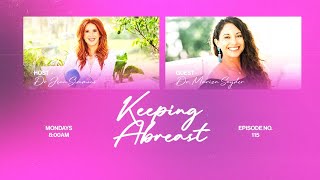
Dr. Mariza Snyder discusses perimenopause symptoms and why bioidentical HRT matters for brain, metabolic, and bone health. She addresses why many doctors miss it, the lasting damage from the WHI study, and when to start treatment.
Questions this video answers
The Perimenopause Revolution
drmarisa.com/book (book also available on Amazon, Barnes & Noble, and Audible)
Chapters
Coming up is my interview with Dr. Marisa Snyder. Dr. Marisa is a powerhouse advocate for the midlife woman. She is leveraging her 17 years as a practitioner, but also her own personal experience and really bringing the perimenopause conversation to the table. It's one that we have not spoken about enough. It's a conversation that is so necessary because the truth is that today education is coming from you. You know what all these life stages feel like, and you are driving our new healthcare system. So tune into this conversation. It is chock full of information and insight that you're only going to get here. So stay tuned for Dr. Marisa. Well, Dr. Marisa, you look gorgeous. Like, glowing gorgeous. It's so nice to have you back on the podcast and I'm really excited for you. You have a new book coming out.
I do. Book number nine, the Perimenopause Revolution. I am so happy that the perimenopause, the transition is having a moment. It is, gosh, it is long overdue. And man, I always say that it is. The perimenopause is the zone of opportunity, because what we do.
Oh, I love that.
Yes.
You know, it's funny. I trained 30 years ago, can't even believe.
And.
Not only do we not talk about menopause, but we like, hardly spoke about perimenopause as even it almost didn't exist as a thing. Right. No, it was just like something like, oh, yeah, whatever, your. Your period is wacko and will just either do an ablation or, you know, whatever. But we never talked about what was physiologically happening to people and, and whether or not they could do anything about it. It was just like deal with it and deal with the consequences. It's so amazing that we're having this revelation now.
Yes, I know. I think a couple of things happened, why we didn't recognize it. I remember the narrative that I was brought up with is that women suffer. That was what I was told that was true.
In order to do that.
Right, exactly. And women are on this earth to raise children and suffer. That was kind of the, the underlying. So I think when women really were suffering in their 40s heading into menopause, we, we. And the symptoms were subjective. We just thought it was all in their heads, you know, for the most part. Or that it was.
Or a rite of passage.
Yeah.
Or.
Right. Well. And I think all of it was just lumped into menopause. So maybe menopause was not just the one day in time as we kind of define it now, that it was. It was a several years. But you know what? Ultimately, I think one, we ignored the symptoms. Unless it was hot flashes and night sweats or low libido or vaginal dryness or maybe even sleep issues. We just wrote you off. You know, we siloed you into specialties, and we kind of just told you, you know, this is just the way it is. It's kind of how it is. And we don't really have a solution until we know you are in menop. And then we've got Premarin or we've got, you know, something along those lines to keep you feminine forever, I guess you could say.
Yeah.
And so now we're realizing women are like, we. You mean this entire transition where things have been so wonky and I don't feel like myself anymore. Like, we can define this. It isn't just aging. It isn't just. We don't know what it is. And then I'm in menopause. And so I'm so, so deeply grateful that we're having this conversation. I think the reason why perimenopause is having such a big moment is that women are. Are outraged by the fact that they kept being gaslit and dismissed when they knew something wasn't right with them. And so we have this, like, uproar of millions of women who are like, enough is enough. I'm gonna speak into this. I'm gonna. I'm going to advocate for myself. I'm going to claim agency. And this is why I wrote the book the Perimenopause Revolution. It really is a revolution.
Yeah.
Tell me, did the reason that you. I mean, obviously you wrote the book because it's information that is desperately needed and needed to get out there. But what inspired it? Like, was it inspired by personal experience?
Yeah. I love this question. So two things inspired this. Number one, I had just entered my practice seeing women in midlife, I would say, in perimenopause and menopause. I didn't know that my women were in perimenopause at the time. I knew that they had symptoms. I knew that it was related to their hormones. I knew that they were being siloed to the cardiologist and the endocrinologist and the psychiatrist and. And being put on prescriptions, you know, for, you know, insulin resistance, prediabetes, you know, those types of things. And. And yet we weren't connecting the dots. So I knew my. I heard my women. I believed them, but I didn't really understand. This is 2010. This is 2010, the. We're. We're what, an 8. A decade into the Women's Health Initiative, hormone replacement therapy is not happening at this point unless you've got a very integrative provider who didn't buy into the BS of all the media. And it's still doing it. But again, few and far between.
Yeah, they were few and far between.
Far between, yeah. Like, not. No one I knew.
Yeah.
So my mom is 48 years old. She's. I. She had me when she was 18 years old. So she's 48 and I'm 30 in practice. And my mom, this woman was always resilient, strong. On top of everything, she was a single mother. She was always able to have capacity and resilience. That's how I always saw my mom was this really strong, incredible woman that was able to take on the world if she needed to. And then around 46, 47, I mean, she had been dealing with fatigue issues. She had been dealing with weight gain. You know, a lot of those. Again, women suffer. It was. I think she even thought that that was what was happening. She was like, okay, this is just what happens to us as we get older. But then came the crime scene periods. Then came the rage. Then came the mood swings and her not feeling like herself and the sleep issues and the cacophony of so many of the symptoms that women in perimenopause. And all of a sudden, my mom, not only did she not feel like herself, but she was barely holding it all together. And I knew that something wasn't right. So I got a front row seat to my mom going through what I would consider late perimenopause. At that point, we were. No one was buying into her early perimenopausal symptoms, but the late perimenopausal symptoms were impossible to miss, and they were disrupting every aspect of my mother's life. And that's when I knew that there was something that we had been missing this whole time. And as I. As I got to step into her care because it kept on being poorly, mismanaged, I got that front row seat and I realized I'm like, we have got to shift the conversation. We have got to support women in a better way before they get to official menopause. I mean, she was still another four years out before she actually reached menopause at that point. And I remember two things thinking, one, like, this is not my mother. She needs. She needs a different level of support. And number two, I thought, oh, my God, is this going to happen to me. And so when perimenopause hit me, I, you know, my mom had me at 18. I didn't have my son until I was 41 years old. And I, you know, I was, I would say, a good, solid two years in postpartum. I was breastfeeding my son when I. When I started to finally climb out of that postpartum journey. And I had a good, solid five months where I felt really good. Like, I was like, okay, I'm back in the game. I'm 42 years old, almost 43, and I'm feeling more resilient again. I'm sleeping again. And then about five months into that, into kind of recovering from postpartum, I started experience some pretty serious symptoms. Sleep issues, mood swings, rage. I started to experience low energy. And it all kind of started adding up all at once. And something I tell a lot of my patients and also the community at large is that so often many of us are coming into perimenopause with other stuff. It's rare that we are a full, clean bill of health heading into peri. For me, I have Hajimoto's thyroiditis. I had experienced burnout before, so I kind of knew what that flavor was. And so initially, I didn't know it was perimenopause. I thought I was having a Hajimoto's flare. I thought maybe I was burning out, I was working too hard. I was overextending myself. I remember trying to figure out what was going on with me. I felt very blindsided by my perimenopausal symptoms. And I do believe a lot of us, it's a yes. And like, when those hormones began to falter, that protective shield that had been keeping things at bay all of a sudden begins to disappear. And things that either we were managing or we didn't know about starts to come up and present itself. So it comes up for review. And that's basically. It took me about five months to figure it out that I was officially in perimenopause. And I'm embarrass. Embarrassed to admit that, because I. I've. I've watched so many women through the journey, and it's so interesting you could support so many women through the journey, but then when it begins to happen to you, you can feel blindsided by it. I definitely. I was not prepared, but I was 43, about to be 44. I mean, do the math. It made sense.
Yeah, of course. And I also think, as someone who had children later on, um, that changes your timeline and And I think those people tend to go through it a little earlier.
Yeah. But, yeah, I think my mom probably was going through Perry. 43, 44. If I could we. Could we go backwards. She and I dissected this so much, and she's like, yeah, the worst of my symptoms were 47. A lot of the things I kept brushing off because no one was helping me anyway. And that was what society kept telling me, was that, oh, this is just what it feels like to be 40. This is just what feels like to be a woman who's working and managing a family and. And she's like, no, it was. It was earlier. It was early perimenopause. I just didn't know until it got so bad that it was impossible for me to ignore.
Well, we normalize what we don't understand.
Right.
And since the Women's Health Initiative, which, you know, I came out of training in 2003, so right after, like, literally all I. All I knew, all that was drilled into my head was the quote, unquote, learnings of the Women's Health Initiative.
Right.
So in 2003, I was taught to believe that hormones cause breast cancer. The only women who should take hormones are those that absolutely, positively cannot live without them. And said women should take the least amount for the shortest period of time. Right. Like that. That was my understanding. And since then, we've had two decades of providers completely untrained in hormones. They don't know what they do. They don't know how to prescribe them. And you used a quote. You said, protective shield. And because of this narrative that we have all been fed, providers and patients alike, that estrogen is toxic, that estrogen is the problem. Because of this narrative.
Narrative.
No one learned that estrogen is your protective shield.
Yeah.
Right.
That your hormones were your protective shield, and that your hormones are not out there to give you breast cancer.
No. Or any. Or any cancer, for that matter.
Any cancer. Right. Or any cancer. Because they're not just protective against breast cancer, they're protective against colon cancer. They're protective against a number of cancers. Right. They are your protective shield.
Absolutely.
And when you lose it, you lose.
Your health in general.
Yeah. Talk about all of the systems that are affected, because it goes way beyond your reproductive tract.
100%. And this is such an important through line for the book. I want women to understand and be able to connect the dots between their symptoms and their hormones beginning to decline. So I think about estrogen and progesterone as neuromodulators, as immune system Modulators, bone remodelers, they are helping to regulate muscle protein synthesis. So the gut is impacted, your muscles impacted, your bones are impacted, your general urinary system is going to be impacted. I think like up to 95% of women are going to have GSM symptoms as estrogen after estrogen declines. But more importantly, what does that stand for? Oh, genital urinary symptoms of menopause.
Yeah.
And most importantly, the brain. I just want to spend a little bit of time with that because when I think about who is the CEO of a woman's brain, it is estrogen, estradiol specifically. And as estrogen begins to decline, think of estrogen. If she's your CEO and she has consistently, rhythmically showed up in the brain to help with neuro regeneration, reducing neuroinflammation, driving energy metabolism and glucose regulation. I mean it's so much more neurogenesis. And so we have this hormone who for 25, 35 years.
Thermoregulation. Right?
Thermoregulation, absolutely. Hot flashes and night sweats. It's as brain related and also impacting neurotransmitters and the sleep centers and circadian rhythm optimization. All of this is estrogen. So she shows up every day, Every day, every month, nine to six. That's the CEO's job. And then all of a sudden she doesn't show up at 9 o' clock in the morning one day, she shows up at 1pm and instead she leaves at 2 o' clock. And then the next day she shows up at midnight and then she goes home at 8am the next day. And so this, this inconsistency, the brain is like, what is going on? Like pining. It's like, you know, the boyfriend or the girlfriend who's ghosting you and you're pining after them. That is the brain when it comes to the erratic loss of estrogen. And As a result, 80% of perimenopausal symptoms are going to be brain related, including the hot flashes and night swe, including the sleep issues. Whether it's you're having a hard time going to sleep or you're having late night wakings. Your energy metabolism, so you'll notice cognitive. Is your cognitive functions being impacted, your memory, your alertness, your mental energy, your lack of word recall, mood swings, rage, adhd, anxiety, depression. I mean all of that. I mean when women say they don't feel like themselves, it's the brain that they're like, wait, why am I not sharp? I used to feel stable. I used to feel on edge. I used to feel like I was high functioning and now I don't know what's going on. Is this early dementia, what's happening with my moods? Why am I snapping at my family? So, and that is a decline or erratic decline in estrogen. And also progesterone is playing a role here as well.
Yeah.
So those are some of the biggest symptoms or systems of the body that are impacted. And also our metabolic system, body composition changes. Every woman will tell you as they move through perimenopause, something is happening with their metabolism. They're like, what is going on? We're less insulin sensitive because of estrogen declining. And so all of this is shifting and changing and a lot of it is a silent shift. I think it's important to note, I know women talk a lot about, or we hear a lot about perimenopause being the zone of chaos, but once we're in menopause, it's all going to calm down. I was like, oh, you mean when we're in a low hormone state, that's when it's going to calm down? I was like, what about the silent shifts? What about the, your cardiovascular risk? That shifted. What about the metabolic system? That shifted. What about bone and muscles? Once we get into menopause, if things were changing in the perimenopause journey, that low hormone state isn't going to bring those back into equilibrium or homeostasis or optimize. So I just want women to know that this is very much a continuum. Perimenopause continues into the second half of our lives. There isn't like a definitive stop date where we go from perimenopause. Hard stop. Okay, now we're in menopause. No, it just keeps on going. I think it's important for us to know that.
I think that this is the area that is particularly problematic because there are people who do go through this phase, this perimenopause, menopause phase, without being too terribly symptomatic. And those people are lulled into this false sense of security that, like, menopause isn't bad for them.
Right.
And so they don't realize, and their providers also don't realize that they're subject to the same deterioration that everyone else is. Just because you're not symptomatic doesn't mean that your cardiovascular system isn't deteriorating, doesn't mean that your bones and joints aren't deteriorating, doesn't mean that your brain function isn't deteriorating. So just because you're not having hot flashes, or maybe you were lucky enough to not gain weight or not have joint pain or not have brain fog. It doesn't mean that the changes aren't happening. They are. They're happening for everyone. They're just happening more silently in some people.
Yeah. The second leading. The second biggest risk factor for Alzheimer's and dementia is being a woman. Is being a woman. Yeah. And it's, it's, it's especially being a menopausal woman. Yeah. Especially, as I say, through perimenopause into menopause.
Yeah.
And you can't feel that all the time. I mean, a lot of us would say. I was just interviewing a dear friend of mine who's like, I honestly thought I had early dementia because it felt like that, like everything about my, my cognitive function began to falter. So I do want to recognize that a lot of women do feel that way. But whether you, whether you're symptomatic or not, you know, the research or the stats are clear. You know, although we live longer than men, we spend 20% more of our lives in debilitating health than men. And we. More women than men are going to die of a heart attack, stroke, or ischemic attack. More women than men are going to have an autoimmune condition. Often, if it hasn't been diagnosed before, midlife is going to be diagnosed at midlife. More, More women than men have depression, anxiety, and migraines. More women than men are going to, again, dementia and Alzheimer's. 67% are going to be women. And so whether you have symptoms or not in perimenopause, honestly, in a lot of ways, I always think it's a, it's, it's, it's a blessing to have these symptoms show up for everything to really come up for review in this, again, the zone of opportunity, because it's a zone of vulnerability that we could say, okay, actually, this is the body telling me that I need to prioritize me, that I need to shore up my health, that I need to. That what got me here isn't going to get me to the next level of optimized health, and I need to pivot. And that is what this book is all about, is recognizing the silent shifts. You don't feel your blood pressure creeping, but I can tell you over 60% of my patients will start to experience an increase in blood pressure over their perimenopause journey. You're not going to feel your triglycerides go up. You're not going to feel Your liver enzymes go out of range, you're not going to feel, you know, non, non alcoholic, fatty liver disease. You're not going to feel insulin resistance. But let me tell you, if there was going to be a time where these things begin to shift not completely into a pathological direction, but shift where we need to know it's going to be in this journey, it's going to be in perimenopause, not menopause.
Even if the women recognize these shifts, we have a monumental problem in that we have two decades of providers who are totally untrained. So even if the women recognized tomorrow that I'm having these things happen and I need help, they have no one to go to talk to me about. How did you get educated in this? Because I know that I was not taught this in medical school or residency. I had to learn this all for myself.
Yeah, I told you. When I really began to notice, it was in 2010. And I remember saying to myself, I have got to be a part of the solution, not the problem. As I saw woman after woman in my clinic again, her symptoms either being ignored, dismissed, or she was being put on medications, but not addressing the root cause of the problem. And so I just started to dive into everything I could. Books, literature, research, interviewing some of the best experts out there at the time. Dr. Sarah Godfrey was kind of leading the charge with the hormone, hormone cure. And I think that book came out in 2010. And I just gobbled up everything. You know, she was in the Bay Area along with me at the time. And so that's where really where I started. I was like, I want to start connecting the dots between the symptoms that my patients are dealing with and their hormones. And it's been, I mean, I think it's now it's. What is it, 15 years since 2010. And so every single day I'm like, okay, how can I understand better what is going on? But even myself, you know, HRT didn't really be become a part of the discussion until the last, I would say five years. And even now, I mean, we barely have providers and practitioners looking to get educated and looking to understand how to prescribe or even understand what hormones are actually doing for, for these women. Yeah, we have a long ways to go. We are a really interesting interception where we have women that know more than their providers and are asking for a new level of support, asking for hormone replacement therapy and their provider providers, whether it's their primary doctor or their OB gyn, don't feel comfortable prescribing, don't know how to prescribe and often will tell women HRT isn't indicated for what they're specifically going through. And so what we're seeing currently is an outcrop of more, I would say, virtual clinics, virtual practices. The, the. And I will say I'm just grateful that HRT is being offered through things, through companies like Midi Health or My myalloy. But often what you're going to get when you're working with a, you know, more of a virtual practice is you're going to get a very cookie cutter, static type of dosage.
Yes.
And so, and not everyone is, is eligible in that. I mean, I know they won't even talk to my patients. Like if you even have a whisper of high risk for breast cancer or history of breast cancer, they won't, they won't prescribe for you.
Yeah, yeah, we are. Gosh, you know, I get the frustration. I get where, you know, podcasts, conversations like this are happening every single day. And we are advocating for all the tools in the toolbox for women and not just in menopause, but also in perimenopause. If women are extremely symptomatic due to erratic declining hormones. Hormones in perimenopause. Why are we waiting? Why would we wait, you know, to put women on HRT during a time where symptoms are at their worst. And so, yeah, and then women are going to their doctors, you know, whoever they're next near, and they're asking and they're getting denied. I can tell you personal experience, my primary doctor, my ob gyn, I'm not getting hormones from either of them. It's not even a worthy conversation. I don't have the conversation with them. I just know.
Well, you can't have a conversation with them because they're not educated on hormones. So there's really no conversation to be had. Most of them, like I say, you can't teach the blind to see. Most of them have been trained to believe, and they honestly do, that hormones cause breast cancer. So why would you even entertain the concept?
Are you ready for our breast cancer screening revolution? Well, I'm thrilled to introduce to you a breast cancer screening tool that I have only recently learned about, but I have universally adopted is the ARIA test. This groundbreaking at home breast cancer screening test is one that I believe will completely change the game. So imagine a screening test that's as simple as shedding a tear, because that's Aria. It's a non invasive, convenient and perfect for all bodies and all breasts. Dense breasts, implants, no problem. ARIA makes it clear for everyone, even.
Women as young as 30.
Aria is backed by over a decade of clinical trials and thousands of samples. And it's developed alongside top breast health experts. Here's how it works. You collect a tear sample at home and then ARIA then analyzes it for protein biomarkers that can signal early breast cancer. And the best part, you get a consultation with a breast health specialist to review your results. Now, ARIA isn't replacing breast imaging. I am using it alongside qt. It's complementing it and giving you a fuller picture of your breast health. Health knowledge is power and ARIA is putting that power back in your hands. It's time to take control of your breast health. And ARIA is another way of doing it. Go to Aria Care. A u r I a care and use my code, Dr. Jen 20 in capitals. D r j e n n 20.
To get 20% off.
Back to our show.
If you tell them you are symptomatic and. And you think that you're in perimenopause, they are going to. They're going to be like, okay, well, we have hormonal birth control, you know, and we're talking about a higher dose of.
Which actually does cause breast cancer.
Yes. With the progesterone, because it is a.
Very dangerous form of progestins, not progesterone. Right. And I also think that there are some people, even in the holistic space, that are confusing the landscape because they're putting messaging out there that says that you don't need hormones. If you just fix this or fix that, fix your gut, detoxify, do my cleanse, then you won't need hormones. And it actually enrages me because there are people with big voices and big followings and people are buying into this, like, oh, I just need to do this cleanse and I'll be okay. And there is no cleanse that is going to replenish your progesterone, your testosterone, your estrogen. There is no cleanse.
Well, and I do find some of these functional practitioners are men that are having these conversations.
They are men. That's exactly right. And I'm out there.
What do you know? Are you.
What do you know me? Why don't you step into this body for a moment and then tell me about how you can eat your. Or supplement your way out of this.
It is. It is very damaging. It's very harmful. Yeah.
You know, and men have a very different experience. Like we fall off a cliff. That's not happening with men.
No, no.
Men have, in General, unless they have some kind of inciting incident, men have a slow steady decline. And, and even with that, I know a lot of guys on testosterone replacement for low T. Right. So I just, I find it particularly infuriating when it's coming from men. But there are some women out there too.
I mean, I remember it's another kind of gaslighting. It's another level of dismissal based on a lack of knowledge and information. And unfortunately at times, I mean, you know, you're selling your stuff or you're selling your protocols and, and so yeah, I, I, I mean are we, I guess to me I'm like, am I surprised that we're still seeing a level of gaslighting? You know, not just in the, not just in your, your typical insurance based provider but also in the world of influencers and, and practitioners. And yeah, I mean it's, you know, I, I, I call perimenopause in midlife the messy middle. But we, right now we are in the messy middle of the messy middle in terms of education. Yes. And the pendulum is swinging all the directions, you know, and so it's, I, you know, just having this conversation with another incredible doctor we're talking about, you know, how long do we think it's going to take for our providers to be up to speed for women to get what they need and you know, we're talking at least a decade.
Who was the doctor, I'm curious.
Dr. Darshan Shah with.
I love him.
Yeah. So yeah, he was like, what do you think? Do you know, how long do you think it's going to take till we get to bedside? And I, you know, we both agreed it was going to be at least 10 to 15 years.
That's what I think too.
Yeah. Not to say that there aren't, I mean there are absolutely functional integrative doctors out there who are, probably have a weightless practice, you know, and I don't, I don't have an easy solution right now. All I can say is do everything in your power to get what you need. Have agency over your health and advocate like crazy. You know, one of, I don't, I don't prescribe myself for my own self and I, you know, for the, the provider that I'm working with is Dr. Felice Gersh out of Orange county, out of Irvine. And I'll be honest with you, I mean she's so, she's so amazing. She's got a weightless practice right now as well. And I remember she came in early at 7am on a Saturday, mind you, her, her, her team isn't there. It's just her in practice seeing me at 7am because that was the time that she had.
Yeah.
She was just on my podcast a couple of weeks ago pleading for people to please come work for her and help her. She'll train them. She'll, you know, but that, that's how it is in the world of providers who are hormone literate because they're so, and, and we can, right, we can train people. People.
Absolutely. And it's going to happen. Yes.
Yeah. And in fact, I've been talking to Lindsay Berkson about starting a provider training course for my own selfish reasons. Because even if you are hormone literate, for the most part, you're still afraid of breast cancer.
Right.
Like, even the most confident hormone literate provider is like, like, even if they're prescribing to someone with a history of breast cancer, they are doing it. So on the down low, they're just like quiet as a church mouse doing it.
Yeah.
I would say being loud and proud.
Besides you, I, Dr. Corinne Men, who is, you know, out there. I'm interviewing Dr. Susan Gilbert Lintz today, again, breast cancer. Both are breast cancer survivors who are really trying to dispel the myth that, that, that HRT on the back end of breast cancer is going to drive higher mortality or increase breast cancer risk.
The data says exactly the opposite. The data says that there are better outcomes for women with a history of breast cancer that take at the very.
Least, quality of life. Can we, I mean, women. Again, this whole narrative that women deserve to suffer needlessly is just, just.
But when you, when you think about it, if you, if all you do is improve quality of life, you are going to improve overall survival. Absolutely. Because the happier you are, the longer.
You'Re going to live.
Yeah, exactly.
The longer, the more motivated, the longer you're going to live.
Exactly. The more motivated you are, the more energy and capacity you have to, to take care of yourself. Absolutely. So, yeah, we're going to. Dr. Susan Lyntz and I are going to be getting into this today. But, you know, and again, I'm naming off a few and there are a few, but they're out there and they're, they're very vocal, they're very loud and they're trying to do, they're doing their very best to dispel this, these myths that HRT is going to cause drive cancer or drive cancer recurrence.
Yeah.
Or is going to drive mortality, you know, rate increase.
Yeah. And I mean if you, I mean.
Look at everyone looking to get rid of the black box warning on even vaginal estrogen. Gosh, the fight to get rid of that black box warning. Oh my goodness. You know.
You have to understand why it's there, right? So the reason that it's there is because the pharmaceutical industry cannot trademark a molecule of nature. And what you and I talk about and what most people in this space are advocating for is bioidentical hormone replacement. Because outside of that, though we don't see an increase in breast cancer with the conjugated equine estrogen, we do see an increase in breast cancer with all the progestogens. And that is because the design of the molecule is such that it acts on the er, alpha receptor. Our alpha receptor is the proliferative receptor. It's the receptor that tells everything to grow. And the more growth stimulation you have, the more likely you are to make a mistake. And so that, that's where cancer comes from, right? It's an overgrowth state where you make a mistake. And that mistake, which in someone with an intact immune system, that should be recognized in its infancy. But when you lack estrogen, you don't have an intact immune system. And it's not just that, but all the other things that are contributing to immune suppression because we don't sleep enough, we're not nourished enough, we don't get enough sunshine. The incidence of vitamin D deficiency is astounding. And, and you put all of this together and you're painting a picture for breast cancer. But it's not because we have too much inherent endogenous estrogen, right? This is not our ovaries sending out too much. It's not our ovaries being bad. And there are certain environmental factors that are absolutely playing a part. There's not, no question about that. But estradiol, progesterone, testosterone, dhea, these are not causing breast cancer. But the pharmaceutical industry also cannot sell them, right? They have to change something in order to own those products, in order to patent those products and in order to profit off of those products. And so they don't want those products on the market. And they want would far rather instead of you being on hormone replacement, they would far rather you be on antidepressants, on sleep medications, on drugs to help you lose weight, on non steroidal anti inflammatories for joint pain. You know, I mean, how many drugs can you name, right? Bisphosphonates for bones. Like you can probably name nine or ten pharmaceuticals that they would Rather have you on than you be on hormone replacement.
Yeah, I mean that's the siloed healthcare that. Yeah, we were talking about that these hormones decline. We start to see shifts in many areas of the body that we have drugs for.
Yeah, yeah, we've got a drug for that. Right. That, that's their, that's their sole purpose. And their, their voice with the FDA is really loud.
Yeah.
So you know, I hope that black spot, that black box warning comes off. But it's every single thing is a really hard fight against a very well oiled and established machine. And the FDA is not immune to the influences of, of industry. I mean they're completely supported by it. They are not an independent branch of government.
Yeah.
So what's a girl to do?
What is a girl to do? Yeah, there's a lot that we can do. You know like I said, it's really about going after, advocating finding a provider and it is shifting, it is changing, it is moving in a positive direction. Yes, it feels slow but there is a lot that we can do also. I think it's important to shore up your own health. I mean despite the fact that we are losing these hormones, there's a lot that we can do. I wouldn't say that they're the end all be all with they're not going to replace hormones but we can protect our metabolic health, we can optimize our sleep, we can support our circadian rhythm, we can again again support our gut and our liver health so that we are at least healthy hosts for these hormones. So there's a lot that we can do. As a woman who is on I'm on hrt, I will say that at the end of the day a lot of what helps me to feel alive is going to be walking throughout my day. It's going to be nourishing foods. I always ask myself what is going to fuel your future brain and making sure that I'm eating along those lines. Balancing blood sugar, having deep connections, having a self care ritual, whether it's an evening routine or a morning routine that is just specifically for you. Setting boundaries, regulating your nervous system, all of these things are going to help move the needle as well. You know I wish I could tell you that HRT has been the, you know, the, the all game changing strategy for me. But it's really been the lifestyle changes that have made the biggest, the biggest change in how I feel. And HRT has also been really supportive as well. And so I always, I always want let you know that it's a yes. And that there's a lot that we can do if you're having a hard time getting your hands on hormone replacement therapy. And so I want women to feel hopeful that there's things that they have control over while they're working that whole situation out.
Yeah, I agree with you. And I think that there is another side of the messaging that, like, hormones are going to fix everything.
Right.
And that's also not correct. Correct.
Yes. That's not helpful either.
Right, right. Like, I like that imagery that hormones are the bow on top of the box.
Yes.
Right.
I would say the optimizer box are.
All the things that you can, should and need to do.
Right.
It's a yes, and it absolutely is a yes. And yeah, you know, I, I wish I. If I have a woman who's pre diabetic and she starts estrogen, is that going to reverse her prediabetes? But no, you know. And so is it going to help maybe motivate her to get into the gym and to move her body in a more meaningful way? Yes, but it's not going to lift the weights for her. It's not going to move her body for her. And so, yes, I always want women know that it's a part of a more comprehensive plan that we're talking about.
Are there any, for you, Are there any contraindications? Are there anyone. Is there anyone that you say absolutely not to?
Yeah, I would say, you know, my sister is an example of a contraindication. My sister had a stroke when she was 42 years old. And given her risk, it's just not something where we're willing to try at the moment. So I would say stroke, incident of stroke and heart attack would be a contraindication for me. Those would be the big ones that I look at when I'm working with somebody or when we're having the conversation estrogen.
And I'm just curious, I mean, vaginal.
Estrogen, I think is a worthy, you know, for my sister would be a worthy. But like, in terms of systemic, you know, I would, I would be. And you know, the thing about someone like my sister is that there's so much lifestyle that needs to be addressed in terms of how she's living that I don't even think she would feel much better on HRT than would if she wasn't. You know what I'm saying?
Like, I would need to be a major shift. Yeah. I have people come to me all the time that think that, like, this is going to be their solution.
Right.
And they're 40 or 50 pounds overweight. And, you know, this didn't happen overnight as a result of them going through menopause. Like, they've been 40 or 50 pounds overweight for decades. Right. And suddenly they see hormones as the salvation. And it's. And I think there has been a lot of, like, dangle, dangle, dangle out there, and hormones will answer all your problems. So I do think that there is some gaslighting around that as well. But, you know, that's the person that I say, like, you're not even ready for me yet. Like, you have so much to get in place first. And that's not to kind of deny them or put the burden back on them, but. But I find as a provider with hormones, and again, I am talking about a very high risk population because the people that come to me come to me because no one else will do it for them.
Right.
And even in that population, I'm not trying to be mean, and I know these women are suffering, but this has to be a partnership.
Right.
And you have to do your part. I'm actually, like, I'm really tough because I don't let people drink alcohol. I won't write for them if they're still actively drinking alcohol, because I think that that is a major problem in terms of if your liver has to metabolize hormones and metabolize alcohol.
It's going to choose alcohol.
Yeah, it's going to choose alcohol. And so it's. It's really hard to even manage those women because their levels are not predictable. And. And next thing, we really set them up for toxicity.
Yeah. I was going to say we really need to be healthy hosts for hrt. You know, my sister is. She's diabetic. She's had a stroke, broke. She's overweight, significantly overweight. Like, she just isn't a candidate for that. She's a candidate for a lot of other things, but she wouldn't. She wouldn't be the. She wouldn't be a candidate that just. She. That wouldn't be the place to start for her.
Yeah, yeah. And so I think. I mean, at least for me, it's not a no, it's a not yet.
Not yet. Exactly.
I don't have a lot of people who I'm, like, definitively saying no to, but I do have people that I'm saying not yet. Yet you're not ready. But when do you think people should start thinking about this?
I think we should start having the conversation. At least start having the conversation to figure it out is in perimenopause, when you start to experience symptoms. You know, I know that a lot of doctors are going to tell you test, not to test. It's just symptom driven. That's how we clinically, you know, start somebody on hrt. Because in perimenopause, testing can be a little bit challenging, especially for someone who doesn't understand the nuances of hormones shifting in perimenopause. So I would say that the second you start really noticing symptoms that are disrupting your life, that are there, that are causing you to not feel like yourself anymore, it's worth having the conversation about HRT and seeing if it is the right fit for you and if it would work with all the different lifestyle changes that you are implementing. Yeah, I don't think we need to wait until you're not having a period. I don't think we need to wait until we officially know you're in menopause. I think that that's a little too late at that point. We're at a low hormone state.
Yeah. And a lot of people are saying those things just to kick the can down the road. Right. Because they don't, they don't know what to do with that, with that patient anyway. And so they, if it's. It's the same advice that they're getting when their blood sugar starts to creep up.
Right.
Like, just wait. You're not diabetic yet, right?
Yeah, one of the, yeah, one of the, one of the issues that I had heard come up that I just feel we can mitigate. So I was talking to another friend of mine and he was saying, you know, why doctors have some fear or reservations around HRT and perimenopause is that in perimenopause, although a woman could be symptomatic, she also has the ability to be pregnant. Pregnant. She could get pregnant. And I was like, okay. And he's like, you know, we don't really know exactly what would happen if a woman is pregnant and she's on HRT and what are the implications of that? And I'm like, I understand. I think it's still, it's, it's why the conversation is necessary. For example, I am, you know, I'm 45, will be 46 in a week, and there's no chance I'm getting pregnant. Let's just say that. And so I, I could easily have that conversation with my doctor and say, hey, that is just not, not. That's not a concern for me. We can talk to women about, you know, what are some of the other options for, for, you know, contraception if HRT is the better option for you instead of hormonal birth control? Because a lot of women don't want to be on hormonal birth control for symptom management. But they are also concerned, especially if you're in early perimenopause and you're still cycling and goodness knows follicular stimulating hormone and luteinizing hormone are just trying to prod those ovaries to crank eggs towards the end we can have a nuanced conversation about what that can look like for you.
Yeah, it's true. And also I'm really struggling to understand what the concern would be if you're on bioidentical hormones and you got pregnant because I don't think there would be very much of an issue.
I didn't think so either. It was really interesting that that was kind of one of the reservations. I mean I, so I just kind of a little bit of a backstory on me. I waited until I was 40 years old. I was, I remember I was going to start trying to conceive at 38, but then I tested for Hashimoto's thyroiditis and I decided to take a whole year year to clean everything up. So I waited till I was 39. Finally, I think I got pregnant right at 40 after I gave myself a year to get everything in line. And we were looking at labs, we were looking at serum progesterone labs, we were looking at Dutch labs. I was kind of looking at all the things and progesterone. I remember growing up, my mom used to tell us that the women in my family, we didn't have, have robust progesterone levels. And I don't exactly know where she gets this. It's so funny how these things just carry.
How would she even know?
Well, she was testing 40 Northern. I mean she was really, I mean again, she was having some of these symptoms in her late 30s that kept getting gaslit. And I think maybe a doctor did run her progesterone levels and were like, hey, you're really low.
Even pretty forward thinking and.
But didn't give her any progesterone. Like just told her they were, it was like, well, it's low. And so then my mom tells me, she's like, you know, by the time you're in your 30s, you're not going to have any progesterone. So this was kind of the narrative that I was thinking about. And it's so interesting that you know, always want to be thinking, well, why? And I think, you know, there was, there's trauma that's, that's, that's been through the family line and a couple of different things that can impact progesterone levels. But I remember thinking, you know, I need to make sure I'm looking at my progesterone levels, especially at 40 years old, if I am trying to get pregnant, pregnant, we, whatever. A couple of my friends and providers that I was working with decided that I was probably okay. I get pregnant, I lose that baby, I have a miscarriage about eight, you know, five weeks in, six weeks in. And I can't tell you if it was my low progesterone levels or not. I don't know if it was a genetic issue. But what I will tell you is that we got me on progesterone immediately after that and I stayed on progesterone. I got pregnant again in like three months later, two and a half months later, I got pregnant with my son Kingston and I at that point I was on 100mg compounded oral micronized progesterone. And I stayed on that until week 17, give or take. So in almost into my basically second trimester, I stayed on that. And so that is a, that is bioidentical hormone replacement therapy.
Hello my beautiful listeners. I'm taking a quick break here to share something truly transformative with you today. If you're ready to take control of your breast health journey, then you need to get your hands on a copy of my book, the Smart Woman's Guide to Breast Cancer. I wrote this book to make a massive impact in the world of breast cancer, empowering women everywhere to make informed choices and educated decisions. You have so much more power and control over your health than you might think and this book, this is a roadmap to harnessing that power. Inside, you'll uncover the truth about conventional treatments. They're often overestimated benefits and underestimated, under explained and under disclosed long term side effects. But more importantly, you'll discover the true drivers of health and how the choices you make at home every day can lead you to, to the best health, the breast health of your life. Even after a breast cancer diagnosis. Whether you're looking to prevent a diagnosis, avoid recurrence, or simply live your healthiest life, this book is for you. Join me on this journey to empowerment and health. Grab your copy of the Smart Woman's Guide to Breast Cancer today and let's revolutionize the way that we approach breast Health together.
And, and quite frankly, I mean, so many of the early pregnancy losses are due to low progesterone.
Yeah. And the conversation, it wasn't worth not getting on it. I was like, we, I need it. Let, Let me at least check that box.
Yeah.
So that I have enough to maintain this pregnancy.
Yes. And it is astounding to me that a. This is not realized.
Right.
And, and how the, the person that would be concerned about putting a perimenopausal woman on HRT because they are worried what if she gets pregnant? They don't understand hormones.
Yes. Yes. Well. And this is what providers are. This is the argument. So I, I remember I was talking, I was like the one. This doesn't make sense. This isn't oral. This isn't. Isn't oral birth control that we're talking about. These are real hormones that our body that are identical to our body. So I was con. I was confused. But these are one of the arguments for why women shouldn't be on bioidentical hormone replacement therapy and perimenopause. And I was just, I wanted to bring it up because I wanted to just address this. I know that providers and practitioners are listening as well. And again, if you're worried, have the conversation. But there really shouldn't be worry anyway. If anything, you know, women get pregnant. Pregnant on birth control. They, they do. And we don't seem to have an issue or that that's not stopping us from prescribing that.
Right, right, right. Although we should stop prescribing that. But.
Yes.
Yeah. So most women also don't understand and providers unfortunately don't understand how the progression of perimenopause is happening. And we're really not early on in your 30s. We are in fact losing progesterone.
Yes, we are.
I mean, that's the first thing to fall off.
Yes.
And so you. What.
What word do you.
I would be that woman. My mother too, obviously, and so is my sister.
Use a, A, a term to describe your mother's cycles. That really stuck with me. I forget what it was something.
Periods.
Oh, nightmare.
Crime scene periods.
Periods.
Crime scene periods.
Yes. Yes.
That wasn't until late perimenopause, though. Note that often we're not seeing crime scene periods until estrogen really isn't showing up and then shows up and then doesn't, you know, and so we, we built up this endometrium.
But that's a, that's a progesterone deficiency. It is absolutely progesterone deficiency.
Well, progesterone deficiency. And then we see these big surges of estrogen. Yeah, but, yeah, the progesterone she has, she had left the party years ago, as far as I'm concerned at this point.
Yeah, but what do you, how do you generally approach this, this window with women? And what is, what is your approach to replacing them? Because I would imagine that it's, you know, by the time they come to me, they're, they're full on menopausal, either because they've already gone through menopause before they got their diagnosis, or they've been rendered menopausal by their breast cancer treatment. So for me, like, when I'm starting off, I'm starting off with everything. Like I'm starting off with estrogen and progesterone and testosterone and DHEA because they have barely measurable levels. But that's not the perimenopausal woman. The perimenopausal woman generally looks different.
Yes, very much so. So late reproductive age is going to be after the age of 35. And again, we do know that we're going to start having an ovulatory cycle or ovulation isn't going to be as robust. We only have, we only have so many eggs left at this point. And so what women will start to notice is really a cyclical symptoms. So in the luteal phase, progesterone just isn't where she needs to be. Could still be there 100%, but just isn't as robust. And so a lot of what I'll see in women in their mid-30s is symptoms of low progesterone, but also symptoms of unopposed estrogen. So they'll notice that they're having a little bit of their. What they'll notice is less stress tolerance, less ability to multitask. Like, you know, back in the, you know, in your mid, Even early to mid-30s, you could still have all the tabs up and man, just be working those tabs like you could handle all of it. But all of a sudden you're like, whoa, I, this is requiring more intention. I'm having to like, actually think about this a little bit more. Workout recovery could be changing PMS symptoms. Instead of being two days or three days, now we're looking at four or five days. Again, it's a subtle shift and it's often dismissed even by ourselves because we don't know what's going on. Women may notice more tender, you know, more heavier breaths heading into the end of their luteal phase, maybe periods are a little bit more heavy day one, but then kind of peter off after that instead of. So, you know, again, this is not often when a doctor is going to give them anything. But if symptoms, you know, are, I would say, intense enough, they're disruptive enough, like oral micronized progesterone even. I see more women every day being prescribed oral micronized progesterone even in their 30s. Because when we run, you run labs, it's very obvious that even on day 21 or day 19 or day 20 or whatever, whatever that seven days after ovulation or seven days before your period is. Is you're noticing that those, those that number isn't where it isn't optimal. I would say almost every friend of mine who is in her late 30s is on. Is on oral micronized progesterone right now.
Now, are you just doing that for the luteal phase? Like, are you having. Cycling at days 14 to 20, whatever, seven, eight, wherever their cycle ends.
And ideally, I would, you know, in an ideal scenario, if I'm working with a patient, I want you tracking your cycle. That is your monthly report card. Are you ovulating? Did we have an ovulatory month or not? And so, yes, after ovulation, ideally, you're tracking that. You're looking at basal temperature, at least. You, you're kind of looking for the signs of ovulation. And then you start progesterone after that and you, you know, you kind of write it for 13 days, give or take.
Take.
I would say. So, yeah, I'm absolutely recommending to cycle progesterone in perimenopause, particularly late reproductive or early Perry. Late perimenopause, things get a little bit more wonky and inconsistent. And there's still, I mean, there's a lot of argument. I mean, this is where we, you know, we're cyc. Are we still cycling progesterone at this point? And I really, It's a conversation with the patient. I. That, you know, there's a, you know, a lot of providers that are just going to offer static dosing. So you once, once you have inconsistent periods or you're skipping periods more than 60 days, which is technically late perimenopause. And now, now it's all just a blur of symptoms. There's no kind of, you're still good in the follicular phase, but now it's hot garbage in the luteal phase. It all just starts to blur together. I always say that when you stop noticing that estrogen peak on day 11ish. Like, you know, we're looking for a new level of care at that point. But this is often when providers are saying, hey, you can just take progesterone continuously.
Yeah, for me it's been very individual.
Yes, I was going to say the same thing.
And because as women, like even my women who had chemotherapy and then you know, after a prescribed period of time they stopped taking the ovarian suppression and their cycle come back and then you give them some progesterone to support them in the luteal phase. But then you know, a few, a few months go by and they're like, listen, I feel so good when I'm taking my progesterone and I feel like I'm going to use your term hot garbage when I'm not taking it. And then I'm like, okay, so let's take it. I do still try to cycle that them. So I do try to give them like less during the follicular phase than I do during the ludal phase because I am trying to still maintain some level of physiology. And then you know, when they stop having their cycle then I just do it straight through. I do have them, all my women, I have them taking a monthly break break, just like a two, three day clean out. Not, not long enough to bring on symptoms. I always tell people if you get symptoms after three days, break for two. If you get symptoms after four days, break for three. Just to give them some opportunity to clean out their receptors and things like that. But, but I, I totally get it that, that when they have that, that protection of progesterone which is like our.
Hormone.
Right? It's our breathe a sigh of relief. It's our anti anxiety hormone, it's our sleep hormone, it's our like ability to deal with the stressors of life hormone.
Right.
And when you take that away, we miss it.
Yeah, we do. Absolutely. And even, you know, for me I, even within that luteal phase, I, I am often rhythmically dosing progesterone and so I will start with a hundred. I may move all the way up to three and then come on back down to 100. What I learned initially I was taking two to three consistently throughout that part of the cycle. I would just fall off a cliff when I would stop taking it. And I was like, this isn't, this isn't it. Like I'm not going from, I'm like this is awful. Like this is, I don't want to feel terrible for three days while my body's like, what did you just do to me? And so I, you know, again, it's very individually tailored, very nuanced, but, you know, you, that's why it's so important to really be listening to your own body. Like, what, what is working for you? And so for me, taking a static dose or, you know, up 200 milligrams across that entire luteal phase, especially towards the end, isn't. Isn't the best move for me. So I, I tend to bring myself back down before I stop taking it.
Yeah. And that makes a lot of sense. Right? It makes a lot of sense.
So it just depends on your sensitivity, you know. And like I said, my mom really struggled with the mental health aspect and my symptoms haven't been anywhere near as intense as my mom mothers. And there's a lot of things that I've brought in to manage that I think she just didn't know a lot of the, the self care and the regulation strategies as well that she could have implemented. She was still going pretty full force without a lot of breaks. And you know, she wasn't, she didn't have progesterone. Like that was never offered to her. She got, she got an ssri and it made her more crazy. Made her more crazy. And so I, in, in watching that unfold for her, I knew that not only did I need the hormones, but also that I needed other strategies in place as well to support me. And so again, it's really back to that conversation of yes. And because some women are going to be more sensitive to hormones or less sensitive to them, and it just, it's really going to depend on, you know, on an individual basis, what is going to work for you.
Yeah. And also, you know, for a lot of women, unfortunately, they're going to have to educate their providers because, you know, when I, when I started to go through it, I, I was not educated myself. I, this was before I, because I was very much in the school of hormones cause breast cancer and we shouldn't be using hormone replacement. It's dangerous. You know, that's, that's the system I came up in. And so when I started to go through it, I didn't even recognize the symptoms myself. And I got sent on wild goose chase after wild goose chase. I mean, I had dizziness where I would like be in the operating room and have to go sit down. And so what happened? Of course they send me to a neurologist and I have a huge neurological workup that's negative, negative, negative. Right. And then I Was having palpitations.
I was going to say.
Yep.
So what happened? Of course, I have a huge cardiac workup.
That's. I'm grateful. I mean, I think women are not having big cardiovascular workups in general. So, I mean, it is. It is overkill because they kept getting it wrong. But I also want to advocate for women getting cardiovascular workups.
Oh, as well they should.
Right?
It's not wrong. But the problem is, at the end of my negative workup, up, nowhere did someone say to me, oh, hormones, this is. This is peri. This is hormone deficiency.
Absolutely right.
No, nowhere was that ever suggested. It was like, okay, I guess you just have palpitations. Like, deal with it. Right? Take this beta blocker. And for someone who is normotensive, you take a beta blocker, you feel like. And I'm in. My baseline heart rate is already in the 50s, 50s. So I did not feel good on a beta blocker. I felt worse on a beta blocker. And then my eyesight was crazy. Now I've been wearing contacts since medical school. But suddenly, you know, before you operate on anyone, you have to read through their name, their medical record number, their diagnosis, what side you're doing, are they consistent, sent, signed, all of this. And like, the doctor, the operating doctor has to read these things. And I'm. I can't. I can no longer read the medical record numbers. Like, by the time I got to the middle of it, I couldn't see anymore. And I couldn't, like, just. I couldn't make a distinction between the number I just read and the number I was going to read. And this is. You know, I'm 20 years into my surgical career. Like, I didn't have a problem reading number numbers. And all of a sudden, I couldn't read this string of numbers. And I kept going to my eye doctor and saying, like, I can't see. How could I be a surgeon? And I can't see. And he's like, where are you having problems? And I said, I can't read the medical record number. I'm fine in the operating room, but I can't read the medical record number. And he's like, your prescription hasn't changed. You're fine, you're fine, you're fine. It's not that you can't see be. And it was that my brain was, like, scrambled, and I couldn't, like, make sense of the string of numbers. And, you know, again, like, back to the neurologist. And the eye doctor sends me back to the neurologist. Neurologist like, you're fine. I can't find anything wrong with you. Right. And it becomes like, not for a lack of looking. Right. They looked everywhere and nowhere. Did anyone say you're. You're just going through menopause?
Right? Yeah, it's.
You mean your master CEO, stop showing up.
Yes.
To the conversation.
Stop coming to work.
Yes.
Really pissed me off.
No. And. And here's the thing. We. We up until Dr. Moscone's work, we didn't have scans. We didn't have scans on women in menopause and perimenopause. We weren't connecting the dots. We. We obviously knew that women had had less protection against Alzheimer's and dementia in menopause. So we knew that that had to be an independent risk factor, but we didn't know why. And because we didn't have the data, we didn't have the visuals, we couldn't. We couldn't put it together. And so, yeah, it's amazing to me again, 80% of your perimenopause symptoms are going to be brain related, including your sight, including your vision. That's your brain.
Brain. Yeah.
You know, the itchy ears, brain, all of that.
Yeah.
Yeah. And again, hot flashes. And nice wise, I think women think that those aren't brain related. They're 100 brain related.
Yeah, yeah, absolutely. Because that's our thermoregulation regulation.
Yeah.
Yeah.
So.
What do you think about the whole sentiment that, like. Well, if you're already through it, it's too late?
I. No, no.
So is it ever too late?
I don't think so. I mean, even. Even with the Women's Health Initiative there, you know, when they looked 20 years out, if they looked at the data. So a woman, let's say she's in her 70s, we saw a tiny, like, almost minuscule increased risk with CEEs, conjugated equine estrogen and potential stroke. You know, and we're talking about receptor sites that haven't been used in decades. And again, it was almost imperceptible in terms of a risk.
So, no, I think I have to say that risk in every decade, as far as I'm concerned, is attributed to oral estrogen, which I am not ever a fan of, because, yeah, we're talking.
About an oral conjugated equine estrogen. So one is not a bioidentical estrogen, estrogen, also, it's an oral pill. So it's going to the first pass with the liver and the gut. It's a different conversation. We're talking about transdermal. Absolutely. I just wanted to report, like, even in that scenario, that again, the risk doesn't outweigh the benefit.
Yeah, yeah. And, and I think it's important to note that even in that scenario with conjugated equine estrogens, when, when you look at the group that took them alone without the progestogens, they had a 23 or 24 reduction in breast reduction in all.
Yeah. And, and, and in all cause mortality.
Yeah, yeah.
So with just the conjugated equine estrogen, not the progestogen, not the mp. Right, yeah.
Right, Right. So even with the increased risk that you might have in taking that form in an.
It wasn't a affecting breast cancer risk and it wasn't affecting all cause mortality. Yeah. So again, I just wanted to mention. And even still. And again, there's a lot of women who, you know, now they're 60s, they're in their 60s and their 70s. They're the generation of the Women's Health Initiative where they're like, can I still, can I still get on hormones? That's the generations we're talking about right now. But currently, you know, I want to say that the window of opportunity is going to be before hormones are bottoming out. To begin with, you know, we don't, you know, a lot of doctors are going to argue that we don't have a lot of evidence of women getting on hormone replacement therapy and perimenopause or even late perimenopause. But that is changing. And I would say your window of intervention is before you're in a low hormone state.
Well, also, I mean, we may not have the data, but that is not stopping women from going out there and getting it. And they are finding over the counter sources of progesterone because they know that it's making them feel better.
Yeah.
And so, you know, women are going out and getting it.
Yes. That dosage is, I think the highest you can find is 50 milligrams.
Yeah.
But it's going to be topically applied again. This is a big molecule. I mean, if any relief I'm grateful for. And yeah, women are very, I mean, believe me, women are, they are, they are very good about getting what they need. But yeah, I mean, we need to do better than that than women. And not always, unfortunately. Are all these products bioidentical progesterone either. So.
But they're not. And they're not all clean.
They're not. No, they're not all clean. Yeah.
Which is another issue that I have with them. So how do you think we solve this problem?
I think we solve this problem a couple of ways. One, we keep having these conversations. So more women are hearing it because the reason why perimenopause is having a moment, it isn't because of the providers. It isn't because of the healthcare system. It's because women are demanding better. Women are advocating harder. They are asking their providers, providers, could this be perimenopause? Can you support me in perimenopause? Like, they're like, I think that this is perimenopause, that it's the consumer outrage that we are seeing this movement happen. So these conversations need to happen. More courses that are teaching providers how to prescribe hormone replacement therapy needs to be out there. And we, I mean, at the end of the day, medical school curriculum needs to include it again.
Again? Yeah, yeah, absolutely. And I. That has to happen.
Yeah, it has to happen.
Medical school curriculums. It has to happen in all of health professional. Right, okay.
And all health professionals.
Your book is out there as a resource.
Yes, yes.
They can get that.
Yes. So you can go. It's available everywhere, books are sold. And if you're like me and you are a midlife mom who, who, you know, you consume content in the, during pickup and drop off, like that was me today. I did record it to Audible or audio, so it's going to be available for audio as well. I do recommend having both. The. The book is going to be found on Amazon, Barnes and Noble, anywhere books are sold and on Audible as well. But you can go to drmarisa.com so that'S-R-M-A-R-I-Z-A.com forward slash book. And you will, you will see it there, there. And I have a slew of beautiful bonuses, including a Perimenopause Revolution masterclass where I'm covering hormone replacement therapy so that you feel educated enough to have the conversation and to ask the questions. I have recipes, meal plans, video workout workout videos, exercise snack videos, a symptom tracker, cycle tracker, functional lab ranges, what to ask your doctor in terms of labs. All of that is in the toolkit, the perimenopause power toolkit. So while you're waiting for the book, if you're getting it pre order, even a week pre order, I want you to know that I've given you everything to get started literally today. So that in the next seven to 10 days, if you implement just a few of those things, you will start to feel like a different woman, you will begin to start feeling like yourself again. So that is all included so that you are set up to win.
Amazing. Amazing. I'm so looking forward to this book. And I think that all of those things that you talked about and just setting the stage for receiving the benefits of hormones is so important and you're providing everyone that service. So thank you so much. This was an awesome conversation. I know people are just gonna eat it up and I know that we have a lot of great conversations ahead of us too. But it was so wonderful to have you on today. Everyone make sure that you pick up the perimenopause revolution and you can get it on Dr. Mariza's website or anywhere where you buy your books. And if you are worried about breast cancer, if you know anyone with a breast cancer diagnosis or if you just want to know how to prevent breast cancer and how your hormones speak around breast cancer, make sure you pick up a copy of my book as well. The Smart Woman's Guide to Breast Cancer. It was so wonderful to see you today. Thank you so much for joining me.
Thank you. Jen, honey, it was such a pleasure.
And everyone out there, if you like this, please send us a comment, share it with someone who needs to hear it and know that I will be back next week. Same time, same place, days. It's Dr. Jen. Bye for now.
More from Jenn






Stem Cells, Peptides, GLP1s and the New Blueprint for Preventative Medicine with Dr. Vass



The Truth About GLP-1 Drugs and Who Should (and Shouldn’t) Take Them with Dr. Susan Brian

What 100 Days Underwater Revealed About Aging and Healing with Dr. Joseph Dituri
