125: Rethinking Mammograms, Diet, and Prevention with Dr. Michael Greger
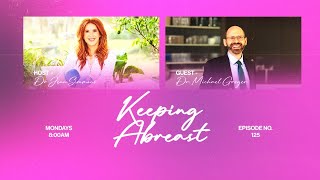
A conversational interview where Jenn Simmons, MD, and Dr. Michael Greger reassess breast cancer screening and prevention. They emphasize that many women and clinicians overestimate mammography benefits and are not fully informed about harms (overdiagnosis, unnecessary treatment, no demonstrated overall mortality benefit). Alternatives and new approaches mentioned include the ARIA at‑home tear test and safer imaging options; the discussion then shifts to prevention through diet and lifestyle, endorsing a whole‑food plant‑centred diet and warning that even light alcohol intake raises breast cancer risk. The episode also references Greger’s book How Not to Die (10th‑anniversary edition) and includes promotional content from the host.
Chapters
Let's face it, what to eat to prevent a breast cancer diagnosis, to reverse a breast cancer diagnosis. That landscape is still confusing, and many, many people just don't know what to do. So my guest today is Dr. Michael Greger, and he needs little to no introduction, but he is a physician who was completely motivated and transformed by watching his grandmother go through a debilitating illness and then recover her health fully and live a long, full, wonderful life after having discovered some dietary and lifestyle secrets which still seem to be eluding most people. So I thought I would take it right to the Source and have Dr. Michael Greger come on and talk to us and about all things diet and lifestyle as they pertain to health. So welcome, Dr. Greger.
It's so great to be back. Happy New Year.
So let's just start and get right into it in medicine in general, but in specifically the area of breast cancer, we're getting a lot of things wrong. We're getting it wrong from the time that we screen through how we treat, how we address it, and we're leaving a lot of things out along the way. So I just, I want to start with screening because you've been very vocal with screening with mammography screen. So just give us the landscape. I mean, what are we doing wrong in terms of screening?
We're not fully informing women about the risks and benefits. And so it turns out, I mean, if you actually do that and you. Then most women actually choose not to undergo mammogram breast cancer screening once they're fully informed about the risks and benefits. But. And so it's about 80%, but maybe you're in that 20%. Every woman has the right to decide for themselves. Is your body your choice? And so that's all I'm saying is that we should understand now it's actually different for prostate cancer screening, where now the recommendation has shifted to not even bring it up, acknowledging that the risks so clearly outweigh the benefits that the average man would, if they fully informed, wouldn't dream of doing it. And so there's not even a one. A doctor need not even bring up PSA prostate cancer screening, because they would just assume that the patient would say no. It's a little paternalistic, and I still would encourage people to, to decide for themselves, but there's, there's very few cancer screening that actually have been shown to actually improve overall longevity, and that's cervical cancer screening, Pap smears. We do have good evidence as well as colorectal cancer screening starting at age 45. We have, but there's six different options to choose from, half of which are non invasive. In fact, we're really the only country that continues to use colonoscopy and that's because we make money, we have a for profit system. The rest of the world uses these non invasive colon cancer screening methods, but definitely have to do one of those methods to decrease, significantly decrease our risk.
And so my point is your point in that, you know, we talk about this concept of informed consent and we want people to make educated decisions and yet they are not given the opportunity to make that educated decision because they're not being educated. So what do you think is being left out of the conversation? Because most women really do believe that screening yearly with mammograms saves lives and that there is a survival benefit and that the radiation that they are receiving is nominal and non contributory in over a lifetime. So what is the information that they're not receiving that would maybe lead to them making a different decision?
Yeah, well, so you know, as your viewers will likely know, you know, contradictory recommendations have been published about mammograms. Everything from, you know, getting it starting at age 40 versus 50 annually versus every other year or not even getting them routinely at all. Nine out of ten women surveyed vastly overestimated the benefits or had no idea how beneficial they are. One survey found that as I said, the majority wouldn't do it if they actually knew. But of course that's up to each individual now. I mean, decisions that are completely one sided, all risk or all benefit, I mean that's a no brainer. So for example, should doctors teach women to do breast exams? Well, the answer is no. It was actually put to the test. Hundreds of thousands of women were randomized to perform self exams or not. And researchers not only did not find any benefit, they found harms, including double the number of women who had to get biopsies taken self exams were not shown to decrease the risk of getting cancer, the decreased risk of dying from cancer or catching tumors in earlier stages. That's why the uspsdf, the United Services, the United States Prevention task came out explicitly recommending against teaching women to do breast self exams back in 2015. You know, 10 years ago. Now. Now to be clear, they didn't come out against breast self examination, only teaching women how to do them. And that's because reminding women to perform self exams only appeared to cause harm with no benefit. Obviously if you discover an abnormality, then definitely tell your doctor. But being told to get into the practice of looking seems to do more harm than good. Yet what do most doctors do? Continue to teach women to perform self exams, even though it hasn't been shown to help. And so, you know, why do physicians continue to do something that only has been shown to cause harm is because that's just what they've been telling women to do forever. Right. Medical inertia can trump women's health. And that's even without a multi billion dollar industry tipping the scales in favor of the practice to continue with. Which brings us to mammograms. Right?
Right.
Over the last half century, more than a half million women have participated in 10 randomized controlled trials of mammography, each with about a decade of follow up. And so what does the science have to say? Well, so if you imagine 1,000 asymptomatic women at average risk randomized to either skip mammograms or get screened following the recommendations get every other year Starting at age 50, well, okay, over the next 20 years, you would expect 200 false alarms, though only about 30 biopsies. Three cancers would be missed, but 15 gratuitous cases would be found, meaning women would be diagnosed and treated for breast cancer unnecessarily. Right now, a third potential harm, getting radiation induced breast cancer from the mammogram X rays, wasn't included in the model because we only have kind of rough indirect estimates on the order of one to five cancer cases caused per 10,000 women. And on the other side of the scale, thanks to mammograms, two breast cancer deaths would be averted, though no lives actually would be saved overall. But if you actually survey women, women think mammograms cut the risk of dying from breast cancer in half, saving the lives about one in 12. In reality, about five women in a thousand die per decade from breast cancer without regular mammogram screening, compared to four in a thousand dying with screening. Now you say, wait a second, doesn't even saving the life of a single woman and a thousand make it all worth it? But that's not true because none of the randomized control trials have ever shown an overall mortality benefit, meaning no overall lives appear to be saved. You say, wait a second, how does that make any sense? Well, if a decade, I mean, if a decade of mammograms prevents 1,000 women dying from breast cancer, then the only way for no lives to be saved is if mammograms somehow led to the deaths in one in a thousand healthy women. And that is where this concept of over diagnosis comes from. That really Gets to your question, what are women not being told? And the fact is that there are some of the tiny tumors that are picked up on mammograms may never progress. Like if you do, you know, autopsy studies on women, about one in five women in their 20s and 30s from like car accident victims have breast cancers in them. But some of which may actually microscopic, microscopic evidence, which may, which may never, you know, these women could die with their tumors rather than from their tumors and be no worse off for it. Right? And so, I mean, the autopsy Studies are between 7 and 39% of women between ages of 40 and 70 have these microscopic tumors, but 96% of them would never go on to spread or kill them. So had those tumors been picked up by screening, the women may have been. If they had not been picked up for screening, women wouldn't have been any the wiser and so would not have been affected by them either way. But once you detect something on a mammogram, right, the inclination is treated because, look, you don't know what it's going to do. And along with that treatment comes all the attendant harms of unnecessary surgery, chemotherapy, radiation. Unnecessary radiation treatments to the chest increase the risk of dying from heart disease and lung cancer. And heart disease is the number one killer of women with breast cancer. It's not actually dying of breast cancer. They're still more likely to die from heart attacks than from breast cancer itself. And yet, ironically, those who survive become from unnecessary breast cancer treatment become mammogram's biggest cheerleaders, thinking mammograms save their lives, right? In actuality, the more likely scenario, in fact, the two to 10 times more likely scenario, is that the treatment didn't do anything because the cancer wouldn't have been harmful anyway. So women may have gone through all that pain and suffering for nothing. That's the irony of mammograms. The people who are harmed the most are the ones that claim the greatest benefit. And so I'm not opposed to mammograms. I am opposed to the patronizing attitude that women should be pressured into getting them without being fully informed by the benefits and risks. Some will still choose to get them, others will not, and it's their choice to make.
Yeah, and I, I agree with you. Women highly, highly overestimate the value of mammogram. And providers also highly overestimate the benefit of mammograms. And most providers that I have come across are completely unaware of the lack of overall survival benefit from mammograms. So they are all aware of the 20% risk reduction in dying of breast cancer, but they're completely unaware of the fact that there has been no overall survival benefit. When I present the data around mammography, it is not so that women won't screen. I think that my point and Dr. Greger's point is that we are, we are wanting you to do what you want to do, to do what you feel comfortable doing, but we want you to do that in the context of making an informed decision, which most women are not able to do right now. So for instance, the, the belief that mammogram saves lives is just simply not true. And there has never been a study that showed that mammogram increases overall survival. And at the end of the, that's the only thing that matters. But that is not translating to not screening. So when I talk about screening, I think that what we need to do is be screening safely, be screening smartly, and be screening in a way that can impact overall survival. Because if we're not saving lives, then there's no point in doing what we're doing. And for me, the thing that is going to change that the most is the ARIA test. So the ARIA test is an at home breast cancer screening tool that checks your tears for the proteins that are the inflammatory precursors of breast cancer. So if you do not have these proteins, you're done screening and you do not need to have any imaging at all. So if you have a negative aria, you don't need any imaging. If you have a clinically positive ARIA test, this means that you have the inflammatory precursors of breast cancer. And at that point, I encourage everyone to get imaging. Of course I encourage QT, which is three dimensional imaging that is 100% safe and does not involve compression or radiation. However, if you don't have that available to you, you can go and have an ultrasound. But if that imaging is negative and you have a clinically positive aria, what you have is opportunity. You have the opportunity to prevent a diagnosis. Now, if you want to work with me to prevent that diagnosis, great, because I have a prevention program for you. But in any event, no matter what you do, you need to work on that inflammation, you need to identify it and work to reverse it. And if you do that and you repeat that test in six months and then it's negative, you have prevented a breast cancer diagnosis. How wonderful is that? How amazing is that? And this is the control that you have. This is the opportunity that you have. This ARIA test will forever change how everyone, everywhere Screens for breast cancer because we should not be using what we have been using for the last 50 years. It doesn't work, it doesn't save lives and the harms far outweigh the benefit. However, we don't have to, we don't even have to talk about what we used to be doing because the future is here now. And it's in that ARIA test, ARIA care, Auria care. And you can get 20% off of that test by using the code DoctorJen20D R J, E N N20. So make sure that you check that out.
Right, Right. No. And so, well, the, the right, the wrong, the wrong message is tripled down the, the, this is what the physicians believe and so this is what the patients believe. And you see this in many areas of medicine, right? We don't have to just, you know, pick on the, on the OB GYNs, you know, the cardiologists or family physicians vastly overestimate the power of statins to decrease your risk of heart attack or these anti osteoporosis drugs or these anti blood, or these blood pressure lowering drugs. In many cases they do help, but much less than they, than they're purported to. And there are alternatives that may be as powerful or more powerful to decrease risk yet because patients and physicians alike overestimate the benefits and underestimate the harms. You know, there's less impetus to institute lifestyle changes because you think a, you know, pill will save you or you know, well, you know, yeah, I heard that, you know, X, Y and Z increases my risk of breast cancer. I don't have to worry because, you know, I got a mammogram, I'm all set, so I don't have to do anything.
Yeah, yeah, that, that is another harm of mammogram is a false sense of security.
Right.
And we know that statistically it will miss 40% of cancers in dense breasted women, which represents 40% of the population. So people are filled with a false sense of security and then you know, three, four months later. And what, what is so disheartening to me and contributing to more and more of the dogma is even the people that it was missed. I mean there are very famous people like Olivia Munn who a mammogram missed her cancer. She was diagnosed months later and, and her message in the end is go get a mammogram. And it's just, it's astounding to me that it, it's just become dogma and not about science. And there are many areas where, where this has become true. It's become about dogma and not about science.
Yeah, yeah. Unfortunately, medicine is filled with that. Nutrition's even more filled with that.
Yeah.
So, yeah, that's that.
Let's get let' into that.
I mean, that's, that's why, that's why I started nutrition facts.org that's why I, you know, wrote down not to die. That's right. I mean, I do what I do because I just, I, I w. This is the resource I wish I would have had in medical school to answer these simple, basic questions about nutrition, which in this, you know, there's just this commercial corruption. I'm in the field where people are, you know, advocating all sorts of crazy things either out of ignorance or from some profit motive.
Yeah. So I want to talk about some of those crazy things. But of all of the books that I read after I finished medical school and residency and had my on the job training for 20 years, how not to Die was probably one of them that influenced me more than anything else. So. And as my, as my listeners are mostly about women's health, mostly about breast health, I'd like to skip to the chapter of how not to Die of breast cancer. So what, first of all, like, what made you figure this out? What was the impetus for you that said that, you know, we're not getting it right in conventional medicine because your training was my training.
Yeah, yeah, exactly. Well, I mean, for me, it all started with my grandmother. She was, sadly, I was just a kid when she was diagnosed with end stage heart disease and sent home in a wheelchair to die. She had already had so many bypass surgeries. You get so scarred up inside, there's nothing more they can do. Confined in a wheelchair, crushing chest pain, her life was over at age 65. Then she heard about this guy, Nathan Pritikin, one of our early lifestyle medicine pioneers. And what happened next is actually detailed in Pritikin's biography. They talk about Frances Greger, my grandmother. They wheeled her in and she walked out. Though she was given a medical death sentence at age 65, thanks to a healthy diet, was able to join her 31 years on this plan until age 96 to continue to enjoy her six grandkids, including me. So that's why I went to medicine. That's why I started nutritionfacts.org that's why I wrote the book how not to Die. That's why all the proceeds I received from all the sales of my books are all donated directly to charity. I just want to do for everyone's family. What Pritikin did for my family, it.
That is absolutely amazing. And so what is it about what you learned from Pritikin and how did that affect you all the way through? Because that messaging that, that your grandmother got from Pritikin and those habits and that lifestyle that she got from Pritikin is almost completely absent in medical school.
Yeah. So I chose the school with the most nutrition training, Tufts, because they have a, they have an adjoining school in nutrition. But even that 21 hours out of thousands of hours of preclinical instruction, 21 hours of nutrition and most of it was like biochemistry of vitamins, Krebs cycle, not clinical nutrition, actually using nutritional approaches to actually prevent arrest and reverse disease, which is what really doctors really mean. But look, I mean as a kid, like I didn't realize the. How revolutionary what Pritikin was doing was. I mean as a kid, oh, grandma went to the doctor and got better. And that's just what you. That's what I go to doctors.
That is what is supposed to happen, right? No, it's not happening, but that is what is supposed to happen.
Well, you know, ideally. Right. If only all our patients are jumping out of wheelchairs after being our hands laid on them.
Yes.
So I mean, at the, exactly. At the time, heart disease we didn't think was reversible at all. You just get worse, worse, worse than you die. And so that's why he was just his, his approach was just not accepted at all. Because you know, it was a clinical diagnosis. You know, you have angina walking upstairs, crushing chest pain. Oh, you have heart disease and then you go on a healthy diet and chest pain goes away. Oh, well then obviously you didn't have heart disease in the first place. Must have been something else. So it wasn't until Dr. Dean Ornish came along in the 1980s and actually proved with something called quantitative angiography where you can actually look inside the arteries and see what's going on. It randomized people to a healthy plant based diet and lifestyle program versus telling people to continue to eat whatever their doctors told them to eat. And the people that continue to eat the diets that led to the heart disease in the first place continue to get worse. Whereas those on average who continued eating healthier went in the opposite direction, actually started opening up arteries without drugs, without surgery. Just this plant based diet and lifestyle program suggesting their bodies wanted to be healthy all along were just not given the chance. As soon as we stopped eating already clogging diets, our body's able to start you know, dissolving some of that plaque away. And so it was really with Ornish's work, with his famous lifestyle heart trial, published in summer of 1990, that really changed my, you know, I had already seen it with my own eyes, but here was in black and white, published in probably the most prestigious medical journal in the world, yet nothing happened. So wait a second. If effectively the cure to our number one killer could get lost down some rabbit hole and ignored, what else might there be in the medical literature that could help my patients, but didn't have a, you know, corporate budget driving its promotion. Well, made it my life's mission to find out. So that's where nutrition facts.org came in and then started writing books. And the rest is history.
The rest is history.
So you are very much a proponent of the plant based diet. That's essentially the, the basis for how not to die and it's tied into every single chapter of the book. I want to talk a little bit about that and then I want to specifically drill down to how not to die of breast cancer.
Hello my beautiful listeners. I'm taking a quick break here to share something truly transformative with you today. If you're ready to take control of your breast health journey, then you need to get your hands on a copy of my book, the Smart Woman's Guide to Breast Cancer. I wrote this book to make a massive impact in the world of breast cancer, empowering women everywhere to make informed choices and educated decisions. You have so much more power and control over your health than you might think and this book, this is a roadmap to harnessing that power. Inside, you'll uncover the truth about conventional treatments. They're often overestimated benefits and underestimated, under explained and under disclosed long term side effects. But more importantly, you'll discover the true drivers of health and how the choices you make at home every day can lead you to the best health, the breast health of your life. Even after a breast cancer diagnosis. Whether you're looking to prevent a diagnosis, avoid recurrence, or simply live your healthiest life, this book is for you. Join me on this journey to empowerment and health. Grab your copy of the Smart Woman's Guide to Breast Cancer today and let's revolutionize the way that we approach breast health together.
So when you talk about a plant based diet, I'm often faced with this concept that there is a whole food plant based diet and there are the vegans who are sometimes whole food and sometimes they're eating a nutritionally deplete diet. Of junk and processed food that they're feeling really good about because it's plant based, but that they are not healthy.
Preach it, sister. Right. I mean, we should eat primarily plants, not necessarily exclusively plants. Plant based diet is really more about maximizing the intake of the healthiest foods. Right. As physicians, we know that labels like, you know, vegetarian or vegan, just tell us what you don't eat. I mean, do you actually eat vegetables? Right. And look, it doesn't matter what you eat on your birthdays, holidays, special occasions. I mean, it's the day to day stuff that, that really adds up. And, you know, and so on a day to day basis, you really should try to center our diets around, you know, fields from, you know, food, natural foods from fields, not factories, these unprocessed plant foods.
Yeah. So I, I always say, like, Twizzlers are vegan and we do not want a diet composed of Twizzlers.
You do not want a Twizzler based diet. I think we can all get behind that.
No, and I don't mean to pick on Twizzlers. There are, there are plenty other, like, horrible junk foods which we could feed, fit into the.
No, no.
This is vegan category. Right.
In fact, probably the worst thing to consume for breast cancer is 100% plant based. And that is alcohol. Right. So alcohol is, you know, where does it come from? It's coming from potatoes and it's coming from, you know, barley and grapes and. Oh, super buddy. You know, significantly increases one's risk for cancer. In fact, last this year, US Surgeon General released an advisory highlighting alcohol as one of our leading preventable sources of cancer, a fact that many people aren't aware of. Alcohol is metabolizing our body to a toxic metabolite called acetaldehyde, which is a known human carcinogen. And there was a comprehensive meta analysis and systematic review of cancer risk that alcohol consumption as even less than a half a drink a day significantly increases the risk of breast cancer, the number one cancer killer of young women. Every year around the world, nearly 5,000 breast cancer deaths attributed just to light drinking. Right. We're not talking about heavy drinking, drinking during pregnancy, binge drinking. All the things we know are bad, but even light drinking. And so, you know, it's important to. It's important to recognize that fact. And so the American Cancer Society, you know, very clear that the best not to drink alcohol. There's. There's other.
In fact, they went so far as to say that there is no safe amount of alcohol for women no, safe.
Right. When it comes to alcohol. Yeah. When it comes to cancer. Absolutely. I mean even a single sip of alcohol can cause cancer causing levels. Cancer causing levels of acetaldehyde in the mouth. So even a mouthwash containing alcohol could, could be risky. And so, so I mean. Yeah.
What can you go into the tie in between alcohol and breast cancer? Because most people don't understand that relationship and so they don't respect it.
Well, yeah, the, the relationship is that alcohol produces this cancer causing substance. So acetaldehyde, which is a breakdown product of alcohol in the body, which happens almost instantly in fact with enzymes in your mouth. And so you are effectively drinking a carcinogen. And it causes cancer, causes DNA breakage, it causes DNA mutations which can initiate cancer, promote cancer.
But it also has an effect on our ability to, to detoxify our, our estrogens. Right. Because we are essentially competing with the alcohol for detoxification space.
So I didn't, I was not aware of that.
Yeah, yeah, it one, one ounce of alcohol will take eight hours for the liver to detoxify. And it's always going to prioritize life over anything else. Right. So it's going to, it's going to do the most toxic thing first. And so, so women that drink alcohol.
Have higher estrogen levels. Is that, is that.
Yes.
Oh, okay, that makes sense then.
And they also have more estrogen metabolites for the same reason. So they're not able to clear it as quickly and not able to clear the metabolites. And it's not the estrogen, but the estrogen metabolites that actually end up being the, the DNA mutating forms.
Don't drink.
Don't drink. I know. So what should we do?
Or save it for the special occasion. Right. Save it for the, you know, save it for your birthday. Save it. I mean, you know, it's, it's really. Our body, I think, has a remarkable capacity to bounce back from injury as long as we're not, you know, poking, abusing it.
Yeah, yes. Too much is too much. Right?
Well. Or in the case of alcohol, any amount is too much.
Yeah, yeah. So let's, but you know, like a glass of champagne on New Year's is not going to kill you, but a daily glass of wine to kick back after the end of a long day.
Might, though we still, I don't think we still have data showing that light red wine drinking is associated with alcohol. We do have white wine drinking and that's because there's actually a compound in the skin of Grapes that acts as a, you know, acts against estrogen synthase and so, so it's possible there could be, there could be a little counteracting of the, of the effects of alcohol. But look, you can have the best of both worlds by just eating grapes, right?
And then you have the benefits because the alcohol is a problem.
The alcohol is.
So let's, let's move on to how not to die of breast cancer, because what do we need to do?
Well, unfortunately, I only have a minute left, so we gotta go.
Let's get it.
So go to your local public library and get the book, how not to die. Yeah, the 10th anniversary edition just released this month. And check it out. Yeah, so I go through, I talk about all the dietary and lifestyle factors associated with protecting one's breast tissue and. Yeah, happy to help out. If anyone has any questions, I'm happy to help out. In fact, yep, I do, you know, monthly Q&As. I have one coming up later on today. And so never hesitate to reach out if there's anything I do to help you or your family.
Amazing. Thank you so much, Dr. Greger. It was so wonderful to have this speed dating with you once again. And we'll get you back on here real soon.
Great, thank you.
Well, everyone, I hope you enjoyed that speed dating episode with Dr. Michael Greger. It is always so amazing to have him. Usually I see him on that treadmill, and he was on his treadmill today, but he was very slow so that he didn't make everyone seasick. And it's never enough time with him. And we spent a lot of time on things that I think are really important, the real value of mammograms, of which they are far less than they are portrayed to be. We talked about probably the most common toxin that is socially acceptable and that is alcohol. What we didn't get into enough or as much is the diet. And we what. What everyone should be thinking about in terms of pursuit of their health, maintenance of their health, reversal of disease. But his, his revised edition of how not to Die has just been released. And I'm telling you, this is something that was probably more influential on me than anything else that I have encountered in my awakening, let's call it that since I finished my training and, and, and my practice, I've had the distinct pleasure and opportunity to have people come into my life that have been highly, highly, highly influential. And Dr. Greger is one of them. He said something really interesting during the talk today, and that's that you just need to eat a lot of plants. You don't have to be plant exclusive. And we need to not get lost in the dogma of it all and maintain reason. And that's that our major nourishment, our major nutrients are coming from plants. And so most of us should be consuming that whole food food plant based diet. And where you get your protein maybe is where you get your protein. But the, the people who are exclusively plant based, that's probably not the best diet for breast cancer because it has to do with your ability to control your metabolic health and glycemic control. And so maybe being plant exclusive isn't the right thing, but there is a right diet for you and it almost certainly involves plants. Make sure that you pick up this latest volume of his book how not to Die and head over to nutritionfacts.org for all those questions that you are looking for answers to because I guarantee you he has spent his life clarifying the research and the answer that you're looking for is there on his website, nutritionfacts.org thank you so much for joining me and I will be back next week, same time, same place. It's Dr. Jen, bye for now.
More from Jenn






Stem Cells, Peptides, GLP1s and the New Blueprint for Preventative Medicine with Dr. Vass



The Truth About GLP-1 Drugs and Who Should (and Shouldn’t) Take Them with Dr. Susan Brian

What 100 Days Underwater Revealed About Aging and Healing with Dr. Joseph Dituri
