90: The Algae Queen, Catharine Arnston's Secret to Healing, Energy & Cancer Recovery
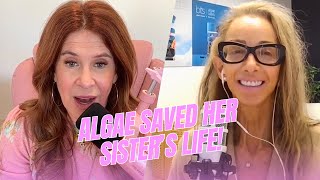
Interview with Catharine Arnston (founder of EnergyBits) about her discovery and use of microalgae (spirulina and chlorella) after her sister's breast cancer diagnosis. Arnston describes algae as highly alkaline and nutrient-dense food (microalgae vs macroalgae), cites specific claimed benefits — protein content (reported 64% for her spirulina), presence of pigments chlorophyll and phycocyanin (claimed anticancer action), and high superoxide dismutase (SOD) levels (antioxidant protecting mitochondria). She gives practical dosing guidance (typical starter 10 spirulina tablets in morning; 30 for health conditions; 10 chlorella at night for detox), notes quality differences (avoid high-heat dried/cheap products), describes packaging/brands (energy bits/beauty bits) and retail details (energybits.com, discount code DrGen20), and frames algae use as supportive for prevention, recovery, energy and detoxification rather than a pharmaceutical cure.
Chapters
Foreign.
Sit tight, because I have such a.
Treat for you today.
A couple of years ago, I was introduced to this amazing woman. And when you look at her, she just radiates everything. Energy, beauty, resilience. I mean, she's really just this beacon of light.
And you look at her and you.
Say, like, I want what she's having. Right? Like, what is happening there? What is going on there? Because she really does look the picture of health and vitality and vibrance. And so I was with one of my friends and I'm like, who's that? And they said, oh, that's the Algae Queen.
What do you mean?
Like, what is the Algae Queen? They said, I'll introduce you and you'll know. Ladies and gentlemen, I have the Algae Queen with us today. This is Katherine Arnsten. And she literally, she has such a beautiful story that I'm not even going to begin to tell it for her. But suffice to say that she went on this journey to. To be this learned person because her.
Sister was diagnosed with breast cancer and she was looking for solutions to bring her sister back to health, to restore.
Her sister to health. And in the scope of doing that.
Discover this amazing world of algae.
So sit tight because you are going to be blown away in this next hour. Katherine, welcome.
Thank you so much. It's so kind of you to say all those amazing things about me. And I'm so.
I'm just telling the truth here.
Well, that maybe embellished a little bit, but. But I am here to. To share what I've learned, what I've experienced and with you and your community because if you do nothing else to help yourself be healthy and avoid or recover from breast cancer or any cancer or any chronic disease, AL should be your go to. And I'm going to walk you through the science to make it easy to understand, because this is not smoke and mirrors. This is the real deal. But no one's taken the time to explain it to you until now, so buckle up.
Yeah, exactly. And it's really all amazing. We were recently at SHIELD together at a party that was actually a celebration of Biohack and the premiere for that. And here you are in your skippy little dress, showing everyone that age doesn't have to define you and you can really be this vibrant, amazing self at any age if you do the things that promote health and wellness and vitality. So can you start off by just telling us about your journey? How did this all start? Tell us this story.
How did somebody become an algae expert and I tell people I didn't choose Algae Queen. I'm the queen, or the Algae Gal, as I affectionately refer to myself, like the gal next door. So I'm actually Canadian, but I've lived in Boston for the last 35 years, although recently just relocated to Miami so I could be outdoors and healthier through the winter. And I mentioned the Canada part because I have two sisters and they both live in Canada, and I have an MBA and I had a corporate career. But 16, almost 17 years ago, my younger sister, who I'm very close to, developed breast cancer, as Dr. Jen pointed out. Now, her oncologist, we were lucky on two accounts. Her oncologist was a woman, and women tend to be a little bit more open to nutritional interventions, if you will. And so her oncologist told my sister that. That she needed to change her diet to an alkaline diet because it would help with her healing. Now, this came from her on.
I think that in it of itself is truly amazing. Amazing, because I don't know if that's typical of Canada, if it's typical of Canadian female oncologists, but I can tell you that the medical oncologists in the United States are not talking about that at all. I know they have little to no knowledge about diet and, and what implications it has. And they. They really are downplaying diet. In fact, quite the opposite there. People are still getting advised, whatever you do, don't lose weight, even if you're obese. They get told, whatever you do, don't lose weight. And a lot of breast cancer patients are obese. And the second thing that they're being given in terms of advice is eat whatever you want. Eat pizza, eat ice cream. What you eat doesn't matter.
Yeah, yeah, that's a crime. That. That should be a. That is a crime. So we were lucky, A, that she was in Canada, B, that her oncologist was a female. And I point out that this wasn't just her neighbor or her yoga instructor. This is an oncologist. So when she. She just said it would be important for her healing. She was going to go through chemo. So when my sister got home and the first call she made was to me, her big sister who loves her. But I knew nothing about nutrition. I was an international economic development person. I had a corporate career. It is what it is. But I love my sister and I'm a very good researcher. And in fact, last year I got my PhD. And I'll tell you how old I am later on, because I just want to encourage women to never give up and never listen to what society tells you, that we do not have expiry dates on our forehead. By the way, ladies, and a lot of people, society tries to tell us that we do and that, you know, after certain age we're no longer desirable. Well, that's just garbage. And everything will work, but you have to follow the recipe. So anyways, so she called me and I said, I have no idea, I will find out. And I did. And it turned out I just went to the Internet that an alkaline diet was primarily a plant based diet. And this is because two reasons. Chlorophyll and phytonutrients found in plants have been found to and proven scientifically to build your immune system. And since she was going through chemotherapy, her oncologist wanted her to have the strongest immune system. So that was number one. Number two, I found out that there was a German scientist by the name of Otto Warburg who won a Nobel prize in the 40s for discovering that cancer cannot exist in cells that are slightly alkaline. There's a range from 0 to 14. And so you want your cells to be seen slightly alkaline, which would push them into like 7.1 so that cancer could not take hold in those cells. So that was the importance of the alkaline piece. The other thing, by the way, is your blood needs to be even more alkaline at 7.34. And if it's not 7, if it's not alkaline, then your body automatically pulls minerals out of your bones, your cells and your organs to neutralize it. And that diminishes your immune system.
So anyways, so let's, let's harp on that for a second because all of these people running around worried about their bone health. The truth is that if you, if your blood becomes acidic, the way that we buffer that, the way that we neutralize that is we pull something that is positively charged out of the bones.
Like calcium, magnesium, potassium.
Worried about your bone health? This is a way to preserve your bone health, make sure that you are not acidic and that your body doesn't have to buffer with the minerals that they should be using to build your bone and preserve your bone.
Exactly. And 80% or more of osteoporosis are women. And we'll get to some of that maybe later on. So I gave my sister all these recommendations of plant based foods to eat and ones not to eat. And she did change her diet and she did go through chemo. Algae was one of the things I found for her and she completely healed and we celebrate her being cancer free every year and she's now over 15 years being cancer free. So that was the best news. The other best news was that in the process of helping her, I started learning about plant based nutrition. Now remember, this was 17 years ago. Nobody was talking about plant based nutrition. And I'm just someone who is very action oriented. I like to solve problems, I like to help people. I thought somebody needs to tell the world about this alkaline diet stuff. And I thought, well, I'll give it a shot. I have no idea about how I had no nutrition background whatsoever. But I did leave my 25 year corporate career. I went back to a school and I went to a school called the Institute for Integrative Nutrition which gave me a health coaching certificate. Not a, you know, just a wide but not deep nutrition background, but enough. And so this was now in 2009 and I set up my own curriculum teaching people plant based nutrition. And, and this is where the miracle that truly led me to algae occurred. Because as I was teaching people, I went to corporations, I went to hospitals, basically anybody who would let me in. And I didn't even charge for it. I just wanted to educate people. And what I heard from everybody who was learning about the importance of eating more vegetables and plants, everyone said, my mother's been trying to get me to eat vegetables since I was a kid. But here's the thing. I found out. People either didn't like vegetables or gave them gas, or they didn't live near a grocery store, they took up too much room in their fridge, they took too long to cook, they went bad quickly, their husbands wouldn't eat them, their kids wouldn't eat them. Basically a huge list of reasons not to eat vegetables. So me being the problem solver that I am, I thought, okay, if I can't get people to eat vegetables, I need to find a way to get them the nutrition of vegetables. But in a way that's effortless, simple, doesn't expire, doesn't give you gas, yada, yada yada, it doesn't taste bad. Didn't know how I was going to do it, but I looked at everything I found for my sister and I just went deeper. And once I hit algae, that's when the miracle happened. Because first of all, algae is the most alkaline food in the world. So that box was checked. It is also the most nutrient dense food in the world. We have quotes from NASA that says one gram of algae has the same nutrition as a thousand grams of fruits and vegetables. One to a thousand. There is nothing with more nutrition than algae. The United nations has endorsed spirulina algae, which is one of the algae we'll talk about which is so important for prevention or correction of breast cancer. Anyways, United nations has endorsed algae for 50 years as the answer to world hunger. Because why? It has the highest concentration of protein in the world. It has three times the amount of protein as steak. And you need protein to build your organs, to build your brain, to build everything. So on top of that, it's been used daily in Asia, daily for over 60 years. That's 6, 0. It's a multi billion dollar agricultural crop. Yes. Algae is not a supplement, it is a food. And it's grown in fresh water. I'll show you some pictures in a minute. So it's a food. So you're eating food, not a supplement. And here's the best part of it all. They come in little tiny tablets. We call them bits because we call them, they're bits of food. This one's, the green one is chlorella and the darker one is spirulina. Spirulina is a blue green algae. Well, I'm going to talk to you about the importance of that, particularly for breast cancer. And chlorella is a green algae. So when you have these little tablets about the size of a baby, aspirin.
For anyone who's listening and not on video, they're these tiny little tablets. I mean they're cute. Smaller than an aspirin. I think they're adorable.
Yeah.
You know, I end up dropping mine on the floor a lot because they're so small and they're very bouncy. So they get on the, on the floor before I can like catch them off of the counter. So my dogs end up getting their dose as well.
Oh yeah, pets love them, kids love them. But each one of these tablets is so nutrient dense, it has the same nutrition as an entire plate of vegetables. So while I'm talking to you, I chew mine. But a lot of people do swallow them. One tablet has the same nutrition as an entire plate of vegetables. It's almost a pound of vegetables. Like really? Really? Yes.
Astounding.
It's crazy. So if you, if you don't like the face, you swallow them. So that would get rid of the problem of people not liking the taste of vegetables. There's no gas. Spirulina is technically a bacteria, has no cellulous wall, so no fiber to cause gas. It can be Used by newborns, kids, teenagers, vegans, carnivores, Paleo. Doesn't matter what because there's no lectins or oxalates or carbs. It's crazy, but ours lasts for three years. It actually never goes bad. But we have to put an expiry date on. So effortless to take. If you can swallow water, we recommend 10 tablets of spirulina in the morning just to fill nutritional gaps. If you have a health condition, 30 is better. And then we'll. And the chlorella, which is a detoxing algae, we'll talk about that later. We tell you to take 10 of those at night before bed because that's when your body goes through a detox repair cycle. But they're effortless to take. They last forever. No flav, no gas, no work. You could if you wanted. We don't recommend it, but you could live on them forever because they have 40 vitamins and minerals, the highest chlorophyll in the world, highest antioxidants about especially one called sod we're going to talk about that is important for protecting your mitochondria which as you get older they die and get damaged and this leads to chronic disease, including things like cancer. So it's the solution. It's already a multi billion dollar industry in Asia and it's just not explained. It's not used here in America for healing properties. They people know it has high protein or greens, but they don't understand the healing properties because you just haven't been told about them. So that's what I'm going to do today.
Do you think that the reason that people don't know about it is because it's a food and we don't value healthy food or it is not something that the pharmaceutical companies can make any money off of because you can't copy, you can't trademark a molecule of nature. I mean what do you think the reason is that most people are unaware of the unbelievable nutritional value here?
I think those do play into it, but I think there's two main reasons. It's just not grown here, not for mass consumption. 99% of algae is grown in Japan, Taiwan, China, India, Korea. So all in Asia. So here in America you might drive by a wheat farm or a corn farm or a tomato patch or a strawberry patch. You certainly don't drive by an algae farm. So it's not anything that anybody grew up with. And I tell people, think about it, you probably didn't know about Chia or Kiwa or Bone broth or collagen powder until maybe in the last 10 years. But these are things that have been used in other countries for centuries. But until somebody explained what they were and packaged them and made sure they were safe for you here in America, you didn't know about them. So that's the other thing. A, it's not grown here. So we don't, we don't learn about it growing up like we do other food groups. And then there's been no incentive to educate you because the pharmaceutical industry and the medical community has you still focused on surgeries and pharmaceutical drugs as the solution. But there's a tide, a shift in the tide. People are looking for more preventative alternatives so they don't get sick, so they don't have to have the pharmaceutical drugs or the surgery. And algae is certainly one of those preventions. I tell people, lookit, if you wanted to bake a cake, you need a recipe. And in the recipe will be all the items that need to be in that recipe for a great cake. If you want to be healthy, you just need to know what the recipe is, because there are things that you can do that will absolutely slam dunk 100% improve your health and help you prevent chronic illnesses. And one of those ingredients is algae, both spirulina and chlorella. And I'll explain why. So it's really just an operator's manual. You just need to know what your body needs and then go out and find it. And it includes things like sleep and red light. Algae is just a very, I call it a foundational food. And quite honestly, most other algae companies, whether you go on Amazon or Target, they don't even know what they're selling because they have a supplements panel on the back. And also all of those are grown in China or India and they cut corners like using high heat to dry it so they can get to market quickly. That's why the prices are so low. And you're going to find out that kills two of the most critical nutrients in the algae that prevent things like cancer, heart disease. And they're in ours because we don't use high heat. So it's, it's A, it's not grown here, B, nobody no inspiration to educate you. I've spent 15 years educating people so they can understand how their body works and how algae fills the needs that your body has and isn't getting. And I'm going to also explain why you need high quality algae, because if you get the cheap stuff, it just doesn't work. Properly. And my goal is to grow it here in mass quantity in, in America, probably in Florida, because we currently grow ours in, in Taiwan, which is the gold standard. But Taiwan has exactly the same climate as Florida. So look out, Bobby Kennedy, because I'm. I want a big agricultural crop here in Florida. We need algae to be grown here. And I want to make it happen. So if you're listening, give me a call.
Yeah, we'll have to connect you with him because, I mean, I would love it to be made here. Right, that would be so I remember you once telling me that the time of day that you consume these matters. What, what would be the reason for that?
Well, this is probably a great segue to explain the two different algae, because first of all, algae is its own food category. And within algae you have two subcategories. You have macroalgae and microalgae. We're talking about microalgae today. But let me explain what macroalgae is. It's that stringy stuff that washes up on shore, also known as seaweed. And it's only in the sea. It's also called dulser kelp. Now, it's good for you because it has high fiber but has virtually zero nutrition. So it's only in the sea, high fiber, zero nutrition. Microalgae is completely opposite, first of all. And iodine has iodine in it as well. Yes, because it's from the sea microalgae, at least when it's harvested like we grow it in fresh water, it has no iodine. That could be good or not good. But microalgae is everywhere, not just in the sea. It's in the rivers, the lakes, the streams, the soil, your aquarium, probably. And it is the most nutrient dense food in the world and has either zero fiber or virtually no fiber. Spirulina has zero fiber because it's actually a bacteria. It's called the cyanobacteria. Chlorella does have fiber, and we'll talk about that in a minute. So the two algae, microalgae, there's tens of thousands of strains. The two most well known are blue green, which is. And spirulina is a blue green and green. And chlorella is an example. But there's tens of thousands of other strains out there. Unlike macroalgae, there's only five or six. There's brown and red and green. So the reason I mention that is because you may go online and Google blue green algae and you'll find out that, oh, your, your Neighborhood beach got closed because of a blue green algae bloom. We're not talking about spirulina. Spirulina is harvested as a food crop in, in fresh water. I'm just going to show if you're listening, if you're looking, this is a picture of a spirulina farm and this is a picture of a chlorella farm. So it's called hydroponic farming. It's grown in fresh water. So back to that blue green algae bloom that closed your favorite beach. It's unfortunate because the only reason why algae shows up is because it's the cleanup crew. It kills bacteria and absorbs toxins. So what happened was there was some kind of runoff in that water. You couldn't see the bacteria or the toxins, but you can see the algae which shows up to get rid of it. It's sort of like if you were at a big concert and, and you know, after the concert's over, the floor is littered with sticky stuff and whatever and the cleanup crew comes in to get rid of it all. Well, that's what algae does. It does it in the water and it does it in your body as well. So if you're thinking, you see about a blue green algae, it's not spirulina. It's just another strain and it's the cleanup crew for that. So spirulina is the blue green algae, as I mentioned, and its claim to fame is it has the highest protein in the world. Ours is 64% protein. And you say to yourself, well, why is that so important? Well, animal protein is all bound up and it can take days for your body to break it down into what's called amino acids, so it can be absorbed. And some, and most of us are compromised in our digestion. So very often you might eat 50 grams of protein, but you only absorb 10% as Aminos. So it's very inefficient. Then you have collagen peptides, which are clusters, three or four aminos, so they get absorbed faster. But with algae, the protein is already in individual aminos, so it's very bioavailable. It has 18 of the 20Aminos, including the nine your body can't make. So it's a complete protein. And this is really important, particularly for women as we get older, pardon me.
Is a complete protein.
It's a complete protein, absolutely.
And what that means is that it has all of the essential amino acids. That's what it means to be a complete protein, because the non essential ones you can manufacture yourself, as long as you have all the essentials.
Right, right. And you need the essential. You see, so even collagen powder doesn't have one of the essentials, which is tryptophan. And so tryptophan is critical to help your body make your own collagen and to absorb collagen. So they have to add it to the. To the protein, to the collagen powder. By the way, spirulina has more collagen in it than collagen powder. So if you're looking for a sustainable vegan source of collagen, you've come to the right place because that would be algae. So spirulina is known for being energizing because it has all this protein and it has. It's high in B vitamins, which convert the protein, the aminos, into instant energy. Now, when I talk about energy, I'm not talking about the kind of energy you get from a stimulant like coffee, caffeine, or sugar, which is a burst of energy. It's sort of like putting paper on a fire. This is the kind of energy that's generated at the cellular level. So it's like putting a log on the fire. You may not even notice it at first, especially if you only take 10. But if you take 20 or 30, you'll start to notice it. But it's not a boost and it's not a crash. It's just very steady. There's no drama with algae. What will happen is your focus will improve, your energy will just. You'll notice that you're not fatigued, you'll notice that you're not hungry. You notice that things just aren't as much effort to do. And that's because you're. And we'll walk, we'll. I'll walk you through. Your mitochondria are getting the nutrients they need to generate cellular energy, which is called ATP. And there's particular nutrients in the algae, particular spirulina, not found in any other food in the universe, that improves that production of cellular ATP. And when you have more cellular ATP, that means you can do more things. Your lymphatic system works, your brain system works, your mitochondria work, your digestion, your sleep. Everything works with more cellular energy. But as you, as you age, you have fewer mitochondria or they get damaged. And so it's like having your lights go out in a building. As you age, you have fewer mitochondria, so just not generating as much ATP so you can't fight issues Health issues. It doesn't matter whether it's cancer or heart disease. You just have less to work. And so this is why at a certain age, and I'll explain why this is happening, you just feel that you're in a downward spiral. And what I want to tell women, particularly as you get into menopause and perimenopause, especially menopause, your body just doesn't function the same because it's missing certain things and nutrients and hormones that you've had all your life that are critical. And I'll talk about what they do. So you have to learn what that recipe is, what to adjust to this new life. Because they're not coming back. The estrogen is not coming back. Your melatonin is not coming back because your body thinks that you die at 30. It's just part of the evolutionary process. We have lived on Earth for 2 million years, and for 1 million 990 years thereabouts, we died at 30. It's only in the last 150 years, we've lived longer. So all of our biological systems, they get to start to shut down once you hit 30 in the. Certainly by the time you're 40, you're not. And this is when you enter this, this menopause with the estrogen, drops and disappears. A very critical antioxidant called superoxide dismutase, which I'm going to talk about, it also drops and disappears. And it has. The highest concentration is in the algae. And we'll explain that. But so what I want to tell women is that, listen, you can either get bitter about all this or you can get better. And I want to encourage you to get better. And one of the ways that you can get better is with algae, because it fills one of these critical holes that have occurred in the nutrients that are provided to you to live a energetic life. Because energy comes from mitochondria. And this nutrient called superoxide dismutase absolutely plummets after the age of 40 and literally is gone by the time you're 50. This is what happened. We're healthy, we're happy, we're active, everything's going. And then, boom, we hit menopause and 40 and 50, and things start slowing down. Our energy slows, down, our brain fog increases, the rate of cancer, especially breast cancer, increases, our sleep gets disturbed, our digestion gets disturbed, we put weight gain on, and none of that has to happen. Well, I can't bring back the estrogen. But I will tell you one of the things that the superoxide dismutase does that will fill part of the need of the loss of estrogen. So wouldn't you like to get better instead of bitter? I sure I do. And this is when I'll tell you how old I am.
And I think that that's what everyone is looking for, right?
Absolutely. I mean, and the other thing I say is it's never too late to feel great. I don't care if you're 50, 60, 70, 80, whether you start a in. One of the things I would encourage you to do is start a weight bearing, exercise, activity, add sleep more, work out more, and add algae to your life. And honestly, those three things are the pillars that will get you back the life that you had before and maybe even make it better, because so you're certainly not bitter. And I'm going to be turning 70 next year. All right? So I am an exact. And I have been eating algae for 16 years now.
Are you seeing what this woman looks like? Because she brags, but I mean, look at her skin, look at that hair.
This is all mine. I don't do Botox. Somebody asked me if these are my teeth. Yes, they're my teeth. Yeah.
I mean, it is just. It's astounding. Yeah, absolutely astounding.
So I. And I don't take any other supplements. Well, I actually do take vitamin C because there's very little vitamin C in the algae. So that's, for me, that's, you know, an important thing. But I. I want other women to experience this. And it's effortless. Let's just say I chew mine, I have them all day long. And we're going to get back to when to take them, because that was the original question. I got off on a bit of a tangent, but something so effortless. By the way, algae was the first life on Earth 4 billion years ago, not just the first plant, first life. I say there's something spiritual about being the first life. And that's why I call Spirulina spiritual Lena now. So. And it's still here. So it's doing something right. We just have to understand it and use it. I can't help you if I can't get it in your body. So that's why actually I designed all the packaging to make them really attractive and pretty so that women in particular would. Would want to use them.
Really did an amazing job.
Thank you.
So there really shouldn't be very much of a barrier to doing it. I mean, if you're like me and you're just someone who, for the Life of them. Just cannot remember to take supplements. But I actually, I leave mine right by the blender. I leave mine on my desk at work so that, you know, I have it in front of my face. But even with that, you saw, I just took all of mine just now while we were recording. Because in no time like the present.
Yeah, and it doesn't take long. I mean, you'll. You'll notice a difference from the spirulina, which we call energy bits, and we have the second brand of beauty bits. And the reason why there's two is I found women didn't like the packaging of the blue one. And I started the company because of my sister. And so I. I'm all. I'm 100% in for women's health and helping us feel. Feel the love. So I just thought, well, let's. My girlfriend said you got to make it pink and give it a cute name. And because it has more collagen than collagen powder, I made a pink, pretty pink version. This is the one I have on my countertop. But these are exactly the same. I call them my twins, the boy Spirulina and the girl Spirulina, but they are absolutely the same. I'm not trying to trick anyone. I just want people, women in particular, to feel comfortable with them. It's because, you know, I'm a woman and this came from Mother Nature and she's one of the gals, too. So, anyways, that's why there's two. So spirulina, generally, you're hungry and tired in the morning or before at lunch or before a workout. So in general, that's when we suggest you take the spirulina. Now, their food. We're starting a whole new campaign about algae as food. So there is no upper limit, but taking 10 a day in the morning will fill the nutritional gaps. You could take fewer if you wanted. You could take more. We use fuel. NHL teams, and they take 75 spirulina before a hockey game, and then they have 75 chlorella, which I'll talk about in a minute after the game. So there's. It's totally your choice, whatever you're doing, if you're working out, if you're trying to correct a health condition like cancer, I would definitely take more like 30 or more, because I'm going to walk you through some of the nutrients that are found in spirulina that are very protective of your. Of your body, particularly from cancer, that you can't find elsewhere. So, morning, afternoon, Before a workout, just have as if you're on GLP1 definitely take them because you're not eating very much and you're certainly probably not getting your dietary protein requirements by the time. By the way we come in, they come in little pouches of 30 tablets as well. These are great for travel. And yeah, I'm mixing. Yeah, there's five grams of protein in a, in 30. And you think, well, that's not very much. But remember, it's almost the equivalent of 30 grams of protein. Because when you take 5 grams of protein from the spirulina, you absorb 5 grams of aminos. When you have 50 grams of animal protein, very often you only end up absorbing five grams of aminos. So this is the more absorbable form. And remember, it's absorbed instantly because there's no cellulose wall, which is why, if I had to defer to one, I would always start people on spirulina, particularly for breast cancer. So that's, that's when we generally recommend the spirulina.
Are you ready for a breast cancer screening revolution? Well, I'm thrilled to introduce to you a breast cancer screening tool that I have only recently learned about, but I have universally adopted. This is the ARIA test. This groundbreaking at home breast cancer screening test is one that I believe will.
Completely change the game.
So imagine a screening test that's as simple as shedding a tear, because that's aria. It's a non invasive, convenient and perfect for all bodies and all breasts. Dense breasts, implants, no problem. ARIA makes it clear for everyone, even.
Women as young as 30.
Aria is backed by over a decade of clinical trials, thousands of samples, and it's developed alongside top breast health experts. Here's how it works. You collect a tear sample at home and then ARIA then analyzes it. Protein biomarkers that can signal early breast cancer. And the best part, you get a consultation with a breast health specialist to review your results. Now, ARIA isn't replacing breast imaging. I am using it alongside qt. It's complimenting it and giving you a fuller picture of your breast health. Knowledge is power and ARIA is putting that power back in your hands. It's time to take control of your breast health and ARIA is another way of doing it. Go to Aria Care. A u r I a care and use my code, Dr. Jen 20 in Capitals, D r j e n n.
20 to get 20% off. Back to our show.
Hello, my beautiful listeners. I'm taking a quick break here to share something truly, truly transformative with you today. If you're ready to take control of your breast health journey, then you need to get your hands on a copy of my book, the Smart Woman's Guide to Breast Cancer. I wrote this book to make a massive impact in the world of breast cancer, empowering women everywhere to make informed choices and educated decisions. You have so much more power and control over your health than you might think. And this book, this is a roadmap to harnessing that power. Inside, you'll uncover the truth about conventional treatments. They're often overestimated benefits and underestimated, under explained and under disclosed long term side effects. But more importantly, you'll discover the true drivers of health and how the choices you make at home every day can lead you to the best health, the breast health of your life, even after a breast cancer diagnosis. Whether you're looking to prevent a diagnosis, avoid recurrence, or simply live your healthiest life, this book is for you. Join me on this journey to empowerment and health. Grab your copy of the Smart Woman's Guide to Breast Cancer today and let's revolutionize the way that we approach breast health together.
So I would love for you to say more about that. So where do you see the benefits for, for, for cancer in particular? So, you know, we talked about that it's very nutrient dense and we talked about that there, the bioavailability of protein. And you definitely don't want to overload your body when you, when you have a cancer diagnosis, especially any of the endothelial cancers. So now I'm talking about breast cancer, I'm talking about colon uterine cancer, ovarian cancer. You don't want to overload your body with animal protein because it is very inflammatory and it is also progrowth. And you're taking it along with all of the other things that happened to that animal before it was slaughtered and brought to market. So the hormones and the antibiotics and all of the things that come along with it. But you spoke specifically about spirulina. What are the benefits to people who have a cancer diagnosis?
Well, first of all, often when you're sick, you don't have any desire to eat. And so the fact that you can swallow these and get all the nutrients you need take away that problem. So you are still nourishing your body because you need to nourish your body in order to heal. So that's number one. Number two, remember, I started this journey because of my sister's oncologist wanting her to have an alkaline diet because cancer cannot grow in cells that are Alkaline because it indicates there's oxygen and it's a healthy cell. Algae is the most alkaline food in the universe. There's nothing more alkaline. So it can help prevent further growth of the cancer. A couple of other critical things. Probably the most critical thing, the reason why this is called a blue green algae, is because it has two pigments in it. The green one you're familiar with, it's called chlorophyll. The blue one I'm sure you're not familiar with, and it's called phycocyanin. And I'm going to spell it out for you. P H Y C O C Y A N I N And what's so important about this phycocyanin? It's proven in science to kill cancer cells. Absolutely proven. In fact, the chemotherapies companies put phycocyanin in their treatments. Now, what does phycocyanin do? Well, if you're listening or you're watching this on a YouTube, I'm showing you a page from a scientific paper which I'll send to Dr. Jen so she can share it with you. And you can also find it online if it's still there. This was an example. They took cancer cells, put it in a petri dish, dyed the cancer cells purple, and then they added phycocyanin to the petri dish. And within 24 hours, virtually all the cancer cells were gone. Completely gone. That's what it does. So if you want to know the process by which that is working, it's a little scientific, but if you bear with me, I'll explain. Remember, I talked about cellular energy being created through something called ATP? Well, the process by which ATP is created is sort of like a relay race. You've watched a relay race, you have a runner with a baton, and they run a distance and they pass it to the next runner, and then they run a distance and hopefully they win the race. Well, the way that your cellular energy ATP is produced is similar, except instead of a runner, you have these molecules. And instead of passing a baton, they pass electrons. And the speed at which they can pass those electrons along determines how much energy is being created for you. Well, there's this. In that process of the four molecules, there's this little helper molecule. Think of it as, like, you know, when you're at the airport and you get, like one of those buses that take you from the terminal to your actual, you know, gate, and you can't do anything until you get to your gate, so you gotta get on that bus. So this little helper molecule is called cytochrome C, and it basically takes the electrons and moves them faster to the next runner molecule. Well, in a healthy cell, that's what happens. And the blue phycocyanin detects if it's a healthy cel and moves that little helper cell called cytochrome C along faster. And this is one of the reasons why spirulina gives you energy. However, in a cancerous cell, that phycocyanin detects that it's a cancer or senescent cell, which is what's called a zombie cell. It's basically a dead cell, but doesn't die. What it does is it ejects that little hypomolecule called cytochrome C. And then that cytochrome C molecule triggers something called capases, which triggers something called apoptosis, which is cell death. And that kills the cancer cell. And what the chemotherapy companies, they put the phycocyanin in their treatments. And the way they determine. One of the ways they determine if it's working is they measure how much cytochrome C molecule is in your blood or your plasma. And if there's a lot, they know that the cancer cells are being killed. But who wants to go through chemotherapy when you can have this going on automatically just by taking spirulina? If. But here's the catch. That blue phycocyanin is deactivated and killed by high heat. And I have scientific papers that prove that. So all those less expensive algae tablets that you're buying from Target or wherever, I can promise you that they used high heat to dry it because they're lower price. So they had to cut corners to get to market, which deactivates this critical capability to kill cancer cells. Unbelievable, right? So this is one of the most important things for taking spirulina if you are either trying to protect yourself from cancer or recover from it. Because, a, you'll get the protein, you get the chlorophyll. I want to talk about superoxide dismutase in a minute next. Because it's in both of them, but highest in spirulina. But you get this extra bonus of having this blue pigment that's been proven in science, and you can Google it to kill cancer cells. And that's pretty important.
Yeah, absolutely. And, you know, we see similar things with blueberries, right? Blueberries have anthocyanins in them, and it's. It's it's working by a similar mechanism. And that's why, you know, God did all of this. Oh, I know all of this in nature, everything. And because for many years we didn't understand it, we tried to go around it, but the truth is that we have so many of the answers right here in front of us at our fingertips that have already been created. We don't need to create new things.
But somebody needs to explain them because not everybody's going to want to spend 15 years of sitting in front of their computer reading thousands and thousands of PubMed articles, which ultimately led me to get my PhD. So. But I have this desire and urge to find a solution because I can't bear the thought of one more person getting breast cancer or any kind of cancer unnecessarily if they just were given the proper recipe of how to prevent or correct the situation. And when you come up with something like algae, which is Mother Nature's or God's gift to us, but hasn't been grown carefully or explained to you at all, it's really, it's. It keeps me good, keeps me going every day if I can stop one more person. So. So this is one of the great things about spirulina, is it has this blue phycocyanin, but it also has a very, very important antioxidant that I want to talk about because this is an antioxidant that will prevent. Helps prevent any kind of aging or any kind of disease and is, I think the. The loss of it at the age of 40 is one of the main reasons why we see this deterioration in our health. And this antioxidant is called superoxide dismutase. I know, it's a very big mouthful. It's also known as sod. So why don't I refer to that? Why is it so important? Well, as I mentioned and showed earlier, we have SOD made for us in our body from the moment we're born. But like, as we get older, 30 and 40, like a lot of other things, it starts to drop. And by the time you're 50, your body is not making it anymore. And what does this stuff do?
Well, there are some people who are born with SNPs or genetic. Genetic modifications that their SOD genes don't work from the start. So there are some people that have challenges. Talk a little bit about what superoxide dismutase is and what it does.
So it's an antioxidant and it's so important for the mitochondria because it's one of the few antioxidants that can get into the inner membrane of the mitochondria. Your mitochondria are the only cell in your body that has two membranes. All of your other cells have what's called a lipid membrane. And antioxidants like vitamin C and vitamin E and blueberries move in and out of those membranes easily. But the mitochondria have a second inner membrane that is impenetrable by. You could eat a room full of blueberries. Not a drop of antioxidants will get in there. There's just a handful that can get in, and superoxide dismutase is the most important one. And why is it so important? Well, remember I said about cellular energy being created in the mitochondria? Well, this is where they occur. But what people don't talk about is that a byproduct of this important cellular energy are free radicals. Now, you've probably heard of free radicals. They're a molecule that has what's called an unpaired electron. And Mother Nature loves balance and harmony. And so if a molecule has one unpaired electron, it will steal an electron from a neighboring molecule, causing damage to that one. Now it's unbalanced. It will steal from another one. And on and on the damage goes. Now, these things called antioxidants have extra electrons, sort of like the kid goes to school with extra snacks for his friends, and everybody's fed and everybody's happy. That's what antioxidants do. But when they can't get into the mitochondria, and you have all these free radicals that are being produced as a byproduct of ATP, your poor little mitochondria, DNA, which are right where all the free radicals are, get damaged, they get damaged and they die. Now, what happens when they get damaged in this process of all these free radicals? Well, in the mitochondria, remember those little molecules that are sort of like the runners, they're supposed to be really close to one another so they can pass those electrons easily from one to another to create energy and release very few free radicals. Now, when the mitochondria gets damaged, it puffs up, it expands, and that has two impacts. Number one, those little molecules get further and further apart from one another so they can't pass the electrons. Like asking Tom Brady to do a pass in a stadium that's four times as large. It can't be done. This is why you have less energy. When you have damaged mitochondria because they can't complete the pass. So there's no or less ATP being produced, which means you have less energy to be healthy, to think, to heal, whatever. That's number one. Number two, those electrons don't disappear. They leak out into the rest of the mitochondria and become free radicals, which causes even more mitochondria damage. So then eventually the mitochondria explode. It's a process called necrosis. And that spills out all of the free radicals and all the other gunk that's been in that, that sick cell, because the mitochondria is sick to the neighboring ones. This is why disease, like cancer, spreads so quickly, because you have this mitochondria damage. Now the reason why I want you to know about spirulina is because the thing that protects your mitochondria from all that free radical damage is this antioxidant called superoxide dismutase. Think of it as a big golf umbrella. If you get stuck in a rainstorm, you have one of those big golf umbrellas. I mean, you could have a whole family under that golf umbrella. It didn't stop the rainbow, but it stopped you from getting wet. That's what superoxide does, sod. Because it doesn't stop the free radicals, but what it does is it turns them into harmless water and oxygen. So your mitochondria aren't damaged. Things are perfect. Right? They're perfect until you're 30 and then that 40, that big golf umbrella, you have less of it being produced. So it's like that golf umbrella became like a totes city umbrella. So, so your mitochondria are dodging raindrops, dodging free radicals, getting a little damaged. Not totally damaged, but a little damaged. By the time you're 50, that mitochondria, that golf umbrella, size of a cocktail umbrella, virtually zero protection. So the free radicals never stop. But your protection did. Because you have no longer this sod. Ta da. Spirulina has the highest sod in the universe. It's like giving you back your golf umbrella so now you can protect your mitochondria so they're no longer damaged. They can start producing. That's that great ATP for you. This is why you get energy almost instantly. By the way, your body can't store ATP. It's, it's used up instantly, so sort of like vitamin C. So now you see an instant impact on your mitochondria. Your brain have 2 million mitochondria per cell. One of the first things you'll see is your focus will improve, depression will be gone, bio brain fog will be gone. You'll start to see everything start working better again because the mitochondria are now protected from free ra. And this is where I want to link in the estrogen story because most people haven't been told that estrogen acts as an antioxidant in the mitochondria. This is why women suffer twice as much from brain fog and health issues after 40 than men. Because they've not only lost estrogen, which has a mitochondrial protection effect, they've also lost the superoxide dismutase. Men lose the superoxidis mutase, but they're not having the same impact as women do when we lose the estrogen. So it's double the whammy. But on the flip side is you will start to see an incredible improvement when you start taking this to get that superoxide dismutase back in your system, get your golf umbrella back up. It's like turning the lights back on. Literally. It turns the lights back on in your brain at the cellular level. The it'll give you more energy, it will help you sleep better. So it's. And there's almost as much in the chlorella. So it's also very valuable. But of course chlorella doesn't have that phycocine and the blue pigment that has been proven to kill cancer cells. So, so it's pretty. And because it's so effortless, it's food. You could swallow it. And this replaces most of your other multivitamins. It replaces a multivitamin. Definitely stop taking fish oil. It's usually rancid. By the time you get replace CoQ10 it can replace biotin. So you can get rid of a lot of clutter on your countertop. Save you lots of money. It can also replace protein. You don't need as much animal protein if you don't want to. And especially chlorella with the high chlorophyll can replace vegetables. It's like a one stop shop. If it wasn't proven in 100,000 studies, you'd think this was too good to be true. But you can't argue with a hundred thousand medical studies. And so they're all there, but you don't know where to find them.
And the fact that we're not talking about it feels like crazy.
I know it feels crazy. And I thought I was going crazy when I started researching all this. This is why it took me so long to get the company going. I was by myself. Literally, for five years, I chained myself to my computer and I just kept reading and reading and reading. I thought, if this stuff does all these things, why don't people know about it? And the problem is, the scientific community is in silos. So they're working with brain health or heart health or lymphatic systems or, you know, bone health or whatever. And there are 25,000 studies on sod alone proving that it reduces inflammation. Alzheimer's, heart disease. Proven so. But what they don't know is that sod, if it's not heated, is the highest quantity in spirulina chlorella algae, because it's also an enzyme. This is where the heat thing comes in, is very important. Again, you buy the cheaper algae, it deactivates the enzymes. All enzymes, not just this one, but all of them. So you either need to find raw, fresh spirulina or arc. Those are the only three things that I can recommend with 100% certainty. Because the high heat deactivates the blue pigment, and it deactivates the antioxidant superoxide dismutase. And to me, those outweigh the protein, the chlorophyll and everything else. But who's going to tell you, right? I am.
Yeah, exactly. So when we were talking about before, the beauty bits are the same thing. There they are.
The.
The spirulina, right?
Yes, absolutely. Exactly.
The energy bits, the beauty bits are the same thing as the energy bits. They're just in beautiful packaging so that we know.
And so think of this as a blue car and this is a pink car. Yeah, exactly the same. Absolutely the same. But women might want a pink car. Yeah, Right.
Okay. So. And can you take too much? Is there a problem with taking too much?
I think if you started. If you. So this is why we start people with 10, because the average person is undernourished and it's so concentrated that we don't want to, you know, go crazy. So 10 would be a good starter amount. 15 or 20, if you're feeling good, keep going. And maybe even 30, because it can become a main source of food for you. I would say probably when you get up to 150, maybe you're getting to the upper limit. There is technically no upper limit because you can't have too much salad. But I will tell you, your poop will be a little green. Even with 10, it might be a little green. It looks dark. Don't be worried. It just proves that the chlorophyll has worked its way because only 10% of chlorophyll gets absorbed in your stomach. The rest of it travels through your liver. By the way, the, the chlorella, which is a detoxing algae, which is very important because also we have so many health issues because we have too many toxins in it. This attaches to lead, mercury, radiation, glyphosate, pesticides, but it also stimulates peristalsis, which, and when you're sick and you're on medication, you usually are, are constipated. This will remove that problem. But also this is really good for IBS and Crohn's, any kind of gut issue. They've been using it for, for decades for gut issues. But that much green chlorophyll has 500 times more chlorophyll than arugula and 25 times more than liquid chlorophyll. So your poop will be a little green. But that's okay. It just proves that it's working. So, you know, if you have a health. We've had people who had colon cancer send us their markers, their lab tests that they were given two weeks to live. Literally. I've got this email saved and they started taking like, I think a hundred chlorella and within a day it dropped and a couple more days it dropped and within two weeks they had like zero, literally zero detection. So, you know, and I, I'm happy to share all this information with people. I, I don't make any of this up because what would be the point? I didn't start a company to make money. I wasn't even planning to start a company. I just wanted to help my sister. That was it. And then, then I learned that I could help more people with trying to encourage them to eat more vegetables and then found out, well, they didn't like vegetables. So then I turned, I discovered algae. It was completely unexpected. It was like Alice in the Wonder in Wonderland falling down the rabbit hole. But I discovered something that I, that was globally impactful and somebody needed to tell the world about this stuff. So here I am, 15 years later, 16 years later, telling you to say.
That even if you like vegetables, even if you eat a lot of vegetables, this still has a tremendous.
Absolutely.
And tremendous implication to you.
Absolutely.
You know, if you're someone who is struggling because you're plant based and you don't know where you're going to get your protein from and you don't know that you're getting all of your nutrients, this is another solution, the chlorella. Because I think the chlorella is really important for people who are on a breast cancer journey, especially ones who have been through the journey and are now trying to figure out how to recover their health, because there's a lot of women in that bucket. We have 4 million breast cancer survivors in this country. 4 million. And most of them are struggling with their health. Health. Most of them are living with the side effects of treatment, which are not insignificant and can include headaches and depression, anxiety, brain fog, palpitations, pain, sore muscles, joints, bone pain. They have bone health issues with osteoporosis, they have gained weight, their body composition has changed, they've lost muscle mass, they have problems with mood and energy, vitality. All of these things come into play for them. And it's not uncommon for women who have been treated for breast cancer to have all of those things. Things, loss of libido, loss of their relationship, sex being unwanted and painful. All of these things these women are suffering with. And for a lot of them, these things can be alleviated with some proper nourishment and detoxification, right?
Absolutely. Well, chlorella plays a very important role. And spirulina, as I mentioned, most people take it in the morning, in the afternoon, before workouts or anything where you need focus. And chlorella, we generally, you can take it any time of day, but we generally recommend it before bed, because when you are sleeping, this is when your body goes through a detox repair cycle. So first of all, it has the highest tryptophan in the world, which is a precursor to melatonin. So it will help you with your sleep. Number one, because if you're not sleeping in the deep sleep, you're not repairing. So that's number one. Number two, because it has a heart, it does have a fiber cell wall. And that heart, it has the hardest in the plant kingdom, it attaches to toxins, lead, mercury, radiation. So if you're currently going through chemotherapy, you want to be taking 30, probably even 60 of these the next day to pull out the excess radiation so that you're not as nauseous in between your next treatments. But it still lodges in your cells at a very deep level. So you want to be pulling that out and. And the detox effect in your blood, it pulls out toxins within an hour and a half in your cells, it takes about seven to 10 days. In your organs, it takes anywhere from two to six months. Because it's all about the density of the cell structure and because it's a detoxing algae, not just a cleansing, a Detoxing algae, what it does, it will pull the toxins out into your blood and while they're circulating around, you may not always, but sometimes you will have some detox, detox effects, which is a headache or breakout or maybe some stomach distress. It won't last forever. And it's not the chlorella, it's the. What's happened is it's pulled the toxins out. And the four ways your body gets rid of toxins is through sweat, breath, urine and bowel movements. So this would be great to take. I would take, if you, I would encourage people to take saunas and maybe take some spirulina or, or cryotherapy or red light therapy. Take the spirulina beforehand because it gets absorbed instantly. And then after the sauna, the red light, the cryo, take the chlorella because it's the cleanup act. It cleans up all the stuff that was released and pulled out during that treatment, but also for sure, take it before bed. So while you're sleeping and getting your beauty rest, this is pulling out the aluminum, all the excess chemo and other, you know, 700 toxins that are documented to be in the average adult these days here in North America. So very detox and at the same time, it's very repairing. It has something called chlorella growth factor, which speeds up the growth of your cells. We've had athletes tell us they heal twice as fast from, you know, shoulder surgery, Lasik surgery. Doesn't matter what it is. This speeds up the growth of your cells. And it does have also a very high amount of that superoxide dismutase that improves the cellular energy piece. And the highest chlorophyll is very detoxing for. It pulls out, it kills bacteria, Chlorophyll kills bacteria. So it kills it in your mouth if you chew it and throughout your colon. And it stimulates peristalsis if you're eating dairy, processed foods if you're traveling, if you're stressed, if you're on medication. And as you get older, you have fewer digestive enzymes. So I would say about 90% of the population is either chronically or intermittently constipated. And this will relieve the constipation, not the spirulina, just the chlorella. So this is why, you know, if you take it in before bed, then you can have a nice bowel, move in in the morning. So this is why this is. And this cleans up all the junk, I call it all the junk in your trunk that's sitting there that you don't want. Because if you don't have bowel movements, what's down there is stuff your body didn't want. It's like, no, nope, don't want that. No, no, no. Getting rid of that. So but if it's not moving out through a bowel movement, your blood circles around and pulls out all that stuff again and circulates it. So it's like, it's like having a ventilation system spewing out bad air. So you want to make sure you get rid of it. So this is really, really helpful for people who either had cancer or want to prevent it because of the detox. And also think of it, toxins. Average person has 700 in their body. If you have toxins, and we all do, they sit in what's called receptor cells in your cell cells. It's like someone's stealing your parking spot. If you, you can put all the nourishment into your body, but if someone's got your parking spot and the nourishment can't get into the cell because there's a toxin blocking it. So we want to tackle that and get rid of that toxin, get rid of the invader. It's like the police taking someone out who's, you know, causing a problem in a, in the bar or the restaurant or something and, and you know, allow the deep the toxins out. And this builds your immune system. By the way, your immune system is primarily in your gut. 80% of your immune system is down there. Chlorella has all the nutrients, zinc, aminos that help build the immune system so that it can work better for you. Cancer takes hold when it has acidic cells and your immune system isn't strong enough to fight it off because we all have cancer cells at all times. And this is why I'm so glad what Dr. Jen is doing because a lot of those mammograms people are taking were squeezing your breast, which had some cancer cells in it. And then now they discovered get squished and they get spread. And so now maybe they were just hanging out there, but now they're active and they're engaged. And when you don't have that kind of invasion, but you can still get the detection, it's much healthier for you and your breast and for your life. So. But in any case, both of these work really beautifully together. This is a wellness algae. That's why we call it recovery bits. It helps you recover your health. And spirulina and is a nourishing algae and if you want an analogy to think when to take them, I stay at a lot of hotels. A lot of us do. And sometimes you order room service and you get nourished and fed and you're energized for your day. And I thought, wow, that's sort of like spirulina. It gives you everything that room service gives you. And then you come back later on, your room's all cleaned up and the garbage has been taken out. And I thought, that's sort of like chlorella. It takes all the garbage out, cleans everything out for you. So. So think of chlorella recovery bits as housekeeping and think of spirulina as room service. And that will also help you remember when to take them. Yeah.
Well, that's amazing. And I love that you took this deep dive with great purpose. Right. I love that your sister as well. I love that you are this shining example of what nourishment, true nourishment, can do for you. And dialing in and tapping into what God has so graciously created for us and bringing this knowledge to the world because we need it.
We do need it.
It's not going to come from the medical machine because it doesn't fit their narrative. And, you know, they really don't want us healthy, unfortunately. And, you know, we don't need to go down that conspiracy theory route. But just to suffice to say that we need loud voices like you and yours to. To make us aware of these things so that we can be proactive about our health. And even when we have reached some stumbling blocks and you get a diagnosis, the knowledge that there is hope for the future and you can restore your health and you can recover your health and use God's, God's amazing creations to do it.
Absolutely. And.
In Florida, because that would be amazing to bring it home and bring it here. And I'm sure it would make your life a little easier because I know you spend a lot of time on the road. So this would keep you home at.
Least a little more. Yeah. At least more.
Yeah. If people want to learn more and do a deep dive, where can they go?
Absolutely. Come to our website, energybits.come n e r g y b I t s.com and we have a 20% discount code for all your listeners. It works on all the products, all the brands, all the packaging types. And the discount code is Dr. Gen20. No space between any of the words, just Dr. Gen20. And there's no time release or, you know, expiration date on that. So. And if you're not sure, you can always go in. If you live in America, you can go to Amazon and buy like a single pouch for $6 and try it out and then come back because the best value is from the website with the discount code. And the other thing I just want to tell people is that if you did 10 tablets a day and use the discount code, it brings the price of a bag down to $104. And I want to tell you two things using that quote from NASA. One bag has the same nutrition as 551 pounds of vegetables. That's about 30 grocery carts of vegetables right here in terms of nutrition. So that's number one. Number two, I know $104 sounds like a lot, but if you work out the math because there's a thousand tablets in here. If you took 10 a day and you used the Dr. Gen 20 discount code, 10 tablets a day will cost you a dollar a day. That's a dollar a day for the equivalent of 10 pounds of vegetables that you didn't have to cook, clean, throw away, fight with your kids or husbands to eat, or if you're not well, just swallow them. So it's very efficient nutrition and very affordable. The things that are really, really good for you are very affordable. Sleep, movement, sun. And I put algae right in there. And love, of course. And in fact, I started this company because of the love for my sister and I wrote a little booklet called the Algae Love Story that we make available to people because it is truly, we'll love your body back to life. And it's a gift to us from God, from nature, from the universe, whatever you want to call it. And we just make. So I can't take credit for algae. I will take credit for growing it so safely and that we protect all the nutrients so you get maximum value. So come and Visit us@energybits.com We also write a blog every month. We're also very active on social Instagram. Energy Bits is our handle Facebook. And we put lots of really great video content out there for you. So come and visit us. Amazing.
Well, I loved spending this time with you and I thank you so much for educating my, my group and my audience about the benefits of algae from the algae gal or the algae Queen or whatever, however you want to refer to her.
Yeah.
But Catherine, you are beautiful inside and out and you are doing this beautiful thing for the world and for humanity and I really thank you.
Well, thank you and thank you for your work, Dr. Jen. I mean, it takes all of us to help turn this big ship around, right?
Yeah, but we're gonna do it.
We're gonna do it. It's never too late to feel great. And let's not be bitter. Let's be better.
Amen.
Amen.
And with that, I will say that I will see you next week, same time, same place. It's Dr. Jen. Bye for now.
Sa.
More from Jenn






Stem Cells, Peptides, GLP1s and the New Blueprint for Preventative Medicine with Dr. Vass



The Truth About GLP-1 Drugs and Who Should (and Shouldn’t) Take Them with Dr. Susan Brian

What 100 Days Underwater Revealed About Aging and Healing with Dr. Joseph Dituri
