Can Breast Cancer Lead to a Healthier You
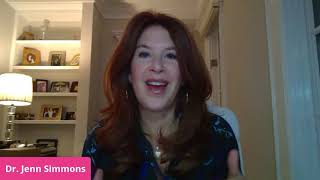
Dr. Jenn (Jen) Simmons of Real Health MD explains that breast cancer should be viewed as a symptom of underlying imbalance rather than an isolated disease. She contrasts traditional oncology—which focuses on removing tumors—with a functional medicine approach that seeks and treats root causes (inflammation, immune dysfunction, toxins, stress, sleep disruption, diet, unresolved trauma). Simmons argues that addressing these drivers can reduce recurrence risk and often leaves patients healthier after treatment. Near the end she invites viewers to a six-week, group lifestyle program run by her and a health coach, with scheduled weekly meetings and email sign-up.
Questions this video answers
Mondays at noon and Tuesdays at 7:00 PM Eastern Standard Time (weekly).
Six weeks (weekly meetings).
Email inforealhealthmd.com (spoken; transcript includes minor variants such as 'infealhealthmd.com' and 'inforeealhealthmd.com').
Chapters
Hi, there. It's Dr. Jen Simmons from Real Health MD and this is my answer to breast cancer. This is my weekly talk about whatever is relevant and meaningful. And this week, we're talking about whether or not you can be a better version of you after a breast cancer diagnosis. And I know that this is a tough thing for people to talk about, because we see breast cancer as making people sick. We don't think about being sick and getting breast cancer. And so there's a lot of unlearning that has to happen in order to be able to appreciate that maybe there can be a better version of you afterwards. And so we're gonna unpack all that this week because I think it's a really important conversation to have, and it brings about why functional medicine is so important in the resolution of breast cancer. Because the way that breast cancer is treated now is that we're treating the symptom. So when you have breast cancer and you develop a tumor that is the symptom of the disease, that is not the reason of the disease. It's not the cause of the disease. The tumor is the symptom. And our treatment paradigm is designed around the tumor. So it's removing the tumor, and it's giving chemotherapy to get rid of circulating tumor cells, and it's giving radiation in order to get rid of tumor cells. But it's not acknowledging why the cancer developed in the place. It's not intervening in that process. It's not getting rid of whatever is driving the cancer. And so if you don't deal with that, then what is to stop the cancer from coming back? And then why are you any healthier as a result of that treatment? You're not. And so the difference between the traditional medical paradigm and how it deals with breast cancer and the functional medicine paradigm is that functional medicine acknowledges that you are in crisis, the tumor has developed, and you need to get rid of the symptom. You need to get rid of the tumor, but you also need to deal with the why. You need to figure out why that tumor developed, where is the inflammation? What is driving the growth of that tumor, and deal with that. And if you deal with that, you get to a healthier place. You eliminate the reason why cancer is developing. You eliminate the inflammation, you strengthen the immune system. You make the body more capable to deal with whatever it's going to deal with in the environment, be it viruses, bacteria, fungus, toxins, and cancers, or any other diseases that result from underlying inflammation from immune challenges. So the functional medicine approach is really about reversing the disease and preventing future disease, and not only preventing breast cancer, but preventing other diseases that result from chronic underlying inflammation. So let's back up and talk about. People often say, how can I have breast cancer? I don't feel sick. And that's absolutely a factor, is that people don't understand. They don't feel sick. How could they be sick? And what you need to understand is that breast cancer doesn't make someone sick. You get breast cancer because you're already out of balance. And there are so many things that cause that imbalance. And what happens is that once you get that imbalance in your body, there becomes a chemical change. The environment becomes shifted, and it only needs to be minimally shifted for our cells to have to respond. We live in very, very tight chemical balances. So even if that, if that shift is off a little bit, your cells still need to acclimate. And one of the acclimations, one of the adaptations, if you will, is to form cancer cells. So the formation of breast cancer cells are just your normal breast cells adapting to an abnormal environment. And there are so many things that can cause that imbalance. So many things. Stress is a major one. And we are all surrounded by stress in this environment, maybe now more than ever. And we are going to see the cases of breast cancer skyrocket from these times. Because in addition to the virus, in addition to the election, in addition to the economic destruction that's gone on, like all of those things add on one another. And that stress alone, when you internalize it, as most people do, then it causes a shift in your chemistry, and as a result, your cells have to shift. It's all about survival. So stress is one of those things that can directly drive breast cancer. And when I look back at people's histories, most people, when they develop breast cancer, they've had some kind of major stressor in their life, some somewhere six months to a year before their breast cancer diagnosis. So stress is a huge, huge factor in the development of breast cancer. You're never going to get rid of stress. But the stress itself is not what's important. It's what you allow the stress to do to you that's important. And that's something that we can choose. That is something without question. We can choose. We can choose to internalize it, or we can choose to let it go and not have an impact on us. Sleep is another thing that drives chronic disease. So people who are chronic short sleepers, they are highly, highly susceptible to the development of chronic diseases like breast cancer. And what's happening is that lack of sleep or short sleep or disrupted sleep, any of that, any disordered sleep is going to have a chemical response in your body. And again, our normal cells, when forced to adapt to an abnormal environment, are going to make cancer cells. That's what the adaptation is. So having proper sleep is so very important. Your diet has a huge influence on what your chemistry is. So a diet rich in bright, colorful vegetables and a diverse diet is going to have a very different impact than a diet that is reliant on a lot of processed foods and fast foods. And I know that it's not always convenient to cook and to shop and to plan and to prep. It's not. But the bottom line is that if you're not going to do that, and if you're going to choose foods of convenience and you're going to choose non organic and things that have a lot of toxins and chemicals in them, things that have been highly altered from their original form, then you're going to pay that price in terms of a shift in your chemistry. And that chemical shift is going to cause your cells to need to ad. Everyone wants to survive. Toxins are another huge source of this shift in our health. And we are surrounded by them. They are everywhere. There are thousands and thousands and thousands of chemicals that are allowed in our food, allowed in our self care products, allowed in our cleaning products, allowed in industry, everywhere they are everywhere. They're in our food, they're on our food, we store our food in them, we cook our food in them. And, and sometimes they actually are our food. And all of those toxins have a profound effect on our body, on our chemistry, on the way that we function. And so no one can live a toxin free life. But in as much as you can to avoid toxins, to decrease your toxic burden, to help yourself get rid of toxins, that will really serve you. And trauma is another thing that really shifts our chemistry. And there are many, many different forms of trauma. And I think that so many people don't realize that unresolved trauma can have profound effects on your health many, many, many years later, many years later. And unless you deal with it, acknowledge it, give it the attention that it needs, it is going to show up somehow. It is going to show up somewhere and it can't. And it may very well show up as breast cancer. So once you have a breast cancer diagnosis, you're already sick. It's already something that's gone into play and that you are showing the signs, you are having the symptoms of imbalance but the good news is that, you know, for most people, you can use that as an opportunity, an opportunity to have better health afterwards. And better health can be achieved. It can absolutely be achieved. It can't be achieved if you continue to do what you were doing before. It can't be achieved if you continue to do what got you to the breast cancer diagnosis in the first place. Right. So that is the definition of insanity. Doing the same thing and expecting a different outcome. But a better outcome is absolutely achievable. Better health is absolutely achievable. And what I do as a functional medicine physician, what we do at Real Health MD is we help people achieve that real health after a breast cancer diagnosis. We help them to really put the pillars of wellness into their life so that they can have better health. They can get back to balance or they can get imbalance maybe for the first time in their lives. You know, now with increased C sections and people not breastfeeding and all of the chemicals that are in even the baby food, you know, we check cord blood and there are, and there are a hundred chemicals in cord blood. I mean, people are being exposed to all of these toxins before they're even born. And then we do things like, you know, we, we have a very high C section rate, not breastfeeding, all of the hand washing. Like, we're not letting our kids get exposed to dirt. And so that really compromises the immune system from the very beginning. You know, in order for our immune system to really serve, we need to educate it, we need to allow it to become strong. And when you are taking a lot of antibiotics and, you know, washing your hands constantly and using all those antibacterial things, you're not really allowing your immune system to become competent. So what I do with my patients, what we do at Real Health MD is we really help people to live their best lives. We help them be the best version of themselves they can be. We help them be the strongest versions of themselves they can be. And oftentimes they are in better health after treatment than they were before, before they had their diagnosis before, you know, and many, often, for many people, it's many, many years before, you know, we're taking them back to. We're really helping them hit the reset button and taking them back to a much, much healthier place. So I fully believe that health can be had after a breast cancer diagnosis, that you can be a better and sometimes a far better version of yourself afterwards. You just need to believe and need to want to be able to do the work. Now, this isn't for everyone. And there are some people who want to just do the standard treatments. And that's fine. That's absolutely fine. This is your life and your choice. But if you really want to be healthy, if you really want to heal, then you're. Then you're going to need to deal with the reason why you got breast cancer in the first place. And I know some people think that it's genetics, but we know very well that we can drive our genetics, we can influence our genetics. For other people, they just, you know, it's a combination of things. It's definitely multifactorial. It's not just one thing that leads to breast cancer. But I know that no matter where you are, no matter where you are in the process, no matter if you were just diagnosed, if you were treated already, if you're living with metastatic disease, your health can be improved. And we know how to help you. I am launching a group program next week. We will meet on Monday at noon and on Tuesday at 7pm and this is Eastern Standard Time. So if you're looking to join our group, all you need to do is email me at inforeealhealthmd.com and we will send you everything you need to get started. And it is going to be a weekly meeting for six weeks. It's going to be run by me and one of my health coaches, and it's going to be an entire. It's just a lifestyle program and it's designed to really give you the tools you need to not only survive, but really thrive. Thrive during cancer treatment, thrive after cancer treatment, thrive in the long run. So I know it's going to be a terrific experience. And again, all you need to do is send us an email@infealhealthmd.com and let us know that you're in. Just type I'm in. And we will be sure to send you all the literature you need and everything that you need to get started. There will be a little introduction to watch over the weekend, a little recording of. Of me that just talks about the program and what to expect over the next six weeks. There is no extreme dieting. There are no supplements. And it's just a. I would call it a gentle lesson into how to live your best life while being supported by a group of people who are just like you, who are going through the same things that you're going through and that are looking for the same things that you are. They're looking for better health, better health after breast cancer. So that is all for tonight. It was wonderful to be here with you, as always. If you want to follow me, I'm at Dr. Jenn Simmons on Instagram. We're posting every day. Obviously, you see me here on Facebook, Dr. Jenn Simmons. You can also find my website, realhealthmd.com where there's lots of resources there. My blog is there. There is a guide to hormone health. There is a guide to breast cancer. And if you want to be part of our group program, which it's going to be so awesome, just email inforeealhealthmd.com and let us know you're interested. Say amen, and we'll send you everything you need to get started. So it was great to see everyone. And I'll see you next week. Bye for now.
More from Jenn






Stem Cells, Peptides, GLP1s and the New Blueprint for Preventative Medicine with Dr. Vass



The Truth About GLP-1 Drugs and Who Should (and Shouldn’t) Take Them with Dr. Susan Brian

What 100 Days Underwater Revealed About Aging and Healing with Dr. Joseph Dituri
