From Radiation Oncologist to Holistic Healer: Dr. Katie Deming's New Approach to Cancer Care
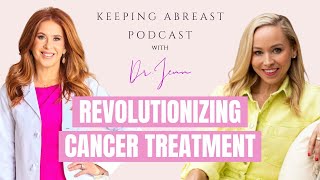
This is a recorded interview (YouTube/podcast) hosted by Jenn (Dr. Jen) Simmons with Dr. Katie Deming, a former radiation oncologist who transitioned to a holistic/conscious oncology practice after a shared-death/near-death experience. Dr. Deming describes: her 20-year radiation oncology career, the Sept 2020 shared-death experience that catalyzed change, leaving her institutional role (left July 2022) and taking ~1.5 years for study and self-healing; research she co-ran surveying ~1,400 women (including Susan Love/AOW cohort) about the term "survivor" and the harms/variation in its reception; critiques of battle/war language in cancer (physiologic harm via sympathetic activation); physiologic basis for why chronic stress impairs healing; complementary strategies to use during and after conventional therapy (visualization, movement, grounding/earthing, sunlight, PEMF, structured/"fourth phase" water concepts, ketosis research in radiation, topical calendula/Meoderm for skin, micro-dose vitamin B3 50 mg TID as proposed supportive agent); and the long-term sequelae of breast radiation (fibrosis, range-of-motion issues, increased lymphedema risk especially with node treatment, small long-term second-cancer risk ~1% observed at 15–20 years, potential heart and lung functional effects). She also announced relaunch of her podcast on Feb 13 and a free workshop on March 5 (found at katiedeming.com).
Questions this video answers
20 years (residency + 16 years in practice).
September 2020.
Left in July 2022.
Surveyed over 1,400 women (pilot with SmartPatients; final survey with Susan Love's Army of Women).
Meaderm (active calendula + aloe vera, vitamin E, hyaluronic components).
Chapters
Foreign. Welcome to this week's episode of keeping abreast with Dr. Jen. I'm your host, Dr. Jen Simmons. And I have a really, really, really special person with you today. Her story is amazing and it really resonates deeply with me because we come from the same world and we had similar paths that somehow we were put on that made us make a dramatic change in our lives. And I know from my part, it takes a tremendous amount of courage to walk away from a tribe that you've been a part of for many, many, many years and try to bridge the gap and try to keep open lines of communication between these two worlds. So first, Let me introduce Dr. Katie Deming. This is the conscious oncologist. She is a radiation oncologist. She is a health care leader, she's an innovator, she has a brilliant TEDx talk that you need to listen to and she's. I'm so grateful to have you here with me today to share your wisdom and to share your experience.
Thank you so much. It's my pleasure to be here.
Yeah, I'm really happy that we got introduced and I would first love to hear about that near death experience that took you from the world of radiation, oncology and very conventional cancer care for, for all intents and purposes to the space that you occupy now. Yeah.
So I was a radiation oncologist for 20 years. I my residency and then practiced for 16 years and was also a healthcare leader running end to end cancer services for a large healthcare organization. And I, starting in 2019, I had a feeling that I wasn't doing what I was supposed to be doing, but it didn't make any sense. You know, I had spent my whole life training to become a radiation oncologist. And my husband at the time when I told him was like, this just doesn't make sense. Why? What would you do? And I was like, I, that's the problem. I don't know, I just feel like something's off, like this is not what I'm supposed to be doing. And at the time he was like, so interesting.
Have you, have you been able to go back since then and, and think about like, what, what I, I always talk about my experience as you know, when I got my diagnosis, it was my eye opening experience. It was my ability to see past the four walls that I had surrounded myself with since medical school and residency and fellowship. And it's like I never looked outside of those walls. What made you look outside of the walls?
Well, so I wasn't looking. I was just had this feeling, you know, So I just had this sense like something's not right. I don't think this is what I'm supposed to be doing, but it literally made no sense. And so I was just kind of sitting, sitting with it. And actually I knew that I didn't want to leave. Taking care of people with cancer, that's like my whole heart. Like, I love being around people who are dealing with cancer because it's so real. And there's so much intimacy there as an oncologist to walk that path with people. So I knew I didn't want to walk away from that, but I just felt like something was off. And also, part of one of the things that was happening is I was frustrated with the way that we were caring for patients. And because I was really in charge of end to end cancer care. I saw the whole spectrum and I was watching what was happening. And I was at a meditation retreat, and this was probably a little before 2019, but I was at a meditation retreat. And they were telling this parable of the river. And if you haven't heard this one, basically they describe that there's this river or this, a village that is right next to a river. And one day the villagers found a body floating in the river. And so they rushed out, they rescued the body and put the person on dry land. And then the next day there were two people. And so the villagers, you know, rescued those two. And then every day was doubling. And then pretty soon there's like, you know, hundreds of people that they're rescuing from this river. And the village organized itself and they had rescue boats and they had pulleys, and they had all this elaborate rescue equipment, and they were doing an amazing job. And the village elders were praising them for the amazing job that they were doing. And I listened to this parable and then I was like, this is Western oncology. This is what we're doing. We are rescuing people on the river, but what the heck is happening upstream? And also, by the way, when we get them on the side of the river, how do we keep them safe? Because they don't know why they fell in. And this to me, was frustrating. And I think now in retrospect, I can see that I was seeing the holes in Western medicine and the problems, but I couldn't articulate it because I was in. In it. And then in 2020, I had just finished, so I was in, you know, leadership and had actually just been nominated to run all of cancer care for this organization at a national level. So I would have been in charge of, you know, managing prevention, screening, and full end to end cancer care for like 12 million Americans and had gone through that whole process. So I clearly was not like, you know, disconnected from my work or I was doing, you know, what I would say maybe good work, but I don't know if it's good anymore. But basically I was like really at the height of my career. And then In September of 2020, I had this experience. And actually I describe it as a near death like experience, but actually the name for it is a shared death experience, which can happen to health care professionals who are at the scene when someone transitions and they can experience what the person who is d trying experiences like the white light, the love, the whole thing, but they don't die. And I didn't know that this was a thing until after it happened to me. Now I've met other doctors who speak about this and, and talk about their experiences, but that experience, just like someone who has a near death experience. I'm sure you're familiar with Anita Moorjani, she's probably in the cancer space, one of the most well known people who speaks about this. But it really fundamentally changed me. After that experience. I knew that what I was doing was not true healing and that I needed to leave radiation oncology. But the kicker was I didn't know what the answer was. I just knew what wasn't right. And that led me on like a several year journey of figuring out how to make that shift, how to walk away without knowing what's next, and then really diving into learning everything that I could about healing. Because as you know, in western medicine, we're trained all about the pathophysiology, meaning the disease state of the organs. We learn how to take care of what's wrong, but I never learned like, what is the ideal state of the body and the ideal function of our organs. And so that's just where I started. I started researching there and basically worked my way out of. I ended up leaving my position in July of 2022. But there was a lot of fallout from that decision because my husband wasn't supportive. He didn't understand it. He thought I was kind of losing my mind or having some kind of midlife crisis, but ultimately made all those changes and moved through it and then took about a year and a half off to study and do my own healing. Because as I've learned, you know, we really need to know how to take care of ourselves and heal ourselves before we can help anyone else heal.
That is really amazing. And courageous. And when I say that we had very similar experiences. We had very similar experiences. I, for my part, and my husband truly is my biggest fan and my greatest supporter. But the year that I was leaving surgery, because I gave them a year's notice, and two years after, as I transitioned into my functional medicine practice, those are probably the three hardest years of our marriage. And it's like he wanted to support me and he wanted to believe in me, and he was also caught up between I was sick and trying to heal, and he didn't see making this major, major, major life change while I'm trying to get better and live. And it's really, really hard to do this just that alone. And then to not have your spouse on your team is. It's. It's nearly impossible. So I applaud what you did tremendously. I'm curious, when you said you took a year and a half to study, where did you study? What did you study?
Yeah, well, and this was the thing is that I looked at doing a fellowship through, like, an integrative fellowship or a functional medicine fellowship. But what was interesting is when I looked at the curriculum, and specifically I'm talking about the integrative curriculum, because that was the one that I looked into the most, what I saw was that it. In some ways, it was kind of like Western medicine extended, where they would give you very superficial, you know, teachings on these different. Let's just take, you know, herbalism and acupuncture and Ayurveda, like, but it was very superficial. And then the idea was you would know enough that you could then refer out to these other providers. And for me, I was like, no, I don't want to do that anymore. Like, I want to really understand. And I also was just kind of curious about truth, and I didn't want to be fed what was the solution. And I knew after that experience, that shared death experience, like, somehow my antenna, if for lack of a better word, was tuned that I could sense when things were true or when they weren't true. And this was kind of what happened with medicine, is that I knew what I do was do doing wasn't true. But then I could sense when things felt aligned, like, oh, this is something that resonates with me. And so I would just follow that. And I basically created my own curriculum and. And basically dug into the things that really were resonating with me and feeling like they aligned best with who I was as a healer.
That's amazing. I think about, for instance, in the world of radiology, and we know that mammograms will not pick up malignancies in 40% of women with dense breasts. We know that the more mammograms you have, the more likely you are to get breast cancer, because that radiation just builds up over time. And unlike high energy radiation, which passes through the field, low energy radiation is highly retained in the field. So women who get mammogram after mammogram, after mammogram, they actually build up. And I wonder if radiologists, when they have this epiphany, because I think eventually everyone will, when they have this epiphany, how they're going to feel about what they did before. So I kind of want to ask you, how do you feel about what you did before?
Yeah, well, I think, I think it's Maya Angelou's quote, when you know better, you do better. And I think it's really important not to, like, feel bad for what I did before, because what I was doing before was what I knew, you know, and, and honestly, what's interesting is, if anything that I've had to manage myself around is not so much being upset with myself about what I was doing. Although in, in retrospect, I had a bad feeling about radiation for a long time that I just, it made me feel uneasy. And for breast cancer, I specialized in breast and gyn. And with breast. It's really well tolerated. People do quite well and, you know, so it's not as toxic. But I did treat other kinds of cancer that were very toxic and my body knew that this was not good, but I just ignored that. Right. And so I, I don't beat myself up for what I did before. But actually one of the things that I found myself more than anything was angry for how I'd been taught and trained and that I had been trained to think that something was healing when potentially it was harmful, you know, and so, yeah, that's where. But the other thing is, is that I know better from everything that I've studied and learned now and the kind of spiritual work that I do is that I can't get into any of that. All I can do is right now what's in front of me and do the best with the information that I have. And also I have so much compassion for all the other doctors because just like us, there's so many others, they're still caught in the system and they can't see it. And actually I couldn't see it clearly until I stepped out. It was like. And there's a quote, I Think you.
Can'T see the picture when you're in the frame.
Exactly. That's exactly right.
Yeah. And I'm with you there in that. Listen, those years that I spent in surgery, I really, really believed that I was helping people. I really believed that I was doing the right thing, that I was finding a silver lining, that I was keeping up with everything that there was to keep up with, that I was doing cutting edge stuff. So I. The thing actually that I feel worse. Worse about. Probably the worst about is that when I was a surgical resident, that was the days of OxyContin, and the OxyContin reps used to come and talk to us and tell us that this was the very best thing for post operative pain. And I cannot tell you how many scripts I wrote for OxyContin. And that is actually something that does haunt me because we should have known better. Like, really, It's a non addictive narcotic. Come on. Like, we should have all known better. And it's not like we were paid or anything like that. I mean. Yes. Did the drug reps take us out to dinner? Yes, but we weren't paid. We weren't making money off of it, but we liberally used it. And I can't even imagine how many addicts I created. So that. That is one thing that haunts me. But my work as a surgeon I don't think does. So I'm completely with you. I want to shift a little and talk about the language.
You.
You talk about this all the time. What we say matters, our words matter. And there are a couple of words in particular that you have come to see in a very different light. So talk to me about what a survivor is and what that means and what that evokes.
Yeah, well, the interesting thing was I had no idea that maybe the word survivor could be harmful or that there was really varied reactions to that word. It was just a word that we used. As an oncologist, I never thought about it. And when I was in leadership, I had a patient advisory council. So I really believe that when you design any kind of care, you really need to have the people who are receiving the care at the table when you're designing it. So I had a cancer advisor, like a patient advisory council, and there were like 12 patients and family members on that council with me. And one day we were talking about the survivorship program, which, as you know, survivorship is the name that we use in healthcare to describe the care once a patient finishes active treatment and then. Then is going into Surveillance, Right. Y. And so we were just talking about that program, and one of the advisors said, I hate that word. And I was totally confused. I was like, what word? What are we.
What.
What are you talking about? And she said, survivor. And I said, tell me more. I. Tell me, why is that? And she said, well, I have stage four, and number one survivorship. This program that you're talking about, I'm never going to be in. So that's, like, upsetting to me. She said, but beyond that, the word survivor, the way that you guys use it, is used for everyone, and I'm not going to survive my cancer. Like, how is that fair? So every time you use this word, it reminds me that I'm not surviving this. And I was blown away because I was like, wow, I had never thought about that. And then slowly around the room, people started piping up and saying, you know, I never thought about that. But I also feel uncomfortable with the word, but for a different reason. Like, someone was like, had dcis. And she said, I feel like I didn't deserve it. So it was just like this.
There's a lot of guilt around that.
Yeah. Like, I don't feel like I deserved the title of survivor. And then I was just really curious about this and. And also aware that, wow, we're using language that we don't even think about it. And so I collaborated with colleagues, and we ultimately, we did a couple studies. We did one with smart patients, which at the time was a very large online patient, like, cancer community. We did the pilot study with them, and then we did our final survey with Susan Love's army of women, and basically surveyed over 1400 women, asking them how they felt about the term survivor, which other studies had done, actually. And the other studies had come saying that people feel okay with it, that it was, like, kind of neutral. But we asked, in addition to how they felt, we asked why they felt the way they did. And what was interesting is, is like, whether they felt positive or negative was kind of neutral. But when you got into the why, you just heard all of these varied responses, and 60% of those responses were negative. And really what we learned was that. And, you know, I think it's important to explain what the definition. The definition of a survivor, according to National Cancer Institute. This is back when I was researching this. Now, they've since shifted it. Actually, after our study, they've shifted it not enough, but slightly, but basic. Basically, the definition was a person is defined as a survivor from the day that they're diagnosed with cancer until the end of their life, regardless of their disease status. And as I looked at that, I was just like, it just makes zero sense. Like, why would you take a diverse. I mean, such a diverse group of people, right? We're not even talking about, like, one type of cancer. We're talking every type of cancer and then all disease states. And what we found was people's reaction to it depended on their stage. So earlier stage, like very early stage, who had, you know, easy experiences, felt guilty. Then some people felt like they liked it because it gave them power, and they felt like that they conquered something. And then some patients would say, I feel like I'm tempting fate when I use this word. Like, somehow if I say I've survived, then I'm tempting fate that it. That I haven't, and, you know, kind of like jinxing myself. And then people with stage four, there was a very strong reaction. And it makes sense. This is not an appropriate label to use for people with stage four when you're saying calling them a survivor from diagnosis all the way to end of life, regardless of whether they die of their cancer. And so for me, it just opened my eyes. I don't actually have an opinion. People often ask me, well, then what word would you use? And I say, I think it's dangerous to use one word to define any group of people. And so I. I really believe it's up to the person. If survivor resonates with you and you like it, wonderful. But if you don't, we shouldn't be just using that term as a blanket label for all of these people without asking. And so I just encourage people to get curious. And also, I don't talk about this in my TED Talk. But the other thing is identity. So identity is really important. What we create in our life is based on our identity. If you think of a person who smokes, you know, they're smoker, right? They identify with smoking. But if someone asked me if I wanted a cigarette, I'd be like, no, I don't want a cigarette. I'm a nonsmoker. You know, my identity is someone who doesn't smoke. And what we create in our life is related to our identity. And if we're anchoring people's identity to a disease, which survivor has the potential to do, it's anchoring you to the disease of the cancer. Then basically you're holding that rather than releasing it and taking on the identity of someone who is healed, which is the most powerful identity. And I don't talk about that in the TED Talk. But I think it's a really important point that whenever we use labels, we want to be aware of what is that label creating for us and what is it anchoring us to? If it's anchoring you to something that you want to create, amazing. If it's anchoring you to something you want to get rid of and you want to move past, maybe it's not such a great idea.
Yeah. Yeah. And I. I love the part of your TED Talk when you talked about, for some people, it's just a reminder of their disease. And that's what you mean by that anchoring. Right. It's just reminding them that. And they're. They're continuing to allow breast cancer to define them. And the other. The other thing that you spoke about is tempting fate.
That.
That when you talk about survivorship, you bring up that fear of recurrence. And so it's just a constant reminder to them that the other shoe could be dropping at any moment. And so, you know, our words matter, and our words matter beyond that, our words matter in how we talk about cancer, how we treat breast cancer. And I know you've spoken a lot about those words, like kill breast cancer, conquer breast cancer. Are you up for the fight against breast cancer? And I know from my part, I don't like that language at all because it puts you in a state of sympathetic tone of fight and flight, and that is the last place that you want to be, because that is not a state of healing. So I would love for everyone to hear your perspective on it because you have a lot to say on this topic.
Yeah. So I think that that was the.
Really.
The second part of my TED Talk is that after I explored the term survivor, I started to look at what is the other language that we're using in cancer that could be potentially harmful. And then I saw this battle language everywhere. And I think, you know, there's a reason why, like, I think it was Nixon who declared the war on cancer. There's a reasons why politicians use war language because it's a way to sell an idea and get people, like, you know, kind of fired up about something or, you know, get people to act. So we see it in marketing, we see it in politics. We see it in these areas where you're wanting to kind of mobilize people into action. Right.
We're on drugs. You know, this is a very common theme.
Exactly. And so it makes sense to use it when people want to evoke that kind of emotion and, like, anger and kind of. But it's manipulative Right. And so when I thought about it with healing, I'm like, why would we ever want to use that language in healing? Because just like you said, we don't want to activate people's sympathetic nervous system when we want to heal. We want to actually calm their nervous system to get them into a state of rest and digest. And so as I was looking at this data, basically, you know, someone could say, well, with cancer, maybe you do want to mobilize people to, you know, get into action. But the truth is the studies show that it doesn't do that. It has an opposite effect when you use that language with people with cancer. It, instead of motivating them, it puts the them into fear and then actually they have a harder time, you know, mobilizing. And, and especially now that I understand how healing happens in the body, it actually does the exact opposite of what we want to happen, which is a state of rest and peace, which is where healing can occur in the body. And so I think, you know, this is one of the things. And, and as I was preparing for my TED Talk, like three weeks after I was alerted that I was, you know, given the talk and I was going to be able to do it, my mom was diagnosed with cancer. And so I saw all this firsthand within my family. And I realized that some of it is people don't know what to say when someone they love is sick. And so it seems like the right thing to say, we're going to fight this and, you know, we're going to battle this together. And, and I saw this in my family and I realized that people mean well, right? So it's not coming from a place of, you know, ill intent. It's actually very well meaning. And people want their loved ones to know that they're like, by their side, but it's having a negative consequence because like we said, it can activate the sympathetic nervous system. But then the other thing is, is that it puts people who are dealing with cancer, which is already stressful, in the position of defending what they want.
Right.
Maybe they don't want to fight this in the way that the family members and somehow then there's something wrong. And this is one of the things that I saw in doing this research is like when people decide not to do something that their family or the doctors want them to do, that suddenly they're like going against and doing something wrong rather than engaging in this fight. And so it just, there's so many levels and layers to this that can be problematic that I, one of the things that's come out of this is really, I want to teach people who support persons who are dealing with cancer how to be curious and supportive and ask, like, what language is supportive for you? Like, what do you want to hear me say? And some people, they do want to fight. Some people that's like motivating, but if it's not, you don't want to be using that language. And I think the more we can be curious and really what we want our loved ones to know is that we're there, we're going to be there for them and we're going to be by their side, you know, whatever that looks like. So I think there's a lot of unpacking around this particular one of the battle language. And I think it's so ingrained in our society and it drives me crazy with all of the non profits that are, you know, directed towards cancer, specifically breast cancer, and they all use this language and what they're trying to do is they're trying to sell fundraising. So I'm like, it makes me mad when I see people selling and marketing at the expense of people who are dealing with an illness that they really want to heal and recover. And it's already hard enough and we're piling on.
Yeah. So think before you pink people. Yeah, I, I, I do want to drill down a little more because there is something happening on a physiologic level when you're in that fight this, conquer this, beat this. There is something happening on a physiologic level that prevents the very thing that you're, that you think you're setting out to do. So can you talk about that relationship and what is chemically hap, chemically happening in the body and that doesn't activate the system that you're hoping to activate?
Sure. Well, healing occurs in the body when we have a sense of peace. So peace. If you, you know, looking at David Hawkins work, who he studied consciousness, he talks about the frequency of emotions and also where illness is created, illness is created in low frequency emotions. Like when we're holding that in our body and as people are able to move up higher frequency emotions like love, joy and peace, that's where the body spontaneously does what it knows how to do, which is heal. And what happens when we are creating a sense of stress in the body through like in this example, language? What's happening is we're activating the sympathetic nervous system, which then pumps out hormones like adrenaline, norepinephrine, cortisol, and basically what that does it puts you into this state of action where all of your blood is going to your limbs and out of your digestive system and basically so that you can fight. And if you're in this state chronically, you basically are suppressing the immune system. You're also keeping your body in these low vibration frequencies and it inhibits the body from doing what it knows to do because it thinks there's a threat and it thinks that it needs to protect itself rather than resting and allowing the body to heal and use its energy. And also you're basically suppressing the immune system, you know, by having cortisol production and these stress hormones. And so physiologically it's doing the exact opposite of what we know is necessary for the body. And this is one of the things too is I think that we don't think about this in western medicine because we don't really think that the body can heal itself. Right. So we're thinking it all has to be done for you. And the body is like some like third party that's just like they're, you know, the machine holding whatever the cancer that they need to eradicate. But when I understood that that's really not at all what we are. We are healing beings. We're designed like if you cut your finger, you never have to think about it to have that heal. It'll heal on its own, but you have to create the conditions for healing. And so I think, you know, it's understanding that language, you know, all the things that we do in our life, the thoughts that we think, the, you know, the people we surround ourselves. But language as well can affect our physiology to get us out of the state that is required to let your body do what it knows to do best.
Yeah, and I, I think it's a really important point that most people can relate to when you say it under these terms. Like we really only know two states. We know fight and flight and we know rest and repair and we don't understand the nuances. So our body doesn't know the difference between a saber toothed tiger or a toxic relationship or a work deadline. Right. It's all sympathetic state or parasympathetic state. So if we are running away from a saber toothed tiger, there is absolutely no reason to have your immune system on. Right? You don't have to worry about dying from the common cold when you have a saber toothed tiger on your tail. And unfortunately our world is filled with saber toothed tigers. They're at every turn, they're in the busyness of our lives. They're in bad relationships, they're in toxins in our environment, they're in being over scheduled. They're just simply everywhere. And we have as a result, immune systems that aren't working at the capacity that they're supposed to be working at. And then we have a cancer diagnosis and then we go into this like let's fight it mode. And your immune system says, oh, another tiger. I'm going to sit by and see what happens here.
Right.
Because you only need me if you can get away from the tiger. Right. And it's just, it's that same story at the river. It's the tigers are constantly here for us and I think we have to figure out a way to get rid of those tigers. We have to figure out a way to be in that parasympathetic, heal, rest, repair state most of the time. We're meant to be there 95% of the time. And for the vast majority of us, and I am right there in that category, we are simply not. We're doing too much. Yeah.
And I think this is one of the big things that, you know, coming back to the river story and this happened in 2019 where I was really questioning what I was doing. I was seeing a breast cancer patient in follow up and she had finished radiation maybe months before and, and I had started at that time talking to my patients about you need to change, like you have to change your lifestyle. What you were doing is contributing to you being sick. So when you finish like the stuff that I've been teaching you, because what was amazing actually as a radiation oncologist is I loved that I could see patients every week. So I got to see, really know my patients and you know, we would talk about all of these things that they could be doing to setting boundaries, to creating new routines and habits that support this, you know, rest and, and you know, protecting themselves from the saber tooth hivers. And the truth is you can't get rid of all of them because they're everywhere like you said. But it's learning how to create those boundaries to choose something different. Anyway, she came back and, and she was just telling me all the things that she was doing because she's like, she has two young children and she's like, well, I had been away from my family and, and everyone had been taking care of everything. So now I have to like do twice as much to like catch up and make up for all the stuff that they took care of while I wasn't able to help. And I Literally was just like, she walked out of my office, and I just held my head, and I was like, she's just gonna fall right back in the river, like. And it's so hard because no one is talking about this, that you have to change your life. And also, the other thing is, there's no shame. It's not like someone caused their cancer. Like, I. This is one of the things that I think when we talk about emotions and, you know, people being responsible for their own health, sometimes people get afraid. Like, I'm saying, you cause your cancer. It's like, we live in an environment that is creating cancer. Basically, by 2030, the statistics is that half of us will get cancer in our lifetime. It's not something you did as an individual. It is the society that we are living in. Like you said, we're surrounded by all of these threats. And so it requires really choosing a different way of living. And it's not just taking medications. It's really looking at your whole life. Is your relationship supportive? Are the, you know, the things that you're surrounding yourself supportive? Who, you know, is your job the right fit? All these things? And also the other thing is, I. I would always tell my patients this. I'm like, cancer is an opportunity. So in Chinese, cancer is two symbols. There are two symbols. The first is danger, and the second is opportunity. And it's like, this is an opportunity. And also, you people will question your changes less after a big diagnosis. So now is the time. If you just finished treatment or you're in the middle of treatment and you want to make radical changes in your life, people are more likely to accept that than when everything is going well, because when everything's going well, like, for example, with my husband, he's like, why on earth would you change when you have everything going for you? But when someone has a cancer diagnosis, it. Everything just imploded. So, like, now let's use this opportunity to create the change, to create the life that you want. Absolutely.
I couldn't agree more. So I. I wonder if you can, because you've had such a unique life experience, and you spent all that time in conventional cancer care, and then you see things so very differently now. Can you help people who are straddling that fence, who feel compelled to stay in the conventional medical treatment paradigm, but they also want to do everything that they can to help themselves and empower their own healing path. Can you speak to, like, things that you think are complementary going along with treatment to help people to. To help people to really get the best Outcome.
Yeah, absolutely. And this is part of my practice now is helping people with conventional therapy get the best results with the fewest side effects. And I think one of the things is really, first of all, making sure that the team of doctors that you have is supportive of exploring these alternative approaches and making sure that when you're choosing doctors, you really feel comfortable with your conventional doctors and that they're open. Because I think that the relationship between someone and their doctor is really important. And if the doctor is not supportive, that can be a big roadblock. So that's the first thing. But then, you know, there are definitely things that you can do, whether it's radiation. So let's just take radiation, since that's something that I specialized in. So, you know, I just saw a patient who was starting radiation, and we talked about, okay, what are the things that you can do to get the most out of this treatment with the fewest sides effects. And so we talked about exercise. So there's studies that show women who exercise throughout either chemotherapy or radiation have better outcomes with their treatment, and so encouraging that, making sure that people are getting exercise. The other thing is that what you think about the treatment ultimately impacts your body. And we know this from studies of the placebo effect, that if you take a sugar pill and, you know, and you believe that it's going to do something for you, people have benefit from that. And so whenever someone's starting treatment, I always want to make sure that they're getting their mindset in the right framework so that they're really intending for the results that they want. So if that's someone having radiation, I'm going to get through this treatment with no problems, minimal side effects, and really focusing on, you know, how that radiation is making them healthier. And the other thing is, is that, but doing visualizations of imagining, like a light coming in through the machine and basically, you know, filling that tumor with love, or if someone else wants to do it as, like little Pacman. There's so many different things that I think that you can do, but using visualization to imagine what you want to be happening. And I think a lot of people think, you know, I want to do the conventional treatment, but then I, I, I want to have a holistic approach. And then they think of the treatment as toxic. And the truth is, if you're gonna do it, you don't want to think about it as toxic. You want to imagine it, you know, getting rid of those cells, but, but supporting your body and getting healthy. And, you know, the other thing Is, is that I talk a lot about using the elements in healing. So, you know, for my whole career, I told people to stay out of the sun because we. We treated skin cancer and stuff. And that's just not correct, right? So, you know, I tell them, get out in the sun for 20 minutes a day, you know, walk on the earth. This particular patient is lucky enough to live in Hawaii. I was like, get in your bare feet and walk on the sand, in the water. You're connecting both with the water and the sand, you know, and earthing or grounding has profound effects on the body. If someone can't do that, they live somewhere, it's cold. You could use PEMF to do that. So, and then the other thing that we haven't talked at all about but is water. So water, one of the things that I'm learning and this, this has come from the research of Gerald Pollock. And then also Tom Cowan has written a book about cancer and the new biology of water. But water occurs in three phases that we know of, right? So we think of water liquid and then solid and, and gas, right? So steam is the, you know, gas, and then ice is the sol. Water. But what Gerald Pollock's research has shown is that there's a fourth phase of water. And basically this is like a crystalline or gel like form of water. And it turns out that in our bodies, the structuring of our water into this fourth phase, or Gerald Pollock also calls it easy water, is really important for the optimal functioning of our cells. And so one of the things that I talk about with my clients and is about how to use water to support the health of the body and that you're better able it promote basically the mitochondrial function. You know, we talk all about that with cancer. But the mitochondrial proper functioning of the mitochondria supports the proper structuring of the water in our cells. And so there are things that people can be doing to structure the water in their cells. So sunlight is one of them. Grounding or earthing is another one. Infrared saunas both detoxes and stimulates this formation of structured water. But yeah, that's. That's something that recently for me, it's. It's the science, I think, that explains why in healing we need this holistic approach. Because our water is affected by the physical practices, like what we eat and getting sunlight and grounding. But then it also, our water is affected by our emotions, the water that we hold in our cells. And so as I've learned more about the science of water, it's helped me understand, really, this holistic approach to cancer is really based in science. Like, they're. That we're affecting our water with our thoughts and with our emotions. And so anyway, those are some of the things that I encourage people to do while they're having conventional therapy.
I get asked this all the time. Are there supplements that you can take during radiation to decrease the effects on normal tissue? And are there supplements or things that you can do after radiation to try to recover from the effects?
Yeah, so. Well, one of the most effective things for radiation is topically is calendula is the active ingredient in creams that will decrease redness and peeling related to radiation. And my favorite cream is Meaderm. And Meoderm is a combination of calendula that's the active ingredient, but also aloe vera and vitamin E. So the aloe vera is soothing, the vitamin E is moisturizing, and then it also has hyaluronic for penetration. But that is the best cream that I've found in my practice. So there's some other studies of using hydrocortisone, but actually it thins the skin. And I think that it. It. My experience with it was not good at all. But Meaderm people do dramatically better. So that's one thing that you can do topically. The other thing is, is that. So in terms of supplements, you know, I don't think we have a lot of data. We have like Trentol and vitamin E. Like the Trentol is pentoxy filing. You know, that's something that they say could potentially mitigate radiation damage, although my experience has not been great. But I think that some of these things, and I don't have data to say this, but what I'm learning now as I understand the water is radiation damages our water. I knew this from, like, the radiation physics. I had to take advanced radiation physics as a radiation oncologist. And the way that radiation works is that the photons, basically what the radiation is little packets of energy, they damage the water and they create free radicals. And then those free radicals then damage the DNA, or they just damage the DNA directly. So the direct effect is where they damage the DNA directly and indirect is affecting the water. But now, as I understand the water, like this proper structuring of the water in our cells, oxidation basically inhibits that, and radiation is causing oxidation. So in the cancer cells, the goal of that oxidation is to kill the cancer cells. Right. But radiation is either to the whole breast or if it's just partial breast, it's the tumor plus about a centimeter and a half of tissue. So you have normal tissue in there. So some of the things that you can be doing to structure the water. So vitamin B3 at micro dosed levels is one of the things that can support that structuring, restructuring of the water. And I know that B3 is controversial. Niacinamide for your listeners is the kind of full length of the name, but at regular doses it actually has shown to be detrimental in breast cancer. So the normal dose is 500 milligrams, but this is a micro dose at 50 milligrams three times a day. That is a really powerful way to support the normal cells and basically alleviating the damage from this oxidative stress. So that's one of the things that people could do, although there's very little data on it. Most of the studies were done in like the 60s of B3 and then that particular doctor who was doing that research was killed. So you do your own put together. But basically it's a, it's a powerful micro dose.
Is that Dr. Belchansky that you're talking about?
No, it's not. Yeah. So anyway, but micro dosing of vitamin, vitamin B3 can, it's really helpful with the, supporting the cells. And then the other advantage of that is that it helps generate white matter in the brain and so it can help with other things like neurodegenerative disease, which we're seeing a lot of in society as well.
So yeah, what about antioxidants like vitamin C, vitamin E, turmeric, coenzyme Q, alpha lipoic acid, melatonin. Are these things that are beneficial during radiation, beneficial after radiation? Both, yes.
So during radiation, your radiation oncologist is going to tell you not to do any high dose of antioxidants. Now vitamin C, if it's not liposomal, you're going to pee it out. So there's no risk associated with that. But your radiation oncologist is going to ask you not to do those things during radiation. But then afterwards for sure that helps. And again, this is the antioxidants are basically fuel for the mitochondria and the mitochondria then are responsible for structuring the water. So all of this kind of of ties back. So basically after your treatment, we want to do everything that we can to restructure things in your cells and help them function properly and eliminate the oxidative stress. So you know, in turmeric would be fine to do during treatment. So that's not something that is, you know, going to interfere and Your doctor will say that that's okay. Melatonin, I probably wouldn't do during treatment. And then no vitamin D or E, you know, during. During radiation, just with those being fat soluble. But yeah, I think afterwards, for sure, antioxidants are both anti cancer and also they're helpful for repairing the damage that's occurred with the radiation. Because it's oxidative stress that we're causing.
Yeah. And in terms of while you're getting radiation, is there any data around fasting or time restricted eating? Does that matter? Does it have any influence?
So what's interesting is actually with radiation, the data that's coming out is around ketosis. So we've known for a long time of using ketosis for people with brain tumors that it helps potentiate the effects of chemotherapy and radiation. But there is some new data coming out and I actually can't cite the studies. I know a doctor, Dr. Hahn, who. He's. Oh, gosh, he's somewhere in the Midwest. But then there's a doctor also at Duke who's doing research on this. But basically they're doing the studies right now with breast cancer of putting people who are receiving radiation for breast cancer on ketogenic diets. And the idea is that basically, you know, if the cancer is using anaerobic glycolysis rather than oxidative phosphorylation, that if we can starve the cancer by not giving it any glucose, basically it helps starve the cancer and potentiate the effects of the radiation. And those studies are ongoing at the moment. But I think that is the one thing that has the most promise with radiation.
Do you think that that has to do with, like the destabilization of cancer cells because they are not able to. To shift between using glucose as a fuel and using ketones as a. As a fuel, whereas a metabolically healthy cell can. Do you think that that's the reason?
Well, what's interesting is actually right after this interview with you, I'm interviewing Thomas, Dr. Thomas Sey freed on my podcast, Metabolic Approach.
Exactly. He's.
Exactly. He's the expert in this. And so you. What he would say is, by definition, a cancer cell is only using anaerobic glycolysis. So exactly what you said. This is the method of metabolism that they're using. They're not able to use oxidative phosphorylation. They've lost that potential. And so because they only use fermentation or anaerobic glycolysis, they can only use glucose. So since the rest of our body, you know, except for our brain, which requires glucose because the rest of our body can function on ketones. Going into a keto. Ketotic state can allow the rest of the body to keep going While you're basically starving the cancer cell and then damaging it with the radiation at the same time.
Yeah. I want to shift to the studies that have been coming out recently Showing that there. There may not be benefit for radiation in early stage breast cancer. So how do you feel about that? Do. Are you in agreement with that?
Yeah, well, I mean, to be honest, I. If I had cancer, I don't know that I would. I would probably do surgery, But I don't know that I would do radiation or chemotherapy. And because I think that, you know, when we step back and we look at you think about the river. Like, why are people falling in the river? And we're falling in the river because we have toxins in our body. Whether those are toxins from our environment, Whether those are emotional toxins, Whether those are mental toxins, all of these things. And basically it's weakening our immune system and our cells are not functioning and ultimately, you know, accumulating toxins to the point where they become. They switch to this anaerobic glycolysis and.
These causes transform cells. Cells.
Yeah, exactly. And so that the treatment that we're doing with radiation. Let's just use radiation as the example, since you're talking about this, Is that you're basically, yes, you're damaging the cancer cells, but you're also now giving something to the body that is inhibiting the immune system. So if the reason why they fell in the river Is because their immune system wasn't functioning well because of all the toxins in our environment, and now we're going to give them another toxin, and yes, we're going to kill the cancer cells, but with radiation, it's logarithmic cancer kill, which means you don't kill every last cell. It's like when you see a, you know, something that. What's the right thing that you spray on the counter or whatever Antiseptic it says kills 99.9% of the bacteria. Cancer does the same. Radiation and chemotherapy do the same thing. They have this logarithmic type cell kill so you don't get rid of every, like, last cell. And so we're killing most of the cancer cells, but then we're affecting the immune system. How are we thinking that ultimately then that's going to help the problem? And so from my perspective, that if I had an early stage breast cancer. I would do surgery just to remove it, but then I would do everything that I can to bolster my body, to heal and, and create optimal health within the cells, rather than adding more toxins. And so that's a complete flip from where I was. And basically this is why I needed to leave, is because there was part of me that knew that this wasn't the right way.
Yeah. Let's go a little further down the line and ask, what about for the later stage breast cancers, what about for the ones with nodal positivity? I mean, I don't think that the data is convincing that it does anything for survival. So how do you feel, feel about giving people a treatment that does not ultimately influence survival?
Yeah, so radiation basically reduces the risk of occurrence, but doesn't ultimately impact overall survival. But I think, to be honest, my approach is similar to what I just said, is that I. I think that supporting the body in promoting healing from within is. And I do think that, you know, I think there's a place for treatments, and it's hard to say, you know, depends on the stage that. That I might do, you know, treatment. But I. I think that I. I really. The toxicity is. Is significant. And I think also the other thing is this, is that if I were to do it, it would be in a very holistic approach of I'm doing this, but then I'm also making sure that I'm boosting my immune system, that I'm supporting my body. And then when I finish, I'm doing all the other pieces to help my body heal. And. And those things are not just physical. Right. So there's data that shows emotional trauma. You know, lead has a higher incidence of cancer, the ACE study. And so I think that one of the things is making sure if you.
Do those, unless you deal with that emotional trauma, you're going to have a higher chance. Currents.
Yes, exactly. So basically, if you're going to do it, I think you want to be doing all the other things to address the whole picture and not just relying on the treatment. Because if you're relying on the treatment, you're basically putting yourself in a state where your immune system is going to be further compromised. And yes, you're going to have fewer cancer cells to fight, but you have a less functioning immune system after all of that. And so you'd want to make sure that you're really boosting that and working to build yourself back up.
Yeah, I want to move over into informed consent, because a lot of people agree to treatments out of fear and don't really understand what the long term sequela are. And though they are explained to them and I'm not, you may have done an amazing job at informing your patients of what to expect from radiation, but I feel like most people are told about short term sequela, skin changes, possible blistering, fatigue, that kind of thing. And I don't think that there's enough talk about long term sequelae, and I think that that's very real. So can you talk about the long term sequelae of radiation? And then I want to give people hope because a lot of people, like get the horse is out of the barn, they've already done it, so they want to know what now?
Yeah, absolutely. When that's the other thing is like whatever you have done, it's, it's perfect. And now the goal is just to make sure you're supporting your body, bringing your immune system back up and dealing with all of these other issues. But so radiation for breast cancer, it's different depending on whether someone had a lumpectomy or someone has a mastectomy, whether we're treating the lymph nodes or not. You know, early stage breast cancer, the long term sequelae are pretty minimal. People have some fibrosis and tightening and I think range of motion and kind of tightness in the chest wall is the biggest thing that people describe long term. But in someone who has like chest wall radiation after a mastectomy, where we've used bolus to bring the skin dosing up, the fibrosis in the chest wall can be excruciating. It can be really challenging for people to mobilize their, you know, chest and, and, and gain regular range of motion. Of course, there's also the risk of lymphedema, and that's compounded when you have, you know, surgery and radiation. So if someone has an axillary dissection and radiation, that significantly increases the risk of lymphedema, there's a risk of second cancer. That risk is low, but it's about 1%. And that risk is usually seen at 15, you know, can be seen earlier, but generally we see it about 15 to 20 years after the radiation. And then, you know, there can be weakening of the ribs. So someone could have a rib fracture, you know, and, and from doing something minimal like coughing and, and develop a rib fracture. Now that's not common, I would say. I didn't see that many rib fractures from traditional radiation. And there's a lot of things in terms of the art of the way the radiation is done, there's definitely just like breast surgeons, there's techniques that have better results than others. And then obviously the heart. So if someone's having left sided breast cancer, radiation, the heart can be impacted by that. And it's not usually a risk of heart attacks, it's heart failure. So decreased heart function in the anterior portion of the heart and then in the lung. You know, there's a small portion of the lung that's in the radiation field and sometimes people can have, you know, cough is something we can see during the radiation. It's uncommon but about 5%. And then long term, the risk of having long term lung damage is very low. Usually with like just breast only treatment. If someone's receiving lymph node radiation, then there's more of the lung that's impacted there. But I think to your point is it is true, like I think number one, I think even if the doctors are saying all the things, it's so much to absorb. Like it's, it like if I were in a doctor's office and they were telling me, okay, this is the treatment and I'm like, okay, it's four weeks and it's this and I'm trying to wrap my head around the details and that okay, there's going to be, be a skin reaction, I need to use a cream and I need to do these things like proactively. I honestly don't even know that I have the mental capacity to really understand, you know, the long term risks. And my mind is not there. I'm like, I want to survive, I want to, you know, get past this. And so people I think don't hear everything that's said. And then when we're doing this, it's like in an hour appointment, we're like rattling off so much information that I, I think the whole way we do inform consent is problematic. You know, one, because I think people can't hear it. But then the other thing is, is that this is when I started kind of understanding how the mind works in healing and diving into kind of the placebo effect. I was like, informed consent is horrible too because then we're planting in people's minds these things that could happen. So it's almost like how do we help people understand what these risks are so they can really make decisions, good decisions for themselves and then erase it.
And not make it a self fulfilling prophecy.
Exactly. So there's so many pieces of that with informed consent.
Yeah. And for the people who have already been there, done that, how, how what is their road to recovery? How do they best heal and reverse the, the changes from radiation?
Yeah, well, I think one is that moving your body, making sure that after you finish either working with a physical therapist or if you're not having, you know, decreased range of motion, really making sure that you're using your full range of motion and moving your body and exercising so that you don't end up having fibrosis. Because that's one of the biggest, I think things that can be a quality of life issue for people. And then you know, I think it's really a holistic approach just like with anything else of the things that you can do to boost your immune system. Again that can be done with supplements. You know, basically changing your lifestyle to support the well being of your body, getting out of the busyness and the saber tooth tigers and, and all of that stuff is going to help your body heal better. And obviously dietary changes. I, you know, I think this is one thing that's very confusing in the cancer space because there's some people who are staunch like vegan is the only way. But then there's data that shows that keto and eating no carb, I mean yeah, no carbs, no vegetables is also effective. But the truth is is that there's not. The good news is there's not one size fits all. I think the big thing is reducing carbs, reducing processed foods, doing the getting rid of sugar. These are the things that are going to help decrease inflammation in your body and help it heal. And so think that's one of the things that people get confused about but really making those lifestyle changes that work best. How does your body feel better and doing those things to get back into your body and let it do what it knows how to do.
Yeah. So we've talked about so many things. This was such an amazing talk. From your journey to our words matter, to why we shouldn't be using survivor to describe this vast group of people when it is a worrisome term to a lot of people, doesn't apply to a lot of people. And just be curious about how to help the people around you, how to serve the people around you, ask them how they want to talk about their disease and how you can be most helpful to them. Getting away from this like power conqueror, beating cancer, you know this war language because it doesn't serve anyone, it keeps us in that fight or flight state and that is not the state which we can heal. And we talked about the fact that there are so many things that take away from the immune system. And you need to see cancer as an opportunity. The Chinese symbols for cancer are danger and opportunity. And this is really an opportunity to change the trajectory that you're on. We talked about all the things that are associated with, with radiation, that change in the water state. And if you are going to undergo radiation, undergo it with visualization. Imagine the outcome that you want, use the elements, get out in the sun, walk on the earth, PEMF movement. And we talked about, you know, afterwards, there are antioxidants that can be helpful, but mostly what you need to do afterwards is change. You need to change from the person that you were before to the person that fosters health. So moving your body, making sure you're doing range of motion, but have a holistic approach that boosts your immunity, change your lifestyle, change the way that you eat, change the way that you think so that your body can heal. Don't miss anything.
No, that's perfect. Yeah. We talked about a lot.
We did. This was an amazing talk. Where can people find you? Yeah.
So I'm relaunching my podcast on February 13th that's Born to Heal with Dr. Katie Deming. And also you can find me@katiedeming.com and on March 5th, I'm hosting a free workshop on the foundations of healing and specifically really talking about the science of the water and how that supports the function optimal function of our cells. And you can find that information@katiedeming.com that's awesome.
And we'll make sure to put that in the show. Notes. This was so great to talk to you and I, I know that the audience is really going to resonate with everything that you had to say. I, I applaud your bravery from walking away from a very big job and a very esteemed position to a place where it had to have felt lonely. And I know plenty of people probably thought that you lost your mind and there may even be people saying that you're a quack. So I'm going to say welcome to the club and this is a great place to be. And, you know, ultimately we know that we're going to come down on the right side of history and we just have to look at our colleagues with a lot of love and acceptance and grace because they have not had the amazing opportunity that we have had to have our blinders taken off. So God willing, they will. And in the meantime, God bless you. Keep doing the good work.
Thank you. It's my pleasure. Thank you for having me.
It is. Dr. Jen, if you liked this episode, please, please share it with a friend. Someone who needs to hear it, someone who wants to hear it. Someone who is looking to drive their health and make this world a better place. You can also join my Facebook group, keeping abreast with Dr. Jen to ask questions and to have more discussion. And I will see you next week. It's Dr. Jen. Bye for now. Sam.
More from Jenn






Stem Cells, Peptides, GLP1s and the New Blueprint for Preventative Medicine with Dr. Vass



The Truth About GLP-1 Drugs and Who Should (and Shouldn’t) Take Them with Dr. Susan Brian

What 100 Days Underwater Revealed About Aging and Healing with Dr. Joseph Dituri
