Jenn Simmons MD is Talking Toxins with Tarah Baiman of Bold Wellness
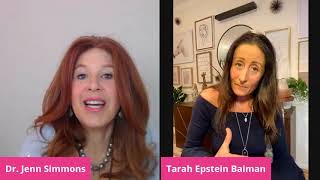
Jenn Simmons, MD and Tarah Baiman discuss toxins hiding in everyday products like personal care items and household cleaners. They explain how to swap them for safer alternatives and why reducing toxic exposure matters for your health.
Chapters
Foreign.
So here we are in my Ask the Doctor session, and I'm so excited for tonight's conversation because I've just really wanted, you know, we've. Tara and I have sat down on multiple, multiple occasions and just, we can go on and on and on and on and talk about this. So, you know, from my perspective, toxins are unavoidable. They're just around us, everywhere. And the amount of toxins that we ask our body to deal with on a daily basis is astounding. And, you know, everything that comes in you, either through your skin or you're breathing it in, or you're ingesting it, which actually turns out that's where we get most of our toxins. Every single toxin that enters into your body, your body has to figure out what to do with that. So the more we ask, the more that your body is literally just overwhelmed with toxic burden. It's just burden, burden, burden. And the thing is, the poison is in the dose. So some people are going to be able to tolerate more toxin than others. Other people are going to be more sensitive and start to manifest these symptoms that, quite frankly, when we were growing up, they were virtually unheard of.
Right.
But for the boy in the plastic bubble, like, I didn't know people who couldn't tolerate foods. I didn't know people with chemical sensitivities. I didn't know people with unexplained rashes and their hair is falling out. They have the scales, they have this. And I just didn't know this growing up.
It didn't happen. I don't think any of us did.
Yeah. So I'm so, so, so excited to have Tara Bayman.
I'm happy to be here.
I want you to. I want you to tell your story because I want to. I want people to know who you are and where you came from, how you came to this enlightened place. And then I really want to get into, like, what you think the major touch points are. Like, where are most of us getting our toxins? How can we all gently come around to a cleaner, greener place? Like, how. What can we do as humble people who, you know, we all have our stuff. Women love their cosmetics. Women, you know, they. Everyone wants their house clean now. Right? We're very focused on.
Especially now. Yes.
Especially now. We don't want germs. But those. Those cleaners that we're using aren't just killing germs.
Right.
They're. They're killing us, too.
Yes. They're creating.
How do we not make the solution worse than the problem.
Right?
So take us through, like, the gentle method of, like, how do. How do we get to that clean, green place without it hurting too much?
So a lot of big questions. Start off with your big questions. So many big questions. Okay, so let me start by saying that what brought me to this point, and I think what brings everybody to the point of wanting to be on sort of a more. More of a wellness journey, if you will, is, you know, so individualistic. Right. So what got me to the point of really wanting to get all of the toxins and the fragrance and the synthetics out of my home as much as I possibly could. Because, Jen, like you've already pointed out, it's truly impossible to get everything out. So I think that when you go with that mentality of, you know, you have to be absolute and everything is black and white, you know, you get into murky waters. So for me personally, about two years ago, I decided that I really wanted to wean myself off of some of the pharmaceuticals that I was taking. I had had, like, a lifelong romance, if you will, with sleeping pills in particular. I had a lot of trau in my background. Some people know me, some people don't, but a lot of backstory as to why I developed such a sleeping problem. And for probably the better part of 25, 30 years, I was artificially sleeping. You know, I was taking Ambien, I was taking whatever I could to try to get myself calmed down enough to go to sleep. And so for me, I wanted to get off of those medications. Um, so the avenue into a more natural lifestyle for me started in that vein. Um, so what I needed to do, as anybody who has more of an addictive personality like I do, is that you have to replace an addiction with something else. So for me, it was getting rid of. Clearing out sort of my medicine cabinet. Yes. And right here's mine.
I got rid of my perfume.
Oh, my. You did? That was the hardest I'm going to get to. I'm going to try to take you through the sequence of how I think it works best, not necessarily how I did it, because I made some mistakes in the road, as we always do.
When we're forging a path. We always do.
Exactly. And I didn't really know, Jen, that I was on this path, full fledged journey, until I really started. So for me to sort of replace these pharmaceuticals, I had to look at a lot of different things. And I want to be clear about the fact that I'm incredibly passionate about getting rid of the toxins and replacing them with essential oils, which is nothing more than the pure essential oils, is nothing more than DNA from plants. Okay. And I'll talk a little bit more about the distinctions between what makes an essential oil pure and what makes an essential oil a therapeutic grade oil that you can pick up at Whole Foods, because that's a big problem.
Can you, can you take people through kind of that road, that bridge that you walked over? Like, what, what did you, what other things did you try that didn't work?
Right?
And how did you, how did you figure your way to essential oils? And that.
Definitely, it's a great question. I mean, I think that, you know, for me, I have always been somebody who's been somewhat health conscious. I've always been concerned about what I'm eating and I've always been somebody who has exercised a lot. So a lot of times people think about those things as being what makes us healthy. You know, what I didn't really understand, obviously was that I might have been eating pretty well and I was exercising more than regularly, probably more than a lot of people, but I was taking in a lot of toxins that obviously weren't making my body function at its optimal ability. So in terms of the things that I tried and everything has to be a wholesome, more holistic approach. You can't just say, I'm going to start using essential oils in my diffuser by getting rid of kicking all of the candles and so forth to the curb. You have to employ a, a wholesome attitude towards it. So for me, it was really about starting to do more intentional living, if you will, like more meditation, more yoga, something like that, where I was always somebody who was an endurance athlete, I was a runner. I needed that like adrenaline kick. And if I wasn't sweating my butt off, I didn't think I was really working my body and it didn't give me, you know, what I thought was that endorphin kick. So for me, it was also just employing a lot more self care and self love and taking care of myself in a way that I thought before. And I think a lot of us suffer from this, right? Which is that I thought years ago if I went to have acupuncture, which has helped me a lot as well, or I went for a massage, or I went for a raindrop technique, which is when you use essential oils in a massage setting, I felt, oh my God, like that's how selfish of me. And what, how, you know, just I felt like that was indulgence.
You indulgent and you didn't deserve that.
I wasn't sure I deserved it. And the big question, as you know, as we're both mothers, right, and working is, is when you're, you know, you've got a few balls in the air, and when one is up, another one is down. So what is being sacrificed? What's being compromised for me to spend that time on myself? And the answer was usually my children, which gave me a tremendous amount of guilt. Right. That mom guilt is tough to deal with.
Yeah.
Yeah. So. So. So again, so my entry into using essential oils was purely based on my desire to get better sleep and to regulate my emotions. And then it went from there. Once I realized that, first of all, I had to take it back a step. I had to realize that the essential oils that I started out using, I didn't understand, were not pure oils. I was getting my oils off of Amazon. I was getting them at Whole Foods, the kiosks at the mall. I thought, you know, one brand of essential oil, what's, you know, what's the difference?
You know, I have a very similar thing where people say, you know, why do I have to use supplements from this brand or this brand? And it's because there is a great divide between what you're buying in the supermarket or even what you're buying at Whole Foods compared to the pharmaceutical grade supplements that most of us use or the medical foods. There's a big difference between reishi mushroom, which is growing on decaying wood in the Far east, and mushroom, which is grown on grain.
Right? Right.
Yes. There is a great divide in product quality and therefore the efficacy. Right.
100%. So I was using what I thought were pure essential oils because when you look at the label, it says therapeutic grade. You know, it has those kind of greenwashing, if you will. It has those. Those buzzwords that make you think that you're buying something that you're really not. It's being brainwashed a little bit, but, you know, but I will throw a lot of that responsibility back on myself to say that I wasn't reading the labels, you know, as succinctly as I read them now. So when I started, I really started using, you know, impure oils that are. And just so that everybody understands in our country, the FDA doesn't regulate essential oils. And so what that means, though, is that all that needs to be in a bottle of essential oil in order for you to slap on the grade that says therapeutic grade. And to use the words essential oils here is 5% pure oil. So when you have a bottle of.
I never knew that 5%.
So bottle of frankincense, which is a frankincense, is a really popular oil. A lot of people know this oil. So at Whole Foods, you see frankincense, and you see, okay, it's like 1799 for the frankincense. And when you really understand what is involved, Jan, in distilling pure frankincense resin from Somalia, you would know there is no way that that can be pure frankincense. But most of us don't know that. Right? So we, we buy that. And then the other 95% is really whatever the heck they want it to be. It's synthetic fragrance. It's really no different than plugging like a Glade plugin in or spraying Febreze. It's the same thing.
So I think we should start there because that's. That's a word that people need to know, right? Fragrance.
Yeah, that's the buzzword. Yes.
What does it mean when you see fragrance on something? Because for me, that's like alarm. Alarm, alarm.
It means run. And it means that it's the, it's the, it's the net that they're allowed to put whatever they want in and call it fragrance. It's really what protects these companies from, you know, people who are even studying the labels a little bit. Because you see the word fragrance and a lot of people confuse the word fragrance with aroma or smell when it's really. It's a more scientific word in, in the labeling industry. It's used scientifically.
Yeah. To hide toxins.
Exactly.
I mean, 100% certain. If it says fragrance, that's a cover up for toxins.
Absolutely. Absolutely.
You definitely want to steer clear of anything with fragrance.
You want to run from anything that says fragrance. And you also, I mean, there's so many of these ingredients that are not easily identifiable to somebody like me. You know, Jen, as a doctor, you might know a little bit more about what that means when it says the words that you can't even understand. So most of us will not really do the research on those words. We'll just say, oh, okay. So, you know, it's a loaded thing. The fragrance is the easiest word, though, for us to look at. If we're looking at our labels and, and we see the word fragrance, we know it's not good. We know that there's something synthetic, something artificial. But there's other. There are products out there that don't necessarily have fragrance that are still not good. For us.
But fragrance in particular, it's going to be something that's fat soluble, which means that it's easily going to absorb into our skin, which means easily going to absorb into our bloodstream, and it's easily going to have an effect on us.
Yep.
So, you know, that's one, that's one easy thing that you can know to steer clear of. And that includes your. Your parfum.
Oh, boy. This is. And, and this is one of the things that I have learned along the way here is, is that had I, if I could go back and do this over again, the way that I would have approached ditching and switching my products. Because one of the things that is really troublesome about this is that most people get so overwhelmed because they think that they have to. Once they start to understand how many products that they're using, like the average, the average American is. I'm going to just do it as an American thing because the worldwide numbers are different. But the average American is using about 300 chemicals on their body a day. And 80 of them come like in the morning. They come. The shower. It's all about what we're putting on our body.
The average woman puts 151 chemicals on her skin before she even leaves the house in the morning. Not that any of us are leaving the house.
Right.
We're still taking a shower. And so we're still using our shampoo, we're using our conditioner, we're using whatever we're using to wash our body. We're using whatever we're using to moisturize our body. We're brushing our teeth, we're washing our face, we're, you know, I mean, there's a lot of stuff that we are encountering even if we're not leaving the house 100%. So what do you think? Where, where do you think most people, like, have the I can't do it hang up.
What do you think when it. I think that the, that I can't do it is when it becomes so absolute, when you start to realize that it's, you know, it's in our dryer sheets, it's on our. In our dish soap, it's in our dishwashing liquid, which is what we're putting in our dishwasher is going on our plates. What we're eating off our plates is going in our mouths. What were our, our. The, the. The dryer sheets are our linens, our towels, our clothing are going on our body, which is where it's obviously being absorbed through the cell Skin. So all of those toxins, the whatever household cleaner is being used on the floors, if you're walking around in your bare feet, they're going into your feet, they're going into your dog's paws.
Your dogs. You know so much.
Exactly. We have to protect the dogs. So I think that, you know that the way to approach this, that I think is the most successful is when you approach it the way that you would remodeling a home or something where very few people remodel or redecorate their home all at once. Right. They pick something. They say, let's do the family room first and approach it that way. So for me, what I think helps people to do this is to pick a starting point. Pick a place that is the least emotional to you. Okay, so. And for people, there's going to be. That's going to be a different answer. For me, it was the laundry room. To me, I was like, I hate to do laundry. I'm not that emotional about it. If it disappeared tomorrow, I would be thrilled. So it was so easy for me to say, the dryer sheets are terrible. Throw out the dryer sheets. And also. And also, Jen, from a financial perspective, not expensive to ditch two or three, what is. You have two or three things of bounce in them. So throw them out. You know what you mean? Like, that's not worth it to me. When you start getting to makeup and perfume and things like that, it's. It becomes more emotional a. Because you have more invested financially.
I'm not telling people to throw them out. I'm telling people to not renew. Right? Yeah. If you just bought a whole box of bounce.
Exactly.
It just got delivered by Amazon, like, okay, use your balance. If you've been using, like, it's done. You don't.
You don't need that 100%.
And so. Okay, so that's a great place that people can start. They can start by getting rid of dryer sheets. But what about laundry detergent?
It's another big problem. Laundry detergent is another big problem. But I'll tell you what's different about laundry detergent than the dryer sheets. People have a connection usually to their laundry detergent, as crazy as that sounds. Because a lot of what makes us buy the products that we buy, and it's a. It's familiarity, it's convenience. And a lot of it, believe it or not, is nostalgic because women are usually the ones who are buying laundry detergent. I'm not stereotyping, but that's often the way that it is. And. And a lot of us don't even think about it. But if. If I. And along the way that I've been doing this, and I say to people, so you're really connected to X, Y, and Z brand. Why is that? You know, to understand what it is that they're connected to. Why are they afraid to let that go? Well, you know, my mom used that. This is what we used growing up. So sometimes, you know, and that's a little bit harder to break because it's a familiar smell. And the thing about smell. That's exactly. Yeah.
This. The smell is. Is definitely the connection. But remember that most of the time, the product that you're using now barely resembles.
But that's true.
Barely resembles the product that your mother used on your laundry.
That's true. It's true. But. But the brand name still carries weight with some people. They might say, I. I'm gonna buy Glad Hefty Bags or something like that. Now why am I buying that? There's a lot of different reasons, but one of them may be because I remember my dad putting those garbage bags, filling our big, you know, our huge. In the garage full of that.
So habit. I get it.
I get it.
So what about. What about your dishwashing liquid?
Yeah, I mean, that's. Dishwashing liquid is the same thing because it's. It's a different way of actually, you know, the dishwashing liquid we're actually ingesting, Right. Because it's on our. It's on our forks and on our knives. It's on our plates.
I am gotten to the point where, like, I can't even stand the smell of. We still have, like, two pods left. I had. I had this huge box. Yep, we have two pods left. I can't even stand the smell. Like, I'm washing all of my dishes by hand now.
Yeah, well, that's what that. Interestingly, that's what happens.
Dishwasher.
Yeah. That's what happens, though, is that once you start to become sensitive and when you start ditching the toxins little by little, you'll find that when you're out and about, although none of us really are anymore, but now when I walk into another friend's home that is full of all of the conventional products, I literally am like, my head feels like it's going to blow up because it never used to feel that way, but because I'm desensitized now that when I'm around it, it gives me headaches. So, you know, you. It's you develop, it's like anything around all the time.
Yeah, absolutely. I'm going to, I'm going to go to the next thing. Candles.
Yeah. God, yeah. A tough one.
I think the people don't, I don't think that there is a general understanding of how toxic those candles off, those candles are. They're giving off these volatile gases and we're, we're just inhaling them and they're all fat soluble, so they're going right into our bloodstream. Yeah. So actually for me, candles was a hard ditch because that was part of my meditation routine. And it wasn't until I think I took a course last year and learned of how toxic candles were. And so it took me a while to kind of, I didn't really learn about oils until recently and didn't get into, into that whole thing until, until just recently. So now, you know, I, I, I diffuse my oils while I'm meditating. But yeah, there are a lot of people burning a lot of candles out there.
Yes. Yeah, the candles are a tough one.
My Shabbos candles.
Yeah. What's that?
I still burn my Shabbos.
Oh yeah, that's different. And there are a few, few, you know, soy based, essential oil based candles that are safe to burn. But the other, but the candles that we're buying at anthropology or the candles that were the Yankee candles or the nest candles, there's so many beautiful, like even high grade candles out there that are we, we, the, the ironic part is that when we're burning them, we're trying to normally relax, set a tone, set the environment, usually do some sort of self care. Exactly what you're talking about. You would burn a candle while you're meditating is a way to try to take care of yourself. But really, you know, the candles are all this toxic. They're literally emitting carcinogens that are very much like secondhand smoke if somebody was in the next room having a cigarette. So I think that candles are really difficult for people. Until, and I was a candle burner too. I was obsessed with the anthropology Capri candle and the volcano candle. Like I had my things too. But when you, when you start diffusing pure oils that you really like, you never want to burn one of those candles again. Like it really. And, and with the diffuser recipes, you're actually able to, you know, create recipes to make smells that, that smell. It's like if somebody says to me, Tara, I love the volcano candle from anthropology, I say, okay, you know, three drops of Northern Lights, Black spruce, three Drops that we actually had the ability to recreate it, a natural smell. And truthfully, it's way more. It's way more fun. You become like a little alchemist and. And the environment, and it's safer. You know, certainly with burning candles, you have to worry about, you know, the candle tipping over with the diffusing oils. You know, there's just not a comparison. But yes, it's a very prevalent issue and something that a lot of people, you know, need to ditch little by little. You know, they got to go from 10 candles in their house to nine to eight, to seven, to six, to five. And. And maybe, you know what, Jen? Like, maybe some people just need to hold on to that one special candle. And I think that that's what we were talking about, about being absolute, you know, that it's the ability to say, you can never burn a scented candle again. You know, maybe that's too much for some people.
Yeah, no, and we talk about this all the time. It's not about what you do, you know, it's about what you do mostly, not about what you do rarely.
Exactly.
No. If that's a rare part of your life, then it's a rare part of your life. And fine. I mean, no one's going to be perfect. You can't be perfect.
Exactly. Exactly.
Okay, So I. I think of household cleaners, the sprays that we spray all over our house to clean. That. That smell that people associate with clean. I associate that smell with death.
Yes.
Like, that to me is the smell of the stuff that they used to use in the hospital between cases. And that, to me, is the smell of death. Like, I just, I. It's not the smell of life to me. And so I couldn't wait to ditch my household cleaners.
Yeah.
And you showed me how easy it was. So can you, like, take people through that recipe because it's so easy.
Sure. I mean, and that was actually one of the easier. I'm not talking about whether the people who are emotionally attached to their cleaners, which I'm sure that exists. I personally was not.
I mean, there are people who love that smell of bleach, but tell you that is toxic.
Yes. Incredibly, incredibly toxic. But, yeah, one of the things that I also loved about the ditch and switch, which for me works really well because for me, like, the simpler it is, the better it is. But I basically have. I just. I have this right here. It's called thieves, which is pure 100% essential oils. There's nothing else in this. Like, it's water. Essential oils. And what you do is it's a brand that, that is just across the board. It's the only brand that I have in our house. And what you do is that it comes as a concentrate and you basically just use. Because it's so potent, you use one capful and then you, and you. And with essential oil based products you always use glass because pure essential oils will break down conventional plastic. So that's another way that you know the difference between whether essential oils or if you ever see essential oils in plastic. It's not, it can't, it can't be. They can't be like that. So that. So yeah. So it's just a 16 ounce bottle, one capful of thieves. And then you fill it with water. And the other thing, Jen, that people think about when they think about switching their products is they think, well, how expensive is this going to be? You know, is this expensive to go better? Yeah. And the truth is it's actually they.
Want to know the cost.
Exactly.
They should, of course. But at least to me and my family this has been much more economical because I'm using one thing to do all of these different things with. I don't have 20 products anymore.
Exactly. That's what's amazing is that there's no. And the other thing that's super comforting that at least when my kids were young, my kids are 10 and 15 now. But when my kids were younger I had all of my kitchen, you know, gear with those. Remember those magnetic locks that used to be on, you know, whatever. However you had, you had to lock your kitchen cabinets because you were worried that your kids crawling on the ground. We're going to start drinking something that was in there where with, with a plant based cleaner. The worst thing that happens is you drink water. Like that's the worst thing. There is no calling the poison control center. There's none of that.
So toxic. They're not toxic.
Yeah, exactly. And one.
So let's get into like personal cosmetics and, and personal care items. So one of my favorite patients said I can't work with you because you're going to make me change my toothpaste. I talking about using essential oils to brush your teeth. And I'm not giving up my toothpaste.
Right, right.
The funny thing is, I mean I held, I held my toothpaste for a long time. You held to yours too.
I did, I did.
And now I switched to the thieves and I put a little orange oil on top.
Yep.
I, I like look forward to brushing my teeth. I can't wait.
Right.
Delicious.
Yeah. No, exactly. It's like, it's like anything that, you know, what we. What gives us anxiety is more about releasing something that we are used to as opposed to really and truly being afraid of the other thing.
Yeah. Fear of change. Fear of change. And people are afraid that they're. They're not going to like it or that it's not going to be as effective. I told you, I think my teeth are whiter than urban.
Yeah.
And all that I'm doing differently is using. Is using the toothpaste and a little orange oil on top.
Right? Exactly. Well, and that's. And there's. And there's so many, you know, hundreds and thousands of those kind of little hacks, which is that. That orange oil is a natural. It's a natural teeth brightener. So you're not. You, you know, you're not putting chemicals on there, which, of course, is going to strip the, you know, strip the enamel from your teeth. So, you know, there's a lot of those kind of things that, you know, that, that it. When you're first starting with this, you don't really realize that, but then kind of the world opens up to you and you look back on it and say, oh, my God. Like, you know, I. I've been at people's houses before where I wanted to, like, you know, freshen my mouth, and I didn't have my toothpaste or whatever, and I would just take a little toothpaste or something. You know, it doesn't even taste familiar to me anymore. So it's. But it's, it's. It's not unlike, you know, changing the way that you eat, changing your diet or something that you feel or. I used to be a Diet Coke drinker. I used to love Diet Coke. I loved it. I loved it. And I couldn't imagine how I was going to live without it. Now I don't even desire it anymore because I've just weaned myself off and found something that I like so much more. So it's no different than anything like that.
Yeah. What about other kind of personal care items? Where, where else do you see red flags in terms of what people are using?
Yeah, I mean, you know, anything in the shower. Right. Like our bath gel, our shampoo, our conditioner. I'm a big consumer. I love a good bath gel. You know, like, I love to get in the shower and just, you know, really, it's like, it's. It's like your, Your perfume before your perfume or just whatever. I Didn't love a strong scent, but I definitely love the feeling of a good bath gel. So certainly in the shower, certainly in the tub, in terms of people who like to use bath bombs and things.
Like that, you know, especially because you're soaking, right?
You're soaking and you're on and off. It's just absorbing, absorbing. So anything that you're doing washing wise, obviously your shampoo, your conditioner, you know, a big area for women is obviously makeup, which when you're getting to makeup and you're getting to perfume now, you're getting into serious emotional attachments. And that for me, that was the hardest. The perfume was my last to go because that was fragrance. I. What I loved. No, Our Species by Frederick Malay.
Oh, I don't even know that one.
I don't know. And that's part of why I loved it, is that it wasn't like a popular. Like very few people ever were around me and said, oh, you're wearing X, Y and Z. It was a really distinct smell. I loved it. I was obsessed with it. It was. I still hold on to the bottle like, I will never let go of the bottle, but I don't use it anymore. I've found a way to replace. I've. I've, you know, I tinker with all different recipes and trying to make the perfume that I really love. So. But, yeah, but when you start getting into that, it's. It's really difficult. And I think that the biggest thing, Jen, is, is that when you tell somebody you can't wear your perfume anymore because it's full of toxins, what you have to be able to do is provide them with what they can replace that with.
And do you. Do you find that you can always fine a fragrance for someone or does it. Is that, Is that a whole process in itself?
Yeah, it's definitely a process because essential oils are it. It is like a perfume in the sense in a fragrance, in the sense that when I smell a bottle of Valor and you smell a bottle of Valor, you put a little bit on your wrist. If I smell the Valor on your wrist, it's going to smell a little bit different than it's smells on mine. Because my Valor. Yeah, because of our.
So happy.
Just our body chemistry, I think that, that, you know, I mean, I've had a lot of success in being able to guide people towards blends that I think that they would enjoy based upon knowing, you know, they have to experiment first. Some people love a citrus scent, some people love a floral scent. Some people love A tree scent. You know, I, I tend to gravitate more towards the natural, like a northern lights, black spruce, the sacred mountains, something that's from the outside bringing it inside. Some people don't like that. They want, like, they want a geranium or they want rose. They want something, you know, very floral. And it's definitely, you know, an art to try to match fragrances. But there are people out there sort of, you know, more with more experience than I have with regard to that taking. So, like, I can, I can say to you, if you give me a candle that you love, I can say, okay, well, here, here's a great diffuser recipe that will match, will come close to that. It's not going to smell the same because it doesn't have the, it doesn't have the toxins. And the same thing with the perfume where there's lots of people who say, if you say I, I wear Chanel number five, something like that, you know, well, here are some essential oils that you can use to try to get to that scent. But I think the most important thing, though, is that when you wean yourself off of the fragrance and the, and the toxins, your nose actually changes. So you will start to smell things differently in general.
And I, I, I actually think that you're gonna feel better, associate feeling better with the scent. So I'll tell you that I loved my perfume.
Loved my perfume.
I wore since I used to wear anit gutal od Adrian and I wore. Well, I changed on a couple of the Creed scents.
Yes. I used to like.
And the second I would put on my perfume, I would get a headache.
Yeah.
And the headache would last for probably close to an hour. And I would sneeze and be miserable. But I loved my scent. So it was like this crazy conflict inside it. I don't have any of it anymore. Now when I get ready for my TV thing or this or that, I, I feel a little naked without my perfume. I still don't feel fully dressed.
Yeah.
But that's why, like, when you made me that roller of valor.
Yeah.
It has now substituted for my perfume. Like, now put that on and I feel ready.
Right, right. That's great.
So, and your it, your tastes do change. Because I didn't mind at first. It definitely wasn't love at first sight. Your taste change, actually, when, when they've brought you to or, or they're met with a place of wellness. So now you, now I equate that smell with wellness.
That's exactly right. That's exactly Right. Yeah.
All right. So cosmetics are so tough because we love our lipsticks, we love our foundation. We, you know, we love these things.
Yep.
So you know how to even go about it? I mean, there are some, I, I know some, my girls have been wearing the same shade for as long as they've been putting on lipstick.
Yeah, yeah. It's a tough one. I mean, makeup is tough. I mean, it's probably, you know, a toss up which is more difficult, makeup or perfume. And again, I mean, the way that I always recommend that people do this is slowly and, and, and always start with your least emotional product. So, you know, and for everybody that's different. Right. For me, I was willing to let go of my mascara first because I had never really found a mascara that I was like so obsessed with. I was always trying. So I was like, well, this is an easy ditch, you know, So I think that that's a great way to go about it is little by little, like, find what you're least attached to and then move, you know, move outward from there. And I think that once you start to realize that and Jen, now you know this the, because everybody's been so aware for the last, I don't know, seven, eight years or so that people are really aware of the toxins that in their, in their makeup. There are some, but there are some amazing companies out there putting out really, like really high quality non toxic makeup, which, which wasn't really the case a while ago.
Yeah, I agree with you. I agree with you. And there are places that are doing it really well and making, making great products. Yeah. And I mean, I know for me, like, I was a very on brand kind of person and I had a bunch of Chanel makeup and Nars and a bunch of Trish, you know, and I have not gotten rid of all of it yet because I, it's hard to throw away thousands of dollars of products. It just is.
Yeah.
But I, I have made a deal with myself that as I buy anew, I throw out an old.
That's the best, that's the best way to do it. And like you said, I think, Jan, if there's, if there's a particular product that you are just, it just makes you feel the way that you want to feel. So you hold on to that. None of us can be perfect. So you hold on to two or three products. As far as I'm concerned, getting rid of, if you, if everybody got rid of the products that they weren't emotional about, but they just buy out of habit, we're already doing better. We're already doing better. So I think that, like, holding ourselves to this standard of perfection is where things fall apart, Right? That's where, like diets go off. Everybody goes off the bandwagon because I.
Ate a cookie, I might as well eat the whole, Right?
Exactly. Where's the Haagen Dazs? I had a cookie. Forget about it. I'm completely done. So I think that like, you know, by keeping us in check about doing, you know, doing things in moderation and then once we are, once we realize that we're feeling better. Not just. I think that the bridge to that is understanding that we intellectually, all of us understand that the toxins are bad for us, but what we really need for the motivation to continue doing it. Or what I needed was to feel better. It wasn't just about what I know I shouldn't be doing it, that I was feeling better, my kids were feeling better, we were healthier, we were empowered to make healthier decisions. So I think that it's more than just doing the right thing, so to speak. It's actually reaping the benefits from doing that that will make the process of ditching more and more products a lot easier.
Agreed. So I think my takeaways for people are the first thing everyone needs to do is stop drinking out of plastic water bottles. It's bad for you, it's bad for the environment. Like get drink out of a glass at home and get a glass or a metal bottle to walk around with and just, you gotta ditch the plastic water bottles. And in terms of your cleaning products and stuff that you're. Stuff that really affects you every day, like the, the dishwashing pods are just, just a nightmare. I mean, they're melting plastic, putting it on. Like the dishwashing pods are a nightmare.
Yeah.
And then, you know, pare down as much as you can. I love your idea to get rid of the dryer sheets.
Right.
You don't need them. I understand.
And some people will say, I'm just going to do this real quick. Some people will say, but I get rid of the dryer sheets, we what do I do? It's this simple. It's wool dryer balls. And, and all you do is you. Well, this is a brand new bag, so I won't spend the time to open it. But they're just wool dryer balls. And all you do is you just drop a few essential oils on. And the great thing about that is you make your laundry smell the way that you want it to smell. Like, I don't know who loves the smell of fabric softener? I mean, I guess we get used to it, but it's. It's an easy. An inexpensive substitution.
Yeah. So how. If. If someone wants to do the ditch and switch with you, how do they. How do you go about doing that?
Well, I mean, I think that, you know, I. What I try to do, Jen, is I try to meet people where they are. Okay. Because some people will come to me and say, oh, my God, I had no idea. And I just went, I just want to do the whole thing. Like, they just. They're intense people. They just want to switch everything out. And I meet them there and I say, okay, let's do it. Some people will come to me and say, I need to do this really slowly. And I always try to say, you know, I try to make it a very individualized, customized program for them to say, these are the products that are going to be the most difficult for me. These are the ones I don't care about. So, you know, and that's. That's what I really love about doing this, is being able to help people. And you'd be shocked to know how many people don't really know the sense that they love so much because what they're so used to smelling is actually the chemicals.
Yeah. Yeah. I mean, I think it's. I think it's a great learning experience. And I love the fact that you're meeting people where they are and everyone gets to go at a pace that's comfortable for them.
Yes, yes.
Right. So some people are like, just. Just, you know, give it to me quick, doc. Just pull the band aid off.
Yes, exactly.
Let's do it.
Exactly.
Other people are. Are very afraid of change. And either way, like, even if you do something little, it has big benefit down the road. Like, absolutely anything that you can get rid of from your routine, any toxin that you can eliminate from. From regularly entering your system, it's gonna lighten your load. And that's really. That's really what it's about. Right. We can't avoid the toxins. We can't.
We can't.
We want to get them in there. But lightening your load is so important.
Well, and I think that another thing, Jen, that we didn't touch on, that I'll touch on real quickly, that I definitely do with people who come to me for help. Where do they start? What do they use? How do they replace it, what's the cost benefit, etc. Is that an important part to look at? Is what are people bringing to the table in terms of their personal health issues? Right. For people who have asthma already or there's. There's a lot of things to consider or people who are sensitive to a certain kind of smell. So I think that, you know, all of this is not as simple as just switch your products out. It's. It really becomes. And what you really want. What I really want for anybody that I'm working with, this is for them to really, really love that they made the switch and just feel better and actually just really enjoy it, as opposed to saying something like, okay, I did it, but I still really miss this.
Yeah. Yeah. And so. But that's the person that, you know, that, you know, maybe you have to slow down. Maybe you have to allow them to. To keep more of their stuff and. And just slowly replace over time. And, you know, the way that. The way that I did it. And I'm not pretending that this works for everyone.
Right.
But I just. As I used my stuff up, the next. The next thing I did was replace it with something that's green so that, you know, it didn't all happen at once. And it took quite some time. And I'm still not totally green, but I'm a thousand times better than I was.
Absolutely.
It's a process. You have to be super forgiving to yourself, but it's incredibly rewarding because you feel so good.
Now.
One runs the dishwasher, and they put one of those pods in. I can't eat off of that plate.
I know.
It's disgusting to me.
Yes. That's what happens.
No, you really. The reward comes in. You feel better. Do you have a kid there?
I do. I have my daughter here.
Oh, come on and say hi.
Watch that. Watch the cord. Come say hi. Say hi. There's Izzy. Hi.
The world wants to see you.
We're live on Facebook.
That usually gets them an exit.
Lucy is. Lucy is outside, and Thomas is in my room. I had to separate the dogs so we didn't have chaos.
No worries.
You can go get one of the dogs. Just don't let them in here. Okay.
This. This has been an awesome conversation. Really awesome. And if people want to leave comments and if I'll go back through, I'll answer questions.
Absolutely.
I'm gonna post. I'm gonna repost this on Facebook and my page and yours, and then we can give people ways to get in touch with you if they want to do.
Absolutely. I'll drop. I'll drop the information into one of the comments.
Awesome. Awesome. Because I think that it's just such a great thing, and you're such a wealth of information, and I know you've had a great impact on my.
Thank you, Jen.
And it's been so wonderful to work with you. And I actually want to say that, you know, I'm. I wanted to develop something to give as a gift to all of my clients, and I came to you, and what you created for them is just amazing. Like, I'm so excited to send the first box out to them because, I mean, it just. It's just a box of, like, feel good. Oh.
And I. And I love doing it. I'm so appreciative of you giving me the opportunity to do it because it's putting the products into the hands of people who can actually use them and not be, you know, skittish about them thinking that they're. That they're getting rid of their old products. So, you know, it was. It's my pleasure.
Yeah. So, Tara, it was so, so great talking to you tonight, and. And I look forward to many, many more conversations, because I think that this is just something that is so needed for people, and yet they're so uncomfortable. They don't know where to start. It's so overwhelming. And you know how to make it really easy for people, so.
Well, thank you. Thank you. We'll talk again, for sure.
Absolutely. Good night, everyone. It was great to see. See you and see you here same time next week.
Thanks, Jen. Thank you. Bye.
More from Jenn






Stem Cells, Peptides, GLP1s and the New Blueprint for Preventative Medicine with Dr. Vass



The Truth About GLP-1 Drugs and Who Should (and Shouldn’t) Take Them with Dr. Susan Brian

What 100 Days Underwater Revealed About Aging and Healing with Dr. Joseph Dituri
