My Answer to Breast Cancer- Everyday Uses of Essential Oils with Aromatherapist Tarah Baiman
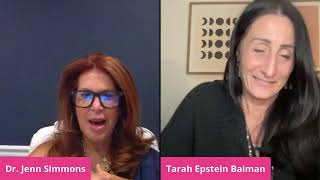
A recorded interview (YouTube video) between Dr. Jenn Simmons and aromatherapist Tarah Baiman about practical uses of essential oils for sleep, home detoxification, and common ailments. Baiman shares personal recovery-driven wellness journey, offers specific oil recommendations and usage methods (diffusers, topical blends, pillow sprays), and suggests household swaps (wool dryer balls, non-toxic detergents, avoid scented candles/pods). The conversation emphasizes habit/routine, product quality, and staged home detox.
Chapters
Hello, hello, hello.
It's Dr. Jen Simmons from Rural Health, Maryland. It's Tuesday night at 7:00 and it's time for my answer to breast cancer. And I'm super excited for the discussion that we're going to have tonight because I have my dear friend Tara Bayman from Bold Wellness and she's here to talk to us about essential oils one on one. Right. All of those things that you can get rid of in your ecosystem, in your atmosphere, and substitute with some. Something that's really going to drive health because that's what it's about at the end of the day.
Right.
We're trying to get rid of the toxins.
Absolutely.
And put in those things that heal us, that nourish us, that, that, that support us and promote us.
Absolutely.
So thank you so much for being here tonight.
Oh, you know, it's always my pleasure, Jen.
So I know that you're not exactly in the essential oils game anymore, but you are a certified aromatherapist.
I am 100% still in. I will always be in the essential oil game in the sense that I love my oils, I will always use my oils and I do help people with aromatherapy services. So even though I'm not necessarily. The only thing that's changed, Jen, is that I'm not promoting one particular brand. That's the only thing that's changed. So my love for essential oils is consistent and persistent. You know, that is there and I really believe in the lifestyle, you know what I mean? It was not a fad, it wasn't, it was a business opportunity that I certainly took advantage of at the time. That kind of just no longer served me for where I was personally. But that decision was not driven by product, you know, not at all.
This whole aromatherapy thing, it really changed your life.
Completely changed my life.
Can you talk to us about that a little bit?
It is one of those things that a lot of people think it's kind of hokey pokey because there is the essential oil world. I mean, it's become much more mainstream, much more commercial, much more sort of accepted certainly now than it was many years ago. Right. When people thought it was hocus pocus, like that you were mixing things up or you were kind of just concocting or that it was very kind of anti pharma or some sort of a statement that was being made by using essential oils, where now it's very, very accepted by sort of everybody and you're not necessarily making a statement, statement on where you stand on other issues. Because you use essential oils.
Yeah.
So, you know, for me personally, obviously, like, I had, you know, sort of an incredible trajectory of kind of a wellness journey, looking to really just radically change my life. I'm somebody who's like, really proudly in recovery, you know, that seven years sober. And that was part of my journey, Right. Was getting rid of obviously something that was destroying my life. Right. Like a horrible, horrible addiction. Um, the first thing that I had to do was kind of kick that to the curb. Right. To get the help that I needed to heal that problem. But it didn't stop there. And you have to basically, you know, replace people like me who really do have addictive personalities. Right. Like you can get rid of a certain substance, if you will, or get rid of a certain activity or behavior, but when we're being honest, typically we replace that with something else.
So everyone. That's not unique to you, right?
Absolutely not.
People who are addicted are addicted and they just trade in the harmful addictions for hopefully less harmful addictions.
Exactly.
But there's always something, always something. People are just hyper focused in that space.
Exactly, exactly. So for me, it really was a shift in. In sort of the way that I wanted to live my life. And being sort of that addictive personality is. I went from saying, I'm not. Not only am I not going to be destructive anymore, self destructive, if you will, but I'm going to be like this healthy wellness warrior, right. I'm going to go to the other extreme. And I loved the whole idea of sort of putting things together. I like the idea of creating things from things. So for me, that was also like very cathartic and therapeutic for me to be kind of mixing these blends. For some people, it might be like cooking in the kitchen. Right. That's therapeutic. It makes them feel good. It makes them. There's something beautiful at the end that you, you know, it's the journey as opposed to just necessarily the end result. So, you know, for me, the essential oil game was, you know, it really started with trying to address something as simple as sleep. Okay. Sleep was such a horrible, horrible problem for me my whole life. I was a very bad sleeper. Terrible insomnia. Some people know my story, right? That I had a lot of trauma in my childhood. Ptsd. Things that really contributed to me not being a good sleeper at night. And so what did I do in my past life was had a few glasses of wine, had an Ambien sleep, something to basically kind of just knock me out. And, you know, once that whole phase of my Life, you know, that I said goodbye to, happened. I wanted to find a natural solution to sleep. So the essential oils, that's where I really started using them, started diffusing oils, started using them topically, and really, really saw, like, amazing benefits from them. And that's kind of how that little essential oil business of mine, if you will, started. Because I didn't set out to have an ess oil business. Like my background. I was a literary agent in New York. I had nothing to do with anything like this. You know what I mean? It was just sort of my story. But what started to happen was people like you, friends of mine, would say to me, tara, like, we know that you have, like, kicked this alcohol addiction. We know that you're. You know that you're sober. We know that. But this is different. Like, you're different. It's not because there are people who kick an addiction and they can. They still exhibit some of the same patterns or behaviors that the per. That people were used to seeing. And I was getting a lot of the. You seem totally, totally different. Like, what are you doing? And I started telling people I started using these oils. I started doing acupuncture. I started, you know, different healing modalities. And it wasn't. I'm not. I would be insincere if I said it was all about essential oils. Essential oils were just a part of my sort of healing journey. But they. They're a really important part of it and something that's like a daily part of my life that I think, I think everybody can benefit from them. You don't have to have a story, like a transformation story. There doesn't have to be some dark, deep hole and that the oils are pulling you out of them. Everybody can benefit from them.
Yeah. So I completely agree with you. Like, you don't have to be at that extreme. But there are so many people, I think, that don't realize where they are in the spectrum. Like, I think that we have normalized a lot of behaviors, a lot of reliance on prescriptive medications or even over the counter medications. I think we normalize them. And I think that people don't realize how not normal, how abnormal that is. So, for instance, I think the numbers are staggering. Like, 75 million Americans suffer from insomnia. That's a huge number. So I know that you struggled with sleep in the past as a result of the PTSD and all that this sleep disturbance that that causes, and that you were using sleep aids for a period of time. And there are innumerable People reliant on sleep aids to go to sleep every single night. And even the people that think that they're taking a Tylenol PM and that's okay, don't realize that artificial sleep is artificial sleep. So it doesn't. You're not getting restorative sleep if your sleep comes at the. Along with a pharmacy.
Absolutely, absolutely.
So can you talk a little bit about some natural solutions that may help people? Because I talk to them about sleep hygiene, about, you know, wearing your blue light glasses, the sun goes down and dimming the lights, cooling your bedroom, making the bedroom a welcome sleep environment, you know, decreasing the amount of blue light that you expose yourself to after dark. But some people still need more. And I think that aromatherapy is this wonderful tool in your toolbox.
Absolutely. I mean, and I. It's like anything is that, you know, once you. It becomes part of your habit. Right. It becomes part of my ritual that like, I can't. I'm so automatic now in terms of, you know, putting oils in the diffuser. And I think that, you know, what's really important is to implement some sort of routine that fits the person and basically do that consistently over and over and over again. Right. That's how we get success. And no matter what we're doing is through consistency. So for me, you know, some of it also is a mindset thing, Jen, where I think there's a lot of people who don't necessarily take the time that they need to decompress or to treat themselves like they need to treat themselves to say, I'm going to take that 20 minutes to just involve myself in self care. Whether that's like giving yourself a facial, whether that is laying in a bathtub and, you know, lighting some candles, no fragrance in the candles, but whatever it is, you know, creating that space to allow yourself to kind of decompress, for me has become so incredibly important. And obviously we all know those triggers of, you know, the phone and the messaging and being able to turn that stuff off is so incredibly important. Not only from a perspective of what does the light do, but just in terms of like the level of anxiety, if you will, that it promotes in me. Do you know, like, I know what I think about.
And quite frankly, everyone, right, we all get that cortisol surge the second we hear that we have a message or an email or this or that and that.
And that's also key too, right, Is figuring out what your time zones are in terms of turning off those. What is it the do not disturb part of your Phone. And, you know, for me, I. Because I do deal. I do have a lot of general anxiety, right? I do. So, like, in terms of, you know, and my son now is driving. Like, there's all kinds of things, right, that just contribute to a normal person's anxiety. But, like, I need to know. So for me personally, even if my kids are in their own bedrooms, I can't go to sleep at night without knowing that. What if something was wrong, that one of my kids were needed to call me from their room? Do you know what I'm saying? Like, I can't. I don't have the ability to physically turn my ringer off because that gives me a lot of anxiety. So I go into my settings, right, and make it so that the two people who can reach me through the breakthrough thing, you know, the two people numbers will ring are those. So it's. It's about setting the boundaries and creating the space for yourself to understand that, you know, without a good night's sleep. And I absolutely understand this. And I don't get a great night's sleep every single night. Do you know what I mean? I'm not sitting here saying, oh, my God, I sleep like a baby every single night. No, of course I don't. But most nights I do. Most nights I sleep really well now. And that's a huge difference because I definitely do take that time for myself at the end of the night. And, you know, I make sure that. And everybody does their own things, but I. I need to sleep in something that makes me feel good. I need to, you know, to do my moisturizing routine with my face. I need my sheets to be clean. Like, you know, there's a lot of things, like getting into a messy bed. Some people can do that. For me, I. I can't function like that. Like, I couldn't do that. So I think. Makes me feel much more relaxed and the lighting and. But in terms of the aromatherapy, you know, smell is so incredibly powerful, Jen, for memory, okay? So it is really important to. When you are kind of concocting oil blends and so forth for yourself, it's really important that you select oils that not only for sleep, that have that quality in them where there is sort of that natural sedative, okay. But also important that you're picking oils that. That don't trigger you in certain ways. Because just. Because I might say to you, oh, everybody knows about lavender, right? Everybody knows that that's like the calming oil. Well, what happens if you have some association that's negative with lavender that happened in your childhood, somebody smelled like lavender that really scared you or something like that. Lavender is then not good for you. So you have to kind of work around not just saying, well, this is a calming oil or this is a common combination, but what makes you as a person feel a certain way.
Yeah. So I completely agree with you. And actually, for many years, I hated the smell of lavender. Like it again?
Yeah, yeah.
It's only since I got rid of some of the really, truly toxic stuff in my environment that I became open to all of these, like, natural aromas.
Yes.
And I think that that is really part of the process for a lot of people is getting over abandoning those things that they associate with a positive memory, that fragrance that has association with a positive memory, even though that fragrance is so bad for them.
Yeah, absolutely. Well, that, I mean, that we're getting into sort of what. What toxins are in our home. Right. And something that's a whole other beast in terms of. And that was obviously, you know, very much a part of my journey as well. Like my essential oil stuff started with sleep, but then it consumed everything, right. Then it became about, oh my God. And I didn't really know things like dryer sheets and dishwasher pods and that I had millions of chemicals in my home. And here I was thinking that I was so clean, right? That my house always was clean, clean and smelled clean, but it was full of things that were probably making us all sick. Do you know what I mean? Unfortunately, knock on wood, that none of my kids, that we didn't have any obvious signs of that kind of toxic exposure, but we definitely, definitely had it. So, you know, reducing the toxic low. We can't get everything out. You know, Jen, you and I have had this conversation so many times, right? We can't get everything out, but we have to do our best to get certain things out. And just like we were talking about the smells and things that are very generational, not only are we doing something that's good for our present day life, but we're doing something positive for the next generation. Because I know my kids right now, you know, they're still thinking, mom's a little crazy with these oils. You know what I mean? Mom's a little like, you know, other parents are just throwing the bounce in and I'm. Or other parents are telling their kids to be using Purell relentlessly and I won't let my kids do that. Do you know what I'm saying? So, like, I do.
I know exactly what you're saying, I have that stuff to contend with before we leave sleep. So if you're not a lavender fan, right, Tell us about other oils that people can. Can use to promote relaxation at night.
Okay. I mean, there's so many. First of all, let me just say this. Before I start rattling off the names of certain oils, let me just say that there is a massive distinction between the kinds of oils that you're using. Okay?
I want you to. I want you to talk about that, because those are everywhere. Right?
That is so important. Even this is. This is what's even more important now, because when oils weren't mainstream like they are now, Jen, actually, the quality of oils that were being used were much better. Because now what's happened, The FDA does not regulate essential oils in our country. Right? So the only requirement for essential oils to be sold in Whole Foods, in Target, in any of those sort of big box places where you can just grab them off of the shelf is 5% essential oil, 5% pure oil. What is the other 95%? It's filler. And it's basically no better than spraying Febreze around your house or Lysol or any of those other things. And it's incredibly misleading because most of the public actually, when they're pulling that essential oil thing off the shelf, they actually think they're making a smarter decision for their family. Like, they think that it's a smarter thing to do. So knowing which brands to use, knowing what to stay away from is so incredibly important. In terms of brands, there's. There's. There's many good brands out there. I still love and trust Young Living essential oils. I am no longer promoting the business. I have nothing to gain from Young Living, which should even more so reinforce the fact that I love their oils. You know what I mean? I think that they're amazing. Doterra makes a great essential oil. There are some good oils from Revive. There's also a bunch of independent essential oil companies that are reputable and good in terms of essential oils that have that sedative quality. Essential oils that are typically known for sleep are things, of course, of course. Lavender. Young Living has a brand that's called Dream Catcher, which is phenomenal. It's basically a blend. I love Dreamcatcher. Roman Chamomile is a wonderful sleep sedative aid. Frankincense is phenomenal. But I will say this, Jen. There's a lot of, like, oils that I could rattle off. But. But what relaxes one person doesn't necessarily relax another. Do you know what I mean, so some people, you know, orange. All of the studies show that orange diffusing orange is very good for depression. That that's something that is, promotes positivity, that people tend to feel better around the smell of orange. So, you know, there's all kinds of studies. And I was in your camp with the, with the lavender. I was not somebody who really loved lavender. There was something about it that kind of triggered me. And then I started to use it in combination with other oils, and then I started to get used to it. So I still don't ever do straight up lavender in my diffuser. That's not something that I do. But what I do do is my wool dryer balls. Like my laundry. I'm obsessed with the way that my laundry and my sheets smell when they have, when they're with lavender. But I don't necessarily love it sort of diffusing. So there's a lot of other ways that you can use. So the, the, the, the sleeping part is you can have a diffuser, which I. Actually, there's one behind me right here, if you can see that. So you can.
Wow, that one's beautiful, Tara.
This, this has, this is just a macrame cover that's on top of that desert mist diffuser. So it's, it's. Yeah. So you can diffuse the oils. You can use them topically. Okay. That is the way that. Both ways. So I always use them both ways. There's an essential oil called vetiver, which is phenomenal for sleep. You know, lots, lots of good sleep oils. You can put your essential oils in your bath. There's a lot of different ways that you can use it. Another fabulous thing to do with essential oils for sleep is if you use just plain glass bottles that you can get from Amazon. You always use glass with real essential oils, never plastic, because they'll break it down. And you can make like pillow sprays. So, you know, 10 drops of essential oils with a little bit of distilled water and witch hazel. And you spray these on your pillows. Like this is the practice that I'm talking about, Jen, when I say, you know, taking those extra minutes for yourself to really indulge in self care is restorative for your sleep, you know, so it takes a little bit of time to have all these things. But what's more important to us than good sleep?
You know what I mean?
I always sleep as being. That's the gas that's in my car, right? If I don't sleep, there's no gas in my car. For the next day.
Absolutely. If you're not sleeping, you're not healing. And we all need to hit the reset button every single night. And you know, think about, think about the nights. I mean, unfortunately my dog just had surgery very early on Friday morning and that was the first time in a long time actually since I was a surgeon that I didn't, I didn't sleep all night long. You know how you feel when you don't, when you don't sleep. I mean, you feel like garbage the next day. And, and so I think about these people that come to me after 20 years of only sleeping three or four hours every night. They say, like, I have energy, but I just don't know why I'm sick. And it's just astounding to me that people don't connect sleep and health. Yeah, well, have health without sleep.
We do that like too, in society too, as well with things like how many times did people kind of. When I was younger, I remember the badge of honor of like pulling an all nighter, right? Like, oh, I did it. I pulled the all nighter. Like that was college stuff. I know, but there's, and also this sort of undercurrent of if you're successful or you're working that you're not resting. Right. This idea of the hustle, you know, we've kind of glamorized and glorified the hustle.
We value waking activities, right? So that's what we value in this society. And whole concept of I'll sleep when I'm dead and that kind of thing. Not, not thinking that, well, that day is going to come a lot sooner than you planned on, right? No, and not that I knew Steve Jobs, but my guess is that he didn't sleep very much.
And.
You know, these tragic things happen to people and from an outsider's viewpoint, like, oh, they did everything right. And so many of those people, so many of those high achievers, they're short sleepers.
And you know, there's a cost to that, right?
You have to pay the tab. And that's what it is.
Well, and the other thing too, Jenny, with your health that I notice about, you know, the whole essential oil and just kind of a more holistic kind of functional medicine approach, if you will, to. About your health. Right? About taking care of yourself, is that people perceive it to be, A, it's more time consuming and B, it's more expensive. Right. Because especially for people, it's a lot easier to go to the pharmacy, fill a prescription and take a pill and swallow it than it is to do all of the things that I'm talking about doing. Right? Like my pre nighttime routine of 20 to 30 minutes of basically just getting myself ready for bed. Right. Completely different than what I used to do, which was basically just like get into my bedroom, you know, pop the Ambien and wait for it to hit me and go to bed. You know what I'm saying? That's easier way to do it. So I think that, that when people are making the decision about, you know, maybe changing the lifestyle a little bit and not everybody has to be, you know, it doesn't have to be an extreme thing. It can be just by starting implementing a warm bath before you go to bed at night. It doesn't have to be this whole extensive self care routine. But if it gets to that, it really is so much better. One of the things that I find is that even if I sleep fewer hours now, my sleep is better and I am more restored than certainly I was when I was taking for sure.
Because that all those sedatives and hypnotics and all of those things that you think are sleep aids are actually preventing you from cycling through sleep the way that we need to cycle through sleep. So you never really hit the restorative phase.
Yes.
And so, you know, it's like.
It.
Is artificial sleep in every sense of the word. It's artificial sleep.
Yep.
Okay, So I know we spent a lot of time on sleep and it's super important, but I want to make sure that we, that we hit the other points because sleep is definitely one of those places where people are using a lot of over the counter pharmaceuticals. I know acid blockers are a really big one too. People don't understand the importance of acid in the system. It has very, very real purpose. If you're a lot of acid indigestion, you need to go see a functional medicine doctor and figure out why instead of taking an acid blocker for occasional indigestion. Do you have, do you have something that you use?
Yeah, I do. I mean, so I use something again, it is a young living blend and it's called Digis D I G I Z E. And it is one of those oils that you would never want to get near the diffuser because it is like something funky. You know what I mean? It does. It doesn't smell good, but the thing about it is you can do it a few different ways. You can rub it on topically. So basically you would, you would you never put an essential oil directly on your skin without Knowing what the ramifications are in terms of your skin sensitivity. So usually if you're putting essential oil on your skin, you should use coconut oil as a carrier. Okay. So you would put it on and then you can rub it.
What you mean by that is you blend it.
You blend it exactly. You blend it with. With the coconut oil. And then the other thing that you can do is you can take.
So are you using that like, right on your abdomen, over your stomach and your liver, and right up.
And you can use it right up and through here. You can also put it in one of those vegetable capsules so that you don't taste it and swallow it. And you can also literally put it in. I know people who put it in hot water, like, they make it like a tea that they can drink it. You know what I mean? For me, I can't really drink it, and I'm not somebody who has a lot of stomach issues. I just never have. But I'll tell you something. When this was about, I don't know, maybe about three years ago or so now, my son, who was an incredible, incredible skeptic of all of this, you know what I mean? Like, literally was like rolling his eyes at me left and right. He was 13 or something at the time, so he was probably rolling.
Embarrassing.
He was probably rolling his eyes at me anyway. But he was particularly rolling his eyes about. About this. And there was a night where he had horrible, horrible, like, diarrhea and just like, you know, just his stomach was a wreck. And I said, yes, we're going to do this digest. And this was very early into my oil thing, so I wasn't even positive what it was going to do at that time, you know what I mean? But I was using every opportunity I could find to experiment to see if they were really working. He literally, from that night on has completely believed in the power of these oils because he literally was like, in 30 minutes, he was. Felt like completely normal again. And he had had. Was battling some stomach stuff, you know what I mean? More so than anything else had really helped him. So it was, you know, and again, like, for those of you who don't really understand exactly what essential oils are, right, they're nothing more than the DNA of plants. When they're real essential oils, it's plants. So because some people are like, oh, they're so scared to either use it internally or, you know, you do have to be careful about the brand. But that, that's what. That's what they're intended to do, you know, it's intended to heal. And I really believe, like you believe, Jen, that, like, that our body wants to heal naturally. Our body really doesn't want. I'm not saying that there's not a place for modern medicine. Of course there is. Of course. Of course, of course.
But I mean, if I break my leg, I'm not going to put essential oils on it.
Exactly.
The best.
Exactly.
Like there. There is a place for. We have an amazing acute care system, Right?
Absolutely.
So if you have a broken leg or you're in a trauma or, you know, that kind of thing, or God forbid, you're having a heart attack, like, you need modern medicine 100%. However, the modern medicine is not. Is not for everything. And it. It, at best with chronic disease, it perpetuates it or can often make it worse. Yep. And so. So I absolutely agree with you that there's a time and a place. And I listen, it served me very well and it got me to where I am today. So I do not disparage modern medicine. I think that it's time for a revamp. Right. We need to kind of stop and take stock and look around and be honest and introspective about what's working and what isn't.
Right.
Because there's a lot that's not. There's a lot that's really, really broken. And the only people that it's working for are, like, the pharmaceutical companies and the hospitals and. And I. We need. We need. We need the pharmaceutical companies and we need the hospitals. But not for everything that they're currently being used for.
Absolutely. Absolutely.
Okay, so what about, like, simple things? Like, I know people that literally take Tylenol just about every day or. Or they're taking, you know, Advil three or four times a week because they have a headache or this ache or that ache.
Yeah. And I used to do that. I used to do that, too. I didn't know any better. Like, when I had a headache, I was always. And I. I was biased towards Advil. Why? This goes back to the conversations that you and I have had about other things in other products in our home as to, like, why are you partial to that particular laundry detergent? Or why are you partial to that? It was because I have a memory of my grandmother telling me all of the time when something was bothering me to have an Advil. Have an Advil. Like, where did she get that? I don't know. But then it perpetuates, you know, so in my brain, have an Advil. And of course, I started Doing that to my kids, too, right? Have an Advil. Have an Advil. And that's what ends up happening. We just keep repeating and repeating. So at this point, you know, in terms of what I do for simple things like headaches, peppermint oil is amazing. For headaches, all you need to do is rub some. I mean, there are some specialized kind of focused headache things. Like Young Living has a product called M Grain, which is specifically designed obviously more for migraine kind of headaches. But if you just roll peppermint right on your temples, you will get a lot of relief. The other thing for a headache with peppermint that works, like, unbelievable. It might sound crazy, but is if you take. If you have a headache and you take peppermint right on the. On the thumb and you push it to the top of the roof of your mouth and just hold it there for about 15 seconds, you get a lot of relief from that. So, you know, peppermint oil, I mean, Jen, you would know better than me, like, what is in Advil and Tylenol that, you know, that suppresses the symptoms, but that is also doing other things, and that's what you have to be concerned about, right? So when you. If you can get relief from peppermint oil, right? From an essential oil, that's a plant, like, why would you not do that.
Over taking something without destroying the lining of your gut and causing intestinal permeability, which is what happens every single time you take an Advil. So every single time you take an Advil, you're contributing to the downfall of your gut. People don't think about that partially because they just don't want to feel the pain anymore.
Right? It's the short side.
We all understand that, right? None of us want to feel the pain. And part of it is because they just don't know, because the loud, prevailing narrative is take a pill.
Yeah, right.
We were all raised in the take a pill generation. And even still in my house, my husband, who was so incredibly supportive of me, but he was raised during the take a pill generation, and it is firmly ingrained in his head. It's so hard to unlearn. It's hard to unbreak, because that is.
That's the conditioning. And that's like, one of the things that I feel so strongly about, about that generational breaking the pattern. Because I think that even though my kids are somewhat, you know, sometimes still rolling their eyes at me, like, if they have a friend over who has an ailment or some sort of an issue, like, I'M not rubbing Neosporin on them. I'm doing, like, my oil concoctions and my. And my daughter's like, mom, please don't do that. Do you know what I mean? Like, please don't do that. Like, just give her the Neosporin. Do you know what I'm saying? Like, but. But I believe that hopefully when it comes time for her to have her children, that instead of saying that, take a pill, you know, she might be grabbing for that kind of stuff, the. The essential oil. So I think it's important to be the person in. In all parts of my life that can help break patterns. Right. That can help, but it is. It is hard to go against the grain of somebody who isn't intentionally trying to roadblock you. It's just their way of. That's how they were raised, were ingrained like that.
Yeah, yeah, it's true. All right, so as we get to the end, I just want to make sure that we have covered the, like, major do this, not that things, right? And I am gonna. This is such good stuff that I am gonna put out a little summary of this in the comments, just so people have it. But I know that. Well, what do you do for, like, little. Like, I. I pulled a muscle or I had a big workout yesterday. Like, is. There is. Do you have a recovery?
Sure. I mean, there are, again, for things like, you know, strains and muscle pains and stuff like that. There are essential oils. There's a particular oil that I love for that. It's called Pan Away. And if you actually. If you mix an oil called Pan Away with peppermint, you're going to get that Peppermint is going to give you that really kind of tingly feeling. Because what people are interested in, Jen, is is that immediate, like, the sensation that something is working, even if it's not really working. Right. Even if it's just. So peppermint is something that works.
It is working. And it does give a sensation of warmth.
Yes.
And that warmth is causing vascular dilation, which is delivering more healing products to the area. So that. That perception that you feel it is working.
Yes. Yes.
No.
What I was speaking to, and I didn't say it well, was, was people who are using things looking for things like Ben Gay and Icy Hot that are full of chemicals that. That stuff feels like it's working. And it does provide that relief, but it's also doing some other things. Another thing that I think helps incredibly, incredibly well with anything that's kind of muscle pain, any kind of just discomfort Is like that CBD hemp market. Okay. But that's something that, you know, we could do a whole show about about.
CBD and probably should. And probably should because that's something that.
I've gotten, you know, more, and you know, this sort of more increasingly invested in and into as an incredible, incredible healing mechanism. So I really believe that there are a lot of creams that can help medicinally with the hemp and the CBD for all of those muscle pains and stuff like that. Not necessarily essential oil, which is what we're talking about, but in that same.
Sort of holistic approach oil, for all intents and purposes, that is an essential oil. Right. That's the essential oil of the hemp plant.
Absolutely.
And the hemp plant happens to have true, tremendous anti inflammatory properties.
Absolutely. So when we start talking about pain and inflammation and because Panaway is not really going to control, Pan Away is going to give you that relief. But the hemp and the CBD is what's really going to provide some healing.
Yep, agreed. Okay, so quickly take me like through the home and let's talk about like the most toxic things and how to get rid of them, what to swap them out for.
Sure. Okay. So it can be so overwhelming, right. When you think about sort of detoxing your home to a lot of people, that's like, oh, if I'm going to detox my life, right. It's too hard. It's like swallowing the elephant. So the easiest way to approach any kind of sort of detox situation is by doing it in stages. I never recommend I help people detox their homes. I, I never recommend that they do it all at once. Unless they basically want to like take a vacation and say, I want to come home from my vacation and have the entire house detoxed. I've done that probably two times, you know what I mean? Because there's just not that many people who are willing to walk away and say, you just do it all. I want to come back, like full home makeover kind of thing. But some of the most toxic, obvious things in our home that we should get rid of that are relatively easy. I'm not talking about emotionally easy, but easy to swap out. Laundry detergents, dryer sheets are the worst. All full of chemicals that we were putting all over our sheets. Our towels, our clothing, going onto our skin, which is obviously our largest organ. You know, really, really bad stuff. Obviously things like fragrant candles, huge problem. Right. Synthetic. Any kind of synthetic, any kind of fragrance, things like Febreze, all those Things that you think might make your home smell. Smell good are really, really bad for you. So it's about swapping out all of those things that are, you know, anything that's artificial. All of the household cleaners that you think are pure and natural, most of them are not. Most of them have chemicals in them. You know, the. The household industry is so sort of charged with this idea of there's companies that are like Mrs. Meyers or Method or companies that represent themselves to be something that they're really not. Right? Because if you see a plant on a bottle, it's. It's designed to make. To basically trick you right, into thinking that this is good for me. If you use the color green, it's all of those psychology.
Greenwashing.
What? Exactly. It's greenwashing. So, you know, products in terms of, like, what we are using to mop our floors. Right. Because think about it. I mean, Jen, you and I are dog lovers, right? That's so freaking important to me. Like, what is on my floor? Like, that's where my dogs essentially live.
That's exactly right.
You know, so what we're cleaning our floors with, obviously, it's. It's cleaners. What are we cleaning with? And what are we. What. What kind of air is in our home? Right? And obviously pollution and plastic and, you know, there's. We could take this into 30,000 different directions. But if I. If you said to me, get rid of, you know, the top five things to get rid of, I would say your dryer sheets, your dishwashing pods. Right. Those tie those. I don't know. What are they called? The. I don't even know what they're called. Obviously, that's what they're called. No, I would not always think the laundry detergent pods, you know, those are terrible, but so are the pods that go in your dishwasher are also terrible.
Yeah.
Fragrance. Fragrant candles, which. Let me tell you something, we are entering into the season where I used to burn a crazy amount of freaking harvest pumpkin spice, you know, whatever the candles were. And I thought it made my home smell so good. And I thought that it was festive. And, you know, it's all those things. And the studies that have been shown are that literally, like, what is in those candles? It's for. It's carcinogenics. Right. So you are literally. It's akin to smoking cigarettes. Like, it's that bad.
Well, they're called VOCs, volatile organic compounds. Yep.
So, I mean, those are. And people say to me. But Tara, like, I Love my candles like I love my candles. You can burn beeswax candles. You can burn soy candles. There's better ways. It doesn't mean that you have to throw out every single candle, but I will tell you this, is that when you replace the candle burning with pure essential oils, you will never miss that, you know? I know, Jen, you used to burn candles, too, like, every single day.
That was my. That was my meditative practice, is that every morning and every night I was burning candles. And now I can't. I can't even be near it. This. This smell will give me an immediate headache.
I know.
It's amazing what happens once you detoxify from these things, the things that you loved so much. I can't stand the smell of perfume.
Right?
Like, I can't.
Yeah. The perfume is obviously a huge one, and that one comes with a lot of emotional attachment. So I was trying to keep it very hard for people because the bathroom is full. And, you know, we start talking about skin care, but just in terms of your house, if you can find a way to get rid of dryer sheet, if you can clean up your laundry room, you're actually doing an amazing job because laundry is something that touches our skin every single day. You can imagine, like, if you can reduce that. And again, like what you said about. I've had experiences where I don't have any conventional. Right. Laundry detergent here, and I'm only using the essential oils. And my son was. Forgot a sweatshirt at one of his friend's houses, like, two weeks ago. Right. And so the mom thought she was doing me a favor by washing.
She washed it.
Forget about it. The sweatshirt, like, can't stay in the house. I can't. And now I can't get the smell out of the sweatshirt because he really wants that sweatshirt. I can't smell out. I told them we're getting another sweatshirt. I can't, because that's what happens. It bothers me so much now. So it's. It is. It's. It's. What seems to be overwhelming is something that when you finish, you know, kind of getting through the detox thing and you get to the other side of it, you think back to yourself about, oh, my God, like, how did I. How did I do that before? It's. It's, you know, it can get overwhelming. But one thing at a time is so easy. Laundry room is a big one. The kitchen is obviously another one. If you're. If you're using those dishwashing pods and. And all of those toxins, are all over your plates and your silverware, and you're eating them. Eating them.
Yeah. So just.
Just those things, just laundry and kitchen alone, you know, could be amazing. Get rid. You don't have to get people who love the whole ambiance of burning candles. You can still burn candles. Just don't burn the fragrant ones. You know, don't and burn. You use the beeswax ones or use the soy ones.
So let's give people some suggestions of what they can do. Instead of using dryer sheets, use wool dryer balls.
Right? Wool dryer balls. So simple and incredible.
Just get them on Amazon. Right?
Incredibly inexpensive. Incredibly inexpensive. I like the Australian or the New Zealand organic balls. And when I say that, I mean, I'm saying these are probably $18 for eight of them instead of $12. You know what I mean? It's not like it's that much pricier, but I find that they last really long. And you can basically either just drop your oils directly on to the balls, or you can use. You can make a spray and then you can spray the balls and just throw them in your dryer. It's so simple. These are, you know, you can tell they look a little bit nasty right there. But they. But they're perfect. Like, they're like that.
Except bl. I use blue tansy on mine.
Yeah, this is perfect. They're in perfect condition, though. So, you know, I probably replace them once every six months just to. Just to do so. But so easy. I mean, it's a 20. And. And it's this. In this instance, it's 100% saving money. Think about how much the. The balance dryer sheets.
Well, those dryer sheets are really expensive.
They're really expensive, right? Yeah.
And then what about laundry detergent? Because so many of those laundry detergents are just so toxic. So what do you suggest? What.
And I again, like, I will go, you know, with the young living always in terms of, you know, the fact that I think they have. Young living has a line called Thieves. T H I E V E S And I know, Jen, you use it. I love it. I stand by that. You know, it's. Thieves is a. Is a proprietary blend that young living has. Basically. What is it? It's rosemary and clove, and it's basically smells kind of like a warm Christmas. I think it's a great smell. It's very clean. The other beautiful thing about when you're using essential oils is if there is a scent that you don't love as much as others, you can just add more. So if the thieves is a little spicy for some people, you know, add more orange, add more lemon, you can kind of adapt it. But Young Living has a great laundry detergent that's called Thieves. It's a concentrate. So it comes in what's basically looks like a small bottle but it's meant to be diluted. You can use it plain, you can use it straight. But all of their stuff is so concentrated that you're able to, you know, to basically just mix it with water. So that's the laundry detergent that I use. I'm sure that there are some others out there that are clean. You know what I mean? Like I'm sure that.
So people can always go to the environmental working group. So ewg.org and they can, they can look for their recommendations there. And there, there are, there are a lot of them. As many bad options as there are, there are also a tremendous amount of good options.
Yep.
Yeah, I know that I'm not using any traditional household cleaners anymore. I'm just using the thieves or. But you can even use vinegar and if you want to dilute it, you can dilute it. Grease. Baking soda. You can make a great scrub out of baking soda if you have anything that you know needs some texture. Yep. And I just getting back to the self care part. You once made me like a delicious essential oil bath scrub.
Oh.
You know, if you are. And you can make bath salts.
Yes.
So if you were someone that was burning your candles while you were taking a bath at night, this is an awesome option. And you can use magnesium salts to make it and then get your magnesium in as well. Exactly. So instead of candles, maybe make some bath salts. Make a scrub.
And get a diffuser. Get a diffuser. It's such an easy thing to do. Even the great ones are not expensive. They're not terribly expensive. I'm not talking about like the designer ones. You can get fancy with it. But the one that's sitting behind me right now is like $80. Like Jen, I don't know about you, but I used to spend probably hundreds of dollars a year. Yeah.
I mean those fancy candles that people get and give as gifts around the holidays, they can be $75.
Exactly, exactly. And this and this, this is. So it's a one time expense for the diffuser. What cost the money is the oils. But that's nominal compared to what, what? I certainly is nominal compared to what I was spending.
Yeah, for sure.
Candles. Because I was buying, you know what I thought were good ones. Which were just as bad as the other ones were. No, better. They just looked a little.
Expensive ones.
Yeah, exactly. I bought the expensive stuff that was bad for me. So it was, you know, But. Yes, but getting it. I've never, ever, for as many years as I've done this essential oil thing, I have never had anybody who has kind of gone through the process of this ditch and switch, if you will, that said to me, you know what, Tara? I, like, really miss. Miss my other stuff. I really, like, miss. I really miss my candles. What they miss is the whatever the routine was or whatever the memories were that were connected to that. But we can kind of rewrite.
We're getting right back to where we started, which is that in order to break an unhealthy habit, you have to replace it with a healthy one.
Correct.
And I think that you've given us a lot of great options tonight. So once again, I thank you so much for being here, for educating us, for enlightening us, and for being really vulnerable and sharing your story and being so inspiring.
Thank you. I hope that, you know, I do it because I hope that it helps other people, and it also helps me, too. Right. Because that is part of healing, is self awareness. And the more that you share your story, the more that you offer hope to other people. So, you know, thank you for. For always inviting me and letting me, you know, share part of my. My story with everybody.
Absolutely. So I'm gonna write something up and put it in the comments. I will also put how you can get in touch with Tara at Bold Wellness. If you want her to help you with addiction, switch. Or help you make some really healthy substitutions in your life, I'm sure she's happy to do that. It's what she does. It's what she lives for, so. And I think you know where to find me. It's Dr. Jenn Simmons from Real Health MD. Bye for now.
Thanks, Jen.
Thanks, Tara.
More from Jenn






Stem Cells, Peptides, GLP1s and the New Blueprint for Preventative Medicine with Dr. Vass



The Truth About GLP-1 Drugs and Who Should (and Shouldn’t) Take Them with Dr. Susan Brian

What 100 Days Underwater Revealed About Aging and Healing with Dr. Joseph Dituri
