My Answer to Breast Cancer
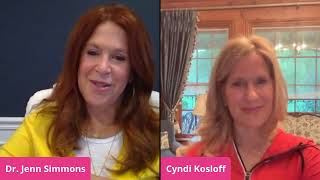
YouTube interview (May 13, 2021 upload) in which Dr. Jen Simmons interviews Cindy Kozlov about Cindy's journey before, during, and after a DCIS breast cancer diagnosis. Cindy, a long-time habitual exerciser (aerobics since the late 1980s), describes stressors in her life (law-firm years, premature newborn) and how IntenSati (mindful, affirmation-based cardio) and later rebounding helped her mood, recovery, and purpose. At age 40 (2010) she was diagnosed with DCIS on the right breast after mammography and biopsy; after discussing options (lumpectomy + radiation + tamoxifen vs. mastectomy), she chose bilateral mastectomy with reconstruction for peace of mind. She later became certified to teach IntenSati and rebounding, offers classes in-person and via Zoom, and lists contact cindilee18@gmail.com.
Questions this video answers
Age 40 in 2010.
A little over five years.
1991.
Started in 1987.
Born at 29 and a half weeks (about 3 pounds; ~6 weeks in the NICU).
Chapters
Hi, Facebook. It's Dr. Jen Simmons from Real Health MD. This is my answer to breast cancer. I am so excited. I know I say that all the time, but I am so excited about this conversation that we're going to have tonight because this story is so inspirational. It's so beautiful. It's reminiscent of so many stories that I hear where people find this amazing, divine purpose in places where they did not expect to find it. And Cindy Kozlov is an amazing example of where we find these messages and how meaningful and profound they can really be. So I don't want to take up any more time. So, Cindy, thank you so much for being here tonight and. And for being willing to be really vulnerable and share your story with everyone, because I think that it's just going to have such a tremendous positive impact on people. I talk a lot in my group about how if you can find positive meaning in your diagnosis, that it serves you so infinitely. So talk to us a little bit. Take us back through what your life was like before and then how your diagnosis impacted you.
Sure. First of all, thank you so much for giving me this opportunity to be here anytime that I can pay it forward and help out another woman going through breast cancer. I try to seize the opportunity. So I basically have always prioritized exercise in my life. I would say when I was in college, I really started pretty habitually exercising and then going through law school.
And what kind of exerciser were you?
So I was a pretty intense exerciser. I would always do the aerobic type of exercise. I graduated college in 1991, so aerobics were very popular back then. I started in 1987. So the 80s, you know, everybody was doing aerobics, step aerobics. It was pretty high intensity cardio. Exactly, exactly. And so I used exercise just to kind of manage my stress. And also I just wanted to keep my physique. Basically, I'm 5 foot 2 and I enjoy food. So I kind of balanced out my, you know, my. My lifestyle with also keeping myself fit and using exercise not only for my mental health, but my physical health as well. Then I went to law school, which was very stressful, as anyone listening who went to law school can tell you. And so I also used exercise as my way to manage my stress. Moving along. I then took a job working in New York City, which was what I wanted. I had to be in New York. All my friends were there. Very stressful job as well.
Law associate. Excuse me, Were you working as a law associate?
I was working as a.
One of Those crazy big New York.
City law firms multiplying millions. And I would get up at like 5am and go to my spinning class before I'd go to work because I was always afraid that I would have to stay late and I wouldn't be able to exercise. So you can see that there's this theme going through. It was like a way of life for me. It wasn't something I negotiated, it was a non negotiable, it was something habitual for me. And then I was lucky enough to meet my wonderful husband who rescued me from the lifestyle of being an associate in New York. Although I did enjoy it, I had a good experience, but I really wanted to get married and have children. So I gave up the whole career and moved to.
How long did you do that? How long did you.
So I practiced law for a little over five years and at that point I was, you know, getting. I was maybe 20, I think I was 28 when I met my husband. And so I just really had had enough of that stressful lifestyle. And it was very important to me to have a family. So I, David, like I said, rescued me from that. And so we started our life together and we have three beautiful boys. So I'm very lucky that they're all, thank God, healthy. But our middle son was born at 29 and a half weeks, which was very stressful. And I used exercise once again to help me, you know, not only just with being a mom and a wife, but also going through this very difficult time having a premature baby. He was less than three pounds when he was born and in the NICU for about six weeks. And I had a very precocious two year old at home at the time. So once I got over that hurdle, I then was thrown another curveball in my life because I would say having a premature baby who wouldn't eat and was borderline failure to thrive, you know, created a tremendous amount of stress in my life.
Yeah, I mean that's really, that's terrifying, right?
It was terrifying. It was terrifying. And every time I went to see him in the nicu, I never knew what it was going to, what I was going to see. And so I'm trying to think back whether or not I was involved with intensity at that time. I think I had just started taking it as a student and then.
So you're going to have to explain to people what intensity. I know that you're going to get to that because of who you are.
Intensity is a mood lifting cardio based workout that uses positive spoken Affirmations while you're doing, I would say more like a Jane Fonda type of move, like a jumping jack, a basic calisthenic type move. And so the whole premise behind it is that while you're doing your move, you're also shouting out, hopefully, a positive affirmation, which it doesn't translate into words very well. I always tell people, you really should come and take a class, because when I try to explain it, it doesn't always translate so well. But the class has this way of just helping you transform your mood while you're, you know, while you're working out. And so I found I originally gravitated towards the class because I was a big exerciser and I was getting the most incredible workout because you're using so much oxygen not only to do the moves, but you're taking that oxygen in if you've ever gone on a run or a walk with somebody and you're having an animated conversation, and it really elevates your heart rate. So that was the reason why I was drawn to the workout. But then I started noticing I was, like, in the best mood when I left. And so I finally realized that these affirmations are really working.
So I think you said, and I had the privilege of taking one of your classes recently, Cindy. And I just got back from the momentum retreat. Shout out to momentum and all my momentum ladies, including Gavora, who is on this. This live right now. And I think you said it's possible to come to the class in a bad mood, but impossible to leave the class in a bad mood because it is just so empowering. And what I think is probably not stated is that you can it as you're saying these things. You can actually rewire your brain.
Absolutely.
100% doesn't think they're powerful to someone who thinks they're powerful.
Absolutely.
With these powerful movements. So it's like proof.
Right.
So I can do this, and I can do this.
Absolutely.
In fact, reaffirming those things and creating actual physical connections. So it's amazing stuff. And I had never done it before. Your class blew me away.
Oh, okay. I didn't realize that was your first time doing it.
Who trained you?
Who trained me? So I took Intensati for many years and I started taking it with. Her name is Betsy Castle, and I was under her tutelage, I guess you could say, at afc. And then when Betsy left, she moved over to Lifetime. So then I started taking it over there. And Amy Fox was the person who actually trained me up and then Patricia Moreno, who is the creator of Intensati, she certified me. So I went to New York City and she certified me.
And I heard she is just amazing.
She's amazing.
And I feel very do a little shout out to her. I know that she's on her own journey and she has a lot of support, but just letting her know that she has even more right here.
Absolutely, absolutely. So I'm just going to circle back.
A little bit because started Intensati when you. When your son was born.
So when I was going through, I had already had my son and I was dealing with the fact that he had all these mostly feeding and swallowing issues. His esophagus hadn't really caught up with the rest of him. So I was taking him all over.
To different grow if you can't eat and swallow.
Exactly, exactly. And so it was so stressful because babies, all they want to do is eat. And everywhere I would take him, he would have his reflux and it's just awful. He didn't start eating real food till he was three. That's a long time to not eat real food.
Oh, that is a long time.
And I also had, like I said, a very precocious 2 year old who's now 21 and this preemie is now 19. So that's, you know, it's amazing. He is a miracle boy. So. So anyway, Intensati was so helpful in just allowing me to clear my mind and to just try to tell myself to have an attitude of gratitude because it could have been so much worse. Right. I was so lucky. He came home from the NICU at 35 weeks to the day without any machines or medications. He really, they said he was like a miracle baby. And it wasn't until I stopped giving him breast milk because I couldn't. He wasn't able to suck and so I would have to pump and then feed and I won't go into all those details, but it was so stressful. So I gave it up pretty much when I came home because I had to deal with his issues and my other son and just, you know, life in general. So that's when the reflux started and that's when it was so stressful and so intensity really helped me tremendously then trying to think. Then I went on to have a third child and thank God he was a normal pregnancy. I did have to be monitored because my uterus, I had to have an emergency C section with the preemie. His name is Saul. And so therefore when I went to have Jonah, they needed to monitor me and I was a high risk pregnancy. But thankfully he was born at 38 weeks with no issues. So I'm going about my life. And one thing my OBGYN had said to me was when I was finished having children, he wanted me to go to a breast surgeon and get a baseline done, because why was that? So he said that my breast tissue was very dense and that he could not feel comfortable signing off on my breast exam. So I, of course, at this point. So I want to say I was 35 when that happened. And so.
And were you very slender?
I was. I was pretty slender only because the exercise and eating healthy, it was all like a way of life for me. And so, yeah, I don't want to.
Create undue alarm with people. People get told all the time that they have dense breast all the time, and that is largely a function of how much fat you have in your breasts. And if you don't have a lot of fat anywhere else, it's very unlikely that you're going to have a lot of fat in your breast tissue. So I don't want everyone to think that just because you have dense breast tissue means that you are going to go on.
In fact, my mother and my sister also have tense breast tissue and they've been, thank God, they've been fine. But I really felt this attitude of gratitude towards my OBGYN when he said that to me because, and I'll just quickly tell the story, I don't want to take up too much time, but when I went to have, when I had to, that was my husband chimping in the background. When I had. When the doctor said, I want you to go get a baseline, of course I did. Because I was always, and still am, very proactive about my health. I didn't put things off. And the breast surgeon then wanted to monitor me for the next five years until it was time for me to have a mammogram. They did all sorts of MRIs and tests and whatnot, and everything kept lighting up like a football field. So they said either you're full of cancer or your tissue is so dense and we don't see any hot spots, so you're totally fine. So we went with the latter theory and I always went to the same radiologist. I also have an attitude of gratitude for. He's amazing. I don't know if I can give a shout out to him as well.
Whatever you want to do.
Okay. So Dr. Brian Englander @ Pennsylvania Hospital, we train together.
Love Brian.
Love him.
Any day. He is awesome.
Awesome. So he was the radiologist who I always went to. I always made sure Dr. Englander read my. Whatever it was that I was having done.
Yep.
And so when I turned 40, Dr. Englander said, okay, let's do this mammogram. And he said, okay, I don't want to alarm you, but I see something on the right breast and I'm really sharing this detail also, because if somebody out, you know, in your audience hears this and I can help in any way, I just. I really would love to be able to do that. So if I'm going in too much detail, just stop me.
Scary time.
It was so scary. It was so scary.
The amount of fear and anxiety around getting a mammogram is so tremendous. That, first of all, I think that that is mostly what drove the United States Prevention Task Force recommendations that women have mammograms less frequently. Not because they don't work and not because they don't detect cancers early, but because they're so anxiety provoking. That, according to them, that was the. That was the greater of the two evils. And allowing a cancer to be diagnosed a little later was the lesser. Now, I don't happen to agree with that, but I don't think that everyone is able to overcome that fear. I know that there are people, Gavora is one of them, that talk about like, you know, what's going to happen is God's will and I'll deal with it. But it's very hard for many women to overcome that fear of going to have the study and what they're going to do with the knowledge afterwards.
Absolutely, absolutely. And if you're the type of person that worries, it's extra difficult. I would say some people are better compartmentalizing than others. And so, yeah, so Dr. Englander, just to continue, he said, I don't want to alarm you, but I see something on the right breast which could be nothing, or it could be an irregular calcification, which Is known as DCIs. That's, you know, and we'll call your breast surgeon and see what she wants to do. And the breast surgeon was hysterical and told Dr. Englander, do not let me leave before biopsying it. So, of course, I was beside myself with worry and panic, and I had to wait almost a week to get the results because I had to. I did the biopsy right then and there and. And it dcis, which, you know, at the time, I didn't really know anyone. I didn't have any friends that had Gone through breast cancer, sharing.
How old were you?
I was 40. It was 2010. And I remember going in January thinking, you know, new, new decade, everything's going to be great. And then I get this, you know, this call that I have basically cancer. And I was like, how could this be happening to me? I am so health conscious. Anyone who knows me knows that, you know, I eat healthy, I exercise, I take good care of myself, very proactive. No one in my family had this. How could this possibly be happening to me? And I honestly, after, you know, doing some my own research and also having a very strong interest in holistic medicine, I honestly think that. And who I will never know. But I think a lot of the stress that I had in my life, whether it was from my job or my, you know, having a premature baby, I really think and not know, not even though I had the intensity. I was, I was, you know, we're all learning, we're all growing. Myself today, I feel like I have really grown so much in handling fear and also becoming more observant has allowed me to have more trust in and my faith. So I just like the person I am today. I think I would have handled it better, but we can all say that with hindsight, but I do.
But it would be hard for you to become the person that you are today. I do think that the stress is absolutely the major player here and you can only take so much of it. And you had layer upon layer upon layer. And there was a great podcast that I listened to this week by Rich Roll. I don't know if you listened to his podcast, but he. This week's was on sleep and the effects, the long term effects of sleep deprivation, which actually like are directly linked to cancer and you know, the whole culture of law school and going to one of those big firms and the number of years you did it because law school, three years and you probably were a very good student in order to go to law school. So that was four years of college where you probably didn't keep a very good sleep schedule. And then you go on to become an associate and you're getting up at five in the morning, which incidentally we are not meant to do, right? I mean there's a reason that we're tied to circadian rhythm and the rhythm of the sun is because we're not supposed to wake up before the sun.
Right? This is true.
And if I know, if from what I know about you, I'm sure not only were you getting up early, but you were working very hard at that law firm and staying late.
It was a vicious cycle.
My guess is that you had many, many years of sleep deprivation and the poison is in the dose. So you kind of had all of that built up. And then you have a premature baby and it like took you to a level that despite all of the positive affirmations and the, and you're in your good diet and you were in a, In a loving relationship, but that stress just builds up.
Absolutely. And at the time, my husband was getting ready to take over as the. Running a family business, a third generation family business. So he, even though he is amazing, he was also, you know, he was dealing with his, you know, stress. And so, yeah, so that was, that's just my best guess that it was due to all the. Because I was really bothered with how, how could this be happening to me. And I even, you know, I went for the genetic testing and thankfully I did not have any of the genes that were problematic. And so I don't know if you want me to talk about then my. What ha. You know, so then I basically had to make a decision.
Tell us about the meaning that you found in your diagnosis. Because, you know, a lot of people would say, hey, I eat healthy, I exercise, I've spent my whole life taking care of my body. How on earth could this happen? And you can go to a very negative place from there.
Absolutely.
And you didn't?
No. In fact, I basically felt. Again, I feel like I'm repeating myself, but I had such an attitude of gratitude because how lucky was I? I was caught. This cancer diagnosis was caught so early, and it was so, you know, I, I was told that I could have a lumpectomy, take tamoxifen for five years and have radiation, or I could have a mastectomy, a single, you know, single side mastectomy. And I called so many women to ask what they went through because again I mentioned I didn't really have any close friends or family. I didn't know about any of these support organizations. And I felt, even though, thank God I had my mom, who was by my side the whole time holding my hand, she and I were petrified. We didn't know what to do, who to listen to, where to go. And it was so stressful and over. And I had these three little boys. And so I just felt Jen Simmons.
Who had the answer to breast cancer.
No, I wish I did. I wish I did. And so basically I decided that because I was in good shape and healthy, I am a worrier by nature. I did not want to live with this idea of having to have a lumpectomy and take tamoxifen. I didn't know it. Why would I want to take tamoxifen? I don't know what that's going to do to me. And radiation, I wasn't so thrilled about having that either. And then the thought of having to constantly be screened every six months or whatever to see if the cancer came back or would come back or come into my other breast, I just decided, you know what? In my opinion, I think having a bilateral mastectomy and reconstruction is really a very green approach at this point and would give me the peace of mind, which is really what I needed. And so this all comes back to mindfulness, right. And intensity. So I dove into my intensity practice with both feet in, and I just used that method of mind over matter and just loving the body you're in. No matter what, moving your body and freeing your mind. Those are also amazing mottos of intensity. So I just felt so grateful. And I think that my recovery was so off the charts amazing because of my ability to get my mind in the right place to control my thoughts, because that's really the only thing at the end of the day we can control. And so I really give, like two thumbs up to intensity. I think it's a miracle.
But what you think about grows, and we know that for a fact that what you think about grows. And so if your focus is on a negative place, then you're going to be met with negative experiences. And that's what's so powerful about the intensity, is because it forces you to be positive, but you really took it to a whole new level. You didn't just go to exercise.
Right, Right.
So you made a career of it.
Well, is Gavora still on the call? Because I can't really see who's on.
The call, but it's hard for me.
Okay, so Gavora. I owe so much to Gavora because I was getting ready to take a trip to Poland and Israel, and I barely knew Gavora at the time. And she said she really wanted to meet with me before we went on the trip. So I said, okay, great, Gavor, but you're going to have to come to one of these exercise classes with me because my exercise is a priority. There's no, you know, it's non negotiable. So she's like, oh, I would love to come with you. So she came to my. To an intensity class with me and she stood right behind me and she came up to me after class, and she said, cindy, you need to get certified in this and you need to bring this to the community. And I looked at her and I said, gevur, what are you talking about? Who's going to come take intensity from me? I just, you know, I was sort of blown away. But then I started thinking about it and how I've always been so passionate about health, exercise, nutrition. I always say that I should have been a nutritionist instead of a lawyer, but it's not too late.
Enjoying the real, real health MD team.
Yes. Yes. So then I thought, okay, you know what? This is a great time in my life to do something like this, to actually get certified, as crazy as it seemed to me at the time, because my kids were older and I just was kind of looking for something. So I did. I went to New York and I got certified by Patricia and. And then I sort of just set up shop in my. I made a studio in my basement and I cater to women and to girls. And I couldn't believe it. People. I talked for free at first, and people were coming on a pretty consistent basis because it's pretty transformative. It is, it is. It really is.
For anyone who thinks it's woo woo. There's actually a lot of science behind it. And so I. I loved it. I loved, I loved doing that and I. I loved being able to see the faces and being able to see like, physical evidence of what I know is happening scientifically.
Yes.
It's like creating that positive connection between your mind and your body.
Yes.
Because it's all about controlling the. That inner chemical environment. And instead of being in the chemistry of stress, which leads to disease, you're in the chemistry of joy.
Absolutely. And it has a ripple effect.
Yeah. It flows over into the rest of your life, into your family, into your friends. It really does.
Absolutely. Effect. I just recently, since I last saw you, I did another. Wasn't a retreat, but I did. On Mother's Day, I taught a class in our community. And a woman came up to me afterwards with tears in her eyes. And she didn't know I was a breast cancer survivor, but she said to me that the class just. It moved her to tears saying all those affirmations. I'm powerful beyond measure. I'm stronger than I think. I'm braver than I see seem. I'm the keeper of my health. My body is my vessel. These words just spoke to her. And then I shared with her that I was a breast cancer survivor. And then she started crying and it was Just so moving. But I just. I never realized how I, you know, how power. I mean, I knew from my own personal experience, but I didn't realize how I could be helping other women and not just women who have breast cancer, obviously. But it's such a tremendous. It's a gift, actually, that I feel like I was given to now help others. Right.
And sometimes we have some major obstacles that are put on our path in order to force us to take that.
Path.
To take that circumstance and remake yourself and realize your mission, realize your power. And so this is such a beautiful, inspiring story. Why don't you tell everyone what you're up to now, where they can find you, what you do?
Sure. So in addition to the intensati, I also recently became certified in to teach something called rebounding, which I'm equally as passionate about because it is so much fun. I just think any exercise you can do and smile through it, and, you know, it's amazing. So. And there's.
Typically, rebounding is engaging the lymphatic system. So unlike our blood vessel system, our circulatory system, well, the lymphatic system is part of it. But our arteries, they have pumps. They are designed to move the things through the blood through by itself. But our lymphatic system, which helps us to detoxify, that doesn't have a pump. So you really have to engage the muscles in order to engage and stimulate the lymphatic system. And a rebounder, which is a mini trampoline, is probably one of the very best ways to do that, because you literally have to engage in every single thing because it's about balance and movement and flexion and extension, but you're against gravity. Like, people think it's so easy to jump up and down on a trampoline, but it's really not.
It's not right hard work, but it is.
It's so rewarding. And for breast cancer patients in general, there have been clinical studies that show the benefits of rebounding. And you don't even have to do that much. Benefits of rebounding in the cancer population is tremendous.
Wow. I wish I had known that also. But one of my upcoming goals is to somehow combine the two, to somehow come up with a way to teach the intensity on the rebounder.
Yeah. Because I know you'll do it. You will do it. I have full faith in you.
So. But if anybody is interested, I do offer zoom with all my classes, including the rebounding, if you have a rebounder. Because I highly recommend doing the rebounding class on A rebounder, because there's zero, close to zero impact on your joints, which is another amazing side benefit of rebounding.
It sure is.
Get all that cardio in and not hurt your knees or your back or. It's really. It's incredible. Plus, it's just fun. Again, anything you can do and have a good time and be with other people, it's just. It's.
Develop things like, as we age, we start to lose that connection between our mind and our body, and that results in, like, not having the balance that we used to have. So we become more clumsy, but we don't have to. And things like jumping on the trampoline. I mean, how do children develop that connection and that cord coordination? They jump on our beds.
Right? Right.
That's what children do. And we yell at them for it when we should be encouraging it. Like jump bed. Right. Those connections.
Absolutely the same thing with us.
Like, we need to not stop doing all of those things that we did in childhood. They're very intentional and they're good for us.
Absolutely.
Keeping those connections going that allow us to get to very old age as a young person.
Right. Yes. And I just want to say one other thing, because sometimes when people hear about the classes, they're like, oh, well, I'm in terrible shape. I could never do that. Or, you know, I have bad knees. I can't jump. Or. The class is really meant to be personalized. It's your workout, so you don't worry about what anyone else in the class is doing. And it can always be done at your own level. Even if that means just marching in place or even sitting in a chair and just using your arms and saying the affirmations, because it's not, you know, what one person. You're all. You're going to both benefit, whether you're jumping, sitting, as long as you're participating in. And you have an open heart, that's.
Really all you need.
I tell people, just come with a positive, open attitude. Yeah.
And any movement. Any movement has positive effects on your body. Any movement. So I agree with you. Like, and you do a great job of meeting people where they are. The class that I took, there were people at all different levels, and they were all engaged, Right?
Yes.
It's really beautiful. I love your message. I love the meaning that you found in your diagnosis. You are so inspirational. I know that you're going to help a lot of people by having shared your story and the details of your story and the fact that you chose to have a mastectomy because that was the right decision for you. And these decisions of how to treat are really, really personal. But the most important decision you can make is to decide to have find meaning and even to say, like, find gratitude in your diagnosis. Figure out what your diagnosis is trying to tell you and, and the fact that you have chosen to share that meaning and that interpretation with the world is just so beautiful.
Thank you.
Thank you. So how can people find you if they want to do one of your classes? Zoom with you?
Sure. So I can tell everyone my email address. That's probably the best way to reach me.
Tell me. I'm going to put it in the notes.
Okay. So it's, it's my first name, Cindy Lee C Y N D I l e e18gmail.com. And then once whoever wants to reach out to me, I will be happy to send you my weekly schedule, which will give you all the information on how you can either find me in person or zoom with me. So even if you have a relative or a friend who's going through a difficult time or that you think, or even if they're not going through a difficult time, if you just think that this, that intensity would be beneficial for them and you and your friend could zoom together, I mean, it's really. The possibilities are endless with the way now that you can communicate on, you know, on Zoom. But of course, I will say the class in person. It's worth coming to if you can. It is.
So if you're local, definitely reach out to Cindy and sign up for one of her classes. They are awesome. They're so much fun. I can't wait to do my next one. And if not getting on Zoom with her, I mean, her energy absolutely comes through, you will love it. And again, you might start in a bad mood, but it is impossible for you to leave in a bad mood. So we're going to say good night.
Thank you again for having me.
It's my pleasure. This is Dr. Jen Simmons with my answer to breast cancer, and I will see you next week. Bye for now.
Good night.
More from Jenn






Stem Cells, Peptides, GLP1s and the New Blueprint for Preventative Medicine with Dr. Vass



The Truth About GLP-1 Drugs and Who Should (and Shouldn’t) Take Them with Dr. Susan Brian

What 100 Days Underwater Revealed About Aging and Healing with Dr. Joseph Dituri
