"My Answer to Breast Cancer" presents the Ladies of Real Health MD!
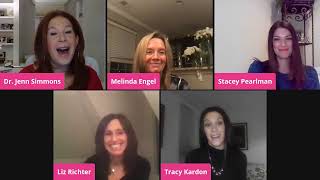
Jenn Simmons, MD and her Real Health MD coaching team share their training and approach to health coaching. They emphasize nutrition, lifestyle, and environment, and are running a free Five Pound Challenge from March 1 to 5.
Chapters
Hello, Hello, Hello, Facebook. It is Tuesday night at 7 o'. Clock. And what does that mean? It's time for my answer to breast cancer. And I am so excited for this week because I have my ladies here. And it's just. It's so great to be able to say, like, I have a team. Like, I feel like my preceding years of coming to this, like, I finally feel like I've arrived somehow. I was, like, illegitimate before, and now I've arrived, so. And it's also been so, so, so special to share this journey with other people. I spent a lot of time on an island just, you know, being the surgeon, but really in solo practice and operating alone. And it's really nice to be on people's health journey with them, with a number of other people. And we're collaborating, and it's just. It's really joyful and wonderful and exciting. So I wanted to introduce everyone to my team, and I'm just gonna have them talk a little bit about themselves and. And so that you can see, because everyone has a different. They come to it in a different way, and everyone has a little bit of a different st. In a different perspective. But I think that the. The main thing that is going to define the future of health care in this country is really health coaching. Because, you know, wellness doesn't happen in a doctor's office, in a hospital, in any kind of environment like that. Wellness really happens in the home. And the thing is, I can tell you, you know, I can spew brilliance if. If in fact, that's what I do all day long. But people don't suffer from a lack of information. We live in a very informed time. People suffer from a lack of implementation, and that is really where health coaching comes in, because the health coaches can hold you accountable. They can also help you problem solve and help you put these pieces to your puzzle in place. So I'm going to start off by introducing Melinda. Melinda is my practice manager, but also a health coach, and she has changed my life for the better. I am grateful for her every single day. So, Melinda, do you want to just talk about how you got into health coaching and maybe a little bit about the story of what drew you to me and what you do here? Of course.
Thank you, Jen. It is such a pleasure to be here and surrounded by these amazing women. I feel so fortunate every day. I've always been passionate about health and nutrition. I attended the Institute for integrative nutrition in 2007 and really wanted.
Was that one of the first cohorts.
Women There were a few years prior, and I know Stacy, I think, was the year before me.
Oh, you were 2006, Stacy?
I was, yeah.
Wow. I didn't realize that.
And I used to see them when I was at NYU in 2005.
Wow.
I used to see them in Whole Foods. I told.
Because they used to eat lunches. I'm gonna Google it. Well, I'm gonna Google it while. While Melinda tells her story.
I have a family member who attended, I think, the first year. And as soon as I heard about the program, I knew that it was something that I wanted to do. And upon graduation, I slowly started seeing some patients. But I also felt that something was missing in my background. Not having a medical background per se, but being very in tune with health, nutrition, exercise, fitness. I also worked with Equinox in Manhattan, and I was looking for a team and the support. And as soon as I heard that Jen was starting her own practice, I just thought, wow. I thought, there's no other person that I'd rather be teaming up with to have the expertise and the mentorship and to collaborate with. And it is just such a joy. And I feel like each week, working together, we get to meet and meet with our patients and help them really just change their lives, which is. I mean, I feel like. Isn't that what everyone wants to do?
Mm, yeah. It's really exciting. So I was, like, way off.
It was.
IIN was founded in 1992. Oh, wow. Let's give a shout out to Joshua Rosenthal. He changed all of our lives. And I can't believe it's been that long, but a testament to his program because, you know, just looking at this sample size. And I found out about IIN through Emily Dodge, who I think she. Did one of you do it with her? I think she did it in. Maybe she was early on. I thought she was 2007 or 2008. In any event, I actually did iin myself in had to be, like, 2015 or 2016, which is how I found out about ifm, the Institute for Functional Medicine. And the rest is history. But I think all the IIN people were somehow, like, naturally drawn to one another because I can almost tell that person that is iin and they. In case anyone doesn't know, I'm talking about the Institute for Integrative Nutrition, which used to be a. An in person course that was taught in New York City. And now it's all virtual. But it. It somehow, like, it just draws a specific kind of person, and you can almost, like, feel the energy off of that group, you really can. So speaking of energy, Stacy Stacey, our resident celebrity, is with us, taking time off of selling gold jewelry on QVC to be with us tonight.
Well, you'll learn from us. We talk about our primary and our secondary food. So my love and my passion has always been helping people and wellness, but my side love has always been fashion and jewelry. So I'm fortunate enough that I get to do both. I get to work for Dr. Jen, fulfilling my true passion. But I do also get to be on QVC selling jewelry as well, which is my fun. But I. Since I was a little girl, I knew I always wanted to be a guidance counselor because I loved helping people. So I went to college. I was in the Health and Human Development college, and then I went right for my master's in counseling. And I was really involved in schools. I was living in New York, and I was working with children and parents, and I really started getting into seeing just the tough food patterns that my students were in, how it affected their learning, how it affected families. I started literally doing PTA meetings, and my topic was nutrition and food, and I would run yoga in the morning for my students and teach them breathing. I found the Institute of Integrative Nutrition because while I had the counseling piece and I always loved connecting to people, I. I wanted that extra boost of the nutrition information. So it was the perfect marriage for me to then get my degree from there. And it's interesting, like Melinda, I started a private practice, and my husband jokes, I'm the only person that started saying, no, please don't refer me. I need to find a team. I did not want to be alone anymore. I wanted to join a team. I love sharing ideas. I love, you know, we text each other who loves this, you know, new service that's delivering organic produce in this, and it's just really lovely being a part of a team of women. And we just love helping you. I think we just all get so much joy helping you meet your goals, whether you're ready to conquer them big or if you just want to take a baby Step 1 Every two weeks, we're going to work with you to do that as well. And it just brings us so much joy to meet you wherever you're at on your journey and, you know, be with you through it all. So I just love being a part of this team.
And I want to mention that Melinda and Stacy helped me to do the My Answer to Breast Cancer group every week. So we're all on together along with the other ladies in the group and in that. And in that private Facebook group, because it's really only for our group programming, but it is such a beautiful place to be. I mean, I don't know about you guys, but I get so, so much enjoyment out of being in that group every week. And, like, the. The mutual appreciation and gratitude that's happening in the course of that learning. I mean, there is a lot of learning that's happening in that group, and I. I think it almost takes away from the overwhelm of the amount of information when we're all there together kind of sharing it.
Yeah, definitely.
There's friendships forming, there's support forming. There's great recipes being shared. There's, you know, highs, lows. It's a really wonderful, wonderful group.
Yeah.
Yeah.
Look forward to it every week. I really do. And I keep telling people that I speak to about the program. You often don't even know that you need it as much as you do. I mean, it's brought people together, especially in this time where everyone's feeling so isolated, and it really fills my cup every week.
Yeah.
Yeah, I agree.
So Liz is also an IIN graduate.
You know, Jen, when you were talking about how IIN attracts a certain type of person, I don't know about you guys, but I explored so many different programs when I decided that this was the direction that I wanted to take. And as soon as I hit iin, I stopped looking, because everything it said I connected to, like, what I was thinking I was reading. And to be able to learn from incredible, you know, top people in the industry was just. And not like, Stacy, who did it in person. I don't know if any of you guys got to do it in person, but I heard that. I was like, oh, my God. But what a great experience and so much information. And so I ended up there because I was teaching yoga for many years prior. And so often my yoga students would say to me, what do you eat? What other exercise do you do? How often do you meditate? You know? And it led me to consider, you know, I could help people in more ways. And I knew what worked for me, or I was figuring out what worked for me. And to have the opportunity to help other people do that is just a beautiful thing. So after iin, I started coaching immediately. And I love getting to help people really figure out how to live their best life, like, what really works for them, because what works for me is not going to work for you guys or for anybody else. And so helping people tune in and figure that out to Feel their best is just so rewarding.
I love it. And I think that that's one thing that is so lost on in the traditional medical model. It's that they think of health as the absence of disease. But we really think about health as so much more. We think about it as optimal function, and we know that there's a lot more that goes into that than. There's a lot more to being healthy than just the food that you put in your mouth. Because as we're taught at iin, there's primary food and there's secondary food. The secondary food is what you put in your mouth, but the primary food is everything else that nourishes you, and that's all the other aspects of life that go into being healthy. So, yes, of course we help people eat in the right way for them, and that's going to be different for everyone. There's no one diet that's right for everyone. But we also help them get a movement plan that they're going to stick to, and that makes them happy and joyful. We're going to help them with a mindfulness practice so that they can deal with the stressors in their life in a meaningful way and not internalize them and have negative energy from that. We're going to help them detoxify their environment. We're going to help them reevaluate those social connections and find what's working for them and what's not. And so there's so much more to it than just, oh, you know, I have high blood pressure, put me on a pill, and that's the end of it. You know, we're really asking the why, and we're helping people to formulate their life in a way that drives health. And I know that all of you, with the exception of Tracy, were pretty scared about dealing with my cancer patients because it can be scary. But Tracy had a lot of personal experience in this area and brought with her a breadth of knowledge, having done what she did for the. For the entirety of her career. And, you know, I like to think of cancer instead of it being a death sentence. I like to think of it as an opportunity, an opportunity to take stock in the way that you're living your life and see if you want to go on a different path. And Tracy is like a prime example of the path to follow for help. And tell everyone, well, yeah, my background's.
Very different than everyone's. I. I've been immersed in the western medical model since I graduated from my master's in social work. In 2005, I've worked at Beth Israel Hospital and I worked at Weill Cornell in pediatric oncology. And then for most of my career I worked in spinal cord injury at Mickey Rehab. And now I work for Penn, for Penn doing, helping people with all different types of chronic illnesses. But it's been interesting because wellness has always been my passion and my own nutrition and veganism and health and yoga, but it's always just so separate from my work. But I'm always trying to kind of be the vegan who's impinging on everyone on the Western model and telling people that they should maybe stop eating sugar when, or start stop eating this or that or bringing meditation when no one else is really saying that around them. So it's just so, so, so different than the work that we do at Real Health MD because so many of our patients are so informed. And so I love the difference of, you know, helping people who have just no information whatsoever about health and wellness and then coming to a team like this where it's just everywhere and everyone has like a different gift to bring to the, to the picture, to the table. So yeah, so I have worked in social work my whole time. And so I like to think that I bring like the biopsychosocial aspect of my patients, you know, thinking about their environment, the context that they're living, their family, their health, and then helping them put that all together and figure out the barriers to wellness.
But essentially, I mean, you have been a coach for a long time. I mean that's what you're doing for people. You just didn't, you know, the great different label. Well, and, and in a different context because you had your hands handcuffed behind your back and in, in that other role. Right. You only have so much you can do when you have so little backing behind you. And I think that there's still so much in traditional medicine that just doesn't acknowledge that there are so many, that the real health and wellness is not happening in the hospital, in the operating room, in the treatment suites. Like that health has to happen at home.
Yes, that health. And I see patients now in their home and you know, it's just, it's so like amazing when you see today I saw someone whose daughter was dying from a glioblastoma and she, she said to me, and I said it came, for some reason it came up that I'm vegan. And she said, you're vegan? I just got this book and she held up this anti inflammatory book, you know, all about the foods, because she has, you know, kidney disease and all of these other things. And I was like, you know, and it made me so happy. And just to, like, bring that to people's everyday life, you know, that's what we're trying to do and, like, open up a world where it's. You're not on a diet. You know, you're not, you're not. This is not a quick fix. This is like changing your life forever and changing the trajectory of disease and, like, things that you think are going to happen, because that's what you've been told, that you're.
They.
You think that they're going to happen. Yeah, that's my passion.
Well, I'm so glad that we got to come on and introduce everyone. And, you know, there are many, many ways to work with us, and it doesn't have to just be because you have cancer. I mean, obviously that's how. That's how most people come to me. But you guys help people with all different kinds, and you help people if they just want to lose five pounds. And actually, we have a five pound challenge up that Stacy and Melinda are running. And when does that start? March 1st?
Yes, it's running from March 1st to the 5th.
Okay. And how do people sign up for that five pound challenge?
Go to or email us@infoealhealthmd.com I'll put that in the chat and we will get you signed up for the challenge. It's free, it's open to everyone. We hope you'll join us. It's going to be a lot of fun and I think really transformational.
Yeah, I think it's going to be so great. Stacy, do you want to say anything about that?
I was going to say, and it's not just. It's not just saying, you know, don't eat carbs and drink a lot of water. Like, it's really going to get to the root to really help you instill some practices. So it's like a bonus that you're going to lose five pounds. You're going to gain so much more, though.
And to be honest with you, it's not just for people that feel that they need to lose weight. We're really going to be helping you make some lifestyle changes that are valuable for absolutely everyone.
I'm just putting the address in.
I really think there's a coach here at Real Health for everyone. Some of my favorite moments are when we have our team meetings and we're so excited. There's a new patient and it's almost like we know based on personalities or who's going to want to work with someone because we do each have different strengths and different things that we bring to the table that make us so excited to be able to work with you.
And that's a really interesting point because we are talking about each patient every week in our team meeting. And that's an opportunity for us to really personalize the experience because we are matching the right coach up with the right patient. And not that we get it right 100% of the time, but so far we're doing pretty well. Right. And there are certain. Not everyone has breast cancer. People come for all kinds of things. So some people come for weight loss, some people come for autoimmune disease, some people come just because they want to be healthier. And so it's. And everyone has their different perspective in all of it. So it really ends up being like a highly customized experience. That's really thoughtful. Right. Because we're really thinking about, like, who would be best for this person and that relationship. I mean, obviously they're going to have a relationship with me, but that relationship with their health coach is far more frequent. It's probably longer. And so, you know, that ends up being a really important relationship and they end up relying on you guys and those relationships that you have with the patients continue beyond, like the acute work that I'm doing with them. So it's really special. It's really special. And everyone always has wonderful things to say about you, just so you know.
It's always nice to hear.
Yeah, I mean, I look forward to my bi weekly or weekly check ins with my clients. And as often as they say, oh, I'm so excited to talk to you, I have to tell you, blah, blah, blah, I'm just as excited to check in and see how they're doing and.
Hear how it's going.
Yeah, it's like they come to you with a progress report. It's like so exciting. You know, they're proud of themselves. You know, most people this, this process for them is transformational and many people often don't even realize how bad they feel. Like I was speaking to one of our friends, 40 year old patients who she thought she was coming to me for some fine tuning. We did some testing, we found some things that we didn't expect to find. We corrected those and in a matter of weeks she sent me an email saying I was actually operating at like 25% and I didn't even know it. I didn't even know that I could feel this, Well, I didn't even know this is how I was supposed to feel. And that's really, it's an amazing feeling. You are giving someone the gift of health. And that's really.
And it's the power of food. I don't think we're like taught in our society that food acts as medicine does, where it can make you feel as good as or as bad as a certain medication. And it's not just sustenance. It doesn't just make us breathe. It really changes how we feel every day.
Well, I like Mark Hyman's description where he says that food is information. That's really what it is. I mean, the right foods are a collection of chemicals that lead to all of the operations that are supposed to happen in our body. And when we eat these like nutrient devoid, you know, pseudo foods, food like substances, we don't feel well because we don't have what we need to feel well. Yeah. And you know, I know that there are many people out there thinking that everything in moderation is fine and you know, sugar is fine. And they just don't realize how horribly damaging all of these highly processed foods are. And it's not, I'm not picking on sugar. I can pick on oils. I can pick on any number of highly processed food, like things that really cause more harm than, well, they're not any good and they cause way more harm than anyone gives them credit for. So to just help people to see that. And it's really not a sacrifice. Like once you start to eat real food, you realize that like, wow, I can't believe that this is how I'm supposed to feel.
Yeah.
And then it trickles down to their family. So like we're not just helping the patients, you know, your patients, but we're also helping their entire family. Extended family and generations.
Yeah, generations to come. And, and when, when people do this, they, I mean, their whole family gets healthier. Without question. But I, I saw a, an Instagram post today. I don't remember whose page it's on, but maybe it was learn, look, locate where they were talking about too young to have breast cancer and there was a 23 year old. And you know, it comes as no surprise to me that we're seeing these cancers younger and younger and younger because we're filling ourselves with toxins at a younger and younger and younger age. Like these. You know, in my parents generation, dessert was once in a while and it was like a homemade something. Right. And now these kids are eating more processed foods than they are Real foods. It's like we've completely flipped the switch on that. And so, you know, these kids are getting daily toxins in their diet daily. And I'm not perfect. My. My family isn't perfect. And I don't mean to, you know, spew implications of perfection, but we all have to do better as a society because we're seeing these crazy diseases at young ages. Kids with heart disease, kids with strokes. And it's the food and the environment.
And it goes beyond that.
Plastics everywhere and. Sorry, I didn't mean to interrupt you.
No, no, no. I'm sorry if I interrupted you. You know, and it goes beyond the food, too. I mean, lifestyle is such an important thing to look at, too. And we look at that a lot with our patients as well, at the quality of life that they're living and, you know, what other changes that they can make to live healthier lives and to, you know, take the stress out of their life and to incorporate meditation and other healthy habits. And, you know, it's like a whole package deal. And we're. We always talk a lot about food because it is so important, but I also want to make sure that everyone knows that it goes beyond food.
Yeah. I love beauty. You want to talk about getting toxins out of what you put in your skincare and your makeup. You can still wear makeup and love, you know, your lotions, but we'll help you do it by getting the toxins out of the products you might be using now.
Yeah. Yep. And there's really toxins all around us, so we really help people to identify and to clean up their environment, both what they put in. In themselves, but around themselves, on themselves, because it all makes a difference. And I. I'll tell you just my personal story that I have a dog who was developing all these different tumors, and I'm convinced that it happened because we were cleaning the floors, like, almost on a daily basis with this toxic cleaner.
And.
Where's my dog? He's. He's on the floor with all these chemicals, and I stopped using it. We started to clean the floor with an essential oil, lemon juice, vinegar blend, and I started him on medicinal mushrooms, and the tumors went away. So I don't know if it's the mushrooms cleaner. And at the end of the day, right when our patients are doing better, we don't necessarily care why. Like, maybe it's the magic of all of it. You know, as. As Lorenzo Cohen, who wrote Anti Cancer Living, says, like, maybe it's the mix of six. I don't know. I don't know what it is. And quite frankly, like, I just want people to get better. Right? I don't have to take the credit. I just want people to get better. So. Well, this was so much fun. I'm going to let you guys get back to your families because is family time now. And if you want to talk to any of the ladies of Real Health MD and maybe you're interested in health coaching, you can send us an email@infoealhealthmd.com and we will definitely get back in touch with you. You can see everyone on our website, which is realhealthmd.com and we just look forward to being on your health journey with you and being here for you for what you need. Good night, everyone.
Thank you. And don't forget to sign up for the five pound challenge.
Oh yes.
Infoealhealthmd.com Bye for now.
More from Jenn






Stem Cells, Peptides, GLP1s and the New Blueprint for Preventative Medicine with Dr. Vass



The Truth About GLP-1 Drugs and Who Should (and Shouldn’t) Take Them with Dr. Susan Brian

What 100 Days Underwater Revealed About Aging and Healing with Dr. Joseph Dituri
