My Answer to Breast Cancer speaks with Donny Makower of RDCL superfoods
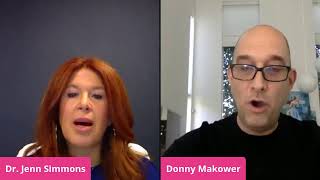
This is a live YouTube interview (My Answer to Breast Cancer) where host Dr. Jen Simmons speaks with Donny Makower, founder of RDCL (Radical) Superfoods. Makower shares a personal catalyst — his sister’s breast cancer diagnosis and remission after a strict plant-based protocol — which led him to adopt vegan ethics and found RDCL. They cover health claims about plant-based diets (protein myths, magnesium and vitamin D sources), ethical arguments against animal agriculture, environmental impacts, and describe RDCL product lines: Super Cocoa (freeze-dried whole-plant hot chocolate) and Radical Elements hydration/functional mixes (immunity, energy, stress support). Promo code (DRJENN) and website (rdclsuperfoods.com) are provided.
Chapters
Mac.
Hey there, Facebook. It's Dr. Jen Simmons from Real Health MD. It is Tuesday night. It's 7 o'. Clock, and that means it's time for my answer to breast cancer. And tonight, I am so excited to have Donnie Macauer with me. He has a great, great, great story which I'm going to have him share with you. But we met maybe in the, like, vegan symbiotic world. Maybe we were just energetically drawn together when Donnie was, let's say, recreating himself in this space and founded a company called Radical Superfoods. And they sure are radical. And. And I just always loved your energy, Donnie. I. We. We always felt so aligned in our message. And so I really wanted you to come on tonight to share your story, which is awesome. To tell people about Radical Superfoods and, and what. And why you felt so strongly and why you disrupted your life to bring this disruptor to the market, which is really what it is.
Yeah.
And to talk to us a little bit about the products and how we can get Radical Superfoods in our lives and then maybe give us a little teaser about the blind spot of compassion.
Yes, I will do that. Yeah, no, that sounds great. I could take a half step back and give you the quick story as to why. So I actually grew up in the Midwest in the Chicago area, and I moved out west to LA Boy in 98. It's been a while. So I've been here now it's like 23 years. You blink and that time just disappears. For most of the time that I've been here, I was the president of a digital marketing and advertising agency that we built and grew and ran and ultimately successfully sold. And we had a lot of really great, influential global brands as clients. We did work for Netflix and for Disney and for Audi and for brands that most people on the street would know these brands. Now, while I was at the agency, my sister, who I'm very, very close with, and I'll start. Because this story starts out badly, I'm just going to let you know it ends well. So this is. This ends up being a positive story. But my sister in 2012 was diagnosed with breast cancer. And while she had surgery to remove the cancer, it had also, she had a pain in her armpit. And they did a biopsy and there was a micrometastasy in the lymph node, and she started feeling a similar pain in her spine. A few months later, she did an mri and there were early signs of the cancer that had spread to her spine. So rather than continue with any western treatment, she didn't do chemotherapy or radiation. She actually went to a wellness center on the East Coast. And she adopted a pretty strict lifestyle change and protocol where she removed all sugar, all processed junk, all animal based products, and adopted a whole food, plant based lifestyle. But not just whole food. She was like juicing wheatgrass in the morning and sprouts in the afternoon. I mean, really, really nutrient rich.
Just out of curiosity, what did her diet look like before her diagnosis? Like, was this dietary change a dramatic leap from where she had been?
Not as dramatic as it would be for the average American because she always ate pretty healthy. And for a long time she was pescatarian. She would eat fish, she would eat some dairy and eggs, but she has not eaten like beef or chicken, I mean, for years, like since we were little. And so she was already very, you know, veggie oriented and I think ate again way better than the average person. But it was not taken to the level that it was taken to when she adopted this protocol.
But I think a lot of people don't understand, like they think that if they don't eat red meat that they're kind of crossing the issues that eating animals brings with it. And I think people underappreciate the amount of toxic burden that you take in when you include fish in your diet.
Yeah, not just fish, but I mean, as you know, dairy and eggs are. Yeah. Problematic.
I wasn't even counting that.
Just fish. Yeah, fish gets a generally a good rap, right. Because people, salmon with the omegas and you know, healthy fats that you could get and sardines and other fish, it's just getting a lot of bad things along with it too. You know, you're getting all kinds of pollutants from the waters. You're still taking in an animal based protein which we know can Spike things like IGF1, a cancer promoting hormone in the body. And so there's just a whole host of reasons to do it. That's not even getting into the ethical implications of eating animals, which we could certainly touch on. But even just from a health standpoint, this is just not necessary. So she dropped all of it and followed a pretty strict lifestyle change. And she followed this for two years and sure enough, she halted and, you know, reversed her condition. And it's a pretty amazing story. I tread carefully here because I never want to project out to the world, look, all you have to do is become plant based and you could just reverse any cancer and reverse any disease. Right. What I can tell you is I saw this happen within my own family with my own eyes. And it's what really first introduced me to the power of food, particularly plant based food. And so her transformation was quite significant. I mean it went from having cancer to not. So that put me on a journey to want to discover the optimal human diet. I'm not a doctor, I'm not a nutritionist, but I know how to read, I know how to listen to people. And I started reading an inordinate amount of books and watching lectures and watching debates. I always loved the debates where the paleo doctor debates, the plant based doctor Keto. And I always found that to be very interesting. My net net on it all was I believed in the power of plant based living. I adopted a plant based diet, but I never went entirely plant based at the time I am now, but I'm getting there.
But at the time like 2014 around there, right?
Yeah, 2014, 2015, 16, I was like eating a predominantly plant based diet because my theory was I understood the power of plants, I understood its in all likelihood I thought the best way to live. And the more research I did, the more that was confirmed. And even when I'm like no, I could just be living entirely on whole plant foods and that is the best for my health, just from a enjoyment standpoint or trying to give myself a flexibility, I sort of was like, all right, look, if I happen to be in a steakhouse, you know, when in Rome, I'll just get the steak or whatever because what difference does it make what you do every once in a while when you're doing it for health? If you're eating well, most of the time. Most of the time. Until about three years ago, a little over three years ago, when in my never ending search for talks on this broad topic stumbled me into a talk about animal ethics and the implications of animal agriculture. And that really rocked me to my core. And at that point I realized that plant based is a diet. Veganism is a lifestyle in which you want to minimize as much as possible impracticable your exploitation of animals for any purpose. Right. Whether it's for food or clothing or entertainment or anything else. And once I realized that, you know, no animal needs to die in order for me to live and not only live to thrive, that I just didn't need to contribute to the exploitation of animals anymore. And at that point I became very strict, adopting as much as anyone possibly can, a cruelty free lifestyle. You can't help the fact that just by living on this earth there's A ripple effect to that and there will be some damage that you cause, but there's no reason to intentionally harm an animal if you don't have to.
So I love that and I love that approach to veganism. However, I think that there, there still, we still need to have the health component to it because as I've heard people say repeatedly, like Twizzlers are vegan.
Oh, yeah. So.
And there are a lot of vegan junk food eaters. And that is not in any way what I'm talking about when I talk about being vegan and the benefits of being vegan and why people should follow that kind of lifestyle. But you know, on the flip side of it is that, you know, I wear animal skins and things like that. So I think that for a lot of people it's not all about the political side of it, it's not all about the humanitarian side of it, it's not all about the health side of it. And there are aspects of all of that that you still have to examine and resonate with. Right. So I don't relate to the junk food vegans at all and I don't think they help the cause.
Yeah, yeah, it's a good note, which is why I advocate for a whole food plant based diet as much as possible. You know, it doesn't mean that the moment something's processed, it's bad for you. I mean, I could take a bunch of whole foods, drop it into the blender and make a smoothie and the second I turn the blender on, it's technically a processed food. So you just want to make sure that you're not adding anything that's overly detrimental to your health or taking anything out that would be, you know, particularly beneficial when you're combining ingredients. I have no problem combining ingredients or making a veggie burger out of vegetables or whatever it might be. I also don't want to make a claim that I never eat what you might classify as vegan junk food, but I do eat mostly whole plant food. So I agree with you. I think the health ramifications are significant. I think people want to eat as close to a whole food plant based diet as possible. I don't advocate for the junk food vegan lifestyle. I like it from an ethical standpoint, but from a health standpoint that doesn't do anyone very much good for their own well being.
Exactly. So I, you know, I think in, in the, the overarching message of, and I do want to touch on this specifically, like we don't need to Eat animals. I think that, you know, that that's an important, a very important message, but equally as important is we need to eat mostly real food and the occasional, you know, impossible burger or beyond meat or, you know, well, I don't want to use Twizzlers because it has a lot of red dye in it. So like, there's really no reason to ever eat that. But you know, the, the occasional made at home cookie, like these things are not going to hurt you in the long run. Just like I'm not sure that that steak that you got at the steakhouse, in the long run, if you had a steak a year, I'm not sure that that's going to have negative impacts on your health. But a steak a week I do think will have impacts on your health.
Yeah, yeah, I have no doubt that it would. But even if it wouldn't, let's just imagine that you ate great every day and once a week you had a steak. And let's even say that you can make an argument. Again, this is up for debate, but let's just pretend for a moment that you can make an argument that a steak a week doesn't hurt you at all. That is where the ethical implications do come in. Because there is a victim at the other end of that stake that really would not have wanted to have any part in that. And the question is, if we don't need to eat animals to live or even to thrive, and we know that we don't, and we also know that animals don't want to die, right? This is not in question. Animals are sentient, conscious creatures that have the ability to feel pain. You know, they have friends. We know when they're happy, when they're sad. I mean, no one would debate this in a dog, for example. And all of these animals that we eat or exploit on a regular basis are all quite the same. They may have varying levels of intelligence, right? A chicken won't be as smart as a dog. A pig will be smarter than a dog, right? But by and large, none of these animals want to feel pain. They all want a pain free existence and none of them want to die. So the question is, how do you justify killing an animal that doesn't want to die if we don't have to, if we had to? Now that's an interesting philosophical debate. And I don't want to talk about the people who live on a remote island that have to kill the animal to live. Right? There's all kinds of hypotheticals that people, I'm talking about if you live in a city and you could go to a, and you're shopping in a supermarket and you can buy one product or you could move your arm one foot over to the right or the left and buy the plant based version of that same product. How do you justify not doing that today in this modern era?
Okay, so let's start to throw some of those arguments out there. There's the ever common, well, where do you get your protein?
Yeah, well, you know, there's a funny vegan shirt that I've seen that says I get my protein from where your protein gets its protein. So let's start with, I mean, let's not think for a second that pigs and cows and all these animals we eat don't need protein. These are big animals, they get all their protein from plants. But now let's look at the biggest, strongest animals we have on this planet. Hippos, elephants, rhinos, gorillas. These are herbivores. They get all the protein. I mean you could get all the amino acids that you need, all the protein that you need from plants. Not to mention that the world over there are elite athletes in all manner of sports, including powerlifting and bodybuilding. I mean, these athletes need so much protein. And they are vegan. Right. Many of the athletes I'm thinking of. Right. And there's a long.
And there are more and more of.
Them, more and more. And in fact they would argue that their performance increased when they became vegan, which is why they do it. Many of them didn't do it for ethical reasons. Some I'm sure did, but many didn't. They did it for performance reasons. Yeah. You do not have a shortage of protein. This is just not a thing. There's not people going to the doctor's office on a regular basis because they have a protein deficiency. If you're eating enough calories and you're eating good foods, you are getting enough protein. And if you need higher protein amounts.
And a diversity of foods, I think that, you know, I always say like it's one wonderful to eat broccoli, but just not every day. Like you need everything, you need diversity.
Yeah. Rainbow in your salad bowl. Right. And you want all the different colors and the pigments and all the nutrients that you get. For sure. Yes. Protein. Protein is just one of those common myths that seems to have lived on forever and probably will for a long time, but forever and ever.
Yeah, yeah. And then what is your feeling? Because I know that there is an ethical side of it to you, but how far does that go in That I know that there are people who won't, who won't eat a vegetable that comes from a crop that was fertilized by animals. But in fact, you know, that is how the crops were meant to grow. They were meant to grow as a result of that symbiotic relationship with animal kingdom.
Yeah, the, the idea that you need animal fertilizer, first of all, there is like veganic, you know. Yeah.
Hydroponics and those kinds of things.
Absolutely. But put that aside. The issue isn't that there's a life cycle and an ecosystem and that, you know, animals are helping plant life flourish. I don't think anyone has an issue with that. It's the exploitation of animals. It's the intentional exploitation that I take issue with. Right. When we breed animals into existence for the purpose of raising them and giving them a horrible life. I understand now some people are going to immediately go to, but wait, what if I buy humanely raised meat and they're out in the pasture? We can talk about that in a minute. The vast majority of animal products that we buy come from factory farms where these animals live in horrible conditions and they are ultimately slaughtered so that we could eat them when we don't have to. And that is different from the fact that fertilizer may be used on, you know, plants. Again, that you just, you. It's the exploitation that's the problem.
And let's talk about the humanely raised animals and, and coming from sustainable farming practices as they, as they refer to themselves.
Yeah, look, I've gone fully down the rabbit hole on this topic. There is no humane way to kill an animal that doesn't want to die. It just doesn't exist. Now, some people might go, but look, take this cow, for example, that's living on that farm over there and they are out in the sunshine. I drive every day and I see that cow enjoying, you know, the weather. And you know, what's wrong with that life? Well, maybe nothing. But there is going to come a day very early in their lifespan where that cow is going to end up in the same slaughterhouse as every other cow. And it's at a very young age. Dairy cows are typically slaughtered at, you know, four or five years old maybe, and a cow will live to the age of 20. Right. Some animals are killed months into their life cycle. And so I just want you, for the sake of argument, almost as a thought experiment, apply this logic to a dog. Imagine that. I said, look, I have a dog. I bred the dog for the purpose of eating the dog because I deemed that that's the purpose. And there are parts of the world where they eat dogs, right? That is culturally normal in certain parts of the world. So I'm going to breed dogs in my house for the purpose of eating them. This dog breed will typically live to the age of 15, but when the dog is 2, I'm going to go up to this dog one day.
Vomit. Just, just hearing this, just hearing this.
Right, when the dog is two years old, I will slit their throat and I will kill them. They won't even know it's coming. It's going to be totally painless. I gave them a great life until that moment, and then I just ended their life. Would you ever argue that that's humane?
Of course.
It's like a rhetorical question you don't even need to answer. All I'm suggesting is that we treat all animals with that same level of dignity and respect. We wouldn't do, we wouldn't allow it for a dog. If dogs were in slaughterhouses here, everyone would be marching on the street, right? But somehow we've created three categories of animals. Category one is pets, our dogs, our cats, whatever that we treat as family members. Then there's wildlife, giraffes and elephants and dolphins that we love and revere in their natural surroundings. And then there's livestock, poultry and seafood that are essentially faceless units of production that have no moral value. But all these animals have an equal ability to suffer and want to live a pain free existence and are emotionally connected to their young or to others in their communities. We know this to be true. So again, we don't have to do this. So there is just not a humane way to kill an animal, you know, when, when you don't have to, period. So I just.
I love that, I love the, the relatability with which you describe that. And you know, it's a really strong ethical argument, right? And, and that's something you know a lot about. You have a, you have a TED Talk coming up on this.
Yeah, it's coming up of a talk called the Blind Spot of Compassion that speaks to the Carmen Arg people have against vegan living. Look, I did not grow up as a vegan, right. I grew up eating all manner of animal products. That was normal. It's culturally normal for virtually everybody in Chicago.
You ate a lot of deep dish.
Deep dish pizza and hot dogs and hamburgers. And I grew up with that. Now I don't think people are bad people because they're eating animals. I just think that they haven't thought about it because we've all been born into a culture where it's completely normal. And so, in fact, there's a lot.
Of judgment headed towards people who don't eat animals for, for a variety of reasons, not the least of which I think that when you grow up in a culture of eating animals and you leave that tribe.
Yeah.
Now you're, you're feeling alone until you find a new tribe to be safe and secure in and your tribe is doing everything it can to pull you back in. You know, don't you just want to taste. Why wouldn't you want to eat this? And making all the arguments they can about why you should be eating meat?
Yeah. And here's the reason why that I give people, why I make no exceptions to that. And yeah, by the way, yeah, in Chicago, this is everywhere. And again, most people just don't think about this issue. Right. I never did until I did. Right. Until I saw the talk and it hit me like a ton of bricks. Then I started thinking about it and did a deep dive and put my own talk together because I got so connected to this issue. A couple of points. One, if I was to pull a bunch of people, 99% of them, when asked the question, do you love animals? They would say yes. If I said, do you advocate for animal cruelty? They would say no. This is true virtually across the board. The only difference between a vegan and a non vegan is a vegan has aligned their day to day behavior to that sensibility. A non vegan hasn't. That's all it is. Vegans just don't want to pay to intentionally hurt animals. That's it. That's the only difference. Right. And so I think as people are made aware of that, you know, and they start making adjustments to their behavior. Now I made, I drew a line and just said, I'm never going to step over that line again. Now when people say, but what about every once in a while, like, why don't you just taste it? This is your example that you just gave. Look, you would not allow an exception to anything else that you acknowledged was a total wrong or injustice. I'll give you a couple of examples. Imagine that I said to you, look, I don't believe in child abuse. I think child abuse is wrong. So I'm only going to abuse my children once a week. How about this? I don't agree with racism. I just find it abhorrent. So I'm going to be racist once a month. There is just no injustice that you could pop into that, that you would accept as okay, other than eating animals. So once somebody acknowledges, as I do, that I think it's wrong, and I just think it's unethical. Again, because we don't have to do this to these poor creatures. I believe they're on this planet with us, not for us. We share this planet together. Why would I ever make an exception to that again? You know, people will sometimes try to be like, oh, but maybe you're inconsistent, you know. You know, when they. When they harvest crops, they're probably killing insects and maybe little rodents or things that might be. Yeah, I have no doubt that I could walk to my car and I can inadvertently step on an insect, but I'm not breeding insects into existence and throwing them in front of a harvester when we're like, you know, harvesting. Like, I would love to take any steps we can to minimize pain and suffering and accidental death. Right. But just because you are taking action that results in unintentional death does not justify intentionally killing. Like, you drive a car. You know, there are car accidents every year, but you're supporting an industry in which thousands and thousands of people are dying. How do you rationalize that? Well, it's not intentional. It's not intentional. It's just.
That doesn't why cars were invented. Right. It's certainly not why cars were invented.
No, it's not. And it's not. It doesn't then warrant you going out and intentionally killing people. Intent matters. Right? Intent matters. I just don't want to pay to hurt and exploit animals. So there's just a lot of red herring kind of arguments out there that are very easily dispelled. And I've heard them all. You know, we're part of the food chain, and animals eat other animals, and we've been doing it forever. And it's culturally normal and it's legal, and, you know, the list goes on and on. But there are really good answers to all of these objections. And you end up with, there's nothing left. And, you know, other than, why don't we just leave these animals alone? And I can address as many of them as you want, but, you know, just for all your viewers, just so that they know, because they could walk away from a video like this and say, you know, he addressed a couple of points, but then later they're going to think of another one. I promise you there's an answer to all of them.
There's an answer to all of them. And, you know, most commonly, I think that people actually Intentionally or otherwise disconnect the two things. So they disconnect what is happening and the intention of the life of that animal and the consumption. They disconnect the life of that animal and the dead thing that they're consuming.
Yeah, that's right. There's a cognitive dissonance there.
Yeah, they deep humanize it. Right. So they, they, they actually take it completely out of context and intention.
Yeah.
And I think it's really only until that realization comes to them and they make that conscious connection that I think that that's where the paradigm change is, is that once, once they connect it to process, that's when the paradigm change comes.
Yeah, I totally agree. And there's another important thing to connect it to that you reminded me of, which is many people may think, look, I'm just one person. Even if I became vegan tomorrow, there's millions and millions of people that are going to continue to consume animals. So what difference does one person make? Well, you make a massive difference because you vote with your dollars every single time you make a purchase. And there are many, many issues that we have very little control over. This is not one of them. Look, when I was growing up, there were four kinds of milk in the supermarket. Skim, 2%, whole and chocolate. And they all originated with a cow. Today there's oat milk, almond milk, soy milk, cashew milk, pea milk. You know, there's, it's just endless. Right.
Why?
You know, again, some may be doing it, have originated their company for ethical reasons, but it's a supply and demand system. We are producing the products that people are demanding. So when you buy that dairy milk, you're basically telling the industry, please make more of this. You are funding its production. But when you buy the oat milk, you are telling that industry, yes, that is what I want. Please make more of that. And now you're funding an industry that's more ethical, better for your health, better for the planet. And so it really does matter because in the aggregate, we could just walk through the supermarket and you see all these new products. That is the result of the cumulative impact of everybody habits.
Yeah, I actually you're reminding me that I came across an Instagram post over the weekend of someone who was bashing.
The.
The almond milk industry for their unethical practices and, and how, how much more land it consumes than the dairy cows and how much waste of water and resources goes into producing all of these almonds. And I literally got so angry that I just had to walk away because I don't Engage in Instagram wars with people. But yeah, there's just, there's a lot of near insane rationalization and hate towards. Towards the non animal consumers.
Yeah. And look, and I wish that wasn't so. I certainly don't hate the animal eating consumers because again, I was one of them for many years. I just again, hadn't thought about this issue. I think that there's a missed point that people have just on the. Again, the environmental impact of animal agriculture is significant. Animal agriculture is a primary driver of habitat destruction, land use, water use, species extinction, ocean acidification, greenhouse gases. I mean, the list goes on and on and on. This has been proven time and time again. There was even a recent study that Oxford University did. They can. It was like they looked in 119 countries, you know, 40,000 farms nearly. And they determined that, you know, adopting a vegan lifestyle is like the most significant or one of the most significant things you can do to positively impact the environment. This is just not in dispute. One other thing I could tell you is that we currently grow enough plant food on this planet to feed like 10 billion people. There's only like 7.6 billion people on the planet, over 10% of which are starving or undernourished. But we just give like most of the plants that we grow to animals. I mean, it takes like 25 pounds of plant food to get back 1 pound of beef from a cow. That's how much they consume. I also think it's like 1100 gallons of water or something like that to get back 1 gallon of dairy milk. I mean, my numbers may be off. I think I've got it right. But the idea is that it's an inordinate amount of consumption, absolutely without question to get that back. And so it's just. It's not true. And by the way, the almond argument, it is another red herring. The argument is almost as though, though vegans are consuming most of the almonds. Yes, I eat almonds, but most almonds are consumed by non vegans. Right. So it is just one of many products that people can buy. And if there are practices that we can engage in to lessen the damage of growing almonds, we should do that and we should support generative agriculture and we want to restore the health to our soil. And there's a lot of things that we could do better. Let's just stop taking animals down on the way, you know, but these are just all distractions. I'm talking about not intentionally killing cows and they're talking about almonds. Like what Are we talking about.
I know, I know.
Separate conversations. I'm happy to talk about almonds.
Yeah. So let's pivot a little bit because I want to get to talking about real disruptor radical superfoods. So give us a little background, give us a little context and then take us through because I love this disruption.
Yeah. So you can almost think of the company in two parts. One part's live right now and one part's not yet, but I'll tease out where we're headed. So on the one level, we create products that are all plant based superfood products that are functional and or nutritional and they're delicious and easy to make. And it's that simple. And we've released three products to market so far and I'm going to show you what they are. The first one, although I'm sharing them in reverse order, but we have a product called Super Cocoa. So this, you get it in a box of 12 and you'd open the box and inside you have little packs like this. So this is a single serving of hot chocolate. So this is a superfood vegan hot chocolate. What makes it super foodie? Well, have you ever seen hot chocolate before that has organic kale and broccoli and spinach and cauliflower and beet and carrot and seven super fruit like blueberries and elderberry and strawberries.
Don't tell that to your kids.
Don't tell that to the kids. They won't know what's in there. And you know, it's got, it's got chia seeds and quinoa and 6 grams of organic pea protein and it has zero added sugar. It's got one gram of sugar in it, which is naturally occurring from the oats and the fruit. But we essentially wanted to make a hot chocolate that's good for you and that provides you with great plant based nutrition. I've seen vegan hot chocolates before or maybe a sugar free hot chocolate, but it's still kind of not great.
They're really made from a lot of junky materials. Even when they're pea protein, it tends to be like P isolates and they tend to be very low quality.
That's right.
And so that's what really drew me to you because you guys have very high standards in terms of what you put in your product.
Yeah, I want to feel good giving this to my kids or for me to drink it. Personally, I don't want to put junk in my body. And so we're really proud of it. I mean, I Advocate for whole plant foods. And you might say, but that's a powder. Is that a whole plant food? Well, it starts as a whole plant food. I mean, just to explain the process quickly, when I say there's organic kale in there, what does that mean? Like, how do you get kale into hot chocolate? Well, you're on the farm. You pick kale, it's fresh. You flash freeze it. It's now frozen solid. You move it into a vacuum chamber, a sublimation chamber. As you slowly turn up the temperature, you're not heating it, you're just causing the water to form on it and you can suck it out. Because it's vacuum, you're left with freeze dried crunchy kale. Like if you've ever had freeze dried mango or some of these crunchy snacks, it's the whole mango. It's just minus the water. So that's what happens. And once you take the water out, whether it's mango or kale or any of these other ingredients, now that it's dry, you can crush it and you can make it a powder. So when I say there's organic kale in here, it literally was kale that's just freeze dried, crushed into a powder and added into this product. And that's true with all of these fruit and veggies and other ingredients. You know, you really are getting something that is derived from whole foods. And so we're really proud of it. And it's, it's a great one for moms and dads to give to their kids and just be like, here you go, here's some hot chocolate. And you know, they're effectively drinking a.
Salad, but it'll a lot of boxes. Right. And I think that, you know, unfortunately you, we as parents, we're competing against a lot of really, really garbagey foods that the kids have easy access to. I'll tell you that I, my children returned to school this week, Right. First time that they've been back at school full time in over a year. And we have to pre order lunch and the choices are like pizza or a chicken sandwich. There is like no real food there.
Yeah.
And when I send my kids in with the, with the food that I prepare, you know, they like, we're competing with companies who have spent millions, if not billions of dollars making these things taste in a way that your children get addicted to them and want to consume them over the real food. So it's just so awesome to be able to give them a product that I don't want to say Tastes like the junky stuff, but is a more than adequate substitute for the junky stuff. But it's not junky stuff. Like, you're getting these. You're getting all of these wonderful things along with it.
Yeah. And by the way, can you see me?
I can. You were gone for. For a moment, but now you're back.
Okay. Yeah, I was. I was getting an issue, too. I'm still looking like my video is not quite right.
You're a little. You're a little fuzz.
There we go. Is it better?
It's okay, though.
Okay.
Okay. And I can hear you perfectly, so.
Okay, good. Sorry. I don't know what happened there.
I love that I can give my kids something that I feel good about.
Yeah.
And to them, it still checks their. Like, they're not the weird kid.
Yeah.
Who's not allowed to have hot chocolate.
Yeah, no, you get hot chocolate. You just have all these other things snuck in there that makes hot chocolate.
Good for you without the milk, which is coming from, like, probably the worst dairy farm there ever was.
Yeah, that's right. There's no whey powder or casein or anything. I mean, you're just talking about a vegan, very healthy hot chocolate that has two types of real cacao in it. We use, like, an organic raw cocoa cacao, and plus an additional Dutch cocoa just to get that rich chocolate flavor. I mean, it's really quite tasty. And you could drink it and it's even a little bit filling. You could have it as a mini meal because it does have protein and fats and everything that you might want from a mini meal. It's only 80 calories a serving, but it is quite filling. And I'll show you these other two products, too, which we developed as soon as Covid hit. When Covid hit, we started going, okay, what are some common issues that people are facing? If we were to develop a product that addresses common needs, what would that look like? And just through doing some listening on social and otherwise, we realized, first of all, people need to drink more water. Most people weren't hydrating enough. And top, functional needs that people were talking about were centered around energy, because people are tired, stress. Everyone's pretty stressed. People want a strong immune system. Everyone's worried about COVID and they just want to be healthy.
Absolutely.
Right. So they're called radical elements. And you would actually just take a scoop and you would add it to your water bottle. I have my water bottle right here, and I have my radical elements in there. And they're both High in antioxidants and they use organic coconut water for hydration, but they're boosted. So this one has a boost for immunity and focused energy. So I like taking this one in the first half of the day when you would want to lift in energy. And then this one's also immunity, but this one's also stress support. And the botanicals we use like stress support. How do you get stress support? Well, we use magnesium. This bioavailable magnesium from seawater.
Which incidentally, I mean 40, somewhere to 40 to 60% of Americans are magnesium deficient because our soil is magnesium deficient. So even if you're like me or you and eating a whole food plant based diet, you may still not be getting the amount of magnesium that you need. Because our soil is depleted.
Yeah, that's exactly right. And magnesium, people aren't only deficient in it, but we know that supplementing in magnesium can help people relax. It calms the nerves. And so when we actually combine that with L theanine from organic green tea and in combination, it's really great for addressing stress. And like our immunity boost is from organic acerola berry. That's where we get our vitamin C from. And a vegan vitamin D3 from lichen. Vitamin D is not normally vegan. Most people don't realize this vitamin D comes from the grease on the like sheep's wool grease.
Vitamin D3 is coming from there. Vitamin D2 is the vegetable form of vitamin D, but that has to undergo conversion to vitamin D3 and that requires sunlight in order to do that.
And we use vitamin D3, but you can get that from lichen, which is essentially a plant based source. So we have a lichen based vitamin D3 and then we have zinc as well. So, you know, and even our energy boost is like organic guarana. We get caffeine and L theanine and rhodiola. It's again the right combination of botanicals that give you focus and energy or immunity or stress support. And so we're really proud of them and they taste great. I drink them throughout the day and.
I actually really like them for hydration. In thinking about our athletes, you know, I had the privilege of going to watch my son play in his tennis match today. And those sports drinks that the children consume, that I just want to, I just want to set the record straight so that they know that you watch the NFL or the NBA and you see those coolers on the sideline that say whatever brand of sports drink. And if you think that you have that sort of sports drink in there. You're out of your mind.
Yeah.
Athletes do not drink that garbage of colored, you know, food, dyed water and cane sugar. And they don't. And this is a wonderful, wonderful way to replenish for athletes and to get them to consume the amount of hydration that they need to consume. I especially like this for my patients going through treatment because with chemotherapy, your taste gets disturbed, your desire to drink gets disturbed. You don't feel that well, so you don't feel that compelled. And so I actually have most of my patients fasting while they're getting chemotherapy.
Yeah.
And using this as a hydration element for them.
Yeah, I love that. Particularly since there's no sugar in these either. Right. And they're very low calorie. One's 10 calories a serving and one's 15. So they're, you know, they just. We, we like this phrase that's on the front. It's upgrade your water. Right. And that's really what you're doing. Water is great. I have no problem with water. What's in my water bottle is mostly water. I just add one scoop of this and now I just get added electrolytes from the coconut water and antioxidants from the fruit that's in there and the botanicals. And it's just. For me, it makes it more enjoyable. I'm actually drinking more because of it. So I'm staying more hydrated. So it's a positive cycle that I'm in.
Yeah. So I would love to share the link. I'm going to put the link in the comments. And then I think if people use Dr. Jen, they'll get 20% off when they. If they want to try these products.
Yeah. As a coupon code or promo code. During the checkout process, there will be a place to enter a code. So just Dr. Jen, just D, R, J, E, N, N. And it will take 20% off the order.
Yeah. That's awesome.
And I think your link that you have might even automatically drop that code into it for them. But in case it doesn't, they can just type it in.
I put it in the comments for people. And so if people want the website, I'm gonna. Is it just rdcl.com?
It'S rdclsuperfoods.com and again, we call ourselves Radical Superfoods, but Radical is just rdcl.
I love your name. I love your pivot. I love your platform. I can't wait to hear your TED Talk.
Thank you.
Anything that you want. Anything that we didn't cover today that you want to leave us with.
We covered a lot of ground. I think these were, these were good questions and. No, I think it was good. We got to talk about ethics, health, about radical. Yeah, great. So.
We will keep an eye out and I know that we're talking about doing some great things together. So I look forward to all next steps. Thank you so much for coming on tonight and sharing your story with all of us. And I am so grateful to have met you and to show that we have had many opportunities already and I look forward to many in the future of sharing our passion. And I love that you said the thing about what can one person do? Because we're, we're coming up on Passover and I am telling the story of Passover at my home this year. And you know, Moses, if not me, then who? Right? And we all have a responsibility to the future generations and to our future selves and to the, to the future of our children and their children to, to do our part.
I think sometimes people don't realize the impact that they could have as an individual. And you know, it has to start with you. And what you do matters. It really matters. You know, and there's just, again, it's really just about aligning your behavior with what's already important to you. You know, here's one thing I would, I would almost pose a question to anyone watching this video. If I was to play a video right now live, for all those watching about what goes on on a factory farm, what goes on on the kill floor of a slaughterhouse, what's really happening with these animals that people just don't see on a day to day basis. They just buy a shrink wrapped product with a picture of a smiling animal in the sunshine. They don't know. And if I was to start playing it, how many people would turn off this video right now, like this stream before that video would start to play? So just think about the fact that it's so horrific and you know it's horrific that you can't look at it yet. You're willing to pay people to do that on your behalf and you're willing to give it to your family, but you wouldn't let your family see how it's made and where it comes from. I think this is a problem and I think people know deep down it's a problem, but it just seems harder to change your behavior. But it's just, it probably was hard a number of years ago, it's just not hard now. Any food that you Want to eat there's a plant based version of it. Eat as many whole plant foods as possible. But Jen, you and I know if somebody really wants a burger, they could get a plant based burger that tastes like a beef burger. If you want eggs, you could have just egg or you could, you know, there's just products, you know, there's cheeses and milk and yogurt.
Everything.
You can have everything.
So like, I don't advocate that, but I do. I do believe that there are bridge foods. I do believe that there are gentle ways to introduce people to plant based living. And you love what you know. And the more that you get to know plant based living, the more that you're going to love it. And it doesn't take very long to break that old habit and build a new one. And when you're building this new habit, the health benefits happen so quickly.
Yeah.
That that reward is right there waiting for you. And so I think that that's why so many people stay with it.
I totally agree with you. And it doesn't have to be expensive, by the way. You know, people talk about, yes, you could buy gourmet vegan foods that are pricey, but you could buy gourmet non vegan foods that are pricey as well. How much are high end dairy cheeses? Right. The fact is most of the cheapest foods in the supermarket are beans and veggies and fruit and whole plant foods. And a lot of the poorest countries in the world are practically vegan by default. So this idea that you have to have more money to eat vegan is just also another distraction. It's just not true.
I forget what her name. Toni. It starts with an O. Plant based on a budget.
Oh yeah, it's a book. Yeah, it's a great book. Dollars a day and there's all kinds of great books out there. Exactly.
I think she has it down to like 85 cents a day or some crazy number. And. And making beautiful food, incidentally.
Yeah, that's right. That's right. So it's just another myth.
It is. It's just another myth. And on that note, we're going to say good night. Donni, thank you so much for joining me and talking about all of these things that are so very important. I love radical superfoods. I can't wait to see what. I can't wait to see the disruption that they're going to bring to the market.
I really, really appreciate it. Thanks for the invite for today. I love the conversation. More to come, of course.
And I will see you all next week for my answer to breast cancer. Bye for now.
Thank you.
More from Jenn






Stem Cells, Peptides, GLP1s and the New Blueprint for Preventative Medicine with Dr. Vass



The Truth About GLP-1 Drugs and Who Should (and Shouldn’t) Take Them with Dr. Susan Brian

What 100 Days Underwater Revealed About Aging and Healing with Dr. Joseph Dituri
