My Answer to Breast Cancer Spotlight with Abby Match
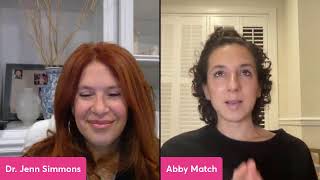
This is a transcript of a YouTube 'My Answer to Breast Cancer' spotlight featuring Dr. Jenn Simmons interviewing Abby Match. Abby recounts being diagnosed with triple-negative breast cancer at age 35 (diagnosis date given), testing positive for a BRCA1 mutation, and describes longstanding health issues predating cancer. She explains the lifestyle and environmental changes she made (plant-based diet, removing plastics, changing cookware and personal-care products, nighttime routines), the positive effect on her and her family, and her community fundraiser 'Beading Cancer Together' (Instagram-based bracelet fundraiser).
Chapters
Hello?
Hello, hello, it's Dr. Jen Simmons from Rural Health MD. I'm so excited for tonight's talk because I have with me the one and only Abby Match. I had the privilege of getting to know Abby over this last year. I don't know that she would refer to it as the best year of her life, but. But I think that she has gained a perspective, and you'll correct me if I'm wrong, but I think you've gained a perspective over this year, and you've found some real meaning in your diagnosis, and you're kind of living that meaning every day now. So I know that it's had a profound effect on you. And so let's get right to it. Welcome, Abby.
Thank you. And Dr. Jen, you should know that I watched you so many times in my early diagnosis. I was sitting here, and maybe there's somebody watching right now that's in, you know, where I was a year ago. And I just watched and I watched and I watched. And I was so fortunate then that I signed on and met you. And I am where I am. So I hope, you know, after tonight, it gives someone else hope that might also be at an early stage in their diagnosis. So let's.
Let's get right into it. And I know this is probably, like, not your favorite story to tell and not your favorite thing to talk about, but can you talk about your diagnosis and the early days and what was happening for you around that time?
Yes. So I was diagnosed with triple negative breast cancer August 1st.
For those of you who don't know what triple negative breast cancer means, that means that it's neither estrogen or progesterone responsive, nor do you have HER2NEU protein on the surface of your tumor.
Right. So finding that out, my doctors and my team, they were suspicious that I was also a carrier of the BRCA1 mutation. Given my age, why were they suspicious? Abby being 35 and having a triple negative breast cancer diagnosis was alarming, but also that I was of Ashkenazi Jewish descent. So even though I had no family history of breast cancer whatsoever, or really cancer that I could think of that was in my immediate family, there was nothing remarkable that I could pinpoint. But they said, well, listen, just given these factors, your age, the subtype of breast cancer, and you being Jewish, you're likely carrying this mutation. And they were right. I found out it took about six weeks after my diagnosis to get those results. So I knew that I needed to do something different in my life. I mean, why did I get this Diagnosis, you know, I don't, I don't blame myself, but there is something that fired the gun and I knew I had to make a change. And you know, I. Dr. Jen, I remember saying to you one of my first words, and I stand by it. I always felt a little abnormal. Something just didn't feel right in my body, I would say. And I always really felt that way and I always was somebody going to the doctor.
Like now when you say always, really expand on that for me, like how, how long?
Since the time I was little. Like I got my period When I was 11, I had cysts when I was 11. I was on birth control for some a summer and then the cysts would go away and then I had gut problems when I was younger and cystic acne and autoimmune issues where I was always getting sinusitis and bronchitis and then an autoimmune diagnosis, specific antibody deficiency where I needed IVIG monthly. And I still do. So things were just following me all my life and I started to feel.
What's funny is that you had that intuition, right? And yet when traditional medicine doesn't know what to do, they kind of like normalize it. Like, oh, cystic acne is just something that happens. Cysts in your breasts are just something that happens. Sinusitis is just something that happens and they normalize it and they make you kind of not trust your intuition, but it was there. You inherently knew that something was out of balance in your system.
Something. Right. Ibs. Oh, well, you know, that just happens. Maybe you should see a psychologist because if you're not stressed, then your stomach won't hurt. But it was just a constant. So getting this diagnosis, I was already awake, but it was a huge wake up call. Like, okay, my body is crying and screaming for help. And so, you know, and I'm going to quote you again because I just learned so much from you and I tell so many people that these are your words, that this diagnosis and you know, cancer is not a gift, but it's an opportunity to get healthy. And that is, that was so helpful for me to hear and something that I live by daily. Like I remind myself this is an opportunity and you know, I don't want to go too far off and I'm going to let you ask the next question, but just I do feel like this has been as much of a struggle, it has been such an opportunity to feel the healthiest I've ever felt in my entire life.
Which is, which is really awesome, but a testimony to you as much as it is to me, because, you know, I, I can share all the information in the world. What you do with that information is entirely on you. And you really took this bull by the horns. Yeah, you really did. So I want to back up and just talk about that, that BRCA mutation because I'm not sure that everyone understands genes. So we have two BRCA genes that we know about, and these are actually tumor suppressor genes. So there are certain people that we are suspicious have a mutation or a change in these tumor suppressor genes, making them more vulnerable to develop cancers. And so the people that we think about as having a BRCA mutation are women under 60 with triple negative cancer. And you were way under 60. Any breast cancer diagnosis, really under the age of 50, if you have three first degree relatives with breast cancer. We think about it, we think about it with any family that has male breast cancer in the family, we think about it in any family that has breast and ovarian cancer in the family, since those are generally associated with the same gene mutation. And we think about it in any woman who has bilateral breast cancer. So you kind of checked off a couple of those boxes because you were very young at your diagnosis and you also had triple negative breast cancer. And so we had talked previously about the fact that yes, you do have this genetic mutation, but genetics, even in that instance, is just a small piece of the puzzle. Right. And the major determination as to who gets breast cancer and who doesn't and who does well and who doesn't is the environment that you create for yourself.
Right.
And I think so many people don't know about the implications of environment. And I think that that's also why young breast cancers get dism, because people think, oh, you're too young to have breast cancer. And I'm sure there was a lot of that when you presented like, oh, I'm sure it's nothing because you're so young. But the environment that we're living in right now is so toxic, there are just toxins everywhere. And it's even far more toxic than it was 10 years ago. And so everyone has a toxic load that they can tolerate. And then once you exceed your toxic load, we see the development of cancers. And I really believe that the reason that we're seeing breast cancer at such young ages is because there are so many environmental toxins and that people are just hitting their toxic load earlier.
Right.
So what did you do to change, to fundamentally change your environment from the time that you received your diagnosis?
Yeah. So I, I Would like to think that I ate pretty healthy before my diagnosis, but there were things that I was still eating that I wasn't aware of that could have been contributing to inflammation. So in talking to you and doing some labs, I really cut out anything that my body showed on labs that it wasn't thrilled with. And I was fine doing that. So I really went plant based and I was fine without any added sugar. Natural sugars I was good with. That was easy for me. I just felt a sense of control. All this control I lost from my diagnosis, I gained it back with, with a healthy lifestyle, with my food. I'm like, okay, this is medicine now. Like, this is going to make me heal. So I was all for that. I'm still doing it. And again, I feel so good in my skin. And then I looked externally around me and I changed things in my kitchen, like the cookware I was using. And that has not just been something great, knowing that there aren't toxins then going in my food, but it also cooks my food so much better. So that's been an added bonus. And, you know, I looked at my storage and how much plastic was around in my kitchen and I got rid of all the Tupperware and I started using only glass. I was using a lot of young living products before my diagnosis. You know, the toothpaste and, and the makeup. So that was an easy switch for me to, to go 100% with the makeup line and the face wash. That was all easy. But really just trying to look around and see where, you know, my water, talk about my water and the filters and all of these little changes and making could make such a big change for me. And, you know, in my answer to breast cancer and taking the course, what I learned is you don't have to do everything at once. I just took what I was learning in the course and I focused on something each week. And, you know, there's a bit of a perfectionist in me. And you really taught me that you don't have to be perfect, you just have to be better. So I really use that mindset to every week think of something I could change in my environment. And I still do that because it's impossible for someone to do it all at once. And if they say they can do it, wow, I would be impressed. But I'm still making minor changes in my life to this and, and we're all right.
So this is always a work in progress for everyone and you can change everything at once and you shouldn't expect to change everything at once. But those little changes really do add up. And when you make them incrementally, you really don't feel them. Like, did you feel deprived at any point along the way?
Not at all. I didn't feel deprived at all. I felt empowered. I felt the opposite. I felt like this sense of control that I gained back. It was just. I can't speak enough about that because anybody that gets a diagnosis of cancer can most likely relate that you just feel like everything has been taken away from you. So I just, I really got organized and made priorities in my life. And I even talking to you a couple weeks ago and, and making a change in my nighttime routine to like these magnet magnesium soaks that I'm doing at night. And it's just, it's exciting to me. Like I look forward to my routine and different parts of my day because, you know, five minutes of meditation here and putting the lights down at this time of day, like it's all medicine, it's all healing and not how I looked at life before. And I just, I'm so appreciative for every day that I get up and I think about what I'm going to do that day and what my healing is going to look like.
Yeah, that's beautiful. So I know that it's had a tremendous impact on you. And I mean, you literally are glowing. Like, you are just literally glowing and so, so radiant and so we. I can see your aura and it is just beautiful. Talk to me about the impact that this has had on your family. Because when you heal a woman, you don't just heal a woman, you heal a family, you heal a community.
Yes. So again, I vividly remember saying to you early on, like, how am I going to do this with my then 5 year old daughter? Like, I'm going to ruin her life. And I can't cry in front of her. What do I do? And you told me in this group why, you know, sharing your vulnerability and crying in front of her is brave and you're going to show her strength. And that taught me so much. And I have to say that this little girl that had some troubles and anxiety before my diagnosis and at such a young age has come out on top of. And if she can do that after a year of COVID and my diagnosis, I have to say it's what we have been doing in our house and some of these changes in our mindset and the healing we've done as a family, my husband and I and my family and my friends and my community. I Mean, we have come together through such a hard time, and we have healed together in a way I could have never imagined. And I just kept saying to myself, we're all going to come out stronger. We're all going to come out stronger. That's the only option. We're all going to be okay. And we are. It's such a blessing and something your class really taught me. And there was a whole week on community and finding your community and what you do with your community. And I have to say that I have never felt more loved. And I hope that I share and my community feels the same amount of love. And, you know, we talk about that through cancer and all the hardships, you really. You find those people, and that in itself is a beautiful thing that comes out of it. And you were right.
So, you know, I talk to people about the people that really end up doing well are people that are able to find some kind of meaning or purpose in their diagnosis. And you really. You really did that. And you. You actually started a business.
From that.
That grew out of your diagnosis. So can you. Can you share with everyone what you've been, what you've been doing and. And how you. And where you found connection?
Yes. So it was sort of an accident, but I was beating bracelets for my radiation staff in March, and it was a way for me to say thank you. And I brought them. My last day of radiation was March 17th, so St. Patrick's Day. I'm like, oh, I'll bring them lucky charms. And so I made these bracelets with charms on them, and I gave them to everyone from, you know, the people that were doing the temperature checks when I walked in to the people in the back doing the radiation. So they love them. And I could. They're like, I'm going to wear this every day, and I'm going to think of you and we're going to stay in touch. And it was just so beautiful. So then I got addicted to beading bracelets. Like, I was waking up at 5am like, trying to get my bracelets done for the day. And my dad is like, you're addicted to beating. And I kept thinking, well, there's many worse addictions, so I will take this addiction and run with it. And I was in the shower and I thought, oh, my gosh, the neat beating cancer together. Like, somebody probably took this. It's probably taken. And so I got out of the shower and I looked on Instagram and I looked on a website, and like, nobody has done this. Nobody has beating cancer together. B E A D I N G. So I was like, I'm going to start doing this. I'm going to do this as a fundraiser. I'm going to be bracelets and give 100% back to organizations that have helped me or people that have helped me, and I'm going to do this. So, yes, since I would say end of March, I started my Instagram page, and I want to say that I'm close to, like, $13,000 that I raised in money from beating, like, 18 bracelets. I use 18 because it's a lucky number to me, but that's a story for another day. But, yeah, I. Yes. So it's been incredible. There's people that I raise money for. I've met people on Instagram, women that maybe are not as lucky as me and have a bucket list they want to fulfill. And I will bead and the women and their community wear the bracelets. And I just venmo the money I've given to hospitals. So it's just something that has made such a difference for me. My mental health beading is great. I can sit there and do something and it's productive for me. It's healthy. It's a way of giving back. And other people love the bracelets, so I'm wearing mine.
I have my real health MD.
Love.
And I love them. And I love your story and what you're doing because it's really beautiful. And, you know, there's a lot of healing and giving to others.
Yes.
And it really, it really catapults your own healing journey when you are supporting other people because it's nice to be supported, but when you're supporting other people, it really changes your chemistry and it puts you into that parasympathetic state, that state of relaxation, repair and healing. And so what you're doing is a beautiful, beautiful thing. What would you say to someone who is on the fence and trying to figure out their journey and where to go and what will help them to get started on their healing journey after a breast cancer diagnosis?
What would I say? Well, trust your gut. That's always the first thing. If you feel compelled to go a certain way, whether it's with a certain doctor or a team, Trust your gut. You need to have faith in your doctors and your team to get to the place where you should be. And don't settle for less. You need. You deserve it. You deserve the best. And I think for me, you know, I found my medical team for my health on the third opinion, but I found it after really researching. And I found you because somebody so close to me said, you have to check Dr. Jen out. She is going to help save your life. And I really feel like if there's one message and somebody is out there listening right now and they're on the fence about functional medicine or they have never heard of it, I want them to know that it has made the biggest impact on my plan of care during treatment and after and forever and always. It's going to be part of my life. And it will change your physical being, but also your mental being. And I think that's so important. It's not. Cancer isn't just chemo and radiation and surgery. It's. It's so much more. It's what you're doing, Dr. Jen. And I want people to know that. And I want people to. To know that the hope is here so they can do well during treatment and after.
Well, I only hope that I am able to change the trajectory of other lives in the way that I've changed yours. Because to look at you, I mean, you just. You radiate health. And so few people think that they. They don't associate with health. They don't associate health with. After a breast cancer diagnosis, but you're living proof that it happens.
But even during treatment, I never felt healthier. And I know that might not sound right, but it's so true. I just. Yeah. Well, I felt so good, so I'm so delighted.
I thank you so much for being here with me today. I want to make sure that people are following you at beating cancer together. Right. B, E, A, D, I, N, G. Yes. And so that's your Instagram handle.
Yeah, it's my Instagram hands up. My personal one is just my name, Abby Match. But. And you'll find. You'll find my beading. And I actually have it right next to me. I have my beads. Yes.
They're so beautiful. Absolutely beautiful. So if anyone is interested in. In getting any of your bracelets, they can. They can just go to your Instagram page.
Yeah. And they just direct message me that you can custom order. You can see if there's something already on my feed that you like. I can replicate it, but I really. I customize pretty much anything. Awesome.
Awesome. So we'll be make. We'll make sure that we put your Instagram handle in the comments for this. And of course, if anyone has any questions, I'm sure, Abby, you're happy to answer questions for people. I'm happy to answer questions for people. Abby is just one of the people who have been significantly impacted by taking the My Answer to Breast Cancer course. I know that a lot of the work was yours, Abby, and you definitely have to be a committed person and willing to make changes. But look at what that investment brings. I mean, you just literally radiate health, and you're such a shining example of what, again, it's not. It's not a blessing. Right. But it is an opportunity, and you definitely seized that opportunity.
Thank you so much.
Thank you for being here, Abby. It was great to see you.
Thank you.
And we will see you back here next week. It's Dr. Jen Simmons. Bye for now.
Bye.
More from Jenn






Stem Cells, Peptides, GLP1s and the New Blueprint for Preventative Medicine with Dr. Vass



The Truth About GLP-1 Drugs and Who Should (and Shouldn’t) Take Them with Dr. Susan Brian

What 100 Days Underwater Revealed About Aging and Healing with Dr. Joseph Dituri
