Navigating Cancer Treatments Beyond Conventional Methods with Dr. Karlfeldt
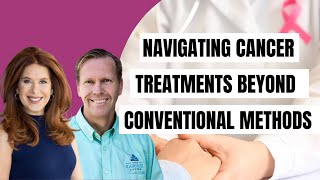
A recorded interview between Dr. Jenn Simmons and naturopathic oncologist Dr. Michael Karlfeldt about his book A Better Way to Treat Cancer. Karlfeldt argues cancer should be approached as a metabolic and environmental disease with attention to root causes (toxins, diet, emotional/spiritual stress, tumor microenvironment). He endorses integrative care — combining conventional emergency/oncologic measures when needed with restorative therapies (diet, fasting/fasting-mimicking diets, mitochondrial support, detoxification, gut health, targeted IV and adjunctive therapies) — and emphasizes foundational lifestyle changes as central to treatment and survivorship.
Chapters
Foreign.
Hi there and welcome to another episode of Keeping Abreast. I'm your host, Dr. Jen Simmons, and I am delighted to have Dr. Michael Karfeld with me today. Dr. Carfeld is a naturopathic doctor, a PhD. He's board certified in naturopathy. He has devoted his career to practicing and promoting natural health. And he is in high demand as a speaker, as an author, as an educator in his field. And today we're going to talk about his new book, A Better Way to treat cancer. So, Dr. Carfeld, welcome.
Well, I'm so excited. It's such an honor to get to chat with you, and this is going to be so much fun.
Yeah, I'm delighted to see you here. I have seen you a bunch recently because I was on your cancer summit, which you held not too long ago, which I know was tremendously successful. And I know that that is a labor of love because I'm in the midst of mine. But I know that you make a really huge difference to a lot of people, and you're bringing all of your knowledge and wisdom to the cancer community with your new book, a Better Way to Treat Cancer. So tell me a little bit about that. In that, having authored my own book, I know that writing is a huge undertaking. Tell me why you wrote your book.
Well, and that's the thing. Both you and I, our passion is to educate and to make a difference in people's lives. And we know people struggling with cancer, they're at a place that is not a space that they want to be in. And they really are looking then for a map so that they can navigate out of that space and how to function within that. And there's just so working. I've been in clinical practice since 87, and I've seen so many cancer patients, and I recognize all these different questions that they have and all the concerns and all, you know, to understand what it is that they're dealing with. And once you're diagnosed, it is like all of a sudden, you have to become an expert. And where should I go to find that information?
So how did you. How did you get into cancer care to begin with?
So it was. It was two factors. One was my father died from colorectal cancer. And so, and I was here in the United States, he was in Sweden. And our relationship hadn't been the best. So I actually didn't find out about that he was diagnosed nor that he had passed away until after about six months after he had passed away. So I didn't have a chance to make an impact on his journey, which was.
Were you already a naturopathic doctor at that point?
I was. It was early in my career, so it was kind of in. It was in the 90s that this took place. Mid-90s, but there's still a lot that could have been done. And so obviously, I wish that I would have known. But also I kind of reflecting on his journey, seeing that it was just the traditional oncology journey, where the tools are very limited and the outcome tend to be fairly predictable, where you start, you do the chemo, you do the surgery, and you start to kind of wither away. And from my understanding, he just kind of. He was as big as a German. Big, strong German. And he just withered away into nothing. And so I don't want people to have to go through that. I want people to at least be able to recognize that there are a lot of options out there and so that they can. And that was the reason I wrote the book. And it's the same with patients that are coming to me. Starting in naturopathy, you start with just kind of general health and supporting them. But over time, you start to get more and more cancer patients and. And you see the frustration in their journey and the limitation and what is available for them. And that is when you feel that, well, I really need to fill this gap, because this gap is just not taken care of in a good way. So then you start to more and more educate yourself and specialize in that area. And so it's become my specialty. My passion is to help cancer patients in their journey. And that's why I wrote the book, because I felt like there was. I felt I had something to add, a creative manual for people so that they can navigate this journey.
Yeah. I'm going to ask you a little bit of a loaded question, because someone just asked this of me today. Do you think the pharmaceutical companies are out to cure cancer?
Well, so there's. It's an economist that I've spoke with, and. And he said that if we find the cure for cancer, the American economy will topple.
Yeah. So it's financial sad, because that is one of the greatest lies of all time that people are really under the impression that. That the pharmaceutical companies are spending billions of dollars in the pursuit of a cure for cancer. And it couldn't be further from the truth.
Yeah. It is. The continual. When you read research studies, it always ends with further research. Further studies need to be done. And so if you look at researchers, I mean, who would want to get themselves out of a Job. Let's say that they've been studying cancer for 40 years, received a lot of grants, they work with prestigious universities and hospitals. And then lo and behold, boom, we found the cure for cancer. What are they going to do now?
If that ever did happen, which. It's such a diverse disease that there's no way there is such a thing. But if they ever really did find something that cured cancer, you know, never see the light of day.
No, no. Yeah, it's right. Right now. It's just so much money into it. And it doesn't mean that, you know, there are a lot of loving and well caring oncologists, you know, so there are a lot of great doctors out there. It's just that the system is set up in such a way that. To feed the financial beast. And that's just the way it is.
Yeah.
And people need to recognize that all of these, the pharmaceutical companies are businesses and they are to sell products. And so, yes, I mean, if you receive benefit from a product, then you will buy it, but they don't want you to stop buying that product. They don't want the product to become obsolete. So it's not the fixing of the issue that is a money making, it's a management of the issue. And so that's where they want to be. They don't want to say that they have the cure. They want to say that this is something that we can use to elongate your life. And so this is palliative care. This is. And that is kind of how the verbiage has changed a lot for sure.
So we use the word cancer very liberally and we think that people truly understand what that means and what it is, but oftentimes they don't. So can we start off by just talking about like, what is cancer? What is breast cancer?
And that is a big question. Like you mentioned cancer, not just one disease. You know, you have several types of cancers. You have several. You know, they tried to look at it genetically and you know, there are hundreds of thousands of genetic defects. You know, so they, they realized quickly that that was not a way to go to try to fix the genetics and that way being able to find a cure for cancer. So, you know, the next step is and what, what are some of the common components? And a lot of integrative doctors have kind of started down that pathway already. And they're more and more in the medical or in the research field that's looking into that. It may not have translated yet into the oncology care that people are receiving. But there are more studies in that direction looking at cancer as a, as a metabolic disease, as a survival mechanism as. And that that is what is triggering then the genetic defects. And that the genetic defects are kind of a hard. So the question becomes, you know, why do oncogenes exist in a normal cell? You know, why are they there to start with? You know, if that is a defect or if that is what's causing the, the individual harm, why do they exist there to start with? And so we're looking upon then cancer, that the cell then shift into that survival mode when the cell is under stress and worried about its own continuation of existence. So then we need to look at, well, what is pushing the cell into that direction. What are some of the things that will trigger the cell to start to signal oncogenes and suppress cancer suppressing genes. So then we are looking and see what can those things be. And now we're looking at the environment. What are we eating, what are we exposing ourselves? What are we thinking, you know, what are our nutritional deficiencies? Then we start to look at what is, what's existing in the body, what is the terrain of the body, you know, what, what does the tumor microenvironment look like? That's, that's creating signaling towards that tumor. And so all of those things, by shifting that and changing that, you're then able to also change the metabolic process of the, of the cell and then shift on the signaling, the genetic signaling that's taking place. So that's kind of where we're heading more now. And we're still playing around a little bit. We're identifying that there's a genetic dysfunction and this drug can impact that type of cancer without genetic dysfunction. But it has its limitation because a cancer is geared for survival, which means that it is going to adapt and change once we've identified that genetic dysfunction. And like I mentioned prior to, when you get hundreds of thousands of potential dysfunctions, then just, you know, working on one is not going to, at the end of the day, do the full trick. You know, it will prolong things, but the cancer will figure out a way to go around it.
Yeah, absolutely. So you talked about a lot of things like the environment and the tumor micro environment. So what is. And cancer is a metabolic disease. I have the majority of people come to me saying I'm healthy, but I have breast cancer. So do you think it's healthy? Do you think it's possible to be both healthy and have cancer? Or are we just not at all recognizing this departure from health and this change in our environment that is causing this tumor microenvironment.
Yeah. So I believe there's a disconnect there. There's no way that a person can be healthy and have cancer at the same time. It does not exist. And it's interesting, and I'm sure you've had the same experiences with your patient is that you have lots of cancer patients that come in and say, I haven't been sick a day in my life. And then all of a sudden now I have pancreatic cancer or I have dealing with breasts. I have stage four breasts. That. It's in my bones and in my liver and lungs and you know, and it's a little everywhere, so. And. But I feel fine. I feel. I feel great. Yeah.
Right.
So it just. What that does, it just proves to, you know, the amazingness of the body and how it's able to adapt and compensate. And while you're then dealing with these issues, you know, so that you yourself can continue to function and do your daily routine and have the energy you need to do what you need to do while the body is struggling. So there isn't a possibility that you're healthy and have cancer at the same time. Because cancer is the ultimate step when the body is saying, we can't survive as it is right now, so we need to shift gear.
Yeah. So you wrote your book mostly to give people a plan. Right. For what to do when you get a cancer diagnosis. So take us through. What do you think the first thing that people should do when they get a cancer diagnosis is?
Well, so you need to walk through first understand why. Why did I get cancer? There's always a root cause. There's always reasons for it taking place. Cancer doesn't just happen just because you need to. Then analyzing. In my book, we have step by step, both analyzing your environment and analyzing what you're eating and analyzing also your emotional well being and also your spiritual direction, your purpose, your. For instance, I just spoke to a cancer, you know, a cancer patient that I just spoke to earlier through zoom and she was. She had a tiny little tumor 15 years ago and she did breast cancer. She did double mastectomy. Yeah. Because she didn't want to be at risk for. For anything. And. And now it's. It's showing up in our. In her ribs and lymph and some in the peritoneum. So it's showing up in other places and as kind of going through and see, you know, what do you think that this was Caused by. And then understanding then her relationship with her father. She is. She became a doctor, but she didn't want to be a doctor, but she became. Became a doctor because she wanted to get the approval of her father. And then her father passed away a little bit over 15 years ago. You know, it's a little bit right after her last. Her. Her last diagnosis and she was saying, I am so pissed at my dad. I've lost my whole life. I've sacrificed my whole life. And. And he never gave me really the acknowledgement. I went into a direction that. That I didn't want to go. And he died. And now I'm dealing with this cancer. So the emotional component is huge. But then also looking at for people that are farmers or they live close to areas where pesticides is sprayed, or they may be kind of working in a profession like an auto mechanic or a hair salon or where they're exposed to chemicals and there may be genetic dysfunction. So you gotta look at all these different factors. When you see. Look at the individual, the tumor, the cancer is the least component of it. That is just the body's way of communicating that enough is enough. But you gotta understand then why is the body trying to communicate that and unravel that and then address those factors? Because otherwise, if you just remove the tumor, then lo and behold, all those causative factors are still there and they want to communicate again. And then it shows up again.
Yeah. So I think what you're trying to say is everyone's cancer is trying to tell you something, that there is a message there. And for some people, it's that, you know, this environment isn't agreeing with me. And, and for some people like me, it's. You're on the wrong path and you need to get off and get on to a different one. And so to be able to get past your anger, your hurt, your disappointment, and be able to have that perspective of what is the message here? What am I meant to learn, what am I meant to change, what am I meant to do? To be able to back off enough and gain that perspective is of the utmost importance. Right. Because otherwise, what is to stop the progression of the disease. Right. Because a surgery certainly isn't going to stop it.
No, all you're doing is that you're then removing the body's language to communicate. And so then the body just gets frustrated and then it has to communicate harder and harder. Is usually metastasized. It's usually in more locations. Doesn't mean that obviously, if you are in that Situation where you need to do traditional oncology care just to save your life, that you shouldn't do that, but you should never not include restorative therapies to look at underlying factors and then also to bring in supportive, integrative care. I mean, that to me, seeing the difference between patients that do not and the patients that do, it's a stark difference between the two. You see cancer patients that come and get treatments at my center, and then they go to their oncologist, and maybe they do chemo. You know, how much better they do, you know, while they go through that journey than a person that just rely on traditional oncology.
Yeah. And to be clear, I mean, we're not throwing a baby out with the bathwater. Right. We do know that there is a rule for a role for conventional oncologic approaches. And, you know, I liken it to a situation where if you have overwhelming tumor volume, it's going to be very difficult for your immune system alone to clear it. And for most people, one of the primary reasons why they got cancer in the first place is because they have an immune challenge that isn't allowing their immune system to do what it's supposed to do. And that's what allows for the expansion of the cancer population to begin with. For those people that have a large amount of tumor burden, Their proverbial sink is overflowing. You're going to need to mop up the floor. Surgery, chemo, radiation. There are situations where these things are appropriate, but they cannot be done in isolation. Because unless you are asking the question, why did this happen? And unless you are mitigating those triggers for you, eliminating those triggers for you, unless you are going to move to the rest of the elements that you talk about in your book and do the things that we know promote your health, there is nothing to stop the progression of the disease.
Yeah, exactly. I can't agree more. And a lot of times you can look upon cancer as your house on fire. I mean, sometimes you just need to quench a fire and then rebuild. So, yeah, sometimes you got to do emergency measures when something is raging, but at the same time, then just don't just become tumor focused and thinking that just because you have a tumor that that is going to end your life, it is not the original tumor that tend to be issue. It's when it starts to move about that becomes the issue. So if we can then use the initial diagnosis as your guide and then. And start to address it, and the body is kind of giving you a warning signal, then you're so ahead of the game and then start to look at, you know, what are some of the areas that I need to improve then. Obviously diet and you know, which diet is appropriate. And that depends sometimes on your genetic and it may depend also on your, on the type of cancer you're dealing with and your background and your know, where you're at in your cancer journey. So you know, having someone to guide you along with that, you know, I'm in my book, I give a lot of, lot of directions there. But still it is good to have somebody to walk along you with on that journey.
Yeah.
And then kind of look on the very foundational pieces. You know, I want to control my inflammation. I want to maximize my mitochondrial activity. I want to support my ability to detoxify and to get rid of the toxins. I want to kind of analyze and see what's my pathogenic load. Am I dealing with parasites, dealing with fungus, Is it a kind of viral driven and then address those, you know, and I want to make sure that you know, you know, so all, all those factors, my gut, you know, where, where's my gut at? And, and the gut controls about 80, about 80 plus percent of your immune systems along your gut. So, so these are the foundational components that I really want to make sure, you know, in my book that I gave a complete journey as to, you know, how to look at them, you know, what are the solutions, what can you do and so that you have then kind of an actionable step or actionable process to go through to then analyze where am I at and all these factors and how to address them.
So what are. I think most people know that diet is important. Actually the medical oncologists don't know, but most patients know that diet is really important. Are there some diet foundations that you talk about with people with cancer?
So it depends a little bit. Also based. So we run a kind of a genetic profile for individuals to understand, you know what nutrition wise, what would be the most appropriate and obviously they're number one.
Which test do you use?
I like nutrition genome test. Yeah, that, that tends to be a really, really good one. And that way you can understand how people process meats or how they detoxify or how and then you can then build a program around that understanding. And so what diet is the most appropriate. And it depends a little bit on the individual. I have a lot of people on kind of a nutritionally dense type of ketogenic with also a gaps focus where you are working on building up the gut along with shifting the metabolic processes in the body. And then also at the same time, we want to make sure that we supply the nutrients needed for optimum cellular function. And also the power of fasting, obviously that is such a powerful tool to bring in. So to do that appropriately, obviously. I interviewed Dr. Longo a while back ago, the radio show that I used to have. And it is just fascinating the amount of research around, you know, the fasting and if people choosing to do chemo, then how the fasting then protects your healthy cells and then, then make the cancer cells more vulnerable, you know, with, with chemo while you're fasting. So it's all these different tools using food as a way to navigate yourself through this space. And then it's very foundational. This is kind of Dr. Paul Anderson, another mentor of mine and friend, and I truly look out to everything that he's done in the integrative cancer space. And I remember interviewing him long, long time ago on, on, you know, actually my first episode when I started my, my radio show, which I still don't have, but I. Which I don't have anymore. But I do so many other things.
But he said only so many hours in a day.
I know, I don't know what God was thinking, just giving us 24. I feel it was kind of. He knew we were going to use whatever he gave us, so he had to put a limit somewhere. But as you said, I mean, the foundational pieces, there's so much you get, you know, by just addressing those. And that is your, your diet, your movement and your spiritual health, you know, your emotional spiritual health. So if you can focus, make sure that you have those three as a foundation, then you can build and do a lot of the different heroic type of therapies that we do here at our center. You know, like the photodynamic that we do, the iv, curcumin, poly, mva, dca, high dose vitamin C, ozone, and you know, all these different really, you know, fancy type of therapies, but you can't. And it's the same with medical traditional oncology. If you don't take care of the foundational pieces, then you're shooting yourself in the foot, you know, by just doing even just vitamin C. Can't supplement your.
Way out of a bad diet, can't exercise your way out of a bad diet. Like all of these things have to be done in conjunction with one another.
Exactly, exactly. If you don't have the foundation, then all of these other things really, they don't have a Structure to fall into. And we need that. And you know, like one thing, a body that's not moving is not expressing life. And then we are moving towards death. And so we need to, in, in order to shift direction, we need to do things that are life giving, that gives us purpose, that gives us joy. You know, we need to eat for life, we need to move for life, we need to have relationships, we need, you know, all of these things that are expressing life is what we need to bring in, into your space, even if you're not dealing with cancer.
Yeah, agreed. So I want to back up and talk a little bit because you brought up Valter Longo and how fasting during chemo protects healthy cells while making the tumor cells more vulnerable. So what you're referring to is his data on the fasting mimicking diet. And I think a lot of people think that in order to get the benefits of fasting you have to do a water fast. But I think what Dr. Longo's data is showing and the work that they're doing at El Nutra, who is the company that puts out Prolon, they're showing that you can actually eat underneath a certain threshold and get the benefits of these prolonged fasts. Because if you're really going to go into autophagy, if you're really going to go into that self eating space where the cells, because they have been deprived of calories for a certain period of time, let's say it's somewhere between two to three days, depending on where you are metabolically, these cells, because they have not had access to glucose, they will start to digest the parts of them that are not working. So misfolded protein, damaged proteins, that kind of thing. So this is how a cell who is unhealthy starts to make itself healthy. And so with regard to chemotherapy, what you want is the normal cells to take up the chemotherapy. And so if they are in this fasted state, they're pretty quiet, they're not metabolically active because they, they know that there's not food around right now. So they're not going to make themselves active. And cancer cells in general don't have that ability. They don't have the ability to read the room right. They, they don't know what's happening in the environment. They only know that they are in survival mode. And so they need to go, go, go. So the fasting mimicking diet, I mean a water fast works too. But not everyone is as enthusiastic about a water fast. Not everyone thinks that they're capable of a water Fast. So I think the, the information coming out around either water fast or the fasting mimicking diet as it relates to chemotherapy is amazing. I'm anxious to see what the role is in radiation because it just seems like it would help. But the problem is we radiate people in general Monday through Friday for four to six weeks. So it's hard to ask people to fast for that long. And then fasting and survivorship, the numbers are pretty convincing. I mean, there's that JAMA study that showed that people who time restrict their eating so that they're doing at least a 13 hour fast every day, which is like nothing. Nothing. They had a 37% increase in survival.
Yeah. It is incredible to see kind of as American people, but all over the world where we're overfed and undernourished and like you're talking about the autophagy, it is an important component that we can't. I mean, it's such a powerful tool in the body to be able to allow the house cleaning to take place. You know, we have a system set up to clean up things that we don't need. You know, like you mentioned old cells, old debris. And it's so important to allow that process to kick in because otherwise we just kind of build up more and more junk and we just kind of crowd the cells more and more and that's when they get into that survival mode and to be able to. And you mentioned regards to, you know, the chemo and the cancer cells. It is important to understand that the cancer cell is very inefficient. You know, cancer is very inefficient in how it produces energy. So it is very vulnerable to any kind of energy deficiency in the body. So when you are fasting, a cancer cell will produce, will need about 18 times more energy substrates or glucose in order to be able to produce the energy than what a normal cell would be able to. And it is in fact in that kind of growth state where it's working on, on growing and doing all these other things. So it's actually requiring even more energy than a normal cell would because it is in that growth state. So if we then shut off that, that source of energy, that source of, of, of glucose or you know, whatever fuel that it's needing. And then at the same time then, then it becomes very vulnerable and it has a hard time to defend itself, has a hard time to produce that antioxidant protection that it does in the cell, one that exposed to chemo. So it just makes a chemo so much more effective. And the challenge is that if you do chemo and you are not doing these things, you're then allowing the cancer cell to figure out how to circumvent the effect of the chemo.
That's where resistance comes from. Right?
Exactly, exactly. So, so you, you want to kind of out of the gate, you know, start with these things because you, you, you want the tool, you don't want the cancer to figure out the tool you're using.
Yeah. And it's especially important, you know, not everyone has an integrative oncologist, unfortunately, which is why conversations like this are so important. Because everyone who is getting chemotherapy needs to know this, and everyone who was getting chemotherapy needs to be doing this. And the medical oncologist, they really need to be involved. And I know, you know, at usc, where Walter Longo is holding his research, they are, but this is not universal practice at all. And it's going to have to come because people are demanding it. And people should be fasting while they're getting chemotherapy. Everyone should be in a fasted state. We should not be giving people boost and ensure while they're, while they're getting chemotherapy, it just shouldn't happen. And again, I, I, I, I applaud the work of Valter Longo and El Nutra where they are, they are proving that you don't just have to do a water fast, that you can eat below a certain threshold in the, in the way of the fasting, mimicking diet that they created that allows for people to not have to deprive themselves of food but still get the benefits of fasting.
Yeah, exactly. It is because when you go to an oncologist or you go to a nurse oncologist, that's kind of your touch point during your care. All they're saying, you just get, eat calories, eat calories, eat ice cream, eat ensure, eat.
No matter what you do, don't lose weight.
Right, exactly.
Horrible messaging for people because if you are overweight, you are two to three times more likely to develop a cancer because of the medical, because of the metabolic dysfunction that goes along with being overweight. And as you said, so many people are overfed and undernourished. Right. So they're eating a lot of calories. They don't have a calorie deficit, but they have a terrible nutrient deficit.
Yeah, and exactly go along with your point in regards to excessive fat. Excessive fat cells, they send inflammatory signals. Fat cells and send inflammatory signals which will then promote and cancer thrive in an inflammatory environment. There's no cancer that exists without an inflammatory environment. So excessive fat will support that inflammatory process that will fuel cancer, that will fuel all the different drivers that it's using. And so losing weight is not a bad thing. And when you're eating well, and you're eating nutritional dense food while you're going through this journey, yes, you will, then you will go down to a certain weight and then you'll stabilize. And while you're doing that, you're then supporting the healthy cells defense against the chemo. Or also, you also have. The cancer cells are trying to. We talked about the tumor microenvironment. The cancer cells are trying to then convince the other cells around them to become like them, you know, to exhibit the same kind of signaling that they do. So we need to keep these healthy cells as strong as possible to resist that signaling, to resist. To go into the join the force, Darth vader area. We want them to maintain healthy and strong. And with a tumor microenvironment, it's really fascinating to look beyond what's going on just within the tumor in itself or the cancer cell. A lot of the signaling that's taking place in the environment drives the aggressiveness of the cancer. So if we can control that environment, we can then control the behavior of the cancer and we can also control whether, you know, so we have, we look upon cancer stem cells and then we look at regular cancer cells, and actually they've seen that the environment can then make a normal cancer cell shift into a cancer stem cell, which is then chemo resistant and will also be able to just kind of hang out there. And then when all the onslaught of the chemo or whatever radiation or whatever it is that's taking place, then it can go into action. When it feels like it's been hiding under its bunker and now it can jump up and do things because nobody's shooting at it anymore. So controlling the tumor microenvironment, you can then control how many of those cells that are shifting into that cancer stem cell behavior, or you can then shift them towards, you know, being just dormant, not active, and they. They're not doing anything.
Yeah. So I know we've covered a lot of ground today. We talked about what is cancer. We talked about cancer as a metabolic disease. We talked about the importance of asking why, of looking at the environment, both your macro environment, but also the micro environment that the tumor is in and the signals that it sends out. We talked about asking about why you got cancer. What is your cancer trying to tell you? What do you need to realign in your environment in order to get past this diagnosis because we know that cutting a tumor out is not going to be a long term solution. And then we talked about some ways to determine what kind of diet is right for you. I know that you use the nutrition genome and we talked about the value of fasting and what fasting does in terms of the body's function, but also the role of fasting during treatment and then beyond. And so I know we talked about the fact that there are a lot of treatments out there, but the basics are what is ultimately really important. And that's why you wrote your book A Better way to Treat Cancer, to really give people the foundation. So can you share with people where they can get your book, where they can find you?
Yeah, the best would be to just go to Amazon so it's available there. And for people that want to see what it is that I do, they can go to my website, thecarofalcenter.com like yourself. I also do a cancer podcast where I interview people that have gone through their journey and also leaders like yourself. And I've been believe I may have had you on or I will have you on. I'm not sure. But at some point you will be there if you haven't already. And so those. And I have a huge amount of resources. Like I mentioned, I did my radio show for probably about three plus years and a lot of those were on different cancer subject where I interviewed people like Dr. Paul Anderson, Valter Longo and. And leaders like, like that. So just typing in cancer on my website, it will pop up a lot of those different interviews and number of ebooks you can pick up for free on my website. The first chapter of my book is free on my website so people can go there and just pick that up. So yeah, there's a huge amount of resources that I have there.
Amazing, amazing. Well, Dr. Carfeld, it was so wonderful to have you here today. I am so grateful for the work that you do and for sharing all your wisdom with our listeners. Because it's information that's really important and we want to make sure that the world knows about it.
Thank you so much. And thank you so much for everything that you're doing for I. I know it's a labor of love to, to really share all this information. But at the end of the day we want people to have tools and feel empowered, you know, through their journey.
Absolutely, absolutely. And I think we can both agree that we were put on this earth by God with a mission and that we. We've just obligated to fulfill it. And it comes with a lot of love in our hearts because there would be no reason to do this other than the love of people.
Couldn't agree more. Thank you so much.
Yeah, it's my pleasure. So I hope you enjoyed this episode. If you did, please share it with a friend. Someone who needs to hear it, because breast cancer is so prevalent that I know that you know people that need to hear it. So please share. It's Dr. Jen. Bye for now.
More from Jenn






Stem Cells, Peptides, GLP1s and the New Blueprint for Preventative Medicine with Dr. Vass



The Truth About GLP-1 Drugs and Who Should (and Shouldn’t) Take Them with Dr. Susan Brian

What 100 Days Underwater Revealed About Aging and Healing with Dr. Joseph Dituri
