The Benefits of Fasting for Breast Cancer
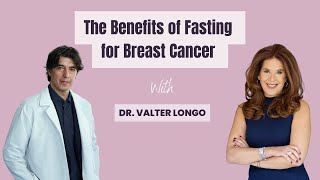
YouTube episode (July 14, 2023) hosted by Dr. Jenn Simmons featuring an interview with Dr. Valter Longo about fasting — specifically the fasting-mimicking diet (FMD) — and its applications for people with breast cancer. Longo explains mechanisms (autophagy, starvation–refeeding, immune activation), cites clinical work (≈13 years of clinical trials including a Dutch trial of 125 HER2-negative patients showing reduced non-responders and a Vernieri study reporting immune activation published in Cancer Discovery), and discusses regulatory and implementation efforts (FDA engagement, food-based drug, clinics). Simmons emphasizes patient advocacy, practical cautions, and that FMD may improve chemotherapy efficacy and reduce side effects while helping immune recovery.
Chapters
Hi there and welcome to my YouTube station. This is Dr. Jen Simmons, the doctor with the answer to breast cancer. And today we're talking about something that I do not think the conversations are having enough around. And the thing that we're talking about today is fasting. Now fasting is definitely growing in its appeal to people. And I think that information is being disseminated, but I'm not sure it's being disseminated in the right place at the right time time. Because we are talking about fasting in terms of weight loss and we are talking about fasting in terms of its anti aging effects. But where we're not having the conversations about fasting is around cancer. And fasting is probably one of the greatest tools that we have to help the cancer person who is going through their cancer journey, recovering from a cancer journey, or, or wants to leave cancer behind. This is probably one of the most important tools and it is especially important during treatment. But while everyone is getting a treatment plan that includes chemotherapy and maybe radiation, what they're not getting is the information that they need in order to make those treatments the most successful. Now, I am not against conventional treatment. I do not believe in throwing the baby out with the bath water. And I know that there is a time and a place and I know that there is benefit for some people, not for everyone, but for some people, those conventional treatments do have benefit, but they don't have benefit in the way that we are administering them because we are ignoring the things that make them more effective and less harmful. Last year I recorded a summit, a breast cancer summit. And one of the people that I spoke to was Dr. Valter Longo. Now, Dr. Longo was involved in the first calorie restriction studies and learned that by restricting calories you can extend life. But there were more lessons to be learned there because calories restriction alone, when done to an extreme, increases cortisol and that increases our stress response and that is a pro cancerous state. So kind of went back to the drawing board, looked at all the different organisms up to humans and figured out the balance in the sweet spot. And we call that the fasting mimicking diet. And that has been popularized for weight loss. But today we're going to talk about it in the context of, of improving cancer treatment and restoring health to anyone who is cancering or has cancer in their background. Now, most of his work is in the area of breast cancer, although he does refer to his work in prostate cancer as well. But please know that if you are anywhere along your cancer journey, there Are benefits to fasting. So let's tune in to my interview with Dr. Valter Longo.
Autophagy is basically self eating. And so as you as a cell stars for long enough, it will begin to break down its components. And it does both because it wants to eat it, eat it, or let's say consume it for energy, but also does it because lots of cell activity cost energy. Right. Consumes energy itself. Right. So you have a double benefit. You sort of get rid of weight and energy consuming components and you use them for fuel. Now the problem, and this is why I always hate simplifications, because people think, oh, you know, autophagy, it's good for everything. Well, that's not true. A lot of cancers love autophagy. That's exactly how the cancer grows. Some cancers, if you block autophagy, they're killed. Some cancer cells are killed by blocking autophagy, Some cancer cells are killed by inducing autophagy. So it depends which cancer cell. But in general, the normal cells, they tend to, if they start, if you start autophagy in the normal cells, you, you're probably starting a reasonably good process, depending how far along you are in the breakdown process. At some point, of course that's going to do damage.
Now in terms of cell repair and cell surveillance, in terms of normal cells, is that something that happens in a fasted state or does it happen regardless of, of whether or not you're fasting or fed?
Of course it happens regardless. At a certain level, there's repair going on all the time in many, many different systems within the cell. In the fastest state, we're starting to see evidence for a very sophisticated search, destroy and replace type of system. Right. So, and it makes sense, right? So, so if you think of a building, you might have an old building, and, and it's not easy to repair an old building, but it's very easy once you take it down, right. To build a new one. It's very, and most people, if you talk to construction contractors, they'll say much easier to take something down and rebuild it than to try to take something and to retrofit.
Yeah.
So yeah, so then that's the idea, right, that this, this fasting, starvation, autophagy, refeeding cycles are going after. They seem to know what to get rid of and think about apoptosis. Right. So I mean this is our idea for, for fasting, refeeding. But we've always known that there are systems in the body, and everybody accepts this, that go after something because it's damaged, right? Well, how does the system know that during embryogenesis, for example, lots of cells are killed preferentially, but the system, the human body knows to kill only the ones that are damaged and not the ones that are good. Right. So we think that during fasting refeeding, the same is happening and the same techniques are used. So all the beds are selected, they're destroyed, all the good ones are protected. Then the stem cells and other regenerative programs are turned on. And then when the food comes around, The template is able to rebuild that building that was taken down by the starvation period.
So let's get into the fasting mimicking diet, because there are specific applications around treatment for the fasting mimicking diet. Right. Specifically, if we're talking about someone who is in active treatment with chemotherapy for breast cancer. Yeah.
So those, I would say they're the most advanced. Now. We've been working on that clinically for 13 years, of course, with lots of hospitals from all over the world. And so that you're looking at maybe six or seven trials that have already been done for and breast cancer. And so I think the Dutch trial, but also the Vernieri trial in Milan, they look very, very promising. The Dutch trial was 125 people, women with HER2 negative breast cancer. And this was preceding surgery. And basically there was a clinical response and a pathological response. So they basically looked at the size, radiologically, the size of the tumor, and then the pathologist took the tumor and looked at how many active cancer cells were in it. The results I think are extraordinary. Which means that if you look at those that were doing fasting mimicking diet, together with the chemotherapy, there was a dose response. And so those that completed many cycles of the fasting, that with chemotherapy, there was a five fold reduction in the non responders. Right. So it's pretty remarkable to see a five fold reduction. It's one study, 125 patients, but it's a good, it's an incredible start. Also because the clinical response, the radiology.
Are these hormone positive cancers.
Both.
It's both hormone positive and hormone negative.
Yeah.
Okay. The only thing that all of them had in common was being her two negative. Right?
Yeah. Okay. And yeah, so then, and then if you look at pathology, there was a dose response, meaning that cancers there were 90% or more cancer free. I mean masses there were 90% or more cancer Free. Those that only completed one cycle, the FMD had an effect, but this increased progressively as they did all six to eight cycles of the fmv, which is, I think Seeing the clinical response and the pathological response and matching. So well, what we see in mice and everything fitting was it looks very, very promising. And in the Vernieri trial then, which published less than a year ago, was looking at what we had seen in the mice, we and other lab, the Kromer lab, which was the activation of the immune system. Basically in the patient with all kinds of cancers, including breast cancer, the immune system post fasting, mimicking diet seems to be much more aggressive against the tumor. And yeah, so we have seen this very clearly in the triple negative breast cancer. And so the Vernier trial, it formalized that showing a clear activation of the immune system. It's almost like there was an immunotherapy without immunotherapy. That's what they saw in different type of cancers. And this is a paper in Cancer Discovery of less than a year ago.
So what does practically, what does this look like for people who are undergoing chemotherapy? What is the fasting mimicking diet? For them?
Yes, for them. I think that when I wrote my first book, I put in a lot of information and, and I got a lot of calls from doctors saying don't do this, you know, because what happened is people read the information and, and I say don't, don't do this at home. But didn't matter, you know, they just went and did it. And the interesting thing, they did it however they wanted to do it. It wasn't like they even follow what I said. Some follow some understood one way, some understood the other. And lots of people ended up in the, you know, in trouble, right, because they did crazy things, you know, so, you know, 10 days, 15 days of.
Fasting, mimicking diet, the more is better mentality. If some is good, more is better.
Or maybe I'll take this out, I'll add this, I'll have a bunch of proteins because proteins are good for you. All kinds of crazy versions and also misunderstandings. So for example, I'm always very surprised when I say 50 grams of proteins. How many expert journalists will turn that into 50 grams of food that contains proteins, right? So now 50 grams of protein and 50 grams of food that contains proteins, if it's proteins are plant based, it's a tenfold difference, right? This is how easy it is that to completely miss on what I say. I mean, misunderstand what I say. This is why we don't, we don't do that anymore. I think, you know, we're sort of now working with the FDA to move this to the for, especially for hormone Therapy. The trial on hormone therapy and FMD is going to be with a food based drug. And the FDA has already agreed to allow this to move forward with an ind and so that's the way to do it. But the good news, because I complained that we I'm not going to allow or I'm going to fight very hard so that people don't say that's going to take 10 years. So then the FDA does allow lifestyle programs that can include nutrition. And so I know that the company is working hard at making available, looking at all the guidelines of the FDA working with oncologists and saying, okay, how can we make a program that includes a fasting mimicking diet available to patients? And of course the oncologist will have to regulate it. And so I think that's hopefully within a year that's going to be out and cancer patients can take advantage of it.
That would be wonderful. Are you finding that the medical oncologists are receptive to this?
I think that there's a big difference compared to 13 years ago. But they're very, very receptive all over the world. Mayo Clinic, MD, Anderson, UCSF at the Clinical trial level. So everybody wants to do a trial. So we now have many, many trials on cancer and that's good. And so they go immunotherapy, kinase inhibitors, hormone therapy, chemotherapy, et cetera, et cetera. And starting of course these trials that were just published, this say seven or eight trials, they're starting to turn very slowly a small percentage of the oncologist. But I think we're in the transition moment where the oncologists are, I will say maybe half of the oncologists and now are agreeing that nutrition is not just something that you do between a treatment and the next. Nutrition can make a big difference. I mean, so I think lots of oncologists, they might not know what to do with nutrition, but they may, I think they're starting to agree that yes, it clearly could have a big impact. So for example, there is a study that you are probably aware of where women were fasted for more than they fasted for more than 13 hours every night. They had a better, slower progression of the disease and saw a better progression free survival. And this is pretty large study, right? I think I forgot, but it was was 600 patients or something like that. This was not a clinical study. It's not a randomized clinical study. But I think this is one of the many studies that I mentioned in my book on cancer. Now it's just in Italian. But soon enough it's going to come to the US and by the way, I donate everything to charity, so I'm not advertising it to pocket money here, but.
Well, but we want you to advertise it because we want to get smarter, we want to know more. Right. And we want to do as much as we can. You know, there is still a huge divide, a huge gap, a huge misunderstanding between nutrition, what food means. Food is information. And there's still this huge misconception that, that people shouldn't lose weight while they're getting treated for cancer. In infusion suites all over this country, they're still giving people boost and ensure and telling them medical oncologists and their support staff are telling people who are getting treated for cancer to eat whatever they want. Pizza, ice cream. This is still happening in most places every single day.
Yes, yes. There is no doubt. There's no doubt. It's starting to change. Right? And I think what's going to make the big change. So we now, my foundation has opened a clinic here in Los Angeles. We have one in Milan. I think what's going to change things is the competition. And I hope we have lots of clinics like this that are saying, okay, we're doing it differently here. Right? And so I think these centers are going to have to adapt because people are going to say, I want to go there, I don't want to go and get the old type of treatment, I want to get the new treatment. And yeah, but, but I agree. I think that the view has been, what could food possibly do to cancer? And, and with that mentality, then I think it makes sense to overfeed the patient because then they're just thinking of the muscle, the cachexia and all of that. But in fact, a lot of patients now gain weight with all kinds of therapies. We just finished publish a clinical trial with prostate cancer in Ireland. And sure enough, most of these men on the hormone therapy were gaining weight. And the fasting, mimicking diet was very helpful. I mean, it was not focused on cancer progression. It was more focused on the metabolic effects. But it was very helpful to make him, you know, lose weight and become healthier. And so, yeah, so I think that that's gotta change. And I imagine in the next five years we're gonna see this thing turning around almost completely. Meaning that the centers that are not gonna have sophisticated nutrition program are gonna have problems and patients are gonna go to those that have what they have. Plus not just the fasting, mimicking diet, I think, but also in between and looking at what we've done in our trials, we look at phase angle, so we look at muscle function, muscle, lean, body mass, and we adjust, right? So the idea is being we want to keep the muscle mass steady and we want to keep the glucose low but not too low. We want to keep the amino acids low, but not too low so that the patient should stay healthy. But the cancer cells need to struggle all the time. And yeah, so that's, that's not easy to do, right? You need to have a team that knows what they're doing. You know, it's going to probably need continuous glucose monitors, etc. Etc. But I think, you know, once we launch these programs, I think that we, it can go pretty, pretty fast and make it available to everybody.
So I loved this presentation and I love his optimism. I'm just not entirely convinced that the conventional medical world is going to adopt this quite as quickly as he thinks it is. Because for the most part, we are way, way, way behind the times in understanding cancer, in understanding that cancer is a metabolic disease. In fact, I just had a patient this week whose son was arguing with the medical oncologist saying that cancer is a metabolic disease and the medical oncologist saying that cancer has nothing to do with, with metabolic health. And so I think that there needs to be so much re education, so much unlearning. So I am not quite as optimistic as Dr. Longo is in terms of when change is coming. I do believe that the conversations are starting to happen and I also believe that this is going to be a grassroots movement because this is going to be driven by consumers. And as a consumer, if you are someone that is cancering, you deserve to, first of all, have the right information and second of all have the right support, third of all, get the right treatment and guidance. And that is going to be driven by you. So if you are currently being treated and your doctor is not talking to you about diet and fasting, then I think it's probably time to find another doctor. I think it's one thing if they say I don't know, because that probably comes from an honest and earnest place. And if your doctor is willing to learn with you, which would be novel and exceptional, but wonderful, if your doctor is willing to learn with you, then maybe that is something worth pursuing and stay put and learn together. If your doctor tells you no instead of I don't know, then that person is not going to serve you because without question, cancer is a metabolic disease. And it's because cancer is a metabolic Disease that things like fasting are so advantageous. As Dr. Longo said, overnight fast increases survival. Fasting, mimicking diet while you're getting treated not only improves the efficacy of treatment, but it also decreases the side effects. So it's protective against the normal cells. And the most interesting thing that they learned is that it helps to re enroll the immune system. It helps the immune system to come back online, which is so important, especially in that triple negative population where your treatment options are so limited. And if you can enable the immune system to help out, which normally when people are getting chemotherapy, it takes out the immune system. So if you can do something as simple as fasting and get the immune system to come back online, this is going to have a tremendous benefit. And that's what they saw in the clinical trials. As hard as it is to be your own advocate, I think you have no choice. If you are working with someone who simply will not listen, I think you need to find someone else to work with because again, this is going to have to come from you. And the other thing that I think that is so important to talk about is that while these providers are contributing to your treatment, the only person that can heal you is you. And we need to stop farming out our health to people who neither know how to make us healthy nor is it really in their interest to make us healthy. And that is not to say that doctors aren't well intentioned. They are, they are very well intentioned. But remember that a good medical oncologist is someone that gives those drugs, right? It's not someone that cures someone, because that's not what chemotherapy does. Chemotherapy cannot cure cancer because cancer is not a chemotherapy deficiency. It may be one of the tools to lower the cancer population. But healing has to come from you, has to come from within, and has to come from changing that microenvironment, changing the environment that was fostering a cancer. And the only way you can do that, you certainly cannot do that by putting chemotherapy in your body. You cannot. It's impossible. But you can do it by changing the way you eat, changing when you eat, changing how you eat, taking the supplements that your body needs to build health, getting movement, getting exposure to sunshine and nature, prioritizing sleep, avoiding toxins. All of these things become paramount when you are cancering. So if you're on a journey and you need help, this is the place to come. We've got you. We've got you. And I will continue to put this information out there. Now, specifically, if you are undergoing chemotherapy and you want to learn more about the fasting mimicking diet. I do have a course, how, when and what to eat during chemo. We'll put that link in the show notes and I will see you back next week at this time where we will be talking to some other expert. I haven't decided which one, but we will have some other expert with information that you need to know anywhere along your breast cancer journey. It's Dr. Jenn Simmons. Bye for now.
More from Jenn






Stem Cells, Peptides, GLP1s and the New Blueprint for Preventative Medicine with Dr. Vass



The Truth About GLP-1 Drugs and Who Should (and Shouldn’t) Take Them with Dr. Susan Brian

What 100 Days Underwater Revealed About Aging and Healing with Dr. Joseph Dituri
