The Genetic Code to Living Your Breast Life with Kashif Khan
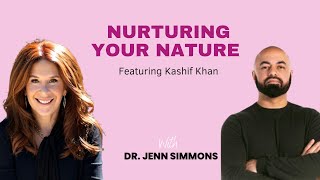
Kashif Khan explains how to read your genes as instructions, not destiny. He focuses on inflammation, detox pathways, and neurochemicals like dopamine, then uses environment, nutrition, and lifestyle to prevent disease and extend how long you stay healthy.
Chapters
Foreign.
Welcome back to another episode of keeping abreast with Dr. Jen. You have something really special in store for you today. I have Kashif Khan with me today. He is the author of the DNA Way, a two time TEDx speaker, celebrity longevity coach, and founder of the DNA Company, which is personalized medicine being pioneered through unique insights into the human genome. He is also the host of the Pilled podcast. Can't wait to hear about that. He grew up in Vancouver, Canada in an immigrant household. He developed an industrious entrepreneurial spirit from a very young age and through his tenure at the DNA company, he advised a number of high growth startups in a variety of industries. As he dove into the field of functional genomics as the CEO of the DNA company, it was revealed that his neural wiring was actually genetically designed to be entrepreneurial. However, his genes also revealed a particular sensitivity to pollutants. He is here today to tell us about what he learned about himself and what we all have the potential to learn about ourselves so that we can do the very best job at nurturing our nature. So, Kashif, welcome.
It's a pleasure. Thank you for putting this together to educate everyone. The work you're doing is amazing.
I'm so happy to have you here. And as you know, I was an early adopter of your test because though I do think that our genes create a roadmap, I also think that we have so many touch points and opportunities to really nurture our nature and most out of our own genetic roadmap. You can't do that without the information. And what makes your approach so very different than everyone else's approach is that it's actionable. And instead of being living in fear of what your genes have to say about you, you can instead embrace them and create a reality that is even better than what could be predicted.
Yeah, you're right on there. And I wish you told me that five years ago. Would have saved me a lot of time and research, you know, but essentially you're. You nailed it in terms of we think genetics is a prescription. You have an 80 chance of Alzheimer's, you have a 60 chance of breast cancer. When that thinking is driven by the pharma money that funds the research, trying to nail down what equals a disease so that you can make a pill. Right? But really what genetics is, it's a set of instructions that tells all of your cells how to do their jobs, from making hormones to making neurochemicals, to clearing toxins. So if you understand how well or how poorly you're doing the job, you then can interpret how that may equal a potential problem or a potential benefit and is. And in between those two things, the gene and the problem or the benefit is your habits, environment, nutrition, lifestyle. And we're going to dive into some of those things today. But if you take for example, what you said about my neural wiring, right? So my, that's a perfect example to explain this. So genetics will say, where's the addiction gene? Where's the, you know, anxiety gene? And then try and make a pill for it. The biochemistry says there's a chemical called dopamine which allows you to experience pleasure. Right? I eat some tasty food, watch Netflix dopamine hit. That's, that's where you get it from, right? The, the reality of how your body does that. There's a gene called DRD2 which determines the density of the receptors in your brain to actually experience dopamine. So we know how intensely you experience pleasure. There's then a gene called COB T which comes along and creates a protein to eliminate the dopamine because eventually you need to get back to normal. So intensity and duration. If you have, like me, the minimal density of receptors, it's very hard to experience pleasure if you have a very fast COMP T gene. It also doesn't last long enough. So now you have a much more actionable and functional perspective. Because if I do nothing, I'll be depressed because baseline for me, I can't get no satisfaction, the world sucks. Or I can find something pleasurable and I'll become addicted because it's very hard for me to not want more of that. Or we also know that dopamine not only powers pleasure, but it also powers reward achievement. And you don't need both. So if I focus on achieving and becoming entrepreneurial, which is what I've done, then I still get the satisfaction I need through a very healthy manner. So in that context, you go far beyond tell me about the addiction gene or tell me about the anxiety gene to the actual biochemistry that you can then action and know what to do. I know I need to focus on reward and keep my dopamine hit busy and occupied through that channel. And it will great. It'll create a great superpower versus the kryptonite I could have had if I didn't know this information.
Yeah, absolutely. And, and it's interesting because with that knowledge, you can know that you can gear your behavior towards productive reward because you also get dopamine hits from scrolling on your phone. But that's not going to be advantageous for you in any way, shape or form, and that that is not going to provide you with durable pleasure.
Yeah, for sure. And in a lot of things that are habitual for us, we are stuck on those habits because there's an innate superpower that we are wired for that we are putting in the wrong context. And it starts to feel like words like anxiety, procrastination, burnout, you know, and because you've been given this tool, you probably don't know it exists. And we only talk about dopamine. There's so many neurochemicals, there's so many hormones, there's so many other pathways to talk about. You've been given this gift from your ancestors who used it to survive, and you're now wired like them, but you're not doing what they used to do. And then it leads to just scrolling on the phone, eating the wrong foods, etc. Etc. And you don't feel good.
Yeah, and that's a really important point because a lot of the ailments and the maladies that we have today are a result of the fact that we are living on a very old gene code in modern times. And so many of the things that we confront on a regular basis today, like stressors that act just like saber toothed tigers to us, except they are far more frequent saber toothed tigers. Right. We were custom to encountering the tiger running away for 15 seconds or getting eaten. But those only two outcomes and not accustomed to running away from Saber 2 tigers for three hours or three days or three weeks or three months or three years, that is our reality.
Once again, you've taken five years of my work and summarize it in a couple lines. And what I learned is the we are wired for the habits of cave people. Our DNA, by the way, is a quarter million years old. It hasn't changed. So this concept of evolution, there's no proof of that in humans, right? We see it in other species, but we don't see it in humans. So we have been the same since that time. Our current industrialized reality is what, a couple hundred years old? You know, modern agriculture is what, 10,000 years old versus 250,000 years of wiring, hard wiring. So an example of that, there's a gene called APOE3 or 4 or depending what version you have. So APOE, it's referred to as the Alzheimer's gene. Chris Hemsworth had a documentary come out on Netflix recently called Limitless where he was told by Dr. Peter Atia that because he has a certain version of the APOE gene, he has an 8 to 10 times elevated risk of Alzheimer's. And it was kind of left at that, right? Like. Like, well, what do I do? Just worry so much that I actually get Alzheimer's or.
Or live your life so vicariously that you won't, you won't live to see the Alzheimer's.
Yeah. So now if we dive into that. APOE is a lipid transport gene, so it moves cholesterol around your body. The 3:4 version 4 being the problematic version, 8 to 10 times risk, the 4:4 version, 17 to 20 times risk is because you cannot efficiently move lipids around. So amyloid plaque build up in the brain. This plaque that builds up is this cholesterol that's being oxidized and hardened and builds up in the brain and leads to dementia. But the question is, why did the cholesterol go there to begin with? Why is there plaque? Right. It just doesn't just happen because there's inflammation in the brain for which your body then uses cholesterol to reduce and repair. It's a, it's a useful tool. But again, the people that have the A4, the, the problematic version, this was a tool that was put in into our DNA because you would go to battle and you would get stabbed in the gut with a sword. And the people with the 34 or the 44 would survive because they fought the inflammation. They would drop a hammer on their foot and survive. But they didn't have the chronic, everyday, constant inflammation that we have now. Right? So what you're breathing, what you're eating, the stressors, the hormone disruption that are constantly causing chronic inflammation, inflammation of the brain, then all of a sudden the 3 4, the 44 become a problem in today's context, right? So this thing that would have been a superpower if you knew what it was good for, cause you a problem. But park, all that aside, the real question is why do I have inflammation in my brain? Is it because I have a leaky gut? Is it because of my mood? Is it because of my insulin response? Is it because as a woman I make toxic estrogens? And if you deal with that, you can't have the dementia because there's no inflammation. Right? So this is how we can think more functionally and identify the gene tells me this is a priority. It's not telling me it's a prescription, it's telling me this is a priority. Now I need to focus on what are all the things that may trigger that and eliminate them from my Life.
Absolutely. And if memory serves, I think that Mark Hyman is at APOE 44.
Right.
Do you remember that?
Yeah, I remember him talking about his APOE status and then saying that, you know, genes are the loaded gun and epigenetics pull the trigger. It's a famous one that he laid down. Right?
Yeah.
And he's living proof of that, where what he's doing is so anti inflammatory in nature that there's zero signs of cognitive decline. He should have already had it. Yeah, but he needed to know we can't do everything. There's so many, do I eat, do I exercise, what pills do I take, what supplements? It's hard to do everything. What we're trying to say is you can rationalize it down and prioritize exactly what you need to do for your body to deal with your biggest red flags.
Yeah, but you would need to know that. And I think that one of the things that we need to establish with people and what they need to know is that certain things have been demonized for the purposes of selling pharmaceutical drugs. Right. So cholesterol is one of them. And cholesterol, as you so eloquently explained, like this is an anti inflammatory, inflammatory molecule. And if your body is churning out more cholesterol, that is your liver trying to put out a fire somewhere. So all these inflammatory triggers, all these fires that are happening in our body, those are the things that we. That's the place where we can intervene. But taking away your body's ability to do it is not the problem. Right. It's not the solution.
There's no surprise that we see a direct correlation with the advent of statins. So cholesterol suppressing medication and the increase in dementia.
Yeah.
Right. So you suppress the cholesterol and you're not repairing the brain. Your brain, your brain is fat. It's cholesterol. Right, yeah. So. And there's a direct line like they go like this together, statin use and dementia cases. So yeah, yeah. So we have to think more functionally, not a silo problems individually, but really deal with the biology, not the symptom.
Yeah. Well, I think the other thing that's important to mention is that cholesterol we know is not the problem. And 50% of people who turn up in the emergency room having a heart attack have normal cholesterol levels. And taking statin lowering medications does not decrease the incidence of cardiac events. So it makes doctors feel better to see different results on a piece of paper, but it does not translate into less cardiac events and less Cardiac death deaths and it does increase your risk of dementia, as you talked about, but also diabetes.
Yeah.
Because we are, we are taking away the body's natural compensatory mechanism when it is faced with inflammation.
Yeah.
And so instead we need to eliminate the inflammation. And in doing that, we need to know what inflames us. And I think that's kind of where your test comes in.
Exactly. It's what is my like big gap, gaping hole in my boat where the water is leaking in? Yeah, that's the thing causing inflammation. So is it that my glutathione pathway doesn't work? Is it that my methylation pathway doesn't work? Is that my antioxidative pathway doesn't work? My glucuronidation. These are all the systems that deal with removing toxins, whether they're hormones, chemicals, heavy metals, etc, so you can figure out where is the stuff getting in, what, what are, where does all come from? We're inundated with toxic insults, but we don't all have the same outcome. We've dealt with families where there's, there's mold in the basement and only one family member is sick because the genetic ability to. There's a gene called GSTP1 which determines how efficiently your first line defense of your lungs prevents airborne inhalation based toxins from entering the bloodstream. And some people are doing really well. There's some people are not doing so well, minus 70% capacity in fact. So put those two people in the same environment, you're gonna have two different outcomes. Right. So now all of a sudden you know what to focus on. For me it's airborne threats. For me, it's gut related threats. For me I can't do cardiovascular activity because my antioxidative genes are not doing so well. So we now know the source of inflammation. Then you start to look at, well, which hardware is failing. And if I have bad arterial health, we can determine genetically the quality of your arteries. If I have bad APOE status, you know, if I have bad hormone status, we can start to then pick out which, which disease is going to trigger first. Right. So we can unpack, unravel that stuff. But yeah, it starts exactly with that. 14 of the 15 top killers in the United States are all rooted in inflammation. Without inflammation, you cannot get 14 of the 15 top diseases and killers. And the 15th, by the way, which is actually the number three killer, is medical error. It's a doctor making a mistake. That's the number three cause of medical death today in the United States.
Yeah.
Yeah. So. And that wouldn't happen also if you didn't have inflammation, because you wouldn't have gone to the doctor. Right? Yeah.
Yeah. I think that that is an important point that you raise because these medical mistakes are. Most of them are pharmaceutical mistakes. Right, right. And they wouldn't happen if that wasn't our practice, because our practice is not in prevention. It's definitely not in prevention. In fact, the only way to get into the system currently is to get sick.
Yeah.
Right. And when you do, the only intervention that's done is symptom management. So let's go back to. There are obvious things in our environment that cause inflammation. Right. Like everyone realizes that eating at McDonald's is bad for you. And everyone realizes that there are obvious toxins in our environment. And as you mentioned before, how you deal with those toxins, how your. Your innate ability to deal with those toxins matters. But there are other things that we can learn about ourselves, not only how we deal with toxins, but. But there are other things that we can learn about ourselves that you uncover in this test that can materially affect our health. So can we start to talk about some of those things? People can understand the power of this knowledge.
So one big gray area that we spent a lot of time on was this whole female hormone health being. While you're supposed to have problems with your hormones. Right. Menopause is supposed to be a disaster. Fertility is supposed to be a challenge. That's literally what women are told. It's.
It's your hormone that is mostly born out of the fact that medical doctors, especially gynecologists, like, people think that gynecologists are hormone doctors. Gynecologists are surgeons, just like I'm a surgeon. Right. Like, they spend the vast majority of their time in training in the operating room. They are not hormone experts. They do not understand hormones. And so they can't advise people in this area.
Yeah.
So the area of hormones is really confusing to a lot of people.
Yeah. And I can tell you, I'm not a clinician. I'm not a scientist. I'm not a doctor. I'm somebody that has spent years focusing on the human genome and learning it. And I speak at medical conferences, and every doctor drops their jaw saying, I was not taught any of this. So they don't understand. It's not no fault of their own. So I'll be on. On stage and I'll. I'll mention the hormone cascade and how it works and this concept of how we make Hormones, the quality of our hormones and the clearance is individual and variable. Is like what? I've never heard that before. There's just this belief that women are estrogen and men are testosterone, and that's it. So what's actually going on is there's genes that take your progesterone and convert it to testosterone. So for that first step, we know if some women make a little bit too much testosterone, then there's a gene that converts your testosterone into estrogen. We also know, are you doing too little or too much there, so we can start to understand your dominance. If I have your DNA, I don't need to meet you to describe your body type, what your menstrual cycle is like, what your menopause might be like if you aren't aware of what to do about it. So genes don't lie because they instruct the drug.
So I understand that part, but do you really think that environment doesn't weigh in there? In that, does their genotype always look like their phenotype? Do they always look like their genes?
In that instance, in hormones? Almost certainly does. Keep in mind what you just said, epigenetics, which is there's an input which causes my gene to over or under express. So I do a genetic test. I now know what version of what gene I have. I may have the FAST SIP19A1 gene, which means I make too much estrogen, right? So that's step one. Now, I know that if I take DIM or an aromatase inhibitor, it slows down that pathway. But the minute I stop taking it, I go back to baseline, right? So, yes, in the hormone cycle you'll see this. There'll be changes. Like this month felt a little better. Better for me. I didn't have anxiety this month. I, I did. I have less weight this month and I didn't change anything because genes constantly express in response to input, whether it's the tiger running towards you, like you said, a food that you ate and exercising you did, your genes respond, but they respond in that moment. It's not a permanent imprint. It's a, it's a, it's a, it's your body allowing you to respond to whatever is going on. So, so you'll see this variability. So now understanding again, same old story. We said it's. I can now prioritize knowing which gene is over or underactive. That's my source. That's my, that's my problem. And I now need to manage the expression of that gene. I know what supplements to take and I Know how to take my bhrt, for example, I think I could be more precise about which do I take Estradiol or estrone or estriol, like where do I actually intervene, do I need to support it with detoxification supplementation? Because maybe I don't have the right detox genes to clear hormones. Maybe I shouldn't take BHRT because I make a lot of 4 hydroxy estrogen or 16 hydroxy estrogen, which are potent potent inflammatory toxins. And this is where we see breast cancer, ovarian cancer, dementia, you know. So the truth is that this is one area that genetics didn't really talk about. Because genetics is this gene means this, this gene means that. And unless you map the full cascade that baton passed, that happens step by step in this cascade, you can't action it. And so genetics is like this stuff doesn't work because you looked at it wrong. You need to map it first and then identify what part of the map is broken and focus there, right?
But there are some genes that you cannot influence, right? Like I have blue eyes, right? Nothing is going to change that. That is a non negotiable. But what you're talking about are genes that we can influence.
Yes. And this is why. So when I go out there and speak to the genetic community, right, the conversation is always so there's 22,000 genes that make up your genome, right? And the conversation is I test 500 genes, I test a thousand genes, I test 5,000 genes, right? It's like more is more. And what I keep telling him is there's only a hundred or so that matter when it comes to functional insights. I need to know my hormones, I need to know my detox pathways, I need to know my neurochemicals, I need to know chronic disease risk markers and I need to know diet, nutrition, right? Like how do I. Metabolic health, if I. This is where everything comes from, inflammation, it all comes from this stuff. And these are the genes by the way. The blessing of our body is that the source of all our problems are the ones that are easiest to manage. You can manage the expression of all these genes and we know how to do that. So this is where I didn't believe that a genetic report was the right tool. I built what I wished I had when I was sick and I healed myself, right? Which was I don't need to know what version of the DRD2 gene I, I have, I need to know what's wrong and how do I fix it. That's it, right?
Yeah.
Like Tell me what to do.
The devil is in the details.
Yeah, Yeah. I need to know what supplements to take, what supplements to eliminate. I need to know what doctor I'm supposed to see, et cetera, et cetera. Like, tell me what to do.
Yeah.
And that functional approach, where there's action only matters in this pool of functional genes, but they happen to also be the most important genes that drive the most important pathways. So it's just this beautiful thing we landed on.
So tell me about this approach in that. For that person that wants to know, and they want to know because they want to live their life in a way that is going to be beneficial, in a way that is going to be nurturing. So how do, how do people go about doing that? And what can people expect to learn about themselves? Like what, what, what changes should they expect to implement?
So a big part of our work was not only a test and a report and data, but it was also, how do we make it easy? Right. If it isn't easy, no one's. Even the clinicians don't. Most doctors don't use testing because it's too difficult. They can interpret. It's a different language.
Yeah. I mean, even, even if you narrowed it down to 100 genes, if you give me a report that all it has is the result of 100 genes. Like, what am I doing with that?
Yeah.
I mean, I'm not a geneticist. Right. I'm, I'm a lot of things, but a geneticist isn't one of them. So I agree with you. Like, everyone needs the easy button.
Yeah. So the way we made it easy is when I was the CEO of the DNA company, We have a new CEO now, by the way. I, I built this research model where I realized the gap was we already understand genetics, we already understand functional medicine. We haven't paired the two by in clinic, using it as a tool. The geneticists don't meet patients. Right. They never talk to them about their problems. So that's what we did. We spent three years studying 7,000 patients and actually helping them with all their problems. And that led us to insights that weren't academic insights. They were practical. That when we actually turned the dial on a supplement or some treatment, that it worked or it didn't work. And for whom did it work? Based on this genetic profile or this profile? This profile. So it became practical. And so what we learned is there's sort of six big areas that if you deal with these six, you've kind of given yourself an extra 15 years of life. If you actually implement everything and you're probably preventing most of the major problems that are coming down the road. And those six areas are mood and behavior, everything about executive function and how your brain works. How do you perceive the world and how does the world perceive you? When you say, is it, it's a 2 out of 10, is it actually 8 out of 10? And when you say out of 8 out of 10, is it actually a 2 out of 10? How does your brain work? Knowing that changes half of people's health outcomes because they now understand how they perceive. Are they reward seeking? Do they burn out and then what to do about it? Number two is everything about diet and nutrition. And we don't get into, like, you need to eat more broccoli or more carrots. Because I don't believe that that's. That the genetic companies that say that, I don't agree with them, I think it's more macro. How do you metabolize fats? Should you be keto or not? How do you metabolize starches, carbs, your insulin response? Do you actually make the enzymes to be a successful vegan? You know, there's specific enzymes you need to break down those types of foods. And maybe a lot of people don't do that. Right?
Yeah. I still remember our conversation when you, when you informed me that I do not metabolize beta carotene into vitamin A, which means that you can't get vitamin A without animal products, without retinol, which was a very tough day for me.
And you, I remember, had the suboptimal version of the FUT2 gene, the methylation gene, which is responsible for gut health also. And to help you make the enzymes to break down your chickpeas, lentils, legumes, beans. So somebody going on that diet, it's going to work for some people, but for someone that has your genetics, you're going to suffer. Three, four weeks into it, I feel amazing. Six months into it, why do I have brain fog? Why do I have joint pain? Why are my hormones going crazy? Because you're doing something that your body can't handle. Right? So second, diet, nutrition, and then all the micros, vitamin D, C, like you said. Right. Then we get into sleep, which is not like there's a sleep gene, but it's more like your circadian rhythm and why you can't fall asleep on time, your detox response, and why you maybe sleep through the night but don't actually feel rested because you're not getting enough detox. Right. Your neurochemical Response. And this is actually the biggest problem where most sleep people or sleep issue clients, I should say, don't realize until we talk to them that they don't actually have a problem falling asleep, they have a problem staying asleep. So they fall asleep and then three, four in the morning they get up and the quality of the second half is nowhere near the same. Right? That's actually a much bigger problem. And we've figured out genetically what's going on there and how to help people with that. So. And now the fourth area is everything around hormones, right? The hormone cascade, dominance, toxicity, detoxification of those hormones, which is so impactful for women. Fibromyalgia, endometriosis, infertility, menopause, hormone replacement. All of these considerations where you're not getting answers. And for men, it's like libido, hair loss, muscle tone, prostate health, all of these things that are driven by hormones. If you have a fitness goal, can you actually get to the point where you're going to deadlift £400? Are you more designed to be like a sprinter at lightweight? We know that your hormones drive all that so you can have the right goals. Then we get into two more things, immunity and inflammation. So like you said, it's so key to understand detox pathways. Where is the stuff getting in? What's causing inflammation? Why are your cells not healthy? Detoxification, methylation, antioxidation, glucuronidation, all these key processes that keep your cells healthy. Where are, is your code a little broken? And the last piece of all this stuff is we look at chronic disease not for the context of you have an 80 chance of, you know, cardiovascular disease. It's more like cardiovascular disease happens because you get inflammation in your arteries. Here's the quality of your arteries. Stainless steel or paper thin. Now, you know, you need to prioritize that. So that's the way we look at it. Now all of these six things we then reinterpret for the context of longevity. So it's the same data, these are six different buckets of data that then all get combined for an additional seventh report that is all about longevity. How do I live an extra 20 years knowing all of what I now know? Right? Keep my brain healthy, my bones healthy, my skin healthy.
So it's not just living an extra 20 years, it's living them well, living them all.
Yeah, health, man. Right? You want to be 120 riding your bicycle.
Yeah.
Right, yeah. So, and that's what, so this is all of what I believe people need to know now genetics, there's another 21, 900 genes to look at that we don't. But I also think that again, unless you're trying to change the color of your eyes or make your finger a centimeter longer than it actually is, the genes that instruct all that stuff are not functional. Right. There are genetic conditions. There's things like sickle cell syndrome. You're born with it. We don't deal with any of that. That's what genetic researchers are doing a good job with. Where you would require eventually a gene edit or some kind of therapeutic.
Yeah.
And we're getting. Those are coming.
But the, but the things that you're talking about, these are things that people can act on by themselves.
Yes.
It doesn't, it doesn't require gene splicing and gene editing.
Yes. It's three buckets. Environment, nutrition, lifestyle environment means what are you breathing? What, what cleaners are you using on your desk? What's in your lawn, in your garden? Right. What, what happens when you go to the office? Nutrition is, of course, food, but it's also supplementation and it's also maybe removing supplementation, things that you shouldn't be doing. Right. Wasting money on stuff that's hurting you.
Yeah.
And then life.
And I think that's a huge problem.
Oh, yeah.
Because, you know, oh, I'll take that. And I'll take that. And I heard that is good. And someone told me, this is good. And no one'. No one has any knowledge of whether or not it's good for them.
Yeah. So simple example. Vegans will be told, take some B12 because you're not eating any meat right now in your methylation. We can figure out exactly what type of B12 you need. Because usually when you go to the store, you're buying what's called methylcobalamine. That's the standard B12. If you don't have the optimal MTR and MTRR genes, you can't use that as a tool. It's not working for you. If you have the suboptimal fat 2 gene, the same gene we talked about, that forces you to not have the right enzymes to be a vegan, you need to take the B12 under your tongue instead of swallowing it. And there's, there's a lot of people walking around that are supplementing with B12 and they're just peeing it out. It's like expensive pee. Right. As opposed to some functional benefit. So we can be very precise about these types of things. So all of a sudden you start to get things right. And then you feel like, oh, wow, this is what I'm supposed to feel like. Right. The brain fog is gone. I'm a little lighter in my step, the joints are a little bit more nimble. Like, I didn't know I could feel like this.
Yeah, I mean, it's, it's so amazing, the insight that people can gain from this. And really, you did say that it increases longevity, but it's doing, it's doing more than that because living an extra 10 years in pain with dementia with heart disease, like that doesn't do any good. And the pharmaceutical companies are doing that already. Right, but you're not living well, so there's not a lot of benefit to spending that last. Like I, I, I so sadly think about the last 10 years of my father in law's life in a wheelchair, having heart attacks, strokes, stents, on a ton of medication that made him out of it and sleepy all the time. And it's like, that's not life.
No.
Yes, he was alive, but that's not life.
Unfortunately, that is the American reality. It's an expectation that by the age of 55 you have your first chronic disease, and by the age of 65 you have two. And you spend the last 15 years of your life in treatment. This is the American standard. I know, it's sad. And all of these things are entirely preventable. Chronic disease, if you don't have it at 25, you should never have it. It's caused, it's caused. Because first of all, like you said, the threats are greater than ever before. The food, the water, the environment, the stressors, the lack of sleep, all of that compounded on top of bad genetics. Right? And when I say bad, I mean genes that are not designed for today's reality. Genes that still think that you live in a cave. That's what your body thinks. It doesn't know how to handle all of what. And there's no change coming anytime soon. Your genes are your genes. Your kids are also going to inherit that same legacy. So it's, we have to think about our health differently because our environment is now different. Since the 1970s, there's been 144,000 additional chemicals added to humanity.
The vast majority untested.
Untested.
Yeah, untested. And never tested for synergy. So even if it was tested, it's tested in isolation.
Isolation. Which is not the reality of how you're exposed.
Right.
Because you have a constant exposure all day long from various sources. And the majority of those chemicals, by the way, were made for food. Right. So you're eating stuff with 144,000, whatever the number is, some number of chemicals. So just understand that the water, like 30% of American water, has TEC in it, a forever chemical, you know, which is a known neurodegenerative that causes Parkinson's. Right. So the, the threats are greater than ever before. So you can no longer have the old model of I'll go do what I want and when I break something, it's a doctor's job to fix me. You have to assume that something's breaking already. Right. You are not designed for today's reality, so get ahead of it. It's so sad that 66% of American personal bankruptcies are due to health care costs.
I didn't know that statistic. That's awful.
You work your whole life to give it up in your last 15 years to your health, which did not need to happen. It's all preventable.
Yeah. And probably the vast majority of it is reversible. Right?
Yeah.
But you can't get well in the same environment that you got sick.
Yeah. And this happens fairly quickly, like sleep days. And it's fixed. Right. I would say of everything, hormones takes the longest, especially if you're a woman, because you have to go through the cycle every month, right?
Yeah.
This stuff, it resolves. The body is resilient. The body is designed to fight back and heal. It's when you have a chronic exposure for decade after decade and then you get to 50 and you start to lose mitochondria, so the cells just don't have resilience and your hormones start to start to drop. So again, your cells don't have resilience. Then all of a sudden the context changes. The thing that you were fighting in your 20s, 30s, and 40s, you can no longer fight. And that's why the first chronic disease usually starts at 55. It's not because you're old, it's not a part of aging. It's because the thing that was there that you were fighting, you don't have the tools to fight with anymore. Mitochondria is gone. Etc. So we know that if you support and fortify those things that are dipping, you can reverse. We've seen this over and over. I can't tell you how many hundreds of people we've taken off of statins that no longer take a pill. Right. So it's all reverse.
Yeah. And that goes for insulin and, you know, diabetes medication and blood pressure medication and statins and all of these things. I mean, all of these, all of these conditions that when I was in medical school, I was taught are not reversible, are all reversible. And in my world, that goes for breast cancer too. And I see it happen all the time, but it's not going to happen. Doing the same thing you were doing before.
Yep.
It requires a different approach.
Yeah. If you think about the disease at the symptom level, it's very hard to understand how to reverse it because you're, you're fighting a fire and not looking at who lit the match and where is it coming from.
Yeah.
You look at the why it's so easy because you're dealing with the wine now. You're dealing with the root. The disease is a byproduct of the root. Right. So you're dealing with that. And, you know, you mentioned cardiovascular disease. My, my own cousin, you know, called me about a month ago saying that I don't know what's going on. I'm on statins, my levels won't go down. This lipoprotein is exaggerated. I'm doing everything right. I eat well, I exercise. And he does like, he has a very healthy lifestyle. So when you look into it, there's a gene called PCSK9. Right. And it creates the protein that eliminates the receptors. So we all have these receptors. When there's inflammation, they're looking for cholesterol. They use this tool to fix it, and eventually you don't need those receptors anymore. So it comes along and destroys them and eliminates them. So our body has all these amazing functions that are going on inside. He has the ultra rapid version of this gene, which means that he's fighting those receptors so fast that he constantly has an elevated cholesterol number in his blood just because he can't bind them efficiently. So he doesn't have a disease, he doesn't have cholesterolemia. What he has is his baseline is just a higher number because he can. So what he actually needs is a PCSK9 inhibitor. He needs to slow down that gene and then actually utilize that cholesterol, which will help ave inflammation. Instead, he's taking statin, there's a press of cholesterol. So in all of these problems, there's a personalized answer, right? There's, there's my why and your why. And that gets you healed really, really quickly.
Yeah. So before we got on this call today, we started to talk about a solution, because I think that this information is amazing. But as we spoke about, it's intimidating. Right. There's so much. Even though we're only talking about a hundred actionable genes, there is still so much. And you can have all the information you want. The key to all of it is implementation and knowing what is right for you. So you have actually offered my audience a solution which I think is amazing. So can you talk about what that looks like?
Yeah. So this is something that we haven't really done before. You know, I've only done it with one other individual who's a good friend who asked me to do this for his audience. He works with mental health. So, you know, we have a genetic test and people can get it and they can self serve. But as you're listening, you can understand there's a lot of nuances and there's certain things that we cannot say in the report. Just fda Health Canada just don't allow us to say those things. They become medical grade, which means a clinician has to intake you and interpret and tell you. So we have programs. I personally work with celebrities and professional athletes and such. And so, you know, the cost is high.
Not, I'm sure that has a hefty price.
And it's only because I can't do that. I need to run the company like I need to run them. So I can't be focused on this. So the price is high. Just to make sure it's not happening a lot. It's happening for the right people that help us get it to more people. Right?
Yeah. Like Dave Asprey.
Yeah, yeah. So I've done it with him. For example, I just worked with Ben Greenfield's family. Right. For example. Great. So that type of thing. Right. So you know, it's a 25000 program. And I'm not suggesting that anybody here does that. What I'm saying. And you know, just because you cared so much about your community, you're like, well, how do we make this happen for everybody? I know how to do this in a group setting where I've worked with corporations. For example, I just flew down to South America recently. There's a construction company that wanted me to deal with all their management team and like, so I'm in this group setting dealing with everybody all at the same time. And I know how to do that. Right. So what we're able to do is instead of this like each person working with me for 25k, which is difficult, let's do it as a group. And Instead of that 20, if everybody's, we'll figure out the appropriate pricing. But I think we do a group session on our website for twelve hundred dollars. And you know, we can, we'll offer some kind of discount on that. We're literally working on this as we go along, just in building for the representing. Right? Yeah. So we'll, we'll offer you a link, but you'll be able to come in with your genetic report in your hand with all of your data. I will be there with you guys for a good half day, full day, whatever time we need. We're gonna go through that full, you know, the six systems I talk about, plus the longevity. And I'm going to guide you on exactly what the red flags are, what to look for, how to implement these things, what supplements you should be taking, why, how you should be eating, every little detail that I can see. And typically for each gene variant, there's two or three potential outcomes. So I'll be speaking to the two or three potential outcomes. You'll have your data in front of you. So the difference between 25k and I'm speaking to your outcome versus paying $1,000 and you're listening to two or three potential outcomes and picking the one that's relevant to you in a group setting. The beauty of all this is we're going to do live Q and A because you can come with your problem. I have menopause. My, my daughter has an acne issue. You know, my son is autistic and I want him to get to school. We will address all of those things. Right. So you can come with your data in your hand, learn about whoever's data that is, and then we'll do live Q and A to answer your questions, to mock that 25k experience and allow you to experience that at a much lesser level. My intention is how do we help more people? And I know the work you're doing is so important and the way you're doing it is so important. That's why I love talking to you. It's not just take this chemo and call me later. Right. You're truly, truly helping people. And that's why I want to support this as much as I can.
Well, I am so grateful. And just to clarify, yes, this is definitely for the breast cancer population, but it's also for anyone who's struggling with their hormones, if you're premenopausal, if you are struggling with infertility, but it's also just to live your best life. So to prevent heart disease, to prevent dementia, and as you said, to learn how to live your life in a way that you're going to gain an extra 15 or 20 years. But you're going to live those 15 or 20 years as a young person.
Yeah. If you look at the actual physical structure of DNA and the cell, and I've done this research because you hear a lot of, like you mentioned, Dave Asprey and these guys, they all say, I'm going to live to 180, I want to live to 200. I tried to understand what are the limitations. And when I look at the physical structure of the cell and you have these telomeres, which are these caps on your DNA that are sort of shock absorbers and bumpers that protect your DNA, they look like they're designed to last 120 years. So my belief is that we can get to 120 with good health if you do everything right, if you're always making the right choice. And the reason we die at 50, 60, 70, is you took years away by making the wrong choices. And those choices are not the same for all of us. You know, our genome calls for different priorities based on who you are. And that's what we're going to go over in this program. So that's what I believe is possible. And the physical structure of DNA speaks to that, that it's meant to last 120 years. We just do things wrong and slow or speed up aging.
Yeah. And I want to be clear, and I know that Mark Hyman talks about this a lot, in that you can reverse these disease states as you and I spoke about, and you can even have your telomeres measured and you can lengthen them.
Yeah, yeah.
All of this is possible because we truly are brilliant machines. We just need to be operated correctly and we all have different operating systems.
So case in point, when I started this journey, I was 38 years old and my biological age as tested was 43. I was five years older than myself. I now actually am 43 and my biological age is 33. So I reverse time. Yeah, I know. Not only did I get rid of five chronic conditions that I had, couldn't work, couldn't function, got rid of five chronic and the best health of my life, I also reversed time. Right. So I, I bought time back by doing all the right things. And I think I can push that even more because I won't. I've been doing this for five years. I'm going to keep going. So that's what's possible.
Yeah. It's amazing the possibilities that come out of this, but you have to do it. Right. And so I am so delighted for the opportunity to offer this to my, to my community. And so we will get everyone the sign up link in the show notes. And what we're going to do is have everyone take the test and then we will provide a date where we will spend the day with Kasha and we'll go through the report from top to bottom. And again, you are going to discuss all the possibilities so that everyone will have their questions answered. And you'll spend time at the end answering people's questions, individual questions, and you will be able to leave that day with a plan for your future.
Yeah, it's empowered.
Plan for your future.
It's, it's, it's a day that will change the rest of your life. And, and the, the gen. What I found, the beauty for me in genetics is your DNA doesn't change. Right. So the DNA you're born with is what you're going to die with. So once you learn how to interpret your DNA, which is the whole purpose, think of it as like a we're doing a hard crash course masterclass for you. We're teaching you how to use your DNA. You no longer need me or anyone else to know what to do next. If, when you go from puberty to fertility to menopause, there's different problems you're dealing with and once you understand your DNA, you can go back and ask different questions. I'm going from working in an office to I want to run a marathon. What's the best way to get there? New question, new context. Right. So the intention is we want to teach you how to use your DNA so that you can always go back to it for any future issue you have to deal with.
Yeah. And at the same time, know that, you know, maybe that's not the right question for you in that if you want to know how to run a marathon but you're someone that doesn't tolerate that kind of exercise, you can know to set a different goal. Yeah, right. Maybe running a marathon isn't for you. Like, I, I know for me, running a marathon would kill me. So I don't, I don't set that as one of my goals.
Exactly. Right.
On Cashif, where can people find you?
Instagram. The best place. It's not by full name. It's Kash Khan official. So K A S H K H A N official. And I have a daily rant where I complain about what's happening in the world. So if you want to learn more about, you know, toxins and chemicals and foods and things you maybe need to Learn about and avoid. That's what I do there. Just me speaking to what I believe people need to know. That's the best place. And like you said, we'll provide this link so people can sign up. Do understand one thing, that it takes weeks for DNA to be sequenced. So you're going to sign up, you're going to receive a kit shipped to you, you're going to ship that kit back. The actual day that we join each other for the master class is probably going to be two months out from that date.
Yeah.
Because we want to make sure we give. It takes four or five weeks, but we just want to make sure that anyone involved has had enough time. Right.
Yeah.
So get your data. Yeah. So you'll probably get your data back before that, but we'll book a time, a couple of months out to make sure that everyone's set and ready. And then I can promise you it will be a day that changes the rest of your life.
Yeah, absolutely. And so I want to be clear, like, when you get this link, when you hear this podcast and get this link, order your test, because there will be a deadline, you will still be able to join, but without your results in front of you, it won't have the same impact and it won't have the same meaning. So make sure as soon as you hear this that you use the link, order your test so that you can join us and be with us and get that plan for the rest of your life. Because you want to live to 120, but you want to live well to 120. Live long, die young. This is the way to do it. Kashif, thank you so much for being here today. I am so grateful for you, for the work that you do and for the legacy that you're leaving, because you really are one of the main keys to living a better life and to navigating this current world. And we need this. We need people like you.
It's a pleasure and thank you for informing everybody, because the work you're doing with your podcast, you don't need to do this. Like, you're busy enough. Right. You're taking the time to share with people, which is amazing.
Well, thank you. It's Dr. Jen. Bye for now.
More from Jenn






Stem Cells, Peptides, GLP1s and the New Blueprint for Preventative Medicine with Dr. Vass



The Truth About GLP-1 Drugs and Who Should (and Shouldn’t) Take Them with Dr. Susan Brian

What 100 Days Underwater Revealed About Aging and Healing with Dr. Joseph Dituri
