The Overlooked Mineral That Could Save Your Life with Dr. David Brownstein and Dr. Jenn
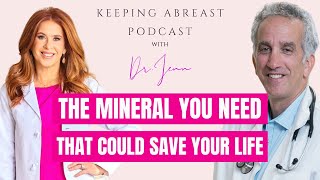
A Keeping Abreast podcast episode in which Dr. David Brownstein describes his transition from conventional family medicine to integrative/holistic care and explains the central role of iodine in thyroid and glandular health. He links rising exposures to halides (bromide, fluoride, chloride) and falling population iodine levels to increased thyroid dysfunction, breast disease, and other glandular disorders, and gives practical prevention and treatment recommendations (diet, hydration, unrefined salt, hormone balance, and milligram-dose iodine when appropriate).
Questions this video answers
About 1.5 ounces; approximately one teaspoon of thyroid hormone per year.
15 bestselling books.
About 75% in his first 10 years; about 25% later after using iodine approaches.
Average dose fell from about 120 milligrams to about 30 milligrams.
About 25 mg/day for people without glandular disease; 50 mg/day (or more) for glandular disease; higher doses for severe glandular disease such as cancer.
Chapters
Hello and welcome to another episode of the Keeping Abreast podcast. I AM your host, Dr. Jen Simmons. And with me today, I have one of the most brilliant people in this space who has made such an incredible contribution to medicine, to integrative medicine.
You.
He is forward thinking. He is setting the standard of hormone health. And so I have the pleasure of introducing Dr. David Brownstein. Dr. Brownstein is an author of 15 bestselling books. His background is in family medicine, but he somehow saw his way to integrative medicine and to approaching each patient in a holistic way from the very, very start, which is amazing. So, Dr. Brownstein, welcome. I'm so delighted to have you here.
Thanks for having me.
Dr. Jen and I would love to know, because you and I came out of training around the same time, I had no idea about integrative medicine. It was virtually unheard of in the Philadelphia area where I trained. And if anyone was doing it, we didn't think about it in the MD space. We thought about it in other spaces maybe, but not in the MD space. So I would love to hear your story, why you became a doctor and how you found yourself pulled into holistic medicine.
Well, I didn't start off that way at all. And I had a lifelong goal of being a physician. And when I was growing up, we grew up in a conventional household. We didn't take any vitamins. We didn't question anything medically told to us. We went to the doctor when we were sick. If they gave us a prescription, we took it. There was no controversy. There was, you know, we just, we follow along. Now, I grew up with a severe case of asthma and numerous trips to the emergency room. And I thought I knew how I was going to die with an asthma attack at a young age. But because I was at the doctor.
That's scary. That's very scary.
It wasn't, you know, I mean, I did everything. I didn't really feel it set me back, but I, you know, numerous trips to the emergency room, I just felt like that's how I was going to go down.
Did you become a doctor, do you think, because you were a sick kid?
You know, I played sports. I did everything I wanted to do. I mean, I just had asthma. That was, you know, that was pain in the butt. But, yeah, I became a look, I was always interested in science. I always loved science growing up. And I wanted to be a family doctor because I saw my family doctor a lot for that asthma. That was part of it. So I went to the reigning national champion, University of Michigan, if you can't see this, I'll just.
Oh, we see it. We see it loud and clear, you.
Know, the reigning national champions for all you Buckeyes out there. And so I went to Michigan with the idea of I want to go to med school. And I went to Wayne State med school after that. And to be a conventional family doctor, there was no interest in anything alternative. I wasn't taught at med school like you. And I came out and did a residency and family practice and then joined a busy family practice office nearby. And it was a conventional office and things were going well. I was about six months into it and I was negotiating in a buy in for partnership at a year. And this is what I wanted to do my whole life. And then suddenly around six months in, I started to lose sleep for an unknown reason. There was nothing wrong, no alternative stressor out there that I could pin to. And after the third night of really not sleeping much, I'm getting ready to go to work and I blurt out to my wife, Alison, I don't want to be a doctor anymore. Now, we met at 18 years old at orientation at Michigan, the reigning national champions.
And did everyone hear that? Does everyone know who the reigning national champions are?
That's right. Just make sure I worked hard for that. So I'm going to mention it a few times. So I blurred out to her six months into practice, I don't want to be a doctor anymore. And I hadn't said a word to her before this. And she looks at me, she's known me since I was 18 years old and said, what's wrong? And I said, I'm not helping people. I'm giving them drugs that many of them don't need. I'm not treating the underlying cause of their problem most of the time, unless it was an antibiotic or something for an infection. And I'm giving him more drugs to treat problems than the first drugs. And I went into medicine because I wanted to help people, but I didn't feel I was helping them doing conventional medicine as I was trained and I was straight as an arrow. I didn't deviate from anything. You know what?
I'm surprising that you got there so fast because here's what happened. It usually takes years for people to realize that and fatigue from the process.
Well, here's what happened. Around that time. My wife worked in Detroit and drove downtown with a friend and we were friends with them as a couple. And my wife's friend's husband was seeing a chiropractor and he kept telling me, kept bugging me to meet this chiropractor. And he said this chiropractor was different. It wasn't just he was adjusting them. He was prescribing nutrients for him, and he was feeling a lot better, and he thinks I should meet him. I kept putting him off. Putting him off, Putting him off. Well, I saw him in the office that day. I told Ellison, I don't want to be a doctor anymore. And he brings up the chiropractor again. So I said, give me his name. Now. At that time in my career, I never referred to chiropractors. I never knew what they did. I never met one before. I'd never seen one. We didn't grow up in a household seeing chiropractors when I was a kid or anything like that.
Right there with you.
I would tell my patients, they're dangerous. Don't go. And so I took his number, and I credit that to the anxiety and sleeplessness that I was having. And I called him, and we set up a dinner meeting for the following Tuesday. So Tuesday rolls around and I'm still not sleeping great. And I get this meeting, and he, you know, I tell Allison as I'm walking out, I get home from work to working all day. And I said, I'm going to cancel the meeting with him. I'm tired. She said, that would be rude. You know, you need to go and be. And I was walking out the door. She told me to be nice. So I go to the meeting. He's a super nice guy. He's. He's very smart. He's talking about functional biochemistry now. I took biochemistry at the national champion University of Michigan in Ann Arbor. In undergrad, I got an A. I took biochemistry at Wayne State Medical School. I got an A. I thought I knew biochemistry. Biochemistry was easy. It basically just memorized the pathways and spit them back out to them. But you don't learn anything about why you're doing that or what the purpose of that is, or how to apply that to the patient sitting in front of you. And once you get your A's and you're done with it, you know, just flies out.
You know how it goes.
So I go to this dinner, and Dr. Robert Radke was the chiropractor. He's talking functional biochemistry to me and how he looks at his patients and thinks about the biochemical pathways and how he can help optimize them and support them. And I was just blown away by this. So at that meeting, he brought a book for me, Healing with nutrition by Dr. Jonathan Wright, who was an allopathic physician. And I took the book home and read it till 3am, 2.33am I had to work the next day too. But I was all charged up, feeling better about things. The reason I. And I read the chapter on heart disease and the reason I read that chapter was I grew up with a dad who was sick my whole life. He had his first heart attack at age 40, second heart attack at 42. Over the next 20 years, my dad suffered continual angina, was popping nitros every day, multiple times. He couldn't do anything because of chest pain and shortness of breath. Over the 20 years, he had a couple of angioplasties and a couple of bypass surgeries he was on. At that time in my life, he was on 12 medications for heart disease, hypertension, diabetes. And he looked awful. He was pale and pasty, throwing nitros under his tongue like they're mints or something like that. And my dad wasn't a. Wasn't a great patient. He smoked, he was overweight. He could eat like the best of them in the world. And. And so I grew up with that. And I remember growing up, I said, number one, I'm not gonna be like my dad. I'm not gonna. I don't wanna be his age and can't do anything. And I'm gonna keep in shape too. Cause he never exercised a day in his life. So anyways, I was waiting for the phone call. He was gonna die. And I opened that book that night and I read the chapter on heart disease that he wrote about. So I called my dad the next morning before I go to work. Now, I only slept a couple hours that night, but I was all excited about, hey, learn something new here. So I had him come in and I drew two blood tests on him. Two blood tests on him based on what I learned from Dr. Radke that night, which we talked about my dad and what I read in that book. And I drew his thyroid levels, and I drew more than what I was taught in med school. In med school, I was taught, check a TSH level, and that was it. If that TSH level was out of the reference range, you could prescribe them thyroid hormone. If it wasn't, then it's something else. It's not thyroid problems. The way I was taught to diagnose and treat thyroid problems was very suboptimal. And anyway, so I draw more thyroid deaths on him. I draw T3, T4, and I don't remember if I had a reverse T3 at that time in a TSH. So I drew three more tests than I normally draw on people. And I also drew his testosterone levels. Now, no one had bothered to check his testosterone levels ever. And his thyroid levels. He had checked the TSH when I looked back at his records years ago, but nobody bothered to check it since then. So a couple days later, I get his blood work back, and his thyroid levels are in the reference range, but in the lower part of the reference range. And his testosterone levels are read as below detectable limits, less than whatever the limit the lab can read. So basically near zero. So I place him on natural testosterone and natural thyroid hormone, and within seven days of doing that, his angina. He calls me up seven days later. I remember the phone call. He said, hey, I haven't used any nitros today. I think I'm feeling better. And I see him over the weekend after that, and he's looking better. His face isn't so pale. He's not popping nitros. He never popped another nitro from that moment on when I put him on testosterone, thyroid, natural versions, testosterone and thyroid hormone. And 30 days later, I check his blood work again, and his cholesterol, which was stuck in the 3 hundreds on medication, fell below 200 without changing any of his bad habits. He no longer looked pale and pasty. He looked pink and healthier. He was doing things. My mom's friends were asking her, what are you doing with Ellis? He looks better. You know, they want to do that for their husband. And I immediately said to Allison, this is what I want to do in medicine. I want to go to holistic medicine. Now, my wife was about seven months pregnant with our first child, Haley, who's now working in my office as a doctor. And, you know, to my wife's credit, and I think I have the best wife in the world, she said, great. I think that's good. I said, are you worried about. You know, I'm not. I don't want to be a partner in this practice anymore. And she says, well, don't. She goes, how are you going to do it? And I said, I'm going to open my own office and a holistic office. And she says, I think that's great. So I said, don't worry. We're going to make this work. And if I have to work in the emergency room, I'll do emergency room work at night. Get this to work. So I went to the partners of the practice, and I said, I'm leaving. And they said, why? And I said, I'm gonna open. I want to do holistic medicine. I told him about my dad, and they said, what's that? And I said, I don't really know, but I'm gonna have to figure this out. They said, why don't you just do it here? I said, it's not gonna work here. I need to be in an office where the person answering the phones, the person pulling the charts, the nurses, the doctors, whatever other providers are there. We're all on the same page, basically. And so I left, and it was the best thing I ever did. It was, you know, 30 years ago, and now there's six providers, and the seventh is coming, which is my other daughter, Jessie, who's just graduating from residency. And, you know, we've. You know, I started doing, basically after treating my dad and seeing the results in him. Every new patient that I saw from that point, and it's still done today. It's a hormonal nutritional evaluation, no matter what their initial complaints are, every single patient. And that's how it got started. And I just, you know, it made medicine fun again. And what I was realizing in those sleepless nights at the beginning was, I can't do this for the next 30 years. And here I am 30 years later, and I'm ready to keep going. Patients are asking me, since my daughters are coming into the practice, are you retiring? I'm like, my plan is to retire when I die. Right now, I'm enjoying it. I have no desire to retire.
And the amazing thing, and this is what we tell our patients all the time, is that your body sends you signals, and there was a message in your insomnia that was your body telling you that this plan wasn't working. No, it wasn't working. And you needed so much more.
So.
I heard you say that I want to get the words right, that there is no alternative to biochemistry.
So, you know, it's interesting. I saw you shaking your head when I was talking about biochemistry and undergrad and biochemistry and med school. You know, I thought I was a master at it. You know, it wasn't that hard. You can memorize it and spit it out again. You know, here I go. Meet this chiropractor who I thought was nutty before I met him. And after I meet him, I realized he knows I came home.
Let's be honest. That's what we referred to chiropractors as. Quacks.
Oh, yeah. And I came home for that meeting and said. I came home for that meeting and said to Allison, he's the smartest doctor I've ever met. And, you know, I was hoping someday I could be even close to what he knew. And, you know, I basically pulled out my biochemistry book, started looking at the pathways and trying, you know, once I realized at that point, when I looked at the pathways and, and you know, it really hit me with my dad here he was on cholesterol lowering medications and he's popping nitros and his cholesterol stuck in the three hundreds. I don't do anything different except get his hormones balanced and his cholesterol falls below 200 without changing any bad habits. And then I took him off his cholesterol lowering medications at that point. And it stayed below 200.
Yeah.
And I said, well, how does that happen? So I start looking at the pathway and I'm looking at. I remember it was in 1990s, there was an ad from Dr. Robert Jarvik. I still lecture with his ad saying Lipitor reduces the risk of strokes and heart attacks by 36%. And if you take Lipitor for like three years, the length of the study, whatever that, whatever the heck it was. And so looking at this ad thinking, there's no way. When I looked at the biochemical pathway, what Lipitor does is it poisons an enzyme called HMG, CoA reductase, and cholesterol levels fall. Well, not only do cholesterol levels fall, the hormone levels fall because they're downstream from cholesterol. So no wonder why my dad had zero testosterone. And then I checked his other hormones. Dhea, pregnenolone, they were all low. So I saw that and I'm like thinking, well, how does statins lower the risk of heart disease by 36%? It's our number one killer. There's no way that's true.
Turns out they don't.
Of course they don't. So I'm looking at the ad and I'm thinking, how'd they do this? So I pulled the article out where that came from. I'm staring at it, and this took me, I don't know, hours and hours or days. And I'm looking at the, you know, relative risk, and I don't even know what that means. And so to get into med school, you have to take statistics. Guess what? I took statistics at University of Michigan. I got an A thought. I knew it. Well, you get to med school, you take the same class again. I got another A thought. I knew it. Well, you go to residency and you do these, these, these period. What do they call literature reviews when you view a paper Together. There's a term for it. But the group meets and you go over a paper and you try and dissect it and see if the study was done correctly. So you would think you're being scientific and going through the paper. Well, so we used to call it Journal Club, but Journal Club, that's what we call it. Journal Club. So I did this, I did that. And you would sound like you knew what you were talking about. The person leading the Journal Club would sound like they knew what they were talking about. And I realize now they didn't know what the hell they were talking about. Neither did I back then. So I end up buying a book, Statistics for Idiots. And I start going through it and I start spending a lot of time, and finally it just clicks on me how they got 36%. The 36% was really a. It's a true number, but it doesn't mean anything for the patient sitting in front of you. It's called the relative risk number. And Big pharma uses these relative risk numbers to make poorly performing drug or therapies look better than they actually are. It's the same reason they said the COVID vaccines were 95% effective when they were 0.8% effective. So the 36% for this Lipitor study was wonderful. When I did it, when I lecture, I go through this in detail and I. Yeah, an absolute risk difference. It was 1%. And that's Lipitor study. The COVID vaccines were 0.8% effective, and the COVID vaccines were. There was no benefit for hospitalization or death. Anyways, that's another story.
That's a whole other story. We could do a whole podcast on that.
But they did the same thing. They do the same thing for the COVID vaccines they did for Lipitor.
Guess what? They do the same thing for all the cancer drugs. Of course they do the same thing for all the cancer drugs.
I see this and I realize it was like a holy cow moment. And I'm looking at these numbers, like, 1%. I'm like, I got to look at everything I learned in med school, and I start looking at everything. Vaccines, osteoporosis drugs, cancer drugs. And then, you know, then that COVID vaccine came out.
Once I learned, you know, I.
It's all the same crap.
Bisphosphonates.
I get medical. I get med students that come rotate with me. I tell them the first day for the month that they're with me. I have two goals for you. Goal number one is they will be able to review a research study in 30 seconds or less, come up with relative risk, absolute risk, number needed to treat. And they'll understand all these terms, and they will understand why the headlines read, 95% effectiveness for the statin drug. It's really 0.8%, what you should be telling the patient in front of you, meaning there's a 99.2% chance that that vaccine doesn't give you any benefit. But. And the second thing is that they can palpate a thyroid because doctors don't know how to palpate thyroids anymore. And that's true. So I just finished with a student.
Or examined breasts. Just.
That's. That's. That's correct. Doctors can't use their hands anymore. They don't use their hands. They. My kids just finished residency and joining my practice, and they tell me the doctors don't touch anyone. The attendings don't touch anybody. They stand. During COVID They stood at the door and talked to them. They never even did the touching of putting your stethoscope on them where you don't even touch them, but your stethoscope touches them. They were afraid to do that. And, you know, it's really something out there.
It is. And, you know, they've had a really long, good run of misinformation and of scaring people into compliance. And meanwhile, all we've gotten is sicker and sicker and sicker.
And it's fear. You're right. Fear drives everything. Fear drives them. And they use fear. During COVID To the. To the man. They were masters at it.
Oh, yeah. Oh, yeah. That was the greatest show on earth.
Oh, my goodness gracious. I remember when covet happened. My office manager comes to me the Thursday before the governor of Michigan closed the state down. It was coming next week. We knew it. And she says to me, you got to meet with the staff. And I said, why? She goes, they're gonna. No one's gonna come to work next week. Everyone's scared. And I said, okay. So, you know, I have this meeting. And I said, hey, what's up? And everyone's like, the governor's closing us down. First question. Governor's closing us down next week. When are we closing down? I'm like, we're not closing. I said, we know how to treat viral illnesses in our office. We know what to do. And we've treated coronavirus in our office for close to 25 years. And I said, we haven't treated this strain that they're talking about, but I have no doubt that I have no reason to think it's going to be any different than what we've treated. And I said, we're nimble enough that we can take, change things around, and we've got enough intravenous therapies and other things that we know that we can utilize when we have to. I said, so we're staying open. Nobody has to work. I said, I'm working, and I prefer everybody stay and we do the job. And, you know, whoever doesn't want to stay doesn't have to stay. And, you know, and we, we lost about 50% of our front desk people. And my nurses all stayed and the doctors all stayed and we, we did our job, you know.
Yeah. And I'm glad that that time is mostly behind us. Mostly behind us. So I want to talk about something that you really are the master of. So let's talk about the thyroid. The thyroid is really one of the master glands, if not the master gland of the body. So can you, so that people understand, tell us, what does the thyroid do?
So the thyroid gland sits here in the lower third of the neck. It weighs about 1.5 ounces, and it produces a teaspoon of thyroid hormone for a whole year. That teaspoon of thyroid hormone has to drive the metabolic rate of every cell in the body 24 7. That's why you refer to it as the master gland, the thyroid. Every cell in the body needs and requires thyroid hormone. You know, after treating my dad with natural thyroid hormone, I said, every patient from that moment on gets a nutritional and hormonal evaluation. That hormonal evaluation includes a full evaluation of the thyroid. And so what I started finding was when I did more than just a TSH test, I actually talked to patients and listened to them, actually palpated them, actually checked the reflexes and started correlating their clinical symptoms and signs with, with what's going on. And I started diagnosing a lot of them with thyroid hormone who have normal TSH levels. So I found after the first 10 years of my holistic practice, about 75% of my patients were on thyroid hormone. And they were feeling better, and they were doing better, and I thought I was doing good. And I wrote this book. This is my second book that I wrote.
Yeah, Thyroid disorders.
And, you know, I thought I was doing a good thing and I was, you know, I was happy and things were moving forward. And then I started to think, well, why would so many patients need thyroid hormone to feel good just because they're adults or just because they're getting a little Bit older and it was bothering me. So I went and looked at the biochemical pathway for thyroid and how it makes thyroid hormone and started looking for what cofactors are needed to make thyroid hormone. And you know, if you look at the biochemical pathways there you find selenium and magnesium and B vitamins and vitamin C, you know, all needed, all needed to make thyroid hormone. And then iodine was part of that. So I would try very, you know, and I would try varying amounts of these, these cofactors and see if I could use less thyroid hormone. And nothing really worked. And what I found was that around year 10, I have was frustrated because I was still, I had about 75% of my practice on thyroid hormone and I was thinking that's not, you know, it shouldn't have to be the case.
But is it, is it that your practice self selected or were you truly.
Like.
What we think of as family medicine in that everyone was coming to you for everything or were you already the thyroid guy?
My practice self selected, there's no question of that. Look, in the 1990s when I started doing holistic medicine, there weren't many people out there. Now there are, there's signs everywhere. Most of them aren't really holistic doctors. They, they say they are, but they're not. But so, you know, I had written that thyroid book and so, and the miracle of natural hormones book, which is my first one, written both those books. So people started coming to me for hormone imbalances and thyroid was one of them. So part of it was my practice was self selecting and, but you know, I was studying those biochemical pathways and I kept coming back to the thyroid and I, you know, iodine was really interesting to me. For whatever reason, I liked the topic of iodine and I would read articles on it and I would try it on my patients. I tried small amounts, medium amounts or large amounts. Nobody did worse, nobody did better. I was still using the same thyroid hormone and I get frustrated by it. And so what happened to me with treating thyroid was about 10 years into my practice, a physician wrote an article to one of my newsletters about. He developed an iodine loading test. His name was Dr. Guy Abraham. He was in California and read the article. And at that point there was no testing for iodine. Now you can't make thyroid hormone without iodine. So when you refer to thyroid hormones, such as checking a T4 level or a T3 level, those fours and threes reflect how many atoms of iodine are attached to thyroglobulin. So you definitely need iodine to make thyroid hormone, but you also need iodine to make any hormone in the body that includes the pituitary and hypothalamus and the adrenals and the sex hormones, the ovaries in women, the testes in men, all need iodine to make those hormones. So I live in Michigan, if you're not aware of that yet, the reigning national champions.
And yeah, it wasn't.
So we're, we live in the goiter belt. It's one of the lowest iodine areas of the world. And the.
Can you explain to people what that means?
So in the goiter belt of the United States, it surrounds the Great Lakes. So Illinois, Michigan, Indiana, you know, that four letter state to my south and east, you know, starts with a lowercase o, ends with a lowercase. Okay. They all have low iodine in their soil. One of the lowest iodine in the world actually. And it goes north to, into Canada. Why is that? That's just, that was, you know, it's thought through glaciers and the making of the Great Lakes that as the glaciers moved and created these pits, that water came in the Ida and drained out of the soils. We don't know. And there's the largest source of Ida in the world in the oceans. So they're, you know, we're not near the ocean, you know, and so there's other areas of the world that are low and as low in iodine as we are, but we're one of the lowest. So I had read the studies from the 1900s, early 1900s and 1800s, where there was a goiter epidemic in the Midwest United States, and if you drew a line to the Great Lakes down, the goiter epidemic was down that whole central area of the United States. So the US government realized there was a gordia epidemic in the early 20th century because there was a problem with the animals, farm animals. They were not growing to the right size, they were not procreating correctly. And there was a worry at the highest level of our government that as the US population expanded from east to west, that the human population was going to outstrip the, the ability of farmers to feed us through their animals. And so this one's at the highest levels of the U.S. government. And they called on a doctor, his name was David Marine, and he was a case Western graduate in Ohio, and he had written a paper about iodine in med school. And they called on him to do a study to figure out, because they knew from studies in the 19th century that miners who went into A silver mining site in South America somewhere, who drank water that had iodine in it from the salt in the mine. Their goiter went away. So David Marine did a study where he gave different amounts of iodine to farm animals to see what the minimum amount was to improve their thyroid function, but more importantly, to improve their ability to grow to the right size and procreate correctly. And he put different amounts of iodine in their food, found the smallest amount that took care of the farm animals. He estimated how much humans would need from that. And he did the first studies on iodine in Ohio and the second study in Michigan, back to back. And iodine is very easy to attach to salt. So that's why they did it using salt as a food source. And what they found was the goiter epidemic in adolescent girls declined dramatically in Ohio and Michigan with the use of iodine. So the US Government didn't mandate it, but they forcefully recommended that we should use iodized salt for the rest of the country. And that's how iodized salt came into being. And iodized salt was the first public health miracle. And it was really. It was hailed as such, and it really was. It got rid of the gorger epidemic that was affecting really the entire country, but larger in the Midwest area where I live.
But today it's not enough, right? Because I think I just read that 25% of women have thyroid disease. Is that number correct?
So today it's not enough. That iodine level from. That's where the RDA was set for iodine based on those studies. And the RDA was set for the minimum amount of iodine in a food supply to prevent goiter and the vast number of people. And that was fine 100 years ago, but we're different now. We are more exposed to. Toxins that competitively inhibit iodine and push it out of the body. They're known as allies. And in the periodic table, if people can remember from chemistry and high school or College, Group 17 on the right side are the halides. And they're grouped together because they have similar functions. And the halides consist of an order of their size. Fluoride chloride, bromide, and iodine. Now, two of those halides are toxic with no known value in the human body. That's bromide and fluoride. And we can argue about fluoride with cavities, but the rest of the world's figured out fluoride should not be put in our water supply to prevent cavities. It's only us in New Zealand that are holdouts of that bad argument. But so compared to our great great grandparents in the 100 years ago, in the early 20th century, they weren't exposed to fluoride and bromide like we are now. Our exposure to these toxic alloys is through the roof compared to theirs. So our iodine requirements are much higher than our priority predecessors. So the halides can competitively inhibit one another. So in the human body, there's receptors for iodine all over the body. There's a lot of receptors in the thyroid, there's a lot of receptors in the breast, there's receptors in the ovaries and the uterus and the pancreas and the prostate. All the glandular tissue has lots of receptors for iodine. We have a really intricate mechanism to concentrate iodine in the glandular tissue against the gradient, which uses the, an energy source or ATP to do that. And you need adequate amounts of salt for that reaction to occur. And you know, we were designed with this mechanism so we could survive a low iodine environment for, for a period of time. So, but is that our iodine requirements.
Are higher in that if we're able to really search out iodine and, and do that for a period of time during scarcity, how long is that sustainable for? And is that why we're all in trouble?
Well, that's a good question. So according to the National Health and Nutrition Examination Survey, over the last 50 years, iodine levels across the US have fallen over 50% during that same time. Over the last 50 years, our exposure to toxic halides, fluoride and particularly bromide. Bromide is used in food and drink. It's brominated vegetable oil. It's in carpet, it's in curtains, It's a fire retardant. They use it in all throughout your house and through your business. It's used in here in these things. We can't get away from it. It's probably in our clothing that we're wearing as a fire retardant. So when you, we have these receptors in our body for iodine to make thyroid hormone, you need the iodine. You need enough iodine to make thyroid hormone. The receptors need to be iodinated. What can happen is if we get excess bromide in our environment and not enough iodine, the bromide is going to bind to those receptors and kick out iodine. Now there's been animal studies that show that if you give animals enough bromide and put them on an iodine deficient diet, they will brominate the thyroid hormone. So T4 will have four atoms of bromine. T3 will have three atoms of bromine. We don't really know.
It would have four and three atoms of iodine instead.
We were designed for the four and three to be iodine, not bromine. We don't know what the effects of this brominated thyroid hormone are in the body because there's never been any studies with it. But I can tell you that's not how we were designed. And what's happened is that I did a study. Since you're a breast surgeon, I did a study on nine breast cancer patients and nine patients without breast cancer, females without breast cancer. I didn't do any randomization. The first nine that came in with breast cancer. I was working with Dr. Abram at the time. He was designing the zodine loading test and the zydine study. We wanted to test iodine levels, bromide levels, and fluoride levels in women that we give 50 milligrams of iodine a day, which is like, it's 500 times the RDA for iodine. So the first nine patients that came in, I did and, you know, the other nine for non breast cancer. So what we did was we measured those levels at time zero, one day after taking 50 milligrams of iodine, and 30 days later. Now, keep in mind, I'm giving the weeds a little bit for answer to your question, but we don't have stores of iodine in our body. We don't have a hump, like a camel hump of iodine that we can draw on when there's iodine deficiency times. So if you don't take iodine on a daily basis, within 24 to 48 hours, you're gonna go down to a lower level or deficiency level or whatever you're at. So out of these, out of the study that I did, and I have this in my iodine bar, I found that the breast cancer patients had 50% lower iodine levels at time zero before they even took iodine, and they had 50% higher bromide levels time zero before they took it. So then a day later, and 30 days later, we did it. What we found was iodine levels went up. Bromide levels started to come. You know, they went up at first as they were detoxing from bromide, and then came down at the end of 30 days. There was one lady that's really interesting in this study, and I use her when I lecture about iodine. She had stage four inflammatory breast cancer, the worst kind of cancer you can have, right? They usually give It a diet when this diagnosis is made, and it's stage four, usually given six months to live. Now, this was. This was 25 years, 20 years ago. And she came to me and with this diagnosis, and I had her on. This is right before I learned about iodine, about two years before I learned about it. So for two years, I'm treating her. She's on thyroid hormone, and she's on some DHA and pregnenolone, some other nutrients that I was supporting her with. And I was detoxing her, and I learned about iodine. So I put her in this study. She calls me up now. She's supposed to take 50 milligrams of iodine from day one to day 30. We're collecting our urine twice during that time period to look for iodine, fluoride, and bromide levels. She called me up two weeks into the study and said, I got a problem. And I said, what's the problem? She goes, my night shirt is turning yellow where my breasts are now. She had lesions across her chest, which was the inflammatory breast cancer. And I said, well, how do you feel? She goes, I feel better. And I felt since she started working with me two years ago, she goes, I'm taking care of my grandkids now, where I wasn't able to do it. But I got this yellow on my bromide. I got this yellow on my shirt. So I said, well, why don't you come in and bring the shirt? So she brings the shirt. She comes in, I take a look at her, and face looks fine. She looks not yellow or anything like that. And then I look at her nails. Her nails were yellow. Now, not jaundice yellow. They were yellow. You picked it up. It was bromide, a bromide yellow color. And her T shirt, the inside of her T shirt, she was wearing a white T shirt at night to sleep. Was yellow stain and that. And it was. It was not a jaundice yellow. It was jaundice. Doesn't stain anything. But. So I took the T shirt and I said, you know, she's feeling fine. I did an exam on her. I draw some blood work on her. Her liver enzymes are fine. This is not jaundice. This is not high bilirubin. And I called her back when I got her labs. I'm like, hey, let's keep going. You're feeling good. So she finished the study. Now, when I pulled her out of that study, her bromide levels were a toxic, you know, potentially toxic levels. When she came out, she didn't feel bad because I had detoxed her before this, but she came down and, you know, she lived another four and a half years, which was six and a half years total. My regret with her is I should have used more iodine now, knowing what I know now. But the other side of that story was Dr. Abraham. I was flying out six times a year to Santa Barbara, California, to spend a long weekend with Dr. Abraham in a lab. And we were testing urine and saliva and blood samples, and we'd go through iodine articles. And the man taught me more about iodine than he'll ever know. And it was one of the smartest doctors I've ever been associated with. And he said, bring the shirt, and we'll test the shirt for bromide. So I lose the shirt. By the time I told him about the shirt and what was happening with her, and I fly out about a month later, the shirt's gone. I have people. I have two people tearing my office apart looking for that shirt. No one can find it. I tear my home apart. I can't find the shirt. So a few years ago, I moved to the house I'm in now, and I'm packing up stuff from my office. I go into this cubby hole where there was just crap and pulling it out, there's the bag sealed with the shirt. It's like 15 years later, I don't know, 17 years later, I find the shirt. So I. Dr. Abraham, unfortunately, had died, but I got the shirt. So there was. It was me, my partner, Rick Ng, and Charles Hakala, who used to really. Pharmacists, used to go meet with Dr. Abraham, and we would do our research. I called Charles, who had a mass spectrometer, and I said, charles, I got the shirt. He knew what it was immediately, and he goes, let's design a study. So we did the study, which I'm going to write up, and I haven't done it yet, but we have the results. We took patches from here on the inside and. And then we took some patches from the back and dissolved it, measured the bromide and measured bromide, iodine, and fluoride levels. And the bromide levels were huge on the front part. There was nothing on the back part. It was really a cool study showing that the breasts are glandular tissue and can concentrate bromide just like the thyroid can. So I always say that there's a continuum of iodine deficiency where iodine's job in the body is to maintain the normal architecture. So if all the receptors for iodine and the thyroid over his uterus Breast, prostate, pancreas, pituitary, hypothalamus, you have iodine, you should have normal architecture. And if I say that this is normal architecture, an iodine deficiency, the first thing that happens in these tissues is you get cysts and you can easily pick up cysts and, you know, cysts in the thyroid, you can pick up cysts in the breast. And right now, in an autopsy study, 88% of US women were found to have fibrocystic breast disease. And then 30, 40 years before that, or maybe a little longer, it was 3% on autopsy study. So fibrocystic breast disease, we know now is a precursor to breast cancer. And if iodine deficiency goes on longer, you get nodules in these tissues, they become harder, nodular. If it goes on longer and you take a biopsy of it, they become hyperplastic, which is a precursor to cancer, which is the end of that road. And animal test tube in human studies has shown this progression exists. And it's also hinted that you can halt and reverse it with iodine. And that's what I've seen in my practice. So the use of iodine. What I found was in the first 10 years of my holistic practice, before I could master the use of iodine, I had about 75% of my patients on thyroid hormone. The next. Now I have about, I have about 25% on thyroid hormone. And my average thyroid dose went from 120 milligrams of natural thyroid hormone down to 30. So iodine has made a big difference. You know, I never saw women's cystic breasts or uterine fibroids or anything like that get better on thyroid hormone. I do now when I give them. Look, it's not that they don't need thyroid hormone. Lots of people do need thyroid hormone, but they need balance with iodine as well. And that's made a huge difference in my practice as well.
So what is the relationship between iodine or thyroid dysfunction and breast cancer?
So in those first 10 years of my practice, I'm putting all these people on thyroid hormone. And I said to you, I was thinking, you know, why do so many people need thyroid hormone? Come on, 75% of people need it. But there was something else, and I was hoping you would ask a question like that. And the other thing was there were two studies in those 10 years that came out. They were done by Bernard Eskin, who was a. He was a kind of, I don't know what he was surgeon or I don't remember what he was a physician who did research with iodine and thyroid. And so he published two studies. The first study showed that if women were on thyroid hormone versus women who weren't on thyroid hormone, they had a 50% increased risk of having breast cancer over. I think he just did the study on breast cancer or not. I don't think there was a time period. He published a second study that showed the longer women were on thyroid hormone, they've greater their increase of breast cancer. If it was. I don't remember the exact numbers, but if I. From one to five years there was a slight increase of breast cancer in women on thyroid hormone versus women not on thyroid hormone. Five to 10 years it went up a little bit more and in 10 plus years it was up 50%. So I saw these studies. I had learned to look at studies and learned to do the calculations like we talked about earlier. And I went through them and I'm like, I can't find things wrong with this study. And it would bother me because I'm treating all these women with thyroid hormone and men. So I'm like, am I doing the right thing? I don't want to be like I was before where I was just prescribing drugs that weren't really helping people. So I would look at those two studies and I bring them out every year or so, read through them again and it was really bugging me. That forced me to keep trying these co factors to see what do I need with thyroid hormone. And then that led me to iodine because I started to realize the relationship with iodine and thyroid problems and breast problems and ovarian, uterine, pancreatic. And look, if you look now we have one in seven women across the United States, adult women diagnosed with breast cancer. We have one in three men. Yes, one in three men, older men, diagnosed and autopsy studies with prostate cancer. We have pancreatic cancer, ovarian look, when I was in training, you know, we didn't compare times of when we were there. But when I was in training I saw pancreatic cancer. It was in alcoholics and it was in older people. I didn't see pancreatic cancer being diagnosed in early 40 year olds like I'm seeing now. I didn't see breast cancer.
I saw a 30 year old last week and I would have told you it was unheard of. When I trained, unheard of to see a child with pancreatic cancer.
When I trained, I didn't see 18 year old girls getting diagnosed with breast cancer like I am now. When I trained, I didn't go to a funeral from a 28 year old patient who died from breast cancer that she got when she was 17 or 18 years old. None of that happened. Breast cancer occurred in women around 50 years old or. And mostly older.
Older.
And that was it back then. So now we're seeing pancreatic cancer, ovarian cancer, uterine cancer, prostate cancer. I saw it in old men 30 years ago. I got guys in their 40s with prostate cancer now. I mean, what the, you know, what's going on? And my premise has been that iodine deficiency is a big part of what's happening with this. And until we recognize that, our government has recognized it because the NHANES study come out every 10 years or so and our iodine levels have fallen over 50%. Right now, women of pregnancy age have an average iodine level below the WHO criteria for iodine sufficiency. And we know iodine's needed during pregnancy to help the fetus develop normal neurologic tissue and normal glandular tissue.
And yeah, there's major problems if you don't have enough iodine in pregnancy.
We've got a big, we got big problems. And you know, unfortunately, conventional medicine's not recognizing it. And, you know, that's why doctors like you and I start looking elsewhere for things because we're just, we're not accepting. We become unhappy or we, hey, usually it's one of us is sick or our family members are sick and, you know, not getting answers and we stumble across something else. And for me, that stumble was a good stumble. That was, I was happy, you know, happy I did that.
So I want to make sure that we get to a couple of things. I want to make sure that we have the fluoride conversation because fluoride is still universally in the toothpaste. The dentists are still using it. They're still telling people to brush with fluoride toothpaste to use to do fluoride treatments in kids. I don't know whether not they're encouraging to drink water with fluoride. I know they used to be. I've gotten away from conventional dentistry, so I don't know what they, I don't know what they're saying anymore. But, you know, what about that? And can we measure fluoride and can we displace fluoride in the same way that we can bromide?
So in those halides, fluoride is the first halide. Size wise, it's the smallest halide. It's also the most electronegative halide out There, which means it's very. When it gets in the body, it can cause a lot of problems and it can poison hundreds and hundreds, if not thousands of enzymes. And once you poison an enzyme, it's gone. And enzymes, you know it's gone. Fluoride irreversibly poisons enzymes.
Yeah. So you have to make new ones.
So the world has learned that putting fluoride in the water supply is not the best treatment. And there's. There's two countries left that still fluoridate water. Primarily. It's the US And New Zealand, every other European country. Israel was the last one. A few years ago, we took fluoride out of the water supply because they can read studies and they can see the problems and the osteosarcomas that are happening in young boys from the association with osteosarcoma and fluoride and osteoarthritis and fluoride. So fluoride primarily binds to.
And is it also a major cause of osteoporosis?
Fluoride binds to bones and disrupts normal bone biochemistry. So, yes, you're going to get osteoarthritis and you can get osteoporosis and you can get disrupted. You don't get as strong as bones and teeth with fluoride. You could pick up fluoride toxicity in kids by looking at their teeth. You'd see these fluorosis marks in teeth. So Dr. Abraham and I looked to study that, and we figured the halides competitively inhibit one another. So there's chloride receptors and there's iodine receptors in the body. There's no fluoride receptors. There's no bromide receptors that we know about. So the bromide and iodine competitive inhibition has been written about before, but there's not a lot written with fluoride. So we tried to measure fluoride in those studies that we did with iodine loading, and we tried to measure it in those women in a breast cancer study. We couldn't come up with it. So what we think is that fluoride is so toxic to the body that when it gets inside our body, our body does a good job of bumping, hiding it away in the bones, in the teeth and otherwise. You know, fluoride is a terrible toxin that can really destroy someone's health very quickly. So we couldn't measure it. There has been a couple of studies where they measured fluoride in patellar and other bone fragments in orthopedic surgery, where they find high fluoride levels with degeneration of joints, but that's about it. With fluoride, the only way we're going to be able to get a good handle on fluoride is to measure it out of bone biopsies. And that's going to be hard to do. But you know, there may be a benefit to putting fluoride directly on teeth. If you don't swallow it, maybe, we don't really know. But there's no benefit to putting in our water supply. And.
I think, I mean, most of the holistic dental community says that is their absolute positive last resort because the trade off is so tremendous.
It's the risk, I think the risk far away. The benefits of it. You know, first we need to get out of our water supply. That's just. Yeah, so we're medicating our.
What are you telling people in terms of how are they. So if you're in municipality that still has fluoride in the water, what are you telling people to do in terms of filtration?
So unfortunately, fluoride is so small, regular filtration usually doesn't take it out. You're going to need something like a reverse osmosis filter. Distilling water can also pull fluoride out. And you can get these special aluminum filters, I'm not quite sure what they're called. They will bind fluoride up, but you gotta have a work with a water specialist who can help you with this. And yeah, I think it's a, I think it's important enough to do and I recommend my patients, you know, filter the water. And look, you can either be a water filter or you can have your water filtered. Because if you don't have your water filtered, you're just going to filter it. And yeah, you know, fluorid ain't going anywhere, but it's going to bind it. You're not going to get rid of fluoride. It's just going to keep binding and binding and binding. Yeah.
And we also, we suspect that it has a considerable effect on what's happening in the thyroid gland. Right. Because if bromide is being preferentially taken up, then almost certainly fluoride is being preferentially taken up.
We're assuming that we don't know. So they didn't. They've looked at this before. They have not found a lot of fluoride in the thyroid gland, but they find it in bone tissue. So I think that's where the money will be with fluoride. But either way, the risk benefit analysis is clearly outweigh to the Risk item fluoride. And, you know, there's a big lawsuit going on with our federal government right now of a group of moms who have sued them about fluoride. And that is front of a federal judge right now who's going to rule on this any day now. And the federal judge seems very sympathetic to the mom's side. To the mom's. You know, the way they presented that side of the trial.
Well, I'll tell you, just, I was the camp doctor one summer, and, you know, one of the worst things you can do is bring the camp doctor to bring a cancer doctor to be the camp doctor. Because, like, what's a cancer doctor gonna find at camp? So, so I get this 10 year old boy who comes into the infirmary and he's screaming because he was climbing the rock wall and he banged his knee and he's screaming and like, just out of control. And I had a 10 year old at the time and it was such an exaggerated response. And I'm looking at him and his knee looks fine, but he has this lump on his leg. And I said, what is that? He's like, don't worry about that. That's been there all year. But my knee is killing me. And I'm like, no, something's wrong here. I am getting. I am downloading a signal like something's wrong. And I sent him to the Pocono Mountain radiology center, or imaging center, whatever it was. And an hour later, I get a call from the radiologist there and he's like, listen, I know you're not going to listen to me because you think I'm just some country radiology doctor, but I trained at Jefferson, and my chairman at the time said, you're going to see this once in your career and you're never going to forget it. But this is an osteosarcoma. So he tells this to me and I'm sick. I mean, all I want to do is crawl in a corner and die. Because here I am, it's my first day as the camp doctor and I find an osteo in a kid. So I call the parents and I say the same thing that the doctor said to me. I know you're not going to believe me because you think I'm just the camp doctor. But as it turns out, I am a cancer doctor. And I believe that your son has bone cancer and you need to come get him. And now that you're saying this about the fluoride, I mean, it makes perfect sense.
There's study after study. Showing relationship with boys and osteosarcoma and fluoride. And for that reason alone, it should be taken out of our water supply. But there's other reasons for fluoride, such as osteoporosis and osteoarthritis and, you know. Yeah, hip fractures. Hip fractures are much higher in women who get fluoridated water versus women who don't get fluoridated water. Yeah.
And, you know, ultimately we have to remember that as many women die every year as a result of a complication of a fracture as do of bone cancer, of breast cancer. So, you know, it's as much of an epidemic as anything else. So speaking of the epidemics, thyroid disease, breast cancer, what do we do to prevent these?
Well, I think, number one, you know, I tell patients, I'm giving this lecture Saturday. Give it coming up. I give it once a year, twice a year. I give for patients. Sort of. What's new in holistic medicine? Well, this one I titled back to the basics. And I would say the first thing is the basics. And in my practice, my partners, we've all talked about this, we consider the basics. Number one, you got to eat a good diet. You got to get refined sugar, refined foods out of your diet. Eat healthy food that supplies your body with nutrients that you don't have to use your own nutrients to break down these devitalized dead food products. And you want to eat food that doesn't have hormones in it that stimulate breast growth and prostate growth. So you got to eat healthy food and eat real food that doesn't have hormones and pesticides and insecticides and herbicides.
So a clean, whole food diet.
Diet. And number two is you got to be hydrated, you got to drink water. Man, I see so many people. I mean, my patients will know because I'm always. I can see it on their B1 carotenine, you know, when it starts creeping up a little bit on their blood work, I always tell them, you're not drinking enough water. And the, the major constituent in the human body is water. The second major constituent is salt. And you got to stay hydrated. We're not. We don't have camp, we don't have humps like camels do. We don't have stores of water. So if you don't take it on a daily basis, you become deficient and chronically chronic dehydration is, you know, it's huge out there. Number three is salt. I wrote a book, salt your way to health and that handy too. So salt, you know, number One is water. The number one constituent body. Number two is salt. You got to have healthy salt. We get this refined salt stuff that's real thin and white, it's been bleached and it's got these toxic chemicals like ferrocyanide and aluminum silicate in it is not healthy for the body. Our body needs unrefined salt with its full complement of minerals in it. And I would say another number four for the basics is. This is what I'm talking about. On Saturday, I got this whole lecture in my head because I'm preparing it right now. Awesome. Number four is balance the hormones. The hormonal system needs to be properly supported and balanced, and you can't do that without numbers 1, 2, and 3. But, you know, sometimes, especially as we get older, you know, sometimes using little bioidentical natural hormones can help the whole picture. Number five is exercise. And, you know, I don't think people need to go to a gym, but they need to move. Walking is fine. Just something at least 30 minutes a day for movement. And number six is iodine. I consider that as part of the basics. And our country is iodine deficient. We have too many halides we're exposed to. We need iodine as part of a basic thing. I can eat.
How much do we need?
Well, so it's best to work with an iodine literate healthcare provider. Having said that, an iodine is best used as part of a holistic treatment regiment, not as a sole, independent, one thing to do type thing. Having said all that, average dosing is if there's no glandular disease, that's thyroid, ovaries, uterus, breast, prostate, pancreas, 25 milligrams a day average. That's about what I have my patients on. If they have glandular disease, 50 milligrams and more. If they have severe glandular disease like cancer of thyroid overjute, uterus, breast, prostate, pancreas, more. And the iodine should be used as a combination of iodine and iodide, the microgram doses of iodine that are out there on the market in our toxic world. It does not do enough to get rid of those toxic allies. You need milligram doses of this now. And salt goes along with the iodine. It helps you buffer. If you get bromide and fluoride that are going to come out large amounts, sometimes that makes people sick. Salt will help to escort the bromide out of the body so it doesn't make people sick.
And then I just want to touch on number Four, which, where you said balance the hormones. Because I have said repeatedly that in a post menopausal woman or in a woman who is made postmenopausal because of breast cancer treatment, there is no balancing of the hormones. Like when they're gone, they're gone. When the ovaries are done, they're done. So what do you say to those people because they don't have ovarian function, how do they balance their hormones?
So I would tell you, you're leaving out half the population because there's postmenopausal women. There's, there's postmenopausal men who are suffering the same problems. Yeah. And, you know, with my dad, when I put him on testosterone, you know, he, he, he was clearly menopause, he was not feeling good and irritable and grouchy and no energy, and put him on testosterone, he comes to life again, you know, and, and thyroid hormone, you know, I did them together. But I, I've looked at everybody with that and what I find is that, you know, I, I, we talked about this before we started recording that, you know, women, 1 in 7 women, lifetime risk of getting breast cancer in the U.S. and, you know, they go through breast cancer treatment or surgery or, and, or, you know, whatever else they give them. And they tell me you can't call on hormones ever. Well, I see these women, I see the same thing with men with prostate cancer who tell me I'm not living life right now. You know, they're unhappy. They're not, you know, they're irritable, their brain's not working, and it's not just irritable. They're miserable and they're miserable. I've had men with prostate cancer tell me I'm not living like this. And they want their testosterone back, that they were taken before they were diagnosed, and then their urologist tells them, you can't have it again. And I see the same thing with women with their hormones saying the same thing. So the, it's interesting, you know, with women, they're telling me, can't take estrogen and progesterone because you, it'll feed your breast cancer. With men, you can't take testosterone, it'll feed your prostate cancer. Well, the men that I seek at prostate cancer have low testosterone levels, generally very low testosterone levels. Yeah.
Almost immeasurable.
Yes. And the same thing holds with women with breast cancer. And when you, when you look at the studies and you and I talked about the book by Avram Blooming, estrogen matters, that he's a conventional doctor. And he went through the literature and said there's no reason women can't take estrogen just because they get breast cancer and that estrogen. And he didn't make a distinction between bioidentical natural estrogens and Premarin. You know, he didn't. And he didn't make a difference. A distinction between. He made a little distinction between bioidentical progesterone and Provera, or progestins, the synthetic form of progesterone. Yeah, but he. But he really made the claim in his book that women can take these safely and just as men can take testosterone safely. And who. The guy, Abraham Morgenthauer, wrote the. From Harvard, wrote that book on using testosterone with prostate cancer patients. So I think that, you know, we've evolved. The holistic world has certainly evolved. You know, the conventional world is still behind it with things, but things are changing, and they're. You know, I find my. I find the oncologists now are giving women their blessing to go on hormones when they're miserable or their lifestyle is such, you know, that. That they. The lifestyle requirements require. You know, they're so miserable that they will give their blessing that they can take hormones now where they weren't doing that five years ago. So things are.
I'm not finding that yet. So I'm. I'm glad and encouraged that you are. I'm still finding people who are absolutely against hormone replacement, with the exception of maybe allowing for vaginal estrogen and outside of vaginal estrogen, absolutely, positively not.
Look, the vast majority are making that claim. I agree with you. It's just there is a little shift. There is a little shift in things. It's come a little bit easier.
I've always said that based on really bad science. I mean, I'm sure you looked at. I'm sure you looked closely at the Women's Health Initiative along with the other studies that happened. The Women's Health Initiative was actually the only one that found an increased risk. And even that was statistically insignificant and retracted 17 years later. But that was a bell that was never unrung.
But, you know, I remember when the Women's Health initiative came out. 2000. When was it? What year was that? 2003. 2003.
Either two or three.
Yeah, I remember when it came out. I was good at statistics at that time, and I saw it wasn't significant. And I also saw the different arms of the study. The estrogen arm never showed a problem. It was that progestin the synthetic progesterone side would show the problem. So if they were smart, they would have said, well, this. Don't give them progestins and let's move on with things. But it took them 20 years later almost to do that. You know, I always say that conventional doctors are decades behind the holistic doctors. You know, when we look at the science with things.
I also, I think that there were other intentions with that study only because it's far more beneficial to the pharmaceutical industry to prescribe dementia drugs and antidepressants and statins and. And bisphosphonates and beta blockers and, you know, all the things and all the things that would substitute for hormone replacement. And I think that, you know, they. If that was their goal, they met it.
Well. There's certainly no better way to get someone on an antidepressant medication than take away a man's testosterone, take away a woman's estrogen and progesterone, because they're not going to feel good and their brains aren't going to work correctly and they're going to get irritable and depressed. So you want to force them on another drug therapy. That's the perfect thing to do. And that was my frustration 30 years ago with conventional medicine, where I'm putting my one drug and then having to use another drug and another drug wasn't treating any underlying cause of their problem, and they weren't getting better.
So I would just like to have you. You said that everyone that you see get gets a hormonal and a nutritional evaluation. So just leave us with, what do you think everyone should be getting? What does that look like?
Well, I think that everyone should be getting a discussion with their holistic healthcare provider and, you know, the basics of things. You know, the five things that we talked about earlier. And I think there's value in doing an extensive blood and nutrient analysis because our food supplies become such a mess that, sure, I would say it's best to get your nutrients from your food. And eating a healthy diet, you're going to get more nutrients than eating a standard American diet with its reliance on refined foods. There's no question about that. The problem is even eating a healthy American food diet, our food supply has become terrible. You know, the nutrient levels have declined markedly over the decades. There are studies that have shown that. So I think. How do you know? I see healthy people come in, they eat these organic diets, they exercise, they don't smoke, they drink water. They are. They're in great shape, they look good and Then I check their blood levels and they're. They're low on thiamine or they're low on B12 or whatever. And, you know, how are you going to know? And so I think that there can be benefit to, you know, getting a holistic evaluation of, you know, what's up, and then use it appropriately and use it to support the. Support their biochemistry and not use things that are poisoning enzymes and blocking receptors, which is, you know, 99% of drug therapies out there.
Yeah, yeah, absolutely. Dr. Brownstein, thank you so much. This was a brilliant discussion. And I know it's going to help clarify a lot of things for a lot of people and help them to live better, healthier lives. Where can they find you if they want to learn more?
So you can go to my website. It's www.doctorbrownstein. b R O W N S T E I N. And I've got everything listed there. And, you know, my office is center for Holistic Medicine, one word dot com. It's in West Bloomfield, Michigan. And.
You'Ve written a couple of books.
A couple of books. Everyone's on the same page in my office. The file clerks, the receptionists, the nurses, the people clean. These are all my patients. The guy who cleans my office at night, I take care of his family. And, you know, we, we like what we do. And it's, you know, you know, if you're not happy with your health care and if your doctor is promoting a therapy that has a 0.8% absolute risk benefit to you, I think it's time to look elsewhere with things. And the doctor can't point out, what's it? What does 95% really mean? Is it poor? You know, what does that mean to me? I can't tell you. It's really 0.8% to you sitting there, then time to find one that can.
Yeah, yeah, absolutely. And you should get your questions answered. And ultimately you should be with someone who helps you to feel better, who helps you to improve your health, and who helps you to get to the root cause of why you're not having the health that you want and desire and deserve. So thank you so much for doing the great work that you do, for helping to educate us and enlighten us, and for really dedicating your life to the service of others, because you've made a huge impact in your space. And I hope that you do do this forever and that you practice for a very, very long time and die young.
And, you know, you and I, we talked beforehand. Shockingly, we haven't met each other, but we will. I can't wait to meet you in the future and you're doing your own set of good work and I can't wait to meet you.
Thank you.
Toast each other.
So thank you again. And thank you all for joining us today, for being a part of this conversation, and for being committed to a better way of living. If you liked this podcast podcast if you enjoyed this podcast, please share it with someone who needs to hear it. I will be back next week, same time, same place. It's Dr. Jen. Bye for now.
More from Jenn






Stem Cells, Peptides, GLP1s and the New Blueprint for Preventative Medicine with Dr. Vass



The Truth About GLP-1 Drugs and Who Should (and Shouldn’t) Take Them with Dr. Susan Brian

What 100 Days Underwater Revealed About Aging and Healing with Dr. Joseph Dituri
