Thinking About Joining My Answer To Breast Cancer?
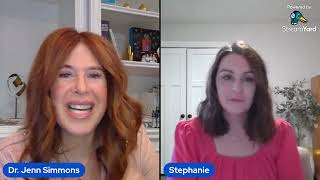
Dr. Jenn Simmons, a breast surgeon who lost family members to cancer and later became a patient herself, created a three-month online program offering videos, live calls, and peer support. It helps people at any stage, from previvors to metastatic patients, build health plans and navigate surgery, chemo, radiation, and hormonal therapy decisions.
Questions this video answers
Three months.
Immediate access to all videos, downloads, and deliverables upon signing up.
Yes — a full payment option or three monthly installments are offered.
Chapters
And, Steph. We're live on Facebook. It's Dr. Jen Simmons. I have Stephanie with me. My. I think she's more than my right hand person. I think that she's my both hands person. And I definitely couldn't do any of what I do without her. Speaking of what I do, I am the doctor with the answer to breast cancer, and I don't come by that title easily or lightly. When I was growing up, I actually don't remember a time where I didn't know about breast cancer. I had a first cousin who was a singer songwriter in the 1970s and 1980s. She wrote all of the music for the Spinners and the Stylistics. Her name was Linda Creed, and she was a Philadelphia legend, and she was my hero. She wrote 54 hits in all. But her most famous song was the Greatest Love of All. And she wrote that in 1977 as the title track to the movie the Greatest, starring Muhammad Ali. But it really received its acclaim in March of 1986 when. When Whitney Houston released that to the world. And I know all of you remember because there was no one on earth that didn't know that song. And at that time, it would spend 14 weeks at the top of the charts. But Linda would never know that because she died of metastatic breast cancer just one month after Whitney released that song. My entire childhood was filled with breast cancer. And I'm sad to say that Linda is not the only one in my family that died of breast cancer. The majority of women in my family died of breast cancer and Linda's life because she was my hero and because she died when I was just 16 years old. Linda's life, and ultimately her death gave birth to my life's purpose. And I did the only thing I knew how to do. I became a doctor. I became a surgeon. I became the first fellowship trained breast surgeon in Philadelphia. And I did that for a long time and helped thousands of women at the deepest, darkest time in their lives. Because there is no worse time in a woman's life than when she gets a diagnosis of breast cancer. And I did that for a really long time and did it really well. And at one time, I was the head of breast surgery for my hospital, the head of the cancer program for my hospital, and a wife and a mother and a philanthropist and an athlete. And I had all these balls in the air, and I thought I was an expert juggler. And then one day they all came crashing down, and it was my becoming a patient and my facing surgery, chemo, radiation, lifelong medications, it was my experience as a surgeon that opened my eyes to all the things that are missing, all the things that are wrong with how we approach cancer and how we approach people. Because really, our medical system is entirely geared at the tumor, and they forget that the tumor is part of that person sitting in front of you. That time in my life was frightening. And if I'm being honest, I went on my journey, my healing journey, to heal myself. It wasn't about my patients. It wasn't about getting them better or making their lives better. It was about me facing my own mortality, losing everything that I loved. That was important to me. And I went on a healing journey. And by the grace of God, very early on in my healing journey, I learned a functional medicine. And functional medicine taught me all that was wrong with traditional medicine. It taught me where to focus, to focus on the person, to focus on the environment, to focus on health and healing. That kind of brings us to one of the questions that someone asked the other day when I was talking about my program that I created, my answer to breast cancer. And I created this program solely because I knew people who got a breast cancer diagnosis would not know what to do, would not know the right things to do, and would not know how to drive their health, would not know where to start, and would feel lost and confused and didn't know what to do. And truthfully, one of the problems with the traditional medical system and the traditional medical treatments, and please know that I am not disparaging those treatments. I don't tell people not to do those treatments. I don't discourage people from doing surgery or radiation or chemotherapy or take the drugs. I don't discourage that because I feel like people make decisions based on the best information they have at the time, and they make the best decisions they can for themselves. And sometimes people meet me right after they get their diagnosis, and I can help them make those decisions and help them to see if those decisions are right for them. But some people meet me during treatment, some people meet me after treatment. Some people meet me years after treatment. And I can tell you this. Unless you know your why, unless you figured out what caused your breast cancer, it's what is going to stop it from coming back, what is going to stop the next manifestation. Because sometimes surgery and chemotherapy and radiation, sometimes they delay the tumor coming back. But the thing that brought the tumor on is still there. Unless you acknowledge that, deal with that, settle that, unless you restore balance, there is nothing that is preventing that next manifestation of illness. And here's the other thing. That I think that it's really important to talk about and it's something that we talk about all the time in my answer to breast cancer is that though the breast cancer treatments are well intentioned, no one gets better while they're doing those treatments. No one gets better from those treatments. And in fact everyone gets less healthy in treatment. Surgery is traumatic. Yes, it does take the cancer out, but it is traumatic, it is deforming and that is damaging to sexuality, to psyche, to everything, to your own self image and self worth. Chemotherapy damages many of our systems and literally everyone is worse for the wear after chemotherapy. Everyone. But we do know how to make that so much better. We know how to make the chemotherapy be more effective, more efficient, and we know how to make it less harmful. We know how to protect your normal cells. These are the things that we are talking about inside of my answer to breast cancer. Radiation damages the tissues around it. I wish that radiation could just treat the breast, but in fact that's not what happens. Radiation treats the breast, but it also treats everything underneath the breast as well. You simply cannot contain the radiation field in the way that we would like to or hope to. There's damage from radiat, there's damage to the breast in terms of fibrosis. There's damage to the chest wall, to the musculature underneath, there's damage to the bones. And underneath the bones, underneath the ribs. On the right side are the lungs and on the left side is your lung and your heart. So these are major organs that we are talking about that also get treated and don't respond well to the treatment. And all of the treatments have major, major, major side effects. And I want to help to protect you against those. And then of course there's the long term medications. And the long term medications, these are not benign things. And most all of them are based on the premise that estrogen causes breast cancer. And it's simply not true. And that is something that we talk about frequently inside of my answer to breast cancer. So Stephanie, why don't to the questions that people were asking.
Yeah, sounds great, great points. And the good news is there is a better way. So one of the questions we had come in is is this course for people doing standard of care or is it different?
Yeah. So I want to be clear. I am about supporting everyone no matter where they are. So if you are in treatment, if you're getting chemotherapy, if you're getting radiation, if you're getting, if you're on one of the hormonal bl blockers or if you're on an aromatase inhibitor. I am meeting you where you are. I am helping you, no matter what stage of treatment you're at. And let's face it, if you have finished treatment, that time is really scary because most women who finish treatment are just waiting for the other shoe to drop. And that's what I want to give you. I want to give you freedom from your diagnosis. I want you to discover your health again, and I want you to know how to steward your health. I want you to know how to promote your health. And that's why it's so very important that you have a plan. And I want to help give you that plan. And that's what's happening inside of my answer to breast cancer. We are covering every aspect that is needed to create a health plan so that when you've completed the three months in my answer to breast cancer, you have a plan. So many people don't know where to do, don't know what to do, don't know where to start. I'm giving you that. I am giving you your plan. I'm giving you your map. I am giving you that recipe for success. We do have a question from Instagram asking if there is a class to prevent getting cancer. I think that this is a great opportunity to talk about who my answer to breast cancer is for, because the people that benefit from my answer to breast cancer run the gamut. And I know that people like to think that their situation is unique and different, and in many ways it is. However, I have had people come through my answer to breast cancer whose mother had breast cancer and she didn't want to get it. And that's why she joined. She didn't have a BRCA mutation. She wasn't at high risk except for her mother had breast cancer. I've had people come through who have BRCA mutations who are at high risk because of their genetic predisposition. But I want to be clear that breast cancer is an environmental disease. It is not a genetic disease. Your genes may load the gun, but environment pulls the trigger. Make no mistake about that. So I've had people who come through who have a genetic predisposition to breast cancer, but they don't have breast cancer. And those people learn every bit as much and get every bit as much out of it as the people who are newly diagnosed and don't know what to do and get trusted guidance from being in the group from people who are getting ready to start treatment or have started chemotherapy and we help them sail through it. And stories like Abby, who had energy to boot all through treatment, and she was walking her dog at 6am and had energy to get through her day, all because she was in my answer to breast cancer and she knew the things to do to protect herself from the harms of treatment. We see people between chemotherapy and radiation and who we help prepare them for radiation. We just had someone come through saying that she heard that her skin would get burned and that she would get tired throughout radiation. And in fact, she felt great all through radiation because she followed the steps that we lay out in my answer to breast cancer. And then for people who have finished the acute part of treatment, so they're done surgery and they're done radiation. And did I mention that we have a plan for people going into surgery? We have a preparation plan, what they need to do two weeks before, what they need to do the day of surgery, the following day, and then two weeks after. And we are setting people up for success in surgery. I'm giving all of my secrets. I spent 20 some years as a surgeon and I'm giving all my secrets to success. And then for people who have finished surgery, chemotherapy, radiation, and they're facing either an anti hormonal drug or hormonal blockade or any of those things, we are helping these people in their decisions because this is a very tough decision to agree to take a drug for five years, for 10 years, especially when you know the damage that can come along with these drugs. This is a tough decision. And most people are not making that decision in an educated way. And we are laying out what's happening there and we are supporting people in making their decision. But that decision should be an educated decision. It shouldn't be come too lightly. And people should know the facts before they make that decision. And my answer to breast cancer is providing them with the facts. And in addition, we have a forum. We are talking about it on Facebook and we are meeting every other week and talking about it live. So for things that come up with people that they want them addressed in between, they send something to the Facebook group and not only do I respond, not only does Stephanie respond, not only does Melinda respond, my health coach, but the people that have been there and been through it and they've already solved that problem, they're responding. So, you know, if I'm not available for eight hours, guess what? There's three answers in there already from the people who have been through it. Because this group is about lifting you up on the days you can't do it yourself. And Then on the days when someone else needs it, guess what? You're there to lift them up. And that is really the hallmark of healing. When you're helping someone else, your healing explodes. It is amazing. Absolutely amazing. Okay, what's our next question?
All right, our next question is, is the program appropriate for someone dealing with recurrence, which I think you sort of touched on already.
Yeah. So we see everyone from the previvor, someone who hasn't had breast cancer yet, to newly diagnosed through treatment after treatment. We also have a considerable amount of ladies with metastatic disease. They are living with metastatic disease. And what's so interesting is that we actually have one woman who's come through my answer to breast cancer twice. Not once, but twice. And she was so reluctant to join in the beginning because she had metastatic disease and because she thought that she would feel different than everyone else. Because sometimes when you have metastatic metastatic disease, you do feel different from people that have early disease. You feel as if they're not having the same experience as you. And what was so amazing to her and what was so beautiful for all of us is how much she got out of my answer to breast cancer. So much so that she did it twice. And she had really tried to learn all she could to make her own plan before she joined, and she just couldn't do it for herself. And let me tell you, it is so hard to do on your own. I know. I tried to. I had to teach myself all of this. It took me three years. I'm trying to give you in three months what took me three years to learn, three years to figure out. And I have spent hundreds of hours since then perfecting it. So I'm always updating, I am always adding. I am always giving more because you deserve more, and I want that for you. Okay, so the answer to the if you have a recurrence, is this group appropriate for you? The answer is absolutely, 100%.
Definitely. Definitely. You also touched on this about doing conventional treatment while you're in the program. Obviously, that's completely fine. Yeah.
So we have people on chemotherapy, getting radiation on aromatase inhibitors, on tamoxifen. Now, if I'm being honest, we also have people that declined chemotherapy, that declined radiation, that declined aromatase inhibitors, or tried tamoxifen or aromatase inhibitors, and it didn't work out for them. And that's okay, because we are supporting everyone in their decisions because everyone is individual. Everyone has individual disease. And we are here to support people in the decisions they make and to Help maximize your health, no matter what you choose. So this group is about making the most of what you have. Making the most, creating health. And anyone anywhere can create health. What's next?
Yeah, absolutely. When does the course start for people that are excited and ready?
Yeah. So this course is running, so the second that you sign up, you get access to all of the videos, all of the downloads, all of the deliverables. You get access to that. So I had originally thought that people would watch one video a week and, like, start to implement each thing. That is not what's happening. So once people get access to everything, they go through it. So most people are watching the videos over a couple of days, and then they're all ready and geared up to be present in the group and be participating in the group. And that's wonderful. So the group is ongoing. Our current group is full, but as we add people, we're also going to add groups. So stay tuned. We will find a home for you, I promise. But you can join at any time and it is ongoing. Absolutely.
Looking forward to the next group. Are there payment options for the program?
There are. So the investment for the three months is 1999, or you can. Or 1997. I might be getting the numbers wrong. 1997. Or you can start and make three monthly installments. And it is completely up to you. And both of those investment options are on the page to join. Yep, absolutely.
I don't know if we had any other Instagram questions. The only other question I had was if it's someone that's already educated on nutritional, nutrition, and perhaps functional medicine and the like, is the course still going to benefit them?
Yeah. So this is what I'll tell you. I can't even quantify how many hours I spend a week updating, learning, researching. So if I'm spending that much time a week, and I'm pretty educated about breast cancer, about cancer in general, about functional medicine, about nutrition, I mean, I consider myself a pretty educated individual. And I'm spending hours a week learning more and sharing that information with you. So I'm pretty sure that anyone will get benefit out of this course. But this is my guarantee to you. My guarantee is if you don't get what you're looking for, I will create what you're looking for. So if you don't have the answer to your question, I will make sure that I create a module that addresses your question. That's how confident I am in this course. That's how confident I am that everyone will learn something, that everyone's life will be enriched, that everyone will get healthier after having taken this course and that everyone will have a plan. I remember when I was just starting off on my health journey and I knew that I needed to learn more about nutrition, but I just didn't know where to go. And I was working full time and I really needed something to fit into my current schedule. And so I enrolled in iin. But before I enrolled in iin, the Institute for Integrative Nutrition, I think I called them about 20 times to say, are you sure I'm a doctor? Are you sure I'm going to learn something? And they said, I'm sure you're going to learn something. So to that person that already knows a lot about functional medicine and nutrition, I'm going to tell you, I am sure that you're going to get something out of this and if nothing else, you're going to get something about, get something out of being part of this community. I'm looking through Instagram to see if there are any questions. I don't see any more. And we don't have any more from Facebook. I don't see any. So why don't we go ahead and put in the chat? In the Facebook chat, we will put the link to my answer to breast cancer. We can post the link for people to sign up. We can also share that on Instagram. And if people have other questions, they can certainly email them to infoealhealthmd.com and I just know that if you are anywhere along your breast cancer journey, you don't know where to start. You don't know a path forward. You need support. You don't know what the right thing to do is or you're just not feeling the way that you should feel. Treatment is challenging for you. It's bringing up more questions than answers. If any of this is true for you, this is why I wrote my answer to breast cancer. So that you have a home, so that you have support, so that you have answers and so that you have trusted guides to take you through. And it's not just me. It's not just me. My team is there and beyond my team, you are supported by people that have walked the walk and they know the other side of it. These are people that have lived it and they're putting their diagnosis behind them and they want to show you how to do that too. And that is what I want for you. I want you to be healthy, I want you to feel great and I want you to be able to confidently put that diagnosis behind you. I really hope I see you soon in my answer to breast cancer. It's Dr. Jen Simmons. Bye for now.
More from Jenn






Stem Cells, Peptides, GLP1s and the New Blueprint for Preventative Medicine with Dr. Vass



The Truth About GLP-1 Drugs and Who Should (and Shouldn’t) Take Them with Dr. Susan Brian

What 100 Days Underwater Revealed About Aging and Healing with Dr. Joseph Dituri
