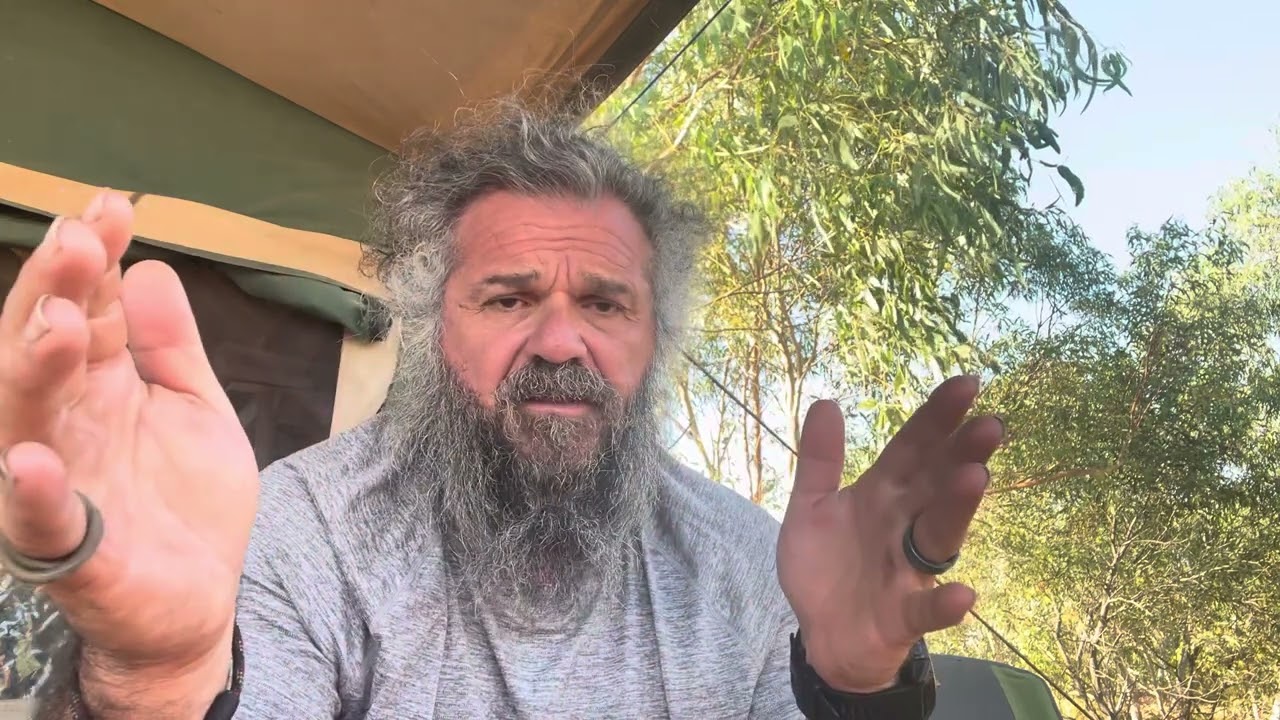
In this monologue, Dr. John A. King recounts a recent meeting with four Wurundjeri tribal leaders, during which they shared cultural lore that is usually reserved for ceremony. He reflects on the stark contrast between the wealth generated by gold and iron‑ore mining in Tennant Creek and the extreme poverty experienced by tiny Aboriginal communities in the area, describing lack of water, power, and essential services, as well as high rates of type‑2 diabetes, cirrhosis, and non‑alcoholic fatty liver disease. King critiques the local alcohol environment, noting the limited bottle‑shop hours and the resulting binge‑drinking patterns, and challenges stereotypes that label Indigenous people as lazy or alcoholic without acknowledging eight‑generation trauma, land dispossession, and loss of voice and home. He explains the Wara‑Mungu principle that every man deserves a voice and a home, and how the removal of these fundamentals erodes purpose, leading to systemic trauma and ongoing genocide. King warns that the Wurundjeri’s cultural knowledge is at risk: only three elder storytellers remain, all elderly and ill, meaning the oral law and stories could disappear within two decades. The piece ends with a call to recognize the tragedy and consider the broader implications of cultural loss.
Chapters
Had an awesome privilege the other day of sitting down with my 4 brothers who are the tribal leaders of the Wurundjeri. We're just talking about culture and talking about lore and stories, and they were sharing with me some things that they, um, you don't normally get shared with until ceremony. It was just amazing hearing the stories, hearing how old the culture is, hearing the different slants of things, and also Listening with open heart to some of the challenges that they're facing. It's extreme poverty in some places around the township. It's as bad as anything I've seen in third world countries. I think what's contrasting and makes it feel worse is it's not the entire town is experiencing this extreme poverty. It's just very tiny Aboriginal communities within this incredibly wealthy town. Tennant Creek is a gold mining and iron ore mining area, and the billions of dollars that are flowing through here are unbelievable. You've got helicopters flying in, executives flying in, all that sort of stuff. And you've got people whose front yards are just full of trash with no water, um, no power, no essential services whatsoever. You've got communities that don't have any water whatsoever, and they need to be— and if they're 5 minutes from town and water needs to be tanked in there, um, you've got type 2 diabetes that is the major reason people die, cirrhosis of the liver, non-alcoholic fatty liver disease. All of these things are very curable and very easily addressed. Then you've got the travesty caused by alcohol. I prejudged the situation before I got here. You know, the whole, um, the bottle shops are open from 4 o'clock to 7 o'clock. Bottle shop is a takeaway alcohol place. But you see why they did it, um, because they're trying to curb the large consumption of alcohol all day long. You can go into a pub and have a beer, but they'll cut you off and they won't serve you anymore. And you've got these really unfortunate situations where people are lining up outside bottle shops, you know, to buy 24 cans of beer to go home to drink them all. To come back again. It's just, it's just tragic. And to blame the Aboriginals and call them lazy and alcoholics without having a look at the whole list of trauma that led to this place— the Imbrari, sorry, not Aboriginal. Imbrari is the, um, is what they like to be called. There's a term Aboriginal, so, you know, Imbrari, the people, the nation. To try and judge them and judge their lifestyle based without— out of the context of 7 generations or 8 generations of continual trauma. You know, being removed from the land and their home isn't something that happened 100 years ago. It's something that happened like 4 and 5 years ago. I was just talking to someone the other day. And not having your own home is something that I was talking to, um, in Aboriginal family structure, my grandfather, who was the tribal leader, um, talking to him was, um, he still hasn't got his rightful land, his family land, the land that his forefathers have always had. He still doesn't have access to it. So here is a man without a voice, and without a home. Now, in Wara-Mungu, those 2 things are very important. They say every man deserves a voice and every man deserves a home. Every man has a voice, every man has a home, and they are the 2 fundamental tenets under it. And when you take away both the voice and the home, then you take away the purpose for the man. And in Wara-Mungu, there are only 2 types of men. There are chiefs and warriors, fighters, people who get out there and get things done. So you take away a man's home, his voice, and his job, and he's got nothing else to do. It's systemic trauma. It's genocide that's still happening today. There's this saying that it is the oldest living culture. It's the oldest visibly dying culture. And we're literally 20 years away from people losing the stories. And the culture and the law that underpin this entire nation, that we are down to the last one or two elders. The last— there's 3 elders left, storytellers, story holders in the Wurundjeri Nation, and they're all old and they're all sickly. They've got very bad medical conditions. So it's tragic. It's absolutely tragic. And, um, anyway, lots of things to think about.