Help Me PTSD Podcast
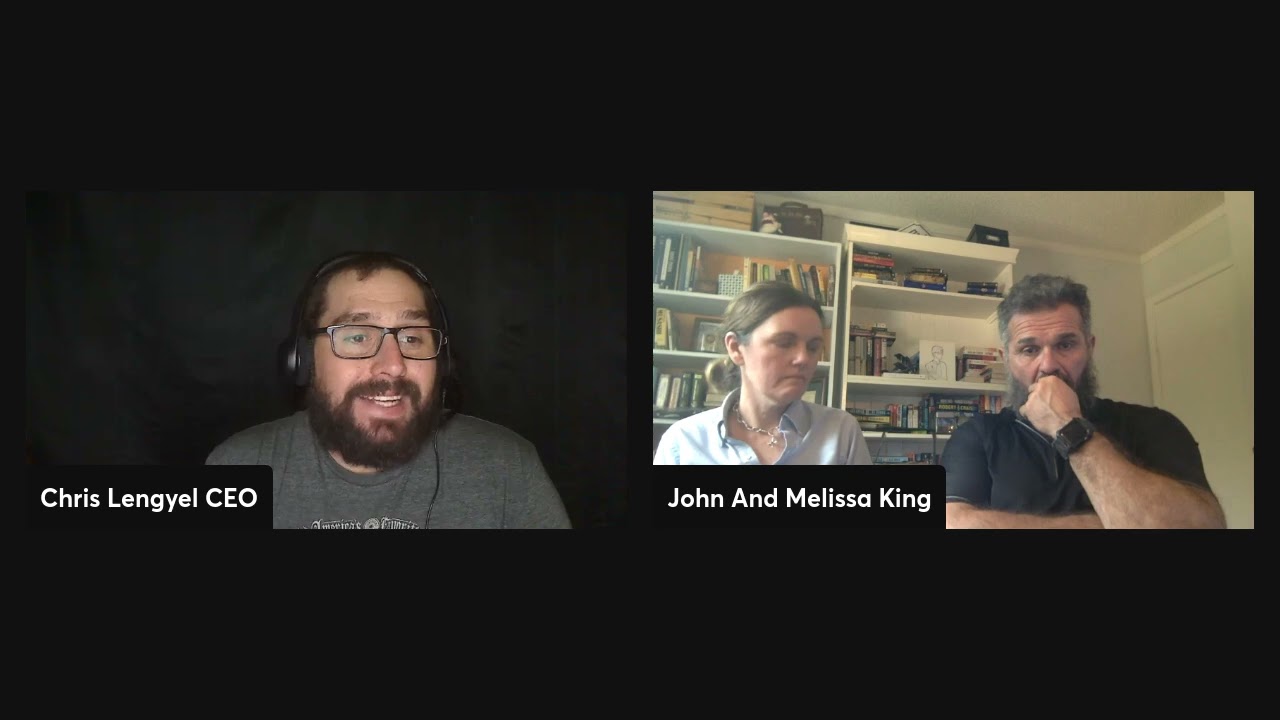
Dr. John A. King and his wife Melissa discuss managing PTSD as a permanent condition rather than something to overcome. King describes building a personal toolbox of daily routines, exercise, mindfulness, and nutrition to move from "John 1.0" to "John 2.0," and explains how couples communication and supportive environments enable sustainable healing.
Chapters
Well, hello everyone. Thanks for tuning in. My name is Christopher Langell and I'm the founder of Help Me PTSD. a platform for clients and providers to meet and a place where we're creating sustainable healing centers. We have one right now going on in Show Low. And today I've got a great guest here, uh, Dr. John King and his wife will be joining me to talk about sustainable healing and the practices that you guys can implement to help reduce these pesky symptoms that PTSD likes to cause. So let's, uh, watch a little intro video of Dr. King here and We'll get on with the interview today.
I wrote Deal With It because people were coming out of seeing the Stopping Trafficking film and seeing my story, and they wanted to know what happened to him, what happened next, or did he ever recover? Or they met me and they couldn't believe I wasn't like You know, batshit crazy. And they'd hear the story and they'd go, why aren't you crazy? It's like when I'd start to talk to them about some of the things. So that was one reason, was to give a second half to that. And I think I came out of it, and when you have— it's a little bit like Mona telling me I was resilient. When you have people telling you how they're so surprised that you seem like you've got it together, You start to wonder, maybe I've got something here, maybe I've learned some things. So I just— we came back from that Hollywood experience with this sense of people needed some real practical help, and they needed it from someone who'd been through it, not academic. So when I started to write Deal With It, it was literally like I thought, I want to write a book that's like duct tape for your soul. You know how duct tape solves all problems? You can start cars with it, run movie projects with it. If you've got duct tape and a penknife, you can solve everything in life, just about. And I thought, I want that sort of utility, multi-purpose tool to be able to do whatever it is that, that could do. So this one book could be a starting place for people, you know, so they could get it and read it. And that's, that's really why I wrote Deal with It. Deal With It isn't just about having PTSD. Deal With It is for anyone who's lost it all and wants to get up and go again. It's not a book solely on trauma. It uses trauma and my personal experience as the platform to herald a message that if you have the courage to just breathe good air in and expel bad air out and get up and have one more go at it, Then, then you will make it.
Well, Dr. John King and Melissa, thank you for joining me today. How are you guys doing?
Hey, doing really good, mate. Thank you for having us on.
Yeah.
Oh, thank you for being here. Well, let's get started today. I know there's a bunch of questions I have, and I want to make the most out of our time. You know, I've looked into a lot of your stuff and the philosophies you have surrounding PTSD just line up with a lot of the things that I like to promote and talk about, you know, one being with just deal with it. Because that's what we have to do as PTSD survivors is just deal with the aftermath and the lifelong things that come up. You know, some, some of these things just don't go away. The past can't be changed. And so we are left sitting in this place just trying to handle all of the things. And for a short period of time, maybe that's very intense, and over time it should dissipate. Some people can get to that place sooner or quicker than others. So I want to talk to you guys today about, you know, where your philosophy is on, on how to overcome, how to get past PTSD. And, and maybe you could talk a little bit about yourselves, where you come from, your background, and start off with, you know, what, how do people get over this and just deal with it just like your book says?
Sure. I think, I think the big thing for me was actually accepting the fact that I would never get over PTSD, that PTSD was going to be something I was going to have to manage for the rest of my life. Now that changed how I looked at things, because when you're waiting for that epiphany where you wake up and one day the unicorns are floating, the butterflies are farting, or whatever it is, and you're wonderfully whole and you're a better person, then you're continually disappointed, as opposed to getting up every day with your toolbox and saying, I've got the tools I need to manage my life and live successfully. And that toolbox you cart around with you all the time. So regardless of the situation or circumstance, you've got a skill that you can pull out and apply. Whereas that puts me in control of coping with a mental illness, whereas the other one actually puts you at the behest of a mental illness because you're waiting for some sort of external deliverance. To take place.
Yeah, you sit around and wait to be rescued. And we're— instead of that, we're really big on personal responsibility. You know, you get up every day and you work at it.
Yeah, it's a good way of putting it.
No, I completely agree. You know, I have a saying is just be an active player, not a passive victim. You know, I think everyone that, you know, regardless if it's PTSD or you're just dealing with general life things that come up, If you're a passive victim, you're just going to experience a lot of pain and suffering along the way if you just stay passive. If you take control of your future, take control of your thoughts and your feelings and your emotions— not necessarily that you can control your emotions or feelings or how you feel about something that happens, but how you respond to that, how you act or how you behave because of what those triggering instances are— really can make the difference. of how you overcome trauma. So let's talk about a little bit about, you know, sustainability. You know, PTSD impacts people for a long period of time. Right after a trauma happens, it says that it's most exacerbated and people experience very severe symptoms. It's the prolonged symptoms that really qualify it as a disorder or post-traumatic stress disorder. A lot of people experience post-traumatic stress, not necessarily the disorder part. What kind of sustainability do you guys promote when you're working with clients and in your book as far as the day-to-day practices? What does that look like for someone overcoming trauma?
The first thing that we try to take people through is defining their new normal. If you are, if you're having the prolonged symptoms, there's been a change in your brain, you're talking about a physical change. You are a different person. You are 2.0. And so what John had to do first was to define 2.0. You know, what does my day look like? What is my, you know, what am I going to do when I get up in the morning? What time am I going to get up? What does my diet look like? And so he had to redefine all of that and put all that structure in place. So now that he could begin to operate in a new, new structure, I think that's the first thing we talked to folks about.
I think, yeah, I think that's, that's great. And look, when we talk about things like, I was very much— was it right brain or left brain?
You were left brain before.
Very, very left brain driven, goal orientated, 5 years goal, blah, blah. And after I had recall of what happened, it was very much right brain creative. So I couldn't— literally couldn't go back to how life was before. So when Mel talks about redefining normal, I was constantly frustrated because I couldn't act like John 1.0 and achieve like what John 1.0— and I didn't like the fact that I wasn't John 1.0. But when I came to accept John 2.0 and his gifts and his talents, his passions and abilities, Then that started me being able to live a fruitful life in this place. And I think a lot of challenge people have is when they're hearkening back to, well, I used to be able to do this, and I found going into crowds really easy, and this was really comfortable for me to do, is they're constantly caught, you know, going backwards. Now you can either turn around and hang on to your past, or let go and hang on to your future. You can't do both because then you straddle a fence. And any fella knows that's uncomfortable. And you just can't do that. You've got to jettison one and go, you know what, I am John 2.0. And I'm going to embrace everything that that means, you know, with passion.
No, I completely agree with that. And it comes back to like, you know, we can't— I tell people, we can't change what happened. Whatever happened that day that you were traumatized, that is forever set really in stone that happened. There's nothing we can do to change that. We can focus on adapting and overcoming. Uh, the, the challenges that that experience has presented or manifested in our lives. And a lot of these things that, you know, for those watching, it might be something that you don't really think of. You know, a lot of people associate PTSD with the military. My, my PTSD is from military experience, but the, the reality of PTSD in, in its essence is that a variety of people can experience PTSD. It doesn't— it's not just military, it's not just police. This is, you know, women, men, boys, girls, children of all ages, uh, from different experiences. You know, I've worked with people that have been in a car accident because they got hit by a drunk driver, and now they, they don't want to drive anymore. They can't go to work, and it now becomes debilitating. Has nothing to do with military experience. Um, so let's talk about, you know, what do you think is the solution? for people to bounce back to a functional place of life in comparison to what we see in the traditional models of counseling and treatment centers?
A solution to bounce back? Well, I think you have to be resilient. You've got to be determined to get up every day and go again. You know, I talked about in the front of Deal With It, my old boxing coach, You know, he taught me that you just got to tuck your chin and throw punches. And I think it's that attitude towards life which is going to get you there. As far as— see, the thing is with saying, well, what do you need to bounce back? I think people are looking for a slogan or a bar sticker to say, okay, I've done this, I've bounced back. It's a commitment to a journey. The moment you say, if I try this one thing, if I go to Chris's Sustainable Healing Center, then my whole life is going to get better. Well, you know, mate, you get people coming out doing that, they're just going to screw the whole thing up, particularly themselves. I think it's that commitment to whatever it takes, however long it takes, I am going to overcome this, and I'm going to get back to a place where I love and enjoy every aspect of life. And I think that's the only way that you can drive forward and enjoy life, enjoy love, enjoy marriage, and, you know, all those sorts of things.
So let's, uh, let's talk about this. Here's the book image for you guys, uh, Deal With It by Dr. John A. King. This is the book he wrote. It's available on Amazon. You can probably get it from going to his website, which is in the comments. So let's talk about this book a little bit, uh, Dr. King. What, what inspired you to write this book? And, and from people that have read it, uh, have you heard, like, what kind of feedback have you gotten from people that have actually read the book and, and how it's helped them?
Sure. Um, well, my PTSD comes from, I was, I was sexually abused and, um, by my mother and her friends. And some would call it trafficked. The term would be used trafficked now. So I had recall of that.
2008.
Yeah, well, I was 45.
Thank you, dear.
So out of that, some people made a documentary on my story. And out of that story, people were continually asking me, you know, as I said, the intro video said, well, why aren't you crazy? Why haven't you lost your stuff? You know, and as I wrote Deal With It, I tried to put it down and take it all and, and make it the sort of thing you could pick up, take with you as a toolbox. And, um, you could use it every day in different situations. And what I found is that the audience was something that we never expected. Um, there's a, there's a copy of it now which has got about 30 or 40 call signs all written in the front, uh, because there's a particular group of Marines, um, that took it, read it, and then just as, as they do, they put the handle in it, send it on to their mate. And, um, I know that's floating around now. was floating around Afghanistan just up to about 6 months ago. Um, we've— a bunch of, a bunch of Tier 1 people have taken the book and read it and used it. Um, a bunch of police. And what, what I found is there was some way in the language where it just transcended my experience and was able to touch the hearts and the chords, particularly of married couples. Because at the end of each chapter, Melissa talks about what we were experiencing at that time and how we dealt with it as a couple. So it's been an incredibly useful tool for couples to be able to, I don't know, mirror journeys or compare journeys or get some feedback on their journey.
They develop a common language around the issues that they're facing. And, you know, I mean, anyone can say, I'm really triggered right now, but it goes sort of beyond that. John and I, we have ways of letting each other know that we need to slow down and talk for a second. Or John, if he says to me, I need to take a walk, then I know that he just needs a moment to decompress. So they were able to, to find some common language to, to use as a communication tool in their marriage, I think.
And I think that's important, what Mel said. Because we use those tools, we use those tools yesterday. So here I am, and you know, not my words, other people's words, this, you know, subject matter expert, world-renowned. I'm using these tools yesterday. It's not something that I know I'm going to be over or get over or ever have to not need. It's something that I know for the rest of my days, and maybe it'll become less and less often. that I need the tools. But I've got tools that help me face every day and every problem and be successful in the midst of it.
No, I think that's really important, you know, is having the right tools at the right time. And, you know, like I say, it's like not everything works every day. Some days my anxiety relief mechanism tool works great. And another day I have to change it up and use something completely different. And I think where people You know, sometimes fall backwards with PTSD is they start relying and trusting on these 5 things are just what I need, but they stop developing other things to use if those things for some reason aren't as effective one day. And so then we start seeing other coping mechanisms that might not be as positive, such as, okay, well, I'm just going to go have a drink because my anxiety relief technique didn't work, so now I'm gonna go hit the bottle instead, or do whatever that vice is to, you know, to ease the pain in the moment. So I think it's essential to build a robust set of tools. So let's talk about that here in a minute. We're gonna take a brief commercial break, and we'll talk about some more tools when we get back.
Start your day the Hempful way. Hempful Farms is a family-owned and operated hemp business with a full range of products to offer you, your family, and your furry friends. We believe in making a natural alternative product affordable to everyone. All of our organic products are third-party tested and a great alternative to many pharmaceuticals. Visit us online or any of our retail stores to learn more. Start your day the hempful way. Hempful Farms.
Hey, it's Chris Lango back with Help Me PTSD. We are interviewing Dr. John King. He is the author of Deal With It, a book about PTSD. It shares his own experiences with his wife and how they have overcome some post-traumatic stress disorder and are planning on helping a lot more people do the same thing. So let's bring him and his wife back on the show. Dr. King and Melissa, hey, how are you doing?
Hey, good, man. Real good. Thank you.
Awesome. Well, we talked about tools and techniques a minute ago, so let's dive right back into that. What are— if you could name 3 things that you use on a weekly basis, and I know we talked about one already that was the, the schedule, the, the structure. How am I structuring my day? Um, you know, I personally use a lot of structure coming from the military. It just works for me. Sleep was a huge issue when I came back. I couldn't sleep. So I'm— when you can't sleep, I'm not rested. When you're not rested, everything else is out of whack. So for the structure, I believe is a great tool because if you do the same thing over and over again, it kind of sets you up for success. So with my sleep, if I do the same activity every night before going to bed, my body and brain naturally go to sleep. Can you talk to us about some of the tools and techniques you use to help you get that stability in your life?
Sure.
I think the gym's a big one for me. Physical exercise is important. Every day, you know, 5 days a week, I like to, you know, exercise for an hour or so. That could be yoga, that could be lifting heavy, it could be cardio. I think the second thing, I do mindfulness meditation for probably 10 to 15 minutes a morning. And I find that, you know, part of me— I'm a Christian man, so I read my Bible in the morning, have a coffee, smoke a cigar, and then I do mindfulness meditations, you know. So, so part of that is part of my morning ritual when I first get up. But probably along with those 2, the most important thing we've found for mental health overall has been diet. I talk about it and deal with it. I, I remember flying into I forget where it was.
Chicago.
Chicago. And going to speak up to a large Christian organization up there. Landed great, was feeling in a really good place. Walked in 10 PM at night, kitchen was closed. Picked up a— I think it was a Diet Coke and a packet of orange Fritos or Cheetos or something and a Snickers. Within 45 minutes, I was suicidal, looking over the balcony 10 stories up, just wanted to get done with it all. In the midst of this suicidal ideation, I'm thinking, what the hell happened, man? You landed. You're going to speak. These people are excited. What the hell happened between 10 o'clock and 11? Orange food coloring is known to set off anxiety and depression. Sugar is known to set off anxiety and depression. And so that started a journey for us. Dude, the journey, man, I'm telling you. I mean, everything from vegan to carnivore. And when we say we've tried it, we're talking 6 to 18 months tried it to try and work out what helps as far as brain health. And so nutrition, it's every meal every day. You know, it's made a massive impact.
Yeah.
And I really don't think people talk enough about it because garbage in, garbage out, man. It's an old computer term, but, you know, it certainly works for your mental health and your physical well-being.
No, I couldn't agree more. I think diet and exercise is a catalyst to overall balance. And, you know, I tell people all the time, it's not— it's a huge pinwheel, you know. If any one area of your life becomes unbalanced or imbalanced, it's going to Throw off the rest. So if you're feeling depressed, you might eat a little bit differently when you're feeling depressed. I think I know we can all relate to that of eating the chocolate bar at 10 o'clock at night because I just, you know, everything went to crap. Yeah, it went, it went to crap today, so I'm gonna go eat a Big Mac, like, because that makes me feel good, which is somewhat of a lie. So now we're believing in a lie, and now it's this vicious cycle of I believed in a lie, so now it's okay to lie to myself. It can go on and on, you know, and, and, and it's where— to what end, and when does it stop? And For me, and, and I, I hear from you, it comes with that structure. And I'm going to do things a certain way. I'm committed to the process in which I can get better, and that process needs to have a, a step-by-step guide. That's what we're developing with Help Me PTSD and, and the healing centers that we're trying to incorporate and, and install in communities, uh, here in Arizona. And it is that structure. It's structure like no one has really experienced before. Unless you've been in the military or someone yelling at your face telling you what to do every second of the day. A lot of people don't get that itemized structure of, of good positive habits, so I'm glad that's incorporated in your book. Let's go into another topic about, you know, we have a lot of different philosophies out there. There's so many different treatment options. The, the government and the insurance agencies want you to do it A, B, and C way.
Uh-huh.
Uh, the, the, the coaching and holistic You know, healing centers, they want you to do it the, you know, CBA way. And where is the middle ground? Do you think the government will support sustainable, affordable practices, both holistically and conventionally, as we move forward, you know, finding different alternative ways to treat PTSD?
Your question is, will the government actually make a Good decision for us.
No. Looking at the floor.
No, they won't. Will Big Pharma hand over the keys to personal responsibility using organic and natural food processes for wellness? No. I think it comes down to what you're doing, Meriden. You're doing a great thing up there, is giving people tools to wrangle this themselves. We don't need government permission. Look, the worst— the best thing for someone coming out of the military is to not go to the VA and ask for help. And I know that sounds horrible, but the VA's got some terrible reputation. You know, they don't even allow into consideration something like the role of medical marijuana. Now, I'm not a big THC fan myself because THC really does not do me favors. And for a lot of people with PTSD, it actually amplifies the problem instead of, you know, soothes the problem. So, but what I'm— and the thing with, you know, some of the PTSD stuff with the military, and I know a lot of the Tier 1 guys I work with, probably 50 to 60% have had childhood trauma, childhood sexual abuse. Now they can't talk about that because if they do, they'll lose their PTSD benefits with the military because it's a pre-existing condition. And it's the same with the police. They can't talk about what happened to them in childhood or in the military. Because instead of a PTSD condition, a pre-existing condition for what they've got. So I think what we've got to do is we've got to build networks and find relationships that are going to move us forward. Now, those sorts of things have to be— you have to take responsibility for your own development. So if I connected with you and you had something— I know your program runs 12 months to 24 months.
Yeah.
with what you're doing, then if I'm connecting with you and Help Me PTSD, then I'm going to commit to that program for 12 months and learn everything I can, and then go on and find the next thing to learn. It's like a smorgasbord. It's not à la carte. The government's going to say, here's your à la carte menu. The VA is. Big Pharma's going to, but it's not. What we have to be responsible for is, I'm going to pick this thing up. You know what, man? It's Brussels sprouts, man. That's not going to work for me.
Right.
But I go over here and I have a steak and a bourbon, well, that's going to work for me. So what is it that's going to work for you? How can you keep bringing those things and being open to new things and then find out those things, the 20% of the things that do you 80% of the good? If you can come up with 20% that will give you an 80% return, then you can fill in the rest with bullshit and duct tape and just get down the road a little bit further than where you are. And what will happen is things will fall off and you'll pick up new things if you're prepared and you're constantly in a place to learn, to listen, and to engage.
No, I think you hit on a lot of different points there. And you know what I found, and I guess the entire time I've been doing this PTSD outreach and how it's evolved, it just started as a live video support group and it got requested to be an in-person seminar. And then from that, it's always been a constant research. Essentially. And so from my last 5 years of research and doing this, we've found a lot of different variables to what's going to help people overcome their situation. And from what I've seen is people staying in the same environment and trying to get over something just doesn't work very well.
Yeah.
It, it just doesn't. If they can't get away from the problem in a, in a physical sense, literally just get away from the issue, Change is very, very limited in, in what a person, regardless of how avid they are, how motivated they are to change, it's a very uphill battle. I found that by removing people from their general environment and placing them onto a place like our healing center, where it's— you're, you're in the wilderness, essentially, you're, you're out, you know, it's 30 minutes away from civilization. You could drive to a Walmart. for groceries or whatnot, but it's far enough away for you to essentially forget that you're kind of around a whole bunch of distraction and reality is different there than it would be in your home environment. And what has come up for some of the people that have stayed, and we've had people stay for a month, the longest person I have right now who's still living there has been there just over a year. So he's coming up on the tail end and moving on with his life. and doing great things. But in that span of 12 to 18 months, it starts off with personal development very first. You don't have to focus on anything else there. You don't have to worry about finances. There's no charge to be here. So the, the burdens of the general world are essentially gone, and it puts people in a place of stability right from the first day they enter the property to allow them just to think. Just to, just to be with themselves and think for a minute, slow down. Um, but what comes up over the span of that is we deal with finance issues that, that weighs into the, the situation. We deal with, you know, employment issues. We do, just like you mentioned, the, the diet and exercise issues, the, the physical, uh, issues. So this place that we've created is a place where we're trying to be We, we created an environment for people to work on every aspect of their life and not have to worry about the day-to-day grind and struggle of stress that's normally there. And I believe in that environment, you will be able to see massive transformation in people with PTSD. That's my theory. Um, I— we're working on proving it. I think we're on to something. Absolutely, you are, man. So, you know, again, thank you guys for being on the show today. Let's, let's follow up with if you had to— if you had something to say to a person who's dealing with PTSD right now, they maybe they just experienced a sexual trauma last week, last night, wherever it may be, and they're struggling, suffering right now. What would be the number 1, 2, and 3 things or one thing that you would want to give that person as a message today?
Do you have something?
I do. I think if John can make it, anyone can. So, you know, you're not alone, and, you know, you can do it. And I think John's already said it, but good air in, bad air out. And just get up and you go every day. I can't possibly overstate The impact of a positive, affirmative environment. And so wherever that is that you can be safe and have that person that's going to let you share your feelings or, you know, talk you through things or leave you alone if you need to be alone. And that really sounds like Help Me PTSD has created an extreme affirmative environment there where they sort of take you out and Put you in this safe place.
Awesome.
Yeah, it does. Um, but I would say to that person that, you know, wherever you can find it, find that affirmative environment, find that positive place, and, um, and then just start working to get whole.
No, that's, uh, that sounds amazing. And it's true, you know, we're— you're not alone. And that's the biggest thing that I, I try to let people know is we, we want people to reach out. The first step is them being able to reach out. And that's what Help Me PTSD is all about, is giving those places and resources for people to make that reach out happen. If you wanted people to get in touch with you, Dr. King, what's the best place and how would someone get connected with you?
I think the website, drjohnaking.com. I think that, that's, that's a good spot. There's an ability to be able to email us through there. You know, we're all over social media, Instagram, Facebook, Twitter, and whatever. But dude, I don't check that crap, you know, spend too much time, it literally rots your brain. So drop us an email. I think so.
Yeah, we love to hear from folks and just get connected. John has tons of free content out there. He does a series of videos that are 1 minute long. And so just address one little topic. And it's Stuff that you could apply today.
There's about 150 of those. So they're just there for people to download and get and use and whatever we can, you know, there's a, there's a book on dealing with shitty days at the moment that's for free, an ebook on how to deal with how to unshit your shitty days or something.
It's called Having a Shitty Day Without Losing Your Shit.
Nice. I like that one. We'll have to get a copy of that.
Shitting your shitty day, I suppose.
Well, no, I really appreciate you guys being able to take time out of your day to be here to do this interview. I think we had a lot of good comments and interaction here. So thank you guys for joining me today. If you want to stick around, we'll chat a little bit more in the backstage, but we'll see you next time.
Thank you so much.
Cheerio, Mike.
Well, guys, that's all I have for you today. That was Dr. John A. King and his wife Melissa. They have an awesome book. Head to their website, drjohnaking.com. You can find it there. If you're wanting to get involved with our Sustainable Healing Project, you can go ahead and make a donation to thefoundationoftheword.org. That link is in the comments. And until next time, my name is Christopher Langella, and I hope you guys have a safe and awesome week.





