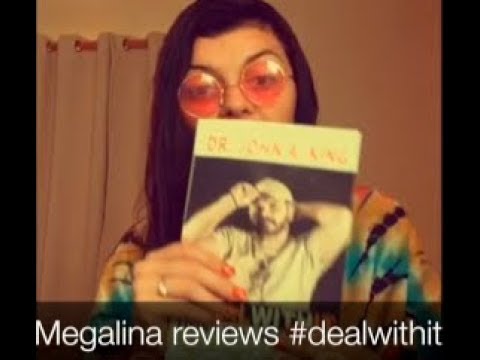
Megalina reviews Dr. John A. King's Deal with It: Living Well with PTSD, highlighting passages on choosing happiness, refusing a victim label, and the power of a supportive partner. The book stresses personal agency in recovery and includes King's story of screaming in a store, then learning to control his reaction.
Chapters
This is my review for Deal with It: Living Well with PTSD, a book by Dr. John A. King. I'm past, I'm my future. Meaning we're not gonna let everything in our past define our future or mess up our future. Our flashbacks. It comes down to us making the decision to be happy. He quotes Anne Frank on page 238, where it says, we all live with the objective of being happy. Our lives are all different and yet the same. Meaning we make the choice to be happy because anybody could be happy. You know, it's a choice that you make to be happy, to pick yourself back up, to choose not to be a victim of anything, of any circumstances, and to get past it and to be better than your broken experiences that broke you or hurt you. Or caused trauma in your life. Page 85, he says, humans like labels. When we assign labels, it means we can pigeonhole someone. It gives us perimeters upon which we can blame or explain behavior without ever trying to understand it. Don't worry about him, he was abused, he just gets that way sometimes. When you allow someone to label you a victim, you're pretty much handing away your future. You're saying, I'm powerless, I'm powerless against this. You're not a victim. You're a strong person, and you can get through this, and anybody can get through this as long as they have people I like how near the end of the book, page 297, there's a poem that he puts in his book by Ben Harper that says, The Power of a Partner. It says, and a heart is not a stone and is fragile when alone. Be my side, be my side, won't you be by my side? I like how he incorporates his wife in this book as well. It is very important to have somebody by your side that is going to support you emotionally through anything that you're going through. Love is a powerful thing, and it's amazing to have somebody that truly cares about you and knows what you went through and can accept everything and still love you and see who you truly are. So that's really powerful when you have PTSD. But it really, you know, it really helps to have somebody there that cares about you, whether they're a partner or a friend, you know, regardless of who they are, honestly. That really spoke to me, and I— it's really good to see people that incorporate that into their stuff. I also like the fact that in one of the chapters he talks about, um, kind of having like a little breakdown where he like screams in the middle of the store, and then like near the next chapter, near the end of the chapter, he's kind of talking about learning to be better and not overreact to stuff. Sometimes it's hard. Sometimes certain things trigger you, um, sometimes more than we realize. That also Like he says in his book, is controlling our emotions and realizing that we're not a victim, that we can pick ourselves back up and brush ourselves back off. I'm gonna be reading it. I suggest it to anybody that has PTSD. This is my book review, and bye!