PTSD And Human Trafficking With Ann Beal Radio Show
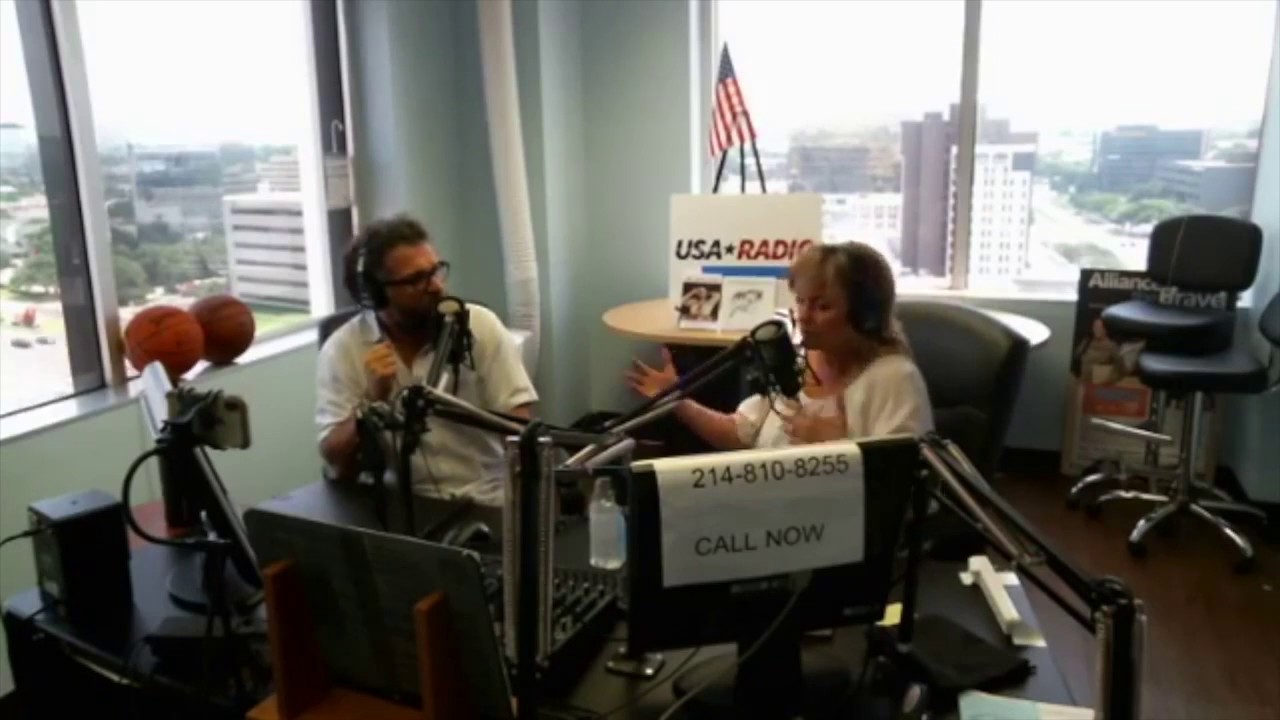
Dr. John A. King discusses his survival of childhood sexual abuse and trafficking, the signs of PTSD in victims, and how to recognize and help trafficking survivors. He shares practical guidance on recovery and details the scope of trafficking in Dallas and across the border.
Chapters
Welcome to Getting Better with Ann Beale. Today, I am excited. I have a wonderful guest today.
Well, thank you. Great to be here, Ann.
I have Dr. John King. You heard him. He is a wonderful man and he is here to help us and people all over the world. As you might know or probably don't know, Dallas, Texas is now number 1.
Yeah.
What are we number 1 in? We are number 1 in sex trafficking in That's correct. Yes.
Definitely in America, which would make us up there in the rest of the world.
It is crazy. Yes, I did say number 1 in the world. Now, how did that happen? That is what our show is about— sex trafficking today, sex trafficking in the Metroplex, sex trafficking in America. Now, Dr. John King, he is from Australia.
Yes, La Voi.
And he has a story to share about his sex trafficking experience. He was sex trafficked as a child. He has become a specialist with PTSD. He helps veterans all over the world. And he is here to talk with us about what's happened here in our community, but also what's happened in America. And so he has a book out.
Yep.
And it is called #DealWithIt.
#DealWithIt. That's great. Living Well with PTSD.
And we just thank you for being here, John.
Well, thank you very much for having us, Ann.
So you have all this experience. And so I know we talked a lot before the show to try to figure out exactly what we wanted to zero in today. And in light of Greg Matthews, who we had on, who was attacked by Grizzly, he works for Homeland Security and is over the Dallas Metroplex just trying to keep everyone safe. And I asked him about that statistic and he said, yes, we are number one.
Yeah.
And I was just— and he said that's some of the really difficult stuff that's going on in Dallas. And so we talked and you wanted to share about that today.
Yeah, I did. I wanted to talk about that and also talk about Recovery and dealing with PTSD, because one of the misnomers with PTSD is that it's seen as something that is an affliction for veterans. But it's really not. By the very nature of its title, post-traumatic stress, anything after a traumatic thing, a stressful period, it's a disorder. It's something that lasts more than 6 months. And Greg, the guy you had on last week, is certainly dealing with PTSD.
Oh my goodness.
Absolutely. So, you know, it's a physiological change and it has a neurological manifestation. A neurological change with a physiological manifestation. It's a change in the brain and how we can process and store memories. And then how do we deal with those memories when they come up? And that really is what PTSD is. So in my situation, I was sexually abused from the age of 4 to 16 by my parents and their friends. And that abuse— their friends, we would now call being trafficked, sex trafficked.
Because they trafficked you out to other people.
Yes, I was involved in— and the memories are sketchy as they are and I understand the nature of memories, but I do have recall of being at events and being involved in different group things and a range of different things. So whatever it was, it was that either sharing of, I don't know, a resource or whatever it is that happened in those environments. That, that we would now call, you know, trafficking.
Well, and part of what happened to you is what I've heard about before. Now, I've never heard it be your parents, and that's what's so crazy as well. It makes your story one that I know thousands of other people had to have had that happen. But there's like a lifestyle that these people live with a whole community of people that is just so Degrading and sexual the whole way, every— and that's what you lived in.
Yeah.
Yes, it was. My— and I talk about this in the documentary Stopping Trafficking. My first memory is of an act of oral sex from my mother at the age of 4. And that's part of where I start the book and the journey with Deal With It. So that being the case, look, things like that you can't process normally. And with your mother, there really is a bit of a Madonna complex that still exists within our society. Now, this statement may sound, ça va faire, but it's— we're at a point where we're comfortable talking about the sexual abuse and trafficking of women and girls. We will have those conversations openly. But we won't have those conversations about boys. Particularly if the boy is abused by his mother and her girlfriends. Now statistically, The statistic of 1 in 6 sexual abuse of boys makes for a great URL, but it is not factual. It's not factual within the United States, it's certainly not factual outside of the United States. In the United States, we don't have— we have some areas and statistics that are pointing more towards 40 and 45% of all sexual abuse and trafficking victims, sexual trafficking victims, are men. In other cases, it's more like 60 and 70% because labor is human trafficking. Violence is human trafficking, guns is human trafficking, and you're talking about boys and soldiers, boy soldiers all over the world. The other thing we don't want to talk about is we don't want to talk about the number of perpetrators that are female, and about 45% of all trafficking perpetrators and abusers are female. So if, if we're stuck in a stereotype and we're looking for a middle-aged white man trafficking an African-American girl, then we're missing out on the Asian 25-year-old woman trafficking a Latino boy. And you're missing out on half of the victims and half of the perpetrators. So that is part of the reason why we're just not able to address this problem because we haven't moved— we haven't moved it from being an area of gender politics into an area of human rights.
But I do think recently people are aware of the girl that played Chloe, the actress in LA that was part of a sex trafficking ring of Really getting actors and actresses trapped into sex trafficking there in Hollywood.
Yeah.
And they were just charged.
Yeah, they were. Nixon was a bit more than that. They had multiple locations where they ran daycare centers and for the sole reason of funneling young boys and girls into acts of sex trafficking. And they are part of the whole Hollywood elite that's going on that a whole range of people are saying, oh, it's all a conspiracy theory. It's a conspiracy fact. There is too much out there. The Weinstein thing, Kevin Spacey that just got swept under the carpet because he decided he was gay, which is probably the worst thing that could ever happen to the homosexual movement. Someone like Spacey saying, I justify my actions because now I'm coming out as a homosexual. And so all of that was swept because it was really sexual abuse of boys. Weinstein wasn't because it was sexual abuse of girls. Spacey was because it was sexual abuse of boys.
Oh, so you saw that discrepancy?
Oh, the discrepancy—
I didn't pick up on that.
No, the discrepancy, that's the discrepancy I faced. I had total recall of what happened to me as a kid when I was 45. And that's what often happens to men. They repress these memories and at some point, like a boil, our brain just says, you know, I'm done, mate. You've got to deal with this stuff. Because it was affecting everything in my life. And so I had total recall of what happened to me as a kid and that led to the onset of complex post-traumatic stress disorder. I had to shut down the businesses I was working in, my church. I lost my family, estranged by my kids. just about bankrupt. Unfortunately, my family just couldn't cope with the revelation of what happened to me as a child, and it just didn't work out. It was a lot of things. If I'd become a quadriplegic or had a heart attack, I think it would have been easier.
Right.
But when you're dealing with a mental illness, it's that unseen thing and the stigma attached to it. And, you know, people didn't understand that what was Pornography was done to me. I did not actively engage in it. So I got blamed for being the source of pornography. And people had a challenge. They couldn't just— somehow it was my fault.
Well, that's because it's so hard for them to get their mind around, right?
Yeah.
And I think that the difference and one of the reasons we wanted to have this show today is to get the word out about women. And I think Chloe is the one, and I don't know her real name. I can't remember her real name, the actress. She was luring these people in.
Yeah, she was.
And so, if you think about it, we want to let young people out there know that people can— you know, you used to be able to— I had friends who went down to Galveston on the beach, and they didn't have a lot of money, and they had a tent, and they had a really nice older lady invite them to come stay at their house. And this was probably 15 years ago, 20 years ago. And now, if you do that, the danger is, is that people can be waiting there to trap you.
Yeah.
And that's— and often, it's a woman can lure you, and they seem very friendly. And so that's the terrifying part. Now, I have a friend that works for the Labor Department, and he has for 15 years been working to shut down a lot of these Chinese buffets and, you know, different businesses that bring in these—
Nail salons, massage parlors, and so it goes on.
Yeah, and they— now, they were thought of as slave— the slave trade. But now when you hear more about sex trafficking, that is like, what, a $20— I don't know how many billion-dollar business now.
It's $150 billion. $150 billion worldwide.
And if you follow the money, right?
Yeah, 30%, I believe it's 30% of all money worldwide, it's US dollars. America has 55% of all child pornography images are held on American servers. So people who continue to post, and I feel sorry for them, they don't know what they're doing. They want to put these pictures of their children semi-clad in bikinis or whatever, and they're 5 and 6 years old. They're posting material for pedophiles to masturbate to, and those pictures are then taken and shared. And it's— people just need to understand that the world is different, that at the end of the arm of every child is a device that can show group sex, bestiality, any sort of engagement. And as parents, we have a moral imperative to make sure that we guide it. We can't ban our children from a technological age, but we have to guide them through and shepherd them through Well, it's our job to protect them.
Smartphones— I just got a text, so I have a question for you. But the smartphones, you know, just being on YouTube looking for things about, you know, we were looking at, looking for Greg's grizzly bear Animal Planet thing, and we were on there and there were all these videos of people getting killed and torn apart by grizzly bears.
Yeah.
And I was thinking, you know, kids have this access on their smartphones and also their Their school tablets that they get from school. And so they need protected from that. They need protection from all the dangers. And also, we know Snapchat, things like that, people are luring these kids. But so I have a text from someone who wants to know, how did this happen? Is it the illegals coming in that caused the sex trafficking? Now, I know that you're going to say that's not it so much because it's been around a long time.
It's been around a long time. But what I've been trying to do, and we're starting to get some traffic now, Is we need to understand that what is happening on our border is the single biggest opportunity for human and sex traffickers that they've ever had. And 60% of all of the people that are smuggled across the border are being smuggled across for human or sex trafficking. Now, now I know this, this is whatever. Sex and sex trafficking is sexy. People don't mind talking about it. They want to run funds, raise funds for it. They want to do all that. But what they don't want to talk about is the people that are building our buildings, mowing our lawns, waiting in our restaurants. They're going to pay on average to a mule about $60,000 back to the families to make sure— if they've got a family of 4 or 5 here, they're going to be up for $60,000. So that guy who's working $5 or $6 or $10 an hour is going to lose 2/3 of his salary every month to a cartel back in Mexico. It's very lucrative. Now, if we want to be sensational and only look for sex trafficking, okay, but then we're missing 2/3 of the issue. A lot of the women that are brought here aren't brought here just for sex trafficking. They're brought here for industry. They clean our homes. They work in the garment industry. They work in low-paying jobs. And they don't— they don't want to— they don't want to be slaves.
No.
They can't go anywhere or do anything. And I am an immigrant. This was my first 1st of July as a citizen.
Congratulations.
Thank you. I'm very, very proud to be an American. And I got here, so I believe in the value of— and I actually got here under the lottery system. So I was incredibly blessed. But then I went through all the criteria to get here, and it took me 10, 15 years to do that. And I think there is a way and a process. Now, do we need to improve our system? Yes. But having an open border policy that is being manipulated to pump up a $150 billion crime industry, I think shame on, shame on our government. And it's not a party— this is not a party politics thing. It is a human rights issue. Shame on anyone, both sides of the aisles, that don't see this as the biggest pressing issue for us to address as a nation.
So for people out there, I know that, you know, I was telling people, I know that if there's 27 million people being sex trafficked, there's probably more.
Yes, they are.
That's only what they know.
45 million every year in the US.
How do people know when they come across somebody? Because you know they have, and I know that I have. Like, how do we know? What do we do? What can we do? So after the break, I'd like you to kind of share with us because that's your specialty, to really help these people. And Vietnam vets, they also have the issues that you help with.
Sure, absolutely. Almost every veteran does.
So if you can help us out. And so you guys, John is sharing his story about being sex trafficked as well, to let us know in the Metroplex, since we're now number 1 in the world. So stay right here because we want to know what to do and not feel so helpless. We'll be right back. Sex trafficking in the Metroplex. We are number 1, believe it or not. And I can't even tell you how horrible of a statistic that is to be number 1 in. Dr. John King, he is sharing with us today all the things that we can do, as well as just being familiar with what it looks like. And if there's 27 million people— or 45 million now.
45 million every year.
And so that you can know, so you can help. And if you do come across a victim of sex trafficking, you gotta know how to— you want to talk with them, you want to get to know them. And I think people don't know what to say. So they tend to say nothing.
Yeah, I think the best thing you can do is just take someone by the hand and take them to the police station if they say that's the case. I think be aware, it's very difficult to tell. I was having a meeting with the Sheriff's Department in Tarrant County. We just brought out— we're just involved in the film Stopping Trafficking. It picked up 18 awards around the nation, internationally recognized as a very dynamic— and they asked me the question. And this is what led me into the post-traumatic stress recovery. They asked me the question, if we'd come across you as a child at 11, how could we as police officers have seen— what could we have done to recognize it?
Right.
And I told them they wouldn't have been able to. I was— I had taught myself to enamour myself to the people who were less likely to hurt me in the room. So if I went somewhere and it was going to be a situation where I was going to be abused, I would find the person that I could sense would hurt me the least and make them my friend. Even though I was going to get abused, I was probably going to be abused the least. So if someone came to the door, a police officer came to the door and they wanted to question me or talk to me, I would make them my friend. I would have been gregarious, outgoing, funny, lighthearted, because they were going to hurt me the least and I wanted them to be my friend. I wouldn't have thought about the things that were happening because remember, the things that were happening to me That was your life. That was my life. I didn't know any different. And that's what hit when I turned 45 in 2008. I realized that all these little bits of memories that I had came together like an old 8mm film. And I said, for the first time in my life, I've been sexually abused. And that was the first time I realized it. So when I started to talk to the police, that has put us down the track that we're on now. And when we started, I was asked to To really write a book, and it's the Deal With It book.
The Deal With It.
And for everyone who's listening today, use the code Ann Beale, A-N-N-B-E-A-L, when you go to the website and you'll get a 20% discount. Just as a gift to you to try and help you in your recovery or your journey in understanding PTSD. And what we found is what we were writing, I started to understand that post-traumatic stress wasn't just about sexual abuse or wasn't just about military trauma. That post-traumatic stress, this impact, this physiological change in our brain that had this physiological change in our body, the inability to cope with stressful situations, how we detailed and processed things, the paranoia, the anxiety, the depression, a whole range of things like that, that that was common to anyone with trauma. So what started as a journey with people in trafficking has become— the book is now recognised as one of the most preeminent texts In a brain's ability to creatively learn itself. There's over 200 tools in the back for people to take and try. So we've got that side academically and amongst therapists. And on the other side, we've got a whole bunch of pipe hitters from around the world that just go, dude, I love this. Well, I can't say it, we're on radio, but I love this stuff.
Thank you.
And I didn't know if we had a beep beep beep, but I'm trying to do very good here. I'm trying to do very good. Because they just get it. It's a guy talking to a guy and I just get it. And I've had guys tell me all the time, we sit down and have a beer or something— I think I can say that on radio— and they'll say, dude, I wouldn't swap my stuff for your stuff. And I think why I've had such a good connection is because for me it's not a peeing competition. It's an overwhelming desire to help anyone who deals with this rubbish. This invasive thing that is post-traumatic stress on a day-to-day basis to help them to get the tools to manage it.
It is very similar. I've had Vietnam vets that had the experience you had at 45, and certain things, what we might think are real subtle things, will trigger and they'll remember a pretty horrible episode at war.
Yep.
And that they have blocked out. And I mean, they'll remember other things, so, but there'll be, you know, these pieces that come back out of the blue. And make them dysfunctional for a while until they can get their bearing again and get the skills to really deal with the reality of that. Now, we are dealing with PTSD and the reality of that, sex trafficking.
Yeah.
Anyone who's kept as a slave here in the Metroplex, anyone who has been through abuse or trauma, Dr. John King in his book, #DealWithIt, Living Well with PTSD is here with us. And when we come back, I'm going to ask you— I know I asked you if you were on The Doctors. Somebody asked me that. You've done a lot of documentaries and different shows.
Television shows, radio shows, anything we can.
We want to make you more aware of what's going on here in Dallas now that we have that ranking of being number 1, to give you the skills. And definitely when we talk about the things that John has been through and how to recover from it, you will get the skills too. Wonderful.
Wonderful.
Welcome back. We actually have a caller on the line, right? And we are gonna put her through. Are you there, Bernadette?
I am.
Hey, how you doing, love?
Do you have a question? Now, where are you, Bernadette? Where are you located?
I am from California.
Oh, from California.
Awesome.
Are you here to ask Dr. King a question?
Yes.
Well, you go right ahead.
How you doing, love?
Thank you. Hi, uh, great. How are you?
Yeah, good, good.
Um, I was wondering if you can tell me— I have different layers of PTSD. Um, I was physically and sexually abused as a child, and then I had a pretty, uh, severe rape I was wondering, am I ever going to be able to get my life back, or are layers of PTSD something that you can't recover from?
So, let me put it to you this way. The day I started to be able to— I felt my life improve was the day that I stopped looking for a cure-all or a miracle. It was the day that I accepted the fact I was going to have it my entire life and my goal was to every day— in my mind, it's a toolbox and in the back of the book, I've got over 200 tools that I've found. What I did is I saw in my head that I had a toolbox and every day I would rise and I would attempt to find one tool to go in my toolbox. If I did that, I'm going in my toolbox and over time, I would progress to a stage where I could manage it. Now, even coming here today on this show, I sat in the car borderline on tears for a couple of reasons. One, I knew I was coming into the studio and I was going to have to mention the not swearing on Ann's show that happened to me as a child. 2, I had to drive in traffic coming in here, new location. It's in a part of town that's a little bit difficult. It's got some challenges. So I'm hyper alert. I was hyper alert coming in here and I had a massive moment. So I went a massive moment, but instead of going from 0 to 100 and staying there for 2 or 3 days to come down, Went from 0 to 100, had a conversation with Melissa about it, and then it was all over within probably 5 or 6 minutes. So would I have been able to do that 15 years ago? No. But I've learnt those things and I've learnt to run at things and I've learnt to give myself some tools and permission to be able to cope with those things when I get there. And I talk a lot about those things in Deal With It. Deal With It is— I don't like the term self-help book. It's not a book about a victim recovering because I've never seen myself as a victim. It's a book for anyone who's had to overcome a massive setback in life. And when I hear your story, I am grieved for your story.
Yes.
But I don't see you as a victim of sexual abuse, as I don't see myself. I've had some massive trauma in my life and I'm going to learn to cope and overcome and embrace John 2.0 for all that he has and all that he is. And I'm going to step forward and I'm going to work towards wholeness. And so I want to encourage you, Bernadette, if you haven't got a copy of Deal With It, use the code AnneBeall at drjohnking.com and get yourself the discount. And please have a read and then email me and we'll have a conversation about it further.
Thank you very much for your bravery and your strength.
Hey, one more thing. Sorry.
Oh, please. No, no. Take as long as you need, Bernadette.
I've learned— 2 things, love. 3 things. Okay. Your past will either refine you or define you. I am not a victim. I've been through. I am not. Secondly, is that at some point we have to turn our scars of shame into medals of honor. And when I realized that, I started to talk in different situations about what happened to me. And if it was uncomfortable, it was uncomfortable for someone else because it's sure as— going through the list of words in my head. That I can't say on air. It was certainly uncomfortable for me. That was the second thing. And the third thing I learned was vulnerability is courage. And I've learned that if, if I'm prepared to be vulnerable, people say, wow, you've got courageous. Look, that's not my aim. My aim is to be vulnerable so you have courage.
Right.
So that you can say to yourself, I can do this. If he can do it with what he's been through, then I can do it with what I've been through. And that's what I hope. So if I share this, if this has helped you, If you're encouraged by my vulnerability, then you're the benefactor. You're the reason I do what I do, Bernadette, so you can get whole.
Thank you.
You're welcome, love. Have a good Saturday.
You too. Thank you very much.
Hey, cheers, love. Drop us a message on Instagram or something.
Hey, Bernadette, thank you so much for listening and thanks for being brave because you've been brave to call in. We have a lot of people that will text and chat, but it takes a lot of courage to call in and just be willing to talk to John or talk to me or any of my guests, and I just thank you so much for doing that.
Awesome.
Yeah, it helps other people so much.
Yeah, it does.
And that's the reason I started with the documentaries and going on the radio. When they first approached me about the documentary, they did so because I was a bit of a unicorn. You know, I was male, I was online, I had a big online— no, I didn't have a very small online, I was publishing anonymous poetry. That was my very first book. You can see it behind us there, No Working title. And they approached me and I told the story in the book. Melissa and I were friends at the time and she said no. And I said, BS, I'm doing this thing. And she said, why? I said, because if I don't run at this thing, then this thing will beat me. And I'm not prepared to— I'm not balanced. You know what I mean? So I use that to my advantage. I'm relentless in the pursuit of whatever it is I've got to. So we shot the documentary in my lounge room and I didn't have any furniture. And from there, you know, we shot 2 hours of it and I didn't even know if I'd make it in there. They had Dolph Lundgren, Jenny Mai, a whole bunch of TV and film personalities in it.
I know you were surprised at how much they focused on your story in light of all the people.
Yeah, that and the second documentary we just did on post-traumatic stress. It really is about my life and my recovery. These 2 halves are the bookends to it. It's a phenomenal privilege to have that as a resource. point people towards. And when it came out with all the awards, people were asking me, well, why didn't you kill yourself? Why? Why? Because, you know, because of what I've been through. And I didn't have an answer. So I think it was 2 years ago, I sat in my garage in summer in Texas, you know, probably 130, brought a box of cigars. It was probably 2 by the time I got done and spent 6 weeks just gut-wrenchingly writing Deal With It and going back through every one of the phases of the life. that I went through. And Melissa writes at the end of each chapter about how we as a couple are dealing with this. Originally, I wanted to call the book Deal With It: Living with PTSD. And she said, baby, that's not what you've done. You've done Living Well With. And the goal is for people not to live with PTSD, but to live well with this thing.
That's right.
And not to be cured from it. And, you know, I thank all the therapists and all the people that I read their books on it. They're clinicians and they don't have a clue. They don't have it. They haven't been where I've been or they haven't been— like a mate of mine, he was in the very high elite military and on one operation, he lost 21 of his friends, men that were prepared to give their life. I don't think in my life I've ever had anyone outside of probably my wife now who would give her life for me, but this brother had 21 of his brothers that were prepared to die for him. die. And I, I've got— I can't relate to that, but then he can't relate to me. What we can relate to is that it scars us in such a way that we have to find tools to move forward, because if we don't, then we come to a place— and I've faced, you know, on 2 occasions, Melissa Ramey and I was in the backyard, um, you know, downing a bottle and holding a barrel. And it was, it was actually a decision of courage. I, I wanted to commit suicide because I didn't want to hurt the people that I love Anymore and I saw no way out of this. I don't see someone who makes the suicide choice as a coward. I see them as someone who's run out of options and there are now options.
Well, and I think that they don't see any other way to go.
That's correct.
They don't see the options of what they can do and I know just the head, what was going on in your head is why people ask you that. And this is where, you know, we have clinics and we have lots of specialists, okay? But there's a part of the brain that people just don't understand and there's things— the brain is bigger than that. It's not computer data in, data out. And so, I think part of what you've done is because you've been through such severe PTSD, and I would say yours is severe.
Yup.
And so, what you've come through is amazing. And if anyone has skills, your book has skills for that.
Yup.
And from the— what we might call people that would say, you know, if you compare abuse, people might say theirs is nowhere near as bad as yours. But, you know, a lot of people think that, well, I don't really have PTSD. I'm not like a Vietnam vet.
Yup.
And it's— you don't have to be a vet. You know, you don't have to have that. There's lots of vets that don't have PTSD. PTSD, that actually haven't gone into battle or anything like that. But for you especially, I know that the skills that you've mastered, that you— I mean, I would say you work on them every day. You're spending the whole life getting better. And I want people to know that there is that resource out there. Would you give everyone your website again?
Yeah, drjohnaking.com. And Melissa will put it in on Instagram for you there, drjohnaking.com. And if you go there, You'll find a copy of— in the shop, you'll find a copy of Deal With It. You'll also find a copy, you see it in the background, of No Working Title. That's my first book I wrote on poetry, on what it was like to be sexually abused and the impact of pornography on a boy as he grew to manhood. And enter the code ANNBEAL for a 20% discount. ANNBEAL for a 20% discount.
So what would you say to— you know, a lot of people would say, what would you say to men? I'll say, what would you say to people about Pornography.
Pornography?
About, you know, it's harmless, all men do it, it's no big deal. What would you say to that?
The first thing is a study by, I think it was Marie Claire, said that, I think it was 30% of women are regular consumers of pornography. So it's no longer an issue that has just been— it's no longer just gender-based on that thing. This thing is growing. What pornography does is it taps into the brain and a series of the adrenal glands that gives you the same sort of adrenaline rush as being engaged in any other risky behaviour. A lot of people with post-traumatic stress, part of the challenge with the condition is you get addicted to risky behaviour. You know, I— riding your motorbike on 114 in a pouring thunderstorm In a, in a singlet without a helmet at 100 miles an hour. And you get the instant revelation that if I made one mistake, I would die. And then praying like mad that I could come off the juice from it. And that's just one of many. I mean, I would constantly engage every 2 or 3 weeks in an activity that could probably bring me destruction. Back to the issue of pornography. As men, often we engage in things that we know are detrimental or could be very harmful and hurtful for those we love. But as children, when we're introduced to that— in the UK, the average age for impotency is now down to 23 years of age because these boys are being introduced to pornography at 11 and 12. I was talking to a young man—
Well, and those go hand in hand.
Yes, they absolutely do.
And that's what I think people need to know, that it leads to impotency.
It does.
It doesn't increase it.
It does. And it doesn't lead to intimacy. It leads to impotency.
Impotency.
And a lot of the— there's one guy I was talking to, he said there wasn't a man that came back comes back from the theater of war, amongst his group of friends anyway, who doesn't have an addiction to porn. He said, we've got access all the time, we watch it all the time, we're away from those we love. And he said, and we're all 18 and 19 years old, there's no reason for us not to, in one sense. The challenge is if you leave your sweetheart here and you kiss her on the steps of the church and she's in a beautiful yellow sundress and then you go off and you're away for 12 months, 18 months and you're watching group donkey sex, Danish naked wrestling things and sharing with your God, and you come back to a beautiful bride who's now just 12 months older, who's just kept herself for you in the same yellow or orange sundress on the steps of the church, and you think, man, what's wrong with her? It's not what's wrong with her, it's what's wrong with you. It's, it's what have you exposed yourself to, and now you're trying to push the boundaries of a relationship. Or my wife doesn't understand my needs sexually. Well, your wife doesn't want to have sex with a farm animal, dude, it's your problem. And at some point you have to take responsibility and wind yourself back from that. Now, I'm not saying this as, you know, I've done, you know, any human being who is— if you grow up being sexually abused, then pornography is your norm.
Because they show it to you all the time.
They show it, you're desensitized, and you're involved with it. I was making deals with it. So it's a particular itch that you want to scratch. Now, if you're not in a relationship— and I'm very, very blessed to be in a relationship with Melissa where we can— we've got a wonderful, not only interpersonal relationship, but sexual relationship, and it's very free and honest in its communication. We can talk about things. And a lot of people have been through this too. And I talk about this in the book Deal With It because I did a massive online survey of people that— and I talked to them about How has sexual abuse affected their view of sexuality? And it splits down into, say, 50/50 to start. It affected about 25% of people to a degree that they don't want sex. Another 25% of people to a degree that they want to engage in, you know, 50 Shades of whatever it is.
Right.
And they don't talk to their partner. Now, a lot of that is very, very positive role-playing because they're trying to come to terms with things. And then there's a group in the middle And the group in the middle are either not satisfied sexually because they don't have a conversation or are performing sex in a way to satisfy their spouse, but they're not satisfied because they can't get satisfaction on it because of a range of things that they have never told anyone about. And we've met people who are into their 10th and 15th year of marriage and have never told their spouse that they've been abused, so they're really never going to be able to move beyond being just dissatisfied with where they are. And it's— it can be so painful for people, but also so liberating. It's painful because they feel a sense of shame. And one of the big revelations for me was this was done to me, not by me. And because it was done to me and not by me, you can get words I can't say on Ann Beale's show, but you can get pretty angry about that. But at some point you go, you know what, this was done to me. Now I'm left with the residue of this. So I'm going to have to have conversations with the woman that I love the most about how this impacts me. Now—
Now that builds resilience though, and part of the thing is you are very resilient. And I know that you love the word that you're not a victim, you're resilient. You are going to be able to repair and become John 2.0, which is better than John 1.0.
I am John 2.0. And when I started to realize that what happens with post-traumatic stress is that I went from— after I had Johnageddon, I went from John 1.0 and I became John 2.0. We'll come back and we'll have a chat about that if you like.
Yeah, and Johnageddon is a— I'd love for you to explain that. And thanks for that great explanation of what happens with people with pornography. It does not enhance your relationship. It ruins your relationship. But it also, it doesn't enhance you. It ruins you. And if I look at anyone, I don't want you to harm yourself. And that's what it does to you. And doing these crazy sexual things as well just mess you up. We'll be right back with Dr. John A. King to give you more information on how to get his books, get his resources. But also, if you have any questions, please call in, chat, text, Getting Better with Ann Beal. The video will be there so you can come back and see it there. We just look forward to hearing more.
Getting better all the time. Now back to Ann Beal on 1160 AM KBDT.
Welcome back. We are shocked by the statistics now of Dallas being number 1 in the Metroplex for sex trafficking. We are privileged to have Dr. John A. King with us today. He has the book #DealWithIt: Living Well with PTSD. He was giving us ideas of all the things that we can do for people that have been abused, sex trafficked, or have PTSD.
Sure.
And we were talking on break because someone did text me saying they— his book is like— they don't think they read your book. I think they just saw you on The Doctors or something. Some show you were on and they said that it just seems kind of cold.
Yeah, I've had people tell me that.
And you said something very good to me is that, yes, well, you know, you have something happen to you and we want you to be able to learn how to deal with it, but we don't want you camping out in the valley of the shadow of death.
Yeah, don't buy timeshare there. That's no good for you.
Yeah, that's really good.
Yeah, and what they tell me is I'm harsh and deal with it. I'm too harsh. And I am harsh. It's too hard. I am hard. I am absolutely ruthless on myself.
I think you're very straight.
Yeah, and I am. And I've got no room for a victim mentality. Unfortunately, in both the veteran and the mental health space, I meet people whose whole identity is enshrouded with the, I'm a victim. I'm a victim of sexual abuse. I'm a victim of the military theatre. It's like, well, I've got no time for you whatsoever. And people have told me, well, you're going to reduce the size of your audience. I want to because I've got nothing to say to those people.
Well, and I think that part of what I do as a counselor and a life coach is I have those people, right? You have people that come to you and they need your help quickly. And so like Dr. Phil, because people will say he's heartless or whatever about him, but he has to help people quickly. And it's better to get help quickly. And this is what you've learned.
Yeah, there's an old joke and it's bad. You know, 2 guys were getting together and all of a sudden one guy said, excuse me, went off and he did a thump and he screamed. Comes back in, has more of his cup of tea, walks in the kitchen, goes thump, ah, screaming, comes back, and his mate says, what's that? He said, oh, my monkey's got cancer in the tail and I'm just chopping it off an inch at a time. And people want to live their life that way. And what I want to do is when I, when I knew what I had and I found someone who would help me, I did 2-a-day therapy sessions for 3 weeks, which was insane to do.
It's painful.
Oh, it was horrible. And I wept and snot and everything else for 3 weeks or whatever it was. But I dealt with it and you need to deal with it. And if you want to protract this thing out and you want to take a lifeline wallowing in this pit of self-pity, knock yourself out, sweetheart. Have a go at it, mate. But don't waste your time buying my book. Use it as a beer coaster. It's going to offend you from the very first deadpool quote. Promise you.
Because you want them to get better. You don't want them to stay there and that's what this show is all about, getting better.
You have to get better and you have to make the decision and deal with it. This is my story on how I overcame this, and I'm hoping that something in there will help you with your story. If you can just find one thing in here that's going to help you get down the road— I read probably 250 books, and out of those 250 books, I got one thing, maybe 2 or 3 if I was lucky enough. But if you want to get this, go to drjohnking.com, put in Ann Beale, A-N-N-B-E-A-L, And it'll give you a 20% discount which will cover all your shipping.
And I know there were some things you wanted to mention before we end today for sure.
Yeah, yeah, I did. Look, Johnageddon. Johnageddon was when John was sitting there and he had the recall and my life went to fertilizer. I mean just to fertilizer overnight. And I had recall. I was walking around 24/7 nightmares of the orgies and the things that were done for me for probably 3 years. I was only sleeping 90 minutes a night. I set a timer to wake myself up or I'd get caught in these big nightmares. I mean, it was horrendous. I went from a public speaking worldwide, corporate coaching, training, speaking in churches around the world business to a chronic stutter that I sometimes still suffer from, a fear of public, a fear of travel. I mean, my life was decimated. And I had to come to a point where I realized that my brain had changed in some way. I went from like right brain driven— or is it left brain? Whatever that one is— left brain driven to right brain. I wanted to sit and smoke cigars and write poetry. I really, like, overnight. And I didn't like that guy. I didn't like the guy that I couldn't set goals anymore. I couldn't work as hard. I couldn't do some things I didn't want to do and some things I no longer even had an inclination or an ability to do. And it wasn't until I started to realize that what had happened in my brain, the neurological change, had made me into a different person. And that different person wasn't just weak because he couldn't do those things, but had more strengths. And I determined to turn my stresses into strengths. And that is John 2.0.
We also want to let you know that John was transformed through CBD. Don't you think?
Absolutely. It's been an incredible help. And a product we use, UltraCell with Zelyse. I know Ann is involved with what we do, and it has been the single biggest help And, you know, outside of it, well, not the single biggest, but it's been one of those things that I've learned along the way that has been phenomenal.
Yes. And if you want to know more about that, just contact us at 817-501-1638 or at our clinic if you would like to come in, 817-232-1363. Just be back here next week at Getting Better, and we will also have John back. Thank you, John, very much.
All right, looks like we're coming back. See you folks. Thanks, Instagram.
Bye, guys.
Thanks, Facebook.
Get better. Get better.
Don't do stupid things.
Don't do stupid things.





