Raised by Pedophiles, Saved by Purpose
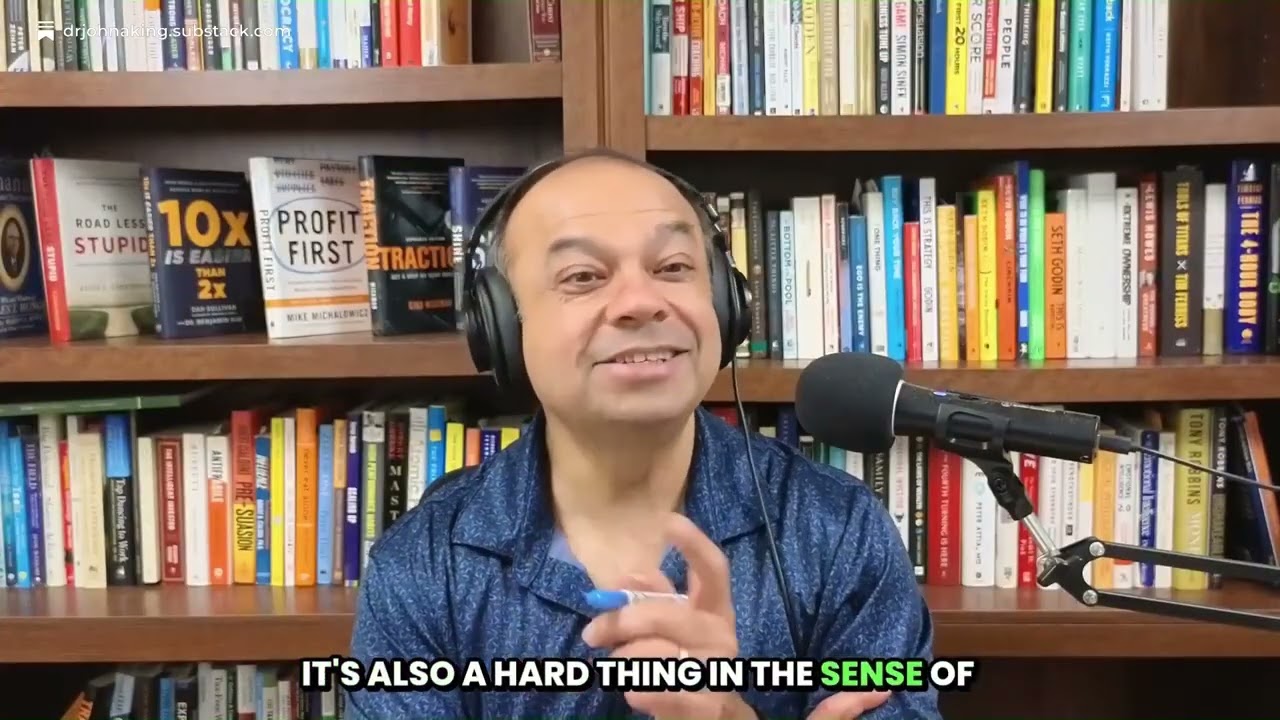
Dr. John A. King discusses surviving childhood sexual abuse and trafficking, losing everything during recovery, and rebuilding his life. He shares trafficking statistics, parenting advice to protect children, and his work helping men process trauma through coaching and his upcoming memoir.
Chapters
Welcome to Rich Your Soul, Dr. John King. It's great to have you join us today.
Rocky, it is great to be on Rich Your Soul. I'm looking forward to this chat, man. I really am.
I am excited for the conversation. We always like to start at the beginning. What was it like when you were growing up? And how much did your family and school teach you about money?
Horrible and nothing. Is that too concise? And that's it, ladies and gentlemen. Thank you very much for coming. My childhood was very rough. And we were the typical Middle-class family, higher educated, very prominent people within the community, educated educators that were also pedophiles. It was constantly striving for money and overextending financially, which put a range of stress. On top of that, an environment that was very dangerous and toxic to be raised in. So again, horrible and not a lot.
We all learn from our environment, huh?
Yes, we do.
So what was it— you mentioned that it was extremely toxic. Were you aware of that at the time of Childhood, or no, I don't think you do.
So I was abused from my earliest sexual memory was about four up until I was just literally too big when I was I don't know man twelve thirteen or something or fourteen. The abuse changed some aspects of it we'd call trafficking being trafficked. But as a child, when you're in those environments, you don't realize what's happening to you because you've got nothing to compare it with. So you're in this situation, and every day you're just surviving. It's not the sort of thing. that you go to school or rugby and talk to people about. Number one, you think it's just your environment. Number two, there's this icky feeling that people shouldn't be told about it. Number three, you've been threatened straight out not to discuss it. So there's a whole range of these internal things that it's only until later in life that you have the wherewithal to be able to process these things that you start to ask yourself a different set of questions.
And I can see that because as a child, that was your normal.
Absolutely. That was my normal. And redefining normal as an adult was absolutely essential. So you've got this abusive situation, which is normal. Then you carry that baggage because your brain processes it and puts it away in little pockets in your mind. But you bring this underlying tension into adult life, and now you've got to process a new normal as an adult with a very traumatic background, and you're fundamentally living from the outside in. Everybody's telling you what's acceptable, what's normal, what to do, because you've raised your whole life, you know, closed up, and you're not sure how to express yourself or if you're allowed to express yourself. So these whole things track differently. And it's a very— your podcast is called Richer Soul. It's a very starved soul environment. It's not rich of emotions. It's not rich of expression. Those things aren't part of it. It's a very famished soul environment.
Now, It sounds like around 13, 14, life changed, or just this— what happened?
I just got big. I was able to fight for myself physically. A knife fight with the guy who raised me, because at 16, I was probably 6 foot tall and I don't know, maybe 150 pounds, 180 pounds, but I was pretty leaned up, rugby player. So I just got too big and I could say no. And I left the home environment soon after that. I think, I think there gets a point in the arc of people who are pedophiles Where if they haven't completely broken and bound the child, they know that this child's going to start having adult conversation. So they move away from this abuse environment and start to sugarcoat it with external acceptance. So there's a shift in the dynamic. And I've never really thought about this before, but that looking back, that seems to be how that goes.
Interesting. Yeah, there's— it's a subject nobody wants to really talk about.
No, it's not. And to be honest, we are more comfortable talking about the sexual abuse of women and girls by male predators. As a society, we're still very uncomfortable talking about the sexual abuse of boys, particularly by females. We've still got that little bit of Madonna complex going on. I think things are changing. In general, men process trauma and traumatic events totally different to how women do. So it doesn't matter if it's militarily, law enforcement, or life issues, men seem to trend to deal with these things in a totally different manner than women do. And we really don't have therapy set up for men that's conducive for men. There's very few places, one, that offer it for men, and very few that cater for what men need in those terms of relationships and to be able to disclose and be honest.
So let's talk about that. How do men process differently?
If you think of conversations, women connect face to face, men connect shoulder to shoulder. Women will sit around and have a cup of tea and talk about life, activities, school, home, all of that, and enjoy that. Whereas men, it's in the activity and the doing of something at the shoulder of a brother that relationships develop and conversations are had. It could be hunting, watching a football game, going to a football game, sitting side by side in a car saying nothing for 4 hours on a road trip. That's how men connect. We connect in the midst of activity. So when you've got a therapy or a counseling environment where A therapist is sitting over there and you're sitting over here and they're saying, tell me about your feelings. It's, I don't want to tell you about squat, man. I don't know if I can cuss on your show, but you're getting my point of view here. I don't want to tell you about squat. Yeah, I'm fine. No, you're not really. This thing happened to you as a kid. No, I'm fine. It's good. But you get side by side with me. I did. And this is what happened to me as a mate. This guy, I was pastoring a church at the time. He's a friend, very good friend, still a very dear friend. He just decided he was going to take me to Florida. So he packed up and went to Florida, went there. And this is just after I'd had recall of what happened as a kid. And we go to Florida, we're standing in, we're staying in a really crappy timeshare. Now this guy's got access to the best timeshare in the world, but this particular one he picked, and I still give him crap for it, was horrible.
It was terrible.
So here we are sitting in our tighty-whities, sitting around looking at the beach, and it's just crap, paint peeling everywhere, mold. We ended up moving. And we're just wandering the beach, just giving each other a hard time. Going to the bottle shop to pick up a bottle of Irish, and we're sitting out the front smoking a cigar. And I remember saying to him, I said, "Hey mate, there's this thing." He goes, "Yeah." He goes, "I got to tell you about a thing that happened." This is this is a condensed conversation that took about 45 minutes an hour, and I told him what happened to me as a kid. And so the conversation goes: There's this thing. 45 minutes later, I start, and I have this conversation, and I talk for 15 or 20 minutes. And he goes, "That's crap, innit?" I said, "Yeah, it's no good, mate." He goes, "Do you want to?" Want a cigar then? Yep. We went for a walk. That's the start of a conversation, and then that conversation has gone on for 15 years now. So with men, it's different. It's not a matter of having a 45-minute session. It's bonding with someone you can trust and you can share your darkest, most embarrassing, shameful moments. That's how men heal.
Is that because society has created that atmosphere, or is that how men are? Because I've been to men's groups Where we do things differently.
I think if you're part of a men's group and it's open, honest, and trustworthy, men will open up in that environment. But still, in a men's group, you're sitting shoulder to shoulder and you're watching other men engaged. When you're singled out one-on-one, I don't think that's a comfortable environment for men to naturally share.
I'm not saying it's comfortable. I'm saying— I guess the question is, will they? Or is it because they've been trained not to?
I think that's worth sitting on for a minute. I think the pendulum has swung. I think the pendulum has swung from men are stoic. See, I've always believed men share their emotions, they just share it differently. I always believed that men will share emotional things with other men often before they'll share them with their spouse. And because part of that is we believe we're protectors and we want to protect our home environment. And if I'm going through something that I know is devastating and traumatic and will affect my wife, I don't want to bring that home. And I think American men have a challenge making relationships. I've found that coming from Australia, where there is very much a cultural difference, I've found that American men have a challenge with it. And I think a lot of that is the competitive and capitalistic nature of our country. Now, I love— I'm an ardent capitalist. But if you're, if you're a compassionate capitalist, which is always the best, as opposed to a competitive capitalist, it's very hard to have a competition with someone else that you're— have a conversation with someone else you're in competition with. If you're compassionate, wanting to see everyone succeed, then I think part of that ability opens up in your psyche an opportunity to have a conversation with someone else who's even your competition because you want the best for him as a human.
And that makes sense. And that's why I was asking you if they were men We're trained that way because I do agree with you. I think it's an American thing much more so than other societies. I think every society, things are different. It really depends on where it is. And I agree with you. I think things are changing. I know we've done some, and I remember one thing in general. When you play a game of catch with a kid, conversations occur. And when you're sitting driving in a car with a kid, conversations occur, usually with the kid in the backseat.
Yes.
And that's those These are the places where it creates that dynamic you're talking about that allow those types of things to occur.
Yes. When you now bring it forward into society and men haven't had prolonged exposure or availability to build deep and lasting relationships, and those that they did through high school and college, we're now in a competitive environment where it's detrimental to even show our emotions. And you want to come home and you feel challenged to share your emotions with those that you're called to direct, protect, and correct, it becomes a bit of a bondage for a guy. And unless you're actively pursuing masculine relationships of depth, and that's a decisional thing, then when you need them, you probably won't have them.
It's also a hard thing in the sense of finding people who also want to.
My mate, my Florida mate with the world's most amount of free timeshare, and we got stuck in a horrible one in Florida, and I'm gonna send this video to him because I want a do-over. 15 years later, Ron is— It was very decisional to build a relationship. And Ron taught me, his daddy taught him, and his grandfather taught him that if you can count at the end of a man's life 5 friends on one hand, then you are amongst the richest men that ever walked the planet. Because most men are having trouble having one. Many men might have one or two. It's a little bit like that quote in the movie The Town. Now, I need you to come with me. We need to do something. You can never ask me what it is or where we go. I just need you to come. And the guy says, Whose car? And that's a little bit like it. If you can get those 5 people that you can share a life with over a lifetime, and it takes a lifetime to make a lifelong friend, then you're an incredibly rich person.
That makes sense. I want to shift gears, but before we do, just because you talked about your early childhood, I know that you do work in this space and I don't— I think parents are— I don't know what's the right word— oblivious, unaware of threats that may be there. Do you have any advice for them? Things to look out for, to be aware of.
We've actually got a free ebook and we'll get to that at the end of the thing on our website called Keeping Kids Safe. I think the— when you talk about a change, societal change, the biggest change that's happened with this generation of parents is they need to give themselves the permission to be parents. Their job is to protect their kids, which means if they need to take their cell phone off their children, they take it. If they need to cut their cell phone in halves with a chainsaw, they just go ahead and do that and they don't ask permission. They need to ground their children until they turn 16, then ground them. Protect your kids. The other thing is, statistically, if you're looking for the white man trafficking the black girl, then you're missing the Asian woman trafficking the white boy, because 55 to 65% of trafficking victims are male— boys and men— and 45% of perpetrators are female. Now, most people out there hearing this If they've got boys and girls in their houses, they're going to spend a lot of time telling girls, men are bad. Be careful of stranger danger. Don't talk to men. It's okay if you see someone and you're in danger, run to a woman. She'll help you. Yeah. No, not anymore. And we don't teach our boys to beware of predator women. And we don't teach our boys how to identify dangerous spaces because boys are growing up like dad and they want to fight rough. They want to make a hand. They want to protect and all that. Whereas we really need to take the time to do both. That's interesting.
I'd never heard those statistics before.
Yeah, it's a very interesting study done out of, I think it was Washington State or I forget, the stats have changed so much now, was about the high number of trafficking or prostitute people. Like 45% of all prostitutes are actually male. And this is the big challenge I had with all the border stuff that was going on. And I voted for a border policy based on human trafficking. Because when we were doing the work, 60 to 70% of everybody coming across the border was being trafficked. And for me, that was something that I could not get behind— any government that would allow this flux of people being trafficked. And it's not an issue of immigration. People can do whatever they want with that. I've got some views on that. My issue is it's a humanitarian issue. You cannot have an environment where people are stolen for labor, for violence, for sex, for agriculture, stolen and brought over. It's just not cool, man. It's just not right.
No, that's true. And I don't think anyone even talked about that.
No, they didn't. When I remember bringing it up and when it came up, I was immediately vilified for being one particular party and not the other. No, listen, I don't care, man. If the red guys are going to have an open border policy and actively encouraging people to have human trafficking. I'm voting against the red guys. If the guys would stop it, maybe I'd be able to hear their policy. But for me, the one policy— and I understand it's a bias because of my background— my one policy was that and having to deal with the aftermath. Like at the height of the American— the American— the African slave trade into America, at the height of that, there were 370,000 slaves in America. This year alone, there's north of 2.4 million. We don't talk about that. No, those are old figures. Those are old figures before the last year of the previous— last 2 years of the previous administration.
Where are most of these people and what are they being used for?
Everything from labor to sex. So we did a trip down to a South American country and we had one of those rich Baptist Karen types that wanted to come down and save the world, and they thought they were going to do it by buying a child out of slavery, which is a great point. And we went to this particular group of people And they gave us a spreadsheet, and that spreadsheet had children as young as 4 and as old as 22. If we wanted to buy a 4-year-old, it was going to cost us— buy their freedom was going to cost us $40 grand. If we were going to buy a 22-year-old, it was going to cost us $1,500 because their return on investment at 20 sex partners a day for the next 10 years at $150 to $200 a pop for a 4-year-old was greater. than a used-up, spat-out, broken 22-year-old. So you're sitting here making a judgment, a moral judgment over a spreadsheet on the value of a human being's life. So when you've got that level of depravity run as a business, because you make more money out of human trafficking than you do out of drugs or arms, much more money out of it because it's a renewable resource. You can get it from anywhere. It doesn't cost you anything and you get a long time. It costs you a couple of beans and a bit of toast. It's an incredibly profitable business to be in. And that's what most people don't see it as. They think it's the trafficking of humans. It's not. It's the trafficking of goods. And we were working with some DEA people at the time, and they realized that they were looking for the trafficking of human beings as opposed to the trafficking of goods. And once they changed their optics and they went back to looking for vans with trash on the top of the dashboard, GPS running, burner phones, 2 or 3 people continuously driving, And they started opening up the back of those vans. They found them full of people because that's how the druggies or the counterfeiters were smuggling goods in. They weren't looking for buses with people sitting up nicely dressed going somewhere. That was probably 6 years ago, 7 years ago.
So you went through a lot of this as a child and then you came to an awakening.
Man, that's one— that's a really nice way of putting it, man. Like the poo just hit the fan, brother. Like one day I had total recall of what happened to me. I call it Johnageddon. Actually, my internal marketing department calls it Johnageddon. I went from John 1.0, very logical, left-brain-driven, goal-orientated John 2.0, who wanted to smoke cigars and write poetry and try and reclaim his life. And that was literally a swap in the brain that happened when I had recall of what happened as a kid. And it all came flooding back. And I ended up developing a chronic stutter, losing my family, my business, my church at the time. And I had to rebuild everything back.
Was there an event that caused it?
Yeah, daffodils. See, when I was— yeah, daffodils. When I was a kid, Mrs. McGregor had a house a block and a half down, and she had these beautiful plum trees, and under the plum trees she planted daffodils. And every day when the nights were too long or too violent, I'd walk to school in the morning, and it was about a 20-minute walk, 25-minute walk. And every spring the daffodils would come up, and the daffodils spoke to me of hope and possibility. And one morning at about 10 in the morning on a Thursday, In 2008, I think it was October or November. Daffodils came up, and I looked down and I thought to myself: It was beautiful, man. Blue sky, like the Simpsons opening. And I looked down at these daffodils, and I thought, man, they're beautiful daffodils. And my mind at that point decided to vomit my memories all over a very pristine, orderly life. And everything came out, and I had instant recall of 12 years of abuse. And for men, it happens often like that, particularly somewhere between 35 and 45. They get Recall or they start to understand what they experienced as a child was adverse.
So what happened next?
Oh mate, it was a cluster. I lost— couldn't preach anymore, couldn't travel. I was traveling the world at that stage, probably 9 months of the year. Had a very successful boutique training coaching business, public speaking, speaking at very large audiences and around the world for profit and not-for-profit businesses. And I ended up with a chronic stutter, a fear of the public. And got divorced and lived in a one-bedroom flat with a Besserblock bookcase and a mattress on the floor. So lost everything.
So you're not there anymore. So I know you're recovered. Recovered.
My, my previous admin, my ex, decided that she didn't believe this was— that God would have her marry someone like me and that the best thing for me was to end my life, that I would never recover. And after hearing that for half a dozen times, I said, you know what, this probably isn't the best for me. You're right. All the best for you. So I'm gonna. Take your advice and do something else. And so I did. And along the way, I came across a lady who looked at my life and what other people saw as trash, she saw as treasure. And I've been building back ever since. And it's awesome. She's great.
And sometimes we need to go through the dark times, don't we?
We have to go through the dark times, brother. We all do. And people think that life is a 6-lane highway. It's not, man. It's a dirt— it's a back dirt road in the middle of a Louisiana swamp. It's just no fun whatsoever. And I think that's what we need to understand. when we're redefining normal is that life is adversity and it will never change. It'll never stop. And it's our ability to be able to cope and navigate it that has to improve over time.
So you left your wife and you started to rebuild.
Yeah, man, it was either that or kill myself. That was my options. Those were the options I was literally given. I wasn't worthy of living as far as she was concerned. So I thought I would remove myself because we're estranged at that part. She'd spent 2 years living out of the main bedroom. She didn't want anything to do with me. And I didn't think that was a good enough or acceptable enough model for my children. And it was horrible, mate. Living with her was horrible and was not good for me. I don't think it was good for anybody. But you know how those things go. It's always dad's fault and you live with it. Would've been dad's fault if dad blew his head off in the middle of the backyard as well. So did that, moved out and moved forward and have never stopped. Never stopped.
It's never easy.
No, it's horrible, mate. And you judge yourself a lot as a man because You're supposed to get that right, and you see the damage it does to the children, and you see the damage that your ex does to the children, and you wish it could be different. But then you look at— you got to make a decision. It's not an easy decision. It is what it is, brother. Regret is a useless emotion. It's a waste of chemical and a waste of time. We all make mistakes, and some of them are different. And it's never what I planned.
I'd been—
was married 24 years to the previous admin. Was a good stretch.
It was. Now, from there, you've shifted because now you work a lot with performance mindset and talking about that more so versus than necessarily fixing trauma.
I think part of that, Rocky, is in order to have a conversation with people, particularly men, I can't get online and say, hey, fellas, let's all get together, hold hands, sing Kumbaya, and talk about your trauma because you've got issues. No, but I can talk to men about, hey, listen, You might be stuck. You might want to have some things to deal with, things to overcome. I can help you get from, hey, this is my background, it's really crappy, to this is where you can go because it's really awesome. So I can take them on that journey in that arc. And what I find is that guys will hop into that conversation where they may be hesitant to hop into a conversation that where they've got to admit that they've got trauma or someone in their life will see them join a group that is a trauma group. Or a therapy group, but to get together with something like Man Church that we run every second Saturday, or get together something like the Phoenix Collective, or to do something like the MindFire Challenge, they're going to go great. But it doesn't matter where you enter, you're going to be asked a series of questions which are going to help you unpack other things in your past that are holding you back. And the reality is we all have things in our past that are holding us back, and those things are 80 to 90% of the time traumatic. And so let's just talk about that. Let's get that conversation out of the way so we can move on into where we want to go.
How receptive are men to that?
Yeah, I can give you the podcast answer or the real one. So let's go with the real one. My story is horrible, Rocky. I know it is. And I've worked with a lot of senior SWAT guys and pipe hitters in the military, and they will say, adding your own expletives, I would never swap your story, Dr. King, with my story. And those guys have been in the sand for 20 years. The reality is I wouldn't swap my story for their story because I don't understand that. So what I've found is once I've built a relationship with guys, we build it around a commonality, and that commonality is transformation. And once we understand it doesn't matter where you come from, what's important is where you're going, then you can walk side by side with that. I can walk side by side with a veteran police officer or a military man because it's about getting my head right, keeping my head right. No one's coming to save me. What do I need to do today to get to tomorrow? And build those wins together. And that's a mindset and a set of skills that is not based upon— that is not trauma-related. That's why we don't spend a lot of time unpacking what's the nature of your problem. We spend a lot of time looking at what is the nature of your future, because that is the more powerful driver.
Do you find most therapists spend more time talking about the past versus defining the future?
In my experience, most therapists have got no idea what they're talking about because they've never been through it. Like, they're making shit up as they go. Like, you talk to anybody in the military, they're sitting down with some kid who looks 12, who's got a doctorate or a master's in something and have never taken a life or never had their legs blown off or lost their best friend. I got one mate who was back in the US on furlough and his entire squad was wiped out by Taliban. Every friend he ever had since he entered the military was decimated in one attack. So how do you sit down and say, hey, listen, why don't we workshop Here's a sock puppet and you just tell this Mr. Sock Puppet what your feeling is. It's not— but my mate, if you go hunting and it comes time to skin the deer and he can't do it and he'll tell you why, then you'll have a life-changing conversation. But you've got to be there for those moments and those times. And even if they can't have a conversation with me because they think you won't understand, John, yeah, I won't understand, but you've got to have a conversation with someone. And so often there's a chance. I call it coaching. I don't— I'm not a therapist. I'm involved in coaching people. It's the same techniques I've used in business for years that I use performance coaching, that I've used in therapy coaching, because I found that is the thing that sees the greatest result. It's not camping on a problem, but helping people to a solution.
So what is performance coaching?
If you and I were coaching, say it was around business or life or whatever, I believe innately you understand 2 things. Number one, the things that are holding you back, and then the answers to your own questions for the future. So my job is to actually help you ask those questions and find solutions for those answers. So what is it that's holding you back? Let's talk about it. Okay, why do you not exercise? Why do you start something and stop it? Why do you have a problem with eating? Why do you have a problem changing your mindset? Let's unpack that a little bit then. Okay, okay, you've identified that. Now what things do you think you can do? Because you can't actually tell people what to do. People aren't interested in actually doing anything they don't think of themselves. So what you do is you try and help them craft a map towards answering their own question. And once they can do that, they'll become committed to their own solution. And then you hold a mirror up and you hold them accountable through the process. And what happens is they— small wins, small incremental changes over time lead to long-lasting results. So you don't go for these big swings or these big things. I just want to help you change 1%, not today, but this week. And if we do that 52 weeks in a row, okay, that's pretty good. Pretty good change. 52% change, 1% a week. And we don't look at things like that. We're American. American. America. I love America. But we want it big and we want it bold and we want it today. If I can't microwave the crap out of it or add water and watch it grow, I ain't going to do that crap. Give me Ozempic so I can lose the density in my bones as I lose my body fat because I don't want to get my rusty dusty out of bed and drag it to the gym. Or just drag it around the block, or just tie yourself to someone else's truck and have them drag you around the block. Sunshine, just stop making a bloody excuse.
Do most people know why they won't go to the gym or do the things that they should do?
Most people don't have a relationship with someone who'll just call them fat and lazy. And I think my clientele are paying me a good amount of money to just go, no, no, you're lying to yourself. Stop that. I'm not really. Yeah, no, you are. That's an excuse. That's an excuse. Most people don't have friends that'll be honest. Most people have a challenge with honesty and transparency and authenticity. Most of our problems would be solved if we could just be authentic with ourselves, because when we stop long enough to ask ourselves deep questions, then we end up with solutions that are going to take us to the right place.
Yeah, it's funny because people do want the easy solution, and in today's world, if you tell people the truth, You tend to get in trouble and you're the one who is blamed for their problem.
Oh yeah, mate. You just have a look at how many disclaimers you've got to put on a website or a podcast. I am not a doctor. I am not a therapist. Do not do anything before you go and see someone for something. Like, because it's Tide Pod capsules, this should not be eaten. Well, what sort of moron does that? Why? Or those ones where the lawnmower is like, do not pokey handy. In rotating bladey. What are you, stupid? Don't hit yourself in the head with a brick, sunshine. And yet we do it. We've got people who do that stuff.
Yeah. And they blame you for not telling them.
So I try and mitigate that stuff.
So the question then is, you're not going to get everyone to come because most—
I don't want everyone to come. I try and anti-sell this thing. The buggery. I'm literally comfortable with 2 or 3 people. If I can change 2 or 3 lives, ultimately I'll end up with 2 or 3 raving fans. And every raving fan leads to another 100 people. So am I prepared to start small in order to scale big? I am, because I want authentic connection and change. I want to be the person that I wish I had when I started this.
Wait, repeat that.
I want to be the person I wish I had when I started this.
Okay, that makes sense. And I think that's a big part of it, right? More often than not, that is what people want. They want—
There are 4 things, and I keep them on a little card my wife made for me. 4 things that I, that are fundamental for my existence. Number 1, be authentic. Number 2, imagine the future you want to inhabit. Number 3, allow these truths to set your goals. And number 4 is live sisu. So authenticity is absolutely fundamental. And I believe the lack of authenticity is the thing that stops us from rising the most. It stops us from getting healthy, stops us from running a business that we actually want to do. Stops us from growing a business. So when it came to starting both the Phoenix Collective and writing this book I've got coming out, is I started with the premise of I must be completely honest and authentic because I have to go to bed knowing that I've told my own truth every night. And if I can do that, then at some point it'll bear fruit. So it's one of those great existential gambles. Can you make money in America being honest?
Yeah, you can.
I think so. Why can't I be the good guy and wealthy?
Do you find a lot of people put the two, like, in a sense, that to me is a seesaw. I can either be good and honest, or I can make money. But they don't belong on the same spectrum. You don't have to put them on the same spectrum. And yet people do that, I think, in a lot of different parts of life.
Yeah, I think there is, there's certainly a group of people, and we've all met them, Rocky, I'm sure you have, that the only way they make money is by being dishonest and lacking integrity. You know, that they don't really care if anyone else is hurt or if anyone benefits. They just need to make money and do that thing. I just believe there is a space where you can make money and do good and be good. And that's the space I want to be in.
It's funny because these days fraud and all of that stuff is the highest it's ever been. And yet these people are good at what they do. If they put their efforts towards positive things, They'd actually have a pretty good, successful life. And I'm like, why don't they put their effort in a positive way instead of risking it all for something like that?
I think being authentic is a lot of hard work. So integrity, being true to yourself. So can a liar have integrity? Yes. If they lie, can a thief have integrity? If a thief is stealing, then a thief is having integrity. So the issue is not just an issue of integrity, which we talk a lot about in business practices. But authenticity, which is the highest of all frequencies because it combines hope and love, or being authentic, true to yourself, involves understanding who you are. Now, if I understand that I am a thief and I make my way through life by hurting people, by stealing their stuff, at some point I've got to come to terms with the impact of that on other people. And at some point I need to understand that I'm going to reap what I sow. So someone will come and steal something from me. Now, do I want to live my life? And a lot of people say that's fine. They'll live with that consequence. But then there's another group that they don't want to do that. They in fact want to live the other way. They want to have a sense of peace throughout all days and all activities.
I think that's probably better.
Yeah, I think so. It's easier. But I have to remember what I lied about when I got up.
So you're working on a book currently? Yeah.
I wrote a memoir called Deal With It: Living with Trauma, and it's been picked up by I got an agent out of New York, wonderful lady, wonderful agency, and she is shopping at the moment. And if people want a copy before it comes out, if they go to my website and sign up, we're going to do a whole bunch of things like chats with the author, sit around and have cigar and bourbon nights and talk about how do you write books, what's involved. And we'll do it, we'll send signed copies to everyone out. So there's a few things that we're doing. So the deal with it is going to be my personal memoir, my journey through recovery. And I'm really excited about getting it public with people.
And part of the theme there is living from the inside out. And I think that's one of the things we really didn't talk about is most people are living from the outside in, not from the inside out. So can you explain that?
If you think about it, you go through school and you're told what to do and how to behave. You enter into university. Some people are told what university to go through, what degree to get. Then they go and get married because they're told they need to get married and you've got to get a You've got to obviously get a student loan and you've got to get a mortgage. So by the time you hit 40, you're actually stopping and going, what the hell, man? Up to my eyeballs in a relationship I was told I would have. And I've got bloody kids and I never really wanted kids anyway. And I don't want to be a lawyer. I want to buy a lawn tractor and mow grass, but I can't now. I've got to stay a lawyer because I've got to pay the bill off. So everything in our life is being lived from the outside in. And often when we get to our— people call it a midlife crisis. I don't believe it is. I think it's a midlife realignment, particularly for men. They're in a loveless relationship, in a career that brings no satisfaction, making the money they don't want or making too much money, and all they've got is too much debt. And so they sit and they take the time to ask themselves, who am I and how do I live true to that? And I know that's what happened to me when I had recall of what happened as a kid. It wasn't an existential exercise for me. Living from the inside out was an issue of survival, and it was also an opportunity to take the time to ask myself the question, who am I? And what do I want to do with my life?
And that's key. We always talk about having a life plan, having purpose. And I think purpose— people get confused with purpose. Oh, I have to save a billion people. No, it can just be living what you want to live in life. And I think people get confused with that.
Yes.
But when you have clarity on who you are and what you want and how you operate, then everything else gets Pretty damn good.
It does. We teach one course on the— in the Phoenix Collective called Derailment: Why Smart People Do Dumb Stuff. And one of our key cores in that teaching is purpose, mission, vision, and value. And because once you've got those lined up, you fly straight. But if you don't know what it is you're called on this planet and created to do, you won't understand what that looks like to do. You won't have that daily mandate, that mission to do it. And you won't have the values that'll sustain it. But once you line those 4 things up, you will just breeze through life, and you'll find that you no longer say no to things because you're too busy saying yes to the right thing.
Saying no is powerful. People don't say no enough, do they?
No, because often they don't know what to say no to. And that's what we teach in Derailment, is if you line up purpose, mission, vision, and value, then your nos are automatic. You'll just know. Look, I'm a writer. Launched my writing career at the beginning of this year. My wife and I decided we wanted to see my writing career. So we're very focused financially and time-wise because writing a book is a third job. It's also the first draft's a second job, editing's a third job. So you read third on top of running businesses, running nonprofits, all those sorts of activities, looking after 4 chickens and a dog. So all of those things. So we're very focused. So my nos are now automatic. I don't have time. I don't have time for a wrong yes, because for me to waste an hour or 2 is an hour or 2 off a manuscript or an opportunity. So my nos are automatic because my purpose, mission, vision, and value are lined up. Like this podcast was an automatic yes because this is the sort of podcast that I want to be on because this is the sort of podcast I believe in. So therefore it's a yes. Whereas the one for a metal fabrication unit was probably a no because I don't know much about pop riveting. So even when it comes down to saying yeses and nos to those sorts of things, it's like I've got purpose, mission, vision, and value that line those up and help me go.
And that makes sense. It applies to every part of life. Saying yes to an event, different types of things that you're invited to, learning to say no. And sometimes the other people might be mad, but I guess it's the question of who is better off being mad, you or them, right? I'm mad that I'm here or they're mad that I didn't come.
Exactly.
And it goes back and forth on that. But I don't know how much people, I don't know if they just don't have the courage to say no.
I don't think so. And I don't think they know what to say no to. So I like to make my, look, it's like a menu, mate. There are certain foods I'm not going to eat and I've made my mind up before I've walked into a restaurant. So it's like there's certain people I won't hang out with. There are certain events I won't go to. I've got some great friends, but some of them I don't want to hang out with. So I just don't. I suppose it's an oxymoron, great friends that I don't want to hang out with. They're people who I once spent time with that I've come to understand are not going to enrich my life or my mental health. So those people I no longer spend time with. I don't do it cruelly, but I'm very focused on what I'm currently doing.
And that makes a lot of sense. Now you had, so to speak, the first awakening. Was there another event after that?
Man, there is, but that'd take so much time to unpack.
Okay.
And I'm just wanna be, I wanna be sensitive to you.
No, that's fine.
Maybe we'll circle back around and we'll do another one.
That's fine. I didn't realize it was such a big thing. I thought maybe it was on a smaller scale, but no, that's perfectly fine.
I'm an Australian Aboriginal and Brownie man. Removed from his family because of a policy to breed the black out, raised by the people who trafficked me. And two years ago, I went from orphan to being a member of a tribe. So it is a bunch to unpack.
That is a bunch to unpack and a whole reason to continue that. Yeah, there were parts of the story you left out there early on. Yeah, there were. Yeah, a few. There were a few. You've been through a lot, and yet here you are still thriving.
I never asked why. That was never my only prayer was that he would turn. All things around for good. And he has. And I think I'm grateful. I've come to who I am and I wouldn't have become who I am without going through the things that I went through. So I can't but have gratitude for it. Now, do I wish that for anybody else? Heck no. But man, I'm okay with it. It's my story. No point having shame with your own story. We've got to, we allow our past to either refine us or define us. And I believe we should be living in a state of mind where our past is refining us, speaking to our future. Not holding us back.
And I think what you said was important. A, you have to like who you are. And B, truthfully, if we didn't go through the things we went through, we wouldn't become the people we are. And then you can say, I didn't want that to happen. Okay. But then the rest of your life also gets changed. And the question is, will you be happy with that new life? Who knows? I don't know. Maybe a good, maybe not. We can't figure that one out. We don't get to play back to the future, right?
Thank God for that. Literally, I would not want to do that again. People go, I love my 20s. I hated everything until I was about 58. So it's only really been the last 2 years I've had my feet under me. And I married a good woman and I didn't know I could be happy. I didn't think that marriage was any good. I didn't think sex was any good, but I married a good woman and she's my true north, man. She's my wonderful. And my life is pretty good. Like, I, I'm really happy. A lot of people look at it and think we're a bit of a too much arty-farty hippie types because she's wandering around in bib and braces raising chickens and patting a dog and I'm smoking cigars and writing books. But I'm just bloody happy, mate. But like, I don't know if I can ask for any more than just being bloody happy. Now I can add more money to it. That'd be fun, but that'll turn up. I'm just not worried about that. I've never had to worry about that. He's always turned up with stuff for me. The Creator loves me for some reason. I'm just grateful for that. I think he loves my wife more. That's why he does continually bless us. And so I'm glad to be I'm glad to be married to God's favorite, and it's all okay, man. It's just all okay.
Any parting words of wisdom for our guests?
If I can make it, you can too. If I can make it, you can too. And if they go to my website, they'll see something called drjohnaking.com. They'll see something called the Mind Fire Challenge. If they click on that, it's a free 5-week performance mindset trauma recovery course we give to podcast guests specifically. They can sign up for the book. And I'll send them a signed copy of that when it comes out. There's a bunch of free resources on there, and we do our best to sow back into people and find and connect with the right people and walk forward with them.
And we'll come back to that again in a moment. What's one truth about success you wish more people understood?
Earl Nightingale: Success happens when opportunity meets preparedness. So don't spend your life trying to be successful. Spend your life trying to be prepared. Because when your time comes, you will walk into it like it's the open door you're supposed to be in.
You have to answer when opportunity knocks, and you have to be ready, right?
You got to be ready, man. Too often your time doing that.
Too often people say no. What's a lesson that cost you a lot but was worth every penny?
Man alive, what's the lesson that cost me a lot? That I'm resilient and I'm relentless. Sisu, a Finnish word that means White-knuckle courage in the face of overwhelming odds. When everything is lost, the spirit of Sisu turns up. My recall of my abuse as a child taught me that I am relentlessly resilient, and that brings me great comfort.
In an ever-changing world, resilience is literally one of those skills that I think everyone needs to learn.
Absolutely.
If you were to—
Absolutely.
If you were to give an 18-year-old one specific piece of wisdom, what would it be?
You're stupid and you know nothing. Hang around with people older and smarter than you, and don't take yourself too seriously. Thoroughly enjoy it. You have no obligations, no mortgage, nothing. Love every bloody minute of it, sunshine, and just get after it. Don't settle down until you're past 25 and you're approaching 30. You should travel the world 2 or 3 times, find a good woman and love her passionately, and make sure she loves you back. Dogs can be a pain in the ass. Because you've always got to find someone to mind them. Get a cat and just leave a dozen cans of tuna out and you'll come back in a month. It'll be fine. There you go.
You've thought about that one, huh?
No, I just made it up for you, but it's fantastic. We should write a book.
Remind people if they'd like to learn more about you, get resources, where are they going to find you?
drjohnaking.com. drjohnaking.com. If they go there, they'll find how to sign up for the book, join the Mindfire Challenge, a bunch of resources, book a time to have a chat, anything they need.
Thank you so much for joining us today. Cheers, Rocky.
See you next time, mate. We'll have a chat. Bourbon and cigar, maybe. We'll have 2 blokes and a bourbon. How's that?
Sounds like a plan.
Cheers, brother.
Hey, thanks for checking out the full unedited video of the Richer Soul Podcast. You can get the full audio podcast with intro, outro, and a ton more details here on YouTube or whatever your favorite podcast player is. Don't forget, we've got hundreds of episodes for you to go back through. And you can also get episode information on the Richer Soul website as well. Don't forget to subscribe so you're automatically updated as to what's going on. And every time we release a new episode, the first few episodes of the Richer Soul Podcast actually lay out the entire framework that everything has built on over all of these years. So check them out as well. Thanks for listening.





