Refined, Not Defined: Living in Spite of Trauma
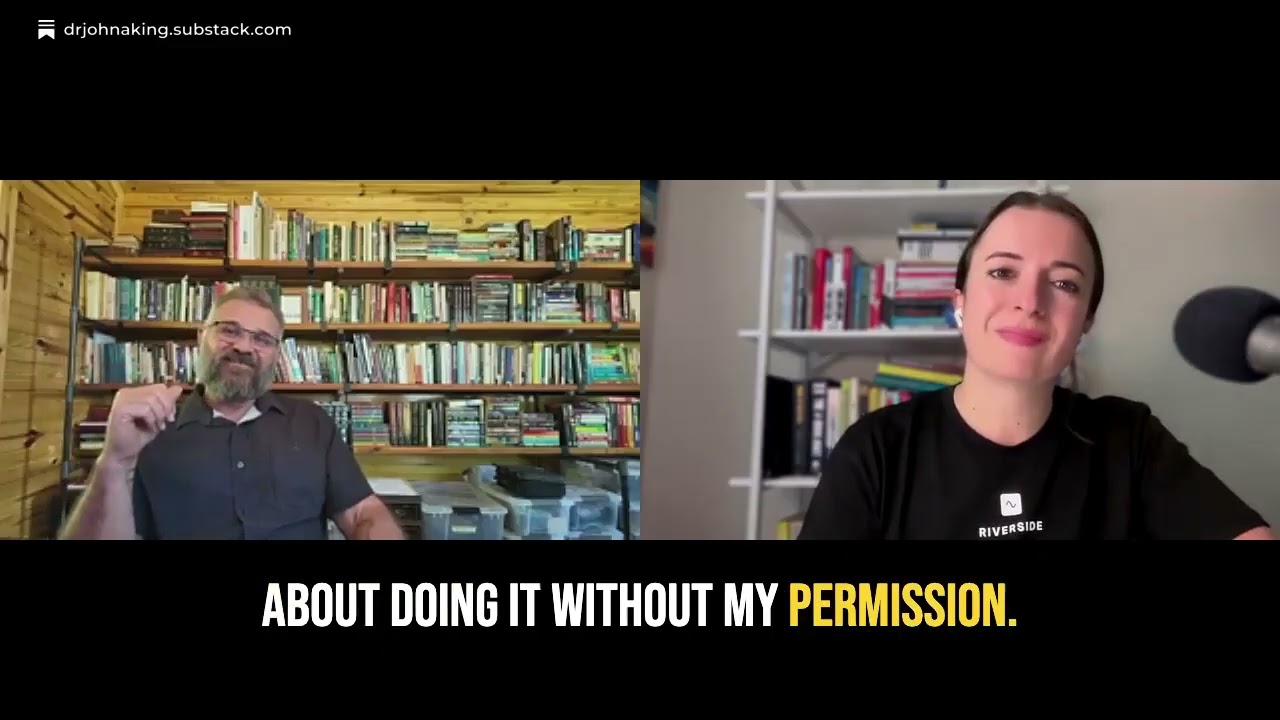
Dr. John A. King, founder of the Give Them a Voice Foundation, discusses surviving childhood sexual abuse and discovering his Aboriginal heritage. He shares his recovery philosophy of being refined rather than defined by trauma, practical tools like sleep and exercise, and his anti-trafficking work through programs like the Phoenix Collective.
Chapters
Welcome back to another episode of Shift with Elena Godd. Today I sit down with Dr. John A. King. He's the founder of Give Them a Voice Foundation and a passionate advocate for trauma recovery and anti-trafficking work. In this candid and deeply moving conversation, John really opens up about his own journey from surviving years of childhood abuse and discovering his true heritage to nurturing resent— relentless resilience and finding purpose in advocacy. Whether you're a survivor, an ally, someone looking to better understand trauma's impact, this conversation will move, inform, and inspire you. Please, as always, subscribe, like, and come back for more. Dr. John A. King, welcome to the Shift Path Podcast.
Well, thank you very much. I'm excited to be here and meet with you.
Yeah, I'm really excited to hear your story and the work that you're doing. But before we go into, you know, all the awesome things you're doing today and just the important work that you're doing, take me back to your own story and just kind of like how you came to even, you know, work so deeply in trauma recovery and what motivated you essentially to start the Give Them a Voice Foundation, among other things that you've kind of created.
Sure. So that it's a bit wiggly at the front end. Like, um, there's got it— there's got a point halfway through which is actually the beginning, which is a bit odd. In 2008, I had recall of being sexually abused by the people who raised me. It was the women who— they're the ones who sexually abused, and we would call that trafficking now. It wasn't just women who abused me. I was an equal opportunity victim, for want of a better term. It was both male and female. And so that happened for about 14 years until I was at the age of 16. And I sort of locked that away and locked it down and didn't really know who I was. And, and, you know, it's funny, when you grow up in an environment like that, you don't have anything to compare it with. So that's your normal. And what happened in '08 is I had like these little frames, like old 8mm film. You're probably too young to remember 8mm films, but these little films of frame, these little pictures in my head. And in 2008, they all strung together and played, and they played continuously for about 7 years. And for the very first time, I realized that this was an aberration that had happened throughout my young childhood. And so I went through that process, and it was actually only 18 months ago that I found out that my family, my parentage is actually Australian Aboriginal Indigenous. And part of the Australian government policy was to breed the black out. And they would take blonde-haired, brown-eyed kids off their parents and put them with European families. So my heritage and my culture is very mixed there. So for me now, it makes a little bit more sense, but it's a very convoluted journey towards adulthood that has— and there's been these several bumps in the road where I've had to make decisions about falling forward or collapsing in a screaming heap. And I think my whole adult life has been consciously or subconsciously committed to, if it were crawling forward one step at a time.
What, you know, uh, I just wanna dissect a little bit. So what has happened at that kind of age, uh, of 28, you said?
No, when I had the recall was in 2008.
2008. Sorry, 2008. Yeah. So what was it that in 2008 that has triggered it, I guess, where you started to—
Daffodils. So daffodils, um, when I was younger, I would, if the nights were too dark and it was too violent, I would walk to school in the morning. And there was a lady, she was about 3 or 4 doors down, Mrs. McGregor, and she had this big green bank and she grew these plum trees. None of these plum trees should have daffodils. And when I used to walk together in springtime, I used to look and think, the daffodils are blooming. I've made it one more year. And so that was a childhood memory. And back in 2008, it was on a Thursday at around 10:45. I had some daffodils growing around a writer's shed that I had at a previous place. And I stepped over these daffodils and I said to myself, they are so beautiful. And that was the moment that my subconscious opened up and my mind just vomited all these memories over a very pristine, orderly life.
Yeah, I can see how that's, that, that brings it back. Um, where were you living? So you said your, your origins go to Australia. Where were you living at that time?
I was in Texas.
In Texas. How long have you been in Texas? Most of your life or?
No, first plane after 9/11. I came over, I flew over here, got involved in nonprofit work and for-profit work and started, I'm a bit of a serial entrepreneur like yourself and, um, started a range of businesses.
Okay. Um, and so, um, talk to me a little bit about, um, you know, you have this kind of, you, you talk a lot about living in spite of trauma.
Yeah.
So talk to me about that.
Your past will either refine you or define you. It'll either be the one thing that you define your whole life in existence by what happened in the past, or to refine you and make you into a better person. And I think they are very conscious choices. Now, whether it's the trauma of military, law enforcement, childhood issues, or business collapse, relational collapses, they're all milestones that we've got to make decisions about what we're going to do with them. And the conscious decision we have to make is, will this define me or refine me? Will I become better and bigger than this? Will it make me into who I'm supposed to be? Or am I going to be stuck telling a story about what could have been? And I think that's absolutely essential for anybody who's going to build forward into something better.
Tell me a little bit more about how you— so, so I absolutely, I think that there's a lot of almost like you have, you know, your, your mind can either be your worst enemy or your, your, your best friend, right? And It's like, it's like controlling that story is so difficult for, for just, you know, it's like the worst thing that's ever happened to you is the worst thing that ever happened to you. And for most people, it's pretty, you know, standard things that kind of happen to them. But in case of like real trauma, right? Something that you went through and, you know, in 2008, this kind of triggered and I'm sure opened up a whole lot of things that you never even, you know, had, you haven't thought about in years. How did you, like, what story? was playing and how did you overcome and change that story?
Well, that's a great question. How did I change the story? I actually believe I had to write the story for the very first time. I think up to that point, like many of us, I'd been living from the outside in. I took my social cues from who I was supposed to be, how I was supposed to act, what I was supposed to like, what I was supposed to dress, eat, wear, etc. And when John Aguedon, as my internal marketing department calls it, when John Aguedon happened, I literally went cognitively from John 1.0 to John 2.0. My left brain, goal-driven, focused guy, I didn't want to be that guy anymore. I wanted to smoke cigars and write poetry. Literally, there was a shutting down of aspects of my brain and an awakening of aspects of my brain that had never really been alive before. So it was an incredible neurological shift. And I realized that I didn't know who I was. I didn't know who I was metaphysically. I didn't know who I was sexually. I didn't know who I— because all of these— so you imagine I've been having sex since I was 4 years old. So my sexual experiences, which is a fundamental aspect of us as human beings, have been forced or molded based on a whole range of premises that I had no control over. And so that very essence of who I was, like, who are you? What do you like? What is enjoyable? What is permissible? All of those questions, fundamental questions. Even so, what do I find joy in? I was never allowed to enjoy something for myself. I had to enjoy what those people that were my abusers wanted me to enjoy to appease them. So I had to strip all that away and I had to really sit with myself. for the very first time and start the process of living from the inside out. And it's probably, you know, it's a long process. It's the most rewarding, but part of the hardest work I think anybody will ever do is flipping that switch from outside in to inside out.
Yeah. And I mean, it's a hard switch to flip for sure. And I know, you know, I mean, you know, it's awesome that you were able to do it. And I just think of how many people are just not able to do that, which is, you know, why you do the work that you do, which we'll come back to in just a moment because I think it's, it's so important. But at what age did you, so you said 16, from 4 to 16, at that age, did you leave the space or how did you get out of that?
I got, just got too big. I was turning into a 6-foot, you know, 180-pound young man and I just did not wanna be told what to do anymore. You know, something happened. I was, there was attempted violence with a Uh, knife. Um, someone tried to stab me, one of the people that were raising me. And, you know, I got beaten up pretty bad, and I just wasn't going to do it anymore. So I think that was part of it. But then I still stayed in that environment for many years. And that's one thing I don't think people understand about the nature of trauma, particularly to a child, is you have nowhere to go. I remember at 7 years of age running away and telling the neighbor telling the lady who lived next door what had happened to me, and she beat me and dragged me back by my ear, literally, because a mother would never do that to a child. And it was probably 40 years before I told the story again. And, and I think that's that part of it. You grow up in this space and it's the only space you know. It's not until you actually move way beyond it and realize the world operates differently. That you can start to ask some of those questions. And for women, it seems to happen earlier, their ability to ask the questions and challenge it. For most men, it happens between about 35 and 45. They get recall of these events.
Why do you think, why, why is that? Is there any literature behind that? I'm just curious, like, what's the, is it that midlife moment?
I think part of it's a midlife reassessment. And I think historically discussing male sexual abuse and trafficking, we haven't done. Unfortunately, it's okay to talk about a lady with a traumatic background or the fact that someone was sexually abused. We can have those conversations and share sympathy and empathy. But for a guy to do it, it's really still— for me, this was 15 years ago. So that's a— the world was a different place 15 years ago.
Mm-hmm.
And for— but still today, one of the major challenges is men. As a man, you don't want to be that vulnerable. You want to have somehow protected your 4-year-old self because as protectors, that's what we want to do. I wanted to protect my 4-year-old self and have enough moxie to be able to stand up for him, and I wasn't able to. So then on top of the shame of the activities, comes the shame of the self-guilt and self-doubt about why weren't you man enough to stand up for that little boy. So there's all these parts, and at some point something just breaks, and most guys get recalled at about that age. That's, that's the only way I've been able to explain it. My, my brain just knew I needed to process something, and it just so went about doing it without my permission.
Yeah, no, it makes sense. Yeah, it's, um, yeah, it makes sense because it's always there, and I think it just depends on the triggers and the moments and, and so on. So It's, I mean, we see this quite a lot with like veterans and stuff, like people that, you know, come from wars and it just, you know, just one day just something happens, but it's actually something that happened many years ago. I'm curious, so up until the age of, you know, up until 2008, how was, you know, your interactions in the world, your relationships? Like how was that, that 20 or so years between when you, you know, maybe turned into a young man and then into like an adult man, so to say?
Very performance-based, very much living from the outside in. My first marriage, it exploded, imploded. She couldn't cope with the impact of the recall. And, you know, I understand it. You know, I go from John 1.0 to John 2.0.
Yeah.
John 1.0 was very articulate and flying around the world and making, you know, 3 quarters of a million dollars in a consulting business. And John 2.0 was A stuttering, babbling mess, and she she didn't want to cope with that. She didn't have the grace for that. And so I think through that whole process that people they lusted the gift and didn't love the man is probably the best way to do it. They lusted my ability to make money, my ability to perform, my ability to lead, my ability to be able to build businesses. But when the you know the yogurt hit the fan, you know. It was all hands off. So it was a really difficult period, particularly those first 5 years after recall. Um, you know, that's where I lost my marriage, very estranged from my kids, living in a one-bedroom apartment. It wasn't until I met Melissa and she literally saw what someone else saw as trash as her treasure. And it was a key moment in turning my life, you know, towards hope. She's been fundamental. She still is.
That's your wife now, Melissa?
Yeah, she is. She's my wonderful.
That's beautiful. I just, you know, as you're speaking, I just think of like how many people are living their day-to-day lives, you know, working in organizations and dealing with a lot of that heaviness, you know. And I just wonder like, how can, you know, in, in, um, you know, I, I'm in talent development, of course. So like I work, you know, sometimes with an HR team, sometimes like as my own kind of department. Um, and I'm just thinking like, And I just, you know, there is just so much that we do not know about the person that is working next to us sometimes. And it is like, how can companies, I guess, be more aware or support individuals that have gone through trauma or potentially going, like other symptoms, signs? Like, how do you do any work through your advocacy work with organizations?
Yeah, we work a lot with HR departments, not so much in identifying it because, you know, people nowadays are very averse to putting labels on anything. But really working with people in the terms of self advocacy, like if you've got a challenge, particularly if you're going into a medical space, you need to be able to develop a skill set of self advocacy. So we'll work with environments that encourage self advocacy. But the challenge you've got nowadays is the nomenclature of victimhood, where people want to make an excuse for everything, and everything's going to trigger them from the aerosol to the. Whatever, someone wearing a hat or a t-shirt they don't like. And it's really difficult to have honest conversations with people who can't be honest with themselves. So you end up with an HR department who caters for everybody or nobody. And because it lacks authenticity, because we're not really sure whom and what we're being authentic to. And that's a major challenge because you're not going to ever get far down the track of recovery if you cannot Be authentic with yourself and with other people around you. Because trauma recovery has got very little to do with the external. It is all the work that you've got to do on the inside.
What— so to that point, what are some practical things that people can do that, that are helpful for somebody like just starting that work? Somebody's listening to this, or, you know, or just somebody's living with somebody who's dealing with trauma. Like, what are some things that, you know, recommend for people to start with?
I've got a, a program we actually pulled together for the podcast in a minute. But for them to start with, believe it or not, if you start with— if you go to bed at the same time every night and get up at the same time every day, okay, you get up and you have a breakfast, a high protein, high fat breakfast, low carb. Get rid of processed food out of your diet. Get rid of sugars as much as you can out of your diet. Get rid of food coloring out of your diet. So if you're getting good sleep, you're getting up and going to bed at reasonable time, no blue screens for at least an hour, hopefully 2 hours before you go to bed. Just that alone will probably solve 70% of people's anxiety and depression, believe it or not. And then you can add in red light, stand in the sun for 20 minutes, have a cold shower. Cold showers will give you 80% of the benefit of a cold plunge. Do 30 minutes of exercise 5 times a week. That's walking around the block, man. Like, listen to half an album, as we used to call it back in the days. So, you know, those are very simple things. Be careful of what you listen to, not only the words but the music. Be careful of what you watch. Doom scrolling is the death of you as a person. It's an actual thing, you know. It's— so what are you feeding your soul with? Take responsibility for all of that, and you can literally Fight your way through.
For people who might not be familiar with the impact of the lack of protein or the food, just overall the quality of food that we put into our bodies, tell me a little bit more about the importance of the light, the sleep, the routine of waking up same time, going to sleep. Like, what if you don't do it, which so many people don't, but I think it's the norm, so they don't feel the impact. Tell me a little bit more about the actual impact for people who are not familiar with it.
So just even fluorescent lighting or LED lighting runs off a blue light, and that blue light actually wakens your mind up, whereas natural light is an orange or a yellow-based light. And as the sun comes over and goes down, it— the pitch and the change of that moves through the oranges and into the reds. So if you're sitting looking at a TV, normally a very big TV nowadays, or you're sitting looking at a phone and all you're getting is blue light, You're actually telling your brain to wake up, and you're overstimulating your courses. That's why you've got to actually stop that before you go to bed. Waking up and going to bed at the same time gives you a sense of habit. We like habits. Our bodies like habits. We want to be in habit. Why high fat, high protein? Do some reading around the carnivore diet. Now look, I know people get tied to particular things for particular reasons, and I was a vegan for eighteen months. Worst 18 months of my life. I did the vegetarian thing for a while, but then when I came down to mental health and understanding my DNA as a as an Aboriginal man, I needed to be on a high-fat diet. I needed high fat and I needed high protein, and I needed white chemical. If you can't pronounce it, don't eat it. It's a simple rule. High corn syrup is white sugar. Just have some sugar. Have a teaspoon of sugar in your coffee. So these are very simple things, and they're not difficult.
Yeah, I think a lot of people—I mean, I think now there's this big push on wellness, and I think we're a little bit more educated about the impact of all these things. But I think that the amount of anxiety that food choices may alone like have on a human brain is wild.
I think you're absolutely right. People trip out; they don't know; they get paralyzed because. I'm supposed to be vegan and, and save the cows from farting, and I'm supposed to be this, and what's actually vegetarian? Am I a pescatarian or a veg? It's like, it's a lot of stress. So just, you've got to strip a lot of that away and ask yourself, why am I doing these things and what should I be doing for me?
Yeah, and, and I mean, but, uh, what I was also saying is just that sometimes all the sugary foods and the lack— and when you're not eating enough protein, like, that alone will actually trigger anxiety in your brain.
Absolutely.
And it will stress your body out. And that's why people like, oh, I'm stressed and I'm stressed out and I'm depressed, I'm anxious. Well, it's like you're eating crap all day, you know what I mean? So sugar is a drug.
I got, I got a friend of mine who came off out of drug rehab. He said it was harder for him to give up sugar than it was for hard drugs because of the chemical impact in his body.
Yeah, no, I, I believe it. It's, uh, my audience knows I care very much about this topic, and so I'm not going to bore them with it yet again, but it is very important. And so do your research, people, because what you put in your body is probably causing a lot of unnecessary anxiety.
Absolutely. Yeah, absolutely.
Yeah. So, um, what do you see as like the biggest unmet need in the trauma recovery?
It's actually tools. So that's why we created the programs we did. There's a lot of hokey science out there. I spent 15 years and $200,000 in my own recovery, and I was blessed to be in a position to be able to do that. Um, but I don't want other people to have to do that and to have the, the sheer stubbornness to be able to spend that much money and that many times to get well. Most people don't have that. They don't know where to start, to be honest. And I was just fortunate enough to be able to work that out for me.
Mm-hmm.
And so I think that's part of why we built the Collective and the MindFire Challenge was to give people a place where they can start to see transformation after 18 months. The thought for people looking down the road at 15 years, doing the numbers and saying, well, you're telling me I'm not going to be good for until I'm 45, if they're at 30. I think that's overwhelming for people. And I think if they can find a way to shorten that, but shortening it meaningful, because you've got to still do the work, but you have to do it in such a way that the change is actually a transformational change. It's not just trying to keep tick a box. You know, I've done it. And anything of any value is worth paying for. And you pay with your time, talent, and your treasure. You have to put the hard work in to get the change to stick and stay if you, if you wanna make it work for you. And people sometimes are just not prepared to do that.
Yeah. Well, it's, it's the hardest thing to face yourself, to do the job, do, do the work yourself. That's the, that's the hardest. That's, and the older we get and depending on various situations, it's, it's very hard. It's a very hard journey. What, when you speak of tools, give me an example of like some tools that you guys have, you know, created or like, what is it? What is, what would a tool look like?
So I did this documentary on my story called Stopping Traffic. And through that process, I met thousands of people who wondered why hadn't I killed myself? How did I get well? So I took 6 weeks and it was, I think it was 2 boxes of cigars and sat in my garage and wrote down everything that I took 15 years to learn. And that became a book. And we've taken that book, and my wife and I teach this book, and we teach it over a 12-week period. And we do it in very small slices. I'm a pilot, and you know, as a pilot, if you take off and you're supposed to be heading somewhere, if you're only off course by 2 degrees, you're going to end up 20 to 30 miles off from where you need to be. And often people think, well, I've got— I'm going to get lost. How do I ever get back to there? It's 2 degrees back the other way. It's every day, small things consistently over an extended period of time. And so what we've done with the collective and with the MindFire Challenge is that we've taken those things and broken them down, put in an environment which is very affirmative, and said, we're going to walk with you, but you're going to have to do the work. And if you don't do the work, I'll be very gracious about it, but I'm going to point that out to you.
Mm-hmm.
Because the only person who's responsible for getting you whole is you. And so that's why we created the Phoenix Collective. And within that, this, the MindFire Challenge was a challenge we put together, um, so people can come try and see and change. And that's available to all your people for free.
Yeah. And that's, I think that's so, so important to have that community and that support, right? Like, it's hard to, you know, you, yeah, you can get it out, you know, you need to do this for yourself, but also like to have that support and guidance. I think it's a, is half the battle. At least that's what I would imagine.
You really do need it alone. Oh, you can't do it by yourself. The power of the partner. And if you don't have a spouse who will walk with you— I didn't have a spouse that would walk with me, so I had to go out and build it. And as I said, I was fortunate to meet Melissa and fortunate to meet 2 or 3 other people that are still my very dear friends that didn't write me off but gave me a second chance. And I've come to learn the grace of a second chance is one of the most beautiful things that any human being can ever be given. Yeah. And I just want to see that for everybody. I want to see everybody who doesn't think they're worth it or the fact that they're out of time. I want to see them find a second chance, you know, that's important to me.
And when it comes to, um, just the, the work that you're doing with human trafficking, and is it human trafficking or child trafficking or sex trafficking? What is it specifically?
Any human trafficking across the board. War, labor, sex, anything traumatic, post-traumatic stress. That's what Give Them the Voice Foundation focuses on. That we were involved in the tail end of the Epstein case and the guy who took over from him, the Nygaard case.
And how is— how— when did you start? When did you get involved in that?
I was approached about halfway through my recovery because they were looking for someone that was prepared to liaison with the government and work with the government. And I, I did all the front, front, upfront work. And then we had a team that did all the back as far as, you know, situations in housing kids that was keeping them safe, gathering testimonies. So we worked together like that.
Is there a story you might feel comfortable sharing, or that's like you're okay to share for, for safety reasons, obviously, and stuff like that? But is this something you can share in terms of like, how does, like, what does a day in somebody who does this work look like? What is a day in the life of somebody who does human trafficking work?
Uh, it's very dark. You end up— I spent a lot of time with a lot of people that had been sexually abused for a long time, and it's very dangerous work. We had— we were followed home from Costco on a couple of occasions. Our lives were threatened regularly. We had to carry firearms all the time. We still do. Sometimes I still get threatening calls or cars park outside. It's just one of those things. It's part of it. And that's why I always wonder about these people who do these big galas, because if they were really involved in anything dangerous, then they wouldn't be having large fundraising events. So, you know, we got to meet a lot of people in the space and a lot of them I weren't impressed with. I think they were fraudulent. So you become a bit jaded at human beings when you're trying to do something to help a collection of men and women and you're meeting people who are just, they're still trafficking them. But they're doing it to raise funds for their own organizations. You become a little jaded. So it was just, and it gets very home. I nearly lost my daughter to being trafficked. If I didn't know what I knew, I wouldn't have been able to pick up the signs. And I was very grateful for that. Even if all of that was just to be able to save her little life, that was important to me.
What are some things that people should watch out? Like, what are those signs?
Um, we actually did a book called Keeping Kids Safe, and I'll, I'll send you a link with that. Mm-hmm. And you can make that available to your people. That's, that's on me. Give that away to them.
Thank you.
And, um, the best thing you can do is be a parent today. Today, for some reason, people stop being parents. Like, the kids can just do whatever the hell they want. It's like, what? No, they can't. Now they can't go where they want. They can't watch what they want. They can't say or speak what they want. They, because they're going, The world is not a safe place. It is, it is just not a safe place. And you've got to be prepared to confront those that you love. We only ever confront those that we care for. So you've got to be prepared to confront those that you care for. Have to. And I'll send that to you. It's called Keeping Kids Safe. I'll email it to you afterwards.
Yeah, I'll make sure to include it in the show notes. You know what I admire about you, John, is that through everything that you've been through and everything that you see, to still have this very softness, like a kind, and I mean, kindness and like a kind softness to you. Because I would imagine that it would just harden a person to see all these things and to continue to see it. Like, how do you— I mean, my blood's boiling just listening to it and just like imagining all the things that happen. It's like, how do you find the, I guess, the resilience, the— what's the word I'm looking for? Like grace to not have your blood boiling and just give up on the world. Because that's—
Yeah.
I can imagine how It's just, it's too much.
Yeah, it is. It is very difficult talking about it in a show like this is very difficult, and I'll have to take some time to decompress from it. But what I often think about is if I can just touch one life, if I can help one person realize that, uh, they're not alone, and maybe they can look at the absolute storm that my life was And say that if that fella can make it, I can make it too. So for me, I've never asked, I've never prayed why me. I've only ever prayed that he would turn all things around for good. And that's what I, that's what motivates me to do things like this, is that someone in your crowd will be touched in such a way that they will have hope. Because I spent a lot of years without it. And the grace of a second chance is a glorious thing. It's a glorious thing.
And for people who are listening who do want to support and, you know, and maybe reach out and just mention that they've heard this conversation and support in any way they can or contribute to the mission, where, where can they get in touch with you? Where can they contact?
If they go to drjohnaking.com, follow me on social, it's all drjohnaking.com. If they go to the website, they'll actually see a button for the MindFire Challenge. If they enroll there, then it's going to be free for them. They can come and start their journey. That's our gift to them. They can book an appointment if they want to try and have a consultation around some stuff. If they want me on their podcast or speak at their events, I do, I do a lot of that sort of stuff. That's probably the best way to do it is just get on there and have a conversation, man. Go on social media and have a conversation. Let's talk a little bit. If I've got time, I'll talk. If I don't have time, I won't.
And we didn't cover this, but tell me a little bit more about your doctorate. What did you do?
I understand from your notes that this is a clean podcast on Apple Podcasts, so I can't swear. So my doctorate is in theology. I tell people it's in turning crap into fertilizer and you fill in the gaps on that one. So it's in theology. Um, but it really is, when I look back, it's the ability to be able to turn things around. for something beautiful to grow out of a mess. And that's what I've done my whole life.
And what is— and the sisu, is that the tattoo?
What does that mean? It's untranslatable really in English. It means white-knuckled courage in the face of overwhelming odds. And sisu is the spirit of a person that turns up when everything else Is lost, and for me, Sisu means relentless resilience. Is just the relentless. My greatest gift is being stubborn. I just will not die having had them win. They did this to me, but they don't define me. I will live a brilliant, beautiful, love-filled, joyous, happy. prosperous, gorgeous life because they tried to take it from me and they're not going to win.
That's beautiful. That is beautiful. Yeah, I mean, I don't know what to say. You just, you know, the work that you do is, like I said, so impactful and the message that you share and the grace that you carry it with and just the impact you make on the people, on myself in this conversation, you definitely made an impact and I'm sure to my listeners as well. And, um, it's, it's, it, it, it is beautiful. So, you know, you, you are living that beautiful life, you know what I mean? Like, you're impacting— like I said, like, I mean, I, my, my heart was boiling, but I do feel very fortunate to have been able to have this conversation with you.
So, well, thank you. Thank you. I've got a book that's coming out. I'm going to reach out to you when it gets published, and we'll come back and we'll do a part 2.
Before we wrap up, is there anything that you wish I would have asked you? Was there anything that you, any, anything that we didn't talk about that maybe you wanna make sure that we mention?
Oh, I'm, I'm really grateful you had me on. You didn't have to. It's a different space. And, um, I'm just really grateful for you giving me a chance to share some truths that are going to touch some people in your audience that may not would've expected to hear it on a podcast on your show. Well, that was very brave of you. So I wanna thank you.
Thank you. I think it's important. We're all humans. This is all part of shifts, of the many shifts we have in life. So thank you, Dr. John.
Thank you. Bye-bye.





