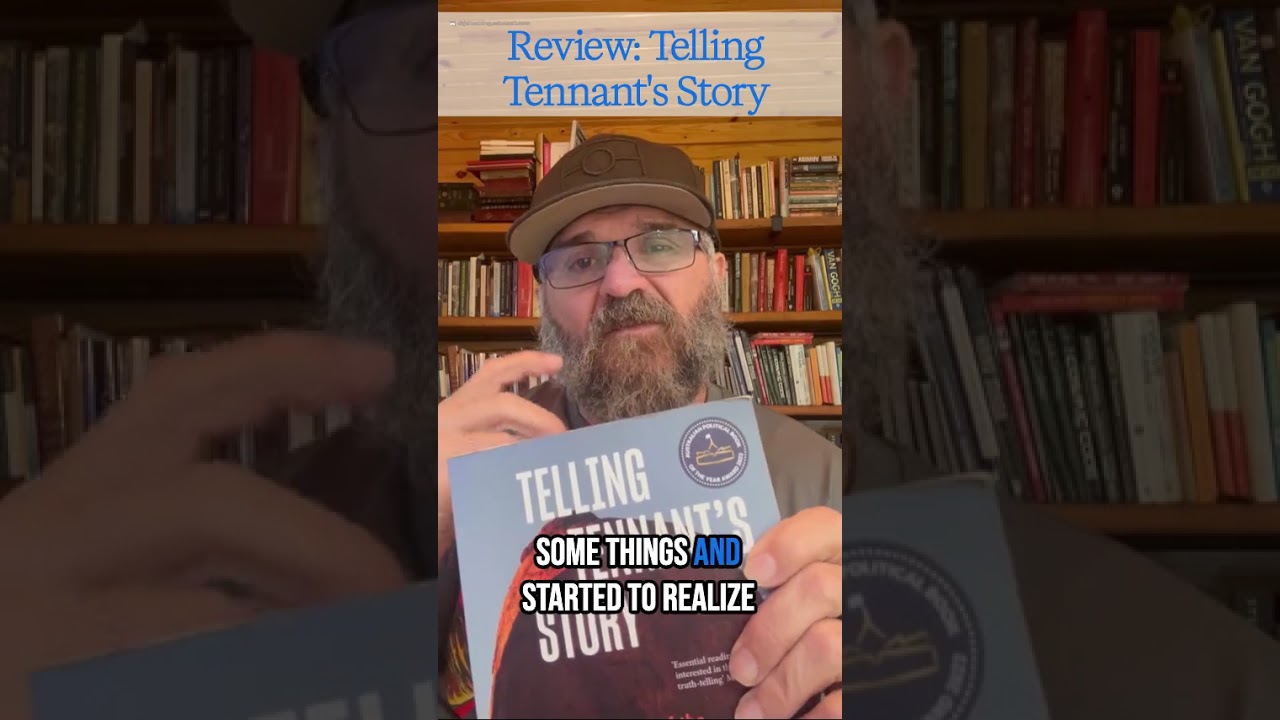
Dr John A. King, a Wurundjeri man, reviews Dean Ashenden's book about Indigenous Australians told through a European narrator who questions his own assumptions. King calls it authentic and non-patronising, avoiding victim narratives. He recommends it for people new to Indigenous experiences, praising its writing and approach.
Chapters
Hi, how you doing? One-minute book review, Telling Tennant's Story by Dean Ashenden. Ashenden, that guy there, by Dean. So this is about my people. I'm an Indigenous Australian Wurundjeri man, and this talks about my people. This was— anyway, I've got to give you the verdict first. Got carried away. Brilliant. If you know nothing about Australian Indigenous people, It's going to be a— you'll have to be half brilliant for that because you're going to have to do some learning, but it's worth it. Back to brilliant. It talks about the struggle of Indigenous people, not in a patronizing way, but from a European point of view. So this fella came to his inquiry about Australian Indigenous people, uh, very authentically, was raised with them, didn't realize what he was seeing until he left And came back till he left and he started to ask some questions about some things and started to realize that some of what he'd seen and been told wasn't living up to the political rhetoric of the current time. So Telling Tennant's Story is a story about Indigenous people and the struggle that, the struggle that we have. I know in America I am, you know, too white to be black, and in Australia I'm too black to be white. You sit somewhere in a grey man's land. I'm not pleading victim, I'm just saying there's another side of the story. And we don't often talk— my wife's Cherokee— we don't often talk about the Indigenous people in America, and if we do, it's always very derogatory. Yeah, I know that because I've sat on in Australia and here and heard those conversations. But this isn't one of those poor me conversations. It's not one of those, you know, all red fellas, all black fellas are whiners. This is about a white fella going, bloody hell, I took some things wrong. I never stopped to think about this. So if you're wondering what plight of, and you want it in a way that's not going like, all white men bad, kill white men, evil white men, it's not that. If you want something that actually steps you through things and answers and asks some questions, Telling Tennant's Story. Peter Piper pick a peck of pooper. Telling Tennant's Story. If you've got no idea, never spoke to a red fella or a black fella, which most of you haven't, it's going to come in at about a half brilliant for you because you're going to have to just sit with it, have a read. But in terms of writing style and, and what it communicates, brilliant.