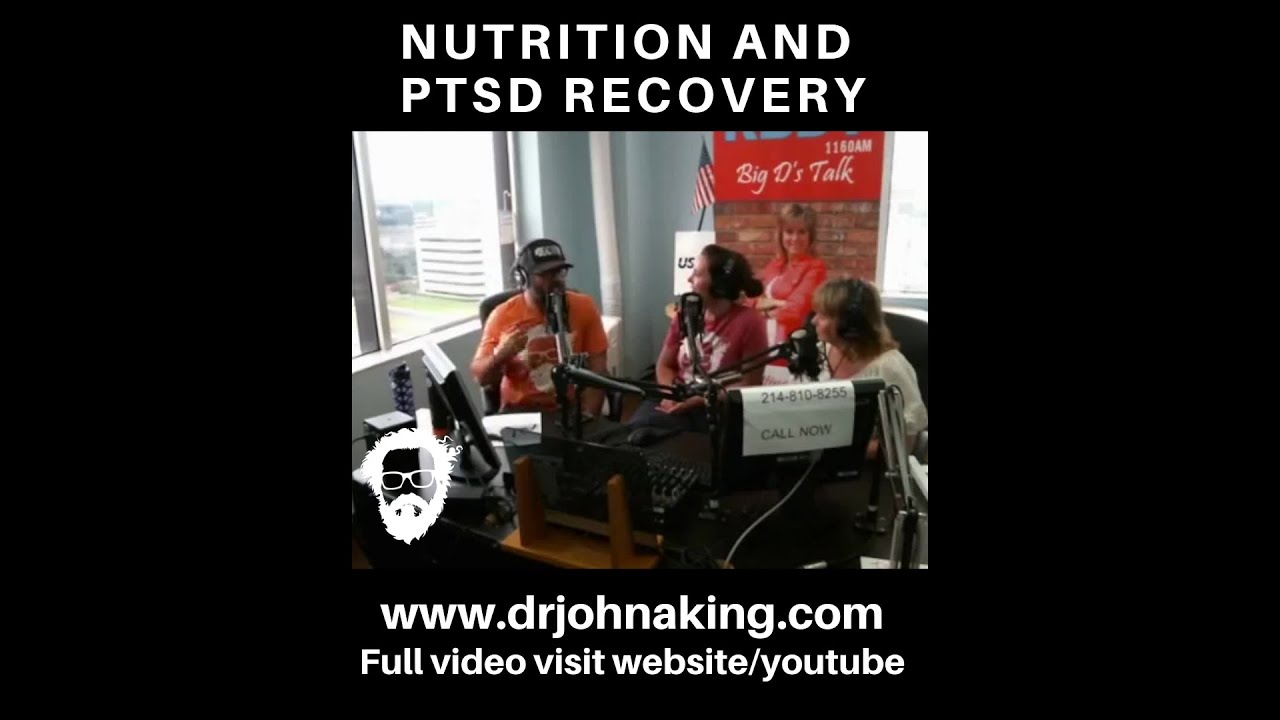
In this interview, Dr. John A. King discusses how his personal experiences with diet have shaped his recovery from PTSD. He recounts a vivid episode where consuming a Snickers bar and Cheetos led to an intense depressive episode within minutes, prompting him to investigate the impact of sugar on mental health. He also describes a severe manic reaction to orange food coloring (dye #5), noting that any product containing it triggers mood destabilization. King outlines his dietary journey—from a vegan regimen to a strict ketogenic diet—driven by brain research, his Aboriginal heritage, and the need for stable blood pressure and stress levels. He reflects on his bodybuilding career, where disciplined eating served as a purpose-driven routine, but later life stressors and a divorce led him to reassess his nutrition. When faced with medication that could cause impotence, he chose to reject it in favor of lifestyle changes, emphasizing the importance of holistic health for PTSD sufferers. The conversation also references his book, "Living Well with PTSD," which expands on these dietary insights.
Chapters
Well, and let's talk a little bit about nutrition because I know your diet is very— you're very careful with food now. And I know recently you said you were doing keto, but there's reasons for that, that you're careful with what you eat. And you told me like the orange dye color makes you—
yeah. What happened is I first started on the diet journey. I was flying into Chicago to do a big meeting. Fantastic day, man, upgraded, everything perfect. Got in late at 10 o'clock and I just went down to the little stupid kiosk thing and picked up a Snickers bar and some Cheetos. Went to the room, ate those, and in 20 minutes I was literally standing sobbing uncontrollably looking over the balcony wanting to kill myself. I mean, I was in deep depression and I caught myself and I thought, this is not logical. What happened between arriving here happy And 20 minutes, what happened? So I thought, okay, well, I wonder what the impact of sugar and food are. Simple question. And I found out over that period of time that the sugar is linked to anxiety, depression, schizophrenia, a range of things, high levels of sugar. And then I found out that orange food coloring number 5, it just sends me manic. And it doesn't matter if it's in a drink or it's in corn chips, orange food coloring number 5, I will get a depression fit. Come on. That's really been the journey. But Melissa has been key. And we've— I mean, I've been— man, I was vegan before I was keto. So I've had some swings.
It's a journey. We've tried everything.
And we settled on the keto out of a whole bunch of brain research that Melissa did. Also, my heritage, part of my heritage is Aboriginal. So the diet, we looked at the diet and the impact on what the traditional diets of Aboriginals were. No people have a processed wheat diet. Let's just get that out there, and a processed sugar diet like we pretend we do. There's no such thing as a Western diet like that. We've all got roots in pure protein and pure carbs. But we added up— and we talk about that a little bit and deal with it in Living Well with PTSD, the book, about the role of diet. But the diet conversation is just one of those conversations that we had when we went through. Interesting.
Yeah, and I think it's so important. I've had with ADD, they've talked about the red dye. Yeah, you know, but as body— as a bodybuilder, which you were, and so successful, the diet wasn't really something that you didn't think about that at first about how it was affecting you mentally.
No. So I did these 2 competitions, qualified for the 55s, you know, national one, and then I came off that. And so very strict, every mouthful, every meal, every day, most disciplined thing I've ever done. Which I really was doing for my head because I needed a purpose to get out of bed. And so I wrapped my life around with that. It wasn't until later, you know, with a whole range of different things and the divorce and all that stuff I went through, that I was just in a different place dietarily. And I needed to address some things, you know, high blood pressure, stress levels, a range of things. So we— when the doctors wanted to start prescribing medication that was going to make me impotent, I'd been married 2 years.
Wow.
You know, I, you know, with no grace whatsoever, flicked off the 22-year-old nurse practitioner. I said, sweetheart, this old man ain't going down that way. You know, the equipment, the plumbing's working, and I'm going to be working the plumbing.
You get what I mean? And you said, maybe we should find a better way. Yeah, and it's so interesting because all those things are so important to think about to have a full life. Your brain, your body, how you're thinking, how you're performing with your spouse. Everything is so important, and I think that with PTSD, you can, you know, just get so paralyzed and debilitated that you can get divorced. A lot of people do when that happens. But for you, you found a way back. And I'm just so excited about that, the things that we've learned in your book. And guys, Living Well with PTSD by Dr. John A. King. When we come back, we're going to give you more information.