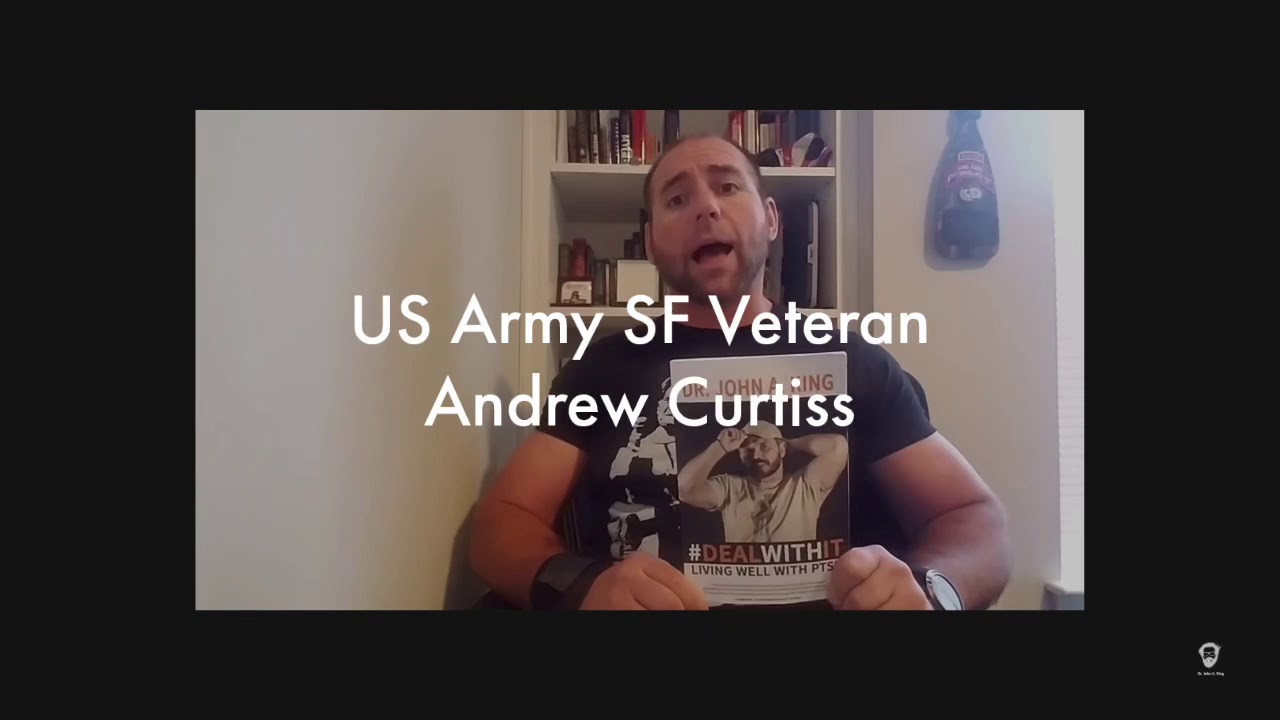
Andrew Curtis, a former Special Forces operative and combat instructor, reviews Dr. John King's book Deal With It. King defines PTSD, describes his own breakdown from compartmentalized trauma, and explains how he recovered without medication by reframing trauma as a superpower. Curtis recommends it for anyone with PTSD or seeking self-improvement.
Chapters
My name is Andrew Curtis. I'm the author of 1984 Redo: Say Hello to Big Brother, Combat Application Techniques, Principles of Destruction, and Economic Collapse. I'm coming to you today to review the book Deal With It by Dr. John King. To help you understand where I'm coming from in my review, I'll tell you a little bit about myself. I am a veteran, a combat veteran. I spent time in Special Forces and I saw some action in the Global War on Terror. I also have consulted for various government organizations as a contractor and have traveled to a lot of places in the world where there are high-threat zones. So therefore, I know a lot of people who are afflicted by PTSD. I am very familiar with post-traumatic stress disorder in its various forms, and I I currently teach various subject matter that also deal with this subject matter. So things like combatives, tactics, and particularly hostage survival type situations. And I do teach hostage survival to a various variety, a large variety of different groups to include civilian and governmental. That being said, this is not a book that's just gonna tell you, oh, this is what PTSD is give you a list of symptoms. It's not a lot of theoretical stuff. This is a very factual book. Yes, you will learn about what PTSD is. You will learn about the different forms of PTSD in this book. He's going to define it for you. He's going to lay it out there. But what's most important to understand about this book is that it's written by somebody who has lived it. He's somebody who has been subjected to multiple traumatic events in his lifetime. He's somebody who basically compressed it all inside, held it in, and at one point had a crash. And that's something that a lot of people who have PTSD experience later on in life when they continue to compartmentalize things and put things away. And this is his story. It's his story. On how that crash happened, what led up to it, and how he was able to pull himself out of those dark places sometimes affiliated with PTSD. This book is a guideline for anyone experiencing PTSD on how to get out of it, on how you can live well with this. And I think he's done a great job on doing that. And I'm going to tell you right now, it's Part of my recommended reading material from here on out. I think that it's a great thing for anyone to know in advance on how you can start to combat and treat PTSD without being stuck on medications, and you can actually live your life and overcome the challenges that have befallen you. I know one of the things I talk about a lot in my class when it comes to hostage survival And survival, evasion, resistance, escape type stuff is reframing the way you think. And Dr. John King does a great job describing on how you can reframe the way that you view things so that you realize that maybe something bad that happened to you doesn't always have to result in continual and residual bad effects. I think that he describes it well by saying his traumatic events, have given him a superpower. And he's able to take advantage of that superpower that he's gained from this instead of being a victim by it. So I love this book. I think it's a great book. I know that anyone who's just interested in even self-improvement is gonna love this book. It's not just for folks with PTSD. If you wanna be the best version of you you could be, get this book.