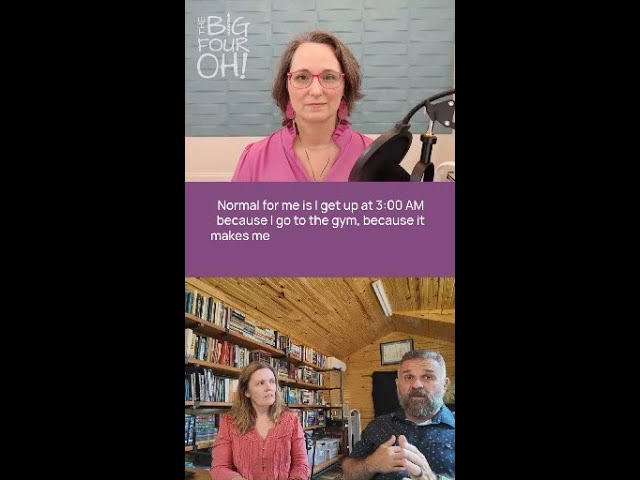
In this interview segment, Speaker B explains his “inside‑out” framework for trauma recovery and personal transformation. He describes how he had to abandon society’s definition of “normal” and create his own, built around an early‑morning gym routine, strategic naps, and disciplined daily habits that support his family and self‑identity. The conversation emphasizes that every micro‑decision—down to the shirt chosen or a spoonful of sugar—has a directional impact on healing; nothing is neutral. Melissa reinforces this point, highlighting the cumulative effect of seemingly trivial choices. The discussion positions the inside‑out approach as the foundational premise for bio‑hacking trauma, urging listeners to examine internal cues and deliberately shape external actions to facilitate the body’s self‑healing processes.
A lot of the times when I talk to people about the tools that they use, it's, oh, I went to this course or I read this book or I followed this person who introduced me to topics. But I love that you really started from the inside out, right? You started with like the gurgling in your stomach and the clothing that you had on your body. I think those are things that we overlook.
You use the term inside out and it's a very important and unique statement. Because probably the very first realization I had was when I understood I had to redefine what normal was because I could no longer live normal according to other people. And then it's like, well, what is normal? And then where am I getting normal from? Normal comes from out there. So then what is normal for me? Normal for me is I get up at 3:00 AM because I go to the gym because it makes me a better man, which means I need to have a nap. At 2:00 PM, it having a nap at 2:00 PM in the afternoon made me weak and soft. No, no, no. Having a nap means that I'm good for my family when I go home for dinner. So I redefined those things. So my very first lesson was inside out.
Yeah.
I was now gonna meet my expectations, but I didn't know what they were. So inside out meant that I was now starting to pay attention to what were those things. And I think going forward, In recovering and learning how to biohack trauma, it all starts on this premise of inside out. What do I need to do from the inside out in order to change me and give my body time to heal itself? Yep.
And I think one of the most important things we learned during that time is that nothing is neutral. And so it might seem like the smallest thing, like the shirt you pull outta the closet to put on, or Oh, I'm gonna have a little bit of sugar in my coffee. Nothing is neutral. It's either taking you towards healing and recovery or knocking you back a step. Like, every single decision is making a difference one way or the other. Nothing's neutral.
Probably one of the best things I ever did to help me with that was take up bodybuilding, because bodybuilding is every mouthful every day for 9 months. 9 to 12 months. I had to— everything had to be programmed. And what that did was give me a mindset, like what Melissa said, that everything counts. It comes down to 10 to 15 calories to get down to 3 to 4 to 5% body fat. And then that discipline, that resilience and relentless pursuit of whatever that goal was translated into my journey. And my life is governed by a series of rules. Now, for some people that could feel debilitating. For me, it feels very freeing because if I don't have the sugar and I'm in a good space and I've been careful what I watch and what I listen to, and then if I'm good with that, then everything else is just wonderful. So for me, it's 20% of effort for 80% return. Yeah.