Welcome to Finally Friday with John and Melissa. And BJ SLoan
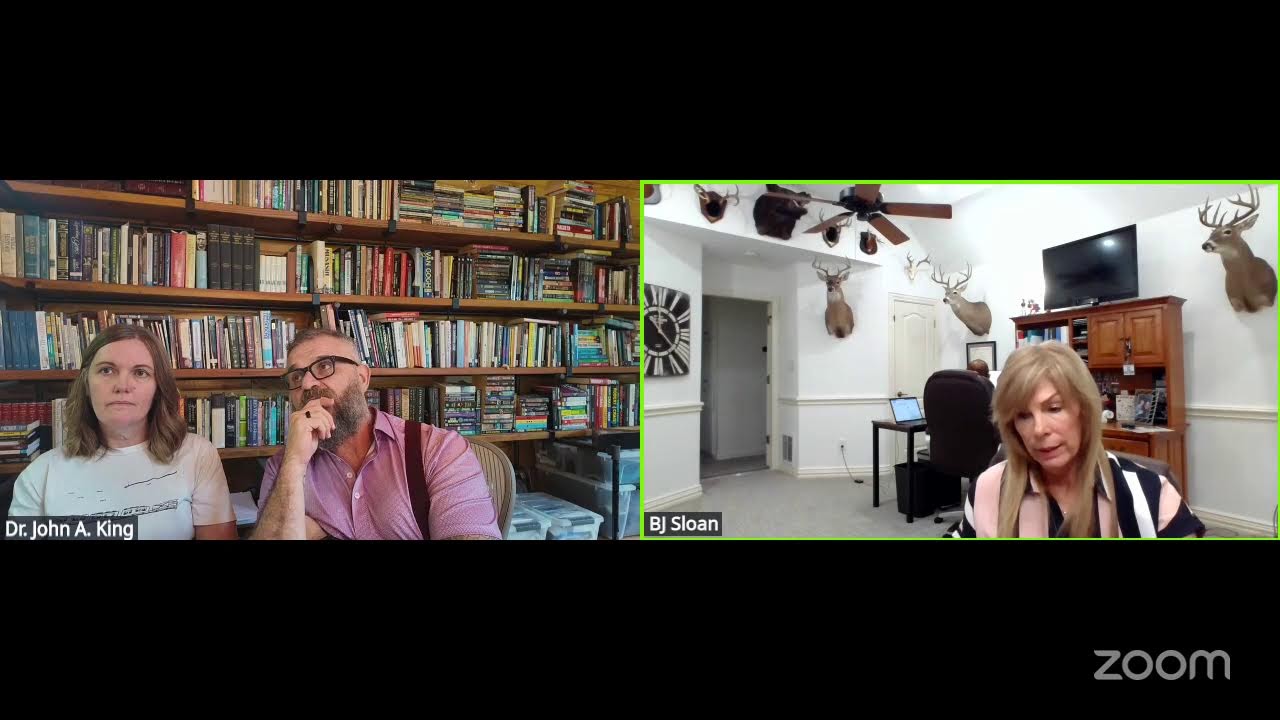
Dr. John A. King and Melissa talk with author BJ Sloan about writing, rejection, and finding your voice. John landed an agent after 32 books. BJ's novel The Forgotten Son is based on a true story from her Texas journalism days. They discuss handling critique, AI's limits in writing, and why daily practice matters.
Chapters
Cloud.
Continue.
Okay, continue and go live.
Oh, BJ came in the waiting room, so that's good.
Excellent.
Hello, how are you? Finally Friday. Woo hoo! Good to have you all over here. Here comes TikTok. So we're on X and TikTok and a whole bunch of different places, and we're just really looking for it. So the aim of Fighting Friday is to sit around and have a chat. And, and as we have a chat, get to know each other just a little bit. And it's gonna be awesome. So if you've got anything you wanna say, put it in the chat and we can, we can, we can chat to you there and talk to you there. It's gonna be great.
Yeah, we can answer any questions you guys, guys have.
Yeah, for sure.
So what happened great for you this week?
Me? Yeah. Why don't we just talk about what happened great for you this— oh, what happened great for me this week is the agent I spoke to, Gina. my agent about my book. I've got 3, 3 books out there. I've written about 32 different books. And so part of what we wanna do on Finally Friday is talk about the creative process as writers and as artists, painters, and talk about all that. So I've been just transitioning over into writing full-time. And so part of that process has been getting an agent, finishing up my novels. I've written, as I said, 32 books, but in the last 6 years, I've really focused and written 5 full-length novels. And Jean is just so excited about the last, the last one, but the voice and just everything is going. We're just really excited about how it's all going. And so it's just been great. So you tell us about your week.
I was just gonna say with that, it took John 5 full-length novels to get to his voice of writing. So anybody, any artists out there, painters, or, you know, people who draw, or if you're writing poetry, If you are still looking for your voice, keep going. It comes. I just wanted to be encouraging about that.
And it's not something that turns up instantly. It's not like in the last 5 or 6 years I've worked a second and a third job being a writer. It's taken 10,000 hours. It's taken 6, 5 complete full-length novels to get to a stage where someone who's in the industry and been in the industry for 40 or 50 years is thinking, Okay, now you finally got it. So just keep going. And look, we want to answer questions about any of this stuff and help you any way we can.
So for me this week, um, well, I had my birthday back on July 2nd, and I was way too busy with a work project to think about celebrating my birthday. So I asked John if we could wait, and he said, of course. And, um, what I wanted for my birthday was I need a different purse situation because my purse was too heavy on my shoulder and it was messing up my back. And so I was looking for a backpack. And so I found one and it is adorable.
It's a turtle.
It's a turtle and it's leather. And of course it has the 2 straps that I need for my back. And this is not paid promotion. We bought this, but John bought this for my birthday. And it has a little baby turtle.
Little baby turtle purse.
For all your things and turtle backpack.
And it's got—
It's got all my things in there.
Things. If anyone knows of a holster, a great holster for a lady for a handbag, can you let us know? DM us.
Yeah. We need something that'll attach to the inside of my bag so my— so it sits up right. And then I also got from the same company. This is from stockyardx.com. I got a little notebook, and it's just a little notebook holder. It's the size for Field Notes, I believe. But I made my own watercolor notebook to go in there. So that happened.
So that did happen.
That happened.
And then creatively for me this week, I still— I mentioned this book briefly last week, but 15 Minute Art Pastels, and it's by Zena Kay. Really been loving this book. And I also— our guest who's coming on today.
Yeah, BJ.
My friend BJ. I accepted a commission for her. And so I've been working on the palette for her, her commission and making some sketches which I've not shown BJ yet.
But there you go, BJ.
Yeah. So, all right. Yeah, that, that's me creatively. This week.
So let's, let's welcome a great mate of ours, BJ, to come on in and have a chat with us. So people ask when finally Friday starts, roughly four-ish before a little bit after a little bit. Ask to unmute. There she is.
Hello.
Hello, friend BJ.
I'm Melissa.
Hi, John. How you doing?
Welcome to Finally Friday.
Yeah, it is.
So Mel was just showing— she showed people she designed the palette, and she just did a rough sketch of them.
Yeah.
Oh, yeah. She showed you she had a turtle backpack. Oh, which we'll see you on Wednesday night, and we'll bring it.
I just was sharing my creative things for the week.
I love, I love those colors. I think they work.
Yeah. And then I did some rough sketches in on really cheap paper for the paintings.
That's neat. That's neat.
Yeah. So all part of the process.
Great. Well, I can't wait to see it.
So folks out there, please drop your questions and we will, we will do our best to answer them. So BJ has written, A bunch of books. She's written 3 books, I believe, BJ.
Actually, I've written about 6, but 3 or 2 are out there now published and one that's coming out next March 2nd.
So, have you got a copy of your books you can show everybody?
Oh yeah.
Of course you do. Authors are terrible. We just, we don't, we don't walk around with business cards. We walk around with a copy of whatever our latest is.
To get it out of the frame. There it is.
Hey, there's Steve. There's the the brains behind the social media operation over there.
This one is the first one. This is the Forgotten Son.
Yeah, I love that book so much.
Oh, thank you. Thank you. That one is actually based on a true story.
Yeah, we wanna talk a little bit about that today.
Okay.
That'd be great.
And then the second one, uh, Unfavored Children's Club.
Yeah, it's a great book. It's a lot of fun. BJ's got a really distinct style of writing. And where can people get your book, BJ?
Uh, Books to Read, uh, or you can get it on Amazon, of course.
Great.
Or BookBub or anywhere books are sold.
Okay. And she got a website. Check out, check out your website and all that sort of good stuff. It'll be good.
bjsloanwrites.com.
There you go. There it is. I was waiting for that. I was having a little pause. So just folks, if you're coming on, we gotta talk to BJ about the process of writing, being a creative person. I know a lot of you out there that are connected with Melissa and I, you know, you're in the writing space and you've got questions about that. So feel free to jump on and ask questions. Please ask away. So BJ, give us a little bit of a background. Tell folks about yourself and the journey too. So what was your earliest moment when it came to writing?
Oh, well, I started writing almost as soon as I could start to read.
Really?
Yes, yes. I started writing stories mainly about our farm animals, and I always put myself in the story, of course. And growing up on a farm in Texas, that was— we always had interesting animals. And a lot of personality. So that was, that was what I did.
Really?
Yeah.
So, so was it just a natural thing for you to grow up, you just always kept writing?
Yeah, I've always wanted to be a full-time writer. I, I worked for a newspaper when I was in college. I worked for the college paper, then I worked for a local newspaper when I got out, and then I worked for a trade journal that was a national publication and did a lot of traveling, and that involved photography as well, which I love. So I've always been in the writing field. I had to take a pause on that for a while to make a living.
Yeah, right.
It gets in the way, doesn't it?
Right, right. But I'm thrilled to be doing that now, and that's— it's the most rewarding thing I've ever done.
Yeah, that's great. So with— so you're a journalist?
Yes.
And when I was trolling you about who you are and what you did and all that sort of stuff, you ended up covering a story for a newspaper that I think you're alluding to ended up in The Forgotten Son.
Yes, that book is based on a true story. Of course, all the details and the people are changed to protect me.
Protect you.
Yeah.
But it was one of the first things that I covered as a young newspaper reporter, and it involved people that I actually knew, went to school with and grew up with. So it was very disturbing, something I'll never forget.
Yeah.
Wow. I'm looking forward to, um, I'm looking forward to reading that. I know Melissa's read it and loved it.
It was amazing. So how much of your life ends up in your books?
Um, actually, instead of being based on my family and my life, it's based on people that I've met in the community where I grew up, in a small rural community in Central Texas. And I always start the process, the creative building of a story, with character. It's always the interesting people and the way they talk, the way they walk, you know, what they do, how they treat other people. That's always where I start. And then the story builds from that.
When you were drafting Forgotten Son, how much of the real ends up in the story? Is it just thematic? Is it just some rough characters? you know, amalgamations of characters, or, you know, so how do you go from the real-life journalist reporting in bringing it over? How does that work for you?
Um, it is thematic in that the incident really occurred. It's also true in that many details in there about the people that were involved and what was involved before. I, of course, you do add things with any story, which I did. But there's a lot more truth than in than, than people might realize.
That's interesting.
We were watching a movie the other day where an awful tragic thing happened. There was a, the body of a baby found floating in some water, and the person who wrote the movie took that one piece of information and built a story around it. So the movie was based on a true event, but the story was completely fabricated. To, I guess, end up at a baby floating in the water. But he was like, how can I build a story around this? And so I thought that was fascinating as far as a creative—
Like it was a spark. Some real-life tragedy was a spark for this creative world.
Well, I can see how that could happen for sure. Now, Forgotten Son actually is, you know, there was really a family and they really, you know, a husband and wife and the actors and the things that are in the story were true. So there's more truth to it. You know, it's, it's unlike some of the movies you see and it says parts of this are true. A lot of this, a lot of this is true.
I, I think I would have read it differently if I'd have known that.
Really?
Yeah, like, because now thinking back, some of the scenes, I was like, whoa.
I'm looking forward to starting reading that one. That's going to be a good read. And you've got a great way with, um, description. Like, uh, we're all part of a group that meets in Dallas every Wednesday night, and we read and we get a chance to hear each other's, um, stories. And I love listening to BJ because she's got a really special way of, of description. She puts you in a place and you end up in small-town Texas. So how much— how important to you is place? Like, you live in Texas. How? Because you seem to make place a character as well when you write.
The place is really important. And, you know, I start with character, but place would be following that because you have to, particularly if you switch points of view, which I do a lot. You want— that's like the stage you're setting. And each chapter to me is like a self-contained short story with a beginning, a middle, and an end.
Yeah.
And I usually have that chapter take place in one particular place. I find if you switch from here and they go there and they go somewhere else, unless it's an action scene, that's really too much.
So if you're out there, you're on Instagram or on TikTok or YouTube, Facebook, if you've got questions you want to ask about the creative process, your own writing journey, please drop it in the, the, the comments and we'll try and get to them. So with it, so what is— okay, so here's like the real question everyone's out there. So rejection as a writer, you go to try and find your agents, you go to a reading on a Wednesday night and people say, well, that was crap. And you've just poured your heart out and you're absolutely sure it was the best bloody chapter you've ever written. And the worst ones are when no one— I love it when they hate what I write. I love that because it's like, yeah, okay, this is pretty good. You know, it's when they just go, oh, that's good, that's really good. That's really like, ticks me off. How do you handle rejection? Like, especially when you're shopping for a story?
Ah, well, it takes a while to get used to the rejection and you can't be thin-skinned about it and you have to realize, and it took, it took quite a while for me to realize that, you know, they're not being mean, they're not being vicious, they're actually trying to offer what they consider helpful advice. Sometimes the critiques are very helpful, and you can learn, particularly if you're a new writer or just learning the craft. But sometimes it's simply because they don't know what came before or what comes after in the chapter. And we only get a sliver of the book. You know, we get a—
Yeah.
15 minutes of the book. So when I'm critiquing, I usually try to preface it by saying, you may have covered this before, or it may come after, and I don't know. But here's my questions with this. So you have to realize that, and it takes a while, that it's not— people are not being mean to you. They're actually trying to help you.
So when you started to shop your book and you've had feedback from your book or talked to publishers about it, what was that process like for you? Was that an easy process or did you find that when people were interested or weren't interested in your work, how'd you go with that level of rejection?
Well, the rejection to agents is, is mind-numbing. It hurts because they say, yeah, it sounds good, I'm interested, send me, send me the full, you know, send me 50 pages, send me this. And then you wait and wait and wait. It takes forever. You finally hear back, you know, 3 months later, and they're like, oh, not for me.
Yeah, yeah.
So that happens.
Or you get the form letter, which is like even worse.
Dear Bob.
But you know what, at least I'd rather get the form letter than nothing. Sometimes—
No letter at all.
Don't even answer. It's like, that's just really mean. But I know that they're just besieged with, with people, you know, wanting to get their book to them. So I have a little bit of pity like that. I have an interesting story about how I found my publisher, though.
Yeah, good.
She— I did do several queries, several rounds of queries. And like I said, it's, it's mind-numbing. But one night when I was at— it was during COVID and we were doing a dual read. Some people came in person, some brave people like me. And some people wanted to be on Zoom, which we had a Zoom screen in each reading room. So we had, you know, both in person and on Zoom. And Jody Thompson, who I had never met before, was on the Zoom call. She was on the screen. And I read from The Forgotten Son, one of the chapters. And when I finished, she said, you know, I want to hear more of that. And then people were saying, that's Jody Thompson, that's the publisher. And I'm like, oh, okay. So of course I didn't forget that. And kept up with her and sent her the whole thing. And that was the beginning of that. She accepted it and published it. And yeah.
Yeah, that's great. And now you're on to book 3.
Yes, book 3, self-publisher. Uh, that one's coming out, uh, Texas Independence Day, March the 2nd.
And I'll be there.
Yeah, there'll be some kind of event, you know, I'll plan around that. And, uh, that one's entitled Papa's Gold, which is, is a story of a, uh, family settling a will from a deceased, uh, father And, but the will has conditions.
Oh, that sounds fun.
Yeah. The, the, you know, the father's best intentions were to put the family back together, but, uh, it's, it's a long road.
How, how does your— what's an ideal creative day work for you, look like for you?
Um, ideal day would be to— I like to write in the morning if possible, usually a couple hours, and then another couple of hours in the afternoon. But I'm fortunate that I'm not I'm not limited to a certain time, day, or location. I can pretty well sit down and put my mind to it and write just about anywhere at any time.
That's right.
I know some people say, oh, I have to write early in the morning, or I have to write, you know, here. I can do that. I can write in the truck on the way to the farm. I can, you know, yeah, and which I do a lot. So I'm not limited, so I'm blessed with that.
That's great. Hey, if you're on social media and got questions for us, please pop on about, um, talk about it all. I had someone, um, here talk about, ask, how do you protect your time? How do you protect your time for writing? Yeah.
Uh, hmm, I guess if you're in a quiet setting, it's, it's better. But I don't even have to be in a quiet setting. I can be sitting with a TV going. So I just have the ability to tune out things I don't want to hear when I'm I know some people like to do writing retreats. Some people like to, you know, go hibernate by themselves. I've heard master authors say that they lock their door and they don't let anybody in. But I've never had, I've never had to do that. I can, you know, I think that comes from being a mother. You have to stop, you have to stop and start a lot. So, you know, you can't just— the kids are, you know, something you got to go take care of. So I have the ability to do that.
How do you stay fresh? There's another question. How do you stay fresh when you're writing?
Ah, I think if you look at each chapter as an individual, like we just talked about, an individual short story, it's fresh. And I also love to rotate my characters when I do point of view. The book that I'm just finishing right now, I have 3 different points of view. I have a middle-aged woman, A 15-year-old girl and a 10-year-old boy. So that keeps me fresh because when I am writing their chapter, I have to get into the mind of, okay, this 15-year-old girl, oh, they're snarky and they're mean and, you know, they're sassy. And here's a 10-year-old boy. Well, he doesn't know about this because he's 10, you know, and he's got his buddy. That's good.
Yeah.
You know, you've got to get in the mind of the character and walk around, and that's what keeps it fresh.
That's great. Do you go from like, um, like when you wrap up the book that you're working on now and you send that to the publisher and they're working on getting it printed and, you know, promotion or whatever, do you go straight into another book or do you take a break?
Yes, I usually go right into another book. In fact, I generally have a good idea what I'm going to start on before I get finished with the one I'm working on. I mean, I've done, you know, I grew up on a dairy farm, so I know hard work. And people that complain about working hard on a book, it's like, come on.
Come on now. This is a privilege.
You're sitting in an air-conditioned space. You know, you're not— so yeah, yeah. It's like, and I tell people sometimes, they say, well, we worked really hard on that. I'd say, well, at least we weren't milking cows.
Yeah, I love that about you, BJ. Like, you're so positive and you can kind of put someone in their place, like, so polite. Very Texan.
She got it.
It's you, you Southern girls. Did I just get insulted? I'm not sure. I'm not sure if I just got insulted.
Bless your heart.
Yeah, exactly. I do find that interesting talking with some younger writers is that their version of hard work is Maybe contacting one agent a week. I remember when I went after it, it was 357 agents in a 4 or 5 week process. I did nothing else but 40 or 50 hours a week write letters to agents.
I think that's remarkable. Now that's a buku bunch.
He's still getting rejections.
I am. I've had an agent now for 18 months and I'm still getting rejections. It's like I got one yesterday. It's like, Are you shitting me?
It took them that long?
And it was a form email. So it must, the bot must run through their email thing and go, oh, look, you haven't rejected these people. Here's another 10.
At least you got, at least you got something. Sometimes you get nothing.
The thing that I found funny was that all the agents wanted you to, if you, if you get picked up, please email us back and tell us. It's like, no, no, you're gonna forget me anyway. So don't worry about it.
Exactly, exactly.
How do you stay fresh creatively? Is there anything you do? Do you go for a walk? Do you read? What is it, what is it that keeps you on the front end of things?
I read every day. I read at night and usually for a couple hours at night.
Really? I just got convicted. Yeah, yeah, that's good.
I do that because, and I try to read authors, uh, that Hopefully write similar style.
So do you read, you read in your genre? Do you ever go out?
You do?
Yes.
But I do read, I do read other things too. Like for instance, I think I told you I read The Hail Mary Project. Well, that's not my genre, but I really enjoyed that. That was—
Yeah, that was a good book. He did a good job on that.
I try to read everything, but if I can read and find new authors that write similar things, I love that. That's like a gold find.
I've been, you know, I've been writing noir for this last 6 years.
Mm-hmm.
And there's, there's a whole range of different streams of noir. You know, there's a classic type and then there's Southern noir and neo-noir. And it's like every time I go down one of these little tributaries, it reinforces core ideas. But I get like, I've never, I've never read anyone as rich in metaphor and simile As a guy that wrote a book called Winter's Bone. I mean, I—
I read that.
Oh, I felt the cold. Like, I literally— and I'm sitting there going, what the hell did that guy do with that sentence? So I'm looking at this sentence going, how the hell do I feel cold in the middle of Texas summer? But it was so vivid. And I started to break that down. You know, Stephen King talks about not using similes and metaphors and all that sort of stuff. But, but they've got to make sense and they can't be abstract. And there's a real truth to that because they've got to make— but there's also something where if you can make someone's synapses jump and attach a different, a meaning that has an emotion to the word winter, for example, and touch those together, then all of a sudden it evokes a response.
It's a body response.
Yeah, it's a visceral I agree.
I agree. Yeah, that is a great book and I love that kind of description. And Stephen King has a lot of rules, but that doesn't necessarily make them legit.
Well, who are we, you know? But then who the hell was he? You know, like, I love listening to his autobiography. I found it very inspiring. Do you get inspired by other writers?
Yes, absolutely.
Or do you find yourself competitive?
Competitive with them?
Yeah, you're inspired by them.
Uh, inspired by the ones that I read. I don't feel competitive with the ones that I know because, uh, nobody writes like—
Writes like you. Yeah, yeah.
Maybe that's, maybe that's why. Uh, but the ones that I'm inspired by, the ones that I, I love that have the great descriptions and just give you a response, you know, you're, you're reading along, you chuckle, or you see something, you go, I've got to remember that, that's just too good. And, uh, Yeah, that's, that's the reward. But reading is like my homework, so I do that.
It is.
And what are you reading at the moment?
Uh, let's see, I'm reading a book by William Gay that I had not heard of. There was somebody at workshop was telling me about it, uh, Jim Koch. I don't know if you know. Yeah, yeah, Jonathan— I know, I'm sorry, I'm sorry. Provenances of the Night, William Gay. It is wonderful. And he told me, he said, you should read it because this guy writes like you. I wish I wrote like that. He's— I'm gonna read more of his stuff. It's really good.
I found a guy just the other day and I, you know, I read one and I thought, so I bought 8 of them. I bought the first 8 books of his.
He'll send me like a whole list of titles and when he texts it to me, I just go on Amazon right then and get the whole thing.
And Because, so I'm reading, I'm doing the same thing. Mick Spalloni and this guy Parker. I'm reading these 2. One is very old school noir, you know, dames, corruptions, lots of smoking, lots of words you can't use nowadays. Fantastic. And then there's this other guy. One is very sparse and doesn't use— is not descriptive. Everything's dialogue and character.
Yeah.
The other guy is very descriptive and What's interesting is they're both noir, right? And being able to track them both and see how they deal with different situations. So it's funny, like, reading used to just be this fantasy escape, but now it's like I find myself nearly taking notes going, man, it's his work now, like you said. But it's— I love it. I haven't lost the wonder of reading, but it's just, it's like you're doing it at a different level.
And what you were describing, the 2 guys that write the same genre but totally different, totally different That's their voice. And it's just like your voice, John. Your voice is very unique. Although it is the same genre, nobody's gonna write like you do.
Yeah, we had a, we had a great call with my agent today and we talked about that. And she, when you've got someone like your agent visibly excited to read your work and you think, so she's been in the game 40 years and she is visibly excited to get this Get this manuscript polished up and out the door.
She said, I don't mean to gush. And I'm like, no, please gush, gush.
And I'm thinking, I'm not in 12 months. I need a little gushing. I've been sitting in my shed trying to write these bloody books, you know. And, um, but she was talking about that whole, and this is gonna, I'm gonna lead into a question about AI. And she talked about, what was that word she used? The voicey one.
Oh, she said voicey. She said that a lot of publishers are looking for voicey fiction.
Yeah. So that was the phrase that they're using. So obviously a voice that reflects. And so that got me thinking about AI because AI, everyone's like either freaking out about it or selling their souls to it. I'm not sure what the hell they're doing. So what's your thought about AI? Is it a threat to creativity? Is it a threat to writers? What's your idea?
I don't know that much about AI, but I think most writers are afraid because they've I've heard the horror stories about, oh, my book got taken and published under somebody else's name. And, you know, there's a lot of things that I don't know about that might have happened to somebody. Maybe it's a different story. But I think that's why most people are afraid. They're afraid that their voice will be captured. Now, it's my understanding— you tell me, John, you know, you and Melissa know— can AI capture your voice?
You're right. If you feed it a lot of information and documents, it says that it's capturing your voice and can repeat it in a voice. But look, it's not, it's not voicey. Like, it can't— there's a particular way that you use phrases when describing a small town in Texas that makes me smell dust. Now, it doesn't matter How many books you feed into AI, AI doesn't have those emotions.
AI hasn't smelled dust.
Yeah, you know, it doesn't, doesn't know that, you know, the room smelled like grandma's. Well, what the hell is that? Like, no AI is gonna say that, like old lady whiskers. No, that's gonna be a human thing. Now it can pick from a range of things and put it together, but I think it's like a At the moment, it's like a petulant toddler. I think, I think there's 2 battles going on. People are forgetting that spellcheck is artificial intelligence.
Yes.
Grammarly is artificial intelligence. And so what they're all, all these authors going, it's fine to use an editing tool like Grammarly. Well, it's artificial intelligence. And then, well, don't get your book AI to write your book. And I think there's a whole bunch of people up here who've never written a book that are going, AI, you know, ChatGPT, please write me a And they're trying to sell it for $0.99 on Amazon. Well, good luck.
If you read something that's written, it sounds like crap. It's garbage.
And I think everyone just needs to relax a little bit and maybe think of it like a massively functional search engine. And that's what I think of AI as. It is the— I use it all the time for things that I would spend— it has changed how I do research. It is an incredible tool for researching. You want to research setting a book and you're setting it in the Middle East and in this particular town and you need this one— I had to do this one of my recent books and I need this one particular information about this one particular island in 1874. Like, that's months of research.
Yeah.
Or it's like, hey, listen, tell me about this particular military incident. Oh, well, here is, here's the 4 known paragraphs. Well, that's all I need because like you, you just build the world around it.
Well, that's what I was thinking. It's more like a tool to be used. And, you know, people are afraid of things they don't know about. So I think as it evolves and people get used to it, that it won't be the boogeyman that some people are, you know, acting like it is.
So, yeah, you know, it depends on if people are going to If someone's sitting at home trying to have AI write their book for them, they're not a writer and they should find another game. You know, they will. And the thing is, why do you write for? Like, do I write because I want to have a machine give me something banal back? Or am I trying to engage in a process of creativity that is good for my soul because there's a story that I want? And I think As writers, we, it's, I think it's one of those joyfully selfish things that we get to do, like to be a storyteller, to craft a story in a world in our mind and share that. It's just, you know, it's like you with your painting.
Yes, Mel's creative.
Very creative. So what I, that was gonna be my question is like, we have a myriad of ways that creativity shows up in our everyday life besides his writing and my painting. Like, where do you have— like, do you have other creative outlets? Are there things that you do? Yeah, tell us about that.
Cooking. I love, I love to cook and I love to create, and I very rarely cook the same thing twice because I, I know flavors and I can put flavors together. So I love to use what I have. You know, you go to the refrigerator, you go to the pantry, you say, what have I got? And then you can— if you know flavors, you'll know how to put them together to make something, you know. And like I said, I very rarely make the same thing twice.
I love that. I have been to your house as well, and I can say that you have an eye for decorating and color and the way you have your shelves arranged in your house and everything. So I would say it comes out there too in decorating.
I, I do love decorating, and that's something that is just natural. And I see it in my mind, and that's the way I see the chapters before I write them. I see the characters, uh, I see where the— where it's going to be, the setting. You were talking about that as another character. And then what happens, you know, what is this chapter about? And so I see each one as an individual capsule like that.
That's very cool.
I love that.
Yeah, that's very, very cool indeed.
So what else?
bjsloanwrites.com.
Yes, that's my webpage.
And they can connect with you on Instagram @BJWrites. Can people connect with you anywhere else?
BJ Sloan Writes.
BJ Sloan Writes.
Facebook. I have a Twitter account.
So sure, connect on all those, folks. And any final questions? I think people are still watching, probably driving around, getting ready to go home in the peak hour traffic or whatever it is. Yeah.
I have a question for you, BJ. Um, if there was one book that you would have to say changed your life, what would that book be?
Oh, easy one. Lonesome Dove.
Oh, really? Yeah.
Yes, I've read, uh, the majority of Larry McMurtry's works, and he writes all over the map, but the Lonesome Dove book I particularly love. I love his characters. I love his description of the West and their their journey. I— that, that was an excellent book. And then he's actually— that's only one of 4 in that, uh, group that he wrote. But yeah, Larry McMurtry.
I felt the same with Louis L'Amour. I know people give him a hard time, but man, you could smell leather. Yeah, I, I mean, the way the guy describes a saddle, and I thought it was ridiculous. I was getting excited about You know, I grew up, you know, in the bush and I got it. I could smell bloody leather.
Mm-hmm.
It was just, you know, I think it's a privilege. I think it's a privilege and a blessing what we do, being able to be creative. And I would encourage everyone out there, like, we all just started our journeys. So I don't know when you— BJ started writing really young. I suppose I've written for a long time, but really in the last 4 or 5 years I've given myself to it in my late 50s. And what about your art journey? When did you start that?
I didn't start painting at all until 45. So I've been painting for 4 years. So yeah, it's never too late. I always said maybe someday, maybe someday. And then I was married to this guy and he said someday's now, do it.
It's Tuesday.
That's great. Doing it now.
And I know, you know, if people If you're, if you're sitting around saying you're going to be a writer or a painter and you're not writing or painting, then you're not. You need to take up bowling or some other hobby because if it's not a passion that drives you beyond the obstacles and, you know, we've all spent years wanting to be published or painting or being professional in our craft, but other people's acceptance of our work doesn't frame our world about how we view our work.
Right.
I think it's great getting public accolades, wouldn't you say? But you don't need those.
It feels nice. It feels nice when somebody sees something that you've created and says, oh, I connect with that.
And I even think of Gina. Gina, my— I love Gina. Cynical. She's been in the game a long time. And but you know what? It's like throwing a dog a bone, man. I get— I've had probably 2 calls with her in the last 18 months where it's been, good boy, good work, good job. And today was it. And I'm thinking, bloody hell, that was, that was big doing.
It is.
But what's really rewarding too is that last time we're on a call, she said, John, I can tell that you have really given yourself to this in the last 12 months. You've read 40 or 50 books. You've watched 40 or 50 movies and you have given yourself to be an artist. She goes, and it shows. And I thought, you know what, that what I think what I found really rewarding was the fact that she saw the effort.
She could see the progress too. Yeah, like that effort was bringing results.
That's really good. Yeah, that she called it to your attention. Sure. Yeah, because you probably didn't realize how much better you were getting. But she could see it.
Yeah, I was hoping I was.
You always hope.
So you're part of a writer's community. You actually, I think you're part of a couple of writers' communities. Is that correct?
Yes, yes, 2 of them. Yes, the All Writers Online Workshop, which is a Zoom group, and then the, the—
oh really?
On Wednesday. Yes, DFW Writers Workshop.
So what about, talk to us about the value of that. Is that valuable to be involved in those and What's the difference between online and in-person?
It is valuable because, of course, 2 different groups of people. And the good thing is I can read the same chapter to both groups. If I read it on Wednesday night and get certain critiques that I, you know, go back and make adjustments and then read it again on Monday night, I'm going to get different critiques from that Monday night group. And then, like I said, you just have to weigh the comments and see if they're legit or not, or if you want to make that change, or if you think it would strengthen the piece. So yes, it is. They're both beneficial in a different way. The online group is more relaxed. We still do the 15-minute time. We still have 6 readers in our read room. We split up into different rooms, but it's similar, but just a different group of people. And there's more men in that group too. Last week—
Really?
In the read room, I was the only woman. And I went in there, I said, oh, it's all men. But that's not uncommon. There's more men in that group. Maybe they just like to Zoom. I don't know.
They want to sit at home in their undies, man. They don't want to get dressed up and put fancy clothes on, come out.
I guess.
Hey, well, that's great. Look, anyway, we're about to wrap up. Um, anything else you want to say? Tell people where your books are. Anything you want to do to encourage the folks that have been listening? There's been 400 or 500 on the different things across the different platforms. So it looks wonderful. So yeah.
Well, I, of course, I appreciate any of my readers. I hope you enjoy them. I hope you enjoy them half as much as I've enjoyed them. I know when I finish a book, I'm so involved with my characters that for days afterwards I miss them. I'm like, yeah, I'm like, what are those guys doing now? And I just want to keep continuing on with their saga because I miss the characters.
It's interesting, isn't it?
Yeah. Yeah.
I do have a question about that. Do you have anything that you've written and published that you would write a part 2 to or like do another version?
This last one, The Unfavored Children's Club, my publisher, Jodi Thompson, I think had that in mind. And so she was, you know, she wanted to leave that where that's a possibility. So yeah, I would gladly go back and do that because, like I said, I'm very fond of my characters.
It is. I remember Mel getting very cross with me when I killed off one of her favorite characters.
Oh, she was really upset. And then the other day, in his current book that he's working on, he brought one of the characters from an older book into that book, and I was like, I feel like crying right now.
The family's back together.
That is so neat.
That's That's like Michael Connelly. He does that. He does that. I don't know if you read him, but he does the crossover with The Lincoln Lawyer and Bosch, and he's got a new detective now. So they're always appearing in each other's stories, which is really pretty cool.
I think it's cool. That's how, that's how I just started, because when I started, I had this universe in my head with all these different characters. And so then I write these stories, and I haven't even written the hub story yet. Like I've got it, I've written it, but it's probably in its first or second draft. But I've come out and I've written these satellite stories that are standalone stories. But my next big rewrite is going to be Rats and Rain, which is this neo-noir anti-trafficking thing based upon our work with Epstein and Iger. And so it's going to be that's and that's but that was the very first fiction piece. And so it's going to be interesting to go back with everything I've learned in the last six years. And rewrite those things.
I love your Harper character. I think that's a great character.
Yeah, he's, uh, yeah, he's pretty special. Harper is pretty special. I think you'll be interested in how that ends up. I've got some, I'll probably shoot you a copy of that one if you've got nothing else to do.
Yeah, I'd love to. I'd love that.
Because it's just, I've got, Gina's given me 2 or 3 changes I've got to make. And then she said, this is because she's really excited about where the market's up to.
She said, she's like, I don't know what you're doing this weekend, but if you could get those to me by Monday, I would like to shop your book next week.
We were like, it's like, okay.
Obviously, whatever we were gonna do this weekend.
She said, I wanna start sending stuff out Wednesday. Okay.
Nice.
Okay. Thank you. And as obviously I know what I'm doing for the weekend, Gina. I am.
Thanks a lot.
And she was like, listen, I know how fast you can work. I I'm pretty sure you can get that done. I was like, yeah, okay, well, I'm just gonna cancel everything that I had on because I was gonna take her to the art gallery and all these other things. It's like, well, obviously I'm not.
Well, so are you finishing it up? Is that what she's asking you to do?
Well, I've written it and she's gone back and read it and she's been really helpful. Like, she started as a line editor, And a lot of the people that she trained up through her early agencies ended up in these big publishing houses. So she's got these relationships which spanned at least 2 generations of editors and publishers. And so she's gone through and she literally said on page 24, I want to see this. And on page 30, I need these 2 things to happen because— and she gave me reasons why. Now, I understand this has been a process of doing this. And she looked at the end and she said, I love the end, but here's one thing. And she, she's saying the but from the point of view of she's read tens of thousands of manuscripts. And she's like, the reader will find this very jarring. So I want you to try and rework those two. It's really one chapter.
It's, yeah, a chapter.
It's a chapter. And I want you to rework that in a particular way.
Wow, this is the last chapter?
In the last, in the last, uh, 2 or 3 chapters of the book. Yeah, it all, it all compresses pretty fast. It's really, it'll, everything, all the conclusions take place in I think 3 chapters. And so there's one particular chapter which is a rescue scene of these kids that have been trafficked.
And the, well, the thing that she was saying was the main character Harker, he doesn't go on the rescue with the guys. And so it can't be in his point of view. And she was like, there's got to be some way that you can bring him back into that.
Because she said, look, you've had it going down this track and you've just let— and, and it ends over here. She goes—
She's like, we're fully invested.
Fully invested in Harker.
Yeah, we need Harker in there.
Yeah.
So, so we have some ideas about how he can do that.
But Harker's got cancer and there's all this backstory and all this stuff going on. She said, I understand. That he can't be there, but he's got to be there. So I need this by Monday.
Well, actually, that makes perfect sense because I think the reader would feel shortchanged if he wasn't in the very end of it. I agree with that.
Absolutely. So do I. And you go to yourself, oh, of course. I knew that, Gina. I was just seeing if you knew that, Gina.
I was just making sure you were paying attention.
That's right.
So, but it's been, it's been marvelous. I found that the writers group, I really grew with the writers group. I found it, I found some things very jarring, but I found some things very helpful. I found some of the people who were giving the critiques, They should be good editors because they're terrible writers. And, and I found it very funny how quickly they were to impose political or personal points of view on interpreting things and yet write from a very political and personal point of view, obviously with agendas, yet try and call out other agendas. So, and a lot of that's generational immaturity. So I found that, but even having to, as a writer, navigate that sort of level of criticism, I think matures you because you've got to— it's like a smorgasbord. No one in his right mind likes Brussels sprouts, and there's no point going to a smorgasbord with Brussels sprouts and screaming about Brussels sprouts.
Buffet, we call it buffet.
Buffet. She loves Brussels sprouts. I can't stand them. They're the result of the fall.
So, so you haven't had my Brussels sprouts.
Well, yeah, okay, so right, challenge accepted. So there's no point going to a buffet and screaming about bloody Brussels sprouts. You just don't eat the Brussels sprouts. And I think when it comes down to people critiquing your work, um, you don't want your grandmother reading your pages because you can do no wrong. You want— you actually want the people who are going to— there's ways to do it, but that's about maturity. and emotional intelligence. But the value that comes when someone gives you feedback, I think, I think for anyone who's wanting to write, find yourself a community and allow yourself to get invested in it. I think that's very good.
I guess the best thing that I learned, or one of the best things I learned from workshop, and I know that you know this, is to, when you're preparing a read for the evening, read the thing out loud to yourself. So your ears, your ears will pick up things that you didn't realize when it wasn't out loud. The rhythm is very important, but here's the funny thing about the rhythm, and I know you appreciate this. You want the rhythm there, and then you want it to break the rhythm because you've got to wake the reader up. And so maybe a 2-word sentence after, you know, this long string of beautiful descriptions.
Yeah.
2 words, and that's the stopgap that wakes them up, but you've got to have both. But the reading out loud is really important.
Excellent. All right, we'll give final words to you. What do you got for folks?
Oh, let's see, what have I got for folks? Well, look for my book, Papa's Gold, or Four for the Money. To be coming out March 2nd, this next March 2nd. And I've got several speaking engagements and teaching engagements between now and then. But right, write every day and I love it. It's the most rewarding thing that I've done.
That's excellent. Well, hey, BJ, thanks for hanging out because it's finally Friday.
Yes. Thanks for asking me.
Oh, always. I'll get you back on when you do Papa's Gold. We'll get you back on for a virtual book tour.
Love it. Love it.
Yeah. All right. Hey, see you Wednesday night, love.
Yes.
Tell Steve he owes me a trip to the farm, but not that, not that you don't. Steve, you owe me a trip to the farm.
Steve, we're ready. We need you to come to the farm.
Yeah, it'll be good. Well, we got to come have a look at a wall for a painting, apparently.
Yeah. Yes, yes.
I think she's gonna be working on it this, this Monday too.
Monday.
Monday. She's got bits of, she's got charcoal outlines all over the house.
So there's charcoal everywhere.
I need your bloody painting gone, BJ. Love ya. Bloody hell. There's only so many versions of Steve I wanna look at.
It'll be perfect.
It'll be great. It'll be what it is.
That's what it will be.
It'll be awesome.
All right. Hey, appreciate you both.
Bye, guys.
Cheerio. Bye-bye. Well, there you go, folks. Finally Friday. BJ Sloan, a wonderful lady. BJ writes. BJ Sloan writes on Instagram and on social media and a website. And look, we'll be doing this around the same time-ish on Fridays. And if you've got any questions or you want to talk about things creatively or You wanna come on and talk about your book and the process, creative process as a painter?
Oh yeah, painting or a writer, drawings, whatever, anything creative.
Yeah. Yeah, we'll get you on. All right.
Cheerio.





