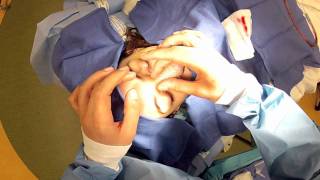
Dr. Shervin Naderi explains why surgeons apply dressings and splints after open rhinoplasty. The dressing re-adheres skin to cartilage and bone, reduces swelling, and holds the nasal bones in place after they've been cut and repositioned. He walks through his preferred Denver Aquaplast splint technique.
Chapters
The final and a very important part of a rhinoplasty procedure is applying the nasal dressing, cast, or splint. Every surgeon has his or her own preference for or the way they like to apply the dressing. The most important thing about this dressing or cast or splint, whatever you want to call it, is that it reapplies the skin back down to the cartilage and bone and structure that's been elevated. Remember, during a rhinoplasty, the skin is elevated and all the surgery is done underneath, and then the skin is draped back down. Whether this is done through a closed approach where the skin is elevated off but not back, or an open approach where the skin is not only dissected off, but also back, exposing the tip of the nose. Regardless, the skin has to adhere back down. And the swelling that patients see afterwards is due to the amount of fluid that collects between the skin and the underlying cartilage and bone. So the better the skin adheres, the. The quicker it adheres down, the quicker the swelling will go away. In people with thin skin, this swelling tends to go away quickly. In people with thicker skin, what can happen is that the skin tends to retain its shape and not adhere back down as quickly, so the swelling actually turns into scar tissue. Now, obviously, everywhere in the nose, there is going to be scar tissue. There's no way you can do the surgery and not create scar tissue. The patient is the one that's creating the scar tissue. That's what allows things to heal. However, if there is too much scar tissue developing underneath the skin, you're not going to be able to see some of the results that you've achieved in rhinoplasty. What I'm doing is I'm taking pieces of tape and I'm meticulously creating a dressing. As you can see, it's a small dressing, and many patients of mine who are nurses, doctors, or dentists don't really mind having this dressing on. They'll go to work the next day, second day, perhaps take a couple days off and go back to work the third day after their surgery. But the vast majority of patients do not want to be seen with this cast or dressing on because it's a telltale sign that they had something done. So what they do is they stay home for the first five to seven days where this dressing is on until it comes off. So after the tape has been applied. Now, what I have is a Denver Aquaplast splint. This is a splint that becomes malleable when it's heated up. I Trim it into the proper size. Each nose obviously is going to be a slightly different size, depending on the age, sex and height of the patient. And then what I do is I heat it up in some hot water and as I take it out, it's now bendable and I can bend it into the exact shape that I want. And it hugs the nose beautifully. There are many different types of casts and splints out there, but after many years, this is what I really like to use. I have tried at least two different other types of casts, and this is by far my preferred cast and splint. Now what I do is I wait for it to cool down. As it cools down, it basically hardens and retains the shape of the nose. This is very important not only for the skin adhering back down, but if osteotomies have been done like they were done in her to narrow the nasal bones. This cast and splint is important to keep the nasal bones medialized and narrow as things heal, because their natural tendency is to shift apart and widen back up again. So these last few minutes are very important. And you can tell that the rhinoplasty, from the very first moment where I have to put local, meaning lidocaine with epinephrine or numbing medicine into the nose, I have to do it myself because it's an important part of the surgery to ensure that the nose is numb and there's not a lot of bleeding that occurring to the very last moment. The dressing is again applied by me. This is not something that you can trust an assistant to. Oftentimes, many plastic surgeons in a breast augmentation close one side and they have their assistants close the other side. But a rhinoplasty truly is a one person operation and you have to be responsible for doing the surgery from beginning to end yourself. It.