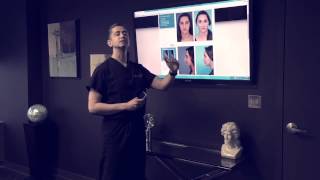
Dr. Shervin Naderi explains how patients should take standardized photographs for Skype/FaceTime cosmetic-surgery consultations so the surgeon can accurately assess facial features. He advises framing from the top of the head to the upper chest, keeping the head level to the ground (Frankfort horizontal plane), avoiding close-up selfies that cause optical distortion, and taking photos from about six feet away (then zooming in) or having someone else photograph you. He notes that SLR or portrait lenses are truer to life and that distortion from small phone lenses can exaggerate the nose.
Questions this video answers
June 19, 2015
About six feet away
Frankfort horizontal plane
An SLR camera with a macro lens or a portrait-type lens
Chapters
Hi, everybody. So we're going to make a video talking about the kind of pictures that I expect to receive from patients that are requesting Skype or FaceTime consultations for long distance consultations. These are typically international patients or long distance patients within the United States. We initially start with photographs and then we do a Skype or a FaceTime consultation where I review the photographs with the patients, see them in person on the iPad, and then go from there. Now, the photos that we get are very variable and it's important for photographs to be standard. You want to be able to compare apples to apples. For example, if somebody sends a picture that's too zoomed in, or if their face is too turned up or too turned down, it can artificially make the nose appear a certain way, where in fact, in real life, if I saw them in person, it may not be that way. So let's review photographs. First thing is, I want to get photographs that are similar to my photographs on the website. If you look at the zoom level you're showing from the top of the head to basically the bottom of the neck or the upper chest, that's where you need to be focusing on. You don't want to be showing the entire body, but you don't want to be too zoomed in on the face either. You need to be able to show this. You see that on the front and you see it on the profile. Now, when you look at the head position, it's very important for the head to be parallel to the ground. You don't want the head artificially tilted up or artificially tilted down, because as I mentioned, that can make the tip of the nose seem droopy or too piggish, when in fact it may not be so. It's important for the face to be level with the ground. There's a thing called a Frankfort horizontal plane. You can Google that and read that about more, but basically it's about keeping the face level. The other important thing is when you take pictures, most people these days take pictures with iPhones or Android phones. You don't want to be too close to yourself. The closer you are when you take a selfie, it's going to blow up the middle of the face. The nose will look gigantic and then the ears get swept back and it's very distorted. The small lens on a phone and a camera phone creates optical distortion. That's an important fact because you want to be able again, look at the face as it is. When I use my own camera to take pictures, I use an SLR camera with a macro lens that actually is true to life, or a portrait type lens as well. But these can have a lot of artifact. To reduce the artifact, what you want to do is have the camera be as far back as you possible. Don't take a selfie from here. If you have nobody else to take a picture, extend your arm as long as possible to be able to get as much reach as possible. But ideally you want to have somebody else take the picture that can use your phone. Take it from at least six feet away. You want to be about six feet away. The farther the lens is from your face, the less distortion is going to get created. At that point you want to zoom in. So you don't want it to be six feet away and showing your entire body. When I'm trying to focus on the nose, so six feet away, and then zoom in using the cameras or the phone's zoom and focus on this picture again. Keep the face flat, keep the camera as far away as possible, and then zoom in and show me what I need to see. That way I can actually judge the nose for what it is. Because if there's optical distortion, if the head position is distorted, then we're basically speaking about something that's not really there. And when I see you in person, that plan may change. So let's have the best photograph as possible, and then we can have a fantastic FaceTime or Skype consultation, compare apples to apples, come up with a surgical plan, do a rhinoplasty, and give you a beautiful result. I look forward to seeing you in person. Thank you.