From White Trash to White Coat, with Lance Essihos. The Functional Gynecologist Podcast Episode 45.
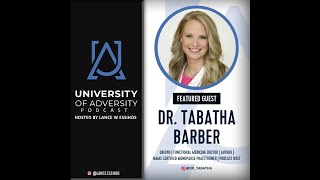
Dr. Tabatha Barber went from teen pregnancy and a GED to OB/GYN, then left obstetrics after a disabling back injury pushed her toward functional medicine. She now focuses on women's nutrition, food sensitivities, and detox protocols, moving away from conventional gynecology.
Chapters
Hi, I'm Dr. Tabitha, the functional gynecologist. I'm a board certified OB, GYN and functional medicine physician. I've embraced the world of functional medicine and wellness through my own personal health journey. And I'm super excited to share my wisdom and unique personality perspective as it pertains to women's health. So if you're struggling with hormone imbalance, weight gain, period issues, anxiety, insomnia, you name it, then you've come to the right place. I want to be your functional gynecologist. So welcome. Hi, friends. Welcome to another episode of the Functional Gynecologist podcast. So this week I'm mixing it up a little bit. I am playing an episode where I was a guest on the podcast called University of Adversity. So Lance Essios is the host and he's really awesome. But this podcast resonated with me because of my autobiography I wrote called From White Trash to White Coat. It details the adversities that I went through growing up and how I went from high school dropout, having a baby in high school, to not really knowing what to do with my future to becoming a physician. So I talk about this on his podcast. You know, he created this podcast because he wanted people to understand that adversity is where you grow and you become who you're supposed to become. And I just enjoyed recording that episode with him so much that I thought I would share with you guys. So this week it's gonna be me being a guest on the University of Adversity talking about my story. So I hope you enjoy it. If you do, I would love for you to still follow the Functional Gynecologist podcast. Hit the subscribe button if you haven't and shout me out. Send me your questions. I want to know if this resonates with you, what you want to hear more of. Because honestly, I'm here to serve. I do this for you guys. I don't get paid. This is like my side gig that I'm just passionate about because you women need to know that you can feel amazing and live your life the way you want, fulfill your potential, have all the things right and be happy and support each other. But you got to make some shifts in your life. And that's what I've done throughout my life. I've reinvented myself over and over and over again. I just keep making the shifts. I keep growing, I keep learning. Because honestly, I believe that's what we're here to do. So I hope you enjoy my story. I hope you get a Little golden nugget of information that you can take into your life and see about making a shift to become the best you that you can possibly be. That's all I could ask for. That's why I do all of this. So keep following me, keep watching, keep listening and send me your questions and your love and your comments. All of it. I want to hear all of it. So Here we go.
Dr. Tabitha, how are you?
Great to be here. I'm so excited.
Me too. Me too. And finally we're making it happen. I know we have busy lives. We're connected to a lot of so many amazing people. So I'm really excited to kind of connect with you and dive into your story. How's everything going in your part of the world right now?
It's pretty good. You know, we're still a little bit on lockdown, but we started school yesterday. I have elementary age kids and college age kids. And so we're trying to do life as best we can. Right, Right.
Yeah, no, for sure. It's interesting because lately, obviously the last few months, it's always been sort of the first thing you talk about. Cause it's kind of addressing like, you know, how are you right now on this craziness? Right. Like, it's been such a roller coaster ride. But it's always interesting because everybody's got a different perspective on kind of where they're at and what the protocol is and all that. So very, very interesting time.
Yeah, it was a rough beginning of the year. You know, I was trying to see my patients virtually at home while homeschooling the kids. And I no long had someone cleaning my house or doing any grocery shopping. All of a sudden I was doing everything and I may have cried or thrown a few things.
Yeah, I think it's pretty normal. I think we've all been challenged. But I, you know, I was looking at your story and just like kind of the craziness that you went through over these years. And it was really like, as we were saying before, I was like, this is like, this is one of those stories that I really love about the show. You know, sometimes we, some. Sometimes we talk about things that aren't too deep or, you know, somebody's story is not crazy. But we, you know, we always pull something out. But this, what you went through and what you've gone through on your health journey and with your book. I love white trash to white coat. It's just like, it's awesome. So I would love if you could kind of take us back to the beginning. I know you probably told the story a lot, but I would love if you could walk us through a bit of your journey and start wherever you feel is comfortable. Walk us through a little bit of how you got to where you are today.
Yeah, I'm really excited to share this with your listeners because just when I heard the name of your podcast, University of Adversity, I just thought, that is my life. Like, I have learned the hard way through all my adversities, all my troubles. And, I mean, there's nothing better than real world experience. And so I had a typical childhood growing up. I had decent parents, I was raised Catholic, and, you know, I lived in a little town, but I didn't have a lot of guidance, so I got to pretty much do whatever I wanted. My parents were super busy just trying to pay the bills and survive, and so I quickly got in with the wrong crowd and did the wrong things right. So it was. I just lived for me. I didn't have any respect for authority. I wanted to do whatever made me happy. I wanted to hang out with my friends, and that got me into a lot of trouble. Luckily, I had some faith. You know, my mom did have me go to church, I did communion, all that whole thing. And I didn't think a lot about it at the time, but luckily I did have that faith foundation. And I did have a deep belief that Jesus saved me and loved me and that I could rely on him in hard times. And so that did come in handy too many times than I hoped it would. But. But that is what got me through. So, you know, I didn't pay attention at school. I just kind of went through school trying to have fun, be with my friends, and I ended up getting pregnant in 11th grade. And I will tell you, the counselor found out, and she pulled me out of class, and she was like, you need to do the rest of your schooling at home. And I was like, what? Why? What are you talking about? And she said, I don't want any of the other girls seeing you pregnant. You're a bad influence. And luckily, I didn't really respect authority, and I was like, fuck that. I'm gonna stay in school. This is crazy. And so I did finish 11th grade despite her wishes, but I didn't go back for my senior year because I had to take care of my daughter. I had her in September, and so I just stayed home with her for a year. And I went through a really rough pregnancy and delivery. I mean, it's really embarrassing when you have to go on Medicaid and food stamps to see the doctor and buy food and do all of that stuff. So it was really humbling. And I think I gained so much empathy for people and I really learned a lot about the system and how broken it is. I was treated like white trash. I mean, I was not talked to respectfully. There was no conversations. Things were just done to me. You know, there wasn't any conversation about consent for anything. I remember after I had my baby, I was just given this diaphragm and he's like, here, you just put it in, you wash it. And that's, you know, this is what you're using for birth control. And I'm like 18 at this point and thank God I didn't get pregnant again. But I mean, there was no discussion about all of the options and was this even a realistic option for a teenager with a brand new baby? And so, you know, obviously I didn't think deeply about any of this at the time. It was later on reflecting. But I learned so much about how not to treat people and how poorly, you know, people in our system who can't afford things or, you know, people of color, how they're treated. And so that was really eye opening to me. And it kind of put this drive into me, like, I want to help other women have a voice and a choice in what happens to their body. And it just, things kept adding fuel to that fire to the point where I was like, I need to go back to school. I need to like, be a doctor or something. And it was all very, you know, idealistic and whatever, but I was like, I gotta make this happen. And I did.
Yeah.
Wow.
Yeah. Like, I mean, that's not an easy thing to accomplish.
No, I mean, I had to get my ged, you know, I had to go to night classes and get my, my graduate certificate, not even a diploma. And then I had to start at a community college. And I made sure I got 4.0 straight for two years. And then I was able to get scholarships to Michigan State University and transfer there. So it was a long road and it took me twice as long as everybody else. But once I had like figured out what my purpose was in life, there was no stopping me. I was like, this is gonna happen. And that's what I did.
How old were you when you decided that, okay, this is like, when did you start on that journey?
So I started community college when I was 19. And my aspirations were to be a nurse at that point because I didn't have the self worth to Think I could possibly do more? You know, my mom didn't graduate high school. No one in my extended family had graduated from a four year community college by that point, or a four year college. So becoming a nurse would have been a big feat for someone like me. And so that's where I put my sights. And the more I went through school at the community college, I just felt this deep desire to do more, be more. And I, you know, told one of my professors and he's like, you can totally be a doctor. I was like, what do you mean? He goes, no, you, you can be a doctor. I'll write you a letter. You can go to medical school. And I just. The fact that someone believed in me, all of a sudden after all these years, I was like, what? So that left a huge impression on me. Like, one little thing that somebody can say to you can transform someone's whole future. And so I try to remember that when I'm encouraging people, because even if it doesn't seem important to me, it might be life changing for them because it definitely was. When he said that to me, like, you can be a doctor, what's the problem? I just thought maybe I can, you.
Know, Isn't that amazing when somebody can see that in you that you don't see? I was just talking about this earlier and I was like, that's like the ultimate level of leadership. I feel like it's like if somebody can see what you don't see and bring help, you bring that out. Like, that is so massive and people can. Not many people think about that. But think about the impact in our conversations on a daily basis, you know, like encouraging people and seeing those things in them that they may not. And that can just, like you said, can be the switch. You just need one or two people to say that. You go, huh, maybe I am good at this. You know, maybe this is my jam, you know, maybe this is the path.
Exactly. I had so many of those instances when I had to go back for my graduate equivalent diploma. I went back to one of my math teachers and I was like, I'm really sorry I never paid attention, but now I need to learn this stuff. Can you help me? And she totally helped me on, you know, her own time, free will, because she believed in me. And she was like, I'm so proud of you that you're finally doing this. Better late than never. And just like the counselor was so negative to me and fueled me in that way, you know, so many other people have lifted me up and helped me so I always, like, tell people, don't be afraid to ask for help. People will help you. People want to see you succeed and make something of yourself. You know, you're not bothering them or whatever. And you don't expect to do life on your own because it's not meant to be like that. And I think because I learned that at such an early age, that is why I've been so successful. I am not afraid to look like a jackass and ask for help and be like, you know what? I don't know what the hell I'm talking about. Please help me. And it's just taken me so far.
Which is so great, because that really. That shows other people, too, that that's trust. That's what builds trust, is to show, like, hey, I don't know everything I'm learning, and I asked for help. And it's like, it makes people more comfortable and want to get to know you more. Want to just that just being vulnerable and opening up and the ability to say, hey, like, I don't have all the answers, but, you know, to be able to ask questions and, I mean, be curious about things, it's so important.
It is. And I don't think we, you know, teach our kids that anymore the way that we should. I don't think. You know, I was raised to think that if you opened your mouth and questioned anything or said anything wrong, you were going to get reprimanded. So it better to just shut up and not ask for help, not to show your weaknesses. Right. You know, so. But I never bought into that. I don't know why.
So what I'm curious about is that, okay, you're. You decided to go into. Go on this path, but, like, what was the thing that. Because that's such a hard thing to start, and you need a certain amount of belief to even do become a nurse, like, that is not an easy thing to do. Like, I've talked to people, gone through the nursing program. It's one of the hardest things. So. But what I find so fascinating is, like, if you were on that path of, like, where you were at, like, what. How did you switch that mindset? Like, how did you get the belief to even start? Because 99% of people, if they're in that situation, wouldn't have done that. Like, what was. What did you. How did you get that, that developed that.
I think that is where my faith came in. I just had a little voice deep inside my head saying, you know what? You are worth more than working at the gas station. All your life, you have something to give back. You need to cultivate that and share that. And as scared as I was and as much as I didn't believe in myself, felt like I had a higher power believing in me and pushing me, and I literally had people tell me I was crazy. I was gonna go into so much debt. Like, why do you think you can do this? It's never gonna work. You know, I had to move my daughter. And at the time I got married and we moved, and they all just thought we were crazy for undertaking that, but just kept thinking, okay, well, I can try this and fail and go back to where I was, or I can just stay where I'm at and never know and have regrets, so what's the difference? And, you know, I didn't think about the money, maybe because I didn't realize. I mean, looking back, I don't know that I could go through it now knowing how painful and excruciating and long it all was, but because I. I didn't know. Ignorance is bliss. And so I just kept thinking, oh, it's gonna be better when. Oh, it's gonna get better when? And so I just went in blindly thinking, this is what I have to do, and let's make it happen. And I just took it step by step. And honestly, once you start doing things out of your comfort zone and you have some little wins, you start believing in yourself, and then you just kind of keep investing and keep believing, and it grows and multiplies, and then it's like you're unstoppable.
Totally. Yeah. The little wins celebrate the little wins. But the. I feel like the hardest part about all of that is. Yeah, the haters and the people doubting you, you can't do that. You're gonna go into debt. It's like, do you notice that anything that. Anything that anybody wants to do that is different or you know, is hard to achieve, there's always these people that want to bring them down or something. Yeah. I don't understand it.
I know.
He says to me. They go, I want to do this. I'm like, oh, amazing. Think bigger. Like, why not? Why would you think small? Why would you think small? Like, I just don't understand. Oh, you know, you're gonna get into this. It's like, what a stupid way to look at things. Like, you go, life.
Like, I've never been a reasonable person. I guess it's like, go home, you know?
Totally. And it's like, these people that. It's like the haters and Want to bring you down. It's just like, they just. I feel like they see something that they know that they haven't done, and it comes out. It's a reflection of, like, a part of them that they know could be better, but they see it in someone else. So they want to, like. They want to, like, hate on them for that. And to be able to get through that, I feel like, is such a powerful thing because that stops so many people from greatness. So many people, especially now online, you got so many keyboard warriors and haters, and whatever you're doing, there's always going to be these people trying to bring you down. Right?
Exactly. I remember I would go back home to my small town, like, between semesters and whatever, and, you know, I would run into classmates that were living still where they were and doing what they always did, and they would just try to bring me down. Oh, my gosh, you're still going to school, you're still studying, you know, and they would act like they felt bad for me, and somehow I was able to understand that that was their lacking and their frustrations and that I needed to just have compassion for them and to hope that they could find their purpose and their motivation and whatever to do what they need to do in their life. Because I just know that we're made to do bigger things. We're not made to, like, go shopping, take our kids to school, watch TV and go to bed. Like, that's a bunch of bullshit. You know, we are made to, like, create change and inspire each other and do amazing things. And I'm just not cool with sitting back and watching life happen.
No, no. And you know, those people just need a hug.
Exactly.
What, what was your hardest part about when you look back now, in hindsight, going through. To become a doctor. Like, can you think back at a point where you're like, holy shit, this is. I don't know if I can do this. Like, what point was that at? And, yeah, like, walk us through a bit of the journey. Because, like, you know, that's. This is something that, you know, most people don't do. They talk about it, but to actually go through with it, especially after, you know, going through what you went through and all that. Like, walk us through that a little bit. Like your journey through actual becoming to becoming a doctor.
There's a lot of painful times that I wouldn't sign up to repeat, that's for sure. You know, general stuff like missing a lot of my kids, events in their lives, sleeping through birthday parties, things like that. But there were a couple really painfully hard instances. And for about three or four years, I was so sleep deprived, I would fall asleep at the light, driving to work in the morning, driving to the hospital, and I would know to wake up when the light shining through my eyeballs would change. Like, I mean, it was so scary thinking back. Like, I would literally drive with my eyes shut. I mean, I was so sleep deprived that I just. I'm grateful I didn't kill anyone, you know, but I had some terrible experiences. And I. You know, I had. Being an ob. GYN is a surgical specialty, and so I was in the OR a lot. And you were definitely praised if you held your bladder and your bowels. You skipped meals, you didn't sleep. Like, you just don't take care of yourself. That's how it is. You do everything else. You don't leave that or for any reason. It's rough. I remember I had one experience where an attending burned someone's bowels accidentally. We were trying to remove a fallopian tube, and he grabbed the bowels, and the camera was all foggy, and he was being completely ass and impatient. And when the smoke cleared and we saw that it was the bowels and not the tube that he burned, like, my stomach just dropped to the floor. And I was like, somehow I'm gonna get blamed for this. I can just see it. And literally, he screamed at me that the camera was, you know, foggy because I was holding the camera. But he. I remember he put the camera down. He walked over to the corner, sat in the corner, and didn't say anything. And I was like, to the scrub nurse, get the general surgeon. And she's like, why? What's going on? I'm like, shut the fuck up and get the general surgeon. Just leave the bear alone. And so that patient was in the hospital for the next 21 days. And for 21 days, I had to round on her and her. And my heart broke for her that she went through all of this unnecessarily because he was so impatient, but he was so rough on me and so belittling and so deflective of all of his responsibility of this situation that that forever changed me as a physician and a surgeon. And I think that I am just very much a truth seeker. I'm like, you need to tell the truth no matter what happens. You know, he should have walked in that room and said, this is what I did. I effed up. I was impatient. I hurt you. I am sorry that you're going through this. Instead of placing blame on a first year resident and everything else. And so ever since that point, I have just made it my mission to be my authentic self, to, you know, accept my failures, to just live my truth because it hurt so many people and he still looked like an ass in the end, you know, it didn't even work out for him anyway. So don't be that way. Just admit your faults on your truth, you know.
So true. Yeah, I, I can't even imagine the pressure that you must feel in that situation. So for me it just makes zero sense to rob everybody of their sleep, of their, like you're supposed to suffer and stay in there and make sure. But how are you going to do your job properly? How can you think straight?
You can't.
Thinking about myself, I'm like, man, there's no way I would, I couldn't do it. Like, and I have the highest, most respect for doctors, surgeons that can like, never mind what's going, like the, some of the stuff that has to be done. But like, even in my like best moments, like, I couldn't do it. I can't imagine what that would be like. Like.
Yeah, the system is ingrained in this old good boy club, you know that they're superhuman with their big egos and they can handle anything. And especially as a female coming in, you better be able to hold your own and you know you're going to get it 10 times harder. The system is finally changing. People are forcing the issue now we have like mandatory hour maximum. You can't work past that. And everything which happened after I left, but so good things are happening, things are changing. But when I went through the mentality was you are not a good doctor unless you are pretty much superhuman and you can just rise above and still function despite all of your human issues. Ridiculous, right? Ridiculous.
So yeah, if anything there should be like a, like a meditation moment or like a ground yourself. Like there's like, I just think about that. It's, it's craziness.
I have learned so much along the way that we should be inspiring people to become healthy. We should be the healthiest of all people and yet we're usually the sickest, the most overweight, the, you know, the worst, the most sleep deprived. So we are definitely hypocrites.
Yeah, it's crazy. So let's, let's talk about your like nutrition in your life and kind of like how it's evolved over time. Like you know, when you started, maybe how was your lifestyle and maybe like how has that evolved over time? Now, and how much has it affected your performance and just your general well being?
Oh, that's a great question. So when I finally graduated residency, I was just happy to, you know, be out of that situation and be on my own and making decisions. And what I quickly found out was now I was owned by the hospital system, the administration, and I was just a number that had to produce numbers. You know, I had to see so many patients do so many surgeries, make so much money, and I just, I was never doing enough. I was on call, you know, delivering babies all night, doing surgeries all the next day or seeing patients. And about eight years into it, I injured my back. And it got to the point where I couldn't function anymore. And like, by the time I got done doing a C section, I would go to walk away from the table and I couldn't walk. I couldn't even move. And so something had to give and I ended up having back surgery. I took six weeks off to heal. They were like, yep, you're good to go. And of course, I was put on call for five nights straight because when you leave, you get punished. You know, I was off for six weeks. So on my third night back on call, I re injured my back and I couldn't move. So I did the unthinkable. And I took four months off work. I was like, this obviously is not working. I need to revamp my entire life. I found Mark Hyman and functional medicine, and I just started studying my butt off. And I was like, oh my God. There's a whole world of wellness and functional medicine and this whole other system that's completely separate from our healthcare system, which is really sick care, right? It's just to keep you alive. But I had no idea. I didn't know anything about it. And so, like, all of a sudden, my eyes were opened, all these possibilities of healing, and I literally healed myself. And so when I had to go back into that world of seeing patients every 15 minutes and cranking them out the door and doing surgeries and never eating, never taking time to meditate or breathe or sleep, I was like, you know what? I'm not doing this anymore. I cannot do this. My eyes have been open. I can't do this with my patients. I can't do this with myself. I. And I left and I completely revamped my life. I gave up obstetrics. As much as I love delivering babies and have great memories, it wasn't sustainable for my life and my health. And so now I do gynecology, functional Gynecology, where I help women, I help them get out of those terrible situations that I was in and reclaim their health. And it's been the most rewarding. Everything. I sleep at night. I have energy during the day. It's. It's amazing. Now I'm not a hypocrite anymore. I'm walking the talk, you know?
Yeah. That must be so challenging, though, for you. Go through the system, learn one way, and then all of a sudden, people are telling you that's not the right way after all those hours. And so many doctors out there will never change their. Their philosophy. Right?
Yeah.
I admire. I admire anyone like yourself, doctors that have gone through the system. And then you, like. Then you realize, oh, shit. Like, this isn't. This is actually. Yeah, like a sick care system. This isn't actually preventing or helping. It's like, just get them part of the program, get them on drugs. It's. It's. It's crazy. And I just, like, admire how you're able to do that, because that is. That must be such a hard paradigm shift.
It was very hard. But when the back surgeon said, back surgeries are like lay's potato chips. You can't have just one. And he wanted to, like, put hardware in my back, and he told me I'll probably have back surgery every couple years, I was like, there has got to be a different way. This is crazy.
Yeah. Wow.
So, yeah, I was angry when I first realized that there was all of this science and everything out there that I hadn't been taught or exposed to. I was angry. I felt gypped. But then I was like, you know what? You've been given a gift. You need to just soak it all in. So I studied my butt off for the next three years, and I was like, I need to learn all of this to take care of my patients, to actually help them reverse their diseases and help them get well and not just, you know, prevent them from dying. So I'm trying to, like, spread the word and get as many of my colleagues on board. But, you know, it is hard when you're entrenched in the sick world system because you are exhausted, you don't have time to read. I never watched daytime TV or barely even the news. And so, like, I just didn't know there was anything else out there. And so the lay public knew more than I did about wellness. You know, my patient. I remember the first time my patient said, what do you think about adrenal fatigue? And I was like, what the hell's adrenal fatigue. I never heard of this before because it's not in conventional medicine. And luckily, I'm a curious person. I'm a lifelong learner. I'm like, let me go read up on this and learn. But a lot of doctors are like, I don't have time for that. You know, I gotta go see my next patient. So it's not gonna be easy fix.
That is so incredible, though, that you're able to do that. Like, to be able to do that and to be able to be humble and to sort of have to relearn things. And that's. It's amazing. Like, it's because there's this. And it's funny because you bring up a good point. It's like, you're so busy, how are you ever going to have time to take on this stuff? But I guess that's where stuff like podcasts and when they started, you know, these kind of things that you can kind of listen on the way audiobooks kind of was like the thing that you can kind of start to learn. And I'm kind of curious, timeframe wise, when did you start to. When did that switch? Like, when did you decide that? Or, you know, when did you first listen to Mark Hyman? And like, when did that sort of shift for you? What year around.
It was about three and a half, four years ago, right? Yeah. So as soon as I heard about all of this, I started listening to podcasts.
Yeah.
Then I read Whole 30, and then I read Eat Fat, Get Thin. And then I found the Cleveland Clinic Institute for Functional Medicine website and I just dove in, had the first. And then I found the American Academy of Anti Aging Medicine, and I just. I just keep looking and searching and trying to connect with people and learn as much as I can. You know, I feel like I should be the expert in women's health because I have all these degrees and, you know, diplomas and things saying that that's what I studied, that's what I did. But when it came down to it, there was still so much to learn. Wow. It was crazy.
What do you see as, you know, obviously you work in gynecology with women. Where do you see is like a common thing? Is it is nutrition? Are people just so misled in nutrition? Like, what do you see as problems that mostly come up these days? Like, what is the common thing that you have to talk to people about or educate them about?
Definitely women are overstressed, overburdened, so they got way too much on their plate. They're trying to be A full time professional woman, run a full time family, have a social life and look hot. They're trying to do everything and they're not realizing what. It just wreaks havoc on your hormones and it causes all kinds of issues. And there's still a lot of misunderstandings and residues of the low fat diet days of the 90s and 2000s, like people still are afraid to eat fat. And I have to sit down and explain. Like your sex hormones, estrogen, progesterone, testosterone, those are made from cholesterol. You need good, healthy fats. The eating low fat is just going to cause inflammation and make you sick. So they definitely, you know, aren't necessarily in tune with the best eating practices or they'll jump on whatever is hot at the moment. Like the ketogenic diet has been hot and a lot of women don't feel good on it because they do it in a dirty way. Like going through the drive through at McDonald's and eating the burger without the bun is not going to make you healthy. You know, you might initially lose five pounds, but you're gonna feel horrible because you're not balancing your hormones. And so women get all these mixed messages and get super confused on what diet works for them. So that definitely is a common thing I see them for. So I always start with diet. I revamp that diet because the standard American diet is horrible. All the processed foods that we eat, it's full of plastics like xenoestrogens that make body think we're getting more estrogen. It makes us more imbalanced. So you got women walking around that want to rip their hair out. Their periods are crazy heavy, they can't get rid of their weight, they're exhausted. And a large part of it is what they're eating and how they're not managing their stress.
Yeah, yeah. There's a lot of women that listen to this. So this is really helpful and I'd love to. Yeah, there's. I'm grateful because there are a lot. And this is so important because people are so misled with nutrition these days and diet. So I got a question for you. I have heard off and on that going too low carb, too keto too often isn't great on the hormones. Can you walk us through the ideal kind of diet for women at like optimizing hormones yet not going too low carb all the time, Maybe kind of navigate that for us.
Little bit. Yeah. So I like to think about how was our body created to function? You know, if you go back to how we are supposed to be. We didn't have grocery stores on every corner. We weren't meant to eat every couple hours. The snacking industry, the food industry fed us a bunch of lies telling us that we should eat every couple hours to keep our blood sugar stable. That's a bunch of crap. You know, breakfast is the most important meal of the day. That was from Kellogg's. That's a bunch of crap. Like, honestly, we were meant to be able to feast in famine. We were meant to be able to like go and without food for a couple days while we hunted and gathered and looked for food. And then we would like have a feast and then we would do that again. And so our bodies, if you can get them re acclimated to burning fat again, they can do that. But it might take a minute if you've been eating snacks every couple hours for the past decade. So intermittent fasting is how we were created to function. So I honestly believe that you should be able to go 12 or 14 hours without food easily. And the majority of that you should be sleeping, you should be sleeping at least eight hours to restore your functions. So you should be able to go longer than that. You should be able to do like a 20 or 24 hour fast every once in a while. I think for women we need a certain amount of carbohydrates the week or two before our period to keep our progesterone level up. I think that is, you know, when we typically are craving sugar and ice cream and all of that junk food, you know, that we get teased about. So if you are in a good, healthy situation, you're going to eat sweet potatoes and more like complex carbohydrates and good yummy foods during that time. And then try to stay away from carbohydrates the other two weeks of the month. Try to eat more healthy fats like avocados, nuts, seeds, olive oil, coconut oil. Get lean protein. We don't eat enough protein as women. Especially as we start to age, we lose muscle mass and we need that for good bones, for good balance, to stay independent. It's super important to get enough protein, you know, and it's just as important to get clean protein. So what I always say is you need to worry about what the animal ate that you're going to eat. So if you're eating a cow that was fed GMO corn feed, you're going to get just as fat as the cow did. You know, you want grass fed beef, you want your chicken to be free range out there eating the bugs and everything. So it matters what your animals ate, what you eat. So you want your food to be clean, you want to focus on healthy fats and lean proteins and then, yeah, eat good, yummy carbs before your period. Listen to your intuition, listen to your cravings, but don't be afraid to do some fasting. I think that there's been a couple things out in the media that are like, oh, fasting's bad for women or keto's bad for women. No, just the way they did it was bad.
Interesting. That's so important. What about the, what about when you have vegans come into your. I know you probably get asked this a lot, but there's a lot of, lot of vegans that listen to. And I've had this, you know, I rob Wolf on talking about meat and I've had, you know, I, I'm, I just like to hear, because I know some people can thrive on it, that's fine. But I know ideally it's not the best for everybody. But like, what are your thoughts?
Well, we know that soy is the only plant that has all 13 essential amino acids that we need for protein. We also know that Soy is number two in the country for being GMO'd or genetically modified. So it's full of pesticides and glyphosate. So it's going to destroy your gut. It's going to probably turn on autoimmune disease. I don't like the soy in this country. And so unless you can find organic non GMO soy, you're going to have a hard time getting all of the proteins that you need in essential amino acids as a vegan. So that's where my worry comes in. You know, if that is what your choice is, that's great and I support that. But I do get concerned that you might be lacking some nutrition. Vitamin D is another one that is mostly in animal products. You do make some vitamin D in the sun. But like I live in Michigan, you live in Vancouver. We rarely see the sun. And then when we do, we're told to put sunscreen on. So we're not making vitamin D. Right. So we have a vitamin D deficiency in this country. Really bad. And that that can attribute to breast cancer, heart disease, osteoporosis, all these issues. And then B12 is the other one that vegans struggle with. And so you can have low energy. Vitamins are super important because they're the assistants. They assist hormones in being made and used and signals being heard like you functions can't happen in the body without a good supply of nutrients and vitamins. So people act like it's just this, oh, this hippie dippy thing, you don't really need them, when actually, that is like, the backbone of the chemical makeup of all the functions happening in your body every millisecond of every day. And so if you don't have a good supply of that, you're gonna struggle, you're gonna be imbalanced. So I would never try and talk somebody out of being vegan if it's for, like, you know, personal reasons, if it's just that my gut doesn't like how meat feels or this and that, then sometimes we need to work on healing your gut. You know, some people avoid eggs because of that, and we need to heal your gut and get rid of that immune response to it. And then maybe you can eat eggs or meat or maybe you need digestive enzymes. So, worth having a discussion. Like, hey, why are you vegan? You know, but that does make things more complicated. For sure.
Yeah. And there's always that argument, too. Oh, this. You get just as much protein as this piece of meat, as this broccoli, which is. I know, it was bullshit. And it's like your body doesn't absorb it as much. And, you know, I learned a lot about this from, you know, Dr. Paul Saladino as well, talking about how we. We absorb animal proteins, animal organ, meats. We absorb all that better than plants. Right. And although, yeah, it says it has this much protein per serving, you're not really absorbing all that either. Right, right. That's a frustrating argument to have because. Right. I mean, you see that on the Game Changers and that kind of thing. And it's like, how do you. How do you deal with that when you. When, you know, and you're trying to explain this to people, when you get documentaries like that coming at you, like, how do you navigate that?
Yeah, well, I just tell them, you know, like, you're gonna get a couple of your essential amino acids, but you're not gonna get all 13. And that essential means that your body doesn't make those. You have to get them from an outside source. So that tells me that we were meant to eat animals. That and the teeth that we have. I mean, there's physical, biochemical, you know, evidence that we're meant to be carnivores. My other concern with vegans is oftentimes they eat a lot of grains, you know, especially wheat with gluten. And our bodies don't like wheat. Wheat didn't come into existence until what, like 13,000 years ago. So we had these millions of years where we existed without wheat, and then we try to introduce it, and a lot of us can digest it very well. And now it's so heavily GMO'd that it's destroying us. Like, there is so much gluten intolerance now, because first, wheat. We don't like wheat. And second, because it's so GMO'd that it's destroying our gut lining, it's causing our immune system to over respond. You know, I get a lot of people who have a very heavy diet on the grains and they are not doing well. Gut is so unhealthy. They have chronic IBS symptoms, which just tells me that your body doesn't like what you're eating. You know, if you're constipated or having diarrhea, there's something wrong with what your diet's doing. IBS is a garbage diagnosis, meaning we haven't figured out what's wrong with you. You know, that's not a disease. That is some symptoms that they haven't explored sufficiently. So you either have food sensitivity or celiac disease or something else going on, but is very often a grain issue.
Yeah. It comes down to inflammation, right?
Yes. Every time. 80% of our immune system lives in our gut. So it's like ready to attack as soon as it sees something. I mean, it's like, you know, the guys at the moat in front of the castle, they're ready to attack. Something wants to cross that moat, they're gonna get it. And so that's why our gut is so important to be up on par.
Yeah, it's. It's so important. Okay. I mean, it can immediately. Anything, like food can just change our moods and our well being. Just like that. Like, I'll. I'll be sitting there. Like, for instance, yesterday I was feeling really good. I'd fasted all day, and then I had this like beef jerky that was kind of like. I don't. It was. It was okay, but. And I had it and I started to feel. All of a sudden I just like, drink. I was like, pissed off. I was like, what? Like, I just got this like egg roll feeling. And I was like, oh, interesting. Okay. There's something that I looked. And I was like, oh, there's funny business in there. Right? I wasn't really thinking. And it's so amazing because you become in tune with that. And, you know, when you clean, you start to feel good. You got to pay attention to that. You Know if you get the headache, do you get the. And it's not just accidental. Oh, I just got a headache right now. It's like, well, yeah, but why. That's not normal, right? You shouldn't be cranky after eating.
Exactly.
You know, like, good.
You shouldn't feel heavy, feel full, bloated. None of that. Like when I gave up gluten, I haven't had a headache since. Like, that stuff just doesn't happen.
And.
But when I do eat gluten, you know, whether I'm an idiot that day or accidentally, I'll be depressed out of my mind for three days. Like, I don't want to get off the couch f the world. It's that strong of a reaction for people. And I don't think you see it until you get cleaned up. Like you said, once you clear the slate, it's so much more obvious when you do have it. Right?
Totally. That's the thing. Like, you have to remove it all first and then reintroduce to see. Right?
Yeah.
That's why I think even like, you know, I've explored the meat based diets and all that and you know, to kind of be like, okay, this feels good now what else can I throw in here after you? And it's interesting because how else are we ever going to know what's bothering us if we don't eliminate it for a while? How else do you know?
Yes. And it takes a minimum of three weeks for your immune system to calm down. So I recommend four weeks. You know, hardcore removing something that you think is bugging you because it takes that long to calm your immune system down and stop reacting. And then when you reintroduce it, you'll know. You'll be like, holy crap. That makes sense.
You know where I noticed that too is restaurant oils. Like vegetable oils and stuff. You know, when you go to a restaurant, you just like, especially like, I know when I'm just dialed in, I'm feeling good and then I go and I'm like, like, that doesn't feel good immediately.
Yeah, it's like swollen and.
Yeah, it's crazy. And like, people don't, people don't realize like the power of those vegetable oils because they think because you can't see it, it's like, oh, it's nothing. Those are so bad.
Yes. Yeah, those are some of the worst. Or salads at restaurants that are covered in preservatives. I mean, people will run to the bathroom with diarrhea and think they can't eat lettuce. No, you just can't eat this restaurant garbage that's covered in preservatives and inflammatory oils. Right, Right.
So that takes weeks to leave your body. Hey, so if you have. So if you're eating restaurant food or that kind of thing, like, realistically, for people listening, because a lot of people try and go on, let's say keto, or they try and do a detox and a lot of them fail because they don't go long enough. Right. Like, you have to give, you have to expect you're gonna feel like shit for a little while, right? Like three, four weeks. Is that, is that pretty much what you, what you recommend?
Yeah, so I get, I hear that a lot. Like, oh, I quit eating gluten last week, but I went back to it because I didn't feel any better. It literally does take 21 to 30 days. I mean, that's how your immune system works. And it takes three, on average, two to three days to feel the response of a lot of these foods. So sometimes you feel it right away, but oftentimes it's a delayed response because it's a part of your immune system called igg, which is a delayed reaction. So what you ate yesterday or the day before is probably what's causing your headache or your rash or your eye swelling or whatever. So it's not immediate. It's not a life threatening IGE reaction. It's a delayed response IGG reaction. So that's, that's why it's really hard to decipher.
Yeah, and it's, it's just a journey of, like, figuring this out too. And I know that you. I did that true cellular detox that you do. Dr. Pompa, he's been on the show. Amazing. It's. It's amazing. And I did it with Dr. Nick. And can you just walk us through your description of the true cellular detox and like, what is actually happening there and how important is actually fixing the cell?
So there's nothing more important. I mean, that's essentially if you want to get, well, have your hormones work, have everything function in your body. When your little mitochondria inside your cells make energy, being able to utilize that energy, like all of that is coming from the cellular level. So when we are full of toxic burden, our cells get inflamed. Things have a hard time transporting in and out of the cell, like energy and vitamins. Then the hormones can't attach to the receptors to sell the cell, send the signals, like, hey, boost up your metabolism, or, you know, bring in this sugar do these things. It can't hear it because it's all gunked up with the toxins that we accumulate every day. And so this true cellular detox program is amazing because it actually gets rid of that inflammation so that the cell can do its job and your hormones can be heard again. You can use the vitamins that are floating around you, energy. So it's like your system is mucked up, and it cleans it up. So I like to describe it. You know, there's three phases. There's a prep phase where you are getting all of the necessary nutrients and vitamins and everything for the cell to be able to do the job that you're going to ask it to do, which is pull the toxins out and get rid of them. So it gets you up to par, gets you ready. It's called the prep phase. It prepares you. The second month is the body phase. So heavy metals, pesticides, mycotoxins, all that, all those toxins like to live deep in your cells. And so you have to take supplements and binders and pull them out, bind to them, and get them out of your body. And we like to always work with gradients in science, so things like to flow from high concentration to low concentration, right? So the detox program tries to get everything out of the more peripheral areas of your body so that we can, in the third month, work on the brain. The brain holds all your heavy metals, like your mercury and your lead. And so you create this gradient where things all of a sudden can flow out of that brain tissue, bind, and get the heck out of your body. And the clarity that you get from this system is so amazing. All of a sudden, people can start losing weight. You know, I don't think a lot of people realize that we. That weight or fat actually has a purpose. It protects our deeper organs from toxins. So a lot of the superficial toxins get stored in our fat cells. And when we try to lose weight, we feel like shit, because those toxins go into our bloodstream, and our body's like, oh, no, no, no, you need to hold on to that fat. This stuff has to go back in your fat cells. So once you go through the cellular detox program and decrease those toxins, then all of a sudden your fat cells are like, yeah, we don't have any work to do. We're free and clear, and we can just get burned. And all of a sudden, people start losing weight that they couldn't lose for 20 years. You know, people get rid of their irritability and their headaches and their ringing in their ears or their num. It's just amazing. All of a sudden their cells can function and hormones work and they don't need more thyroid medicine anymore. And it's just, it's beautiful.
It's such an interesting program because I remember there was times it was. It was tough because I was feeling like, like it really, really. Like when you're detoxing, you're detoxing.
And why did you do it?
I would say I needed to detox. I needed it. I had, I had a lot of. I had a lot of metals, a lot of like mercury. And it was. Yeah, you know, there was definitely. I needed it. And it was really awesome journey go through. And, you know, it's really interesting how we look at it. Like, it's, it's. It's an inflammation and we're so full of toxins and inflammation and it's like as soon as that's gone, the weight will just come off, right? So many people don't realize that. It's like we're so inflamed and we have so many toxins. Like, how do we expect. And that's interesting. You said like, that fat is there to protect, right?
We don't want to think about it that way. But yeah, body is trying to protect us. Just like your immune system being overreactive and creating autoimmune disease, it's not because it hates you, it's trying to protect you, you know, so you just have to look at it through a different lens. And then when you can realize, like, what do we need to remove? What are the impedances that we need to remove for this body to heal itself. And it will.
For everybody listening, specifically women or men, I know we probably discussed it, but just to kind of have it as three key points that you think today that someone can kind of be like, okay, I'm going to make a change today. What are the three most important things that someone can do to walk away with today that can start to get the balls, get the, get the wheels turning a little bit into the right direction.
I always say start getting rid of the snacks. So if you can't do anything else, quit snacking all day. Like just eat a meal, be done, wait three or four hours and have another meal. You know, if you can get that going, that's going to get you on the ball to making better food choices because fat and protein is going to keep you satiated longer. So you're going to eat less carbs. So Start with getting rid of the snacks and focus on your diet. Move your body every day. Like stop being a couch potato or a computer junkie. You know, I. I promise that I have that issue too, but you literally have to get outside and move your body. Park at the back of the parking lot, Walk up to the store. Like, give yourself reasons to move. Chop up your vegetables. Like carry something, you know, I don't know, just move. Those are two huge things. And then three, get rid of the toxins. So start to make little changes because they will add up. Like if you just start switching out, you know, your. Your most eaten vegetables for organic, then you're getting less pesticides there. Stop using plastic water bottles, use stainless steels. You know, switch out your plastic Tupperware for glassware. Like, if you make a little change every week, by the end of the year, you'll be a new person. You know, it does add up. It doesn't seem like a lot, but it really is.
So good. If we, if people want to learn more about you and follow you on your journey, what's the best place to find you and what are some things you're working on that people can check out?
Yes. So I love to hang out on Instagram and Facebook @ Dr. Tabitha. It's all A's, T, A, B, a, T, H, A. I have a website, Dr. Tabitha.com. i have a renew you sisterhood where we do seven weeks of intermittent fasting, learn all those answers, healing techniques to get your body back to where it should be, get your hormones balanced. So that's a really awesome program. I do the true cellular detox, like you said. You can always connect with me for that. Yeah. And then check me out on my podcast, the functional gynecologist. Right.
Yeah. Some awesome guests on there.
Yes.
Awesome guests.
Good job.
Awesome. And your book, you got, you know, white trash to white coat. How long ago was that written?
So I wrote it during my back injury when I was off for four weeks. So it's a couple years. Yeah. I say you should be 18 to read it. I wasn't the best child, so there's a few moments in there, but I want. I just think it's so important people to share their stories because it inspires each other and you. I feel like I could learn something from everyone on this planet by hearing their story. So that's why I wrote it.
Isn't that the truth? Everyone's a teacher. Everyone's got a story.
Yes. You gotta tap into it and find your worth. Yeah.
And it's a sense of healing, too, every time you tell your story also.
Oh, God, yeah, it was huge healing. It was painful, but it was very healing.
Facing it and be able to, you know, articulate it and get it down. It's, you know, I found that a lot. I talk about it all the time on this show that, you know, hearing them and sharing them, it's like we're all healing. And, I mean, that's kind of as cheesy as that is. That's kind of like what we're. You know, it's kind of what happens. And hopefully somebody listening can. Can benefit from that too, which is what. Why we do what we do. Right?
I mean, it's right. Exactly. That's why I love your podcast, because I just feel like listening to people, you can always find something to relate to your own life and learn from.
Totally. Totally. Well, I'm going to end with one question I ask everybody. Oh, yeah, I love. I always leave the easy one to the end. Out of all your struggles, adversity, challenges, setbacks, what is one main lesson that adversity has taught you?
To have compassion. Like, never assume somebody's being an asshole because they're an asshole. You know, or someone's asking you for something because they're selfish. Like, think beyond that. Try to figure out what's really going on with them or just give them the benefit of the doubt. I mean, I just. I think we're not nice enough to each other. We're too judgmental. We're too quick to snap back and respond and be defensive. And we just need to have more compassion with people. That. And you need to be authentic. Like, be true to yourself. Be who you are and don't feel bad about it.
Especially now, compassion being in your truth, especially right now, in the world, the state of the world. It's like. And you really gotta. You gotta have that.
And.
Yeah, no, well said.
Ugly out there it is.
And all we can do is start with ourselves. Like, what can we do to show love to ourself and to other people? I mean, that's really where the change happens.
Yep.
Right? We have. We have to. If everybody's just jumping on each other and, you know, canceling everybody and says make a mistake, it's like, well, you better be ready to get a finger pointed at you as well if you make a mistake. You know, if you're jumping on everybody and not having compassion, seriously, like, people need to, like, relax because they're gonna get it back at them too.
Right, Exactly.
So, well, thank you so much. This was awesome. I could talk to you for hours. This was so much fun. I know.
I appreciate all your wisdom, and I love your podcast, so keep doing what you're doing.
Thanks. You too. I think this is. You're doing such a great thing, and I think, you know, the background that you have and, you know, now doing functional medicine, like, it's just so awesome that you're working and specifically with women on these important, important issues, and you're very relatable. So if I was a woman, I'd be like, I want more. I want to learn more. Because that's really what it is at the end of the day, isn't it? Like, relating to people and being, like, the trust and feeling like I like her. I want to. I want to learn more. And. And I think at the end of the day, when there's so many people saying different messages, some the same, some different, it's really the person that you're. That you're buying into.
Oh, for sure, for sure.
And they're. And. And. And the community and like, their. Their message and. Yeah, really, at the end of the day. So, yeah, that's great. I really appreciate what you're doing.
Well, thank you so much. Thanks for having me on.
Thank you for being a guest. Thank you, everybody.
Thank you so much for joining me on today's episode. I hope you got something out of it. It's really important to understand the difference between conventional medicine and functional medicine. There is a time and a place for conventional medicine, but when you're dealing with chronic disease or diseases that have made their diagnosis based on a constellation of symptoms, then you know, you need a functional physician who will get to the root causes of the issue so that you can actually fix the problem and it doesn't keep recurring or if it does recur, you know what to do to get that back into remission. Such an important distinction. So I really want you to take one golden nugget of information from this episode, add it to what you've learned from the prior episodes, because I promise, if you make one little change, one little baby step every week and are consistent with your changes, they add up, and it's not a one plus one, it's exponential. They multiply upon each other, and you will reclaim your health and get back to being the amazing woman that you're supposed to be. Right? So that is my goal for you. But I need you to do the work.
Work.
I need you to find what needs to be dealt with and start working on it. Please don't hesitate to shout me out on Facebook or Instagram @Doctor Tabitha. That's three A's. No I t A B a T H A. Tell me your questions. I am here to serve you. I honestly do this for you. I don't get paid. This is, you know, not my day job. I do this, this as a side hustle because I have a strong desire to help you. I want you to live your best life. This is a sisterhood, not a competition. We're all in this together and I just want to lift you up and help you be the amazing woman that I know you can be. And I want you to believe it as well. So please shout me out. If you tag me and share my my podcast, I will send you a free gift. That would be so amazing. So thank you so much for trusting me to be your functional gynecologist and go have a kitcast week. Bye.








