Get Back into Balance with Eastern Medicine, with Tsao-Lin Moy. Functional Gynecologist Podcast #57.
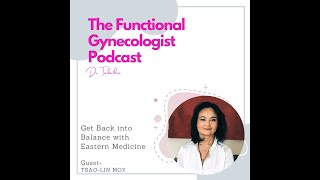
Tsao-Lin Moy, an East Asian medicine practitioner and fertility specialist, explains how acupuncture, herbal medicine, and nervous-system regulation support hormonal balance and conception. Eastern medicine treats the whole person and prevents illness, while Western medicine focuses on acute repair. Stress, sleep, and diet shape fertility outcomes.
Questions this video answers
About 85% (as stated in the episode).
www.integrativehealingarts.com (as stated in the episode).
contact@integrativehealingarts.com (as stated in the episode).
ChaoLin Moy (spelled out in episode as TSAO-LIN MOY).
Will I Ever Get Pregnant? The Smart Woman's Guide to Get Pregnant Naturally Over 40 — available on Amazon (as stated in the episode).
Chapters
Hi, I'm Dr. Tabitha, the functional gynecologist. I'm a board certified OB, GYN and functional medicine physician. I've embraced the world of functional medicine and wellness through my own personal health journey. And I'm super excited to share my wisdom and unique perspective as it pertains to women's health. So if you're struggling with hormone imbalance, weight gain period issues, anxiety, insomnia, you name it, then you've come to the right place. I want to be your functional gynecologist. So welcome. Hi friends. Welcome back. So this week we are talking about infertility again, but we're putting a little twist on it. We're talking about it from the point of view of an East Asian medicine practitioner. So I have Cho Lin Moi with me today and Cho is just amazing. She really comes at infertility from the angle of old world complete whole person integrative approach focusing on the mind body connection. She has an office in New York where she works with clients one on one. And she incorporates acupuncture and all of these healing modalities to support women's health and wellness. So Choi Lin, she is a natural fertility expert trained in East Asian medicine. Like I said, she. She's the founder of Integrative Healing Arts in New York City which utilizes acupuncture, herbal medicine and energy healing to treat patients. So cho has over 18 years of experience in alternative and Chinese medicine. She's a licensed acupuncturist. That's hard to say. She's an herbalist and the best selling author of Will I Ever Get Pregnant? The Smart Woman's Guide to Get pregnant naturally. Over 40. So her expertise in fertility helps couples conceive naturally using her fertility protocols in Chinese medicine. So Cho is really awesome. She's been featured on many media outlets. She's been on Dr. Oz, Metro Focus, Good Day New York, Bold TV and she's been in publications like well and Good, Ask Men Insider, Parenthood, Mind Body, Green, Eat this, Not that, Parents, Best Life Online and msn. So that's pretty impressive. She has this integrative approach of using ancient Eastern philosophy and healing methods while supporting western paradigms of health to achieve optimal health. So like I said, her specialty includes fragments fertility but also stress management, anxiety, immunity and sleep. Those are all important things that we're dealing with during COVID right now, I'll tell you that. I mean that's like the top list right there. So we're all over stressed. We're all wanting to strengthen our immune system, sleep Better have less stress, manage all our stuff.
Right?
So I love this conversation that I had with Cho because it just takes a different twist on things, like a different way of stepping back and looking at your body and your mind and how it interacts with the world and how we can intervene in a more beautiful, positive way to bring balance back into our system. So it's pretty, pretty cool conversation. So even if you're not trying to get pregnant or having issues like that, this is really good information just for health in general, for reclaiming your health for optimal health. I mean, she just hits on so much good information. So what I want you to do is I want you to think about what's going on with you right now. Where are your struggles?
Lying? What.
What issue are you trying to figure out? Or what issue is nagging you and you're trying to ignore and get rid of? Right. That may be a message from your body that you need to stop and listen. Like, hey, what is my body trying to tell me? How can I get in tune? How can I realign my mind, body connection and get back into balance? So I really want you to stay tuned for this episode. Listen for that golden nugget of something that you can take away from this that's going to make a shift in a positive direction for your health and your amazing life. So let's talk to Cho. Here we go. Well, welcome, Cho Lynn, to the Functional Gynecologist podcast.
Thank you for having me.
I'm super excited today because this is a great time topic that I really personally don't know much about. And so I'm excited to learn as well as my listeners, hopefully. So we're going to dive into, like, acupuncture and Chinese medicine and all that good stuff. So welcome.
Thank you.
Yes. So, okay, so you practice Eastern medicine, right? So we hear that term a lot. Eastern medicine, Western medicine. Can you just kind of explain to my listeners, what does that mean? What's the difference?
Okay, so compared. You mean compared to Western medicine? Yeah. Okay. So Eastern, or what we call East Asian medicine, is really an umbrella term for medicine and healing arts that are coming from China, Japan, Korea, and even in India. So it's really more based in a whole health model which we look at, which includes the physical, the spiritual, the energetic, and then also the emotion as part and parcel. And so when we look at a person, we look at their whole health, including their family, what's happening in their family, family history of health, and also their community. So there are many things that will show up for someone when they come into an office and they bring their entirety, you know, their whole life with them. And so the idea. So that's the difference is we're looking at a whole picture. And this, I would compare it to more of a Western model where people show up when they're sick. You know, so it's more of that. We call it more of a broken and fixed model and more the idea, which it comes from like an industrial revolution idea of like, that we are a bunch of body parts and we can replace them or there's just one part that is not working. And so that would be the difference. It's kind of a different perspective, right?
Yeah, definitely. When I think about Western medicine and just the creation of it came about to fight off bacteria and to heal soldiers, like you said, with broken body parts and to fix acute situations. But it never really was able to focus on prevention or handling of chronic disease, which is so different than acute care situations. You know, it's not like treating strep throat or an ear infection or a broken leg. The things that we deal with now, all of these, the obesity, the diabetes, the thyroid dysfunction, like that is where I think Eastern Asian medicine shines, because you're looking at the whole picture. You're taking so many other things into account that affect our bodies. Right.
One of the things that you mentioned, let's say obesity and this in the west, it's tremendous. Something like 70% of Americans are in that category, and also 42% are diabetic or already. And that creates a problem. I mean, an overall health problem. And so where we are right now is, well, we can do prevention for the people who don't have it, but also the people that do have it, it doesn't mean that they shouldn't be doing something else. And it's not like, okay, well, they're broken. Their only resource is going to be on diabetic medication. That the idea is if you can do more on your own. And that's also the idea of the Eastern medicine, is that the patient is very much involved. And the more the patient is involved, we know that there's more compliance and better outcomes. And there's research with that. When they're motivated to lose weight for a bigger purpose, they want to play with their kids. One of the examples I usually is someone will say, oh, I'm going to lose weight because I want to go to my son's wedding and I want to look good. And after that, a lot of times they gain the weight back. But if There bigger purpose that's in there, like kind of like a better life. Enjoying their children, having, you know, like more of a legacy to their health. Right. Because then your kids are. You're modeling for your kids, which is why they're generations. Right. And so having that bigger perspective that there's more to your health than just yourself, but how it affects other people around you. And that's also part of that idea that we're really interconnected with, you know, not. It's not just about me, like, who cares? But it's really like I need to be there for my child or my husband, my family, to. To participate in the community as well. Oh, I think that's important.
Yeah, exactly. And I love the idea of family members coming to appointments and being involved in care and decision making, you know, And I find that functional medicine and integrative medicine have kind of brought that eastern philosophy to the west. And they're really trying to show that we are a system of systems. We're all interconnected. You can't compartmentalize these body parts and expect to heal them. Right. I mean, when we. When I try to get patients to change their diet, for example, we got to get the husbands involved because they need to be supportive. They need to eat what their wives are cooking, or they need to get in on the plan or it's not gonna work. Right. I bet you see that all the time.
All the time. Well, actually. And it shows up with fertility, too. And that is. There's one. Usually one of the questions that I ask is, who's leading the char. There's one person is like, I want to have a baby or I want to have a baby. And it. There are things about our health, how we are, that can actually cause, you know, strife in a marriage, can strain, you know, when someone is sick in a partnership, that puts a lot of strain on a relationship.
Yeah.
Those are the dynamics we have to really, like, look at. It's. It's a bigger piece. Right. How everything is going to fit together.
Yeah. So I'm glad you brought the fertility issue up, because that is your specialty. So people are coming to you because they are struggling to get pregnant or they're concerned that it's not happening for them. And what is the biggest issue that you're finding? Is it diet? Is it stressed out lives? Is it just like they're not. The husband and wife aren't on the same team mentally? What's going on?
Well, I'd have to say it's. It's kind of a Little bit of both and all of it. And you know, one of the things that I believe is that, you know, there are many. Usually it's women that are coming, right? So there's that aspect of women are believing, oh, there's something wrong with me, am I getting pregnant? The more stressed out they get, the worse it like that affects their, the egg quality, it affects their cycle. And then when that happens, it just creates a triggering of irregular cycles and problems. So one thing that I would have to say that is with all of these is that there's missing that mind body connection. That's another difference with, let's say Eastern medicine is really recognizes that mind body connection and the techniques or the treatments such as acupuncture is something that, that connects the person, their nervous system, it taps into their nervous system and they experience that sensation of wellness which most people are so unaware of. Like they don't realize, like, oh, I'm in a deep relaxed state and being able to be connected with themselves, then they're better equipped to know what's right for them, what's not right for them. So that I would say is a big portion. And that's also why there's so much stress, because people feel stressed because one, they feel they don't have control, right? So if you feel you don't have control over your body, it's not working. The thing that you need to do is feel like recognize. No, you're in control. You're the author of your health destiny. I'm going to show you what you need to do to take these steps to get yourself into alignment. And so it means stuff like tracking your cycle. A lot of women and has nothing to do with how smart they are. We just don't learn about our bodies, right. And actually there's a lot of shame around our body. Oh, you know, I don't know what this is or I don't look or I don't I check. My app is going to tell me when I'm gonna have my period, right? So there's a lot of that disconnection from ourselves. And so that's really like kind of bringing things very simply to understanding your body. It's your, it's your machine. Literally if we want to like look and so you need to run it. And part of it is like you, this machine, like how fine tuned do you want it? You know, the cars that are, you know, the Maseratis and the Ferraris, they're in the shop all the time because they're going to be High performance. And for the most part, when we look at the. The model of broken and fix right before it breaks, it's not at its best, you know, at its best, health. And so this is the idea that we need to be in better health. Overall health, you know, like our sleep, the diet, the exercise, the stress management, like, all of those are part of a very healthy body. And a healthy body is one that is able to have good fertility. And so I hope I answered that question.
Yeah, I mean, you gave us so much good information. There's so much to unpack. I mean, just the one thing that struck me was Western women are taught to either feel burdened by their periods and their cycles or, like you said, ashamed. And so it's nothing that we celebrate or want to keep track of or even understand. It's like, get rid of this period. This is annoying me. I don't have time for these issues, you know, and then all of a sudden, they want to have a baby, and they're like, wait, I need a period and all of this, you know, and you've been neglecting it all of these years. So I love that you're bringing this to the forefront because it's so important for women to realize, like, our menstrual cycle is a vital sign. It's telling us so much about our health, and we should really be understanding it and be in tune with what it's telling us, because it will tell us, hey, you're way out of whack. You need to reel it in, right? And, oh, my gosh, the other thing that you brought up so many times, it's put on the woman. And, you know, as a conventional OB gyn, I was pretty much taught that you will get a semen analysis from the guy, and if his count's normal and he's got enough swimmers, then he's off the hook. He's good to go, like, his health really doesn't matter. And what a disservice we're doing women, because then we're putting it all on them and they're not getting pregnant, and we're like, there's something wrong with you. You know, and then they're feeling ashamed, when really it could be the guy who's drinking five beers every night or smoking pot or sitting on the couch.
I mean, it is a collaboration. And that's the first premise, really. And this kind of, like, speaks to women's health in a big way. You know, women initially are going to be like, oh, it's probably my fault, right? Because they're right. Oh, it's probably my fault. And to get back to, like, what do we call the period, they call it the curse. Yeah. Is it a curse? It's a beauty. You know, in Chinese medicine, the menstrual blood, they say it comes from heaven. It's heavenly. So it's literally this kind of the idea that as you reach a certain age, then you're kind of given this magical blood, which means now you will be able to create. Right. Because that's the onset of the. And so the idea, like, as a woman goes through the change, around 14, and she's 14, 15, she's developing that. It's then recognized that she now has this gift that she's going to be able to conceive. Right. And so this is a very different idea. Because the uterus is known, it's considered what they call an extraordinary vessel, and it's also known as the baby's palace.
Bumps explaining this. It's so beautiful. Yeah.
So the idea is that, like, women are given. It's not a curse, it's actually a blessing. Like, this idea of this particular. They called. It's called the Tian way, or like the. It comes from heaven. It's like the heavenly water that comes through you. That's, you know, like blessed water. You know, you're blessed that your body can now produce. To have a life, you know, to be able to carry and sustain a life, that is a beautiful gift, if that's what you, you know, and that's something like, wow, you know, like, this is huge to be able to have that. It's not a curse. I mean, it may be uncomfortable, but really, you think about it, this is, you know, this is how life is sustained.
Yeah. That's incredible. I wish we would take the moment to just think about it that way. And I'm thinking about my youngest daughter, who's now 10. I'm like, I need to have a different conversation with her. You know, I. So far, I've only had the anatomy conversation, and, like, here's what's actually going to happen physically. But I love that you reminded me that we need to talk about the innate beauty and the ability to create and what a blessing it is. So thank you, because that's really important.
You're welcome. Yeah, I mean, I think that that's also internal, like the emotion. So when women come and they're experiencing infertility, they do have a little bit of this, like, oh, my body's not doing what it's supposed to do. And it's like, oh, it's like more self negative versus okay, what do I need to do to help my body do what it will do naturally? And really that's what we're looking at. It's not unnatural, it's natural. And so it will take time. Look at the sleep, the diet, all of those things. And as you know as a doctor, that if there's some hormonal imbalance, it's not just affecting their reproduction, it affects their pituitary, it affects their thyroid, it affects like everything. It's not just kind of local. And so this is really looking at the bigger picture of health is going to be important for balance.
Yeah, exactly. And it's so important to get healthy before you get pregnant so that you don't have to go down the path of, you know, preeclampsia and gestational diabetes and massive weight gain that you can't get rid of after you deliver. And all these things that women struggle with. Postpartum depression. Oh, that's huge. You know, and so often it's just nutrient deficiencies and loss of that connection, that mind, body connection that you talk about or ability to handle stressors. So you mentioned acupuncture. Is that one of your main ways of healing?
Yes, actually, because acupuncture is a non drug. Right. So it's very safe. So any, anyone who is, if they are at the point where they're going to be going for fertility treatments at a, a fertility clinic, that it's not going to interfere with anything else they're doing. The idea is that we're helping the body come to a place of balance, which would be homeostasis. We could use the western term homeostasis. So where their sleep is better, their digestion is better, their stress levels, the cortisol goes down. Right. So all that extra weight gain. So one of the problems with stressors is that there's that extra cortisol that builds up and then what happens is that becomes a hormone disruptor. The more stressed you are, the more that the stress hormones are going to interfere with the reproductive hormones. And so you get that feedback, that negative feedback cycle. And so by using acupuncture, it taps into the nervous system, which they have. You know, studies have actually shown that it triggers parts of the nervous system which is the parasympathetic, which is the rest and digest. So someone who is totally stressed out, which women are worried about if they're going to be able to have a baby, what that does is that interrupts that stress cycle. So that is a big part. So that's like has to be anyone who is worried if they can have a baby. I don't think men really worry about that at all. Even though, you know. Now studies show that somewhere around 30 to 40% of the couples that experience infertility, it comes from the male. There's a problem on the male side, but there's a lot of focus on the woman needing to be fixed. So that pressure already there. And then if it's not happening, we look at, you know, sleep is disturbed emotionally, a lot more anxiety. If they had other problems before, like if they had an eating disorder or anything else that had been there previously, then that kind of kicks that makes the stakes even higher. And so the acupuncture is a great way for improving the hormonal balancing and the blood flow and better sleep, better digestion. Right. All of those things. And so actually feeling connected to the body as well. They can actually feel okay now this is what it feels like to be relaxed. And that's a place then they learn to be able to go back there. Then they know like, oh, am I really relaxed? And then they can do other things like meditate and do some yoga and change certain foods that actually. So they'll know what it feels like to feel better, you know, and that like gives them guidance. And the idea is they get the two go. They'll be able to do more on their own because oftentimes it's like they're doing everything. Yeah, they're not having coffee, they're, they're eating this, they're eating that, they're taking these vitamins and none of it's working. And really the, the one thing is, is that they need to just like allow, like don't get over focused on it and just really your body needs to have like a break to be able to assimilate and integrate as opposed to like forcing things. Right?
Yeah. We never have any downtime to process our thoughts or emotions. We are just a society of go, go, go. You know, women are doing it all, being it all, having it all. We I'm like, we're barely breathing. So I love this idea of acupuncture that is just reconnecting your mind to your body, calming your crazy cortisol level. Right. How often do we need to do this for it to be effective?
Well, it really depends on the individual. When I work with someone, it's a personalized plan. What I would say depending on where a woman is and a man in their fertility journey, it could Be twice a week, you know, so that they get stable. And then. And really, we're looking at everything, including tracking the cycle, because we're going to need to look at, like, what changes. And I also give them homework.
Because.
They have to be involved. Otherwise they're just like, okay, just come here. And then you fix me. Like, well, I'm gonna help you to. So that your body heals itself. And then you're going to be doing things also so that you get a stronger mind, body connection and then really be able to be in charge of it. Right. Because as you know, as a physician, that if your patient has, like, details about their health and they're like, okay, there's this in my cycle. Then I notice day five, this thing happens, and then you're going, okay, I have a much better idea of what's also going on. And really, for them to be empowered. Right. With their own body so that they know. They need to know.
Yeah, exactly. I feel like that is where the answers lie. Being proactive with your health and being like a team member of your health care. Right. Not just going to the doctor and expecting the answer to be given or the pill or the surgery to be given to change the outcome. Like, you need to be proactive, take control, make the decisions, be informed, and that is going to be where you reclaim your health. So I love that you do it that way. I just think that's the only true way to heal. Right. And you have an amazing success rate, don't you?
Yes, I have a very good success rate. I guess it's an 85% success rate. But what I have to say, it's not me. It's really this collaboration. Right. So that's the end, I would say A lot of women, they come to me and they've had a lot of failure before. And in some cases, they were kind of told, like, you know, there's not really much hope. Maybe you need a surrogate or you need a donor egg or there's a lot. And I actually believe that for most women, they can get pregnant naturally, that there is. It's a matter of really, like, working at it. Not to say don't do anything else, but there's really a lot that can be done naturally to help them and their fertility. For sure.
Yeah. I mean, I can't tell you how many times as an OB that I've had patients say, I finally gave up. We went, you know, to talk to the adoption agency, and I finally got pregnant. Like, as soon as they release all of that Stress. Stress and that burden they're carrying. Their body says, okay, now we feel safe. Let's get pregnant.
You know, like, yeah, the pressure is off. It's like taking an exam. You know, if you're just like doing a practice exam, it's. You're like acing it. But when it's the real deal, you're like, there's another thing too, and that is that I believe that we are more than our physical body and that infertility is not just biology and hormones and that there is something else that takes place to bring us into alignment so that we can actually have that, you know, that heavenly connection we could call it to come in, and that we are that vessel for life. And so that is an important aspect that also is something that is in Eastern medicine, that there is a spiritual part of the medicine that recognizes that there's more that's there. Right. That's something to be a different.
Yeah, I think that is such an important part. And I think a lot of people are afraid to talk about that because they don't want women to feel bad or guilty, like it's their fault necessarily, they can't get pregnant, you know, but if we could just understand that maybe baggage we're carrying or bad relationships we're in, you know, maybe our body is trying to protect us in the situation and our future children, you know, and just trust in the universe that, you know, listen to your body and it will guide you back to health and then you'll get pregnant. I mean, I never count anybody out. When somebody wants to have a baby, like you said, doesn't matter what the age. I think the potential is there. We just need to make sure your body's functioning optimally and that your mind, body are in alignment and that you have dealt with all that stuff, right?
Yeah, yeah. It's just. It's a lot. I mean, the thing is, is that today, where we like delivery next day, and when it takes time, then it feels like it's too long, but there's a certain amount of time that it takes. And as, you know, like, you know, with a woman that her cycle comes once a month and there are these windows and of fertility which are going to be maximum, and everything has to really kind of line up. Right. And so then statistically they get statistics in there that even if everything lines up, they say it's like 25%, but there are probably things that are not being measured that then make. Makes it seem like it's harder. But there's more there. I Mean, it's just like. But you got to get yourself everything to be in alignment.
Yeah, exactly. So are women coming to you at the point where they've already been trying to get pregnant and they're frustrated and at their wit's end?
Yes, actually, most of the women that come to me, they get referred to me because their friend said, you should go and see Chip. And they had been trying, maybe they had before they got diagnosed with polycystic ovary syndrome, or maybe they found out that they might have endometriosis and some fibroids there. There's that many of them they try on their own. It doesn't happen. For a certain point. There's this thing like they just wanted to be natural and they don't want to think about it. They wanted, they don't want to do it during the fertile time because it has to be romantic. And. And then it doesn't happen. And then they start tracking it with their phone app and then it's not happening. And then they go to a fertility doctor that starts, you know, taking, making tests and stuff. And then they're like, okay, you're over 35. Oh, you're.
Yeah, we got to do this today.
You got to do like. And then they start to spin out and they, maybe they go like, okay, we'll do an IUI or. And then there's a point where they're kind of in, in like I guess a funnel or in the next thing and the next hormone. And they'll go, wait a second, wait a second. This. There's something wrong. It doesn't, it's not in a line. There's something not quite right with the story. And then what they'll do is they'll start to search and then someone will say, why don't you come and see me? Go through their history. They get treated for several months and it's really like, let's get you regulated and get your life into balance. So you can of think even like think clearly about what's your next step going to be? Like, decision to start injecting hormones. And you know, once, once you're in, in that, in that process, it's extremely stressful. You know, 7am Every day, get your blood taken, start in jet layer. There are a lot of things and who knows if it's going to work. And so they're usually at that point where they don't know what to do. They've had a lot of failure and so they want to do something different. And that's a lot of the time, that's when they come to see me. But my patients that come and see me for regular back pain, stress, and then when they want to have a baby, it's so much easier because all along we've been working with them and so it's not the same level of feeling of desperation like it has to happen now. So that's like part of the process is really to let them know this is a process to a certain degree. You just need to go with. You just need to kind of surrender to the process. Just allow your body to do what it's going to do naturally. Right?
Yeah. That's so awesome. I love that you are out there helping women and you're in New York City, so love the world and so much that you do is hands on. So they do need to come see you in your office a lot of the times.
Right.
But I just. 85%, that's incredible. I mean, if you can avoid IVF and not have to do injections, I mean, now they're saying that those possibly are causing ovarian cancer in the future. And I mean, it's just so much that we don't know. Right. So.
We do know about the hormones that they do because they're stimulating, you know, the turnover of cells. And so all of the hormone stuff is risky.
Yeah, exactly. So I love that women can come see you and do it the right way. I love that. So where can women find you? Ciao.
Okay, well, my website is www.integrative healingarts.com. if someone wants to reach out to me, my email is contact integrativehealingarts.com and yeah, I would love to, you know, hear from, you know, women or people, whoever is interested. Oftentimes it might be a parent that's like, my daughter's trying to get pregnant or my niece is trying to get pregnant or something like that.
Yeah, well, I'll have all those links in my show notes because it's so important. I want women to be able to connect with you and get the help that they need because what you're doing is so important and, and it works. So that's amazing.
Yeah. And I want women to know that they're like, they have in their this potential. I mean, this is a creative energy that women have. And it's, you know, that's like one of the things. If you want to have a baby, you have that potential. And let's like just help. Let's help you get that out there so that you can have a baby.
Yeah, yeah. And Would you say that the. The first thing women need to do is just get control of their stress? Do you see that making a huge difference?
I mean, I see that makes a difference with, like. But yes. Yes, with everyone. And part of that is by that. Again, going back to the mind, body aspect, feeling stressed usually comes from feeling like you're out of control. Right. And that's usually if you don't know if your head is up here and your body is, you know, down there. So the idea of connecting yourself and then you really feel like, okay, you're in a much better state.
Yeah, exactly. Well, this has been such an important conversation. Thank you for all your wisdom. I love it.
Thanks for having me. I love talking about this stuff because I like, you know, I want as many people to know that there are options that are out there.
Yeah, exactly. Well, I think we hit on a lot of important information, and I hope everybody reaches out to you. Are you on Facebook or Instagram?
Yes, I am. I'm on Instagram and it's Cholin Moy. That's T S A O L I N M O Y. Also the same for Facebook. And I think in the bio, there's also. I wrote the book Will I Ever Get Pregnant? The Smart Woman's Guide to Get pregnant naturally over 40. And that's also. That's on Amazon.
It's on Amazon. Awesome. Okay, well, I have all those links so people can check you out. It's been so good talking.
Thank you. Thank you so much.
Yes, thank you. Take care.
Okay, bye.
All right. Wasn't it beautiful? That was a really good episode. I love connecting with people that are doing things differently and learning new things, especially like ancient healing techniques, things that have been used for thousands of years that we know work, and we just need to embrace them and utilize them. So I love that she is, you know, so passionate about helping women overcome their infertility and get as healthy as they can. So, like she mentioned, she wrote the amazing book Will I Ever Get Pregnant? The Smart Woman's Guide to Get pregnant naturally over 40. That is on Amazon. Amazon. But I will have the link in my show notes just so that you can grab it easily. And I'll have the link for Integrative Healing Arts so that you can connect with her if you want to do that. Like I said, she's in New York City. You can always go see her or just connect with her on Facebook and Instagram. She is a wealth of knowledge. She's been doing this for so long, and she gets amazing results so definitely connect with Cho. And thank you for staying tuned, for listening, watching whatever you're doing. It's so important that we keep trying to be our best selves, and all we can do is tell each other's stories, learn from each other, share each other's information, be open to new ideas and ways of doing things right. I mean, that is where the magic happens. What I learned in Medical School 20 years ago was already antiquated and only helps a small percentage of our issues in our population. You know, that's good for acute care, like fix my leg, fix my ear infection, that kind of thing. But really getting us healthy and having our bodies feel safe enough to continue. See, that's a whole nother story. Like, we need to decrease our toxic burdens. We need to be nourishing ourselves and giving it what it needs to function optimally, to create another human being, a human life, and to be healthy, doing it so that we don't destroy our body in the process. So I just love bringing this information to you. So if you are finding any value in this, I really want you to hit this, the subscribe button. Share it with all your friends, leave me comments, tell me what you want to hear. You know, when you hit the subscribe button and rate it, that tells itunes that you care about this kind of information. And it's important that we have a voice and a choice of what's out there, what we're listening to. And so if you're finding value, I would really love for you to hit that subscribe button and hit give me a five star rating because that makes all the difference. I want to keep serving you ladies. I do this for you. You know, I don't get paid. This is a side gig. I just feel super passionate about bringing you the information so that you can make better informed choices. There's more to reclaiming your health than what the conventional world has given you. So I want you to be a proactive member of reclaiming your health. I want you to be informed, and that's why I do this. So thank you for being on this journey with me and trusting me to be your functional gynecologist. So go have an amazing kick ass week and please come back next time. Share with your friends and shoot me your question. All right, I love you ladies. Bye.








