Get Ready to Look Younger for Life with Dr. Anthony Youn
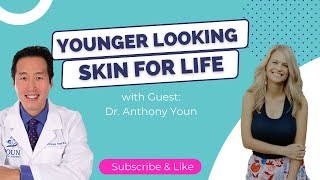
Plastic surgeon Dr. Anthony Youn explains autojuvenation, using your body's own repair systems to slow skin aging. He breaks down five causes of aging, including 1% annual collagen loss, and offers a 21-day plan: cut gluten, dairy, and sugar, then add two days a week of 16-hour fasts to trigger cellular cleanup.
Questions this video answers
Nutrient depletion; collagen degradation; chronic inflammation; oxidation/free radicals; buildup of cellular waste.
About 1% per year generally; up to about 2% per year for women after menopause.
Week 1: remove gluten, dairy, ultra-processed foods and added sugars. Weeks 2–3: intermittent fast two days per week (stop eating at 8pm, then not until noon), and eat autophagy-promoting foods (omega-3 rich cold-water fish, monounsaturated fats like olive oil/avocados/nuts, and polyphenol-rich foods).
Book: Younger for Life. Website: autojuvenation.com.
Chapters
Hi, I'm Dr. Tabitha, the gutsy gynecologist. I'm a triple board certified, OB, GYN and Functional Medicine physician. I've embraced the world of functional medicine and wellness through my own personal health journey. And I'm super excited to share my wisdom and unique perspective as it pertains to women's health. After caring for thousands of women, I've come to realize that your gut health determines your gyne health and your overall health. And it's a super gutsy thing for me to go against conventional gynecology practice to bring you the truth. No more band aid medicine, ladies. We're talking root cause resolution on this show. So if you're struggling with hormone imbalance, weight gain, period issues, anxiety, insomnia, you name it, then you've come to the right place. And I want to be your gutsy gynecologist. So welcome. Hello. Welcome back. I'm so excited for this week's episode because I have a guest. I know I've been doing some solo episodes lately. A returning guest, Dr. Tony Yun. He was on the show before. Let me see. He was episode 177. Look younger without plastic surgery. So Tony is a fellow Michigander. He lives on the opposite side of Michigan than I do. But we both went to Michigan State and we both have a passion for holistic health care. Coming from the conventional space and then finding this whole world of health and wellness, we have this understanding of what each other have gone through as a conventional surgeon going into this world of health and wellness. And we're just really excited to bring you everything that we continue to study and learn. And Dr. Yoon is bringing you all of the science, all of the nerdy stuff that's really happening or could happen inside your body. But he explains it in such an easy to understand way. And today we're going to talk about your skin and how you look and aging and how to reverse the aging process or slow it down. Because that's what we're looking for. Right, ladies? So Dr. Yoon has a new book coming out called Younger for Life. Feel great. Look your best with the new science of autojuvenation. So he's going to unpack. What the heck is autojuvenation? And how do you tap into that process and really support your body's own innate intelligence, which I talk about all the time. How do you really support your body to heal and to be healthy and well and slow down the aging? It turns out aging quicker happens because of stuff going on in our environment and in our diet and in our lifestyle. And so he's gonna unpack all that for you so you can really understand that. But you want to check out his book because he's got a 21 day jump start of how to really tackle all of this and reverse it, turn it around, do something different. So we also touch on fillers and laser light therapy and, and the new at home techniques and regimens that you can do. Supplementation, skin care, topical products. It's a great episode. I loved it. But let me just sing his praises. Dr. Anthony Yoon is one of the most trusted and well known plastic surgeons in the world. Recognized as a leader in the field and followed by millions. He is highly valued for his honest approach and ability to speak to all areas of health and well being, not just plastic surgery. He's the most vowel plastic surgeon on tik tok and YouTube. He hosts the popular podcast the holistic plastic surgery show which I've been on. That was an awesome episode. Five things your conventional gynecologist isn't telling you. Tony has appeared on countless national TV shows, radio programs, print, online publications, you name it. So I'm really excited that he's tackling this anti aging movement because I'll be honest with you, one of the first ways I knew that I was going into this perimenopausal shift was that I looked different in the mirror. My face was changing. And we're going to talk about why the heck that happens. So stay tuned and listen to that part of the episode because everybody looks at me and they're like, oh, you don't have a lot of wrinkles. But it's not, not always about wrinkles. There's other things happening that change how you look and make you look older. So we're going to talk about all of that. I'm really excited. It's such a good episode. So grab his book, the links are in the show notes and head over to his podcast and listen to it. Oh my gosh. And if you don't follow him on YouTube or Tik Tok, you are missing out on your oxytocin release for the day. Like, he is hilarious. I am always laughing when I'm around Tony. My face starts to hurt because I'm smiling so much. So you have to follow him. You have to check him out. He's like a nice comic relief during the day. So. All right, let's jump into this episode. Here we go. Well, welcome Dr. Yoon back to the gutsy gynecologist show.
Thank you so much for having me, Tabitha. I really appreciate it.
Yeah. I'm so excited for this conversation because when I was looking through your book, I was like, oh, my gosh, this is everything I talk about. This is what my ladies need. And we don't often talk about it in relation to skin. You know, we're talking about for weight and hormone balance and feeling good. But you have a whole different spin on this.
Yeah. You know, it's funny because I, you know, we've got a lot of friends in the holistic space, alternative medicine space, and if you ask them, like, oh, what do I do to get beautiful, healthy skin? They'll tell you to heal their gut. Heal your gut, heal your gut. And then we've got friends who are dermatologists, and they'll say, oh, you know, use sunscreen and use a retinol. And then if you ask a plastic surgeon, they'll say, oh, beautiful, healthy skin. Use Botox and get a facelift. And so the way I look at it, kind of like yourself, is probably more of a true integrative approach, is how do you combine alternative medicine with traditional medicine to get the best of both worlds? And so it's. It's this concept of auto rejuvenation where you're using your body's own regenerative abilities to rejuvenate itself. But the key is that you have to give it the right tools and the right environment in order for it to do so.
Oh, my gosh, I love that. Autojuvenation. I couldn't agree more. Our bodies have this innate intelligence that they know how to heal and stay in balance. Right. Like we're surgical surgeons. We will cut people open and, and suture them back together, but we don't actually heal the. The skin closed. Right. That is all a process happening from the body.
Yeah. And when you think about it, you know, for me, I do a lot of. I still operate two days a week. I do all cosmetic surgery. And when you think about, you know, for me, I take somebody who is healthy, I make them unhealthy, and then we expect that they're going to be healthy again. Like, when you think about it, like, the body is. Is an amazing thing. Thing, because it wants to be healthy, it wants to be youthful, it wants to be active. You know, it wants to be energetic. But unfortunately, today's society and the way that we live our lives in general isn't all that conducive to that. So it's kind of getting back to those roots. A lot of what you talk about, but looking at it from more of a skin and anti aging perspective.
Okay, so let's start off with what are we doing to destroy our skin? You mentioned the gut. Is that an important piece of, of it?
It definitely is. You know, and for me, the way I look at aging of the skin is that there are five main causes of aging of the skin that I focus on. And the food and the health of your gut is a huge part of almost all of them. So the first cause of aging of the skin is nutrient depletion. Our food is not as nutritious as it used to be. And if we're not getting enough nutrients in our body, our skin and the overall kind of how our body works is going to suffer from it. Number two is collagen degradation. 70 to 80% of our skin is made up of collagen, and we lose about 1% of the thickness of our collagen every year. Women after menopause gets up to 2% a year. And so eating some, you know, collagen is a protein. You have to eat sufficient amounts of protein and once again, diet having a big part of that. Third cause of aging of the skin is chronic inflammation. Chronic inflammation, Big issue with the skin that can definitely damage the skin. Main cause of chronic inflammation, or a big one, is sugar. Fourth cause of aging of the skin is oxidation or free radicals. And these are basically damaging molecules that are made by our body, by our own metabolism, but they're also ingested in the form of ultra processed foods. You can get it from pollution in the air, from cigarette smoke, from automobile exhaust. And so our body's defense against oxidation and free radicals are antioxidants, which, you know, people hear a lot about those. And then the final cause of aging of the skin is a buildup of cellular waste. And this is something where the intermittent fasting can really, really come into play.
I love that. Okay, so those are the five basic areas. And if you're looking at your own skin, or you as the surgeon, you're looking at your patient, Are you able to evaluate what you think those areas are for that person, or how do you evaluate that?
Well, really, I think all five of those are kind of omnipresent. You know, I mean, we, in general, some of them will overlap because let's say if somebody is eating a diet high in processed and heavily processed foods, then most likely you're also going to probably be having a diet that's high in excess sugar. And so not only are you going to get the oxidation causing premature aging, but you're also Going to most likely have high amounts of chronic inflammation because those diets kind of work hand in hand. And then when you look at, let's say, buildup of cellular waste, a big cause of the buildup of cellular waste is the fact that so many of us are just grazing all day, that we're just constantly eating and we're not taking time off to allow our gut to rest and for our body to undergo those changes and those kind of intracellular cleanup changes that we can get from intermittent fasting. And so, yeah, I think really, when you look at it, all of us to an extent, are dealing with this in our own ways. It's just that there are some people where their actions and, you know, what they eat and their environment around them makes it potentially a lot worse. And that's one reason why we see some people that age very slowly and other people that seem to age way prematurely.
Absolutely. And I think that we forget about that nutrient depletion piece of it, because if we're eating all day long, well, then we must be getting everything we need. Right. That's the kind of the mentality of it. And now we have this society of obese people who are actually malnourished. They actually don't have enough vitamins and minerals, even though they're overweight. So it's not like the little Ethiopian kid that we used to see on TV in the 80s. Right. I mean, if you are overweight, you probably have some major deficits deficiencies. What are the most common vitamin and mineral deficiencies that show up as skin issues?
Well, you know, it's interesting. There's this belief in alternative medicine that our soil is. Has been depleted of nutrients from industrial farming practices, you know, and that's a belief that we, a lot of us, have. And you hear that, I'm sure, from a lot of people. But there actually was a study that looked at that specifically, and that study did show they actually looked at fruits and vegetables here in the United States from the years 1950 to 1999. So this ended 24 years ago, the study. But they found a significant reduction in at least six key nutrients in fruits and vegetables from 1999, you know, way back to 1950s. So it is true. And of those six, there are three that really stood out to me. Vitamin C, protein and iron. Vitamin C, protein. I mean, all three of these absolutely important for your skin, especially protein and vitamin C. And so this was actual proof. And this study ended way back in 99. So you can imagine what it's like nowadays. Where it's even potentially worse because I would expect their soil is even more depleted. And so those are just two of them. That has actually been shown in a real study to find that we are, that our, that the produce that we're eating is not as nutritious as it used to be. We're not getting the vitamin C we used to, we're not getting the protein that we used to. At minimum, those two are super important.
And why is vitamin C so important for skin? Let me just tell you. I have a 13 year old and since she was about 12, her life is all about Sephora and Ulta and skin care. Like these tweens are just obsessed with their skin care regimen. And I see the vitamin C everywhere in, in those places. So let's talk about that.
So vitamin C is important for the skin for two main things. The first one goes back to like middle school biology and we were all taught this phenomenon called scurvy, this condition where back in the age of explorers, you would have people who would go on these ships exploring for months, even years on end. They would bring fresh fruits and vegetables with them initially when they left, but then they would then cross the Atlantic and they would be for weeks, if not months without fresh fruits and vegetables. And then they would get scurvy because they would run out of vitamin C. So vitamin C is an essential co factor for the production of collagen. And as I mentioned earlier, collagen composes 70 to 80% of our skin. It's the part of our skin that makes our skin nice and tight and strong. And I kind of liken it to the logs of a log cabin. Those logs, when we're younger, are nice and tight and they're strong. And as we get older, they start to fall apart. Vitamin C, super important once again for creation of that collagen. But the second thing, just as important, is that it is probably the easiest antioxidant for us to obtain. Okay. Antioxidants fight free radicals. And I mentioned earlier that oxidation and free radicals are one of the main causes of aging of our skin. And so essentially what it is is just the fact that we're alive. Our bodies produce waste products called free radicals. And these free radicals can damage the DNA of our cells if they become too numerous. Now, our body also produces antioxidants to neutralize free radicals and so that these free radicals don't attack our DNA and cause premature aging and even potential cancer and stuff. So somebody like you, Tabitha, where you have focused on living a healthy Clean life. You're not eating ultra processed foods, you're not indulging in smoking and a lot of these other types of activities. You probably have pretty good homeostasis, meaning that the amount of, of antioxidants that's produced by your body is enough to kind of neutralize those free radicals. But if somebody is not leading that type of lifestyle, they're eating a lot of ultra processed foods, they're smoking, you know, they're, you know, exposed to a lot of environmental toxins, then those free radicals can actually overload the body's natural antioxidants and cause the damage to the DNA. That's where the antioxidants come in that you take either by mouth, let's say by eating, by taking a vitamin C supplement or even better, eating vitamin C rich foods like colorful fruits and vegetables. And you can get on top of that, apply vitamin C to the surface of your skin like what your daughter is doing to fight the free radicals that are directly impacting the surface of the skin as well. So it's really an inside out type of a deal with, with antioxidants you want to take them by mouth in food form you can also take the supplements, but obviously you can't out supplement a bad diet. But super important, put it on the surface of your skin every morning to fight those free radicals and protect your skin throughout the day.
Absolutely. And you, so we, you've talked about this oxidation process where things are getting damaged, the cells are damaged, we need to heal them. What would you say is the most or is the number one reason for that? Was it sugar? Is that what you mentioned?
Well, that's going to be chronic inflammation. So the main cause of oxidation that's going to be really probably for our lifestyle in general in the United States, that's going to be the ultra processed foods. Because ultra processed foods are actually filled with free radicals. Now it's possible maybe 50 years ago the, the biggest source may have been smoking because so much of the, of our population was smoking. But I do think in general 50 years ago we weren't eating quite as many ultra processed foods as we are day. So I, and I haven't seen a study on this. This is just my impression that I would probably say ultra processed foods may be the biggest source of free radicals today. But that's my, my, my guess. Now chronic inflammation, that's another cause of aging of the skin. And the big contributor to that is sugar. You know, if I had to pick one type of food that really anti ages the Skin or. Or prematurely ages the skin. I'm sorry, one food that prematurely ages the skin the most, it would be sugar. You know, I put sugar as the number one ager of our skin, diet wise, followed by after. That would be the ultra processed foods. And sugar does this by a couple of different processes. It does it by the process of glycation, where literally the sugar will bond to the collagen of your skin. And I mentioned earlier how the collagen, they're like the logs of a log cabin, and those logs start to fray and fall apart as we get older. That's one reason why a skin feels rougher in texture and more wrinkled and drier as we get older. Well, what sugar will do is it will literally bond to that collagen and cause that collagen to become kinked permanently. And so ideally, you want that collagen to be nice and tight. Now the sugar bonds to it, it becomes kinked. Those are called advanced glycation end products, or ages, appropriately titled. And so basically, sugar will literally bond to the collagen of your skin, causing it to become kink, causing your skin to become prematurely aged, but also something that you have covered on your podcast before. Chronic sugar spikes cause chronic insulin spikes. Chronic insulin spikes can lead to insulin resistance, and that can cause chronic inflammation as well.
Gosh, I'm so glad that there is a plastic surgeon calling this out. This is so important. I think that, you know, the majority of women listening are probably north of 40, and we just think we can eat the way we did when we're 20 and 30 and get away with it, and we really can't. It shows up on our skin, it shows up on our body. And I know for me, that was one of the biggest things I had to break up with sugar. I had to break that addiction because it was aging me. Not only was it destroying my brain, I wasn't able to think straight and I couldn't get the weight off. But you're right, it changes your collagen and how you look in addition to. Then your hormones are shifting and you're losing the protection of estrogen. That's a whole nother story, right? But, yeah, this is definitely something that all women can take control of and handle, right?
Yeah. And I think, you know, for me, I've. After figuring this out, you know, for a long time, I'm like you. I went through traditional medical training. I got my MD at Michigan State University. I did three years of general surgery residency. There you go. Go white. I got two years of Plastic surgery residency and I did a fellowship in cosmetic plastic surgery. And throughout that entire time of my training, I had almost no training or education really in nutrition or preventative medicine to slow down the aging process. Like, I got really good at doing surgery because they were great at teaching that, but anything other than that, really, we just didn't learn. And so I got to a point in my practice where I realized that I didn't know what I didn't know.
Right.
And this is really important because a lot of physicians never get to this point where you think that what you were taught, that's it, like that you know it all, like that's all of medicine. And I think you and I have realized after being in practice for a while, it's like, wait a minute. There is an entire spectrum of being healthy and of wellness that we just have not been trained in. And we need to learn that because otherwise really you're only treating half of medicine like the other half is the preventative part. It's finding out the root causes of why people are, you know, having diseases, why, for me, why they're aging prematurely and how do we prevent that from happening. And so I really went down the rabbit hole for that for many years and created this concept of autojuvenation which focuses on five main things and it is what you eat, when you eat nutritional supplements, skincare and non invasive treatments. And I feel very strongly that if you focus on those five things, that the vast majority, maybe 80 to 90% of people can turn back the clock. They can have beautiful, younger, radiant looking skin and hopefully not feel the need to have to go into the knife to get to where they want to be.
Right. Well, I just appreciate that so much because I, I know I was a fellow surgeon and surgeons like do surgery, right? That's why we go into it.
Cut us to cure. Right.
I loved being a surgeon, but it's not always the right answer, it's not always the way. So I love that you are showing women that they can avoid going under the knife by doing these five things, focusing on these areas. So let's talk about it. What to eat and when. Because now you're speaking my language. Love fasting for women. I think it's so helpful. Tell me what you think about fasting.
So, you know, this is something that, once again, I was. We didn't talk anything about this during my training. You go to a plastic surgery meeting and nobody talks about it. And even, you know, interestingly, you know, I still go to my annual meetings for plastic Surgeons, and they provide us lunch. And what's in the lunch? It's a box lunch with usually like a turkey, cheese and ham sandwich on white bread. They give you a bag of chips and then they give you like a cookie. Yeah, like a processed cookie. It's not even like a cookie that a mom made. It's like uber processed cookie and then a can of soda pop. Like that's the. And that's kind of what everybody has, you know, because there's no knowledge of kind of how nutrition plays a huge part in how our skin ages. Once again, people don't know what they don't know, and that's the issue. So where fasting comes in with this really, is this the fact that once again our bodies are continuing, you know, we're continually eating here in our society. And what happens when you continually eat is that your body, your cells can fill up with intracellular waste. And these are organelles, these are used proteins, these are even old discarded mitochondria. And as just the fact that we're getting older, the fact that our body is alive, our cells can fill up with this intracellular waste. But the amazing thing is our body has a recycling process where it can get rid of this waste naturally by using it as fuel. And that's called autophagy. Autophagy means self eating. And essentially is this process where our bodies will automatically use this intracellular waste for energy, and then that helps to clean up the inside of the cells, causing the cells to function more efficiently, effectively, more youthfully. So this is kind of our own body's intracellular rejuvenating process. Kind of the idea of autojuvenation, you know, using your body's own regenerative abilities to rejuvenate itself. But the key with autophagy, and the reason why we don't see it as much in our society today, is because you have to stop eating for a while for that to happen. You know, some people believe you have to stop eating for a minimum of 12 hours. In my book, I do recommend 16 hours. Ideally, yeah. But the idea is that your body has to stop getting all this fuel provided to it and then allow it to, to allow this process to occur, to essentially clean out your cells from the inside out.
Exactly. It's so important to allow that process and support that process to happen on a semi regular basis. You know, when I run my fasting programs, I try to push the 16 to 24 hour window, you know, a couple times a month or for some women, they can handle it. Once A week. What are you recommending?
So, yeah, so that's a great question. We have a 21 day jumpstart in my book. And what we do is we start off in the first week and this is something where we tested on people and found after doing this 21 day jump start, that they would have skin that was radiant, it looked more youthful. They would have. They go out with their friends or family, they wouldn't know that they're doing this jumpstart. And they would ask them like, wow, what are you doing with your skin? It looks fantastic. And we even had some people who were stopped by strangers on the street saying, hey, I just need to ask you, like, what your skin care regimen is, because your skin looks really nice.
I love that.
Yeah. So this is a simple 21 day jumpstart where for the first week basically we cleaned up their diet. So we got rid of gluten, we got rid of dairy, we got rid of ultra processed foods and foods with added sugars. And so we kind of cleaned up the diet for a week. We put them on a very specific but simple skincare regimen and a number of supplements, but literally five different types of supplements, all very basic stuff. And then for weeks two and three, we had them intermittent fast, just two days each week. Okay, so for two days each week, they would intermittent fast where they would stop eating at 8pm and then not eat until noon the next day. Drinking water, coffee, tea is fine as long as you don't put anything in them. And then we did something that was a little different that I haven't seen anybody do. But there are certain foods that we do believe that can help to stimulate autophagy. Foods that even though you're eating them, your body may still continue with the autophagy process. So one thing that we tested was whether if somebody did an intermittent fast for 16 hours and then for the rest of the day, if they just ate those foods that promoted autophagy, could that potentially help them? And there are some studies to show that that may be the case. And so those foods are foods that are rich in omega 3 fatty acids, like cold water fish that are rich in monounsaturated fatty acids, like olives, olive oil, avocados, nuts and seeds, and foods that are rich in polyphenols. So these two, two type of groups of foods, foods that are healthy fats and polyphenols, appear to potentially stimulate the autophagy process, possibly even while you're eating. And so we kept them on that for the rest of the day we did that for the weeks two and three, just two days a week, each week where you would fast and at the end of that, just found these great results.
Oh, my gosh, I love that so much. I mean, it really does sound a lot like how I live and how I eat. And I'll tell you, I get a lot of compliments on my skin and my age. Like, you know, I'm pushing the big five zero and that's. I got a five year old and you couldn't tell.
Yeah. You know, I thought you were 70. No, I'm just joking. I thought you're 12. I told people online. You know, it's funny, Tabitha, I tell people online, they ask me all the time, how old are you? And I'm like, I'm 88. Honestly, not 88. And some people, believe me, they're like, wow, you look great for 88. I'm like, I know, Pretty impressive, huh? And then other people, they'll ask me and I'm like, oh, I'm. I'm 25. They're like, oh, wow, you got to try your own skincare, buddy. So it's like, but you look fantastic. I would never. I mean, I think you look at least 10, 15 years younger than you really are. And you know, I've met Tabitha in person many times. I'll tell you, she looks the same in person as what you see her.
Oh, my gosh, you're so sweet. Well, part of it's because I'm laughing the whole time from you and everybody looks better when they laugh. So. No, I just want to say, like, that sounds like an amazing 21 day jumpstart. I mean, that is how I live. That is my daily choices. I try to avoid gluten and sugar and dairy. I try to do intermittent fasting and time restricted feeding all the stuff and make sure I'm getting the antioxidants in. Another thing I would love to just have you touch on is the outpatient procedures that people can do, like red light therapy. Now you can do this kind of stuff at home, like all these med spa things that used to be crazy expensive. Now we're seeing the at home versions. Are they any good?
Yeah. So, I mean, really, if I were to pick one good bang for your buck if, let's say you've got follow, you know, I know you know, you're in west Michigan, I'm near Detroit. And there's a lot of areas between us, you know, where they don't have med spas or they don't have dermatologists and places you can go. And so really if you're listening to this and you and you're like, hey, I'm on a strict budget or I don't have access to a med spa, I don't want to drive two hours to get there, then red light therapy I think is a great option. I think bang for your buck is fantastic. Red light therapy comes in many forms. You can get at least expensive. It's like a hand handheld device. You can treat like a quadrant of your face at a time. I don't know, it's kind of a pain, so I wouldn't, it's not my number one way. But you can get tabletop devices. You can get. There's one called the loom box that I'm a fan of. You can get these creepy looking masks that you wear around and scare your spouse, you know, while you wear that. And then there's like beds that you can even get into. But I think really red light therapy is a great option for overall anti aging. The belief on how works is that the energy from the red light helps to power your mitochondria. The mitochondria are the powerhouses of the cells and it causes ideally those cells to produce or the mitochondria to produce more ATP, which is energy. And so essentially you are energizing your cells to become more youthful. And there are split face studies that have been done on red light therapy where they would take the face split in half, not surgically, but split in half and treat one half the face with a sham laser and the other half with a red light therapy device and find a significant improvement in collagen, elastin, wrinkles and skin hydration. So it definitely helps. There are a lot of studies out there that, that do support red light therapy and its benefits.
That's awesome. Okay, and how about hyperpigmentation? Because I know a lot of women complain about this because of birth control pills sometimes that synthetic estrogen can cause melasma and hyperpigmentation and different issues. You got to be careful with that, don't you?
Yeah. So melasma is a tough one. That's one that's going to be more hormone mediated. And that's why a lot of women also see that during pregnancy for melasma. A couple of keys and you know, I was talking with a dermatologist about a year ago about this who that's like his big focus and what they're looking at specifically actually wearing sunscreen is huge for melasma. And I'm like, well, it just helps protect your skin from UV damage. It's like, it is so important. That's like the number one thing. And then they've been also trying a treatment called tranexamic acid, which we use in surgery to limit bleeding. But you can actually use that? Yeah, you can actually use that as well for melasma. Being a plastic surgeon, I don't treat melasma in my practice, so that's something that would be more of a dermatologic thing. But age spots and sunspots are a sec. Are a different thing. Okay. So if you've got melasma, that's deep pigment, that's pigment in the dermis, it's not going to be treated by superficial lasers or anything like that. That's really where you definitely want to see a dermatologist to get those specific recommendations. Age spots and sunspots are different. Those are your body's response to excessive UV damage. And so, you know, the melon in our skin, essentially what it does is it. It protects our skin from UV damage. And if you're getting a lot of UV rays on your skin, then that can cause that melanin to clump up and create these spots. The good thing about these spots is that you can get rid of them. The bad thing about these spots is that if you don't actively get rid of them, they just build up and you get more and more. And so I recommend typically a very safe inside outside approach. From the outside, you can treat it with IPL or intense pulse light. IPL is in general, a very good bang for your buck. But you do want to, ideally do it at a med spa. There are some handheld IPL devices that are just coming out now. Quality is still, you know, getting up there, but my understanding is that they can definitely help. But if, but ideally, I would do that at a, at a doctor's office or a med spa. And then topically, you can treat it from the inside using a brightening cream made with either kojic acid niacinamide or licorice root extract. You know, those are kind of the three real safe but effective ways to target the pigment from the inside. So ideally, that's what I'd recommend, is an inside outside approach. You know, try to get ipl if you have access to a place to do that, Combine that with the brightening creams.
Okay. I love that. So, yeah, if you do have access to a med spa, I think, you know, when you start getting into the light therapy, some people have the bbl, the broadband live BBL means something different for you in the plastic surgery, right?
BBL and ipl, kind of the same thing, but yeah, it also means Brazilian butt lift, which is a whole other thing. So. Yeah, so when you recommend somebody to have a bbl, you definitely want to make sure you let them know which BBL you're talking about.
Right, exactly. So let's talk about plumping up the face and the skin and stuff because I think that's a big piece of it for, you know, women that follow me. We're kind of going into that transition of menopause. Our hormones are shifting and I know for me, the first thing I noticed was I lost my cheeks. I just lost all the volume in my face. And it was because my collagen was shifting, right?
Yeah. And you know, as you get older, we do facial aging is a three dimensional process. You know, you do lose fat in your face. You lose actually muscle a little bit and you also, the bone actually starts to atrophy a little bit too. You know, there have been MRI studies in plastic surgery where we have looked at that. Well, there's not much you can do about the bone. Bony, you know, kind of atrophy that occurs, you know, muscles as well, you know, people will do face yoga. I'm not a big, I, I love yoga, but face yoga I'm not a fan of because technically what you're doing is making these weird big expressions with your face. And when you're making these deep facial expressions, some people believe that, oh, by doing that you can stimulate the muscles to contract and that will lift your face up. But these are not the, the muscles of facial movement are not the reason why our faces sag as we get older. And so exercising them isn't going to make it any better. However, there was a study that found that if you do that a lot, the muscles can get bigger and so maybe you can gain a little bit of volume from that. But the problem is, is that the more of these facial deep, you know, kind of extreme facial expressions you make, the deeper your wrinkles are going to get. And so you're going to trade a little bit of volume for the deep lines. So really, you know, although facial aging is this three dimensional process, unfortunately there's no natural ways to regain that volume other than just gaining weight, you know, so what do we have? We've got filler injections and we've got your own fat. Those are really the two ways to add volume back in. You know, traditionally I used to do it with fat all the time. Because your own tissue, we inject it, about half the fat that we inject will stay. But it is surgery, but it is your own tissues. Injectable fillers have come a long way, and now they're fillers that we can use that are specifically made to plump up the cheeks. Make sure, if you do consider filler as an option, that you choose a hyaluronic acid based channel filler. There are fillers made of all different types of substances, but the only ones I in general that I recommend are HA or hyaluronic acid fillers because they have an antidote to them. If you have a bad treatment, we can inject an enzyme called hyaluronidase that will actually melt that hyaluronic acid away, some of that immediately. And the big thing we worry about, obviously people who have filler in their cheeks, they worry that they're going to be overdone. They're going to look like Madonna and like overplumped or like a real housewife. But even more dangerous than that is filler can be accidentally injected to it intravascularly, where if you accidentally inject it into a blood vessel, then that can cause major, major damage. You can get what's called necrosis of your tissues, where tissues can actually die. And so using an HA filler, super important just in case something like that happens.
Yeah. Well, I'll be honest, I tried to do a little filler for my lip edge because I felt like I was losing the definition of it, you know, between the different colors. And I got a white area from the hyaluronic acid. Do you think that is because I have autoimmune conditions? Or maybe it was displaced too superficially.
Maybe more of a superficial thing. What did it state of that white? Because sometimes we'll see a little blanching initially, and that's just from a pressure of the filler that typically goes away pretty quickly.
Right. It wasn't that initial blanching. It was weeks, maybe two weeks later. That's why I was feeling like it was an autoimmune reaction to it. And I was like, okay, won't be doing that ever again.
Yeah, I haven't. That's not something we've seen a whole lot. Sometimes you get something called the Tyndall effect, where it will look a little bluish if it's injected too close to the skin and it may be in your lip. That's kind of what you were getting was more of, of a, of kind of a Tyndall effect, but because it's in the lips, you're not seeing so much blue as maybe you're seeing more of the whitish color. But the way to treat that would be just to inject the hyaluronidase and reverse it. The other thing you can do is massage a lip, you know, so if anybody gets filler and they feel like, oh, I got a little lump or something, then the first thing we always recommend is just to massage it. Because sometimes the act of massage and that can help things to kind of smooth out a little bit.
Yeah. And filler lasts, what, six to 12 months or something?
Yeah, it depends on the type of filler and where you inject it. If you inject it into parts of the face that don't move, like, let's say something. Sometimes I'll inject filler into the chin to make the chin a little more prominent. Then it can last potentially years. Other areas, like, if you do the lips, because the lips are so mobile, they have such a high metabolic rate, your body tends to absorb that filler much more quickly. And now you're looking at maybe four to six months, depending on the filler.
Oh, okay. Interesting.
And the filling ellipse is so painful. Like, I always. I. I do it here and there, but I feel bad because it hurts so much. You know, it's like that the lips are so sensitive and they swell up a lot. So people are like, oh, my gosh, what'd I do? You know, it hurt a lot. And then their lips are huge, and then two hours later, they call the oscillator. Oh, yeah, it looks really good, you know, because swelling comes down so quickly.
Yeah, I know. I had numbing medicine on there for a long time, and it still was really painful. And I had only, like, gotten a tiny, tiny bit along the edge, so.
It'S like, whew, it hurts.
Oh, my goodness. So do you think collagen supplements help with all of this?
Yeah, this is very controversial. You know, I've talked about collagen on my social media channels, and inevitably, I have people comment, well, my family doctor says it doesn't work. And it's like, I love this.
I personally notice the difference.
Yeah, well, this is another situation, I think, where you have doctors who don't know what they don't know, you know, and so really, the question for these family doctors who are saying it doesn't work is, have you looked at the actual studies? You know, because how many times, you know, we've been in traditional medicine, and how many times have we said as a resident or even as an early attending physician, like, oh, well the studies show this and this. But did we look at the studies or is it that this is what we were told in our training that this study should. This is what I thought about breast implants for a long time, you know. Well, all the studies show that the implants don't cause illness. And it's like, did I actually look at the studies? Do these doctors, you know, some of them may, but I think a lot of them don't. And so what is the truth behind collagen supplements? Well, collagen is a large protein and the argument against collagen supplements working is that, oh, it's such a large protein, how do you even know it's going to get, get, you know, absorbed through your GI tract? Well, really what it is is that collagen is a large protein. But collagen supplement manufacturers, the good ones, will break it down and hydrolyze it into an individual amino acids or peptides to make it more bioavailable so that you can actually absorb it through your GI tract. And then the question is then is what do the studies show? And the studies are very clear. There was a meta analysis in 2021. They looked at over 1100 people who took a hydrolyzed collagen supplement and afterwards, after 90 days, found a statistically significant improvement in the wrinkles in skin hydration and skin elasticity. And there have even been prospective placebo controlled randomized trials where they have taken people, put them on a hydrolyzed collagen supplement for a couple of months, then they've actually biopsied their skin afterwards and found a significant increase in the amount of collagen in their skin. So really my belief now, after looking at these studies and doing multiple Medline searches and stuff like that, of it is that if people are saying that collagen supplements don't work or that the studies show they don't work, the question for them is have you actually looked at the studies or are you just parroting something that you may have heard? And my guess is that they're probably parroting something that they may have heard. And as you and I know that there are a lot of studies of traditional people in healthcare who are just plain anti supplement, period, you know, they don't like any supplements, you know, and just like you, you know, I have my own collagen supplement that's actually the top seller at my online store, you Beauty for Supplements. And the, and the stories that we get from people in addition to these scientific studies that prove it. But the stories we get from people who are like, oh my gosh, my skin feels so much better, it looks better, my hair is thicker, my nails are stronger, my joints feel better, my chronic pain has improved. It's like the stories are endless in people who take collagen as a supplement.
Absolutely. Because collagen makes up a huge majority of our body. All those things you just listed, I don't know if people realize that collagen is in the joints, it's in the hair, it's in the nails. We need it everywhere and we decrease our production of it as we age.
So yes, and, and I think though, a key though too is looking at what type of collagen, because there are five types of collagen. Type one is hair, skin, nails, and bone. Okay. So if you've got any issues with those hair, skin, nails and bones, you want to make sure that the collagen you have has type 1 collagen in it. Type 2 collagen is in the joints. So if you've got joint issues, you may want to take type one and two. But let's say if you're just taking type one like a beauty collagen and you've got joint issues, it may not help you as much as if you make sure there's type 2 in it as well. Type 3 is in muscle and then type 4 and 5 aren't quite as important for anti aging. That's going to be four is in our kidneys and then five is placenta. So but you want to keep, keep track of one and two especially because those are the ones that people usually will take collagen for.
Absolutely. And then it goes back to the gut. Are you actually absorbing the supplements you're taking? So if you do the fasting, like Tony's saying, you're going to heal the gut and help yourself absorb those supplements better. So it's, it all comes back. It's a big circle. I love all of this so much. I'm so excited for your book and it's dropping soon. But even cooler is like you're doing a pre sale bonus, like all this free stuff. Please, please share with my listeners because I know they want it.
Yeah, yeah. So we have a website called autojuvenation.com autojuvenation.com and basically if you go to it, we've got a ton of free gifts, including a companion recipe book. We've got a $30 gift certificate to my online store, Yun Beauty. So if you want to try our skincare processor, made with natural organic ingredients. You can get them there. And we have also a bunch of other free gifts like a Quick Start Skincare guide and a bunch of other things. Now, you know, the book itself, Younger for Life is available, is available wherever books are sold, but you can also get it. Where I try to encourage people to go is bookshop.org so if you want to buy it online, this is kind of like a clearinghouse, a website for independent bookstores. And so if you may have like a local independent bookstore that isn't big enough to have a big website that can compete with these big, big, you know, huge sellers, this website does that. And then you can just choose, you go. When you open up the site, you can pick Younger for Lifebook and then you can pick your actual local bookstore to send the profit of that sale to. And for me, I think that makes so much sense, you know, being a supporter of local bookstores. That way you can actually send a profit of it to, to that bookstore. It's bookshop.org we have a link for it at, at our autojuvenation.com website as well. Well.
Oh, that's so awesome. I'll put those links in the show notes. They're all there for you guys. That is so cool. And get the bonuses right. Like, do the 21 days, see how you feel. I think you're gonna look different. You really will. So thank you for doing all this amazing work, for being brave and stepping outside of the conventional space and, you know, being contrarian sometimes it's a little scary, but that's what people need from us, right?
Yeah. I mean, there's not a lot of us out there, but the ones that are, I mean, we have a loud voice and we want to use it so that people know that you don't have to necessarily undergo invasive procedures to turn back the clock and to feel and look your best, you know, there's a better way to do it. For most cases, sometimes surgery is your only option. You know, and there are those cases. I still operate, you know, two days a week because sometimes you just need that, that if you want to get to a certain place. But I do think the vast majority of people, what you have to, what the best way is, you want to start with the basics, you know, with your food, with supplements, with intermittent fasting, you know, with skin care, non invasive treatments. And most of the time you do that and you're going to be styling and won't hopefully feel the need to go under the knife.
Exactly. And just so you guys know, like, Tony's got extra things at the end of his book on like, troubleshooting and, you know, next level skincare stuff. So if you have questions, he's your guy. Thank you so much for coming on and sharing all the twists.
I appreciate you. Thank you very much.
I hope you got some golden nuggets out of that episode. I know a lot of this is stuff I've talked about before and I'm going to continue to talk about because you need to keep hearing these recurring patterns of health and wellness. Intermittent fasting, supporting proper gut health, eating a clean diet, breaking up with sugar, supporting your antioxidant process in your body and on your skin, and cleaning up your environment, like all the things and doing some basic supplementation because we really just don't get all the vitamins, minerals and antioxidants we need in our diet. Even the healthiest of diets, we just don't. So I love that he is supporting the idea of a collagen supplementation. I will tell you, adding collagen to my daily regimen has been a game changer. It really has. And that is why I offer this product to you guys. Collagen Lift. Because that is what gave me volume back in my face. It tightened up my legs. I was starting to see like little wrinkly skin above the knee. I don't know if you've had that yet, but it's not cool. Like, I don't like that loose skin feeling. And just this product in particular, Collagen Lift by Gutsy Gyne. It's the tiniest little scoop. Like, you don't have to have that big, massive scoop that you sometimes get with protein powders and things. This is a tiny little scoop and it's got just a hint of sweetness. You can put it in your coffee and stay in autophagy. Stay in a fasted state. You can mix it in water and drink it down. You can put it in yogurt, you can put it in a smoothie, like whatever. And this can really help bring back the firmness in your skin. So obviously that goes with a clean diet and lifestyle and all the things that we talked about. But don't be afraid to use supplementation. It's, it's, it's necessary for us at this point in our lives. So I hope you found that episode really helpful. Let me know what else you want to hear about and if you've appreciated this episode. I'd love it if you give me a five star review and Shoot me your questions and comments. I am here for you. You are the reason I do this. I don't get paid, like this is all extra time because this is why I'm on the earth. To help spread the mission of health and wellness for women and help spread the message that it's in your control. Like you have the ability to change how you look, to change how you feel. And you can look and feel so much better than you currently do. I know because every time I feel like, okay, I'm doing really well, I take it to another level. I'm like, okay, now let's try this. And it's really incredible. I do feel like I'm aging in reverse. I'm getting my energy back. I didn't have this much energy when I was delivering babies 10 years ago. Even though I was a decade younger, I felt a lot older. I remember being in my 20s and, and saying, I feel like a 70 year old, I feel like an 80 year old and I don't feel that any way anymore. Now I feel like a 20 year old should. Like I never really felt in my 20s, but I am imagining that's what 20 year olds feel like. So you can totally shift all of this. I promise. It's all in your control. We just have to get the tools and the knowledge and so that's what I want to keep showing up and giving you and helping support you with. So please continue to listen because my book is coming out very soon and it's this program, you guys has been a game changer for so many women. Like really incorporating a fasting life lifestyle while nourishing your soul, while strengthening your faith. Like it's renewing to the soul and the spirit and it gives your body a sense of purpose and energy that it doesn't have without that soul feeding nourishment. So I'm really excited about my book Fast to Faith. I will be talking about it more. I would love for you to join the program for lent, which is February 14th. Valentine's Day is the beginning of Lent this year, 2024. So just consider that. Keep listening. Hang in here with me. Share me with all of your friends, all the women that you know. That is probably the best gift that you can give. I know we just had Christmas and we're, you know, spending all kinds of money on, on things and gifts, but this is a real gift and I appreciate your gift of time and attention. But if you could share stuff like this podcast episode with a woman, you know, your mom, your sister, a co worker, a friend, a colleague, a daughter. Like, that's a real gift. Helping women see their issues and find a solution. That's better than any pair of shoes you could buy or gift card or whatever else that we're giving. Like, give them the gift of health and wellness. Get rid of their aches and pain, pains and their struggles. That is the best gift ever. So please, just share with one woman. Okay? That's your goal this week. Okay. Thank you so much. I appreciate your time. I. I truly, truly do. I love you guys. See you soon.








