“Hormone Therapy Helped…Until it Didn’t” Watch BEFORE doing Hormone Replacement Therapy
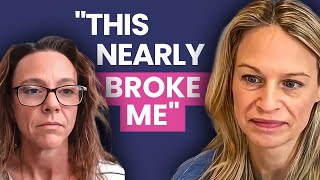
Andrea tried hormone pellet therapy for midlife symptoms and felt better initially, but relapsed when underlying issues like poor estrogen metabolism, high cortisol, and gut dysfunction weren't addressed. Dr. Tabatha Barber and Andrea discuss why hormone therapy alone isn't enough and what actually needs to happen first.
Chapters
It breaks my heart because so many doctors out there are telling people, just use Benadryl to sleep. And we're wondering why Alzheimer's and dementia is just skyrocketing decade over decade. Yay. Andrea, welcome to the Festive Faith podcast.
Thank you. Thank you. I'm super excited and a little nervous to be here.
Oh, good. Thank you for your honesty. I love bringing on real women to the podcast who have been there and done that, because that's who my listeners want to hear from. They don't want to hear from some polished expert. Like, we're at the point where infobesity is over. Like, we. We can get all the information right, but trying to put all the pieces together for us as individuals, that's the challenge. Women are like, but what about me and my situation? And so that's why I want to bring you on here, because you had a little bit of a different journey and you came to me looking for guidance on hormones and all the things. And so I want you to share with listeners, like how we started to connect the dots and how you really figured things out for you during this transition time in your life. Okay. I'm really excited about it. So it's been a couple of years since you came to me in the medical practice, right? Do you remember, like, what was the driving force or the reason why you did that?
I started struggling with my hormones at like 42 or 43 and quit having periods by 45. I think it was 2019. I hadn't had a period in a while, but I was like, still the horrendous hot flashes and just non functional. And a friend suggested hormone pellet therapy and I was against pharmaceuticals. And I'm like, I'm not doing this. And then I just gave in and did it. And it was the. The biggest life changing experience. No more hot flashes. My inflammation was gone, my blood glucose levels were going down, my cholesterol was going down. Everything was fabulous. The problem was I didn't change my lifestyle. And unlike most, I'm not overweight. I exercise, I eat really well, but I'm an overachiever. And so I continued to overachieve and do all the things because now I felt better. So by the time I came to you, I think it was maybe 2022. It was no longer working anymore because I just kept doing the things and the hormones couldn't. Still weren't compensating. And my gut issues were coming back. My gut issues could never really gone completely away. And I found you on a podcast just by happenstance. And started listening.
That's what you thought.
And so. And then, yeah, and I just reached out to do the discovery call, and the rest is history. I knew there was more to it than the surface part of it that I was taking care of. I firmly believe in hormone therapy, but it is a band aid if you don't address the root cause.
Yeah, absolutely. Well, I remember meeting you and thinking, wow, this woman, she's like, badass. Part of my language. But you were doing really amazing athletic things that most women kind of give up at this point in our life. Like, you were, I think was a 50k or triathlon or something. You're like, I'm ready to train for this. I'm like, whoa, whoa, whoa, girl. Hold on.
Heal your body.
Yeah. And so I like that you pointed out the fact that the hormones made you feel better. So you thought, I'll just go back to my old way of living. And what you quickly realize is it just doesn't work. It's a band aid. It's not treating necessarily the root cause. What I imagine is like this domino effect. We start to have this hormone shift, Our hormones shift, and it affects all of our other systems. And so that creates some gut issues and elevated cholesterol and elevated blood sugar and just inflammation in our whole body and joint pain and brain fog. And those issues start to compound and create new issues. And once your gut turns into a hot mess from your chronic cortisol and your stress and your hormone shifts and your immune system gets overactive because you're no longer having that protection from estrogen, like, then you have new root cause issues. So the hormones may have tipped it over, but by and large, fixing the hormones isn't going to put all those domino pieces back upright. They're tipped over, you know, now they need to be addressed. And so you did the healthy her program. You did the gut healing regimen. We looked at your adrenals. Your cortisol production was through the roof, which totally makes sense. That's how you were able to do that kind of power training and everything that you were doing athletically. Right. But it wasn't helping you in the long run because chronic cortisol makes you so inflamed. And I don't know if you remember, but I remember you came to me on Benadryl. You were.
Oh, yes.
To help you sleep. Right. Okay.
For 20 years. I don't know. A long, long time. Okay, now I cringe.
No, but I'm. I just want to point this out to people Listening. Because this is a really important point. Like, there's a lot of discussion around Alzheimer's and dementia right now. And you know how scary it is. And we're calling dementia type 3 diabetes because by and large, it is from chronically elevated blood sugar issues. But our brain uses acetylcholine to think and to have thoughts and make memories and do all the things that it needs to do. And Benadryl is an anticholinergic drug. Those antichrist cholinergics block acetylcholine. And when you take Benadryl, especially like over the age of 50 now, that's what we call elderly in the medical world. Right.
Hello.
Welcome to the group. There is an increased risk of dementia when you use that chronically on an ongoing basis. And it breaks my heart because so many doctors out there are telling people, just use Benadryl to sleep. And we're wondering why Alzheimer's and dementia is just skyrocketing decade over decade. It's things like this that we don't think are harmful because you can buy it over the counter at the drugstore, so why would it cause you any long term problems? But it really does. So I wanted to highlight that because I know somebody needed to hear that today. Don't take Benadryl. This sleep we got you on Gaba and Lian. And melatonin is neuroprotective. It helps modulate your immune system. Like, there are better options to help you sleep. Progesterone. Hello. Right. So how did you get off the Benadryl?
I take Gaba with L theanine and then I have a magnesium. I don't remember what's in it. And then I take progesterone at night, too.
Do you have a magnesium blend of like threonate and malate?
I don't remember what it is, to be honest.
Okay. That's okay.
I've played around with different ones until I get it just right. Like I'm on a different. I've tried three different GABAs and the one I'm on now I love. Perfect.
And that's the individual part of us, you know, like the majority are gonna do well with a certain product, but not everybody per se, so.
Right.
That's really important to know. And you mentioned when you came to me, you were on hormone pellets, but you were feeling like a little puffy, a little bit overdone. Let's talk about that. Because hormones are super beneficial, but it's kind of like you gotta find the sweet spot. Not too high, not Too low. It's like Goldilocks bed because too high gives you symptoms and too low gives you symptoms.
I think the most enlightening thing that happened when I first came to you and that was when we discovered like, I didn't know that. I didn't know my body wasn't detoxing the estrogen. I didn't, the things that I was feeling, I didn't realize. But the testing that we did showed that that was my first realization that, oh, here's the problem. And I probably always have had that issue because in perimenopause I was told I had estrogen dominance. So I'm assuming I've just, yeah, my body just doesn't detox it properly. I think it's super important to point out that if you're going to go the hormone route that you choose a provider that's going to test everything, not just your hormone levels. And the person that I go to doesn't. And I didn't realize that. I mean, yeah, we know everything about my hormones and we test the typical things. But not knowing how my body processes those hormones is a huge thing that needs to be addressed for anyone that's on hormones. Because, yeah, just knowing your levels isn't really telling you much.
Right. So to clarify, you were seeing a local doctor and just getting hormone therapy and you were seeing me virtually. That's, that's okay. I just want women to understand what was happening. And so you were getting your blood levels of how much hormone was available to you. But we did a Dutch test where we looked at your urine metabolites and we saw how you're metabolizing those hormones. Your numbers were way off balance, your so called bad estrogens were too high and your good estradiol was not where it should have been. And so that's really helpful because a lot of times we just need to support the liver differently and do some detoxing with that to get your estrogen, your estrone, your estradiol, your estriol, where we want them for optimization, to feel good and to thrive. Because if you're walking around with estrone three times as high as estradiol, you're going to be puffy and you're going to be inflamed, you're probably going to have some postmenopausal bleeding if you still have a uterus or other issues. So, yeah, I'm glad we did that test. That was also where we saw your cortisol was through the roof with the 24 hour cortisol test. So I love doing that test with women because it gives you so much information and you realize you just needed detoxification or metabolism support. And I'll say the word metabolism can be super confusing. I know. We use it in so many ways. We use it when we talk about breaking down hormones. We metabolize our estrogen, we talk about it with our weight and how quickly we burn through energy with our blood sugar. And so the word metabolism just means like a process is happening to change what from one form to the other. And so our estrogens get changed into different forms, and if they aren't done properly through those detox pathways, we have a metabolism issue. So I just wanted to clarify that because that's super confusing. We need a new word for that. Honestly, we just do. So I would love for you to talk about the fact that you came to me two years ago, but you are still with me and you went on to become a certified fast to faith coach. Like you were doing intermittent fasting. When I met you, you were kind of dabbling in all of these things. Why did you hang out in my community and was it the sisterhood or what keeps you here? Why did you choose to become a coach?
The biggest thing for me was just how life changing it was to. I mean, I changed everything. The way I ate changed. I always ate healthy based on what society told an endurance athlete how to eat. But I just couldn't believe how much better I felt after working with you and with Morgan and trying new things. I kind of just followed you in the background for a while until the first Fast of Faith program. And then I was like, I had kind of fallen off. I'm not falling off the wagon. But, you know, you go back to your old life and habits and whatnot. So I'm like, I'm gonna jump in and I'm going to do this program. And it was wonderful. I followed it a little bit differently. I took fasting a little slower. I was already intermittent fasting, but I typically go 14 hours instead of 16 because of my activity level and because I can very easily go the wrong way with my cortisol levels again. But bringing the faith component in and using the faith method and reading the scripture every morning, which I do anyway, I don't know what it was about. I guess I just started looking at it differently and having the support of a group and being with a group of women who were all doing the same thing was just so amazing. Having the faith builder calls and the whole thing was amazing. When we did that program the very end of it. That week, I went to a women's retreat with my church. And the previous year when I was there, God told me, spoke very clear to me, you need to slow down. You're killing yourself. That year when I went and I'm just finishing up that program, he said to me, you need to tell that you need to share this with other women. And I left there and had it on my heart that I need to help other women discover the healing that I had, but didn't have any idea what that looked like. And I just kind of went on with my life, and it was always in the back of my head, and I kept thinking, I'm not being obedient. I'm not being obedient. And I had probably spent three or four months looking for health coaching programs before I got the email from you. And it was either super expensive, it didn't align with my values. It was too conventional medicine driven. Just nothing aligned. And then I got the email that you were offering the program, and I knew that it was a gift from God.
I love that so much. Yeah. All those other programs just weren't what you were supposed to be doing. And it is not happenstance that you connected to me. You healed with me, and then now here you are certified Fast to Faith Coach, I am so proud of your obedience. But you're right. Like we say, okay, God, we'll do it, but then we don't know what to do, and we're just kind of la, la, la. And that part can be really hard because we want to make things happen a lot of the times. Well, let me figure it out. But you were so. And you just kept waiting and seeing these other programs. Nope, that's not the one. Nope, that's not the one. So I love that. That is incredible. But I want to highlight the fact that you did Fast of Faith as an endurance athlete, where most women were working out 30 minutes a day, kind of like chilling at the gym or talking at our HIIT class to our girlfriends. And we're not, like, really hardcore. Right. So you were more hardcore. And so we just adapted the program for you. We increased your protein in the macros, and we just tweaked some things. And it worked for you. Right? Like, you did really awesome. So I love that. I love that God brought you to me because he showed me that this program is adaptable and that we need to make versions for other women doing other things. And so that has, like, led us on to Carnivore. And all the other versions of the program. So thank you for that because that is so incredible. Instead of just being like, oh, I can't do this program. It's not fitting my needs, you're like, I know, God's called me here. Like, let me just ask. And we figured it out. So that's the cool thing is sometimes we just need to ask for what we need, right?
Yeah. Yeah. Which is women aren't good at.
No, we aren't a lot of the times. But that is literally how I have been successful in life. And I realized that, you know, after I dropped out of high school and had to go back and get my ged, I needed to ask the teachers that I was not so cool to that gave me detention to help me pass my ged, and they were more than happy to help me. And I realized, like, people want to help. You just have to get rid of the ego and be vulnerable and show up and tell people what you need, and they're more than happy to support you. So I'm really excited to see what you're going to do with your coaching certification because you do have a special message, and you are going to reach women that I'm not necessarily going to reach or one of the other coaches. You know, we all have our own story that resonates with certain people, and that's why it's important that we all share our story, right?
Yes.
Yeah. That's so important. So I just want to go back to. You said like you were reading scripture, you were praying to God. You had that component in your life. But when you combined the Fast to Faith program with the faith piece of it, what do you think was the difference? Was it your relationship with food was changing your relationship with how you were treating your body? What was it?
I would say both of those things. Treating the way I treat my body, that has been a huge thing because I like to overdo it. And so I've learned to respect my body and remind myself that this body is a gift from God and I need to treat it respectfully. And yes, food, of course. But for me, it's more of the physical. You know, if I'm much more conscientious about. If I didn't sleep well, I don't do the hard workout, which before, if it was on the schedule, I did it, it didn't matter. When it comes to food, though, I used to be the person who ate five, six times a day because that's what they told athletes to do. Or the types of foods that you should be eating and learning that food doesn't have to consume me. I'm filled with. By the Holy Spirit. I don't need that constant consumption of food. And I. It's so freeing to not have to live based on when you're gonna have to eat again. I'm still getting the same amount of food in my body. I'm just going about it a whole different way and it doesn't control me anymore.
Yeah. That's so powerful. Oh, my gosh. Yeah. Especially when for me, it's traveling. Like, I don't want to have to worry about eating every couple hours when I'm in airports or in places that I know the food's not going to be quality. Right. So for you, like, food is such a distraction sometimes it takes a lot of preparation. So the idea of eating five or six times a day, no, thank you. That's just.
My meal prep used to be absurd. I mean, I still am pretty good about it, but it was. It was nuts. And if I traveled, I was taking big things of all the stuff. Yeah.
And anyone who still has younger kids, they're feeling this fully right now because little kids eat every couple hours. And so you're constantly in the kitchen. You're either feeding them or cleaning up the messes or getting ready for the next time. It's just. It's all consuming. So I love that. I love that you realized I can just rely on God and let him guide me, Let him give me the strength. And my body can go multiple hours without food and still thrive, still do all of those amazing things. And the last piece I want to touch on is the rest. Because you said if I didn't sleep well, I still did the workout. Like, I still pushed through. And that is why your adrenals were such a hot mess. Let's just put that out there. And we just don't respect rest, we don't respect sleep in this country. We think it's a badge of honor to be exhausted, to be busy, to be overproductive. And really, it's just destroying us. It's just a huge distraction. So how many hours are you sleeping at night? What does that look like?
So my goal is seven hours. I still am not the best sleeper, but I'm very, very protective of my sleep now. So I say my goal, the goal is seven hours. That's going to bed at nine, getting up at five in. There's some awake period in there, but it's unusual that I don't hit my seven hours. I love that, yeah, I'm just protective of my sleep. Where before, you know, I'd be up till 11, 11:30, up at 4:30. Wasn't even sleeping during that time period, even on the Benadryl, because my body didn't know how to shut down. When we worked together and we did that testing, even though other people had told me, you need to slow down and you're doing all these things. Seeing things on paper was like, I'm slowly killing myself doing this, like, legitimately. Like, I don't think people realize you are legitimately slowly killing yourself because your body can't live that way forever. And that that's the one piece that I really honed in on. It was, I have to prioritize my sleep. It's more important than anything else.
Yeah, absolutely. Yeah. I love seeing the data on paper because then it's hard to disagree with. Right. It's not just some doctor guessing or telling you something or some coach telling. Like, it's right there. You can see your cortisol pattern. So that's really helpful. Before we close, I would love for you to share. Before we got on camera, you were mentioning now that I'm a certified fast to faith coach and I'm trying to go out and reach women, make an impact. You're having some struggles, right? The enemy is coming for you. And I think that we need to highlight this fact because I feel it every single day. It's finally less because I've stood up to it. But when you are doing kingdom work, when you are being obedient to your calling and helping further God's plan, the enemy gets angry and he tries to block you every step of the way. Right. Tell me what happened with your meeting.
Oh, well, I just have had some mental blocks or mental struggles or have feelings of imposter syndrome. And I belong to a Christian networking group. We met last night and I had been given the opportunity to speak about Fast to faith. And we were sharing different things. And it was funny because one of the other women brought up imposter syndrome before we even got to my time to speak. And I think it's something all women struggle with and especially women in business. And it is 100% the enemy. We are all doing what God has called us to do. We just need to step into that and trust that he will provide the way. And I just openly told them before it was my time to speak. This is what's going on with me right now. I almost didn't come tonight. And like I was telling you one of the girls had car trouble and had reached out for a ride, and I offered to take her. And afterwards, I kicked myself because I'm like, now that means I have to go. But then it was like, no, that means I have to go. Like, so it kind of forced me to go, and it was the most amazing thing, and everything went fine. I mean, they. And they prayed over me, which was wonderful, you know, and you just have to do it. Just step out and do it. And there are. You know, for me, the way I see it is there are so many God's told. God told me years ago, you need to share this message. You need to help other women heal and just need to trust that he has a plan and be obedient to that and keep moving forward. And, you know, it'll be a learning process along the way. But I'm excited for the opportunity.
I think it's so important to realize all those tiny little things that are happening. Like, I feel like that woman reaching out for a ride was God reaching out, saying, don't stay home. Don't believe the enemy. Get out of that mindset, and let's go do this work, you know? And God's always throwing us a lifeline, and we're just. We can either focus on the negative or we can focus on positive and what we should be doing. So I'm super proud of you for going and not giving into that. That is how we stay stuck. We believe the lies, and we don't feel worthy, but we just are worthy. Not because of the works that we've done or anything, just because of Jesus. So I'm proud of you. Yay. And I can't wait to see everything that you do. So I hope somebody I know somebod got some golden nuggets out of this episode, because there are women out there overachieving, trying to do it all, have it all, be it all. And they wonder why they keep struggling, even on hormones. So I think this was a really important conversation. Thank you for your honesty and your vulnerability. You really are helping other women.
Andrea, thank you for having me. And I. Yes. I'm really excited for where this path takes all of us. Really.
Yes, exactly.
I want all women to know they don't have to suffer through midlife or even before. That would be great.
Yes. We love the younger crowd. We love you guys. If you're listening, your turnaround would be so much easier. Grab the reins right now and take control of everything. So we are here for you. But, you guys, if this resonated with you. Go to fastofaith.com check things out. We are here for you. We just want you to come into our sisterhood of women so that we can support you and show you that there's a better way to live, that there's a way to be in alignment with God's plan for you. And that includes not only your bigger picture purpose, but your daily life, your health, your relationship with food, all the things. So thank you so much for listening.








