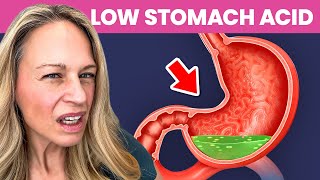
Dr. Tabatha Barber explains that heartburn, bloating, and fatigue in women over 40 might signal low stomach acid, not high. Acid-blocking drugs can make it worse. She describes a baking-soda burp test you can do at home to check, plus simple fixes like apple-cider vinegar and slow eating.
Questions this video answers
Take 1/4 teaspoon baking soda in a cold glass of water, drink first thing in the morning on an empty stomach, and note if you get a good burp within 5 minutes; repeat for at least three mornings to confirm.
About 1/4 to 1/2 teaspoon of organic apple cider vinegar in 8 ounces of water.
If you're over 40 and struggling with bloating, heartburn, or fatigue, the problem might not be what you think. It could be low stomach acid. Today, we'll uncover how low stomach acid impacts your health, why it's often misdiagnosed, and how caring for your gut is a biblical act of stewardship. By the way, I'm Dr. Tabitha, your Christian physician. I have figured out that the true way to overall health is healing your gut. So. So let's get into it. What is low stomach acid and why is it a hidden issue for many women over 40? Well, here's the deal. Low stomach acid comes from your stressed out, busy life. Honestly, low stomach acid is probably the most common issue that I see in my medical practice. Women come to me with a slew of symptoms, and it always traces back to that darn stomach acid. So I'm really glad that you're watching this video because there are some so surprising things that you're going to learn today. The stomach is very acidic, but the esophagus is not. And the esophagus is the tube that connects to the stomach. And that's how our food travels from our mouth into our stomach. And right there in between those two is your lower esophageal sphincter. So that's a muscle, a circular muscle that opens to let the food into the stomach and closes to keep the food in the stomach. It also keeps the acid in the stomach. But guess what? The. There are things that relax that sphincter. And when that sphincter gets relaxed, all of a sudden the stuff in your stomach goes up into your esophagus. That feels like heartburn. Heartburn has nothing to do with your heart. We called it that because it kind of feels like it's in the place where your heart lives. But really, it's a stomach and esophagus issue. So you're thinking, well, if I'm feeling all that acid and all that burning, I must have too much stomach acid. It's actually oftentimes the opposite. Our stomach AC should be produced especially when we're about to eat something, because it helps break down the food. It is part of our digestive process. Stomach acid is also important to kill off things that come in through your food and your drink. But when we are really stressed out, we're eating in a hurry and we're getting all these big chunks of food in our stomach, we can't make enough stomach acid to keep up with it. And so that food sits there, there too long with those Bad bacteria, they start to ferment and overgrow and create a lot of gas. That gas pushes up into the esophagus along with the little amount of stomach acid there is, and it feels like a burn. It's really important to not assume if you have reflux or heartburn, that you have too much stomach acid. This is where conventional medicine goes wrong. They give you an acid blocker for your heartburn symptom, and that just makes the problem worse. When the sphincter relaxes and swishes things up into your esophagus, you feel that burn. What are the biggest reasons the sphincter relaxes for? Alcohol, spicy foods, fatty foods and stress. Too much cortisol, too much adrenaline. So if you are eating takeout food or fast food in five minutes, really stressed out, racing to get back to the office, that is going to relax that sphincter and then to add on top of it. Sometimes we lay down after we eat, eat, and that really swishes the food back up. So if you are complaining of heartburn, bloating after you eat, those types of issues, we need to evaluate your stomach acid. So many of our chronic health issues are from low stomach acid not being addressed. We're either not addressing it or we're making it worse by being on proton pump inhibitors like Prilosec, nexium, Protonix, or H2 blockers like Zantac and Pepcid. When we do that, that chronic low stomach acid issue turns into a chronic medical problem. I see this every day in my medical practice. Women come to me with hair loss, brittle nails, chronic fatigue, weight gain, all of these issues, and nobody has evaluated their stomach acid. It's imperative that we do this. I almost always do stool testing on my patients when they come to me with chronic medical conditions. And I do this because I want to see how their gut is functioning and what is living inside of it. When we see chronic stomach acid issues, we see overgrowth of bad bacteria, namely H. Pylori. H. Pylori is a bacteria that can live in the gut and it can cause all kinds of problems. H. Pylori is responsible for ulcers, gastritis, stomach cancer, some really bad stuff. And the reason that they overgrow and take over is because there's not enough acid in the stomach to keep them killed off and prevent them from multiplying into taking over. Low stomach acid, number one, can cause bad bacterial overgrowth, which can lead to ulcers and other bad things. The second piece of that is that when you are not breaking down your food properly because you don't have enough stomach acid to do that. You are not absorbing your vitamins and minerals from your foods or from your supplements. And that can lead to vitamin and mineral deficiencies. That might sound like no big deal, but it can be profound. I've had a woman come to me with numbness and tingling in her fingers and toes. All of her conventional doctors, a neurologist included, couldn't figure out what was wrong with her. It was a B12 deficiency from her low stomach acid and H. Pylori infection. I am telling you, this is a domino effect. Once you have chronic low stomach acid, the issues just compound and compound. But how can you know for sure if low stomach acid is the issue? Let's talk about how to diagnose it naturally. Naturally at home. But before I get into that, if you're ready to restore balance in your digestion and honor the way God designed your body to function, I've created a simple step by step guide. Click the link in the description to get started today. So there is a simple at home test that you can use to check for low stomach acid. It's called the baking soda test. And here's how it works. You take a quarter teaspoon of baking soda in a cold glass of water. Drink it first thing in the morning on an empty stomach. If you don't have a really good burp within than five minutes, it could indicate that you have low stomach acid. You want to do it for at least three mornings in a row to see if you have consistent results. But if you consistently are not having a good burp, that is telling me that you don't have enough stomach acid. How do I know that? It's chemistry. So much of our digestive function has to do with how we show up when we eat. Okay, I was reading Proverbs 15 recently and Proverbs 15:17 says better a small serving of vegetables with love than a fatted calf with hatred. What it's really saying is that when you eat stressed out in a negative situation, you're feeling unforgiveness in your heart, you're feeling stressed out at work, you're feeling hatred toward the person you're eating with, whatever that may be, that is going to affect your digestion and really interfere with your body's ability to utilize that food and be nourished. If you eat with love, even if it's less than the amazing fatted calf, if it's just a little bit small amount of vegetables, you're going to digest it better. You're going to absorb your vitamins and minerals better and you're going to function and feel better. So are you showing up as a positive, loving, forgiving person who has good intentions or are you bitter and full of resentment? If you are, your body keeps the score. It knows it won't function properly. God is asking you to release all of that and show up in a healthy, happy, loving way for yourself. One of my favorite things to drink for stomach acid support is apple cider vinegar or just lemon water. I absolutely love starting my morning with some organic apple cider vinegar. I do about a quarter teaspoon, a half a teaspoon in 8 ounces of water. That gives my stomach the acid that it needs and reminds my stomach that acid needs to be produced anytime that I am stimulating it with food that is really a setup for the rest of your day. It's so good and it's got probiotics, good bacteria in there that help your microbiome focus on clean, healthy animal proteins and fats. Get those eggs and that beef and that bison and those chicken and your nuts and seeds and avocados. Get all that good, healthy, nutrient dense food into your body. Eat it in a calming, slow manner. Chewing your food at least 15 to 20 times and you will actually absorb the zinc and the magnesium and the other nutrients that you need and your digestion will start to shift. Now that you know how to diagnose low stomach acid, let's talk about another crucial health factor, balancing hormones naturally after 45. Click here to watch my next video and take the next step in restoring your health.