My Doctor Was Wrong About My Thyroid (Yours Might Be Too)
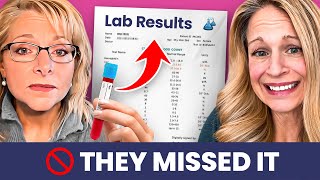
Lisa, a pharmacist, spent decades struggling with weight before discovering her doctor missed Hashimoto's by only testing TSH. Conventional thyroid testing often skips T3, reverse T3, and antibodies. Gut health, gluten sensitivity, and nervous system regulation matter as much as the numbers.
Chapters
All right, before we get started with our awesome episode, we are just going to add on this little amazing golden nugget that you just dropped for me. I need women to be able to be their own health advocate. I often hear I'm afraid to tell my doctor what I'm doing with my functional provider. I'm afraid to tell them about the supplements I'm taking or that I'm doing the Fast of Faith program because they're not going to understand what. Or I've had patients who are seeing me who are like, oh, my primary is never going to go for this. I'm not even going to tell them. So will you just quickly break down before we get into your incredible episode, just a key couple points to take away that will equip women to go into their doctor's appointment, their conventional doctor's appointment, and feel confident that they can advocate for themselves without feeling bad. And a lot of women don't like confrontation. We understand that. And it's not about confronting your doctor. It's about, like, asking them to be on your team. Right. So how does that conversation go?
100%. And I mean, like I just had said, I. Even as a pharmacist, I felt intimidated to talk to my doctor about what I had going on in my own life and what I thought the answer is were or what I had learned. So I would recommend for any woman, even if you have an established relationship, but especially if you're looking for a new primary care doctor, which is what I had to do. I had to look for a new primary care doctor. I took time prior to the appointment to sit down and list what was important to me from a primary care doctor because I hope I like her, but I only want to see her once a year when my doctor requires it. I don't want to be the unhealthy person, person who has to go in all the time. I mean, if you have to do that, great. But let's get you toward the point where you're functioning better on your own. So I said, I work with a functional medicine doctor. When I come into your office, I want to feel comfortable talking to you about all of my health care, not just what's going on with you and I. I want to be able to bring ideas to you. Let's talk about them. I don't want you to poo poo what I'm saying and make it feel like that's just not real medicine. I want to be able to have an actual conversation to discuss things in what I have learned maybe what, you know, what you see work as well and how we can tweak those things. Because I knew that if I picked this doctor, she would be my doctor for a while. And I have, you know, I'm going into the later stages of life 20 years from now. I want to make sure that I can talk to her about the things that are concerning to me and my health and maybe other ways other than the regular medical direction, the allopathic way to fix these things and that there are other solutions out there. Like let's be open minded to everything and see if we can fit it all together to make this triangle of me and my primary care and my functional medicine all work together so that we can just thrive. Because that's the point. Let's thrive.
Yeah, I love that. Thank you so much for sharing that. I would just encourage women, you know, if you're not sure you can talk to your girlfriends and ask, ask them do you have a doctor that seems to be open to alternative treatments or the idea that there's a root cause medicine and a lot of conventional medicine is diagnoses related and symptom management related. Are they open to that idea of doing deeper work? And you can even call doctors offices and talk to their front office staff and ask them. And they are usually pretty honest like oh you don't want to see so and so he's going to shut, shut you down or yeah, this person is great, she'll listen to you. She might not really know but she's open minded and willing to learn. Like don't hesitate to find a new doctor. Go doctor shopping. This is your health and your body and you have to be your own health advocate. So thank you for sharing that golden nugget. Now let's get on to your incredible episode that we just recorded because it is so good. You guys have to listen all the way through to the end. I just wanted to pop this on here because this is priceless information. We have way more say in our health and our body than the white coats give us credit for that than insurance tells us that we do. Like we legit are in charge. You're paying for your insurance, you get to choose, right?
Absolutely. Stand up for yourself.
Awesome. All right, here we go.
Foreign.
This is going to be an awesome episode. We don't really talk about losing excess weight. We usually talk about like we need to lose five or ten pounds here or there, get into our summer body. But today we are talking about when you are really carrying extra weight to the point where it's really impacting your overall life. We're talking 50 or more pounds. I promise you, you can release way. There's a reason it's happening. And I have an amazing woman on today. She is a patient. She is a Fast to Faith certified coach, and she has been through it all. She's run the gamut of conventional medicine. She's a pharmacist, so she knows the drug world, and she is here to share her truth and the truth about our body's ability to really just completely transform. So I'm super excited. Welcome, Lisa. You're so awesome.
Oh, thank you, Dr. T. Thank you for having me. I'm super excited to be here and to share stories with you and just see if we can just help somebody out there.
Oh, you're absolutely going to help somebody. More than one woman. But I would encourage you, if you're listening, just remember that you can always pause a podcast and come back to it if you don't have time for the whole thing. That's the beauty of the podcast, is you can come back to it. Right. But I know that you're going to want to listen to this all the way through and share it with all your girlfriends and because most likely you know somebody, if you're not like Lisa, you know somebody who has been through what she's going through or is in the middle of the struggle right now. And we need to share our stories with each other. We need to lift each other up. So, yes, let's dive in, Lisa. This is going to be so good. I want you to talk to me about where you were when you first found me. You came to me as a patient.
Had been struggling with what was going on with hormones, and really learning about my thyroid because even though I'm a pharmacist, you know, as we have figured out that we didn't learn the things that we thought we were going to learn when we went through that whole conventional medicine thing. I have been on thyroid medication for many years, 20 years. At that point, I was learning so much from different podcasts and people about how your thyroid works, what you need to test, what doctor should be testing for, looking for and asking about. And then I would go to my regular primary care physician and say, hey, I want these things. And I really never got the answers I was looking for. Specifically, I would say, hey, I need to have these tests done, saying, knowing that I had a thyroid condition and there should be no problem ordering them. And then I would just come back with the one standard test and until I finally took matters into my own hands. After learning that you can. You can order your own test, I thought, well, let me look. And I did it. I got some information. I went back to the doctor, I said, look, this is my information. And quite quickly it was judged as, I don't know if I really trust that lab. I don't know if we could do that kind of thing. And I had thought at this point, which. What showed on those labs was that I did have Hashimoto antibodies and no one in all of my history had ever even looked at that. Which in retrospect, I think could have really helped me along my weight loss journey had I known that those things were happening. So while I was going through all of this, I was listening to you. I was listening to. I think I actually heard from you, from another podcast that I was listening to. And I thought, well, I'm going through this perimenopausal change. She's a gynecologist or. And so let me see if we gel. We kind of did. And I set up an appointment and I said, okay, great. So before you and I had even had our first consultation, a few months later, you really started changing the trajectory, really incorporating faith into it. And I knew that God was pointing me towards you. There was a reason, because I've always been a very faithful person. But to be able to bring him into all aspects of my life is really where I thought that he was pushing me. And then I. When I heard you talking about that and that that was kind of the direction you were going, I thought, all right, God, I hear you. You nudging me right where I need to be. So that was initially how I got to find you, was I wanted an answers. I had to go searching for things all by myself. And then knowing that God was leading me in the right direction, towards the right people that I needed to be at.
Yes. And you even came all the way to see me on my book signing on my birthday. You're so sweet. So, yes, when God nudges us, we need to be listening. But you hit on a few really important points that I want to highlight and clarify for our listeners. Conventional doctors, they often order what's called a reflex tsh. So when they want to check a thyroid function, they order TSH with reflex to free T4 if abnormal. So what that tells the lab is don't check even a free T4 or anything else unless that TSH is way out of range. Like, you know, above 6, I think is the cutoff for most labs. So you have to be almost like in a myxedema coma trying to be hospitalized with your hypothyroidism before they even check the actual thyroid hormone level, which is T4. And they're definitely not checking T3 or reverse T3 or thyroid antibodies. And for you, that was the key because that autoimmune process was coming from your chronic gut issues, and it was driving all of this inflammation in your body and preventing your body from releasing all of that weight. So I would recommend, if you're listening to this, and that is what your doctor always checks, and they don't want to check the other labs, they'll give you some answer, like, insurance won't cover it, which is untrue. You know, they don't know how to interpret it, so they don't want to do it. You can order your own lab tests. You can go to ultalab tests.com. you can go to functionhealth.com. there are ways to get that information. So I'm glad that you brought that up, because it's really important. But when you came to me, you had also gone through all the conventional steps to try and lose a significant amount of weight. Right. So we need to talk about that because there's so many women listening who. It's just like this lifelong battle, and that's what you were going through. Right. So I know the thyroid piece was a huge piece of it, but just kind of paint a picture for everybody listening. Like, what were you dealing with?
Yes, absolutely. Well, I have in my mind struggling with weight my entire life. Obviously, when I look back on pictures, I shouldn't have been as hard on myself as I was. But I would say that the real struggle started after my second pregnancy. I do feel like probably my thyroid took a big hit during that pregnancy for other reasons that I can go into later. But after having my son, I gained. Well, while I was pregnant, I gained a significant amount of weight. And then after having him, I just could not lose it. And I was 28 at the time, 29 years old. And I went through a good, gosh, 15 years, maybe almost, of struggling with the up and the down and the up and the down, and it kept going up and up and up. Finally, when I was around 40 years old, I was probably around £250, and I thought, I have to do something. This is crazy. So I did the conventional stuff. I made sure that I exercised. I watched all of my food. I paid attention to all of the things, and I lost 60 pounds, almost 70 pounds on my own. And I was so proud of myself and excited for what was to come. I felt so much better, my knees felt better, everything was great. Well, then I started to get into the mid-40s and of course life hits. You know, I had lost my mom in my late 30s, so there was always that trying to be. I work full time, I'm a pharmacist, I work full time, I work long hours, 10 hour days. And then I, it crept, it crept up and it crept up and it crept up and it crept up and I was finally at £285, £280 back and forth. I think I stopped weighing at that point because I was just so over myself. Right? Yeah. And I had had a friend who had gone in and had a gastric bypass and I had not wanted to do that for a long time because I didn't want to change my physiology. And I thought, don't do that. You can do that, you've done it on your own. But I was tired of the roller coaster. I was just tired of the roller coaster. And I thought that that was going to be my answer, that I was going to have to think about food every single minute of every single day. It was exhausting. So I did, I went in and I had gastric bypass. And I would say the biggest mind shift for me at that point was I don't want to be the statistic. I don't want to be the person who goes and has this done and doesn't follow what needs to be followed and gain it all back. I've made this big change. I want to continue it. I did great the first year. I lost all of the weight. I went down to my lowest weight. It was probably 146. I was only there for a day and then, and then I went up to where it was like kind of my, my baseline was in the 150s, then about, I don't know, 48, 49 years old. I think it was the perimenopause thing. I was, I can, looking back, can see that I was probably in the perimenopausal stage in the early 40s when all of this was happening. But definitely in my late 40s is when the hormone shift started to occur. And all of a sudden 20, 30 pounds started to come right back on and no matter what I was doing, was struggling again. Little did I know, no one had talked to me about gut health. No one had talked to me about. They kind of said you might have problems absorbing some things, but they didn't tell me how to fix it. They just said, take these supplements. You're going to need to pay attention, eat your protein. There's so much more involved to understand. To understand why your gut is doing what it's doing, to understand how to get the nutrients that you need, all of that. So that is how then I. I started learning about myself, and I learned about the ketogenic diet. I dropped carbohydrates that year. And I'm like, this is working for me. It's so great. And I guess one thing I would like to stress to people is it's a roller coaster because I did all of those things. I gained a few, like, 20, 30 pounds back. I did the low carb, really strict for so long. You could ask my friends, they couldn't believe it. I lost £20. I felt great. And then hormones kicked in again. I was like, what is going on? And that's when I finally decided to figure out about my thyroid and then started to learn from you about perimenopause and all my hormones and how estrogen impacts everything and progesterone and all this stuff.
Oh, my gosh. Thank you for sharing that. I mean, it's like, I honor you for being so vulnerable. Some people, you know, feel a certain type of way when they make decisions that they don't necessarily want to make, but they feel like they're out of options, and so they do it. And. And then it's not the end all, be all answer, right? Like, I've done the same thing. And you're like, man, like, why is this not the answer yet again? But I love that you figured out how to just give yourself grace and realize, like, this is a journey. And I continue to learn as I go through all of this. And now you're paying it forward and coaching other women. That's amazing and incredible. We're going to talk about all that, but I really want to emphasize the fact that as an OB gyn, I was referring patients to the bariatric clinic. That's what I was told to do from the hospital administration. Like, you have someone over £250 and they get an automatic referral. And it's heartbreaking because we didn't ever talk about the things like the thyroid and the gut and adrenal chronic stress issues and all of the things that really are impacting women's weight. It's not that you just need surgery. So here you are. Now you're going through all these hormone shifts, and you're like, wait, A second. Why didn't that surgery, quote, unquote, work? You know, so it's such a dynamic process. That's why I want women to just forgive themselves and to realize that we're all just doing the best we can and we all have different health journeys. And yours is around weight. And now you. You're keeping it off. But let's talk about a few things that you really learned along the way. Number one was that you had part of your stomach removed so you couldn't even absorb things properly anymore or digest your food in the same way. And you didn't get a lot of education around that. So what was probably the biggest thing that you learned around that, especially in.
The beginning, you don't eat a lot. Right. And so you have to get nutritional food in again. I'd like to say that I don't have any regrets about what I did, because had I not been on that journey, I would not have been led to learning more about how my body works on its own. And finding you and in this group of women, it's amazing. But also, if I can help someone out there hear the story, to understand, and then educate themselves on the best way to do what's right for them. I was really embarrassed for a long time to even talk about it. I wouldn't, because people judge. Yeah. And. But then I realized there might be other women out there that need to hear that it's okay. And if you've even gone down a bazillion paths that you wish you hadn't tried drugs, that you wish you hadn't, or you want to try drugs, then you're not so sure about them. It's all a different journey, and it's okay. And find someone and listen. Let's do it the right way so you don't have to make those things. And so learning about nutrition, learning about putting protein in first and making sure that I get those things from you, and I've learned about how important the good carbohydrates are. Making sure that. I mean, in our mind, we always know how to eat right. But I guess maybe because I'm an educational type, like, I want to know why. Why is it right for me for me to eat this way? And the gut issue was a big thing. It did not occur to me, quite literally, until I started listening to you about how my actual gut had probably changed because of this surgery and how that probably was such a big and important factor in it. And so healing my gut, I think, was a really important step that actually was never even indicated when I was going through all of this.
Yeah. And even the simple thing, I guess, is not so simple. Giving up gluten. Like, I thought I was gonna die when I gave up gluten, but it has completely changed my life, and I have seen it completely change yours because your Hashimoto's thyroid disease was being driven by that continuous leaky gut and gluten response that your body was having. So I say it's simple because it's one thing that you can eliminate from your life, and it can have such a drastic impact on everything. Right.
Lately. And that was, I think, one of the biggest frustrations that I had is because no one had ever tested me for Hashimoto's. And from listening to podcasts and listening to you and learning that gluten had an impact on thyroid health, that I will say is one of the most frustrating things about my journey is to understand that had I been diagnosed with that way prior and I had maybe cut gluten out of my diet way earlier, I might not have had to struggle as much as I did. So I'm grateful that I did learn. And as soon as I found out about it, I was like, well, I gluten, which is not as hard as it sounds. It really isn't. But, yeah, you know, it was a journey and it was a learning curve, and we're going to chalk it up to experience.
And I love that you said, like, no regrets, just learning experiences. We have to believe that God is constantly working things out for our good. And even if we don't make the necessarily the best choice, there's an opportunity to learn from that and make it worth it. You know, now here you are helping other women, and sharing your story is so powerful and helpful because we have got to let go of all of the shame around our body, around food, around our decisions. Like, we just need to feel okay with all of that and own those decisions, good, bad, or the other. You know, and that's the amazing thing about being saved, is, like, you don't have to worry about that. You can just put that at Jesus feet. So thank you for sharing that. I think that's really important. So big takeaway was your thyroid wasn't optimized, even though you were on medication for decades. And you're a pharmacist who knows medication. You understand medication. You needed your medication tweaked because you didn't have the right lab results to even know what your body was doing with that medication. So you didn't even have the proper information. Right?
Correct. I didn't, to be honest with you. There's so few. When you really think about it, of the thousands of medications that are out there, it surprises me how few there are to just help our thyroid. Right. We're very limited. And no one in all of this time frame had ever spoken to me about T3 one little bit. Not at all. And even when I brought it up to my doctor, I said, well, it kind of seems like I'm maybe not converting or that maybe I'm not, you know, don't have an. She's like, well, we can raise your. Your T4. And I thought, I don't think that's going to work. So she was actually listening to, I guess. And. And with that point being, ladies, be your best advocate. Do what you can for yourself. Because to be honest, doctors are intending to do the best that they can. They really are. They just don't all know. And if you can educate yourself and then find out the information, a lot of times they'll listen. You just have to have it and be able to talk to them about it.
Yeah. I had no idea there was anything besides armor and Synthroid, you know, and here I was, a quote unquote women's health expert as an OB GYN treating thyroid disease every day. I didn't understand any of this. I got the reflex TSH test, and then I would move their Synthroid dose around and wonder why they didn't feel better. So I can't stress that point enough that you made. Like, most doctors really do care about their patients, but we're just as unhealthy as you are. We're struggling just as bad. Like, I had my own thyroid issue that wasn't being managed properly. And so I was struggling with brain fog and fatigue and irritability and constipation, which was making me toxic and all of these things, while I'm over here trying to help women with the same exact problem. Like, it's crazy to be outside of it now and look back and just. And see how sad it really is. But that's why these podcasts are so important for women to advocate for themselves and just be like, wait a second, wait, there's more tests that we can do. There's more information, and you can feel better.
You can so feel better.
Yes.
Don't. Don't give up hope because there is an answer. Dr. T is one of them. But don't give up hope because as you will learn from all these podcasts, so many women are Going through so many different struggles. There's someone who's struggling the way that you've been struggling and has seen the light at the end. There is a light, and it has a lot to do with God. Absolutely.
Yeah.
But he gives you so many people to get you to that light.
Absolutely. And we haven't even talked about the fact that you have had so much going on in your personal life. You are over here dealing with big, heavy things, people passing away, having major illnesses, big changes in your life, and you're trying to navigate all of that along with your health struggles. So what would you say to the woman who is just like, I'm too busy taking care of everybody else. I don't have time to even make a doctor's appointment for myself. I don't even have barely have time to listen to this podcast. I definitely can't see Dr. Tabitha and, like, go through all of this.
Oh, there's so much I could say. First and foremost and most important, I think is that you are worth it. The amount of worthiness that you put on everybody else, you are just as worth it. I mean, God created us all to, as you love to say and I love to repeat, he created us to thrive, not to just survive. So stop surviving and start thriving. And the only way that you're going to do that is to finally understand that you cannot pour from an empty, empty cup. You have to let it overflow. And so put the amount of energy, at least a fraction of the amount of energy that you put into other people, put it into yourself, and that is okay. And it is okay to sit down and take a breath and understand that life can be hard. And that is okay. We can still get through it. There are people to support us through all of it. Because you're right. Life has been hard this past year. It was really hard. It took me. It was the first time in my weight loss journey where I was sucker punched and I was just spinning out of control. And not completely, but enough for me to know that I wasn't doing what I needed to do. Even though things are not completely settled down, it finally made me realize, okay, now you've let go enough. Pull in the reins, start doing the things and really also healing from that kind of trauma and that kind of craziness that goes on in your life and recognizing that you need to take care of yourself before you can take care of other people and look for us, because we are out there to help for sure. And I tell my patients that all the time when I Have so many elderly people come in who are trying to take care of their significant others or spouses and they get exhausted and it is exhausting taking care of everyone else when you're not taking care of yourself, yourself. So take that time, do what you need to do. Go for a walk, take some deep breaths, pray, journal. Do those things that are going to fill your soul so that you can be the best version of yourself for all the other people in your life.
Yeah, absolutely. It's almost impossible to take care of other people when you're not taking care of yourself. That's why I went into full on burnout as an OB gyn. Like, I wanted to take care of everyone with all my heart, but my body was telling me, no, you have to take care of yourself. And I just want to say I am so proud of you because you had every excuse in the book for not making time for yourself. And then to add on to it, you turned around. And as soon as I released my coaching certification program, you're like, I'm going to become a certified Fast to faith coach in all my free time. Right? Like you didn't have any free time. Here you are dealing with all your personal things, working full time, working on your health and you're like, I need to pay it forward. I need to help other women. And you dove right on in and you're running, you know, doing the book club and running women through fast to faith. And how do you do all of that? Is it because you are pouring into yourself first and God's just making time for you now because you're making him a priority?
It's a little bit of everything. I think for me personally, I have no kids at home right now, so that was better. I did have a mental kind of jump to take because I thought, am I going to be good enough for this? Right? You know, in my mid-50s now, or close to it. And is someone gonna really take me seriously? But really, I had been learning so much and expressing so much to all of my friends all of the time and they would constantly say, you need to do this, you need to do this. But I didn't know how. I thought I could go back to school because I'm a school person, right? I could go back to school and figure it out, but do I really want to take that much time? And you brought it up and it was, I mean, I've been a very faith filled person all of my life. Miraculously I can literally say from the time that I was, was six years old, Like I have been a faith filled person. Yes, it's been stronger and weaker at times, but that's growth. But I've always struggled with knowing exactly where God wants me. And in re, in hindsight, that's probably because I wasn't giving him enough time to talk to me. Like I was doing all of the talking and I wasn't doing any listening.
And let's, let's talk about that for a second. Just a second. That is so good. You were doing all the talking and you weren't letting God talk back to you.
Right, right, right. I mean, I was always praying and I was always very thankful and I was always asking for prayer and asking for forgiveness, but never really saying, God, you lead me. You lead me. It's so weird for me to even say it out loud because I don't think I've ever said that out loud. So I said, you lead me. And when you came out with that program, I knew instantaneous, spontaneously, that God had led me to you originally, two years prior to that, a year and a half prior to that, to just make sure that at some point I could be here with you when you did that. And I went to my husband and I said, I really want to do this. And for no other reason than he's just who he is. He's like, I don't think we have money for that. And I said, well, I'm going to do it, so we need to figure out how we're going to do it. Because I feel called to do this. So we are going to, to figure this out. And we did, and it was fine. And I just, every time I get to the point where I'm questioning myself or I get the imposter syndrome, or I think I'm not doing well enough, I have to stop myself and I say, this is the one, one of the more specific times that you know that God called you to do this, so stop worrying. Because if he called you to do this, at some point it's going to happen. If things are not happening exactly the way that you think that they're happening, it's because there's a reason something else is happening. He thinks you can be more prepared. He thinks something else is going to interrupt it and he doesn't want it, something's going to happen. He knows he's been in the future, he knows what's happening. And I just got to take a pause, take a deep breath, get back into my habit of actually listening and see what he has planned for me, not what I Have planned for.
Yeah, exactly. I mean, some. His plans are always better. That is what I have learned the hard way. I want my plans to happen, and when they don't, I realize, like, oh, my gosh, you were protecting me. You were setting me up. I wasn't ready. Thank goodness. I didn't actually get what I was praying for because it would have destroyed me. Right. So I think the more that we can always just assume that God is our heavenly Father. He wants the best for us. He is constantly in our corner trying to give us everything that we want, but he's doing it in a loving, fatherly way of, like, I know better than you. Right.
I mean, when we think about it, what we do with our children, we try to give them advice when they're in their 20s. They don't want to listen. Even though we've had all the experiences, you know, it's the same thing. He knows. And we're just being a little stubborn because we think we know better. And thankfully, at 53, I figured out a little bit. Stop. Yeah, absolutely.
I think about how angry I would get at my kids.
Like, really?
I'm a doctor. You're not going to listen to me when you're complaining about your tummy ache right now. Or, I'm your mother, I want the best for you, or, you know, I don't understand. That's the phase we're in right now. You don't understand. You couldn't possibly understand. Yeah, because I was never a teenage girl. I never went through any of this. Right. And so I completely see that happening with God. God is just like, okay, you're right. I don't know what I'm talking about.
And when you. When you mess up, come back, we'll work, we'll talk about it again.
Exactly. I'll clean up your mess because I love you. And we'll try again, and maybe you'll learn this time.
Right.
I mean, God is just so good. And the more that we listen to him and show up and do his will, the more the blessings just come to us. It's so beautiful. So I love seeing you just come full circle at this point. Point. How long has your weight been at a healthy weight where you're feeling good? Because I feel like you've looked thin since I've known you, ever since we started. So what's that, a year and a half?
Oh, it's. It'll be two years this summer, but yeah, so about a year and a half. Like I said, when I had the surgery, I was 285. And I dropped down to my lowest. I maintained it about 155, 160. I lost it then again. And then with your help, I got back down into my 150s. And then, like I said, last year, life hit me and I gained back 20 pounds. And so this past probably eight months, I've really been focusing on retraining my mind. And actually, a big thing that I learned from you in the classes was the trauma piece and recognizing that there was probably some trauma that I didn't realize was occurring. So learning how to deal with that, to get rid and get into that, you know, parasympathetic state to help to release some of that excess stuff that's hanging around that I didn't really realize was hanging around. And also, I mean, I think it's fair to say that especially in our medical world, that is all really not looked well upon. And I would have been that pharmacist, you know, 20, 30 years ago, who would have said, it's crap. Don't listen to that, you know. But now learning and knowing what I know and understanding how trauma affects people, I think that's been a big portion of my dealing with the past year and the things that have come at me and to understand where they were. So now I'm. I'm good. I'm like, got five pounds to go to get to where I really want to be, back to where I was again. Also, that hormone thing, like, you and I were working on my hormones, my estrogen and progesterone, and everything was really, really good, and then it wasn't. And then it was great, and then it wasn't. One of the things I really want to make sure that women know is that the. One of the biggest checkpoints that I think of this entire journey for me has been to learn to listen to my body in whatever aspect that is. If you happen to feel a little fluffy a particular day, why? What's going on? What did you eat? What's going on? If you are really sad about something, look at all of the check marks that it could be. Is it a significant event in your life? Is it something hormonal happening? Is something like that? Have you not been exercising like you think you normally should be or would be? Or do you need to just maybe do a little bit more so you can get your endorphins? Just listen, like, if you eat something and the next day or a week later, you're like, wow, that's really bad, or you took a break of eating what you should be listening, I think has been the biggest thing that really we don't teach people young to do.
That is so important. And the fact that you're a pharmacist, like, I love you. I think medications are super necessary in certain situations, but a lot of them have been developed out of the idea of getting rid of symptoms. Right. We treat something by getting rid of the symptom. What we're actually doing is we're muffling the body. We're shutting it up so we don't have to hear from it anymore. And so it speaks to us in a different way. You go from heavy periods to talking to you to breast cancer or, you know, a skin rash to diarrhea. Like, your body is trying to tell you something. So it's not always appropriate to take a medicine to cover up your symptoms. And so I couldn't stress that enough. Like, that's why I love journaling so much. When you start writing things down, like you're saying, like, what have I been eating? How have I been moving or processing my emotions? And all of those things, you start to see those patterns and connect the dots and like, you are the one who is going to know your body the best. No doctor can know your body better than you can. It does. I don't care how smart they are. I don't care what school they went to. Like, you are going to know your body best. And you are just such an amazing example of that. And it sounds like you've just really put all your pieces together. You can see your picture completely now. And so now you can go ahead and help other women and you're like, oh, I know what that is. I've been there. We went through all of that. So that's.
Girl, let me tell you. Exactly.
Girl, let me tell you. And you have just hit on so many important points. And I wanted to quote you because you said this to me, if anyone is going to care about my time, it's going to be me. Let's talk about that for a minute. Because we hit on the fact that we need to do self care to be able to take care of others. I should say I was always blaming my managers, my admin, like the people who ran my schedule. Like, I don't have control. I can't set boundaries. I can't put myself on my schedule. Talk to me. And help women understand that they have to be their own advocate. They have to set those boundaries. It's imperative because everyone will always just take from you. And it's not because they don't love you, but your boss will always ask you to work more. Your patients will always want you to go above and beyond. Like there's never a time when your children aren't going to ask of you. You have a free minute, it's going to be gone. So you have to make that your own time 100%.
And I can tell you if you are in a family where you have not allowed that to happen, just be ready. Because people don't understand it. I mean, my husband would look at me because I'm again, I work a 10 hour day and so there is definitely sacrifice that I would have to put in. And it's not always the optimal amount of time, but especially a few years ago, my optimal time to exercise would be when I got home at night and I didn't get home till 7 o'. Clock. So I would be working out from 7:30 to say 8:30 or depending on however long the workout was. And I could tell he was a little annoyed with me because I was spending a lot of time. I think he then understood that if I didn't. Well, let me tell you what he did enjoy. He enjoyed the benefits of me feeling good about myself, right? He totally enjoyed that. And even when I was going through the perimenopause, I don't know if you remember the phone call that he had with you, but he wanted to kiss you because he thought her mood is so much better, right? Because he could see significant difference between what I had done to work on myself and how good I felt about myself and how I was carrying myself different and I was, you know, my body dysmorphia was evolving as we went through it all. And so he was excited about the way that I was changing as well. And then when my mood changed with hormonal changes, he was like, what's going on? Right. But they will give you pushback, so just be prepared for that and it's okay. They're changing, they're going, this is different for them. They haven't had someone look at you, you haven't had you look at yourself yet and say, I'm important enough to take care of myself. And truly there's no catastrophes that are going to happen. If you take a half an hour to an hour for yourself every day or every other day or whatever you can squeeze in, you can find it. The world will not stop. The children will find something to do, the husband will find something to do. It's going to be okay. And then once they realize how important self care is. Especially. I feel like one of the biggest reasons reasons I went down this journey is to help my family because both of my children went through things in which their diet and lifestyle need to change to make them better humans physically and emotionally. And my husband is older and he's going through lifestyle changes in which I needed to know this information and I needed to be able to help him. I say, if I can help that man, I'll be worth all of everything of a coach, because, wow, he's something. But then they see you change and they understand. They understand. And if I had known about diet and how to correctly nourish my kids 20 years ago, then we would be on a different path right now.
Yeah. They're seeing how miserable and sick we are, and they're like, we don't want that. I definitely agree. The younger generation is like, me first. The pendulum almost swung too far.
I need to find a nice little medium spot.
Right, Right. But this is really important point to emphasize is I would talk to your family and say, here's the deal. I can't show up as my best version because there's just nothing left for me to give. And so I'm going to do this for myself. Whether it's I'm going to start meal prepping so that I can take lunch to work, or I'm going to go work out after work, or I'm going to get up an hour earlier and sit in praying on, you know, scripture, whatever you need to fill yourself up and just tell them in advance and ask them to support you even if they don't understand. And like, hey, can we just do this for six weeks or eight weeks and see? You know, maybe I'll show up different. Maybe I'll be nicer to you. Maybe you'll like me better because I'm just, I'm happy. And usually husbands and family are like, okay, but what's in it for me? So you just got to focus on the fact that they're gonna enjoy you more because you're gonna show up as a better version. So it's the truth of it. Everybody's always asking what's in it for them. Right?
So 100%. Yeah.
Yeah. I think it's so important we hit all of these points. Well, you are just so inspirational. You blow me away every single day. I cannot believe how far that you've come. And you're an incredible fast to faith coach. And I know that you just, just, you're just getting started. That's the really cool thing. I know we always think, like, okay, God, that was a lot. And he's like, oh, no, that was all prep work. Here we go. We're gonna really do this now. So I'm excited to see all the women you help, and I hope there's a few women on here that needed to hear your story today. You know, they're. They may be struggling with that just excess weight, and they've never had their thyroid evaluated, or they do need hormone replacement therapy, or they need their gut healed. Like, come find us. We will help you. Lisa is incredible. She can guide you. I just. I appreciate your time today, and I know that somebody's feeling this right now.
Thank you so much. It's been an incredible journey, and I'm so grateful that God led me to you and to this group of women who really have helped to, you know, help my physical self, but mostly my spiritual self. I, you know, I have a strong faith, community at home, but you can't grow spiritually if you don't do different things. And this was just that. It was just what I needed to just get a little bit out of that comfortable box that I was in to grow a little bit more toward what God wants me to be.
Yes. Yeah. We need to give him all the glory. And I just think it's so important to be around other people who are living for God, who are walking in relationship with him, because that is going to continue to drive that relationship that you want. And I just think it's really important that we hang around people that we want to be like. So if you're hanging around people that you don't even like hanging around or, you know, you don't want to be like them, it's time to find a new group. And like you mentioned, the sisterhood in the fasted faith group, it's just so uplifting. Like, we are there for each other, and we're always cheering each other on and helping each other out. So thank you for being so active in that sisterhood. Like, you are just so wonderful.
So thank you. Thank you.
If you are not in the Fast2faith app, you have to download it. It's free. Just download the app you want. Check out the sisterhood. Lisa is in there. All of our certified coaches, hundreds and hundreds of women who are just. They are finally seeing the light. They're walking with Jesus. They're taking care of themselves so that they can show up as a better version of themselves for their family, for their co workers, just in life in general. So don't hesitate. Like, come join us. It's just such a beautiful community. It just fills my heart. I want to pour into you. I know Lisa does as well. So check out the Fast of Faith app and say, hey, I heard your podcast episode, Lisa. Good job. All right, well, until next time, please just keep listening to Jesus. Maybe talk less, listen more. I think that's golden nugget for today. All right, take care.
Thank you.








