See Naturally Without Glasses with Claudia Muehlenweg
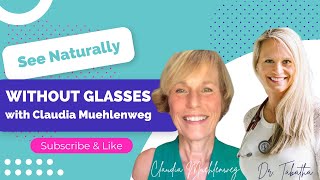
Claudia Muehlenweg, a natural vision educator, explains how stress, posture, and lifestyle affect eyesight. She covers practical habits like the 20-20-20 rule, palming, and frequent blinking, plus dietary support with omega-3s and lutein. Many clients report improvements in weeks to months without glasses or surgery.
Questions this video answers
October 27, 2022.
On screens people blink 2–3 times per minute; ideally blink every 2–3 seconds.
The 20-20-20 rule: every 20 minutes look up for 20 seconds at ~20 ft.
"10 Habits for Healthy Happy Eyes" (free handout).
A 21-day introductory program (called "21 Day Better Experience"/foundations program).
Chapters
Hi, I'm Dr. Tabitha, the gutsy gynecologist. I'm a triple board certified, OB, GYN and Functional Medicine physician. I've embraced the world of functional medicine and wellness through my own personal health journey. And I'm super excited to share my wisdom and unique perspective as it pertains to women's health. After caring for thousands of women, I've come to realize that your gut health determines your gyne health and your overall health. And it's a super gutsy thing for me to go against conventional gynecology practice to bring you the truth. No more band aid medicine, ladies. We're talking root cause resolution on this show. So if you're struggling with hormone imbalance, weight gain, period issues, anxiety, insomnia, you name it, then you've come to the right place. And I want to be your gutsy gynecologist. So welcome.
Hi, ladies.
Oh my gosh. I'm excited for this episode because this is something that has affected me definitely over the past year and a half, maybe even two years, and a lot of my patients. So vision, I don't know about you, but as I quote, unquote, getting older, aging, all of a sudden, my vision seems to be affected. And I went to the optometrist and was told, oh, you're just getting old. You just need reading glasses. Deal with it. And luckily, I am in an amazing mastermind group with a bunch of health entrepreneurs. And I met my guest, Claudia. Claudia is a natural vision expert. And she said, no, no, no, don't do that. There's a better way. And what I came to realize was I was doing things that, that were affecting my body's ability to focus and have clear vision. And if I could tackle those issues and do things a little bit differently, I would, I could stop this vision issue that I was having. So the bigger thing I realized is when you give in and use glasses, it makes your vision worse. I don't know if you guys, if you wear glasses, but if you notice after you wear them, your vision is worse after you take them off and you become more dependent and your prescription continues to increase. And so my guest today is all about not going down that path, not giving into that, because correcting for one, like nearsightedness or farsightedness will often compromise the other. And then you end up having poor vision in both situations, which is what happens to a lot of people as they age because they use the crutch of the glasses. And I just. She's really awesome because she started wearing glasses when she was really little. And so. So it's not somebody who is, you know, has never needed glasses or never worn glasses and is like, well, you know, you can magically be healed or whatever. Like, she has gone through it and she's taken thousands of people through this. So it's really awesome because to me, as a functional physician, this is just root cause medicine. Yet again, glasses are a band aid or surgery. And so I really want, you know, to dive into this today and hopefully you get a ton of value out of this because I think it's something that we never question, right? It's like, oh, you just go to the optometrist and you get your glasses and you never stop to think, huh, Maybe my overall health has something to do with my glasses. Maybe my lifestyle style, maybe how I'm functioning throughout the day. Maybe that has something to do with my vision. And so I really, I think Claudia is going to get you to go h. Interesting and start to question some things. And she's got amazing resources, so please check them out in the show notes because you guys need this information. I promise you. This is really good. So let me sing her praises. Claudia Muhlenberg. She's the founder of holistic vision llc and she's the creator of the naturally clear vision method. She always hated her glasses, and she's made it her mission to help others see clearly naturally, just like she has done. Claudia is a sought after international speaker and workshop leader. She focuses on finding the root cause of her client's blurry vision instead of using those band aid treatments like glasses, contacts, or surgery that actually make your eyesight worse in the long run. So I think this is going to be eye opening, pun intended. Check out the free downloads. Connect with Claudia. Share this with anybody who you think might need it because this is great information. Okay, here we go. Well, welcome, Claudia the gutsy gynecologist show.
Thank you so much for having me, Tabitha. Yeah.
This is such an important conversation because as you know, it's very common for women north of 40 to all of a sudden have eye issues, right?
Yes, yes. I pretty much work mostly with women over 40, so. Exactly. True.
Yeah. So I just remember, like, one morning I couldn't really read my computer or my phone and I thought, what the heck is this? I'm only 46 years old. What's going on? So I would love for us to really dive in and help my listeners understand how the eyes function, how they work, and. And where that dysfunction comes from, because I don't think we give much thought to any of it. You know, it's like, I understand as a physician that there's a lot of muscles involved, but I would say most people just think, like, it's your eyeball and it, you know, and that's all there is to it when there's so much more.
Right, Absolutely. So, first of all, we do see in the brain. We see in the visual cortex in the brain. And I only have a little rubber eyeball here, but so the retina is actually part of the brain, and the eyeball is kind of the only way where we can see into the brain without surgery. And that's also fascinating. And so basically, the eyes receive light, and then the cornea and the lens bundle the light rays and project them onto the fovea, which is a small, very teeny, tiny spot in your retina where you have your perfect vision. And then the. The signal goes through the electro. Through the optic nerve as an electric signal to the visual cortex, and that's where you really see. So I always jokingly say we don't see with our eyes. You know, we actually see with a brain. Yeah. And, you know, we know a little bit about neuroplasticity and how we can train the brain to see better. And yes, the eyeball, if there is no eyeball, or if the eyeball is not healthy, or there's other pathologies, obviously, or there's anything wrong with the optic nerve, obviously that will affect the signal that you receive in your brain.
Yeah. So it's very much related to brain health and nerve health, because that huge optic nerve is transmitting the light images that it's seeing to create that image in your brain that you're actually seeing. So talk to us a little bit more about how do we keep things in focus. You know, a lot of people, when they're younger, they have trouble seeing distance. And like I said, as we get older, then we have trouble seeing closer. What's going on with that?
So that's a big question, first of all. But basically, vision is just like it's one of the senses. And it's probably the sense that we use. Not probably, but very surely the sense that we use most. You know, I've heard different things. 70 to 80 to 90% of the visual of the sensory input comes from the eyes or the visual system. But when you think about the other senses, how they're really effortless, there's like, no strain, there's no efforting. You hear things, you smell things, you taste things, you touch things, and good vision is basically easy and effortless. Now, how do these problems happen? And there could be many reasons. There could be. Let's talk about physical first. So studies have shown that sunlight is really important for the length of the growth of the eyeball. And they looked at children that are playing outside for two or more hours versus those that are mostly indoors and found that the rates of nearsightness, or myopia, which is, I think what you had originally, is a way, way higher in children that don't get that natural light exposure. So that. And that other studies have shown that with Chinese young adults living in Australia versus in cities in Southeast Asia. Asia. So that's one factor. It's just like the light. Because our eyes are light receivers and when they don't get light. And sunglasses, another topic we can get into. So that's one factor, Right? The physical one. And also what you do with your eyes. So if you always use your eyes at the near point and you look at computers or books, you know, school, you study, and this is why we also talk about college myopia, right. You kind of at this near point all day long. Yes. Your eye muscles, it's just like your other muscles or other parts of the body. If you never stretch your hamstrings or you sit all day, your quads and your hip flexors will be tight. So there is, at some point, the eyes will not really know how to adjust to the distance anymore. And they get, maybe you want to call it, weak and stiff in that distance. So it's definitely important to shift your focus frequently to different distances as we get older. On a physical level, they say the lens hardens, but research has shown. Or there's actually, it's not. We still don't 100% know how the eye accommodates. And yes, the lens is a big piece, the lens in the eye, but the cornea is also a big piece and the length of the eyeball. And I've met people that have no lens, like they had some trauma to their eyes or the lens was replaced or removed because they had, you know, a congenital cataract, for instance, and it wasn't replaced by an artificial lens. And they still can focus and maybe have visual acuity. Not 2020, but maybe 2040, 2060, 2080. So then you're like, well, if it's only the lens and if that's the only piece that gets supposedly hard as we age, why can we still. How does this make sense? Right? How can we still focus when we don't have a lens? So it's a little bit more complex than I think we believe. And with the age, one more thing I want to say a lot of times, so there's also mental and emotional components. So let's just briefly talk, just touch on some of those. So babies are all born farsighted, meaning they can see distance but they cannot see up close. So when you have a child, you know, I hear that all the time, doesn't matter, first grade, second grade, third grade, or maybe teenager suddenly becomes nearsighted. In addition to them not playing outside and studying too much, there's often what we call adverse childhood events like the child doesn't perceive the world as safe. And when we don't perceive the world as safe, we can't relax. And when we can't relax, our visual function will be affected by that. So you basically become like you don't want to see, literally don't want to see the world because it's scary. And you stay in this little bubble of safety in that kind of close up zone. So that's one example for emotional reasons. And maybe you have other questions before I talk too long.
Yeah, no, I think that's great. And I would love for you to explain to my listeners what do you mean by muscle fatigue and how is, how are muscles affecting our eyesight?
So basically we have, and I only have five fingers, but imagine there's a sixth one. So we have six outer eye muscles and four other so called recti. So they look like, they're just like straight muscles that look like a cross. So basically top, you know, inferior, superior and then lateral and medial. And then we have two obliques, one on the top. They look like more like a slingshot on the bottom and the top. So these eye muscles move your eyes in their sockets so that you can roll your eyes. But they also believe to be helping or like changing the eyeball length because they're very strong and the eyeball is, if you've ever, you probably did eyeball examinations in your medical school, very soft and squishy. Right. So these eye, these muscles also help with focusing. And so a lot of times people think the muscles are too weak when in fact they're too tense. It's almost like, you know, you've seen probably people that do a lot of bodybuilding and they have, you know, like a strong biceps, but it's so tense or like so tight that they can't actually stretch out the arm all the way. I don't know if that makes sense as an example, but a lot of times they're overly tense or some of them are too tense and others are too weak. So there's a, that that's often related to astigmatism or farsightedness or near sightedness, that there's an imbalance in the muscles. And then we obviously have the ciliary muscle inside that controls the lens shape and. Yeah, so. And the eye, the pupils right there. So there's. There's muscle inside the eyes too.
Yeah. So I don't think people realize that muscles are so important in the functioning of the eye and in just being able to focus your vision for distance and in near sightedness, you know, and sometimes things that look like a lazy eye or a turned in eye eye, it's because you said like the muscle is too tight or the opposite one is too weak, you know, and they're not counterbalanced with each other. So you can get that deviation of the eye being pulled in. And so I just think of like you have to have healthy muscles the same way you do in the rest of your body. So it's so important for diet and nutrition and getting enough of your amino acids and all of those things. Yet nobody talks about that. You go to the ophthalmologist and there's no discussion on the physiology and the health of. And nutrition and everything. So I would like to hear, you know, how does that factor in?
So great question. I do want to touch a little bit because you mentioned lazy eye or strabismus. So a lot of times when children and I actually had a convergent squint and when you look closely, you will see my right eye still has a little bit of a tendency to go toward the nose. So a lot of times what they do like say one eye goes in. Right. So it goes inwards. Where's my other. I had another eyeball. Oh, here it is. It's somewhere hidden under my. But I have two eyeballs and basically, you know, so they might, let's say the eye turns in, then they cut the outer one, they cut both muscles and they lengthen that one and they tighten the other one. But the piece that these surgeries don't accomplish, and unless you do vision therapy with a behavioral optometrist or vision educator like me, the brain. Just because the eyes are now cosmetically aligned and straight doesn't mean that the brain actually integrates vision from both eyes together to create fusion and binocular vision, which gives us the depth perception. So a lot of times these surgeries are really actually just cosmetic because it is More than the muscles, it's actually your brain. It's an intricate process. And actually each eye is connected to both sides of the brain. So you know, and then we have this overlap in the middle where we see both eyes and then outside is just one eye and outside here is just the other eye. So it's so much more complicated than just this. So that's one question. And then, so I think a big piece I want to talk about is stress because stress is really the root cause of pretty much all vision problems. So when I ask people, when did your vision decline? Yes, maybe you were 45 or 46, but what also happened? Oh, I divorced or we moved or I, I lost my job or a lot of times there's additional, it's not just the aging. And I find that people that have a big purpose in their life, that get excited to get up every day, have lower rates of the so called presbyopia or what you call the old lady side. Like, you know, where you're like, than people that are like counting down the days to retirement. So definitely that emotional and mental aspect is a factor as well. And of course diet is a factor. So when we talk about eye diseases like glaucoma, which is an optic nerve disease, or we talk about amd, so called age related macular degeneration or cataracts, there is often toxic exposure like steroids can be leading to cataracts, lead exposure, other toxins, and then also poor diet. So lutein, zeaxanthin are the things that you find in so called eye vitamins. But it's, you know, and I like, I do like supplements but I don't think they're a replacement for a healthy diet like omega 3 fatty acids. All the stuff that are really important for the rest of the body are even more important for the eyes. Really?
Yeah, I couldn't agree more. And I think that stress piece is really spot on. You know, I, when I'm not sleeping enough and I'm extra stressed and I'm like waking up and going straight into stress mode, I'm not like doing my exercising and meditation and prayer journaling and any of those things, that's when my eyesight is the worst. And it takes a good hour, hour and a half for my eyes to start accommodating and stuff to not be blurry and then I can see again and I've even had to get the old lady glasses out every now and then just to function and I keep fighting it. But like my ex husband, his stress was so Severe. He had a retinal detachment. Like, that was a big deal. You know, he had. The outer lower quadrant of his vision completely went black. And that's literally a diagnosis that's due to stress. And so I'm so glad that you highlighted that, because people constantly tell me, well, I can handle it. I can handle it. And I say, even if you can handle it mentally and emotionally, it doesn't mean your physiology is handling it right.
Absolutely. And I love that you talked about the stress and how long it takes to downregulate. I call that. That's actually something I start with every new client or everybody that gets into my program. I call that strains and gains. I'm like, you know, get really clear on what makes your vision worse, what makes it better. And almost everybody agrees. My vision varies. It's not always the same. And then once in a while, like, one out of 10 people, like, no, no, no. My vision is always the same. And then usually there were contacts or they, you know, like, tune in and notice that it doesn't. It changes. And even people with perfect eyesight, when they are stressed, when they have an accident, when there's something like, you know, especially if you're in that extreme fight or flight mode, everybody's vision is blurry, right? That's just a normal physiological response. Our peripheral vision shuts down. The pupils dilate, you know, adrenals. You're in that. You hold your breath, you know, so that's. If you're in that chronic stress mode, you might feel. That's my normal state. You don't even realize. And I've been there as a single mom, raising my daughters by myself. They're now in their twenties. I barely slept. I mean, I was just in survival mode for probably at least a decade, if not two decades. I mean, it was intense. And my vision, that's how I really got into this to. To, you know, because people tell you, oh, you're 40 something now. That's normal. And I'm like, no, I don't. I don't. I don't believe that it's normal. You know, there's. There's definitely something. So, yes, you totally were spot on about that stress piece and how to. Can you. How can you relax? And it sounds so overly simple, you know, but it's not just physical relaxation. It's really mental and emotional relaxation. Because if your mind is going 180mph, guess what? Your body is too.
Yeah, exactly. So I think the key is, like, figuring out what's triggering the Vision issues. And for me, it was definitely stress. So when I first met you, you were talking all about this, and you even did a little training on, like, how to help strengthen your eyes so that you don't need glasses. And so that's what really piqued my interest, because I had gone to the UPT and he gave me the prescription. He's like, well, you don't have to have them, but if you. If you feel like you need them, you can wear them. And I remember you saying, like, as soon as you become dependent on them, your muscles will get weaker, your eyes will get weaker, and you'll need them more and more. And I found that to be the case when I was wearing them every morning. And so doing those exercises helped a ton. And that's basically how you work with people, right? You teach them how to not rely on glasses. I would love for you to, like, walk me through that a little bit.
Yeah, I would love. First of all, I don't like to call them exercises because, you know, you might have heard of eye yoga, or you roll your eyes in your sockets a few times, or you do the in and out, you know, which is. There's nothing wrong with doing those things. It's always helping circulation and, you know, relaxing the muscles. But it's really about vision habits. So a simple thing that everybody can just implement right now is blinking. And it sounds overly simple, but blinking prevents staring. So let's do the opposite. Let's stare. I'm staring really hard at you right now. And actually, first of all, I can't even do it anymore. But people with near sightness can probably stare pretty good without blinking for like, a minute or longer. So that blurs everything. It's like if you press your hand and your. Your skin, eventually it gets numb, right? So blinking kind of keeps your eyes moving because every time you blink, you automatically shift your attention. I like to think shifting my attention, rather shifting my eyes. And then blinking lubricates your eyes. So especially if you had LASIK or you have dry eye syndrome, blinking is one of the simplest things you can do. And I met many people with great eyesight, and you notice they blink a lot versus people that are like, just, you know, they just look at you with that blank stare. Okay, I can't even do it anymore. So that's a good tip. Like, you know, and initially I had to remind myself, especially when we look at something. Screens. Studies have shown that people blink only two to three times per minute, when ideally, you blink every two to three Seconds. So, you know, I had to practice as I was driving and then I forgot and now it's such a habit that I don't. It's not an exercise I have to do anymore. It just becomes a natural habit eventually.
Okay, awesome. What else should women be doing? Especially if they have that job, they're looking at the computer all day. Like, how do you keep your muscles from being fatigued?
So, I mean, there are several things. I mean, you might have heard of the 20, 20, 20 rule, which is every 20 minutes, look up for 20 seconds and look 20ft in the distance. I think you should look up a lot more. And I have my computer actually placed against the window. So I just need my. To shift my eyes literally just from your eyes. And I couldn't look far into the distance. So moving your attention, moving your gaze near and far, frequently taking breaks. So that's another important thing. And what I also like to recommend is, especially if you use cheaters or readers, go with the weakest ones. Like, here's what I usually recommend. So go with the. Let's say you have a plus two. How about using a plus one and a half? And when you blink and when you breathe and when you shift your focus and also your peripheral vision, you're aware of your. Everything is clear. And now you're on the computer for an hour and you know, your eyes get tired and things get blurry. Now that's to me, the engine light coming on, be like, oops, maybe we need to make a little break, step away from the computer, maybe go outside or something. I teach as well as palming, which is basically you close your eyes and I have the mic here in front of me, but you basically cover your closed eyes with your cupped hands. You relax your shoulders. Ideally you want your elbows to be supported and just take a few deep breaths and be like, ah. In your mind, bring up something that really makes you happy, where you're like, oh, yeah, that was so nice. Like, you know, it could be an imaginary place, a person, whatever makes you go like, ah.
Yeah.
And then you do that for, you know, any whatever. Even if you do it for five deep breaths, doesn't have to be long. And when you're ready, you take your hands away and you keep your eyes closed. And then just wait till your eyes feel like we are ready to come back to planet Earth. And you do five quick blinks and then I'd like to do five gentle squeezes. And then usually your eyes already feel more lubricated and refreshed. So it doesn't have to be this long exercise. So those are some simple things. You can do that, like palming. We call that palming because you use the palms of your hand. And the blinking is usually. And the omega 3 fatty acids are usually my top three tips for dry eyes.
Awesome. And you mentioned the natural lubrication. Talk to us about eye drops, because I think women are like, well, I just need to take my eye drops. I just need to use Visine or whatever, when really that's probably contributing to the problem, isn't it?
Totally. Because eye drops actually reduce your natural tear production even more. They actually make you dependent. So, I mean, I work with clients that have. So I just want to make it very clear. If you have eye drops for glaucoma because your inner ocular pressure is too high, please take those eye drops. I help people also with natural methods to reduce the pressure in the eyes. But that's. That's a totally different story. And I'm not giving medical advice here, but if you just have dry eyes, you know, I had clients that just throw away the eye drops. I'm like, no, no, no, hold on. You don't want your cornea to be dry because then you can get scratches on your cornea. So blink more, do the palming, frequent plumbing. And then you do. Maybe you take the eye drops five times a day. Then maybe you get to the point where you, instead of taking the eye drops, you do some palming, and maybe you palm for like five minutes and you don't need them anymore. And then when you really need them, you use them. And eventually I even had laser clients that had dry eye syndrome, completely wean themselves off the drops because they are just a band aid. Right. They make the condition actually worse. That's my recommendation. And if you do need eyedrops, there's homeopathic eye drops out there that don't have all these preservatives that I would recommend to switch to those. And then again, if you have allergies, that's a little bit different. But generally speaking, you want to use them as a kind of first aid if something is really bad or you're in a really dry climate or this dry winds or something. But weaning yourself off those eye drops is really key.
Okay. I love it. And I have women who have autoimmune conditions, and a lot of times their eyes are affected. Would you say that they can still benefit from these types of recommendations?
Absolutely. Because everything I teach is based on getting into the parasympathetic Relaxed state, natural vision habits and eye anatomy and neuroscience. So some of my clients, you know, had insomnia and they don't have that anymore. They feel overall happier and relaxed. They even have a more positive outlook on life and get excited about the future. I mean it's that a lot of times I hear, oh, I thought this was just about eyesight. And now I realize it's really my life vision and insights into so many things. So yes, it can benefit everybody. It depends on where you start. Obviously the results are different, but at the minimum, my goal is always to preserve what you have and not make it go worse. That's like my what I really hope as a minimum. But the majority of my clients actually see improvements.
That's wonderful. And how long does it usually take to start noticing a significant improvement?
So that's always a good question. I, you know, work with people privately or in small group mentoring programs. That could be the first session. You know, you immediately see improvements for other people. It might take a little longer. I have a three week program where we just had a call yesterday and oh my God, everybody, after two weeks saw so, so many improvements. They were so excited. So it goes quickly. But it also depends like, like say you have a minus three diopter nearsightedness. Are you wearing plus two and a half or three readers, you know, and maybe you've been wearing them for like 10, 20, 30 years. You know, it will take time. I mean it could be years before you either completely get rid of them or at least you know, you and significantly lower glasses. So I give you an example. I had a client, she's one of my favorite clients. She's in her early 70s and she noticed a decline happening when they switched to computer. She was in her 40s, worked in a pharmacy long hours. So that's when she noticed her vision declining. And when I met her, she had progressive glasses, which I don't recommend, but I don't know if we have time to get into that. And so basically when we broke down the distance, so the distance, she had like 275 plus. And for reading she had about 550 plus. So really strong farsightedness. And my first tip was to her, go to the dollar store. See like they usually have plus 325 are usually the strongest readers you can buy in like a drugstore. And so she bought those and she said oh my God, they work totally fine. I don't even need. So she immediately dropped 2.25 diopters. But I just, and Then in her distance vision she went to like plus twos. Again. I always safety first because for driving you need 2040 or better. And I think now she's at plus one for distance and plus two for reading. So like again and she's been working in my programs, not privately with me for like maybe two years. So. And you know, and she's, she's not always on top of things, but basically, you know, even in your 70s, you know, she's way below half of what she came with, so.
Oh my gosh, that's an awesome story. I love that.
Yes.
So you've been mentioning like the measurements of different eyesights and stuff. Maybe we should back up and explain to people. I think Most people equate 2020 with good vision or perfect vision. Right. But what do all the other numbers refer to?
First of all, 2020 is not even like this was all decided by Harman Snellen in the eight in the 19 19th century. And I think he basically used his best assistance vision as a guideline. You know, how we create paper formats and rules and stuff. And so that's why that's called the Snellen chart. He was a Dutch optometrist. And so 2020 is normal sight. I don't think it's perfect sight. Like Eagle eye is more like 2010. So that basically means that you can see the 2020 line at 20ft. And let's say you have 2200. That means a person with normal vision. What you can see at 20ft. A person with normal vision can see at 200ft. So that's what 2200 for instance means. And what other numbers were you asking about? The diopters? Yeah, this I teach in my advanced courses. I teach prescriptions because everybody feels loves to know what all these numbers mean. So basically a plus lens or plus number means farsightedness. It's basically a magnifying glass. And a minus lens means that you are nearsight. In other words, you struggle more with distance vision. But the close up vision is pretty good. And those make everything look smaller. And the plus lens is like a magnifying glass make everything bigger. So when you see somebody and they have glasses on and you see kind of behind their glasses, like the line of their face is kind of inwards that is always showing a minus lens. So somebody nearsighted and a far sighted person usually has bigger eyes. It depends on the strength. Right. The stronger that adopt is, the more, the more extreme that effect is. If it's just a plus one or Minus one. You might not even see that in the glasses, but if it's small, you will definitely be able to see that. But yeah, I don't know, I think it might be a little bit overwhelming. Just know when you have a cylinder and an axis number that indicates an astigmatism, which I also work with. And that's pretty easy to reduce, actually.
Nice. Okay. And so your program helps with nearsighted and farsighted and astigmatism. Okay.
Yes. Yeah. Basically I have a 21 day, so better. I said experience. That's what it's called. That's like an intro level. That teaches you all the foundations. Light, rest, movement, breath work. That teaches you the relaxation foundation. And that's a great place to get started if you just want to test this out. Right. And then I have a call so called naturally a vision. That's where I go more into like all the, like. I really dive deeper into prescriptions. How you measure for reduced prescription, how you can order them inexpensively online, night vision, day vision, posture. That's when I really get deep down into even eye diseases. But yeah, basically what I teach helps with any condition, with any eye condition. I mean, definitely.
Wow, that's awesome. And you mentioned the progressive lenses, so.
What'S up with those? Okay, so basically when you look at your prescription and you have. So this sphere is, you know, usually when you're near sighted correctly for the distance and if you're farsighted, that's your reading glasses. And then as I said, cylinder and axis. Cylinder is the strength and diopter of your astigmatism and the axis is the angle. And again that's way too much to get into here. But if you have an ad like add on your prescription, that means either bifocals or progressives. And from the prescription it's. You can't really tell. The difference is bifocals have one diopter on top and one on the bottom. And they assume when you look straight you have the correction for distance and when you look down for reading and diopters. Because the reason this happens is because diopters only correct you for one distance. So when you are plus one readers, that one plus one diopter only corrects you to like 16 inches reading distance. It doesn't correct you for two, three feet or further. Right.
Right.
Your, your minus one corrects you only for 20ft. It doesn't mean that you need that same. You probably don't actually, you don't need anything for reading a computer when you have a minus one near sightedness. So with bifocals they now try to kind of progress this which is basically the same thing, but it's gradated. So it's kind of, let's say you have, I don't know, plus two on top and a plus five on the bottom. It's like it slowly goes higher as you go lower in the glasses. Like, you know, and the one thing big problem with these glasses is that they assume you look straight in the distance and you look down and you're reading. But now you look straight and you're at the computer. And what I see happening is people do this because the computer is close and you need more diapers. And that creates postures related to astigmatism. So now you do this contortion which creates neck tension. And the other thing that happens when people first get them, everybody that gets them is like, oh my God, this was so confusing. I hated them. You look down, but now you're hiking and that's not breathing distance. Depending on how tall you are, that might be quite a lot more and that leads to falls and trip, tripping. So yeah, I get everybody. And they're also really expensive. So I get everybody out of those glasses.
Yeah, they sound horrible. And I. That makes total sense. Like you're not necessarily looking down to read, you're looking ahead. And so now you're getting your neck all contorted and that will cause eye issues in and of itself. So that makes total sense. And I don't, I just don't think we think about that kind of stuff. And obviously optometrists don't necessarily think about it. Right. Because they're prescribing these things.
Well, I definitely have a lot of eye doctor friends, but I have to say that, you know, there's holistic eye doctors for sure, you know, that are also in our association and we have a colleague in our group together that you know, is a function functional neuro optometrist that works with fusion and helps people to have the eyes work together. So but let's talk about normal optometrists. They make their money with selling you glasses and contacts and they really wouldn't, it wouldn't really make sense for them to, to get you into perfect vision because then they really wouldn't have a business. Ophthalmologists are a little different. So I prefer ophthalmologists because they look at the eye health, they really make sure that everything is fine and they're not really interested in Giving you prescriptions so much they could maybe talk you into surgery you might need. But overall, ophthalmologists are really great resource as medical doctors. So I don't want to say optometrists are all bad people, but they don't help because here's my thing with glasses. To me, you know, when you look at treatments like your work, right, you help people to actually feel better, ideally without having to spend money for the rest of their lives. So they come to you, you see them for any amount of sessions or. And then you feel good and you, you invested into healthy, improved health. And with eyeglasses, it's like you spend all this money, but you will never, ever get out of these eyeglasses, so they actually make it worse. How have we accepted something that makes your condition worse and we pay money for that? That's just, you know, right.
It's like giving somebody crutches when they have a bad knee and just saying, well, here, you just use these the rest of your life as opposed to going to physical therapy. I know, it's. It's wild that we just take that band aid approach and we just say, okay, I. I guess that's.
That's how it is.
So I love that you have a different way to approach this. And you're up front, you see, you shouldn't need these crutches. You shouldn't need this band aid approach. And so I just love everything that you've created. It's incredible. And I'm a living testament. Like, you don't have to give in to the glasses. You know, I have them for emergencies when my eyes are really tired and I really am stressed out and I have to read something and I can't. But I, I try not to use them and I do the exercises and it's just made a ton of difference. And I'm going to keep fighting that because to me, it very much is like giving up and not fixing the problem. I agree.
Exactly. And, you know, you become more aware. Right now, you're more aware. And I wonder, I want to ask you or your listeners too, that was something when I got lost at age 3. So I've been, you know, dealing with glasses and on and off. I was a period in my life where I didn't have glasses, but I was back in glasses. But every time I took them off, and that was really. That really got me into this. Like, my vision was worse, let's say, you know, I was farsighted, so I was the opposite of you. Like, for me, distance was always good. But then anything middle distance or close up was blurry. And the closer it got, the blurry it was. So, you know, every time, like, let's say it was a little blurry. And I used the glasses for a while, and then I took them off. It was way blurrier than before. I put them on, and I'm like, this doesn't feel right. Like, usually when you take a medication, like, even if you have headache and you pop a painkiller, right. You usually feel better. You know, even that's. Even though that's also a bandaid approach. Right? It's like, but you. At least you feel better. But my vision was always so much worse. And that got me really into that whole idea of, like, I. I don't want to go down that road. I just really. This doesn't feel right.
Yeah, I equate it to. It just makes your eyes lazy. They don't have to do the work that's necessary to focus and accommodate because the glasses are doing it for them. And so then when you ask, yeah, do that. They can't. Right.
I would actually rephrase that a little bit because they're not. It doesn't make them weaker, but it allows you to strain. So you make an effort in the first place when things are blurry, and now you strain and now you put the glasses on, and it might. It gives you the clarity, but you're not changing the habits. You might still stare. You don't blink, you don't take breaks. And that's why your vision condition gets worse, because they do the work for you. You're right about that. But the muscle tension is still there. Like, it doesn't. You know, you're not. You're not focusing on the stress release or maybe I need to take a break. You know, you just power through. And that's why you. When you start with the plus ones, everybody, everybody, that starts with readers. Before you know it, it's a plus one and a half. It's a plus 175 plus two. And then the eye doctor tells you, and all my friends listening and all my friends in real life, that started with readers so innocently, oh, you're so cute, like the sexy librarian. And then five, six years later, progressive glasses and your perfect distance version, your 20, 20, 2015 distance version that you were so, so proud of, maybe your whole life suddenly is blurry and you need glasses for driving. And now you have zero clarity at any distance. And to me, that's just. That's just a freak Thought where I'm like, no, no, no, I'm. Now I'm totally handicapped now I can't do anything with all.
Yes. Oh my gosh. I think that's a really important point. Like you're just setting up your future. It's kind. That's the same thing in, in medicine. It's, you know, we don't fix the root cause, we're just gonna keep on adding to the problem.
Exactly.
Oh my goodness. Okay, so you mentioned that people can sign up and do your introductory program and just get their feet wet and really see what it's all about, Right?
Yes, I have that. And I also have a free gift for your listeners. It's called 10 Habits for Health and Healthy Happy Eyes. That is a. As a handout. It doesn't have pictures. It's just a lot of information. It really, I talk about the posture, the sunlight, how to reduce glasses, the palming. So I give a lot of great tips. So that's a free download that you can get if you just want to kind of read up and try some, some things for yourself. And then the 21 day program is my easy to implement minimum amount of time, energy and money way to actually get started. Started get support for me. We have coaching calls in the program and then my natural key vision program is then the, the bigger, more advanced program. And most people, some people jump right into that big program because they know they want to do it. But I would say the majority starts with a free gift and then the 21 day program. So.
Yeah, well all those links will be in the show notes so everybody needs to check it out. Cuz I have yet to meet anybody who doesn't have I eye issues. So this is great. Thank you so much for all the work you're doing and all the resources. You're awesome.
Thank you so much. And you're awesome too.
Thanks, Claudia.
Thank you, Tabitha.
All right. I hope you found value out of that. So good. So many golden nuggets. And I want you guys to try the exercises download her free gift where she explains, you know, certain things that you can just start doing to really reclaim your vision. Like I said, I did those and they were really helpful. I, I think I need to be more consistent about it, but it has helped without a doubt. And so I hope you take something from this episode and really start to incorporate it and realize you don't need those crutches or if you do like use them as little as possible because essentially it's like use it or lose it. That is how the body works. If you use your body, your muscles, your lymphatic system, everything, everything in your body, it goes for your vagina, your skeleton skeletal system, your. Your brain, like, if you don't use will atrophy, it will not function any longer. So that's why when people start to have signs of dementia, we have them do sudoku puzzles and different memory games and things to stimulate the nerves in their brains and the cells in their brains to function again. And if you don't use your eyes, if you rely on glasses to do that, that vision correction for you, then you lose it. So you use it or you lose it, you guys. Same thing with vaginal health. You know, women avoid intercourse because it's painful. And the less you use your vagina, the less it's usable because that tissue starts to shrink up and tighten and lose its elasticity and its moisture. And sometimes it's about figuring out how to make things usable again. So I know that was a little bit of a sidetrack, but here in gynecology land, we can talk about eyesight and vaginas in the same episode. It's all good. You can. Guys are cool with it because honestly, it's just another body part, right? And we are one body. We're all connected. And our vaginal health is just as important as our eyesight. And for medicine to not acknowledge that, it's doing women a real disservice. So. All right, sorry about that tangent. Okay. I just to want. Just wanted to do a little shout out because I've been getting some awesome reviews and I wanted to read one and I don't need my glasses. So let's see.
Jen.
Oh, big long number after her name said, so much helpful information. 5 stars. I came across this podcast while searching symptoms under Apple podcast search and I'm so glad I found it. The content is so helpful and I've learned a lot from Dr. Tabitha. She's amazing. Exclamation point. Oh, my gosh, Jen, thank you so much. That just fills my heart. I'm so glad that I was searchable and you found this information on Apple. That's telling me like we're making some headway. All of the reviews you guys are leaving and hitting the subscribe button. Please do if you haven't. Like that makes a difference. Women need this information and we have to help get it to them. So share this with other women in your life that you know would benefit from it. Hit the subscribe button and leave me a review because all of that makes a huge difference. So thank you ladies so much. Keep up the good work and I hope you have clear vision going forward. Not just in your eye vision, but in your life, in your purpose, in everything that you do every single day. So know that you are worth it. You're worth the time of taking care of yourself and making yourself and your health a priority. You shouldn't have to justify to anybody. You are worthy. So go have an amazing kick ass week, ladies. Love ya, Sam.








